All posts by Minnesota Steve

Gimpy old guy who loved Minnesota and yet left to live closer to his daughter and grandson. I enjoyed three mild winters in Oregon, then we all moved to Michigan. After two years there, I'm back in St. Paul. This is my fourth home in six years. I don't figure on moving again.

Leaving the Best for Last

Today’s guest post is by Steve.

My father adored watermelons, both for how they tasted and because they represented a particularly happy period of his childhood. He would eat a watermelon slowly according to an oddly complicated plan. His approach to this task had all the formality and precision of the Japanese tea ceremony.

Dad would begin his attack on a slice of watermelon by excavating the red melon meat right along the rind, starting with the far end of the watermelon and working cautiously forward toward what had been the center of the melon. Digging carefully, tunneling in alternatively from the left and right sides, Dad would clean away all melon meat along the skin. Then he would begin digging away at the part of the melon with the seeds in it.

A Man, A Melon, A Method

That ultimately left the part of the watermelon that had once been the center, and that middle part would become increasingly isolated and unsteady. But Dad’s plan included leaving long strips that braced the center and kept it from collapsing. (These bracing strips resembled the “flying buttresses” of medieval architecture.)

At some point nothing would remain except the melon that had once been exactly in the center. Eating slowly, with reverence, Dad would finally consume the delicately flavored redness of the heart of the melon, savoring each bite.

Of course, all he was doing was “leaving the best part for last.” I just never saw anyone make such a ritual of doing that. And of course, as my father’s son, I’m the same. I always save the best for last.

Children, as we all know, want to eat their cookies before choking down their vegetables. One reason I eat my veggies first is that I’m proving to myself that I’m no longer a child, lacking restraint and discipline. (But does it say anything about my character that I take credit for consuming my meals like an adult? Am I that desperate to find something to feel proud about?)

I’ve been amused to see how thoroughly this principle of saving the best for last has permeated all aspects of my life.

For example, it dictates the order in which I read e-mails. If my “In-Box” contains several new messages, I do quick calculations, scrolling up and down. I will first delete the spam. Appeals for money for good causes get quickly examined and zapped. Then perhaps I’ll deal with the “hilarious” forward from that silly woman who thinks I enjoy emails featuring cats with speech defects. I will next take time to read messages from groups I care about. Pretty soon the only messages left unopened will be notes from friends who wrote directly to me. Even when I am reading notes from friends, I prioritize, reading letters from some friends first and saving the most special ones for the very last.

Each morning I fire up my computer and work my way through a series of web sites. This is not “surfing.” I’m not free-lancing but moving steadily through sites that are part of my morning ritual, especially news sites. I enjoy all these sites, or I wouldn’t read them every morning. But some are less fun than others, and those are the first I read. Finally there comes that delicious moment when I cannot postpone it any longer: I click on “Trail Baboon!” It is always dead last among the sites I routinely visit.

Shall we eat a can of fruit salad? All that pineapple and pear stuff dominates these salads, and that is just fine. I eat it first, trying to avoid the grapes. Then I’ll eat more of the light stuff, including those tasty grapes. Toward the bottom of the salad I have to be careful, because that’s where they brilliant red Maraschino cherries lie. Aha! There they are! If I’ve been cautious, my last two bites will be pure red!

Ah, look: Here is the morning newspaper! But before reading, I must reassemble it. I chuck out the advertising inserts. Then I arrange the remaining paper, putting the A section on top. The A section is a stone drag bore because it only has stories I already heard about on public radio or the internet. After the A section, which I burn through quickly, I’ll read the local news section next, for it might have news that is actual news to me. Next I turn to Sports . . . but here things get complicated. I generally like this section, for it has a lot of fresh content. But my local teams have been playing so badly that reading about them is a form of abuse. After one of my teams has another miserable game I will put the Sports section on top of the stack to be read first, and yet I am such a sappy optimist I often read the Sports last or next-to-last. At the bottom of my reassembled daily newspaper I’ll put the Entertainment section, saving the best for last, for I enjoy the movie and book reviews, and my paper has a good high-tech product reviewer whose work appears here.

It would feel queer to read the paper in any other order. Once in a while somebody who doesn’t know me will screw up my program by asking to borrow the Sports or Entertainment section when I am systematically working my way through the sections in order. I disguise my outrage because most folks wouldn’t guess how important it is to read the newspaper in proper sequence. And to tell the truth, I’m embarrassed by how rigid I have become about this. If somebody forces me to violate the proper order of reading the paper, my nose might be out of joint hours later.

I am not a narrow-minded person. I can enjoy all kinds of people. If you tell me you dive right into the best part of something, saving the worst for last, I wouldn’t automatically have a low opinion of you. But, golly gee, that’s just so WRONG! Could anyone who saves the worst for last be trustworthy? I’m not sure!

Do you save the best for last? How does that affect your life?

Memoirs of a Teen-aged Flock Sucker

Today’s guest post is by Steve.

I got my first “real” job when I turned 16. My dad, a top executive at his factory, didn’t want to be accused of nepotism, so he arranged for me to work in an allied business that he never dealt with. The business where I worked was a silk screen processing plant.

Our work was to use squeegees, screens and paints to emblazon various products—t-shirts, sweatshirts, pennants, caps—with college logos or mascots. After we had screened a design on a shirt or whatever, that object would be covered with wet paint. We would then send it down a long conveyer belt under a bank of heat lamps. All those lamps made the shop as hot as a steel mill. There was a concern at the time that sweating too much would deprive our bodies of precious salts, so we spent a lot of time around the cooler belting down water and eating fistfuls of salt tablets. Workers occasionally fainted, dropping gracefully to the floor by their work stations.

I remember when Gina went down. Gina was a skinny Italian girl with a hooked nose and saucy mouth. She looked like a pocket rocket version of Cher. On the day I started working in Silk Screen Processing my dad pointed out Gina, saying, “Keep your distance from that Dago girl. She’s already had one kid out of wedlock.” His warning, of course, just inflamed my interest. Our production manager—an excitable man—happened to be nearby when Gina swooned and hit the floor. Gene knelt over Gina, babbling wildly about how she needed air. Then he suddenly noticed that his hands were up under Gina’s blouse, unhooking her bra. With a scream, he lurched to his feet and fled the building. That incident became just one more reason the workers held him in contempt.

A raw ink design on a shirt looks cheap, so most of our sweatshirts had ink designs that were flocked to make the design fuzzy and elegant. Flock is a curious product, sort of like thousands of tiny short hairs, and in your hand it feels like a handful of dust. After we had dumped several cups of flock on the wet paint of a sweatshirt, the shirt was filthy because of the excess flock. All those tiny hairs settled deep into pores in the shirt and refused to leave.

That’s where I came in. My dad designed a Rube Goldberg machine that was basically two Hoover vacuums, one upright and one upside down. These two vacuums met face-to-face with perhaps three quarters an inch of space between them. My job was to fold a sweatshirt, hold it tightly and then run it back and forth between the two roaring Hoovers. Two minutes of sweeping a shirt between the Hoovers would clean it up almost like new. I’d throw the clean shirt in a big bin and reach for the next flocky shirt. I could never get ahead. The faster I cleaned the shirts, the more dirty ones they would stack by my machine.

It was unpleasant. The Hoovers roared at such a volume that I could not listen to music or converse with the workers around me. The machines were hot, plus the effort required to drag the shirts back and forth between the whirling beaters was exhausting. Sheets of sweat ran off my chest and back as I worked. But the greatest sacrifice involved with working on those Hoovers was boredom and isolation. I couldn’t say a word to anyone all day.

And you know what happens when you run a Hoover over a loose rug: the beaters eat the fabric, the fabric gets wrapped around the belt, and the machine seizes with a sick whoop that often means the belt is broken. And if the fabric in question is a white sweatshirt, as most of ours were, now it would be ruined with black rubber skid marks. To keep shirts from getting sucked into the Hoovers, I had to pull and stretch them to keep the fabric taut. We only screened enough sweatshirts to fulfill each order, so if I spoiled a shirt or two we would be forced to set up an emergency run of that design to replace the ruined ones. Guess how popular that made me with the workers who had to replace shirts I had spoiled with my Hoovers?

There was a final twist. Because I was “the boss’s son,” I was terrified of being seen as a slacker. Typically for me, I over-compensated by attacking my job with a ferocious effort, suffering in silence while forcing myself to smile with the fixed grin of a corpse. The bosses couldn’t find anyone else who would do that job. After a day or two on the Hoovers, anyone with half a brain quit. Not me. I got to suck flock off sweatshirts all summer long for three summers in a row. At the end of that time, shaking with rage, I asked the production manager what I had done to cause him to keep me on those damned machines for three years. “You were fast and you were always smiling,” he said, “I wanted to keep you happy.”

The only good that came of all of this was my determination to get a college education. I wasn’t sure I was smart enough to do college work. Nobody in my family had ever been to college, and I had hardly distinguished myself as a scholar in high school. But having sampled the delights of factory work, I was ready for a change. After sucking flock off sweatshirts for three years, inorganic chemistry didn’t seem so formidable.

What is the worst job you ever had?

Two Ears, One Mouth

Today’s guest post comes from Steve.

About a decade ago I was delighted to discover that I was a storyteller. Storytelling is amusing for others, and yet it can be so much more. I saw it as a rich activity that is essential to forming values and shaping the way we perceive the big issues in life. I was proud to identify myself as a teller of stories.

Maybe a year or two later, after some reflection, I began to see the dark side of storytelling. What could possibly be wrong with being a storyteller? In a word, storytellers are rotten listeners. There are exceptions, of course, but the statement is essentially true. Painfully true. And I began to see evidence that I was an especially inept listener.

It isn’t hard to see why. A storyteller is driven by a burning desire to tell a story that others will enjoy. But nobody can tell a story and listen at the same time, just as nobody can suck and blow simultaneously on a tube. The acts are incompatible. Telling stories well requires full concentration. When a storyteller isn’t actually talking it might look as if he or she is listening. The sad truth, however, is that a silent storyteller is (at best) listening with half an ear while preparing to trot out the next story. Most storytellers suffer impatiently while others talk, waiting until that other person shuts up and they can tell another story. Talking when they should be listening, storytellers fail to appreciate what others have to offer, and they typically fall into the trap of telling their favorite stories over and over.

While storytellers are a blessing to mankind, the greater need is for more folks who listen well. Listening well is the ultimate act of respect we can show for others. Because people talk inefficiently and repeat themselves, it is rarely necessary to listen closely. We can listen with half a mind without missing a thing. Listening well requires concentration and a bit of humility, and it is the rare person who concentrates with a full mind on what others have to say.

I was married to such a person. My former wife is the best listener I’ve met. I’ve often watched her relating to people she doesn’t know. She might ask a good question or two, but mostly she listens, and it is instructive to see how quickly people respond to that. They experience a glow of good feelings toward her without knowing that they are thrilling to the rare experience of being listened to. My former wife is a highly accomplished woman, and I’ve always felt that her business and personal success was based largely on her amazing ability to listen to others.

When I became aware of the terrible temptation that drives storytellers (including me) to talk too much, I resolved to listen better. I made a project of talking less and listening more. It was amusing to see how hard that was. After all, the normal mode for a storyteller is talking! Ironically enough, I suddenly found myself wanting to tell stories about the need for listening well.

Even so, I got better almost instantly. Because so few people bother to listen well, it is actually easy to become a superior listener. If you make an effort—even a small effort—you will do far better than most of us do in daily life. And if you want to do even better than that, there are a few well-known techniques that signal to others that we are listening attentively to them. (A typical “trick” of listening well is repeating what someone has just told you, which is a strong signal that you are interested and are paying attention.)

Just at the time I had launched my project to become a better listener I gave a ride to Carolyn, a young woman in my book club. I hardly knew her, although I liked Carolyn, for she is a passionate reader of books. Carolyn and I were making small talk as I drove her home from the club meeting. I think I had just asked her about her job. I was preparing to tell her a story about bad jobs . . . but I stopped myself. I thought, “Shut up, Steve! Be a listener, not a damned talker.” And then I noticed that Carolyn had just spoken the same sentence, word for word, two times in a row. That seemed odd. I ditched the amusing story I had queued up and instead asked Caroline a question about what she was trying to say.

Both of us were shocked when Carolyn burst into tears. Because she scarcely knew me, she was embarrassed, and yet she couldn’t stop sobbing for several minutes. I fought the impulse to start blathering advice. What Carolyn needed, obviously enough, was someone to listen.

Carolyn explained that she had doubts about everything in her life. Although she was fond of the young man she was living with, she knew he would be a terrible husband. He was pressuring her to buy a house with him, which would have made the relationship more complicated and difficult to leave. She had equal doubts about her job and the profession she was preparing to enter. When Carolyn looked at her life, “everything” about it seemed wrong, and she was being pushed toward commit to several decisions she dreaded making. She was terrified.

We talked. I don’t know if the things I said to her that night did any good. I’m sure it was a good thing that I had listened to her. I’m sure the way Carolyn opened her heart that night was ultimately good for her, for she dragged all her unacknowledged demons out of the closet and shoved them in the bright light of day. At the very least, I knew that the trust Carolyn had shown me was a thumping validation of the wisdom of listening well.

I knew a ranch hand in northern Montana, a man named Sonny Turner. His weathered face had a lot of character, particularly since his long nose slanted sharply to the right. I once asked, “Sonny? How in hell did your nose get so crooked?” Sonny said, “Oh, that happened in a bar in Williston. It was one of them times when I was talking when I shoulda been listening.” I knew just what he meant.

Are you a good listener?

Are you a good listener?

Guilty Pleasures

Today our guest post comes from Steve.

The difficulty of talking about guilty pleasures is that people have such different notions of the concept.

Many women will purr and confess that a chocolate delight from Just Truffles is their guilty pleasure. I’m sorry; that is not a guilty pleasure! That’s an indulgence . . . and a particularly aristocratic one. People who try to pass that off as a guilty pleasure are suggesting that even when they succumb to a sybaritic craving they have exquisite taste.

Nor is it a guilty pleasure when your two-year old daughter expresses her adoration for “macky cheese,” painting her face and torso with what comes out of those boxes, including powdered ersatz cheese in a shocking shade of orange. She can’t have a guilty pleasure because she just doesn’t have informed taste.

No, a guilty pleasure is something that you know is schlock, and yet you find it irresistible. It is some kind of compelling treat we are ashamed of enjoying. Some remarkably cultured women are suckers for bodice-ripper romance novels. A liberal who enjoys “Gone With the Wind”—with all that Southern claptrap and racial stereotyping—is slumming in ways that reek of a guilty pleasure. And there are so many more: Karen Carpenter’s music, gossip shows on TV, vampire novels and any Hostess or Little Debbie pastry treat.

I have several authentic guilty pleasures. The one I can talk about (with some blushing) is the TV reality show, Survivor. I’m currently following the twenty-third season of it, and I have scarcely missed an episode from those earlier twenty-two years.

Don’t lecture me about how awful that show is. I know, I know! I’m the guy who has watched over 200 episodes! All that stuff about the “tribes” is painfully cornball. The jungle music is gauche. The shows are heavily edited to control audience responses, so you can’t trust your eyes. When Jeff Probst reads the Tribal Council votes, the order of the votes has been carefully arranged for dramatic effect. Most contestants are immature peacocks. The shows are as phony as an email from a Nigerian prince.

And yet I watch. Every week. Why do I watch? Three reasons.

First, Survivor episodes are mostly unscripted. So much TV is stale and predictable that I thrill to something that has a touch of real life to it, even if “reality” is as hokey as it is here.

Second, the challenges are almost irresistible watching. Under the pressure of challenges, cool contenders sometimes melt down and habitual losers occasionally find grit that nobody would have guessed was in them. Challenges that feature an ability to deal with pain often produce the most unlikely heroes. As silly as the Survivor game is, it showcases people performing under stress, and that always has the potential to be interesting.

Finally, while it is not ethical to conduct many kinds of experiments with human beings as subjects, that happens on every episode of Survivor. The show is like a fiendish laboratory where people are put under cruel pressure and tested weekly, with results that are as instructive as they are unpredictable.

The single salient lesson I draw from all those silly shows I’ve watched is that most of us are our own worst enemies. Over and over, contestants fail in the game because they cannot escape their essential personalities. The bossy woman proud of being a leader offends everyone and gets voted out. The accomplished liar gets tangled up in his stories. The guy who sees himself as a “warrior” in tune with his own primal energy becomes an object of derision. The calendar model with implants assumes her looks will reward her, but she inspires seething hatred among other women and is given the bum’s rush.

In the exit interview, contestants always claim to be proud of the way they played the game, never mind that they just lost. What they say is, “I had to be true to myself.” They apparently don’t see that they have stuck with their usual strategy for dealing with the others, even when that wasn’t working for them. Those who do well in the game usually are able to pick and choose the way they interact with others. So the game isn’t entirely silly. I think it instructs me every week about effective and dysfunctional ways of pursuing one’s life goals. But still, it is a guilty pleasure!

Do you have a guilty pleasure?

The Truth Cop

Today’s guest blog is by Steve Grooms

America was in the seventh year of its war with North Vietnam in the fall of 1971. That fall I was a graduate student in the University of Minnesota. I wasn’t sure what degree I was seeking or what I’d do with it, once I’d graduated. I mainly had to maintain official student status so I wouldn’t be drafted to join the war.

I had hated this war since its start. Every night I shook with fury as various national leaders went on television to lie about the “progress” of the war. Every year, more and more people died—young and old, Vietnamese and American, civilians and soldiers. Every year, the official logic for the war looked more insane.

I finally decided that my hatred of the war might provide a plan for my life. The American public was not getting the straight story about Vietnam. Maybe I could become the sort of pioneering journalist who would show all my docile countrymen how wrong the war was. Even better, perhaps I could become a columnist with a courageous voice who would write op/ed essays showing my readers how stupid they were to believe the lies the U.S. government was feeding them about the war.

And so I decided to switch my major from American studies to journalism. I had a lot to catch up on, for I had never yet taken a journalism course. Unfortunately, I had a late registration date, so all desirable courses in writing and editing were filled before I could sign up for classes. In fact, the only promising course still open was “Public Opinion and Propaganda.” At least that course would relate to my intention to use journalism to open the public’s eyes to the madness of the war.

Things didn’t go as planned. That class shocked and confused me in a way no other event in my long educational history had done.

The first shock was learning how silly I had been to think I could educate people by telling them the truth. The first section of the course showed how diligently people protect their pet beliefs from anything that challenges those beliefs. One study we read showed that people have at least eleven different strategies for denying information or views that they don’t want to hear. Eleven! Although to tell the truth, any single one of those mental tricks will usually work to keep unwelcome facts or views at a distance.

For example, if new facts threaten the values people already hold, people have no trouble ignoring the new facts. Or they might encounter information they don’t like and simply forget it. Or they might misremember things so badly that they think that the new facts actually support their preferred view of things. Or they might summarily dismiss unwelcome views because they came from a suspect source. And so it goes.

The lesson was hammered home over and over: People are going to believe whatever they choose to believe.

Before I had been in the course for a week I could see that the world needed another angry young man with a typewriter about as much as it needed more communicable diseases. I wasn’t going to win the hearts and minds of fellow Americans with all the predictable liberal cant I planned to publish. People would never thank me for telling them my version of the truth. ”Oh, so this war is actually a tragic and murderous mistake? Gee, I wish I’d heard earlier, but thanks, Steve, for finally straightening me out!”

My first response to my new sense of public opinion and propaganda was a practical one. I dropped the silly plan to become a crusading writer. My graduate school major went from “journalism” back to “damned if I know!”

And yet the most significant impact of the course on me had less to do with an occupation and more with character. My course taught me that people were amazingly wily and energetic when their pet beliefs were threatened. But I was a “people” too! I had a belief structure, too, that I was surely defending with all the techniques I’d been studying. Like everyone else on earth, I was a shyster and a con man who could lie and forget and spin and misremember things so I wouldn’t experience the discomfort of doubting my own preferred version of truth.

Since 1971 I have tried to live with the uneasy fact that much of what I believe in—including things I passionately believe in—is probably not true. Of course, one can know that without knowing which core values and facts are bogus. Now I live with a sort of Truth Policeman in my head who knows every sly trick I use to protect my preferred way of seeing things. He cuts me no slack, that dirty copper! He catches me when I resort to mental tricks to preserve my comfort zone of faith.

And yet I have come here to praise him, not bury him with a lot of whining. It is healthy to be asked—or forced to—defend one’s pet beliefs. When I sense myself wanting to believe in something, I automatically become skeptical. The more I want to believe something, the more likely I am to be lying to myself. Oy weh and ish da! This kind of self-doubt can mess up your mind.

Ultimately, I’m not sure this kind of self-awareness can make a person better at seeing the truth. It is surely more realistic to hope that wisdom and self-awareness about these issues can makes us a bit more humble about all those things we think we know about the world.

Have you ever encountered a gifted teacher, special course or singular event that shook up your personal values and caused you to re-think pet beliefs?

Innie v. Outie

Today’s guest post is by Steve Grooms.

It is bizarre to remember the shame I used to feel about being an oddball. In my youth I thought of myself as an alien plunked down among normal people. My life was an elaborate ruse, me trying to imitate the look and behavior of normal people, trying to sneak by without being discovered.

You might wonder what quality in me convinced me that I was so weird. My deep secret was shhhh! that I was a “daydreamer!”

The word referred to a person who had something like a non-stop flow of stories in his head. Other kids would be sitting beside me in school, frowning with concentration as they confronted the multiplication table, while just a few feet away I was playing a sort of movie in my head in which I was fighting Communists. I couldn’t guess what was going on in the heads of other kids, but I was sure they weren’t thinking strange and inappropriate thoughts like I was.

When I recall them, the stories I used to find so compelling now seem embarrassingly conventional. In a typical story I might dive in front of a hurtling automobile to push some cute girl to safety. She would live but I would die, my head crunched on the grill of a Studebaker. My dying would let everyone in town contemplate how badly they had misunderestimated me. In my script there would be an older cop with a deeply wrinkled face who would observe: “Susie owes her life to Steve’s courage.” (Then—for the life of me I don’t know why—the cop would add, “The poor lad obviously didn’t know how this day would turn out, or he would have worn fresh underwear.”)

I might as well mention my favorite daydream in my teen years. It had me and Annette Funicello up in a tiny pontoon plane deep in the wilderness of Alaska. Uh oh! The engine would crap out, causing us to crash land on some unnamed lake. Annette and I would be unscarred, but all the adults died (ha! that eliminates all those pesky would-be chaperones!). In my fantasy I would have plenty of time to find out if Annette might be a bit frisky if I could talk her out of her mouse ears. And if not, I’d still enjoy the best fishing of my life until we were rescued. This was a fantasy with a built-in backup plan.

Because I was a daydreamer, I saw myself as an outsider. I wasn’t part of the school social culture like one of the popular kids who was a musician or debater or even one of the unsocialized dweebs in flannel shirts who ran the school projectors. I wasn’t a musclebound football player who strutted school corridors with a cheerleader draped on each arm. I was just me, a shy goofball with too much imagination. My image of myself was that of a lonely kid standing in some outer ring, staring wistfully in at kids in the middle of things, all those kids who enjoyed a degree of popularity I could only experience in fantasy.

Memories of this have come back to me recently, along with the stunning perception that many or most of the kids I admired in school also saw themselves as outsiders. Some of those kids were outsiders (in their own eyes) because they lived on farms and took a bus to school. Some were outsiders because they were tall or short. Some came from families struggling to maintain a lower middle class life standard. The Greek and Italian kids fought a subtle racism that most of the town would have denied existed. Some kids were just too damn bright for their own good. Our town was so lily white that Jewish families had to drive 30 miles to Des Moines to attend synagogue, and I know the kids felt like outsiders because of that.

I’ve been reflecting on the consequences of seeing one’s self as an outsider. The girl who was too Greek to be American and too American to be Greek became, in time, a sophisticated observer of both societies. The boy whose intelligence got him tagged as “an egghead” learned to appreciate the irony of the way intellectually limited kids so often taunted smart kids. Most outsiders stopped feeling freakish when they found people like themselves in college and they then could stop judging themselves by the narrow standards of high school.

Now I am amused to note that almost every close friend is a former “outsider” whose sense of life was enriched by loneliness and longing. I harbor no resentments toward kids who had it all their way in high school. They had the confidence and discipline to do difficult things when they were young. I don’t hold it against them that they got their act together a decade or so earlier than I did.

It is probably a good thing that so many youngsters see themselves as outsiders, for their ranks give us our writers, social critics and standup comedians. And it is surely a good thing some kids were insiders, too. They acquired leadership experience early in life, experience that is often difficult for a former outsider to learn. Maybe a healthy, integrated, fully functioning society requires the creative efforts of the naturally confident as well as those who felt condemned to a marginal life on the fringe.

Were you an innie or an outie or maybe something else? What has that meant in your life?

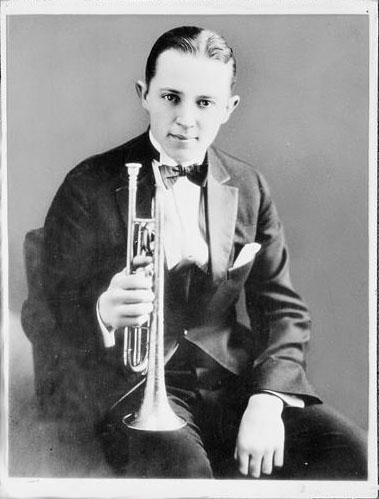
Bix, R.I.P.

Today’s guest blog is by Steve Grooms

The first days of August in 1931 were so hot in New York City that people couldn’t sleep. The residents of a large apartment building in Queens had the additional problem that the man in room 1G was out of control, getting up at all hours to pound out bizarre melodies on his piano. On the evening of August 6, the musician went crazy, hallucinating that Mexicans with knives were lying under his bed. He suddenly pitched forward and fell dead. Bix Beiderbecke was only 28 years old.

The cause of death was listed as pneumonia, but that was probably a fiction to comfort Bix’s parents. Most scholars think he died of a seizure suffered during an attack of the “DTs.” Simply put, Bix had finally killed himself with Prohibition bootleg booze. Bix’s health also suffered because of the heavy work schedule of jazz artists. I could make the case that Bix was crushed to death by the conflict of high and low culture. Others have concluded that Bix died of humiliation. In the words of his friend Eddie Condon, “Bix died of everything.”

The body was shipped back to Davenport, Iowa, for a quiet burial. The family was ashamed of their alcoholic son. Even the jazz world failed to note the passing of the cornet player who was one of the giants of jazz’s formative years. Bix lay in obscurity for decades until later commentators rediscovered his work and created a new identity for him as jazz’s first “dead saint” and romantic cult figure.

Now, almost century after Bix’s tragically brief career, historians can’t agree about almost anything about his life. Battles are fought over his name, his sexual orientation, what made his music distinct, his musical legacy, why he died and many other issues. We know almost every movement he made in his short life, and yet Bix will forever be a mysterious figure wreathed in contradictions and conundrums.

What we know for sure is that Bix was a musical genius, born with perfect pitch and an almost mystical ability to think creatively during his solo improvisations. When he was a toddler he would stand below the piano, his arms stretched up to play keys he could not see. He acquired a cornet and taught himself to play it, and one consequence was that Bix learned strange fingering for producing some notes. His idiosyncratic fingering might account for the pure, sweet tone everyone tried in vain to imitate. A friend said the notes coming from Bix’s horn were as pretty as the “sound of a girl saying yes.”

While many early jazz players liked silly effects, such as barnyard noises, Bix was a purist who impressed audiences with the stunning creativity of his solos. In the early years of jazz, the cornet or the trumpet was the instrument that drove the group’s pace and presented the melody. The magic of Bix’s playing is his creative way of spraying pretty little notes in patterns that progress in a supremely logical and pleasing way. He proved that jazz tunes could be both hot and beautiful at the same time.

Bix came to the attention of the jazz world in 1924 when he was the boy wonder star in a band known as the Wolverines. He hit his peak in 1926 while playing in various groups. In 1927 he joined the most famous band of the era, the Paul Whiteman Orchestra. Already by 1927 Bix began seeing himself as a musical ghost, a pathetic creature stuck playing in a style that had become outdated.

What we have of Bix today is a pathetically small body of recordings made between 1924 and 1930 . . . just six years. In addition to his cornet work, Bix wrote and recorded some odd piano compositions. The surviving recordings are a tiny percentage of Bix’s musical output. It is hard for the modern ear to pick out Bix’s playing in the ensemble sound, and it is even more difficult to appreciate how radically superior his playing was when compared to other cornetists.

As someone who has studied Bix for twenty years, I can only urge others to take the effort to become familiar with this tormented, inebriated genius from the earliest years of jazz. The best way to meet Bix now is through a documentary film produced by Playboy entitled “Bix: Ain’t None of Them Play Like Him Yet.” The film, which is sometimes sold by Amazon.com, is in the Netflix system. Electronically remastered versions of his recordings continue to be issued almost every year.

His most famous recording is “Singing the Blues.” Bix’s horn comes in at the one-minute mark:

“I’m Coming Virginia” captures Bix’s reflective, poignant side. Again, Bix’s horn appears one minute into the recording:

Have you ever grieved the death of a celebrity you didn’t personally know?

The Crazy Uncle in My Attic

Today’s guest blog is by Steve Grooms

I spend a lot of time alone, except . . . (sigh) . . . I’m never really alone. More accurately, I am “alone with my thoughts,” and my thoughts are a noisy, jeering, vulgar and confusing partner. A slightly more pretentious way of putting this is to say I’m stuck at all times with “the voice of my interior monologue.”

Most of us, I believe, have a sort of voice in our head, a voice that we often ignore (which just encourages “him” to natter on more). I know the voice of my interior monologue—too well—but I have no sense of what this is like for anyone else. My fascination with that question led to this guest blog. I’m fascinated to find out what others will have to report on this issue.

Much of the time my interior monologue is just a quiet voice muttering in the darkness, with nobody paying attention. I might be totally unaware of the voice and then happen to notice that he is singing the Sesame Street song for the 403rd time in a row. He’s easily amused, my interior voice. I’ve noticed that he has a quirky obsession with unusual names. While the real “me” is concentrating on some frustrating task, my interior monologue might be chanting, like a stuck record, “Hayden Panetierre, Hayden Panetierre, Hayden Panetierre.”

At other times the voice of my internal monologue is an articulate and intriguing personality, a sort of splendid copy of me who has a similar range of interests and abilities. When I try to solve a problem, this voice pitches in and makes shrewd suggestions, like, “Why not whack this little dingus with that heavy wrench? Whadda you got to lose?” I know this sounds a wee bit schizophrenic, but I feel like “two heads are better than one,” and I appreciate it when my interior monologue does something constructive. Anything constructive. Because, just between you and me, on most days that voice is queer and undisciplined, a parrot with a disgusting vocabulary and a contentious disposition.

For example, the voice of my interior monologue often judges me, and he isn’t a generous judge. If I miss I throw a snowball at a tree and miss by a humiliating margin, my interior monologue groans and observes, “Sheesh! You couldn’t hit your butt with a frying pan.” If I am slow to perceive an obvious fact, he sneers, “Stevie Wonder coulda seen THAT!”

Part of the complication of being me is that I live with two codes of acceptable conversation, the polite “official” one and the vulgar voice of my interior monologue. I am not known for having a potty mouth, but that is because I usually can filter out the foul, blasphemous things my interior monologue is saying. But when I am sufficiently startled, the words that pop out of my mouth are his, not mine. If something unexpected and scary happens, I might whoop, “Christ on a crutch!” That isn’t me speaking! Heck, I don’t even know what he means by that!

It is strange having this voice in me, this voice I cannot escape. I once was playing racquetball when I tore the cartilage in my right knee. The knee made a clicking noise, locked and suddenly I was falling. “Oh my,” my interior monologue commented wryly before I hit the court floor, “your dancing days are done!” If I clobber my thumb with a hammer, my internal monologue usually informs me in a detached, ironical tone: “Geez, in ten seconds that’s gonna hurt big time!” Although he is me, he doesn’t seem to have much sympathy for me. Do you see how bizarre this is?

Once when I was hunting pheasants I walked nearly to the end of a line of cornstalks before turning to seek birds somewhere else. Spluttering with indignation, the voice of my internal monologue broke in to say, “What would that smartypants writer Steve Grooms have to say about this? That self-appointed ‘expert’ has written that you should always work out the cover to the very end.” Groaning, I went back to hunt the last 20 yards of corn. When a little rooster flushed from the end of the corn row, I managed to hit him. I didn’t need the smug voice of my interior monologue to tell me, “Told you so! Told you so!”

As I experience life, then, it is complicated. I have this voice in my head that I cannot evict, even though he doesn’t pay rent. He is part of me, part of the confusing, weird and goofy experience of my life. He virtually never shuts up and often says stuff I wish he wouldn’t. I have mostly gotten used to him although he is something like the crazy uncle who lives in my attic.

Do you live with a second voice chattering away in your head? What is that voice like?

The Low-Speed Chase

Today’s guest post is by Steve Grooms.

Crosby Farm Park is a former farm turned into a 736-acre urban park. It lies along the east bank of the Mississippi River just below Hidden Falls Park, across the river from Fort Snelling. Crosby includes almost 7 miles of trails, a boardwalk over a marsh, a long river shore and two small lakes.

It has critters, too. It was well known for years that there was a coyote pack in the park that was kept alive by a diet including rabbits, muskrats and unlucky house cats from the homes just off Shepard Road. On my first visit, I saw a gray fox (a tree-climbing variant of the usual red fox). I also know for a fact Crosby was home to a black bear for a while in 2001. Does a bear poop in the woods? Yes, and on the walking paths, at least that year.

Crosby is many things, but what it is not is a dog park. That is, any dog down there is supposed to be on a leash. I’ve always blamed the Russians for that. The park is used heavily by Russian immigrants, and they have a terrible opinion of dogs. If an unleashed dog approaches someone with a sweet smile and wagging tail, and if that person nearly faints away with fear and disgust, you’ve encountered a Russian.

In spite of the rules, Crosby is really attractive to dog owners. Dogs can sprint along the river beach and swim for sticks. The park is so big a dog gets to roam a lot without encountering other dogs or people. It is just a pretty place and great playground for people and dogs. And if you hike down there during low-use hours, you’ll probably not see a Russian or any other human. There’s no harm in that!

There is harm, however, if you get caught. It is risky to run your dog off leash in Crosby even if you are in remote areas of the park where others don’t go. At the end of your hike you have to get back to your car in the parking lot, and that means you have to walk where park rangers often go. When a friend got caught with her golden retriever off his leash, she was fined $75. When she got caught again, the bill went to $100. That’s a lot of dog food!

I’ve allowed my English setter, Katie, to run off her leash in Crosby since she was a puppy just a few months old. She doesn’t range far, and she is the sweetest dog I’ve known in a lifetime among dogs. That means she doesn’t intimidate anyone except a freshly-immigrated Russian. I’ll admit it feels spooky to walk around looking out for someone who could tag you for $100, but I did it for years with no close calls.

Katie and I took a hike in Crosby in the winter of 2008. Because the woods were full of snow that had gone through several melting-freezing cycles, all the paths were covered with treacherous ice. I adapted to that by lashing on “traction devices,” a sort of rubber attachment to my boots that carried short bolts like the studs in winter tires. With a traction device you can walk normally on ice without slipping or falling.

At the end of our walk, Katie and I were on the return loop about a mile from the parking lot. Out of the corner of my eye I saw that a large man was following us, a large man wearing a chartreuse vest. Adrenaline hit my system as I tried to think of anyone who might wear a chartreuse vest except a park employee. Maybe this was just someone who was checking the health of the place, but the odds were good that he was a ranger with a pad of citation tickets in his pocket. But I was ahead of him by 200 yards or so, and I had good traction.

It was a fascinating problem. I had to get to my car before he caught up with me, and I had to get there with enough time to throw Katie in the back of the car and make my getaway without getting caught. Was my lead good enough for all of that? Probably not. But if I walked at a normal pace I could pretend I wasn’t knowingly breaking the rules. Authority figures in Minnesota are more likely to issue warnings than fines if they think you were dumb enough to break the laws. Or putting it the other way around, if you run and skulk and make it obvious that you are trying to get away with something, even Minnesota authority figures can get ticked off.

We came to a fork in the road. I went left, not taking the short path to the parking lot. The path I took went through deep woods, and it was used by few people. Without letting my pursuer know it, I turned just enough to peek behind me. Dang! The guy in the vest was still on my trail, having taken the path in the woods like I had. The evidence was mounting that I was his quarry.

Even while struggling to avoid a $100 fine, I could see the humor of my dilemma. I had to make good time, flying over the ice, without looking like a guilty person. I was a bit like the duck that seems placid above water while he is actually madly paddling beneath. And I thought of the OJ Simpson low-speed chase. I was walking and the ranger was walking, but we were both trying for as much speed as we could get without breaking form and actually running. In spite of my casual body language, arms gently swinging, I was panting by now.

As we neared the parking lot, a fellow got out of a white car and headed down the woods path right at us. With this fellow were a black Labrador and some sort of gray mutt.

“Hello!” cried the newcomer. “Do you know how I can get down to the beach?”

“Just keep going,” I said, “and turn left when you get to a T in the trail. You’re going just the right way now!” This guy with two off-leash dogs was going to run smack into the ranger.

As I passed the newcomer, I smiled broadly. “Damn! You wouldn’t believe how happy I am to see you down here today!”

The Bear That Ate Jerry

Happy Groundhog Day!

Somehow it seemed appropriate that a wild animal should make an appearance in the blog today, and I’m happy to say that one was provided by our wilderness loving friend from St. Paul.

Today’s guest blog is by Steve Grooms

In early June of 1967, I took a Boundary Waters canoe trip with my roommate, Bill, and his California friend, Jerry Voorhees. Bill was a tall, arrogant fellow who enjoyed barking out commands to Jerry and me. Although I was twenty-five at the time, Bill called me “Steevie,” because he knew it annoyed me. It amused Bill to order Jerry and me about like the drill sergeants he’d suffered under in Army Basic Training.

Jerry is harder to sketch. A plump fellow with thick glasses, Jerry was no athlete and less of an outdoorsman. He was on the canoe trip because Bill ordered him to be. Jerry was a sweet, accommodating soul who lacked self-esteem. Bill didn’t help Jerry’s composure with all the abuse he heaped on Jerry, calling him “fat” a dozen times an hour and mocking Jerry’s stammer. Jerry’s father had been a liberal New Deal congressman in California who became famous because he was the first politician to have his career trashed by mudslinging lies from young Richard Nixon.

The trip was more fun than it might have been. I caught a trophy northern pike whose memory still thrills me. We were out in the bush for six days. When we got back to Grand Marais, we were stunned to read that the Israelis and Arabs had conducted a whole war in our absence, the “Six Days War.”

Other than that, the most memorable moment was provided by the bear.

We slept three across in our little tent. Jerry, as the omega trip member, was stuck between Bill and me. Our heads were at the back of the tent, our feet by the door. It was rather tight in there.

We had gone to bed one night after dinner. It was fairly late, late enough that the loons had finally gone silent. Spring peepers trilled from every puddle in the woods. Jerry snored softly. Bill tossed in his sleeping bag.

I had almost fallen asleep when I heard the bear. Something was shuffling around our campsite, something with heavy feet. We had not been careful enough to run our food packs up into the trees, which should have concerned me. Stupidly, I wasn’t afraid.

Instead of being scared, I was enjoying the moment because I knew Bill heard the bear. Bill’s breathing changed, becoming fast and ragged. I had been with Bill in a violent storm once, and I knew how terrified he could be when he felt himself threatened. I grinned into my pillow, picturing Bill on the far side of the tent, his face a mask of terror. Jerry snored on.

“Jerry! There’s a bear!” hissed Bill.

“Snaaaaark,” said Jerry.

“Jerry, dammit! There’s a BEAR!”

“Snoooooooooooop!” said Jerry.

I pressed my fist into my mouth to keep from laughing out loud.

That’s when Bill snapped. In total panic, he grabbed Jerry with his left hand, clamping down on Jerry’s right thigh like the Jaws of Death.

Jerry, dammit, THERE’S A BEAR!”

“I KNOW! I KNOW!” screamed Jerry, now very awake. “And he’s GOT ME BY THE LEG!”

That’s when we broke into laughter. The three of us hooted and whooped until our pillows were soggy with tears and our tummies ached. Whatever the creature in our camp had been, it obviously fled in panic when we began roaring with laughter.

Jerry later explained that he was awakened by the vice-like grip of Bill’s hand on his leg. “I thought he was going to eat me right up,” said Jerry, “starting with the sweetest meat.”

Have you ever had a frightening animal encounter?