Category Archives: Songs

A Voice in the Choir

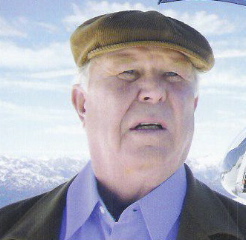
There was just one time when I looked up from my desk to find a movie star standing there waiting to talk to me.  Only once, but that was enough. It was Ned Beatty, whose birthday is today. He’s 76.

 Ned Beatty Sings
Ned Beatty Sings
Beatty is a character actor, and a good one.

He spends part of his year in Minnesota and somehow managed to get into the habit of listening to a daily radio program I worked on. He was in the office to talk to some other people about a film project and wanted to stop by to say “Hello”.

That was very kind of him, and memorable too. Obviously, since I’m still flaunting it today. Beatty’s “hello” resonated across the wide-open room, which makes sense because he claims in his bio he got into acting because he has such a loud voice.

Although his first show-business love, and his career focus now, is singing. Apparently, after several hundred film and TV roles as a character actor, Beatty has come full circle to the place where he started.

Beatty’s online bio says: “Singing was probably his favorite subject in school . He also sang in church, at weddings , in a quartet, ( they sang for their supper), the Louisville a cappella choir, and received a scholarship to Transylvania University to sing in their excellent a cappella choir, under the direction of Harvey Davis, a gifted musician and composer of modern Liturgical music. Ned loved to sing in that choir, but wasn’t particularly interested in attending classes in other subjects.”

And when I listen to him sing, I understand why he enjoyed to that show, since his music would have easily fit into our playlist. In other words, it’s not chart-topping material. He sounds like a straightforward singer, not one to add lots of showy embellishments. He sings like someone who got a kick out of singing in a choir – a singer interested in honoring the song and blending with the others, not necessarily in being in the center of attention or creating a spectacle.

Kind of like a character actor.

Are you a pop star, or a voice in the choir?

Take My Hand

Today is the birthday in 1899 of the musician and songwriter Thomas A. Dorsey.

With his preacher father and church organist mother, he certainly had an upbringing rich in religion and songs of praise. But when it was time to get a job he went into the secular music world instead and made a name for himself there as a pianist and singer called “Georgia Tom”.

Dorsey put together a band to play behind Ma Rainey, performed in jukejoints and wrote bawdy (for the time) popular songs, but there was a personal cost that was most evident in the two breakdowns he suffered.

keyboard

He kept trying to return to a way of life that spoke to his roots, playing in churches and becoming the band director for two congregations. Dorsey couldn’t keep his street and social music out of the mix, and he raised eyebrows by bringing some blues to the people in the pews. It doesn’t take much to get people talking. There was concern that he was introducing the devil’s music to a sacred setting.

In 1932, his his wife Nettie and infant son died in childbirth. His response to this immense personal tragedy was to write new words to a hymn, “Maitland”. The result was Take My Hand Precious Lord, a song that was sung at the funerals of Martin Luther King Jr., LBJ, and Mahalia Jackson.

And of course it is still sung today.

Thanks primarily to this one tune, Dorsey is considered “The Father of Gospel Music.” And if Dorsey is Gospel Music’s father, Mahalia Jackson could be considered its mother.

http://youtu.be/as1rsZenwNc

Dorsey wrote hundreds of sacred and secular songs, both the words and the music, though he is primarily known for this one set of lyrics. As long as people turn to religion and music for consolation in dark times, the name Thomas A. Dorsey will be connected to Take My Hand, Precious Lord.

If you could be known forever for writing one song, what song would you want it to be?

Burn On

Burning_water-1-

This is one day out of several in its history when Cleveland’s Cuyahoga River caught fire.

The year was 1969, and we remember it today because someone at Time Magazine decided to write about it and Randy Newman processed it in a way that’s simply unforgettable.

http://youtu.be/7SKGIwsXuA0

The song only lasts two and a half minutes but it says as much about man’s ability to foul his environment as all the words that have been applied to the topic in the 44 years since. That’s the beauty of a great topical song – it can deliver its message quickly, discreetly, and in a way that gets inside your head.

Of course many topical songs become obsolete by the next news cycle, but for me, this one endures.

Apparently there are no known photos of the Cuyahoga burning that day, but Newman’s song is vivid enough to drive home the point that it is ridiculous and fundamentally wrong for a river to catch on fire.

Even if you are a pro-jobs, anti-regulation, big-industry loving, right wing Ohio voter, you could be tempted to sing along with this charming ditty about the smokin’ Cuyahoga. That’s the real power of a well-crafted piece of musical commentary.

What song do you love to sing, even though you don’t necessarily believe the words?

Opening A Northwest Passage

On or about this date in 1940, the first successful west-to-east navigation of the Northwest Passage began, starting in Vanouver, BC and ending in Halifax, Nova Scotia, two years later.

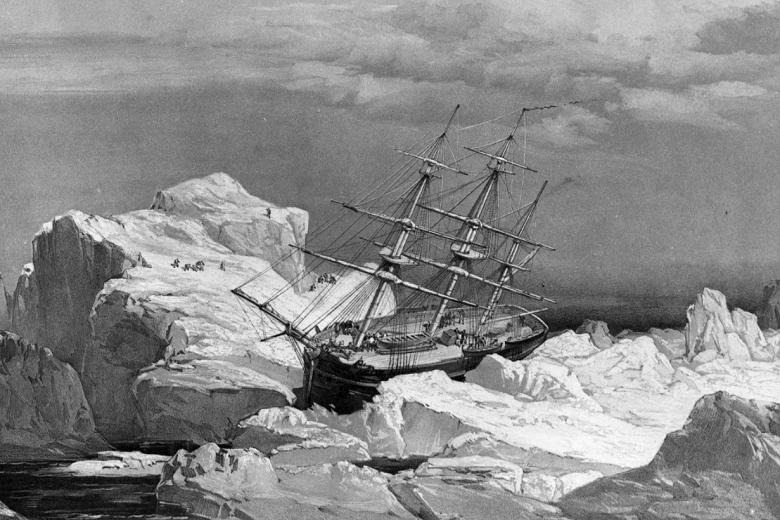
The Northwest Passage is a sea route above the North American continent. For many years and quite a few explorers it was an elusive prize. Searching for it brought pain, despair and death to too many adventurers, who wound up with their vessels trapped in sea ice very far indeed from any hope of rescue.

shipwreck

It seemed the Northwest Passage was a myth, like Bigfoot or the Easter Bunny. But With our relentlessly progressing climate change, the ice has gone out and stayed out longer, and what was once thought impossible is now increasingly common. So common, nations have started arguing about who controls the route, which, when open for commercial uses, will save shippers an enormous amount of time and money.

Is this a silver lining in the saga of global warming? Ask a polar bear who is swimming and searching in vain for something solid to stand on.

I can only guess how members of the doomed 1845 Franklin Expedition might have processed the news that their goal could be reached with no trouble if only they were willing to wait 160 years. The bravery of a handful of long distance travelers willing to sacrifice comfort and life itself could not accomplish what billions of less valiant people have done simply by choosing to ride down to the corner for a pack of cigarettes. The Northwest Passage is destined to be opened by those of us who don’t mind idling in front of the neighborhood convenience store.

Of course it reminds me of this favorite song.

Back in the 1970’s when Stan Rogers wrote about tracing the Northwest Passage over highways in a car, little did he know he was talking about the very activity that, multiplied many times over, would cause a Northwest Passage by sea to finally open up.

When have you found your pathway blocked?

Word Guy

Today is the birthday of the Swiss-born Tin Pan Alley lyricist Al Dubin.

Al Dubin got to make his living in New York City, matching words with music. After enjoying part of the fabulous Tony Awards last night, I’d have to say some people have all the luck. I’m always impressed with the talent on display at the Tony broadcast. Broadway people are unnaturally good at a number of things, and they have an electricity that the presenters and performers on the Oscars seem to lack.

But if you read his short biography at the Songwriter’s Hall of Fame, it seems like Al Dubin was unqualified for almost everything he tried.

Writing lyrics was pretty much his only success. And at that I wouldn’t call him the kind of poet whose verse will echo through the ages. Dubin’s response to the lines of a classic, The Rubaiyat by Omar Khayyam, turned out somewhat less memorable. A lot less.

Here’s the inspiration:

XII
A Book of Verses underneath the Bough,
A Jug of Wine, a Loaf of Bread–and Thou
Beside me singing in the Wilderness–
Oh, Wilderness were Paradise enow!

And here’s what Dubin did with it:

A cup of coffee, a sandwich and you,
A cozy corner, a table for two,
A chance to whisper and cuddle and coo
With lots of huggin’ and kissin’ in view.
I don’t need music, lobster or wine,
Whenever your eyes look into mine.
The things I long for are simple and few;
A cup of coffee, a sandwich and you!

I guess life is too short to spend much extra time trying to add sophistication to that you/two/coo/view rhyming sequence.

Lullabyofbroadway-title

Dubin liked nights out on the town well enough. Alcohol and romance were also high priorities and dissipation was a favorite theme. He IS the guy who wrote the original “Boulevard of Broken Dreams.” I’m not sure how you find the focus to write even mediocre song lyrics with your head pounding on the morning after, but I suppose Dubin was not an early riser.

Just like the characters in one of his most famous songs – The Lullaby of Broadway.

http://youtu.be/QNAM45hCBpw

What’s your favorite lullaby?

Lunar Exploder

Image from NASA
Image from NASA

Super speedy space chunks regularly slam into the moon – that’s why it has so many lovely craters. An exceptionally big one fell recently and hit at 56 thousand miles per hour, liquefying rock and ejecting tons of dust. Sound awesome?

Here’s the good news: It was recorded on video.

Here’s the bad news: Perspective is everything.

If we had been standing within sight of this on the Lunar surface, we’d have had a “shock and awe” moment easily rivaling the kind of explosive mayhem we’ve become used to in all our action films and thrillers. From our vantage point here on Earth, however, this major collision is just a brighter-than-usual pinprick of light.

There are indications that both the Earth and the Moon were pelted by a series of asteroids on March 17th, the date of the observed lunar explosion. We might have wound up with a much-too-close-for-comfort view of the festivities, had it not been for our protective atmosphere.

Scientists think tracking the frequency and location of explosive lunar impacts will come in handy should we ever attempt to have an extended human presence on the moon’s surface. Being able to predict the size, speed and trajectory of incoming boulders should give us a chance to leap out of the way. In theory.

There are plenty of famous moon songs, but they always depict our satellite as remote, mysterious and peaceful. I don’t know of any of them speak the to the constant threat of sudden violence that hangs over the dusty landscape there. Until now.

Cue Astronaut Tony Bennett!

Fly Me To The Moon
Help me dodge explosive bombs.
Drop me in a quiet spot
the universe becalms.
In other words, Asteroids!
In other words, help them miss me.

Walking on the moon
I’m seeing craters all around.
I’m afraid to look up
I’m afraid to turn around.
In other words, how’s your luck?
In other words, learn to duck!

How are your reflexes?

H. B., Taj Mahal

Today is the 71st birthday of the incomparable American musician Taj Mahal.

Henry St. Claire Fredericks was born in Harlem and raised in Springfield Massachusetts, but his world turned out to be much larger than that. The wide-ranging career he has had as Taj Mahal is clear evidence that there is much to be gained by indulging a curious mind – he’s an accomplished artist and a world music scholar. The skill he exhibits today is a testament to the many influences he has absorbed along the way.

Taj Mahal drew inspiration from his father’s record collection, his stepfather’s guitar, and his neighbor’s style, just to name three things that went into the mix.

He’s also a man of the Earth, having studied agriculture in the ’60’s. Apparently he has milked many, many cows, and is one of those people who could sustain himself off the land given the right tools and enough time.

Searching for a Taj Mahal live performance on You Tube, I found this gem, which was uploaded in 2008 but it’s actually a recording made in Bonn, Germany in March of 1995.

He’s 53, but must have been spending some time out in the field, wrestling more cows. Look at those arms!

Here’s a quote from Taj Mahal’s website:

“I didn’t want to fall into the trap of complacency. I wanted to keep pushing the musical ideas I had about jazz, music from Africa and the Caribbean. I wanted to explore the connections between different kinds of music.”

How do you avoid complacency?

All Shall Be Well

This is the anniversary of the day in 1373 when an English mystic, Julian of Norwich, was said to have been healed of a serious medical condition after experiencing a series of religious visions. In response she started writing, and produced the influential treatise “Revelations of Divine Love.”

julian

A religious order was founded in her name. You can visit them in Waukesha, Wisconsin of all places. But this is no summer getaway to the Dells – the schedule is rather severe.

I’m not inclined to believe stories of miraculous healing, especially when the recovery was supposedly a favor granted in response to an extra measure of religious devotion. But it is encouraging to think that a sudden, positive change is possible, especially when a severe illness is diagnosed.

This experience of having multiple visions apparently took Julian to a sunny place, theologically – away from a vision of a wrathful God to one more interested in peace and love, leading to the writing of these famous lines: “Sin is inevitable, but all shall be well, and all shall be well, and all manner of thing shall be well.”

Which led, in turn, to the writing of this song by Sydney Carter – one I know from the work of Ann Mayo Muir, Gordon Bok and Ed Trickett, but done here by a German group called the Ohrwurm Folk Orchestra. (Ohrwurm is the German word translated as “ear worm”, which describes to perfection the kind of song that gets into your head and becomes impossible to remove).

Name a song that comforts you in times of trouble.

Billy Joel’s Birthday

Yes, I get a kick out of Billy Joel’s music, even though it was mostly beyond the boundaries (there were boundaries?) of what we played on the Morning Show during my MPR days.

I even like Joel’s lyrics, though some passionately contend that his writing and everything else about him is terrible.

This might be true. My Billy Joel opinion is more of a feeling. He meets the man-with-two-first-names rule, which is a basic requirement for pop stars (Michael Jackson, Elton John, Tony Bennett, Dean Martin, etc.).

I’m not interested in writing a defense of his sound and his style, but Joel’s songs are catchy and he’s just about my age but he still looks good, which is not that easy. Plus, I admire anybody who can play the piano and sing at the same time.

But finding the courage to say I like Billy Joel in public may be as close as I’ll ever get to knowing how it feels to be a state legislator from a conservative part of rural Minnesota who is voting for same-sex marriage today. You know you’ll get slammed for it, but what the hell? Sometimes you just have to admit that fair is fair.

Plus, he’s been around so long. Here’s one of my favorite Billy Joel songs, recorded decades apart so you can have him with a full head of hair, or without.

http://youtu.be/gecSWeu3UhQ

http://youtu.be/4ioGfiTxx9s

Been to any good restaurants lately?

R.I.P. Richie Havens

My favorite quote from the late Richie Havens appeared in his New York Times obituary – “I’m not in show business,” he said. “I’m in the communications business.”

Havens was a spectacular communicator, famous for improvising his way through a longer-than-expected set at the opening of Woodstock because he was already at the gig, waiting to go on fifth, and the musicians scheduled to appear ahead of him were stuck in traffic.

Maybe Richie Havens would have become famous anyway, but he got a boost from a simple matter of timing. I guess it proves you’ll never regret showing up early for an important appointment.

Here’s a song that didn’t make the cut of the video version of Woodstock, but it spoke (and speaks) eloquently to the point the anti-war protesters were trying to make in 1969.

When have you been on time when the others were not?