Memoirs of a Teen-aged Flock Sucker

Today’s guest post is by Steve.

I got my first “real” job when I turned 16. My dad, a top executive at his factory, didn’t want to be accused of nepotism, so he arranged for me to work in an allied business that he never dealt with. The business where I worked was a silk screen processing plant.

Our work was to use squeegees, screens and paints to emblazon various products—t-shirts, sweatshirts, pennants, caps—with college logos or mascots. After we had screened a design on a shirt or whatever, that object would be covered with wet paint. We would then send it down a long conveyer belt under a bank of heat lamps. All those lamps made the shop as hot as a steel mill. There was a concern at the time that sweating too much would deprive our bodies of precious salts, so we spent a lot of time around the cooler belting down water and eating fistfuls of salt tablets. Workers occasionally fainted, dropping gracefully to the floor by their work stations.

I remember when Gina went down. Gina was a skinny Italian girl with a hooked nose and saucy mouth. She looked like a pocket rocket version of Cher. On the day I started working in Silk Screen Processing my dad pointed out Gina, saying, “Keep your distance from that Dago girl. She’s already had one kid out of wedlock.” His warning, of course, just inflamed my interest. Our production manager—an excitable man—happened to be nearby when Gina swooned and hit the floor. Gene knelt over Gina, babbling wildly about how she needed air. Then he suddenly noticed that his hands were up under Gina’s blouse, unhooking her bra. With a scream, he lurched to his feet and fled the building. That incident became just one more reason the workers held him in contempt.

A raw ink design on a shirt looks cheap, so most of our sweatshirts had ink designs that were flocked to make the design fuzzy and elegant. Flock is a curious product, sort of like thousands of tiny short hairs, and in your hand it feels like a handful of dust. After we had dumped several cups of flock on the wet paint of a sweatshirt, the shirt was filthy because of the excess flock. All those tiny hairs settled deep into pores in the shirt and refused to leave.

That’s where I came in. My dad designed a Rube Goldberg machine that was basically two Hoover vacuums, one upright and one upside down. These two vacuums met face-to-face with perhaps three quarters an inch of space between them. My job was to fold a sweatshirt, hold it tightly and then run it back and forth between the two roaring Hoovers. Two minutes of sweeping a shirt between the Hoovers would clean it up almost like new. I’d throw the clean shirt in a big bin and reach for the next flocky shirt. I could never get ahead. The faster I cleaned the shirts, the more dirty ones they would stack by my machine.

It was unpleasant. The Hoovers roared at such a volume that I could not listen to music or converse with the workers around me. The machines were hot, plus the effort required to drag the shirts back and forth between the whirling beaters was exhausting. Sheets of sweat ran off my chest and back as I worked. But the greatest sacrifice involved with working on those Hoovers was boredom and isolation. I couldn’t say a word to anyone all day.

And you know what happens when you run a Hoover over a loose rug: the beaters eat the fabric, the fabric gets wrapped around the belt, and the machine seizes with a sick whoop that often means the belt is broken. And if the fabric in question is a white sweatshirt, as most of ours were, now it would be ruined with black rubber skid marks. To keep shirts from getting sucked into the Hoovers, I had to pull and stretch them to keep the fabric taut. We only screened enough sweatshirts to fulfill each order, so if I spoiled a shirt or two we would be forced to set up an emergency run of that design to replace the ruined ones. Guess how popular that made me with the workers who had to replace shirts I had spoiled with my Hoovers?

There was a final twist. Because I was “the boss’s son,” I was terrified of being seen as a slacker. Typically for me, I over-compensated by attacking my job with a ferocious effort, suffering in silence while forcing myself to smile with the fixed grin of a corpse. The bosses couldn’t find anyone else who would do that job. After a day or two on the Hoovers, anyone with half a brain quit. Not me. I got to suck flock off sweatshirts all summer long for three summers in a row. At the end of that time, shaking with rage, I asked the production manager what I had done to cause him to keep me on those damned machines for three years. “You were fast and you were always smiling,” he said, “I wanted to keep you happy.”

The only good that came of all of this was my determination to get a college education. I wasn’t sure I was smart enough to do college work. Nobody in my family had ever been to college, and I had hardly distinguished myself as a scholar in high school. But having sampled the delights of factory work, I was ready for a change. After sucking flock off sweatshirts for three years, inorganic chemistry didn’t seem so formidable.

What is the worst job you ever had?

The Oldest Chickadee on Earth

I had the pleasure of talking with ornithologist Michael North on KFAI the other day. He bands birds in Cass County in Northern Minnesota, and on December 9th he captured a black-capped chickadee he has seen before – nine years ago to be exact. The first time he saw it, Michael determined the bird’s age to be about two years, based on the shape of the tail feathers. He says after a year in the world, the tail feathers of a chickadee go from sharp-edged to rounded. I think life does that to all of us.

Not THE bird, but one very much like it.

It is unusual for a chickadee to live so long, and Michael North determined that this particular bird was the oldest chickadee on record at 11 years, 6 months. You can hear our interview here, along with a song made up just for the occasion by the stellar and chickadee-friendly artist Claudia Schmidt.

We don’t often think of a chickadee’s small life as having an arc, but imagine what that bird has been through, somehow surviving through all the hazards of life in Northern Minnesota for well over a decade. Not to mention making it through 11 winters without a snowmobile suit or alcohol to assist. We don’t know how much longer this bird will survive, but at the moment it is the Oldest Living Chickadee on Earth. That is quite an achievement. I can only guess what trials have been met and what calamities have been surmounted. I suppose there was a hungry cat somewhere along the way, and a sharp-eyed hawk. But so far, none of the normal things that can do in a chickadee have done a thing to this one.

What might be in the autobiography of the Oldest Chickadee on Earth?

Ask Dr. Babooner

Dear Dr. Babooner,

Just today I ended a 9-year involvement with someone – a relationship that was troubled from the start and tumultuous throughout. I admit that I was the aggressor. I invaded this person’s life because, frankly, I thought they had given their love to a dictator. I had decided that some regime change was in order, and I expected to be welcomed with open arms. Instead, I was attacked and resented, and now that I have finally decided to withdraw, I’m dismayed to hear how much my departure is appreciated and how thoroughly I will not be missed.

Nine years is a long time to spend on something that leaves such a bad feeling, but I can’t undo it. I can only move on. Even friends and acquaintances who watched this situation go through its various phases seem to regard me with trepidation, as if the newly-freed me is anxious to lurch into another intense involvement. Honestly, nothing could be further from the truth. I can’t afford a new adventure right now, emotionally or otherwise.

Part of me is sorry this is over. Part of me wishes I had listened at the beginning and not become involved. Part of me hopes that a messy aftermath will bring the too-late realization that I was a positive influence, overall. But that would be wishing ill for someone I thought I was helping. At least that’s what I told myself I was doing. Parts of me thought that, anyway. As you can tell from all these parts I’m describing, I’m a little broken up.

And then there is the uncomfortable fact that we are both still “on the scene”, so to speak, inhabiting the same world. When our paths cross in the future, as I’m sure they will, I intend to behave with calm dignity where once I only wanted to elicit shock and awe.
I don’t know what to expect in return.

Dr. Babooner, what is the best policy if one’s goal is to get along with one’s exes?

Conflictedly,
Won’t Miss Drama

I told W.M.D. that when it comes to complicated relationships, post-involvement amnesia is a great fence-mending strategy that can work sometimes, but only if the other party also has it. On the negative side, amnesia makes it possible to slide into an identical entanglement in the future. But that’s just one opinion.

What do YOU think, Dr. Babooner?

Bunches of Shame

Sensational journalist Bud Buck has been looking for shocking stories in the grocery store. And when Bud looks hard enough, he always finds something.

The depth of the daily heartbreak faced by a typical grocery store banana is hard for an ordinary person to fathom. We, at least, maintain the pretense that all humans have equal value without regard to their condition. Of course we don’t treat each other this way, but at least we say the right words. Woe unto you, however, if you’re a banana. Because things are much worse. For you, the world is a much harsher, infinitely more judgmental place.

On a recent trip to my favorite nearby food outlet, this reporter was appalled to discover that virtually ALL the bananas on display in the produce section were clearly underage. These bunches were far too green to be taken home. Certainly any sensible person feeling compelled to peel a banana at that moment would look at these rookies and would find them unappetizing. And yet here they were, clearly marked for sale out in plain view. Don’t get me wrong – I’m not a prude. But timing is everything!

Across the store, meanwhile, the evidence was plentiful that a small, separate band of banana bunches had taken terrible casualties at their remote outpost at the head of the cereal aisle. These experienced bananish citizens had done everything in their power to hold on to the territory. Some fell off their hooks. Other bunches were brutally ripped in two! Many of their number had become extremely yellow there was nothing left for them to do but retreat to the bottom of the display, bruised and defeated, though still proud. It seemed unlikely that anyone would give them another shot.

My observation – non-banana-centric shoppers tended to bypass BOTH these versions of the valiant fruit, preferring only to lavish their attention on perfect, like well-formed, bright yellow, unblemished fruit. How long can we afford to be so picky?

For the bananas sake, I’m begging you, please! The widening disparity between “Not Yet” bananas and “Too Late “ bananas is growing. The “Not Yets” have to listen to dismissive and snide remarks that they are ‘too, too green.’ The “Too Late” bananas are laughed at and largely ignored. Meanwhile, we’re not creating enough “Right Now” bananas to satisfy the voracious need. The whole banana industry relies on them to further the “fresh” “yellow” brand that we’re still building. Its failure is a depressing example of what we call “Bunches of Shame.”

This is only an excerpt, of course. Bud goes on for quite a while. But his angle is clear – he’s trying to ignite a class war in the produce section.

How can you tell if fruits and vegetables are ‘ripe’?

Confessions of a Birthday Scrooge

Today’s guest post comes from Tiny Clyde.

I have a birthday this month, never mind which day. And don’t go wishing me happy birthday anyway.

“Every idiot who goes about with [Happy Birthday] on his lips, should be boiled with his own [birthday cake], and buried with a [birthday candle] through his heart. He should!”

If I could have my way, which I cannot, of course, my birthday would be ignored. It’s not anything about growing old. I do not grasp how one day of aging is more significant than any other. As a matter of fact, I go through each year saying I am older than I am. If you ask me how old I am on January 10, 2012, I will not remember and have to subtract years. So I will subtract 1944 from 2012 and say I am 68. Each December I am surprised to realize that I am not as old as I always say.

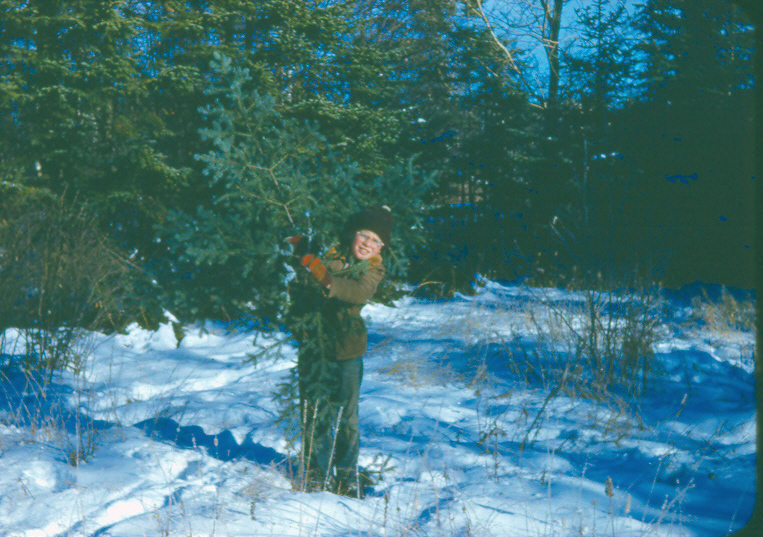
My birthday problem starts as a child. It was a ritual to put up our Christmas tree on my birthday, which I was expected to consider a gift. From about age ten the gift included the task of going into the woods, selecting the tree, cutting it down, and putting it in its stand. I am not claiming I had a bad childhood. I had a very good childhood, except every year on my birthday. The standard joke was to say that I was being allowed to open one Christmas present early. My mother loved standard jokes. She wore many a standard joke down to the nub, ground it to powder, and still repeated it. I am still not sure that it was always a joke. In any case, the wrapping on my present or presents was Christmas wrapping, a simple economic measure. My mother loved simple economic measures even more than she loved wearing out the same jokes each year.

A few days before Christmas (some unspecified number) is about as bad a time as there is to have a birthday. My granddaughter’s birthday is December 25. So far she has not felt slighted, but when she becomes a sulky teenager, that may change. But I think my date is worse because people, me especially, make a point of overdoing her birthday–in proper birthday wrapping.

My sister’s birthday is March 27, which happens also to be my wife’s birthday. Now think about it. Is there any better time for a girl to have a birthday, even though it may fall on or very near Easter? Think of all the spring clothes she can be given, or, as in my sister’s case, have made for her. So my sister’s birthday was a feast of presents. You know how those girls are—they consider clothing actual presents. Then on my nineteenth birthday, my sister further buried my birthday under familial distractions by getting married that day.

My childhood birthdays happened at a time when I had already received everything needed for the winter. It was also a time of the year of limited money in our family, as opposed to the spring when more money was at hand. We also had a seldom-seen and difficult grandmother who doted on my sister because my sister had been given her name. She would write on the letter with my sister’s presents how in the rush of Christmas she had simply forgotten my birthday.

Dickens, Of Course

Now, (nudge, nudge, wink, wink) I’m not carrying a grudge, especially against my sister, with whom I was as a child and teen extremely close and with whom I still have a close bond. It’s simply that I joined the parade years ago and decided to ignore my birthday too.

(Before I ask the question of the day, I do want to clarify that I would not swear to any of the above under oath. Not one word of it.)

What’s your favorite quote or scene from Dickens’ “A Christmas Carol”?

Inexplicable Particle Party

There will be an announcement from the scientists at the CERN super collider this morning having to do with particle physics and the search for the mysterious Higgs boson, which supposedly plays an important role in some theoretical explanation of the universe and why things have mass.

I made a token effort to read up on it and quickly came to the conclusion that this is something I will only understand if it is explained in terms so simple that the description completely undermines the complicated science that supports it. Please, put it in some nice words that interest me. If the universe is a hot fudge sundae, is the Higgs boson a piece of walnut, the cherry on top, or the bowl?

Maybe it will all make sense tomorrow, once the world’s best journalists have had a shot at interpreting this scientific press carnival. Or perhaps we should just prepare ourselves to be smothered by a tsunami of profound confusion.

One thing is for sure – there will be a lot of loose talk over the next 24 hours about the Higgs boson as a “God” particle, because God is something we already know how to argue about and misinterpret.

And if that’s not bad enough, some idiot will try to put the thing into a dopey poem.

They’ll bravely attempt it, in newspaper articles
Journalists writing about physics particles.
Laying it out with such logical text
that a monkey could read it and not be perplexed.

And on radio, too, they’ll attempt to explain it
so beautifully, singers will try to refrain it.
On TV they’ll make Mr. Higgs and his boson
As sexy as starlets without any clothes on.

But after the press conference, headlines and fizz
There will still be uncertainty as to what is
the meaning of whatever news comes to pass,
using words that take space and have weight, but no mass,

So beware the quick and the glib and the simple.
It’s more than a dot or a speck or a pimple.
There’s no single term for it that isn’t flawed
which is why it’s elusively named after God.

Name something that defies understanding.

The Great Oxidation

Having spent the weekend discussing places we’ve lived, let’s turn our attention now to places we may live some day in the distant future. Or, dear baboons, places where other restless creatures already live. Places they may be longing to leave.

Which brings us to Kepler 22b, the most recently discovered “Goldilocks” planet – a place orbiting a different star where the temperature is ‘not too cold’ and ‘not too hot’. Initial observations indicate conditions could be favorable for human-like life.
That is, if the planet has a surface.

Dang! When it comes to the nuts and bolts of existence, there’s always that complicated bit about needing a surface to sit on. Not to mention some of the other necessary valuables, like having to have water to drink, food to eat and air to breathe. Air is especially important.

In writing about the notion of a “Goldilocks” planet, Dennis Overbye of the NY Times identifies an event that had to happen before life as we know it on Earth could get its start – The Great Oxidation.

“The seeds for animal life were sown sometime in the dim past when some bacterium learned to use sunlight to split water molecules and produce oxygen and sugar — photosynthesis, in short. The results began to kick in 2.4 billion years ago when the amount of oxygen in the atmosphere began to rise dramatically.

The Great Oxidation Event, as it is called in geology, “was clearly the biggest event in the history of the biosphere,” said Dr. Ward from Washington. It culminated in what is known as the Cambrian explosion, about 550 million years ago, when multicellular creatures, that is to say, animals, appeared in sudden splendiferous profusion in the fossil record. We were off to the Darwinian races. Whatever happened to cause this flowering of species helped elevate Earth someplace special, say the Rare Earthers. Paleontologists argue about whether it could have been a spell of bad climate known as Snowball Earth, the breakup of a previous supercontinent, or something else.

Eventually though, Earth’s luck will run out. As the Sun ages it will get brighter, astronomers say, increasing the weathering and washing away of carbon dioxide. At the same time, as the interior of the Earth cools, volcanic activity will gradually subside, cutting off the replenishing of the greenhouse gas.

A billion years from now, Dr. Brownlee said, there will not be enough carbon dioxide left to support photosynthesis, that is to say, the oxygen we breathe.

And so much for us.

“Even Earth, wonderful and special as it is, will only have animal life for one billion years,” Dr. Brownlee said.”

Which all seems rather wonderful and dismal at the same time. Clearly the clock is running and as many science fiction writers have already suggested, it is high time we start looking for another place to be before Earth becomes uninhabitable. Is Kepler 22b it? And in this time of ritual celebration, why is it that the major religions have traditional festivals that inspire and create a sense of wonder, while science offers us nothing except another episode of “MythBusters“?

Perhaps scientists should develop something celebretory that can spark the imagination of the unfaithful.

What would be one of the features of a festival built around “The Great Oxidation Event”? “Oxi-Claus?”

So Far Away

I stumbled across this article a few days ago and immediately recognized the idea as one that makes so much sense, I assumed it had already been done – a Carole King jukebox musical on Broadway. Apparently one is in the works, though the NY Post write up breathlessly describes a reading of the script that happened last May as it it were the most remarkable and recent development. Do things really happen that slowly in the world of musical theater? Well, a lot of Ms. King’s songs are thoughtful and unhurried. And it was a long summer.

If the show ever gets launched, let’s hope it includes this song.

Doesn’t anybody stay in one place anymore? Let’s look at it on the residence level. Where have you lived the longest?

Everything Old Is New Again

If you’re entranced by the latest cultural throwback, a completely silent black and white film called “The Artist,” then perhaps you are charmed enough to try out another very old thing that was recently discovered – the world’s most ancient mattress.

Mom-With-Too-Much-Time-On-Her-Hands Concept of a Prehistoric Bed

National Geographic says the find in South Africa is a squishy pad made out of compacted grasses and leafy plants, and is 77 thousand years old. That’s about how long it has been since I turned the mattress at home. In prehistoric times and today, bed maintenance isn’t one of those ‘top of mind’ tasks.

So how good a night’s sleep could you get on a bed of Jurassic Leaves? Personally, I wouldn’t expect much. For me, it’s all in the pillow, and National Geographic doesn’t mention that kind of accessory in this bedroom set. This is the bed you set on fire every so often just to get rid of the garbage and discourage pests. So not only did they not have ‘sleep numbers,’ they just plain didn’t have numbers. And it shows in their behavior. If you can’t count, there’s no such concept as ‘too much.’ And these ancient beds are large enough to accommodate the whole family – which is the sleeping preference of people for whom the concept of one or two to a bed “is unknown.”

I take news of a prehistoric, smelly, insect-ridden family bed as just one more piece of evidence that proves we modern people are hopelessly spoiled. Our obsession with creature comforts has made us weak and whiney, and if magically transported back 77 thousand years, we would probably die in less than 10 minutes. And why not? Anything would be better than eating a still-throbbing heart from the bloody remains of some recent kill and then trying to sleep in a leafy, buggy bed. Survival of the fittest, indeed! If THEY were so fit, why are we so Unfit? And how awful will our current beds seem to people 77 thousand years from now?

What do you need to have in order to fall asleep?

An Ode is Owed

No doubt the former Governor of the State of Illinois, sentenced to 14 years in jail yesterday, will soon be immortalized by the jailhouse poets. Oh, yes, there are many denizens of the gentler arts behind bars! Among them is the great P. Oswald Effinger the Third, a convicted and unrepentant repeat pedant, who has already offered a modest effort. P.O.E. III, as he is called, holds the title of Poet Incarcerate at Paul Powell Penitentiary in Pawnee, IL, which is one of only a handful of fully alliterative detention centers in the U.S.

A note from the poet: “The newly minted inmate will find a warm welcome in jail. I predict people will want to call out his name from their cells because it is such a treat to say, and so it will echo up and down the halls of the penitentiary. I believe his name is a marvel. With four full syllables, it permits full expression and can be spoken in such a way to match any human emotion. On paper, the name looks like a mess. It is a pure deception. The name wants to be rhymed, needs to be rhymed, begs and pleads to be rhymed. What I have given you, then, is a poem that some may call an abomination, but I assure you, all the couplets are completely consensual.

    Now it is Christmas, so be of good cheer!
    All the townsfolk will gather their families near.
    With their hearts full of kindness and mercy and joy, of which
    not very much will be shared with Blagojevich.

    He had been rather great for a very short while
    Like his hair he impressed us with volume and style.
    He was boastful and brusque. You could not call him coy. And which
    laws he’d obey was known just to Blagojevich.

    He was caught on tape saying “I’ve got it … this thing.”
    “And it’s golden,” he said, clearly thinking, ka-ching!
    Illinois is a state that grows corn stalks and soy. A switch
    isn’t too likely. Just ask Rod Blagojevich.

    In the prison they’ll cut off his iconic locks.
    there’s enough there to weave into ten pairs of socks.
    Though to wear them is something you wouldn’t enjoy. An itch
    needs to be scratched if that itch is Blagojevich!

How important is it to have an impressive head of hair?