Road Worrier

Kudos to everyone who responded to the pitch for guest posts yesterday. I’ve been hearing from people during the past few weeks with generous offers of surplus posts to give me some extra time to adjust to my new job and some extra projects that are chewing up the afternoon and evening hours. Bless you!

One offering that came in yesterday was so good, the moment I read it I knew I wanted to post it today! Many thanks to today’s substitute host, Steve.

The car of my youth was a 1947 Cadillac. It was a queer choice of automobile for my family, being both impractical and costly to maintain. But my dad got the Caddie at a low price because of a series of events that are complicated and ultimately tragic, so I won’t go into them now. And although Dad was no car snob, this car appealed to the child in him.
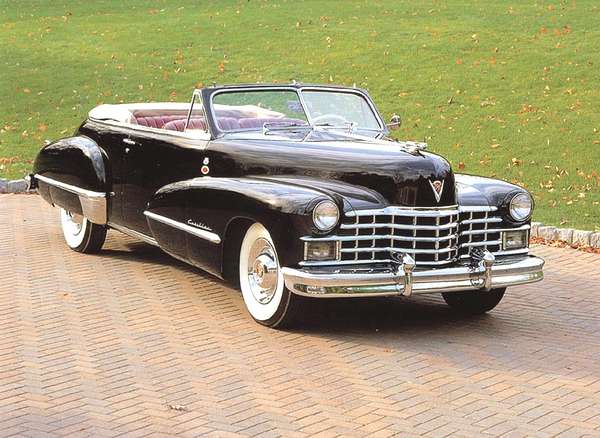
He was delighted to find, for example, that the Caddie didn’t have a hood release in front or a gasoline filler cap in the rear. Dad would pull into a gas station and just grin while the attendant walked around and around trying to figure out how to get the hood up or the gas in.
The trick for lifting the hood was to push up on the hood ornament, which was a stylized woman with wings. When the Caddie was new we had to whack the “Ladybird” ornament pretty hard, and in later years we had to give the Ladybird one hell of a clout on her chin. Dad found that funny, too. To put gas in, the gas station attendant (I know that dates me) had to lift the right taillight assembly to uncover the filler cap hidden underneath.

1947 must have been the first year Cadillac began experimenting with hydraulics. The transmission was a very early and buggy hydraulic system. Our windows were hydraulic, but finicky, so once you put the windows down they were going to stay there for months until the next mechanical overhaul. Worse, the convertible mechanism itself was hydraulic and unreliable. Putting the top down was foolish, for the chances were more than even that it wouldn’t go back up. And then there was that night we went to the Ranch Drive-In Theater and decided to put the top down. The top lurched into the night sky until it was pointed straight up, and then it refused to move an inch either way. The outraged honking of all the cars behind us is something I’ll never forget.

The ’47 Caddie became my car to drive on short hunting and fishing trips around Ames when I got my driver’s license. And by that time the Caddie had a new trick. The engine would shut down after 16 or 17 minutes of driving. Since my dad sometimes drove the Caddie 8 minutes to his office, he refused to believe my stories of engine trouble. I complained a whole year before he tried to drive it 16 minutes and learned I had been right.

The Caddie engine shut down one lovely May day when I was out with buddies Nick and Mike. We couldn’t get it going again, and we were out in the country where I couldn’t call for help. But there was a farm house right up the hill, so we climbed that and knocked on the door.
I almost lost my voice when the door opened. There about five young men in that farm house, all looking like the most lethal biker gang on earth, with tattoos, naked chests, bizarre hair styles and black leather. These guys looked meaner than the mutant hillbillies of “Deliverance” on a bad hair day. I wanted to run away, but I had just knocked on their door. I quaked out my request for help, and this bunch of psychopaths agreed to give me a push.

You might be thinking: but you can’t push a car with an automatic transmission. Indeed, that is what everyone said. But I had just read an article in a paper that said if you got the distressed car above 47 miles an hour and dropped the tranny lever into D, she might fire up.
We got in the Caddy and the gang of escaped convicts got in some kind of hopped up truck and began pushing us. Has anyone driven country roads in Iowa? They are all covered with limestone gravel, which makes a good road unless you get up speed or try to turn left or right, at which point the gravel rolls under your tires like ball bearings. And we were on a serpentine road next to the Skunk River.

By the time we were up to 40 mph the bumpers of the two cars were sawing back and forth wildly and we were drifting from one road edge to the other, inches from disaster. When we got to 50 I dropped the transmission into gear, but nothing happened. Then I realized I hadn’t explained a “Plan B” to these leather-clad father rapers. They were still on Plan A, and their only thought was to keep pushing me faster and faster. Now the old Caddie was slewing madly from one curve to another, throwing gravel way out past the ditches. I was past thinking about starting the Caddie, for it was all I could handle to keep that old beast from drifting into a ditch. Somewhere near 60 mph the engine kicked in, and then I had to floor it to let my friendly sociopathic Good Samaritans understand that I was on my own power.

Did you ever drive a car with a quirky personality?
Literature and Chickens

Today is the birthday of the writer E.B. White in 1899. The E. stood for Elwyn, which White said he “never liked”.

“My mother just hung it on me because she’d run out of names. I was her sixth child.”

I guess it didn’t take long to get to “Elwyn” during the last summer of the 19th century. Just one of the ways in which things have changed.

White wrote for the New Yorker Magazine and celebrated the city in prose, but he and his wife Katherine were also drawn to the countryside. They bought a farmhouse in rural Maine and lived there in the company of animals from 1938 on.

Observing nature gave him inspiration for plenty of wonderful work, including “Charlotte’s Web”, a classic tale about a philosophical spider and a fabulous pig.

Here’s an E.B. White quote:

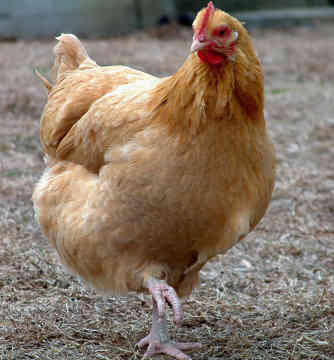
“I don’t know which is more discouraging, literature or chickens.”

There’s a lot of the human/animal struggle in White’s writing, including this letter to a friend.

My poultry operations have expanded considerably since you were here: I have a large laying house with a flock of would-be layers that turned and bit me in mid season. It was the most stinging defeat of my life, for I put a good deal of my energy into the project, raised the birds by hand from infancy, ranged them on green range, groomed them for the battle, designed and built the house, and saw them go into production in early September looking like a million dollars and shelling out in great shape. All of a sudden some little thing went wrong and they began to come apart, the way pullets do when the vitamins don’t add up right, or when a couple of them get going to the bathroom too often. From forty dozen eggs a week I slid off to about fourteen dozen, and cannibalism began taking its ugly toll. Ah welladay! A man learns a lot in a year, if he hangs around animals.

I have to wonder how E.B. White would feel about all the action these days around the issue of keeping chickens in the city.

He wrote about everything, from poultry to polling. Nothing is off-limits to a talented observer.

“The so-called science of poll-taking is not a science at all but mere necromancy. People are unpredictable by nature, and although you can take a nation’s pulse, you can’t be sure that the nation hasn’t just run up a flight of stairs, and although you can take a nation’s blood pressure, you can’t be sure that if you came back in twenty minutes you’d get the same reading. This is a damn fine thing.”

Chickens and people – he seemed to have an affinity for unmanageable things.

Though he died in 1985, E.B. White remains an inspiration to writers everywhere, thanks to his books, poems and a slim but powerful guide, “The Elements of Style.”

If E.B. White gives you a hankering to write, I’d be happy to put you on the list for a guest blog appearance! I’m hoping to take next week off, so drop a line to connelly.dale@gmail.com.

What are some of your feelings about chickens?

Summer Bummer

I’m embarrassed to admit it – I had forgotten all about perennial sophomore Bubby Spamden until a surprise e-mail showed up late last night!

Hey Mr. C.,

How’s your summer?

Mine started out cool because I haven’t been able to find a job (again). And that means long days at home in the basement, playing video games with my buddies Skeeter and Doug until we can’t stand it, which means we play for a very very long time.

My folks complain and roll their eyes and say we’re wasting our brains, but I think it’s really a good thing to play video games non-stop. Our hand-eye coordination gets to be super good, and we learn to cooperate or at least not kill each other, which we don’t, mostly.

I mean we do, but only on the screen.

Anyway, they say we’re getting dumb and violent. But have they looked at what’s been happening with our thumb strength? I’ll bet unemployed American teenagers have got the quickest and most muscular thumbs in the world, by far.

Kids with strong thumbs are important in history. There was that Dutch kid who used his to plug a hole in the dike. And don’t forget Little Jack Horner! If not for his thumb, that Christmas Pie would still be all full of plums!

And what about in modern times? Today, thumbs are what you use for texting. And texting is communication. And communication is survival!

What if I saw a logging truck rolling out of control down a steep mountain, and the only way to stop it in time was to text for help? Somebody your age would take forever to send that message, but I could do it in seconds! So maybe playing video games all the time is the best thing we could be doing. Our thumbs could save the world. You never know!

Anyway, that’s not why I wrote.

I wrote because my cool summer has turned awful, and I blame the Governor of Minnesota and those legislative leaders. What a bunch of goofballs! Just because they didn’t get their work done, tens of thousands of state workers stayed home this week.

Do you know what that means? Hundreds of thousands of state workers’ kids now suddenly have to deal with mom or dad or BOTH hanging around all day, saying fun-killing stuff like “why don’t you clean your room?” and “You cook the dinner tonight” and calling down the stairs with rude, disrespectful comments, like “Time to mow the lawn!” and “Get outside and take a walk for God’s sake!”

This is ruining summer. I’m serious! If I have to go outside, do you know what kind of trouble I’ll get into? Me neither! It’s scary.

Please, I’m begging Governor Macy’s and all those taxophobic legislators – get your work done so Minnesota’s teenagers can get furloughed parents out of their hair and back to work!

I’ll pay you to settle it up. Seriously. I’ve got access to lots of cash ever since my folks stopped trusting banks and began stashing their savings in the dresser drawer. Piles of money – all yours to balance the budget. And you don’t have to call it a tax. How about a “Delinquency Suppression Fee”.

Your pal,
Bubby

I’m worried that Bubby is willing to steal money out of his parents’ dresser drawer to help fund state government, and that he doesn’t know the name of the department store that gave the Governor his millionaire status. Difficult times can drive desperate people to say confusing things that they don’t really mean.

What was your worst summer vacation ever?

Charges Dropped Against Charging Bear

The unfortunate encounter between two Yellowstone National Park hikers who “did everything right” and a grizzly bear who was just “protecting her cubs” ended in the death of one of the hikers. That’s sad. But the Park Service is probably right in its decision to not destroy the bear in question, since its behavior marks the attack as defensive.

Officials called it a ‘one in three million’ occurrence. Literally. It turns out that 3.6 million people visit Yellowstone each year, so let’s hope this is the only one. The Christian Science Monitor pointed out that bear population numbers and the number of park visitors are both on the upswing. Unexpected meetings are bound to increase. Two people were killed by bears near Yellowstone last year.

How can we adapt to defuse these dangerous situations?

The married couple spotted the bear and her cubs and retreated. They turned their backs on the animals and continued down the path the way they had come. When they checked to see the bears reaction, she was already charging them.

Clearly the hikers’ actions in this case were not enough to get the bear to see that they intended no threat. What part of “backing down the trail” don’t you understand? All of it, I suppose. Wild grizzlies just aren’t attuned to the signals we send. I think I would have done exactly the same thing as these two hikers did, probably with the same results.

The man who was killed told his wife to run when the bear charged them, but park rangers say it was her decision to play dead that probably saved her life. The bear attacked the man first, inflicted the fatal wounds, then turned its attention to the woman, picking her up by her backpack before dropping her and leaving.

She must have done a convincing job, though I can only imagine being crazy with fear in that situation. How does a person stay still and limp while being picked up by a grizzly? But with a bear that’s able to run 35 miles per hour, this may be the only reasonable reaction to a defensive attack.

And yet playing dead is not a natural behavior for humans, nor is it something we teach in our schools. Too bad. There’s another important skill that has been sacrificed to our obsession with reading and math.

Still, as Tim Pawlenty would tell us, if you can find it on Google then the government doesn’t need to do it. And wouldn’t you know – there is a small but earnest “how to play dead” industry online.

The best advice I’ve seen so far has to do with breathing – you should do it, but not too much. Also:

* When people die, they do not always have tongue sticking out one corner of their mouth. Try to avoid it.

* Do not smile, even if the people around you are laughing and saying stupid things.

Yes, smiling is a dead giveaway for any ‘playing dead’ player. We all know the dead have nothing to grin about, and do not generally ‘get’ punch lines, even obvious ones.

Perhaps we will, through brutal experience, develop this survival strategy until we are on par with the wily possum. But how many millions of years will it take before evolution gives us a grizzly who will charge you, pick you up and drop you, then tell a good one-liner, just to make sure?


Do you know a joke that’s guaranteed to get a laugh?

In Dublin’s Fair City

… Where girls are so pretty,
I first set my eyes on sweet Molly Malone!

So goes a famous old Irish song, done here on You Tube by The Dubliners.

I thought of this song when I read yesterday that the spread of Zebra Mussels across Lake Minnetonka appears to be steady and unstoppable. Infestation is probably inevitable, though there have been efforts to slow the advance of this invasive species by encouraging boat owners to drain, clean and dry their boats before moving from affected waters to clean ones.

Ah, well.

At least when Minnetonka’s docks and shores are completely encrusted with sharp shells, we can sing to our new overlords about their relentless advance.

I love to go boating,
A-drifting and floating,
On summertime days in the suburbs out west.
The lakes get quite rowdy.
They’re frothy and crowdy.
With Zebra Striped Mussels, Alive, Alive-O!

Alive, Alive-O! Alive, Alive-O!
They’ve got Zebra Striped Mussels, Alive, Alive-O!

On Lake Minnetonka,
They drop so much stray junk ya
can’t even see water beneath the debris.
The piles are fantastic
They’re discarded plastic
And Zebra Striped Mussels, Alive, Alive-O!

Alive, alive-O! Alive, Alive-O!
They’ve got Zebra Striped Mussels, Alive, Alive-O!

So thanks to the sportsmen,
The starboard-and-portsmen,
Who go lake-to-lake with their vessels un-drained.
They’re spreading and trading,
Wholesale propagating
Those Zebra Striped Mussels, Alive, Alive-O!

Alive, alive-O! Alive, Alive-O!
They’ve got Zebra Striped Mussels, Alive, Alive-O!

Do you pick up hitchhikers?

Ask Dr. Babooner

Dear Dr. Babooner,

Show trials really turn me on.

I feel horrible about it because the court cases I like the most always revolve around tawdry acts supposedly committed by selfish, despicable people who display no remorse. When one of these trials comes along, I totally immerse myself in the case. I read everything and watch live coverage on TV. I think about it constantly and can talk about it non-stop. Normal people cannot be around me until the jury rules and the case is over. I become intolerable.

My wife says this is typical behavior for a miserable, self-loathing creature with an insatiable hunger to feel better about himself. My fascination with accused wrongdoers is, she says, a coping mechanism. By pickling my brain in the sour brine that overflows from the jars of an endless string of black-hearted individuals, I am trying to convince myself that I am, by comparison, fairly normal.

I tell her that I am passionate about justice, and thoughtlessly spouting all this amateur psychology makes her look dumb. I may not be a perfect person, but I am far from being obsessed with my own shortcomings. I do, however, feel that wrongdoers should be thoroughly and mercilessly punished.

That’s why, when I believe a person is guilty and a jury lets them go in spite of the evidence, I fall into a terribly deep funk until some measure of payment is exacted. After the Casey Anthony verdict yesterday, I forced myself to sit in an ice-filled bathtub until my toes turned blue.

But that’s not the worst of it. For a year after O.J. Simpson was acquitted, I lined my underwear with crushed glass and went barefoot every day.

“More evidence of a bizarrely twisted self image,” my wife said.

“Just trying to restore some balance to the world.” was my answer. But I understand why my wife would find me to be a human smash-up, terribly moody and impossible to live with.

Oddly, she says I’m not so bad.

Dr. Babooner, why is she lying to me?

Sincerely,
Unworthy.

I told Unworthy that it is pointless to beat yourself up just because somebody else thinks you’re self-loathing. So what if you are? I don’t think that reflects negatively on you! A lot of decent people are overly critical of themselves. By constantly telling yourself you are a black-hearted wretch who deserves to suffer Hell on Earth, you demonstrate a strong preference that the world should be better than it is. Your self-directed pessimism is a sign of outward optimism. Stand up and be proud of your inwardly directed hatred!

But that’s just one opinion. What do YOU think, Dr. Babooner?

Greatest Show on Earth

Today is the birthday of the American showman and promoter, P.T. Barnum, in 1810.

Barnum had a genius for marketing anything people were willing to gawk at, whether it was a blind old woman, a dwarf, an elephant, a monkey head sewn to the tail of a fish, or a Swedish soprano.

Part of Barnum’s gift was to recognize that people need a story and a powerful name to spark their interest. Thus the blind old woman was amplified to majestic proportions, and in Barnum’s world was presented as not just an old woman, but George Washington’s former nurse. To make the math work, her age was said to be 161 years.

The dwarf was also age enhanced, transformed by Barnum from a 5 year old to an 11 year old, and re-named “General Tom Thumb”. Though he was actually from Connecticut, Barnum advertised him as being brought from overseas “at great expense.”

The elephant was dubbed “Jumbo” and actually was brought from overseas at great expense, and proved to be a huge moneymaker for Barnum, only to die tragically in a head on collision with a locomotive. The monkey/fish concoction was billed as “The Feejee Mermaid”, and soprano Jenny Lind won hearts as “The Swedish Nightingale”.

Barnum is said to have been an advocate of “humbug” as a useful tool for promoting various acts, meaning it’s OK to exaggerate and tell outright lies if the public gets its money’s worth and enjoys the show.

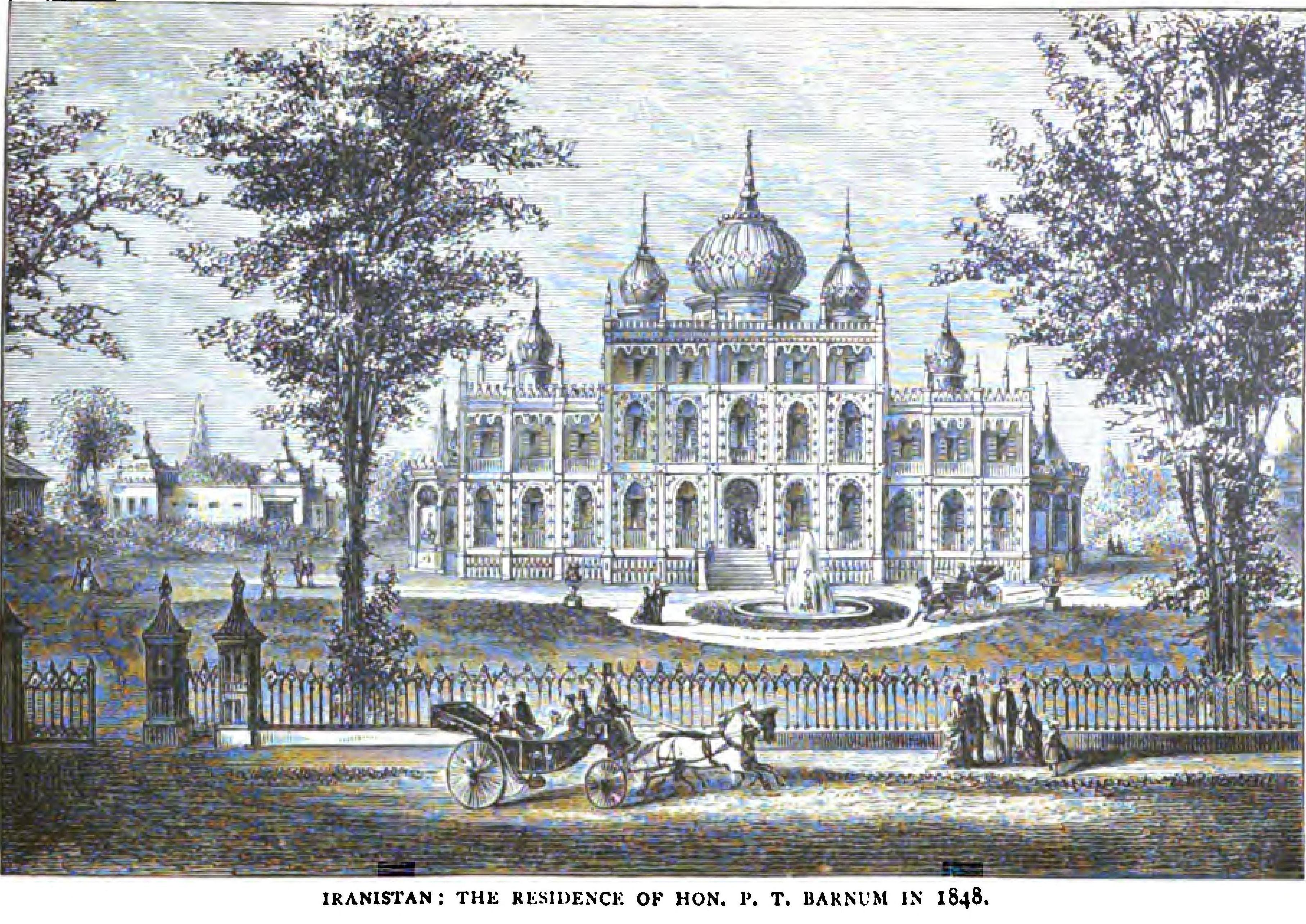
He made a lot of money and did extravagant things with it, including building a palace in Bridgeport, a Xanadu he named “Iranistan” (really!). Jenny Lind claimed that seeing an image of Iranistan is what made her want to come to America to be put on display by Barnum – his success was evident from the majesty of his home.
Never mind that Iranistan burned to the ground 9 years after he built it.

Barnum would feel right at home in the world of 2011, and would thrive online, a vast kingdom made up almost entirely of humbug. In fact, everything I know about P.T. Barnum came directly from Wikipedia. How much is true? Who cares?

Does the world need promoters?

Taking the Long Way

Happy Independence Day!

To celebrate freedom by staying home from work on a Monday must feel especially sweet, unless you happen to be an employee of the State of Minnesota. In that case, the open ended-ness of your long weekend would tend to put a damper on those feelings of jubilation. Trust me on that.

Personally, I’m reporting for work today without complaint, because I have to, and because it’s delightful to have a job.

And so we will observe the day with picnics, parades and fireworks, though some might choose to celebrate with a woodworking project.

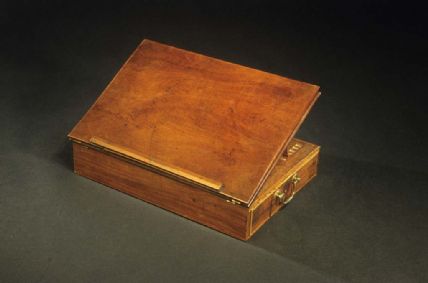
Here’s an artifact that is, without a doubt, an object of great significance. Thomas Jefferson drafted the Declaration of Independence on this lap desk of his own design. A compact and tidy thing, it folds out to present a felt covered workspace that sits at a comfortable angle for writing.

And yes, you have to do your scribbling longhand. There’s no keyboard, kiddies.

But it IS portable. Jefferson was a visionary, and somehow he could see that we would want to be able to plop down and put our thoughts to parchment anyplace, anytime. You can store your writing implements in the handy divided slide-out drawer. And it locks, so people can’t steal your ideas when you drift up to the counter for another caramel macchiato grande latte.

The Thomas Jefferson lap desk appears simple enough to be a basement project for the at-home craftsman, and some have tried. I can only guess that the various moving parts, tight fitting drawer and old-world corner joints defeated a few amateurs along the way. Just like writing the Declaration itself, the creation of an enduring piece of art is a lot harder than it looks.

One of the greatest things about America is that somebody else is ready to sell you that thing you can’t make for yourself – and there’s a price range so you have a chance to find one that suits your budget.

You can pay just over $1,900 (with shipping) for a Jefferson Lap Desk, though you’d think at that lofty price point it might be more effective to deliver the whole package for $1,776. Others are available at $795 and $600, fountain pens not included.

Once the desk arrives, open it up and conceive a nation (in liberty). Feel free to start over as often as you like. As long as you’re creating some founding documents, try to include a few words of advice for future leaders in regard to the whole notion of a debt ceiling.

If you’re like me, you’ll have to figure in the ancillary costs of dribbling ink on your good shirt.

When do you take the time to write it out longhand?

What Government?

Good discussion on Friday about admiring those you don’t agree with. Thanks to Clyde for the thoughtful guest post, and for bringing up Jon Hassler, whose writing provides a comfortable place for so many readers.

And so far, so good on the state government shutdown.

At least as far as my personal comfort is concerned, and what else matters? I’ve already got money, food and good health. Why should I worry about suddenly absent services that only other people need, especially if they’re people I don’t know and can’t see?

A friend forwarded a video for those who adhere to the old Ronald Reagan saying –
“Government is not the solution to our problems, government IS the problem.”

I can’t deny that government is sometimes inefficient and bureaucratic. But unnecessary?
It’s handy to have someone or something to blame for all the problems you see. But you may not want to wish it away entirely.

http://youtu.be/saWCZVggQAs

Where is the most lawless, unregulated place you’ve visited?

Mutual Admiration/Opposition Society

Today’s guest post comes from Clyde.

I am a devoted re-reader of the 1974 book Staggerford by the Minnesota writer Jon Hassler.

I admire the honest but still satirical image of the professional life of a secondary English teacher, which Mr. Hassler once was. It has a delightfully real and satirically-portrayed faculty party and faculty meeting. Also, equally honest is the portrayal of the sad lives some students are forced to endure. As a lucky side-light for me, I have met the teachers who were the models for two of the characters in the book. He got them exactly right.

But when I re-read it every two years or so, I more and more admire the character Agatha McGee, the main character’s land lady. Miss McGee is old-fashioned and conservative, in the true sense of the term of one who does not want things to change, ever. She is a devout Catholic who still uses her ancient Latin Missal. When she passes the peace in church, a modernism she resents, she says “Pax.” She is a sixth-grade Catholic school teacher who dresses and runs her classroom the way teachers did in the 1920’s. She is dark and broods over rain, sin, and the moral laxity of modern poetry. She later becomes the main character in two subsequent books which have never quite worked for me.

As a dedicated change agent in education, and one open to modern adaptations in religion, I should dislike her. But instead I am drawn to her and the clarity and wit of Hassler’s descriptions of her. I suspect he feels a similar contradiction in his attitude towards her. It is the strength of her convictions, her underlying humanity, and her take-charge-in-a-leadership-vacuum ability which so strongly affect me.

I hope I am a better liberal, well, moderate liberal, for having met her.

When have you come to respect, admire, or even love someone, real or fictional, whose opinions or attitudes contradict your own?