Bears!

Here’s a message that came in early this morning from our text-crazy friend in the woods, Bart the Bear. I think he was up all night, picking at the keys, trying to make up for his lack of thumbs.

Bart - The Bear Who Found a Cell Phone

Hey. Bart here.

Some campers were up here yesterday and I got kind of excited because they were talking about getting blackberries out of their backpacks.

“I can’t live without my blackberry,” one said.

“Me neither,” said the other one. “I’ve got it in my hand, like, all the time.”

I’m thinking these are my type of guys. I can’t live without blackberries either.

But then the first one said “My wife yells at me and says I can’t play with my blackberry at the table.”

Honest, it didn’t sound like these guys even KNEW that blackberries are food. And lookin’ at ‘em and playin’ with ‘em? They’re pretty, I admit, but geez! And what use is just one? You confuse me. How did you humans get to be so … everywhere … if you don’t know the difference between what’s good to eat … and toys?

Anyway, I almost charged in there and ripped open the backpacks myself, but I figured it wasn’t worth it for just two bites. When I have blackberries, I eat bunches.

Then they got to talking about other stuff I don’t care about, but my ears perked up when one said “this drop is gonna put us in a bear market.”

A bear market is a really interesting idea to me. Is that a market where you buy bears, or a place where bears go to buy the stuff that they like? I’d like it to be the second type, of course.

The other guys says “Put us in a bear market?
We’re already IN a bear market.”

Then the first guy answers with “It’ll be a SUPER bear market. A bear-a-palooza market!”

I started drooling ‘cause that sounds awesome. I can think of all sorts of things I’d like to get at a bear market, especially if I don’t have to pay. And I don’t, usually. I just take the stuff that looks good to me – as much as I can carry – and I come back for more, later. Unless the ranger shows up.

That’s Bear Marketing 101.

Anyway, I know lots of other bears – polars, grizzlies, koalas, black bears, brown bears and wooly bears too. If there’s someplace you guys are hiding from us every body calls a bear market, especially a SUPER bear market, let me know. I thought I heard them mention where it is, but I can’t remember if it was by a wall or near a street. One of those. Anyway, send me a map. I’ll organize a buying trip and we’ll give ‘em a day of commerce at the bear market like they’ll never forget!

And we’ll bring a picnic!

Are you the type of person who panics?
A Little Place in the Country

Many thanks to Steve for two guest blogs last week. We’re in a guest blog free-fire zone. No need to ask – just send one whenever you have an idea! connelly.dale@gmail.com

On this day in 1815, Napoleon Bonaparte set sail for the Island of St. Helena in the south Atlantic, his second exile. They had already tried to put him on ice at Elba, but he didn’t stay.

Don’t get the wrong idea. I really don’t know anything about Napoleon, except that led the French when they were successful at war, that he was short, he liked to tuck a hand into his vest, and he married Josephine.

http://www.flickr.com/photos/nutmegdesigns/

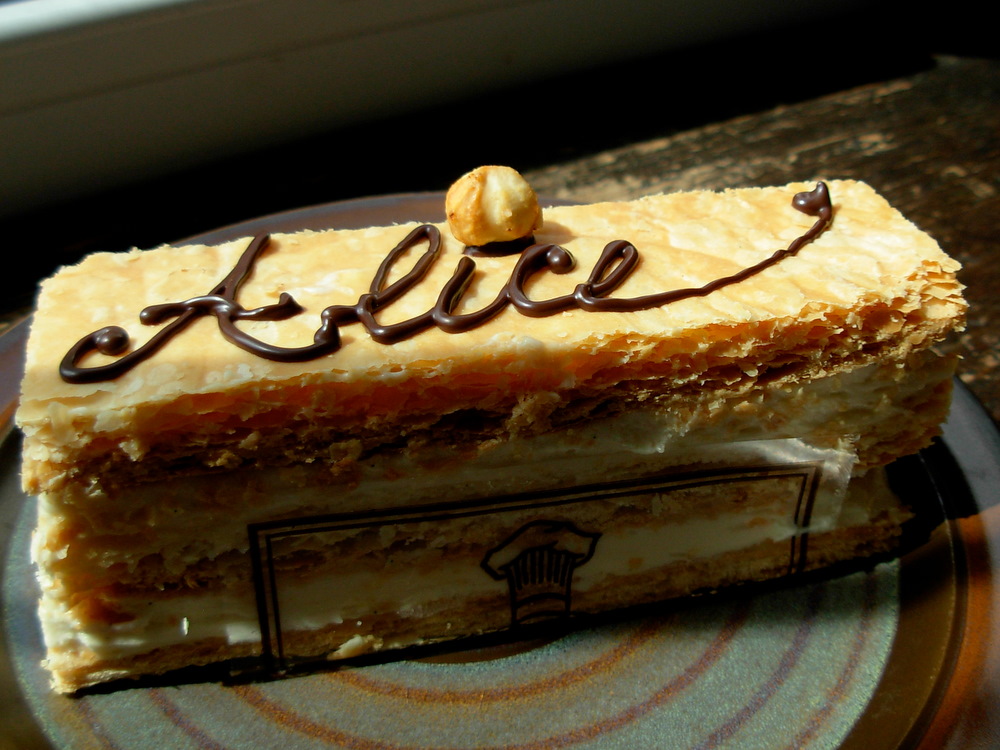
Oh, and he has a lovely pastry named for him. Although this one wants to be called Alice. And why not? Alice is a friendly name, and being served a dessert named Alice is not an instant reminder that you are a zero when it comes to French History.

It is pitiful to be so clueless and I would blame the American education system except that I have been out of it a long time. Several of my beloved teachers are long dead and at any rate they can’t be held responsible for my ignorance anymore. I have had plenty of opportunities to complete my education, but decided to watch TV instead.

So no historical facts or meaningful observations come to mind when I think of Napoleon’s final exile, but I have been able to come up with two songs.

This one by Mary Black is very specifically about St. Helena.

And this one, named for the battle that sent Napoleon into his final exile.

If I had appeared on television in any of those outfits, I would want to go away for a while too. But the thought of total exile seems quaint today. Where is exile, exactly? And what is it? Can our compulsively interconnected world even imagine it?

And is there a place on the globe where they haven’t heard of Abba? Anywhere?

You are responsible for punishing a military mastermind so threatening he can’t be allowed to raise another army. Prison would be a dangerous place – too many impressionable minds waiting for a leader. And dropping him on a barren island somewhere? That’s just a reality show waiting to happen. His influence would grow!

Construct some sort of exile to keep him in check.

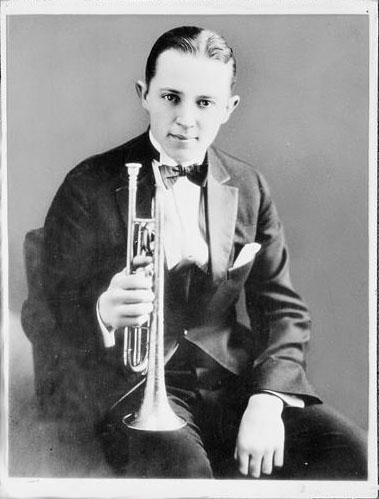
Bix, R.I.P.

Today’s guest blog is by Steve Grooms

The first days of August in 1931 were so hot in New York City that people couldn’t sleep. The residents of a large apartment building in Queens had the additional problem that the man in room 1G was out of control, getting up at all hours to pound out bizarre melodies on his piano. On the evening of August 6, the musician went crazy, hallucinating that Mexicans with knives were lying under his bed. He suddenly pitched forward and fell dead. Bix Beiderbecke was only 28 years old.

The cause of death was listed as pneumonia, but that was probably a fiction to comfort Bix’s parents. Most scholars think he died of a seizure suffered during an attack of the “DTs.” Simply put, Bix had finally killed himself with Prohibition bootleg booze. Bix’s health also suffered because of the heavy work schedule of jazz artists. I could make the case that Bix was crushed to death by the conflict of high and low culture. Others have concluded that Bix died of humiliation. In the words of his friend Eddie Condon, “Bix died of everything.”

The body was shipped back to Davenport, Iowa, for a quiet burial. The family was ashamed of their alcoholic son. Even the jazz world failed to note the passing of the cornet player who was one of the giants of jazz’s formative years. Bix lay in obscurity for decades until later commentators rediscovered his work and created a new identity for him as jazz’s first “dead saint” and romantic cult figure.

Now, almost century after Bix’s tragically brief career, historians can’t agree about almost anything about his life. Battles are fought over his name, his sexual orientation, what made his music distinct, his musical legacy, why he died and many other issues. We know almost every movement he made in his short life, and yet Bix will forever be a mysterious figure wreathed in contradictions and conundrums.

What we know for sure is that Bix was a musical genius, born with perfect pitch and an almost mystical ability to think creatively during his solo improvisations. When he was a toddler he would stand below the piano, his arms stretched up to play keys he could not see. He acquired a cornet and taught himself to play it, and one consequence was that Bix learned strange fingering for producing some notes. His idiosyncratic fingering might account for the pure, sweet tone everyone tried in vain to imitate. A friend said the notes coming from Bix’s horn were as pretty as the “sound of a girl saying yes.”

While many early jazz players liked silly effects, such as barnyard noises, Bix was a purist who impressed audiences with the stunning creativity of his solos. In the early years of jazz, the cornet or the trumpet was the instrument that drove the group’s pace and presented the melody. The magic of Bix’s playing is his creative way of spraying pretty little notes in patterns that progress in a supremely logical and pleasing way. He proved that jazz tunes could be both hot and beautiful at the same time.

Bix came to the attention of the jazz world in 1924 when he was the boy wonder star in a band known as the Wolverines. He hit his peak in 1926 while playing in various groups. In 1927 he joined the most famous band of the era, the Paul Whiteman Orchestra. Already by 1927 Bix began seeing himself as a musical ghost, a pathetic creature stuck playing in a style that had become outdated.

What we have of Bix today is a pathetically small body of recordings made between 1924 and 1930 . . . just six years. In addition to his cornet work, Bix wrote and recorded some odd piano compositions. The surviving recordings are a tiny percentage of Bix’s musical output. It is hard for the modern ear to pick out Bix’s playing in the ensemble sound, and it is even more difficult to appreciate how radically superior his playing was when compared to other cornetists.

As someone who has studied Bix for twenty years, I can only urge others to take the effort to become familiar with this tormented, inebriated genius from the earliest years of jazz. The best way to meet Bix now is through a documentary film produced by Playboy entitled “Bix: Ain’t None of Them Play Like Him Yet.” The film, which is sometimes sold by Amazon.com, is in the Netflix system. Electronically remastered versions of his recordings continue to be issued almost every year.

His most famous recording is “Singing the Blues.” Bix’s horn comes in at the one-minute mark:

“I’m Coming Virginia” captures Bix’s reflective, poignant side. Again, Bix’s horn appears one minute into the recording:

Have you ever grieved the death of a celebrity you didn’t personally know?

The Crazy Uncle in My Attic

Today’s guest blog is by Steve Grooms

I spend a lot of time alone, except . . . (sigh) . . . I’m never really alone. More accurately, I am “alone with my thoughts,” and my thoughts are a noisy, jeering, vulgar and confusing partner. A slightly more pretentious way of putting this is to say I’m stuck at all times with “the voice of my interior monologue.”

Most of us, I believe, have a sort of voice in our head, a voice that we often ignore (which just encourages “him” to natter on more). I know the voice of my interior monologue—too well—but I have no sense of what this is like for anyone else. My fascination with that question led to this guest blog. I’m fascinated to find out what others will have to report on this issue.

Much of the time my interior monologue is just a quiet voice muttering in the darkness, with nobody paying attention. I might be totally unaware of the voice and then happen to notice that he is singing the Sesame Street song for the 403rd time in a row. He’s easily amused, my interior voice. I’ve noticed that he has a quirky obsession with unusual names. While the real “me” is concentrating on some frustrating task, my interior monologue might be chanting, like a stuck record, “Hayden Panetierre, Hayden Panetierre, Hayden Panetierre.”

At other times the voice of my internal monologue is an articulate and intriguing personality, a sort of splendid copy of me who has a similar range of interests and abilities. When I try to solve a problem, this voice pitches in and makes shrewd suggestions, like, “Why not whack this little dingus with that heavy wrench? Whadda you got to lose?” I know this sounds a wee bit schizophrenic, but I feel like “two heads are better than one,” and I appreciate it when my interior monologue does something constructive. Anything constructive. Because, just between you and me, on most days that voice is queer and undisciplined, a parrot with a disgusting vocabulary and a contentious disposition.

For example, the voice of my interior monologue often judges me, and he isn’t a generous judge. If I miss I throw a snowball at a tree and miss by a humiliating margin, my interior monologue groans and observes, “Sheesh! You couldn’t hit your butt with a frying pan.” If I am slow to perceive an obvious fact, he sneers, “Stevie Wonder coulda seen THAT!”

Part of the complication of being me is that I live with two codes of acceptable conversation, the polite “official” one and the vulgar voice of my interior monologue. I am not known for having a potty mouth, but that is because I usually can filter out the foul, blasphemous things my interior monologue is saying. But when I am sufficiently startled, the words that pop out of my mouth are his, not mine. If something unexpected and scary happens, I might whoop, “Christ on a crutch!” That isn’t me speaking! Heck, I don’t even know what he means by that!

It is strange having this voice in me, this voice I cannot escape. I once was playing racquetball when I tore the cartilage in my right knee. The knee made a clicking noise, locked and suddenly I was falling. “Oh my,” my interior monologue commented wryly before I hit the court floor, “your dancing days are done!” If I clobber my thumb with a hammer, my internal monologue usually informs me in a detached, ironical tone: “Geez, in ten seconds that’s gonna hurt big time!” Although he is me, he doesn’t seem to have much sympathy for me. Do you see how bizarre this is?

Once when I was hunting pheasants I walked nearly to the end of a line of cornstalks before turning to seek birds somewhere else. Spluttering with indignation, the voice of my internal monologue broke in to say, “What would that smartypants writer Steve Grooms have to say about this? That self-appointed ‘expert’ has written that you should always work out the cover to the very end.” Groaning, I went back to hunt the last 20 yards of corn. When a little rooster flushed from the end of the corn row, I managed to hit him. I didn’t need the smug voice of my interior monologue to tell me, “Told you so! Told you so!”

As I experience life, then, it is complicated. I have this voice in my head that I cannot evict, even though he doesn’t pay rent. He is part of me, part of the confusing, weird and goofy experience of my life. He virtually never shuts up and often says stuff I wish he wouldn’t. I have mostly gotten used to him although he is something like the crazy uncle who lives in my attic.

Do you live with a second voice chattering away in your head? What is that voice like?

Be Kind to Your Arts Volunteer

The Minnesota Fringe Festival begins this evening, and if you haven’t considered attending a few shows this time around, you should. Almost anything can happen on stage with one major exception – the show can’t last more than an hour. This is a major draw for theatergoers with active bladders, as well as those who want their entertainers to get to the point or at least get it over with.

One reason to be hesitant – the festival relies on the support of an army of volunteers who take tickets and run the stages while being informative, courteous and efficient. Another reason – I am one of those volunteers.

Given what we know about my memory (or at least what people tell me about my memory), “informative” can be a challenge, sometimes. Especially when there are 168 shows at 18 venues. Still, I stand by my off-the-cuff statement to one curious patron last year that the show “An Adult Evening of Shel Silverstein” did not include an actual appearance by Shel Silverstein. I totally guessed on that one because Silverstein is dead, and I turned out to be right in spite of the strength of Fringe shows that feature zombies. “Courteous” is a strength area – I’m fairly certain I do OK on that one. “Efficient”? I admit I’m a work in progress.

Here’s my dirty little secret: though I have been in the employment pool for over 35 years, I have never had a paying job that required the physical handling of money. There are no burger joints in my background, no movie theaters, no coffee shops – in fact, there are no cash boxes anywhere in my resume. Also, I am a uni-tasker. I do one job at a time and I try to do it carefully, even if that’s not the fastest way to move the line (and it never is). You could say I’m retail – impaired.

This is a significant, self-inflicted handicap. In the crush time before a show starts, Fringe volunteers need to quickly decipher and make note of each type of admission various patrons will present, including the “all show” Ultra Pass, the 10 Show Pass, the 5 Show Pass, the Kid’s 5 show pass, and single show admissions. They must keep track of discount admissions (senior, student or MPR member), and if the patron cannot produce a Fringe button, the volunteer must explain that one is needed along with the ticket. It’s a one-time purchase ($4) but an every-show requirement, and if you forgot it on the kitchen counter you will have to buy a new one. And volunteers must be firm if anyone attempts to enter the theater after the doors have closed. All Fringe shows begin on time and there is no late seating.

Did I mention that I freeze up in a confrontation? Not total paralysis, but there might be long pauses, stammering, sad eyes and some gulping – more than enough to dull my persuasive powers. I’ve learned that people will not cede an argument out of pity.

Fortunately, Minnesota Fringe volunteering is the perfect entry-level experience for someone with my unique collection of shortcomings. The audiences are polite art lovers who have a high tolerance of ambiguity. They come to the festival predisposed towards forgiveness, whether they are being patient with an artist who thought he could build an entire monolog around his cat’s tumor, or a volunteer who can’t add. It is a rare and beautiful quality for an audience to possess an open and adventurous spirit. People at the Fringe expect to have their expectations challenged.

Note to one of last year’s customers: The blank look, the fumbling around in the cash box and all the finger-counting that accompanied the process of my making change for your fifty dollar bill was not, as you may have thought, incompetence. I was presenting a tiny drama about the value of paper money when offered in exchange for the fruits of a creative mind. Question: Can anyone truly “buy” an idea?

I hope I gave you something to think about, and I encourage you come back. I’ll be at the same place wearing this year’s volunteer shirt. My new show asks if it’s really possible to “control” a crowd.

If you had to create a piece of solo performance art, what would it be about?

Oldie But Goodie

Today is Tony Bennett’s birthday! He’s 85, and he has a new album – more duets with people 1/4th his age.

In celebration of longevity and recycling proven material, two things Tony is known for, I offer a reprise of a blog entry from long ago, when Tony was a spry 83!

Dr. Larry Kyle of Genway, the supemarket for genetically engineered foods, has announced a repeat of his Bennett birthday special!

While other old bananas turn brown and quietly liquefy, the Bennett Forever Banana stays a vivid, tasty yellow with firm, flavorful flesh! Just when you think it’s as good as it can get, it gets a little bit better! That’s a remarkable advance in fruit preservation, all thanks to a little bit of Tony’s DNA, which he graciously contributed one night by putting his hand on a pen I gave him to sign a concert program.

In fact, these Bennet Forever Bananas are SO GOOD, I’m still offering some of the bunches I put on sale two years ago. They’re as fresh and yellow as a taxi in a car wash!

Look for Genway to use the magic of Bennett DNA on a whole line of fruits and vegetables that will benefit from extended shelf life. Lettuce, grapes, strawberries, asparagus, broccoli … even Tony Tomatoes and Bennett Beets will amaze and delight you long past the time you thought they’d be compost.

It’s a brand new day for the produce section. Find these beauties under the Bennett Forever Banana banner and pick up a banana hat for yourself or the kids! It’s not an actual hat, but rather, a new way of carrying a bunch of bananas (pictured) that I think has great potential to be a fashion trend for the rest of the recession! Carmen Miranda on a budget! That’s the kind of innovation you expect from Genway, the supermarket for genetically engineered foods!

Do you eat food that’s past its “best by” date?

Roughing It

It has been almost one month since we heard from perennial sophomore and chronic underachiever Bubby Spamden. I started to think he had gone on vacation with his parents … but no! The Spamdens never go anywhere!

Hey Mr. C.,

I’m kind of bummed today because it looks like the U.S. government won’t go into default after all. I have to admit I was kind of hoping it would.

Oh, I know what people say –that it would bring an economic catastrophe that would last a long time and seriously wreck my Potential Standard Of Living, not that my P.S.O.L. was ever anything to get excited about. In fact, each time my teachers at Wilkie hold me back for another year, they make it a point to sit down and have a talk, lowering my expectations about the kind of future I might have. It got to the point where I was kind of hoping a national economic super-collapse would create a level playing field where everyone could be down at MY level of sub-standard achievement, just so I wouldn’t feel so alone.

See, the teachers always tell me when I don’t hand in my assignments on time – “You better learn how to get your work done, Buster (yes, some of them still don’t know my name!), because out in the REAL world if you don’t get your work done, you wind up all out of money and not able to pay your bills.” Like that’s so unusual! It describes, like, everyone I know!

I mean, I used to think it would be horrible to be a no-account deadbeat, completely unreliable and financially stressed all the time. But this summer it’s just another name for government!

I see the U.S. might still lose its AAA bond rating, even though they got a deal worked out. Just as well. I always thought three A’s all bunched together like that was kind of showing off. What’s wrong with a C or a D thrown in there just for variety, huh?

So the next time a teacher calls me a lazy bum and predicts my personal economic collapse and a future that’s all about living in an appliance crate and eating cat food casserole every Wednesday night, I’ll ask what diff does it make and how does she like her under-funded pension plan?

I’m writing down the names of the teachers I will invite to share my cardboard box someday! It’s a very short list.

Your pal,
Bubby

Ever go camping in your own back yard?

Happy Trails

Happy Monday, Baboons!
I had a nice, artful post prepared for today, all based on the idea that a Deficit Ceiling Deal would still be nothing more than an elusive fantasy. Oh well. My loss is everyone’s gain!

Fortunately, faithful regulars are standing in the wings with prepared entries.

Today’s guest post is from Plainjane from the West Side.

I don’t know how often these two artists have appeared in the same sentence, but I find it striking that one, Bill Morrissey, who I’ve enjoyed for years, should pass at the same time as one, Amy Winehouse, who I was mostly aware of because of her notoriety. Clearly both were tremendous talents and very troubled souls. Bill’s autopsy blames a heart ailment, but it is widely known that his health was damaged through years of alcohol abuse. In Amy’s case, she struggled publicly with addiction. I think of her as the English Janis Joplin.

I’ve read the comments on Facebook about both of those deaths, and I’m truly saddened by the lack of compassion expressed by some of my younger “friends” at Amy’s passing. I’m guessing that the more compassionate remarks about Bill’s death has to do with the age of the commentators.

I’ve been pondering the connection between creative genius, talent, mental illness and addiction. We have so many examples of people with extraordinary talents that have led, by most ordinary definitions, miserable lives.

Depression seems rampant among many of the creative people I admire the most, and I’m wondering whether there’s a connection between the sensibility that allows you to immerse yourself into the pain of others and the creative urge. Although I’ve never counted, I’m guessing that there are far more love songs written about love gone wrong or betrayal than falling in love.

And unless you’re a fan of “True Romance” I’m guessing that most of us think of conflict and pain as a very real part of life and great novels.

I love happy endings, but at the ripe old age of 68, I’ve come to the conclusion that truly happy endings are uncommon. One of the most idealistic love songs that I can think of is Bill McCutcheon’s “Last First Kiss, written as an anniversary gift to his wife. It’s lovely, but you have to ask yourself if many real relationships actually fit this description:

Sunday morning, coffee’s on
The kids are gone
I’m thinking of that moment when
All you had to do was speak
My knees went weak
Yeah, I’m twenty-two years old again

You were my last first kiss
I never imagined love could be like this
You are the woman I still can’t resist
You were my last first kiss

That Friday night at your front gate
It was getting late
A long, slow walk home from the dance
You said you had a real nice time
Slipped your hand in mine
I closed my eyes and took a chance

Been to heaven
Been through hell
Since I gave you that ring
Now heaven knows
I wouldn’t change a thing

Sunday morning, coffee’s on
The kids are gone
I’m thinking what a ride it’s been
Still all you have to do is speak
My knees go weak
I’m twenty-two years old again

©2001 John McCutcheon/Appalsongs (ASCAP) & Steve Seskin/ Larga Vista Music/ Scarlet Rain Music ( ASCAP)
Swannanoa, NC July 2001

Compare that to the distance and lack of communication that mark the relationship described in this Bill Morrissey song – “Birches”.

Which seems more “real” to you? And does “reality” matter, when it comes to art?

Ask Dr. Babooner

Dear Dr. Babooner,

I’m very, very involved with my whole extended family. Maybe too involved.

I’m the de facto leader. They call me “The Power”. Everyone looks to me for making key decisions and being a fair referee. It’s like I’m the government or something. Of my whole family, which is, you know. Weird.

And while it’s true I have a bit of a problem controlling my spending, every dollar I drop goes to pay for a good thing that’s really important (to me). I do like to be a key player in a lot of things all at once. When I see that my brother or sister is hungry, for example, I buy lunch. Is that so wrong?

When our whole family gets together it can get pretty intense.

There are cousins who really encourage me to keep stepping in and being generous and taking control whenever things look even a little bit bad – they see me as a “safety net” for everyone else. And there are the cousins who say I’m always “in the way” and if I would just step back, it would free them up to do all the things they want to do and be who they really want to be – J.C.

That means “Job Creators”.

But I don’t see what’s stopping them. I think they’re just using me as an excuse. They might have slight delusions of grandeur and could maybe be a little bit jealous. I don’t mind. I’ve got bigger problems.

I’m about to run out of money.

I can’t ask the family to chip in any more dollars to tide me over. The complaining gets so loud when I do that, and everybody is already irritated. The cousins who have the dough don’t want to hand over any more. The cousins who need stuff want to camp out on my front stoop until this is resolved. I’m afraid I’ll have to step over their starving bodies before long. Ish. And I did promise grandma I’d help pay for her teeth. Nobody wants to watch her gumming fried chicken at the next reunion picnic.

Dr. Babooner, we’re a family! I know we can agree with each other if we try! It’s just the money that poisons the atmosphere. Or is it the power?

Sincerely
Uncle S.

I told Uncle S., that the money/power combination is usually at the heart of most arguments, and they are seldom separated. Some say the key to happiness is to give up both, but I say hang on and buy some earplugs.

But that’s just one opinion. What do YOU think, Dr. Babooner?

happy birthday don, archy & mehitabel

Today is the birthday of Don Marquis (pronounced MAR-kwiss, I believe).
He was from Walnut, Illinois. Born there in 1878.

A newspaper man with an active imagination, Marquis wound up writing so much more than the usual police reports and obituaries. He was a playwright and a poet, and for a daily column he created some characters to carry the weight. Among them, a literary cockroach named Archy, who submitted his poems by hurling himself at the keys on Marquis’ typewriter, one letter at a time. Thus there are no capital letters, since it would require two simultaneous keystrokes, and a cockroach has only one body to sacrifice for his art.

In honor of Don Marquis on his birthday, (and for our leaders in Washington as they play a game of economic chicken), here’s archy on the irresistible lure of recklessness.

i was talking to a moth
the other evening
he was trying to break into
an electric light bulb
and fry himself on the wires

why do you fellows
pull this stunt i asked him
because it is the conventional
thing for moths or why
if that had been an uncovered
candle instead of an electric
light bulb you would
now be a small unsightly cinder
have you no sense

plenty of it he answered
but at times we get tired
of using it
we get bored with the routine
and crave beauty
and excitement
fire is beautiful
and we know that if we get
too close it will kill us
but what does that matter
it is better to be happy
for a moment
and be burned up with beauty
than to live a long time
and be bored all the while
so we wad all our life up
into one little roll
and then we shoot the roll
that is what life is for
it is better to be a part of beauty
for one instant and then cease to
exist than to exist forever
and never be a part of beauty
our attitude toward life
is come easy go easy
we are like human beings
used to be before they became
too civilized to enjoy themselves

and before i could argue him
out of his philosophy
he went and immolated himself
on a patent cigar lighter
i do not agree with him
myself i would rather have
half the happiness and twice
the longevity

but at the same time i wish
there was something i wanted
as badly as he wanted to fry himself

archy

If you are a moth, what’s your candle?