
Today’s post comes from Clyde in Mankato.
I know, I was an English teacher and all that, but I am really far more visually oriented than word-oriented. I opened at random a book called The Prairie World by David F. Costello. I read this description, and until I came to the key words, which I have left blank below, I had no idea what plant he was describing:
“If you examine a stem closely, you will see that the leaves alternate in opposite directions from the stem, and only one leaf grows from the node. The leaf itself consists of two parts: the sheath which forms tube around the stem, and is split its full length; and the blade, which is wide and often flat but nearly always elongated. The portion of the leaf at the junction of the blade and sheath is called the collar. The mebranous or hairy structures where the base of the blade touches the stem is called the ligule. This structure, which varies greatly among different _____s, is useful in their identification. It keeps water from flowing inside the sheath where fungi might grow. Some _____s have appendages, one on either side of the base of the blade, known as auricles . . . As the ______ continues its seasonal growth it produces new stems from buds that develop from old stem bases near the surface of the ground . . .”
Do you recognize that plant? We all know it well. But we seldom look at it at such close range. I had a colleague who taught biology who tried to get students to notice, to look, to see at both the close range and the larger picture; to see patterns, to see differences and similarities and to relish the wonder of nature. I tired to teach essentially the same thing about reading and literature.
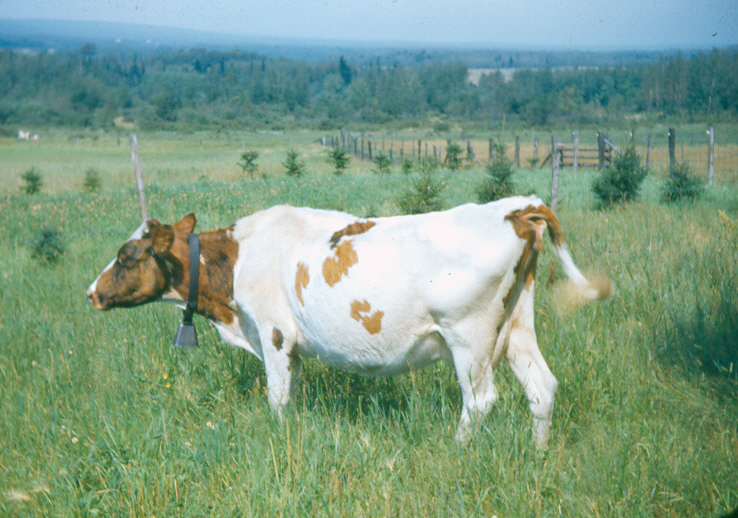
Costello is describing grass. Just grass, grown taller than we let it grow in our cultured yards. The technical jargon does not help, it never does, except to the those in the inner circle of the world circumscribed by the given jargon. But since every June of my childhood was driven by a high concern for grass, or hay as farmers call it in full form, I should recognize it by any description. I used to lie in it, just to relax in the sun, to rest with my dog by my side, to look up at the clouds drifting across the sky on their way to Lake Superior.
Somehow I did not  roll over and look carefully at the intricacy of a single plant of grass. In the larger picture, driven by the daily details, a biology teacher and an English teacher are teaching many of the same skills.
Praises be for the small and simple yet wonder-filled things which sustain us heart, body, and soul.
Are you a good looker?
 Trail Baboon