
Today’s post comes from Steve Grooms
I grew up in central Iowa in the 1950s, a time when public schools performed Christian music like Away in the Manger and Silent Night. When choir directors heard me sing they quickly nominated me to be the narrator for our concerts. Since my family didn’t often go to church, I learned the story of baby Jesus’ birth by telling it to audiences of proud parents at school concerts.
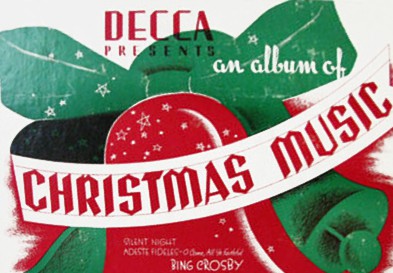
My sense of Christmas music was further defined by what played on the radio in our living room. Bing Crosby, Nat King Cole, Judy Garland, Burl Ives and others performed such pop music classics as I’ll Be Home for Christmas and White Christmas (many of the tunes having been written by Jews working in the pop music industry). I heard (but never came to like) novelty Christmas music by Alvin and the Chipmunks or songs like I Saw Mommy Kissing Santa Claus.
As a child, I had a silly running battle with one Christmas tune: Santa Claus is Coming to Town. I hated that song with fervor that is hard to understand. When I heard “so you better be good for goodness’ sake,” I was outraged because clearly “goodness” was not involved, just greed for Christmas presents. Why that affected me so deeply I will never know.
In the Grooms household my mother preferred the pop classics in a style she called “mood music.” Mood music (a forerunner of “new age” music) was atmospheric stuff meant to be played softly in the background. Her favorite, by far, was an album by Jackie Gleason (who was also a bandleader). Gleason’s Merry Christmas album was a light jazz treatment of Christmas music performed in a deeply nostalgic vein for people who liked to celebrate the day weeping wistfully in their eggnogs. The first big shock I experienced after getting married was learning that my bride considered my family’s Christmas music embarrassingly banal and beneath contempt.
In my first Christmas as a married man I was introduced to her Christmas music, which was all about choirs performing classic European religious Christian carols. Many of the tunes were created in medieval times. Her Christmas music was usually sung in vast cathedrals, so it had a lot of echo, and many songs featured the piercing purity of the sounds of boy sopranos. The audio highlight of Christmas for my wife was the Festival of Nine Lessons and Carols performed each year at King’s College.
In short, her Christmas music could not have been more different from what I’d known as a kid. At first I was humiliated by her disgust for my old Christmas music, but I quickly embraced the beauty of the more traditional choral music my in-laws loved so much.
Still later, I acquired great fondness for Celtic music. Inevitably I began enjoying performances of Christmas music performed in that style by folk and Celtic musicians. At some point I had to add the music of the Charlie Brown Christmas show to my list of favorites.


It all becomes mixed together. I have known so many Christmases that my tastes are eclectic and inevitably mixed with memories, good and bad. I fell in love with one album during an extremely emotional Christmas, the worst of my life. George Winston’s December album became a classic in the winter when we discovered our old cat had cancer. My daughter’s last evening with him was spent holding him in her crib while the December album played over and over in the night.
To hear Christmas music now is to be reminded of earlier times, with all that was sweet and terrible about them. Like Scrooge, I am haunted by Ghosts from Christmas Past, and they come with a soundtrack.
What is your favorite Christmas music?
 Trail Baboon