Tag Archives: farming

The Old Home Place

Header photo: threshing machine cc BY-SA 2.0

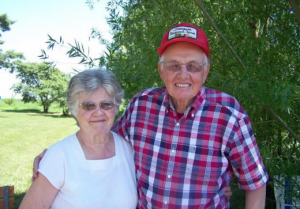
Today’s post comes from Jim Tjepkema.

My Grandparents operated a small dairy farm that was run by my Uncle after my Grandparents retired.   I visited that farm with my family on many occasions when I was young.  It was a small farm that was still being run in some of the same ways that it was operated when my Mother was young.  On those visits I learned about some of the old traditions that characterized farming in the Midwest many years ago.

One of my most treasured memories from a visit to the old home place was the time we were there when my Grandparents were hosting a threshing party.  Before farmers had combines that threshed grain in the field, stationary-threshing machines were used and bundles of grain were brought to those machines.  It was called a threshing party because a group of neighbors gathered to bring the grain in from the field and thresh it.  The threshing party I observed included a big noon meal, prepared by my Grandmother and women from the neighborhood, to feed the threshing crew.

By the time I made my first visit to the farm they had switched from using horses to using tractors for fieldwork.  However, they still had one of the draft horses that had been used to work the fields.  One of the years when we visited at Thanksgiving there was a small patch of corn still waiting to be harvested.  My Uncle hitched the horse to a wagon and we helped him finish harvesting the corn by hand picking it and throwing it into the wagon.  I was surprised to find out that the horse was able to move the wagon ahead without anyone riding in the wagon.

I learned more about the old farm during an extended visit when I was old enough to help my Uncle with fieldwork and milking.  Modern milking machines were used, although there was no bulk milk tank.  Pails of milk were carried to the milk house and poured into cans that were kept cool in a tank of water.  When my mother was young, they sold milk by bottling it on the farm and delivering it to homes in the nearby town.  The milk that my Uncle produced was hauled in cans in the back of his pickup to a local cheese factory.

My brother and I helped my Uncle with haying.  We helped load bales of hay onto hay wagons and then unloaded them into the barn.  The farm still had some equipment for handling loose hay including a hay loader.  I saw this equipment in action when it was used to harvest wild prairie grass, which was piled on top of bales of hay that were stored outside. My Uncle showed me how to use a pitchfork to stack the wild hay on the bales in a manner designed to shed water, thereby protecting the bales.

I have described some of the highlights of my visits to the old family farm.  Some other memories included: playing in the hayloft; taking the cows out to pasture; watching the birth of a calf; and feeding the pigs.  I was lucky to have seen the tail end of some of the older ways of farming practiced by my Grandparents and Uncle.  In fact, farmers interested in becoming more sustainable have recently rediscovered some aspects of those older farming practices..

What older ways of doing things do you fondly remember?
Come Along, Don’t Go Along

Today’s post comes from Jim Tjepkma

I had the very good fortune to spend five years working closely with Dick and Sharon Thompson in my job as the coordinator of the Rodale Institute’s Midwest On-Farm Education and Research Network.  The Thompsons were among the nation’s foremost leaders in the development and promotion of sustainable farming.   I meet them soon after Rodale hired me early in 1989.   I was the second coordinator for the Rodale network that had been setup several years earlier.   The network was based on Dick and Sharon’s approach to advancing sustainable farming, which was centered around farmer participation in education and research programs for the development of alternatives to conventional farming methods.

Screenshot 2015-12-09 at 6.47.31 AM

Dick said that he had received a message telling him that his approach to farming should be one of coming along and not going along.   For him this meant that he should question the current farming methods that were very widely used and look for better ways to farm.   He started by trying out some unconventional farming practices he learned about from other farmers who were also questioning the increasingly industrialized approach to farming that most farmers had adopted including heavy use of pesticides and the use of very large machinery.

Under Dick’s “come along, don’t go along” approach, he put together some of the best of the alternative ideas he could find into a system that worked well for him.  Dick had a lot of skill at finding and adopting better farming methods and came up with practices that worked well which were not in line with many of the practices recommended by universities.

He decided that he needed to demonstrate that his methods were as good or better than the ones the universities promoted by setting up scientifically designed research plots comparing his practices to theirs.  His research plots became a central part of large field days that he and Sharon hosted and he also taught other famers, included those in the Rodale network, how to do their own research.

Dick was a featured speaker at many farm meetings and usually participated in these meeting with Sharon at his side to let everyone know that she was an important part the work he did.   He also encouraged other farmers to come forward as speakers and as educators as well as encouraging them to engage in research.

I think Dick and Sharon’s approach of “coming along not going along” sets a good example for all of us.  In fact I think his approach is basically what a good citizenship should do.  We should not automatically accept what we are told by authorities and we should be actively engaged in creating a better world.

Who do you know who has influenced you by setting a good example?

The Back 40 Boneyard

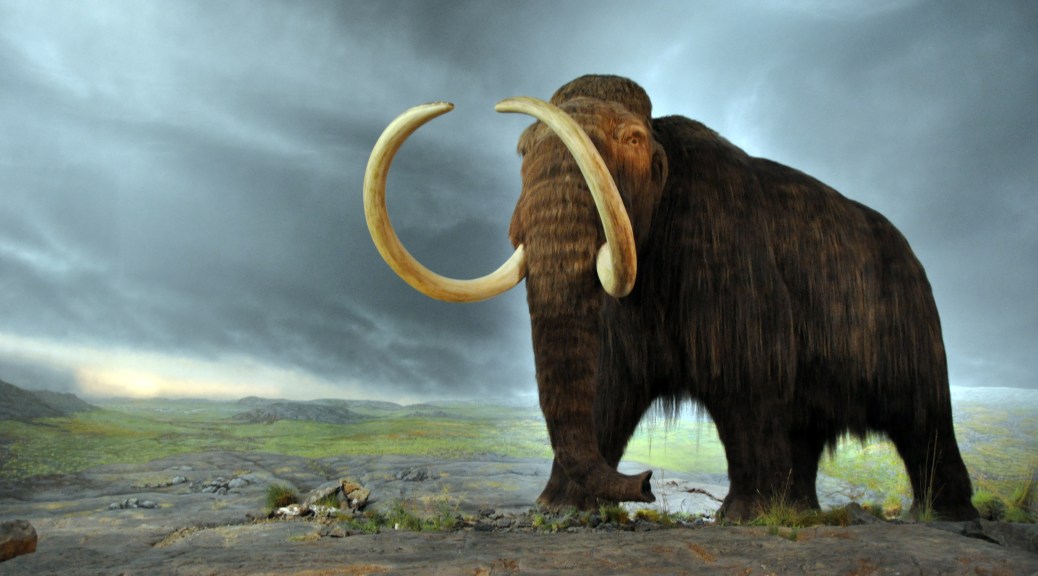
In a southern Michigan soybean field, a farmer found a bent fence post, caked with mud.  Which was no big deal, until he discovered it was actually part of a fifteen thousand year old pelvis of a Wooly Mammoth.

Wooly Mammoths, which are extinct, seem rather exotic for southern Michigan. Though the news accounts carried no suggestion that the farmer felt annoyed by this unexpected find, it had to be a pain in the butt to halt daily agricultural operations to bring in the archaeologists.

But Trail Baboon’s singsong poet laureate, Schuyler Tyler Wyler, became quite excited when I told him about this story, because he considers the Wooly Mammoth to be his totem animal.

Both STW and Wooly Mammoths are large, hairy, under-appreciated creatures whose unexpected appearance can sometimes lead to feelings of disappointment that the discoverer has not found a real elephant, or a serious poet.

STW’s latest work speaks of this in the hirsute behemoth’s lilting voice.

A farmer works for higher yields,
to see his family’s bread won.
But gets my carcass in his fields!
A crop!  Alas, a dead one.

My bones are no commodity
to trade on the exchange,
An old organic oddity.
low-salt, no cage, free-range.

To dig me up is more than play.
I’m ingrained in the ground.
Though true, I’m trespassing today,
‘Twas not when I fell down.

So now they’ve dug up my remains,
and inventoried fully:
Acres of soybeans, tons of grains.
One ancient Mammoth, wooly.

But I’ll make no apology
to that exhausted farmer.
His harvest – part mythology,
part prehistoric charmer!

Ever find a surprise in the dirt?