Tag Archives: media

Speeches That Didn’t Change The World

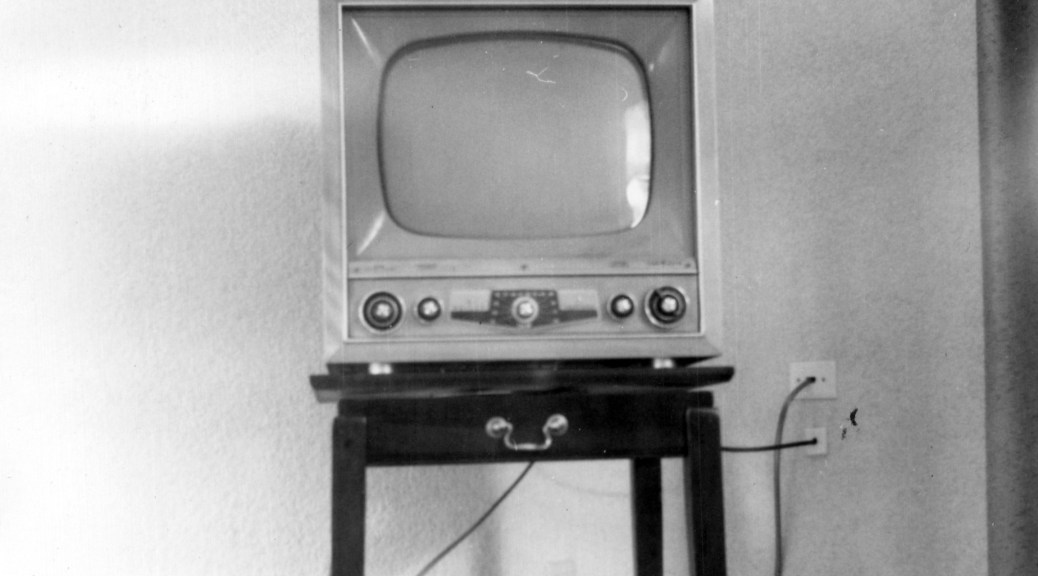
Today is the anniversary of Newton Minow’s “vast wasteland” speech.  It’s a landmark in the history of broadcasting because Minow had just been elevated from his position as just a guy with a name that sounds like an idea for a fish-flavored soft cookie, to the the exalted chairman of the Federal Communications Commission, appointed to lead the regulatory agency by President John F. Kennedy.

Minow was talking to the 1961 convention of the National Association of Broadcasters and he didn’t mince words as he challenged his listeners to watch a day of television from the moment of sign on,  when the programming started, to sign off, when it stopped.

Yes, children, there was a time in history when the television stations would actually be quiet at the end of a day.

Minow argued that “a vast wasteland” was on display.

“You will see a procession of game shows, formula comedies about totally unbelievable families, blood and thunder, mayhem, violence, sadism, murder, western bad men, western good men, private eyes, gangsters, more violence, and cartoons. And endlessly commercials — many screaming, cajoling, and offending. And most of all, boredom. True, you’ll see a few things you will enjoy. But they will be very, very few. And if you think I exaggerate, I only ask you to try it.”

The speech was a challenge to broadcasters to change their programming approach and do their work in the public interest. Wikipedia claims it was selected as one of twenty five “Speeches That Changed the World,” which is a ridiculous claim.

Minow didn’t change the world.  Broadcasters pretty much ignored him and went about their business.  When Gilligan’s Island debuted three years later, the shipwrecked boat was named after Minow.

Years later, Minow said he was really advocating for providing more choices for viewers, and in 2015 we can see that technology has certainly taken care of that.   But the broadly uplifting and ardently educational medium he imagined at the time did not materialize outside the creation of Masterpiece Theater and Sesame Street.

If Minow did anything at all in 1961, he merely predicted the empty, miserable, disappointing future of broadcasting.

When have you said the thing your audience didn’t want to hear?

Media Merry-Go-Round

The F.C.C. has opened a four month comment period on proposed rules for handling traffic on the internet. The debate will be about media and power and access and whether there should be a fast lane on the freeway of ideas.

Ultimately it is all part of the struggle to capture a moment of your attention.

This is nothing new, of course. In the years just before there was an internet the contestants for a piece of your mind were the printed word, radio, television, and any real flesh-and-blood person who might be standing in front of you at the moment. In a head-to-head face-off, television always won, of course. Print was too flat, radio too thin, and real people were not as shiny or attractive as whatever was on the screen.

Though raiding parties were sometimes sent from one camp into another.

In my online wanderings this week I tripped over this ancient TV clip about a quirky St. Paul based radio show. What seemed odd back in 1979 still feels like a weird and somewhat academic examination of a vanquished form of media. And aside from the strange calming effect of seeing an exceedingly smart man with a truly wonderful beard talk quietly into a large microphone, I was struck by the complete inability of a television program to capture the essence of the thing being examined. But then, maybe they didn’t really want to capture it.

And then there was this brave attempt to profile a different radio program that, as I hear about it now, seems impossibly dull!

My recollection of the reason why this report even happened is that TV at the time was trying to become a morning habit for people who were accustomed to turning on the radio when they woke up. The strategy was to flatter a wide selection of radio hosts through a series of live visits, hoping the “we’re on TV” giddiness of the DJ’s would send their listeners scrambling to the tube for a glimpse of their previously unseen heroes, possibly never again to return to that humble box of wires once it hit them that television stations were doing morning shows too!

I think it worked – a little bit at least. Morning television certainly took off, but nothing has been as good as the internet when it comes to getting attention. Neutral or not, it is grabbing increasing numbers of ears and eyeballs while TV and radio are losing their audiences.

How bad is it? Pretty much everything is online now, including the only remaining evidence of what radio sounded like when it was filtered through the perceptions of TV people who thought they were stealing the whole game, just before they found out that the game had changed, entirely.

What captures your attention?