
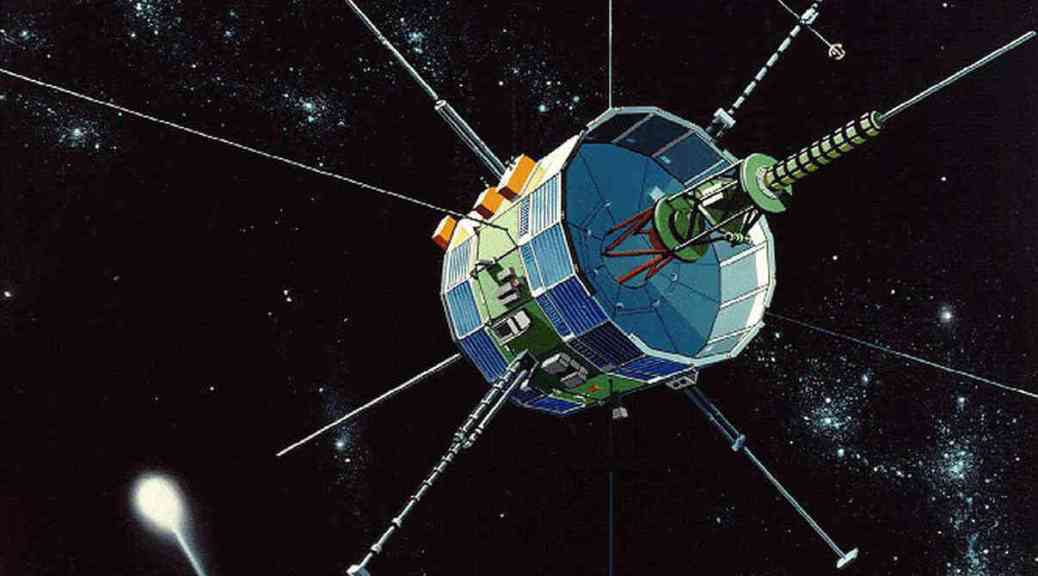
Our earlier conversation about “second acts” for people who have finished one career but aren’t done doing things has an off-planet parallel. A group of private space jockeys is attempting to re-start a defunct satellite named ISEE-3, or ICE.
Yes, this once cutting-edge conglomeration of obsolete computer parts has been around long enough to have earned at least two names. This is one of the privileges of age that has been taken over by young people who make it a habit to call themselves whatever they please whenever they want for no reason at all.
Fine, I suppose. But earlier generations approached names with a sense of obligation – you owed it to mom and dad to wear out the one you were born with before taking on another. And this plucky little satellite did just that.
Entering space in 1978 as the International Sun-Earth Explorer #3, (ISEE-3), this machine fulfilled its obligations by spending years collecting data at the edge of the Earth’s magnetic field, examining the solar wind and looking very closely at solar flares and cosmic rays.
But you know how it is with highly technical jobs. After a while they can become a bit dreary.
So when a flashy, exciting comet came whizzing by, ISEE-3 was smitten. Soon, its geeky-sounding moniker was history and our space spinner was off to intercept an exotic-sounding Comet named Giacobini-Zinne. And with this impulsive diversion came the much more dangerous and cool-sounding name, ICE (International Cometary Explorer).
So it seems even our technology can have a mid-life crisis and give in to a sudden, inexplicable alteration of course. This is why we need to let the young be young while they’re young. Short of allowing the kind of name-change anarchy I complained about earlier, of course.
But once off the path of a dutiful drudge, ICE was ready to yield to temptation, sliding into a casual relationship with yet another sparkly comet, the famous and notoriously fickle Halley. I’m not clear on the details, but apparently ICE took up a position between Halley and the Sun, running a calculation that involved both but committed to neither.
So it’s no surprise that by the early ’90’s, ICE was burned out.
End of story? Apparently not. Tomorrow, June 21, a team of modern techies will use updated equipment to send signals to ICE in an old language it recognizes and respects, telling it to boost its rotation by an extra half-spin per minute.
This is important for some reason I don’t understand, but I totally get it that the communicators have to approach this space geezer with antiquated language to get it to respond properly. It’s an awkward twisting of reality designed to get a desired result, similar to what happens when young people speak to us without swearing.
If ICE (or ISEE-3) is smart, it will accept this new mission simply because the alternative is uninspiring – simply to float through space, waiting for the lights to go out.
Pete Seeger said it best in this clip from the Smothers Brothers Comedy Hour in 1968.
How do you know your get up and go has got up and went?
 Trail Baboon