Tag Archives: Science

Arctic Art

Although I work with words and audio most of the time, I have great admiration for anyone who can take a good photograph. As discriminating baboons know, there’s a lot more to it than point-and-click. And for wildlife photographer Paul Nicklen, there’s a whole lot of physical courage involved as he steps out into Arctic weather and submerges himself in frozen oceans. Nicklen has worked at the top of his craft, producing features for National Geographic. He’s going to be speaking tonight at the University of Minnesota – part of a program by the U’s Institute on the Environment.

If you can only watch the first five minutes of this TED talk, you’ll get a sense for depth of his commitment and the quality of his work. And if you make it through the first five, you’ll feel a strong urge to watch the rest – but be warned! There are penguin innards on display. Cute!

Another measure of Nicklen’s intensity – I’d call it a day and send in my photos after swimming with one Leopard Seal. He took a dive with 30! No wonder the photos are so good.

Describe the best picture you’ve ever taken.

A Lull In The Lull

Today’s guest post is from Dr. Cozy Futon, lead rest-searcher with Physicians for Bedrest.

My Fellow Sleepless Americans,

Yawning? Please pull over and take a nap.

Millions of people are running, walking, driving and sitting around with such an overwhelming sleep debt, they are literally good for nothing. Their brains are addled by constantly being under the low-level strain of Internet surfing, tweeting and Facebook posting. They process information superficially and lash out at anything they don’t understand, which is just about everything, given their diminished state of mind. Bloggers are especially prone to this condition, which is why so many of them are perpteually cranky.

Occasionally, members of the restless masses will resolve to get more sleep and are surprised to find that after a few initial hours of quality repose, they wake up. Their inability to sleep 8 hours straight becomes a concern, then an obsession, and finally a type of mania. They lie awake at 3 a.m. filled with dread over lying awake at 3 a.m..

The result? Deeper depravation, sleep-wise.

On behalf of Physicians for Bedrest, I ask you to consider that perhaps you are merely a two-stage sleeper. As explained in this recent article from the BBC, there is historical precedent to suggest that humans are designed to sleep in two chunks separated by a couple of hours of wakefulness – just exactly the way you do on those nights when you find yourself playing computer solitaire after midnight.

Don’t believe me? There’s a book: At Day’s Close: Night in Times Past. Plan to read it in the lull between your two sessions of sleep.

Here’s a quote about the book and its author from the BBC story:

In 2001, historian Roger Ekirch of Virginia Tech published a seminal paper, drawn from 16 years of research, revealing a wealth of historical evidence that humans used to sleep in two distinct chunks.

His book At Day’s Close: Night in Times Past, published four years later, unearths more than 500 references to a segmented sleeping pattern – in diaries, court records, medical books and literature, from Homer’s Odyssey to an anthropological account of modern tribes in Nigeria.

In many historic accounts, Ekirch found that people used the time to meditate on their dreams.

I’m enthralled with this idea of going to sleep, having a scheduled intermission, and going to sleep again. Like a play or a sporting event, it makes perfect sense to have an interlude in the midst of the enjoyment so you can process what has just happened, and think about what is yet to come!

Among the things Ekrich found reference to people doing “between sleeps” – going to the toilet, smoking tobacco, visiting neighbors, chatting with bed-fellows, reading, writing, praying, and sex. Not necessarily in that order. Of course instead of setting aside eight hours for sleep, you’ll have to reserve ten. But you won’t even notice the difference, and the halftime show could be spectacular!

What keeps you awake?

A Sprout of Doubt

What’s with these Russian scientists all of a sudden?

The week before last they were punching through the ice that covers prehistoric Lake Vostok in Antarctica, hoping to find microbes that haven’t felt the sunlight for millions of years. And now, at the opposite pole, they’ve grown plants from seeds said to be 32 thousand years old.

Clearly the Russians are on a not-so-secret mission to restore a world we all thought was long gone. Could this be a remnant of the old Soviet plot to re-animate Lenin?

Microbes first, then the narrow-leafed campion, followed by the Soviet Union itself? We have Comrade Ground Squirrel to thank for this development, so carefully did he tuck his treasured seeds next to the permafrost, chattering way to his Fellow Furry Travelers that this day of glorious resurgence would surely come. Others have harbored similar wild dreams of rising from an icy demise, as we know too well from the oft-told frosty end of slugger Ted Williams.

There is some hope in all this that anything cold and dead may yet return, as we learned from Robert W. Service and Sam McGee. And as I discover over and over when dinnertime arrives and I realize I’ve got nothing in the fridge that’s remotely edible. But in the deep freeze … that’s a different story. If those Russian scientists would take a look behind that huge loaf of garlic bread at the back of my icebox, I think there’s some chicken from 1979. If I smothered it with enchilada sauce, would anyone really notice?

What’s in your freezer?

It Came From Lake Vostok

Today’s guest post comes from Bathtub Safety Officer Rafferty.

In my work as a PDA (Professional Downside Anticipator), I constantly ask people to stop and carefully consider the variety of bad things that could happen before they choose to take one action or another. For this I am often criticized. People call me a spoilsport, a doomsayer, a sourpuss, a Cassandra and a worrywart.

As they belittle me, I ask them to consider this: if I turn out to be right about even ONE of my dire predictions, their attitude about my warning will place them squarely in the role of that character who appears in every science-based horror film – the one who dismisses the strange object in the crater made by the meteorite, the weird gelatinous substance found near the scene, the unusual young man who has no emotions, and the ruthless millionaire’s brain kept in a jar, saying they are “… nothing to worry about. There is no danger. Return to your homes”.

That person is the first one to be eaten by the mole people.

I find myself in that position again today with news that the Russians have finally broken through to the submerged surface of Lake Vostok in Antarctica. The lake is buried under miles of ice. Whatever is in it hasn’t been free to move about the planet for 20 million years. How can this be good? The Russians say they hope to find microbes in the water that have never been encountered by humankind.

I say, “Great scott, what if they find microbes that have never been encountered by humankind?”

These are educated people. Surely they know what happened to the tribes of North America when the microbe-laden Europeans arrived. Certainly they have seen the sort of movie I described, where an ancient horror is unleashed on an unsuspecting world by careless scientific inquiry.

Robin Bell, a glaciologist from Columbia University told the Associated Press: “It’s like exploring another planet, except this one is ours.” Robin Bell is exactly the sort of name a movie character has when he or she begins with a firm belief in the scientific project, and then slowly comes to realize what a terrible scourge has been unleashed on an unsuspecting world. “Glaciologist” is precisely the type of scientific discipline that character practices – legitimate sounding and yet a little quirky. Not your typical brainiac. Robin Bell ultimately winds up as the only person who can save humanity by rappelling down the ice shaft carrying a pocket-sized hydrogen bomb that must be placed directly under the creature’s nest. Robin Bell survives, but only after scads of walk-on characters with no names (you and me) perish.

It concerns me very much that there’s already a scientist named Robin Bell in this story.

I know people will not believe me when I say this because I have a reputation as a scold, but please, I beg you – “Seal up Lake Vostok!” Take this good advice from me right now, or wait until Robin Bell is forced to say the very same thing, as a gentle rain falls on a blasted, smoldering landscape.

What have you opened that you immediately wished you could close again?

Old Brains

I’ve been reading far too much about old brains lately.

In fact, my mind has to put up a shield of self-ignorance, essentially denying that it is also a brain, before it can help me learn anything about them. Reading that it takes billions of interconnected neurons to process the words that tell me it takes billions of interconnected neurons to process the words is the kind of bio-informational feedback loop that causes wisps of smoke to come out my ears.

It feels like some things are not worth knowing.

But the latest news about old brains sends exactly the opposite message – that we should exercise our brains to keep them fit. And while we’re at it, we should exercise everything else, too.

My one-stop-shopping site for OBI (Old Brain Information) is the New York Times, where they are clearly trying to corner the market for elder ecephalifans. The paper isn’t called “The Gray Lady” for nothing, and if you want to know what’s happening among the folds of gray under the waves of gray, they’ve got it.

It turns out there’s a new study that shows some beneficial effects of exercise for people with a heightened risk of developing Alzheimer’s.

Education was also found to be a long-term brain benefit. A different study found that education is associated with a longer life and decreased risk of dementia. “The effects of education are dramatic and long term,” said one doctor quoted in the story.

Here’s an excerpt that confirms everything you already thought about brain health, although if you’re over 50, putting it together in a string of words this smooth would have taken you a lot longer than you imagine.

Many researchers believe that human intelligence or brainpower consists of dozens of assorted cognitive skills, which they commonly divide into two categories. One bunch falls under the heading “fluid intelligence,” the abilities that produce solutions not based on experience, like pattern recognition, working memory and abstract thinking, the kind of intelligence tested on I.Q. examinations. These abilities tend to peak in one’s 20s.

“Crystallized intelligence,” by contrast, generally refers to skills that are acquired through experience and education, like verbal ability, inductive reasoning and judgment. While fluid intelligence is often considered largely a product of genetics, crystallized intelligence is much more dependent on a bouquet of influences, including personality, motivation, opportunity and culture.

Yes, that’s what I’ve got. “Crystallized Intelligence.” It sounds so sparkly!
And hard, prickly and brittle.

But I have no trouble believing that education keeps your brain alive. In a world so full of things we don’t already know, the only question is – what to study? That’s the economics question and again, the Times comes to the rescue with a blog about what the top 1% of earners majored in.

It turns out the largest percentage of 1%’ers studied “Health and Medical Preparatory Programs.” No surprise there. In second place, Economics. Even an economist could have predicted that one. Third place goes to Biochemical Sciences. A bit of a surprise! But fourth place is the shocker – Zoology. Zoology? My understanding is that Zoologists study animals in their natural environments and also in captivity. Animal behavior is a special fascination, and zoologists work in university settings, research institutions and zoos.

I’m guessing the Zoologists who are making the huge bucks took their knowledge of animal behavior out of academe to some more lucrative arena, like Wall Street. After all, what better place to apply all those hard-learned lessons about the law of the jungle?

What have you done for your brain today?

A Bee’s Lament

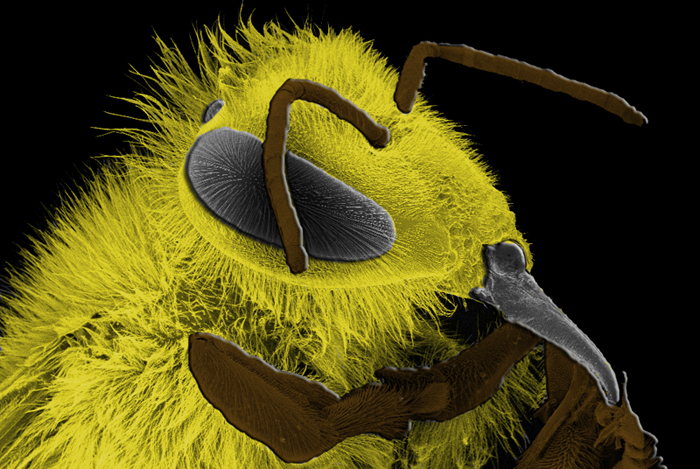
As a thoroughly bee-phobic human, I assumed it would feel great to have wings and a stinger. Bees, to me, are tiny, cunning, swift, fearless and evil. Little did I know these small yellow and black monsters have their own very real nightmares – revealed yesterday in a study of parasite-influenced bee behavior. The mystery of Colony Collapse Disorder is unraveling, and the causes are a surprise both to bee experts and perhaps to the bees themselves.

My Queen,

I write to you with profound regret and a deepening sense of dread, having just reviewed a summary of the findings of some freshly published research. The horrifying tale told by these scientists carries just one silver lining – at last I can explain to you why I left the hive those many evenings to fly around like a crazed zombie, out of control, out of my mind and clearly possessed.

The reason? I was, in fact, clearly possessed.

Please Forgive Me. I'm a Victim Too!

I assure you that I took my duties quite seriously while I was under your thrall and with the other workers I tried to make our colony one that exemplified the best of traditional bee virtues – hard work, loyalty, unquestioning allegiance to authority, hostility towards outsiders, etc. These are the kind of values that would make any Iowa Republican proud, as long as they were able to overlook our clearly socialist/monarchist organizing structure.

When I first felt the urge to leave the hive at night during the time I should have been resting, I fought against the strange compulsion but alas – I was no match for it. It was as if I did not control my wings, my body, my own antennae. I wanted to spin in a circle, fly towards the light, and sit and buzz, totally buzzed on something inexplicable. I know you thought I was sipping something stronger than honey. But I left because I simply could not remain inside.

Today, words cannot describe my remorse. I know I abandoned you and all the others at a delicate time, and in doing so, put the hive at risk of total collapse.

But yesterday, while compulsively stinging the bejabbers out of some old, bald, shrieking humanoid, I noticed that he was reading an article from the San Jose Mercury News that explained so much of what I was going through, I wept with joy, relief and terror.

My abandonment of our community was the result of a parasitic takeover that made it impossible for me to resist. A tiny fly (yes, tiny even on bee-level) injected its eggs into my abdomen while I was busily serving you. These eggs altered my chemistry, inflamed my senses, dulled my judgment, and led me to wander off spasmodically at times when I should have been doing my job.

Knowing that I was helpless against this invasion may not ultimately change your opinion of me. I’m resigned to accept your scorn. But I hope you will understand someday that I did not actually intend to betray you, that I am a victim too, that I apologize to you with the utmost sincerity, and that I will soon pay the price for my actions when I die, and a dozen fly larvae crawl out of my neck. Ugh.

The old, bald, shrieking humanoid that I attacked today was truly a pathetic creature, but to avoid my paralyzing feelings of remorse and my gruesome fate, I would willingly trade places … even with him.

Sincerely,
Your Loyal Servant
Worker #500309930002993B

I am trying to feel sympathetic towards bees. Theirs is not an easy life, and the perils are many. But still … they give me the creeps.

Would you trade places with an insect?

Inexplicable Particle Party

There will be an announcement from the scientists at the CERN super collider this morning having to do with particle physics and the search for the mysterious Higgs boson, which supposedly plays an important role in some theoretical explanation of the universe and why things have mass.

I made a token effort to read up on it and quickly came to the conclusion that this is something I will only understand if it is explained in terms so simple that the description completely undermines the complicated science that supports it. Please, put it in some nice words that interest me. If the universe is a hot fudge sundae, is the Higgs boson a piece of walnut, the cherry on top, or the bowl?

Maybe it will all make sense tomorrow, once the world’s best journalists have had a shot at interpreting this scientific press carnival. Or perhaps we should just prepare ourselves to be smothered by a tsunami of profound confusion.

One thing is for sure – there will be a lot of loose talk over the next 24 hours about the Higgs boson as a “God” particle, because God is something we already know how to argue about and misinterpret.

And if that’s not bad enough, some idiot will try to put the thing into a dopey poem.

They’ll bravely attempt it, in newspaper articles
Journalists writing about physics particles.
Laying it out with such logical text
that a monkey could read it and not be perplexed.

And on radio, too, they’ll attempt to explain it
so beautifully, singers will try to refrain it.
On TV they’ll make Mr. Higgs and his boson
As sexy as starlets without any clothes on.

But after the press conference, headlines and fizz
There will still be uncertainty as to what is
the meaning of whatever news comes to pass,
using words that take space and have weight, but no mass,

So beware the quick and the glib and the simple.
It’s more than a dot or a speck or a pimple.
There’s no single term for it that isn’t flawed
which is why it’s elusively named after God.

Name something that defies understanding.

Star Light, Star Bright

Here’s a freshly written note from perennial sophomore Bubby Spamden, a lad still looking for his future.

Hey Mr. C.,

In Ms. Axiom’s science class yesterday we had this great discussion about a new idea from some astronomers at Princeton and Harvard who want to find out if there are other civilizations out there in the universe. They’re going to use telescopes to look for light from alien cities! Is that cool or what?

I used to think that my ideal job as an adult would be “Planet Finder”, but now that so many distant planets have already been found, I’m thinking “Alien City Spotter” would be an even better job for me. It’s still in my chosen field, which we took a test to figure out. My results said I would “thrive in any line of work that involved Looking Into the Sky and Wondering About Things.”

When we were talking about it in Ms. A’s class I said I wanted to be the first human to find an alien city because I’d get to name it after myself! “Bubbopolis” is what I’m thinking, because it’s so much fun to say. There’s enough of a beat there that people would probably write songs about it and then there’d be a huge push to build a spacecraft to go visit Bubbopolis as soon as possible. Maybe when we got there, the Bubbopipolitans would like my name so much they’d actually change over whatever they were calling the place to the much cooler name I gave them – which would mean instant immortality on two different planets for me! That pretty much lines up with my life’s goals!

But then people started to chip away at my great idea. Nathan Nathanson pointed out that the article said these scientists were only going to look for alien cities in our own solar system, where we’re pretty much 100% sure there are no other advanced life forms or civilizations anyway, and that to look farther than that we’ll have to build super telescopes that haven’t even been invented yet! So what, Nathan? You think you’re so smart just because you read all the way to the end? I’m against getting all the information on things because it leaves no room for your imagination!

And then that fun-killing egghead Samantha Quilts stood up and said that what would probably happen if we found an alien city with its lights on at night is very different from what I imagined. Rather than build a rocket to go there, we’d all probably get so scared we’d go into a worldwide panic about turning OUR lights off at night so the Bubbopolis creatures wouldn’t be able to see US.

She’s probably right.

But even then I could have a good career as a Nighttime Glow Warden.
I’m already pretty harsh with my parents when it comes to leaving lights on at night – they’re the worst! One time I came home from this football game at about 10:30 and all the lights were on in the living room and the TV was blaring away, but they had gone to bed! That’s crazy. What were they thinking? I gave them a good talking to the next morning, which felt really great, and they didn’t seem to mind it either.

By the way, “Scolding People” came in second on the list of job areas that I’d be good at.

Your pal,
Bubby

I congratulated Bubby on this small step forward in his continuing project of figuring out what his someday job could be, though it made me wonder if he’s looking a little too far into the future. Still, with our carbon production running well ahead of predictions, browbeating people for leaving the lights on at night could turn into a growing career field.

Are you an energy saver, or a waster?

Expanding Universe Haiku

The winners of the Nobel Prize in Physics are three American scientists who asked some important questions and wound up getting answers they didn’t expect.

Hubble's snapshot of the backyard, courtesy of NASA

As a result they gave us this confounding image of a universe that is expanding rapidly, with stars and galaxies rushing away from the center at ever-increasing speeds.

How’s that?

For folks (like me) who write news stories and summaries, Nobel week is a challenge and an education. In trying to explain how a prize was won, we’re called on to distill and decipher other people’s complicated multi-million-dollar research. Do you really think I can, with little knowledge or understanding of the field, step in and do a better job explaining a major technical principle in fewer words than the scientist who has spent his or her life struggling with the same information?

Some topics don’t like to be compressed.

But try I must. So why not take it all the way down to the minimum? Here’s a challenge – boil the expanding universe down to three lines, with five syllables in the first line, seven syllables in the second, and five in the third.

Go.

Galaxies racing
faster away from center
Mama will be pissed.

Dark Energy is
The unseen motivator
Behind the madness

The whole universe
Receding away from you
It’s not personal

The      spaces        between
the       words      in      this        haiku       are
bigger.          What’s             up,                          huh?

Leave your own haiku, or just explain how the universe will end.

An Ode To The Nematode

Today is my birthday, and I am determined to relax, no matter how much work it takes.
Fortunately I have great help from people like my good friend Jim of Clark’s Grove, who wrote today’s guest post. With a few forthright words about nematodes, Jim has helped me understand my true role in the universe and has placed my birthday in its proper context. To anyone who says “host” is not a decent job description, I say, ‘Pal, we’re all hosts.’

Here’s Jim’s post:

I suspect that many people know a lot about something which is not widely known by most other people. I am thinking about unusual information that might be gained through professional training, or from involvement in a hobby, or by somehow gaining access to unusual information. I happen to know quite a bit about nematodes, a group organisms that I think are a mystery to the general public. My knowledge of nematodes came mostly from my study of these organisms as a graduate student. I would like to share some of the information I have about these very significant and severely overlooked creatures with the hope that you will share information about something that you think has been largely ignored.

Nematodes, which are also known as round worms, are the most numerous multicellular animal on earth. There are some single celled organisms that outnumber nematodes, but nematodes have exceeded all other animals with more than one cell when counting the total number of individuals. If you removed all the soil and water from the earth and left the nematodes, the large populations of nematodes found everywhere would show you where the soil and water was previously located. Most nematodes are very small, only a millimeter or two in length, although you might have seen some of the larger parasitic ones that are several inches long in the stools of your pets. Some whales contain parasitic nematodes that are more than 20 feet long.

A Nematode with a Nematode Inside.

Nematodes parasitize just about everything including all kinds of animals and a wide range of plants. People suffer from many kinds of nematode parasites; including pin worms, hook worms, and the worms that cause trichinosis which you can get if you don’t do a good job of cooking pork. In fact, there are even some nematodes that are parasitic in other nematodes. If you look closely at the picture I provided you will see two nematodes because this is a picture of a nematode with a parasitic nematode in its body cavity. I came across this parasitized nematode during my study of free living nematodes found in soil. The drawing was done with ink on scratch board following instructions for making nematode drawings that came from a famous nematologist, Gerald Thorne. Thorne was very devoted to the study of nematodes which he was sure would be found in soil samples from the moon. He was certain of this because he knew they are found everywhere on earth.

I got started in nematology by doing a research project on plant parasitic nematodes, some of which can severely damage plants. However, most of my efforts in nematology were centered on the taxonomy of a group of free-living nematodes which led me to discover and describe a dozen new species of nematodes. Most people who work on the taxonomy of larger organisms would not expect to discover such a large number of new species. When it comes to nematodes, it is not hard to find numerous new species because most of the existing species have not been described.

I have attempted to dazzle you with some information about the wondrous group of organisms called nematodes. You probably weren’t aware of the huge number of these organisms hidden in soil and water everywhere and also found as parasites in or on many animals and plants. In fact, you might have harbored or still be harboring some of them, yourself. I think I was infested with pin worms when I was a kid. In those days many school children suffered from infestations of these very small worms. I wonder if you have information about something that is unusual or not well known to the general public.

Are you familiar with something that is being ignored?