
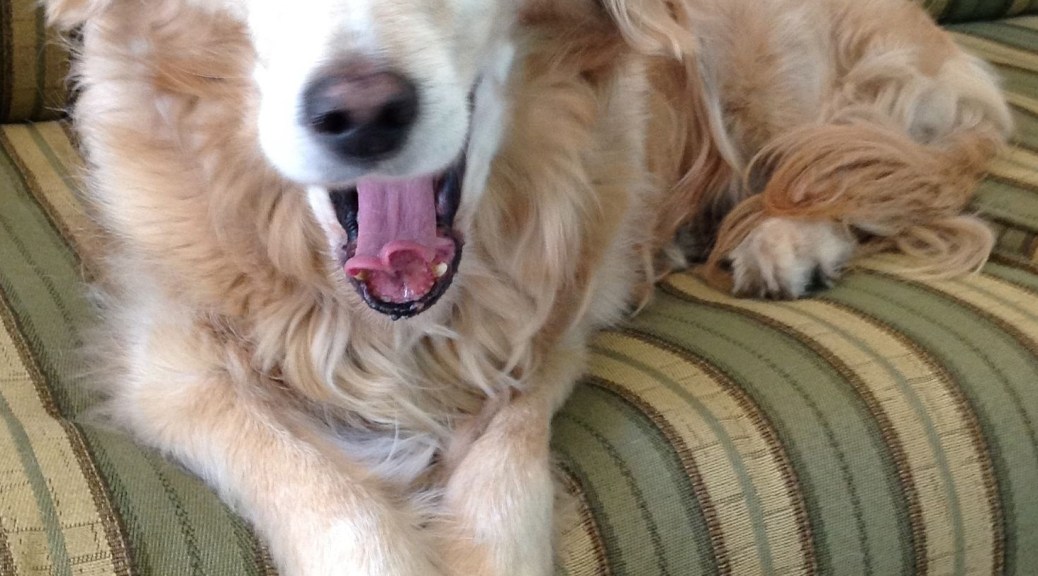
A new study says dogs yawn more in response to yawns from their owners than they do to the yawns of strangers. I just tried to make this happen with my dog by yawning several times right in her face. She wouldn’t look at me, possibly out of embarrassment. Or maybe I need to brush my teeth.
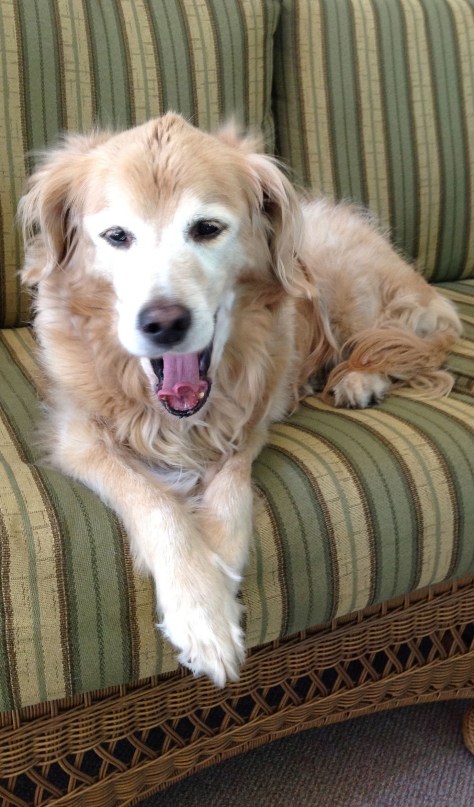
But I did start to feel a little tired, so we took a twenty minute nap.
While sleeping I had a short dream that I was a frightened chipmunk running from a Rottweiler who had cornered me at the back of an open garage. With no easy escape, I cowered in a corner as the animal stood over me, drooling and trembling in the same way a movie villain pauses over a supposedly-vanquished superhero or secret agent to make a speech before delivering the final blow. It was a garage, so I considered grabbing a shovel from a hook on the wall and using it to force the dog to back away, but then I remembered, I’m a chipmunk – no hands. So I yawned. Amazingly, that caused the dog to pause for a moment, so I yawned again. The dog tipped its head to one side the way dogs do when they appear to be confused. I yawned a third time, and incredibly, the Rottweiler also opened its mouth wide.
Then I woke up.
I’m not sure this proves anything other than the potential fact that it is not very satisfying to fall asleep while reading science articles because it leads to complicated dreams about research. Maybe articles about yawning studies are bigger snoozers than comparable research papers. I should get a grant to study the phenomenon!
Contagious yawning has been observed and extensively documented between humans, chimpanzees and baboons, and there is reason to believe we have a stronger response to yawns from those we care about. Although the researchers in that study assumed the relationship between family members is automatically a more caring one than any relationship with others. That may not always be the case, since family members can be quite vicious towards one another (see Rottweiler, above).
There is also a theory out there that spontaneous yawning is a natural physical response intended to cool an overheated brain. I suppose you could observe this in any classroom where SAT tests are administered. Perhaps there is also a connection between test-induced yawning and spitwad formation in 16 year olds.
Back to my dog – she is definitely not responding to all the yawn cues I’m giving her, but she has started to obsessively lick a sore spot on her left rear leg. In this case, the theory of empathetic mimicry is not holding up. Although I am feeling a strong urge right now to bite my own ankles.
What makes you yawn?
 Trail Baboon