
Today’s post comes from Steve Grooms.
They say we all get fifteen minutes of fame, but that’s surely not true. Some of us never experience the consummate weirdness of sudden fame. Others, for better or worse, get far more than the allotted fifteen minutes.
I’ve had a few moments of fame, if we can agree that fame is a relative term. One was fun, if silly. The other was not fun at all.
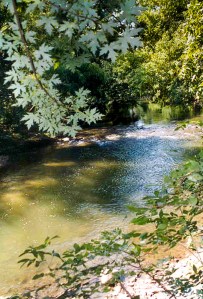
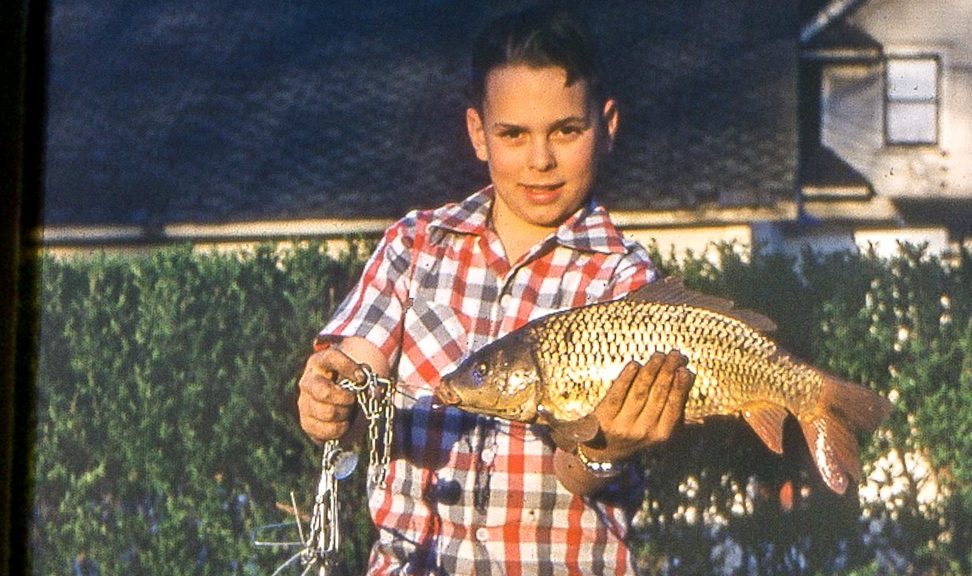
One overcast March afternoon I caught a four-pound carp in the creek that ran near our home in Ames. In Iowa any stream small enough to be called a “crick” is small indeed. Squaw Creek is ankle-deep, with a few holes where the water is knee-deep. I spent hundreds of hours fishing the creek. Mostly we caught chubs and shiners the size many anglers use for bait.
Then came the magic afternoon I caught the carp. In fact, I caught two mighty fish that day. My trophy carp (if that is not an oxymoron) made me famous. That was six decades ago. In all that time I’m not sure I’ve ever matched that accomplishment. Kids in Ames—even kids who had never met me—knew my name, for I was “the kid who caught The Fish.”
I have also tasted the other kind of fame.
In 1966 I was walking in the West Bank, near the University of Minnesota, at the corner of Cedar and Riverside. It was a dodgy neighborhood in those days. The stoplight turned red just when I wanted to cross Riverside. At that moment three young men stumbled out of a local bar that catered to a rough clientele. They were in a foul mood, out of money but determined to get even drunker than they already were. The first thing they saw was me.

“Hey,” one of them snarled, “do you think you’re tough?” I mumbled something about not being tough. One of them came up behind me and delivered a roundhouse blow to my right ear. I saw stars. The drunks debated who would “get to finish this guy off.” I talked them back into the bar by offering to buy a round of drinks. When they tilted their glasses to drink, I sprinted to safety.
The next day I nursed a sore ear and reflected on my vulnerability. I spent a lot of time in that area, which meant I could run into trouble again. By coincidence, my local grocery store had just put up a display card selling tear gas canisters. These were brass cylinders about four inches long, with a plunger knob on the end. If you got in trouble, the display said, you could snap that plunger and POOF! disappear in a cloud of gas. No need for guns, knives or spilled blood. Any time I was threatened I could escape with the aid of modern chemistry.
The next day was a Monday, a day I had to be at my office. During our lunch break I described my mugging to associates in the freshman adviser office in Johnston Hall. Of course they wanted to see the tear gas device, so I passed it around. The last guy to examine it returned it to my desk.
Moments later there was an explosion. The office instantly filled with tear gas. The cylinder must have rolled off my desk, landing on its plunger. All the advisers dove for the floor. Those were days of student protest, and everyone’s first assumption was that our office had been bombed. I ran into my office to grab the textbooks I’d need, inhaling enough tear gas in the process to render me speechless for two days. A hand-written note on our office door said, “220 Johnston Closed On Account of Tear Gas.” That little brass canister held enough to flood the whole second floor with tear gas. The senior administrators of the College of Liberal Arts wept as they worked that afternoon.
There was a party for College of Liberal Arts workers several weeks later. At that party someone introduced me to E. W. Ziebarth, the dean of the whole college. Dean Ziebarth was a remote, godlike figure who looked exactly like the actor David Niven. He had elegant manners, although none of the workers was bold enough to speak to him. Shaking my hand, the dean looked confused for a moment, trying to place me. Then he smiled, “Oh, yes! The Tear Gas Kid!”
Have you ever done anything to win fifteen minutes of fame?






 Trail Baboon