All posts by jimtjepkema

Bigfoot, Anyone?

Header photo: Statue of Bigfoot at tourist attraction near Silver Lake WA, CC by 3.0 via Wikipedia

Today’s post comes from Jim Tjepkema

Remer Minnesota has declared that it is the true home of Bigfoot and recently held a Bigfoot festival.  They claim that entire families of Bigfoot were seen in the area in the early days of the town.  It is thought that those families moved away when loggers thinned the woodlands out.  There is a blurry picture taken in 2009, and widely published, that claims to indicate Bigfoot is still found at least occasionally near Remer.

I doubt that anyone has seen a Bigfoot.  The blurry picture could be a fake.  Also, people who claim to have seen Bigfoot may have been mistaken or not truthful.  Where is the proof, expectable to scientists, that Bigfoot exists?   Is there anyone who can verify those stories that families of Bigfoot were seen near Remer many years ago?

On the other hand, is there any way of proving that Bigfoot doesn’t exist?

As an agricultural worker I heard of a number of practices and treatments that were recommended to farmers which were not supported by valid scientific research.   There were unsupported claims that farmers would be free of pest and disease problems if they used certain fertilizer programs.  In addition, a variety of untested cures were offered to solve existing problems.

Usually I was unable to get the farmers who were using untested practices and products to return to ones that were supported by proper testing.   The people who recommended those unproven practices and products had gained the trust of the farmers involved and they would hardly ever listen to me.   Anyway, how can you prove that something doesn’t work?   Practices that seem to run completely counter to those that are well established might be found to have value if the right kind of testing is used.

So, how do we know that Bigfoot doesn’t exist if that is true?  Maybe Bigfoot is very good at hiding making it extremely hard to get good evidence of their existence.   Is there a group of large creatures secretly living among us?  Given the state of the world today Bigfoot might have decided it is not wise to come out of hiding.

Have you seen Bigfoot?  


Of Fishes and Families

Today’s post comes from Jim Tjepkema

I tell people that if they go fishing with me they will not catch any fish.

The main reason for my lack of success – fishing is low on my list of preferred activities. I had great time fishing with my Grandfather as a boy. The same was true for my father. He took part in outings organized by my Grandfather and had fun doing that, but he almost never when on any other fishing trips.

Dad spent a lot of time sitting in boats with his father, and he did not appreciate it when his father stayed out on the water for extended periods of time in bad weather trying catch a few more fish. Apparently these unpleasant hours caused him to develop a dislike for the activity.

But while Dad and I didn’t inherit Grandfather’s passion, my Granddaughter enjoyed fishing at summer camp and asked us to give her a chance to do more. We found a place where we could fish with her from a dock, and she managed to catch 3 or 4 “keepers”.

We ate them for dinner.

Actually my wife and I were the only ones who ate the fish, because Granddaughter is a vegetarian. She tried a small sample and didn’t like it. She will not be carrying on the family fishing tradition in the same way my Grandfather did because he loved eating fish as well as catching them.

Never the less, she does seem to have his love of catching fish.

How does your family feel about fish?

Village Life in Bulgaria

Today’s post comes from Jim Tjepkema

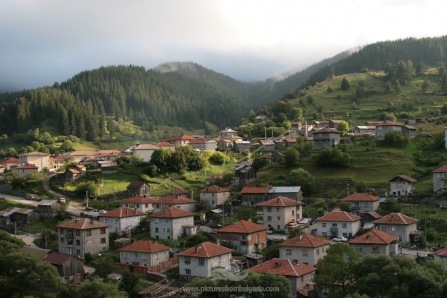
I have been keeping in touch by Facebook with a friend from Bulgaria.   He posts all kinds of information about Bulgaria on Facebook including the You Tube video found below.  This video about village life in Bulgaria reminded me of the villages I visited there as an agricultural volunteer.   I visited in person with a number of people who had a life style similar in many ways to the couple shown in the video.

Many of the Bulgarians living in the villages I visited own livestock, although they might not have as many animals as you see in the video.   Farms, like the one shown, are located in Bulgarian rural villages and are not scattered around the countryside as they are in our country.  Even farms larger than the one shown seem to operate out of farmsteads situated in villages.  When I was in Bulgaria they were trying to recover from their years behind the Iron Curtain when all the people who owned farms were forced to give up their land and work at cooperative farms.  However, during the Russian occupation people in the villages were allowed keep small plots of land and small numbers of livestock to provide themselves with food.

In the video you see the sheep return to the homestead for the evening.   I suspect that the sheep had been taken out to pasture by a herdsman from the village that looks after the livestock of the villagers during the day.  I saw villagers going to meet their livestock that was brought back to the town in the evening by someone who had been watching them during the day.   During the day I saw livestock being tended by shepherds as they grazed in open fields along the roads.

Apart from the sheep, some other livestock are shown that are being cared for including a donkey.  That donkey is probably used to pull a cart.   I saw people using donkey carts the way we would use a car or a truck, although some families did own cars and trucks.   The sausage, wine, and fermented cabbage shown in video were probably all products of the farm.   I think I was served homemade wine at every village home I visited.  Also, in many homes, I saw wood burning cook stoves like the one used by that older couple.

Village people in Bulgaria live much the same way small farmers lived in this country many years ago.  Most of the occupants of the villages are older.  Some are young, although it seems that many of the younger ones have moved to big cities.   As I listen to the campaign speeches of some of our Presidential candidates, I wonder if I wouldn’t be better off living in a Bulgarian village producing my own food and wine.  I believe that many places like the one shown in the video are now for sale because the older generation of people living in those places is dying off and the younger ones are moving to big cities.

If you decided you no longer want to live in the USA, where would you go?

A Seedy Guy

Header photo courtesy of Seed Savers Exchange

Today’s post comes from Jim Tjepkema

Robert Lobitz passed away before I got a chance to meet him in person.  I knew about him from seeing his seed listings in the Seed Savers Exchange Yearbook and from exchanging seeds with him by mail.   He didn’t come to any of meetings of seed savers that I attended and apparently stayed close to his home near Paynesville, MN.

As a member of SSE, Robert exchanged seeds with other SSE members.  He also obtained samples of seeds from Federal seed collections which he grew in variety trials to learn about their characteristics.  In one of those trials he discovered a pea that had yellow pods and shared seed from that pea with other seed savers.  Several seed companies are now offering this pea for sale under the name, Golden Sweet, which is the name given to it by Robert.

Red Swan snap bean, developed by Robert, is also available in commercial seed catalogs.  This bean is a product of Robert’s work on creating new bean varieties.   Snap beans and some other beans are self-pollinating.  However, bees will sometimes carry pollen from one variety to another by getting into the bean flowers before they have self-pollinated.   Robert looked for beans produced from flowers cross-pollinated by bees and saved these seeds to serve as starting points for his work on developing new varieties.

All of Robert’s work with seeds was done in his own gardens as a hobby.   Peas and beans were not the only vegetable seeds that he collected and studied.  He also collected many kinds of potatoes and soybeans.   Among the members of SSE he stood out as one the best seed savers sharing hundreds of kinds of rare seeds from his collection with other seed savers.

For me, Robert was an outstanding example of how a person who is not a paid professional can make significant contributions in a field where most of the workers are highly trained specialists.

In what area are you a significantly talented amateur?

Hard Times in Hollandale

Today’s post comes from Jim Tjepkema

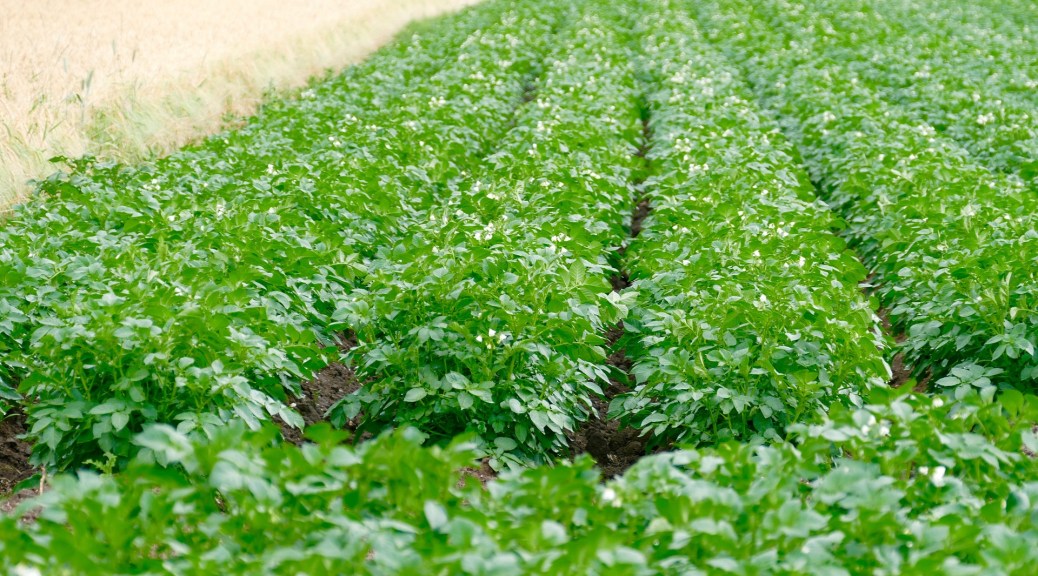
Hollandale is a small town in Southern Minnesota that came into being in the early part of the last century when a large wetland area was drained. The organic soil that was exposed when the land was drained was sold off as small vegetable farms. In it’s early days there was a very large number of small farms that produced a wide variety of vegetables. By the time I moved to the area in the early 80s, there were less than 30 vegetable farms and they were primarily devoted to growing potatoes with some of them also devoted to producing onions, carrots, and sweet corn. Most of the families that purchased the original small farms were of Dutch heritage and many of the ones I met when we moved there were descendants of those families.

Within any ethnic group you can often find people who are proud of their heritage. That is certainly true for many of the Hollandale area residents. I asked one of the older members of the community if he agreed with the saying: “if you aren’t Dutch, you aren’t much”. He told me that he might think that, although he never says it out loud. Both of my father’s parents were born in the Netherlands, so I know a little about the pride of the Dutch.

20160124_144338

My first job in Minnesota was at a small agricultural research company located near Hollandale. When that job ended I started a crop consulting business and soon found out that there was a big need for a consultant who could help vegetable growers keep on top of production problems. Two of the best growers were willing to try my services and they made it clear that the other growers should also use my services. As a result, I spent 10 growing seasons checking Hollandale vegetable fields for diseases, pests, and other problems along with providing advice on dealing with what I found. Due to the high production costs for vegetables and large risk of losses due to production problems, I was able to show that my services were needed. Unfortunately, the farmers were not willing to add very much to their costs by paying me a high salary.

During the years I worked with the Hollandale growers the number of farms gradually decreased until there were only 5 of 6 left and now there are only 2 or 3. I’m sure some of them quit because the strain of operating a vegetable farm became too great, as they got older. There is a tremendous amount of work involved in planting, growing, harvesting, storing, packaging, and marketing vegetables. One grower, who also grew corn and soybeans, referred to corn and soybean farming as a hobby because the amount of work needed to produce those crops is very much less than is needed to produce vegetables.

There were a number of other factors that led to farmers calling it quits. A big one was the problems they have with flooding when water from higher ground filled their low lying fields following heavy rainfall. Also they had a big problem with soil loss because organic soil can blow away during dry weather and burn up during hot weather. In addition they had difficulty competing with the very large farms that dominate vegetable production in the United States. The drop off in the number of growers brought my work in Hollandale to an end. However, I have many good memories from the years I spent working with those farmers.

What’s the toughest job you ever quit?

My Short “Career” Packing Meat

Today’s post comes from Jim Tjepkema

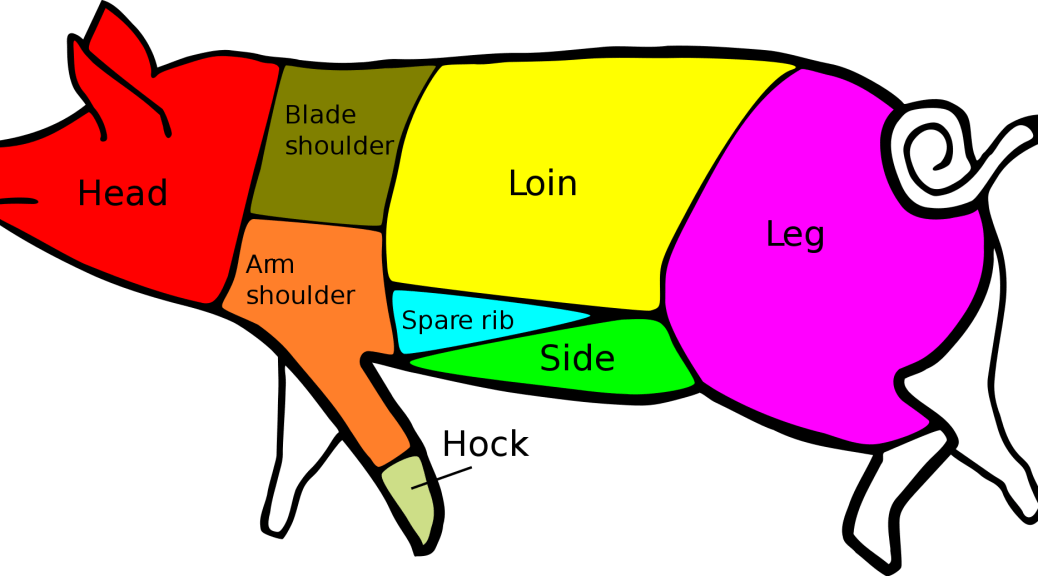
I could see that my work as a private agricultural consultant was coming to an end.  Many of the vegetable farmers that were my best customers were retiring or going out of business.  I found an opening working as a temporary employee in a local meat packing plant and ended up working at that plant for 2 years.  During those two years I worked at many different positions, starting as a laboratory technician, followed by working at a variety of quality control jobs, and finishing up by working on various production lines.

I learned a lot about the production of processed meat, and met many very interesting people.   There were times when I didn’t mind working at that plant.   However, in many ways it was not a good place to work.  A man who had worked there for many years told me that while it might look as if he liked his job, the opposite was true for him and many of the other employees.

In my first position at the plant I had limited contact with people working in the production areas.  I did get to know the quality control clerk who sent samples up to me from a production line.  She and I developed a good working relationship helping each other to make sure the samples were checked in a timely manner.   One night didn’t go so well when I tried to bring her test results while she was eating in the lunchroom. She made it very, very clear that I should never bother her during her lunch break.

I went from working in the lab to working as a quality control clerk when they eliminated the job I had in the lab.  I found out that those clerks often had a very difficult time completing all of the checking and sampling that was required.

In fact, I wasn’t able to do some of those jobs fast enough.  The position I was given required me to learn to fill in at any and all of the many different quality control clerk jobs.  When it was clear that I wouldn’t be able to master all of those jobs in the small amount of time I was given me to learn them, I moved on to production work.

I started out on a ham line putting chunks of sliced ham into compartments on a bagging machine.  At first I wasn’t able to do this job fast enough.  However, they gave me enough time at this job to get up to speed and I eventually mastered the job.   Unfortunately, work on that ham line was seasonal and I had to move on to another job.  I took several different temporary jobs in other parts of the plant to hold me over until I was needed again on the ham line.   With more time to learn the temporary jobs, I might have been able to handle all of them.  However, they gave me very little time to learn them and I failed at some of them.  At that point I decided I was not cut out to be a meat packer, bringing my days working there to an end.

What kind of short term work have you done that was interesting or not so interesting?

The Old Home Place

Header photo: threshing machine cc BY-SA 2.0

Today’s post comes from Jim Tjepkema.

My Grandparents operated a small dairy farm that was run by my Uncle after my Grandparents retired.   I visited that farm with my family on many occasions when I was young.  It was a small farm that was still being run in some of the same ways that it was operated when my Mother was young.  On those visits I learned about some of the old traditions that characterized farming in the Midwest many years ago.

One of my most treasured memories from a visit to the old home place was the time we were there when my Grandparents were hosting a threshing party.  Before farmers had combines that threshed grain in the field, stationary-threshing machines were used and bundles of grain were brought to those machines.  It was called a threshing party because a group of neighbors gathered to bring the grain in from the field and thresh it.  The threshing party I observed included a big noon meal, prepared by my Grandmother and women from the neighborhood, to feed the threshing crew.

By the time I made my first visit to the farm they had switched from using horses to using tractors for fieldwork.  However, they still had one of the draft horses that had been used to work the fields.  One of the years when we visited at Thanksgiving there was a small patch of corn still waiting to be harvested.  My Uncle hitched the horse to a wagon and we helped him finish harvesting the corn by hand picking it and throwing it into the wagon.  I was surprised to find out that the horse was able to move the wagon ahead without anyone riding in the wagon.

I learned more about the old farm during an extended visit when I was old enough to help my Uncle with fieldwork and milking.  Modern milking machines were used, although there was no bulk milk tank.  Pails of milk were carried to the milk house and poured into cans that were kept cool in a tank of water.  When my mother was young, they sold milk by bottling it on the farm and delivering it to homes in the nearby town.  The milk that my Uncle produced was hauled in cans in the back of his pickup to a local cheese factory.

My brother and I helped my Uncle with haying.  We helped load bales of hay onto hay wagons and then unloaded them into the barn.  The farm still had some equipment for handling loose hay including a hay loader.  I saw this equipment in action when it was used to harvest wild prairie grass, which was piled on top of bales of hay that were stored outside. My Uncle showed me how to use a pitchfork to stack the wild hay on the bales in a manner designed to shed water, thereby protecting the bales.

I have described some of the highlights of my visits to the old family farm.  Some other memories included: playing in the hayloft; taking the cows out to pasture; watching the birth of a calf; and feeding the pigs.  I was lucky to have seen the tail end of some of the older ways of farming practiced by my Grandparents and Uncle.  In fact, farmers interested in becoming more sustainable have recently rediscovered some aspects of those older farming practices..

What older ways of doing things do you fondly remember?

If They Don’t Like You, It ‘s a Good Thing

Today’s post comes from Jim Tjepkema

I was told at the start of the school year by a person offering advice to substitute teachers that “it’s a good thing if the students don’t like you”. The person who said this was a school principal who thought the main role of a sub was to maintain strict order in the classroom. During my years as a sub teacher there were many times when I had my patience stretched thin. However, I was more or less able to avoid the heavy-handed approach suggested by the advice from that principal.

I thought I was prepared to do substitute teaching because I had been involved in helping with programs at a small private school. I was wrong. My first day of substitute teaching in a grade school was a disaster. A very mischievous boy took over the classroom and led the other kids in creating problems during most of the entire school day. From that experience I found out that I needed to learn a lot more about how to maintain order in a classroom.

One of the most important things I learned was that I should immediately confront trouble makers, like the one who gave me a bad time on my first day. Many teachers told me that if a kid will not behave I should send him or her to the principal’s office and I did follow this advice on some occasions. When you have more than one problem kid in a class it is not so easy to get things under control. One time I was asked to sub in a classroom filled with a small group of kids that were all troublemakers. I had to put up with them because I wasn’t ready to send all of them to the office. Another time I asked the principal to come to the classroom to get a very bored bunch of kids to calm down after they had given me a hard time on the previous day.

There were some other tricks I learned such as always sharpening pencils for grade school kids. If you let them do it, you will have a long line of kids waiting to sharpen pencils including some pencils that don’t need sharpening. I was willing to put up with a little bad behavior although I did tell my classes that they shouldn’t do anything that would prevent the students that wanted to study from studying. I remember the many very tedious days I spent sitting in classrooms when I was a student and had some sympathy for kids who were having trouble doing what is expected of them as students.

Once I made the mistake of asking for help from the principal who told me it would be good if the kids didn’t like me. She handled the situation by screaming at the students using a very loud angry voice. That is something I wouldn’t do, although it is a technique that can bring a classroom under control. To top off that bad situation, she also screamed at me. I did make the mistake a few times of being too hard on sensitive kids and I regret doing that. For the most part I was able to develop a good relationship with the students, even the difficult ones. I liked them and they liked me.

Do you have any advice for substitutes?

Come Along, Don’t Go Along

Today’s post comes from Jim Tjepkma

I had the very good fortune to spend five years working closely with Dick and Sharon Thompson in my job as the coordinator of the Rodale Institute’s Midwest On-Farm Education and Research Network.  The Thompsons were among the nation’s foremost leaders in the development and promotion of sustainable farming.   I meet them soon after Rodale hired me early in 1989.   I was the second coordinator for the Rodale network that had been setup several years earlier.   The network was based on Dick and Sharon’s approach to advancing sustainable farming, which was centered around farmer participation in education and research programs for the development of alternatives to conventional farming methods.

Screenshot 2015-12-09 at 6.47.31 AM

Dick said that he had received a message telling him that his approach to farming should be one of coming along and not going along.   For him this meant that he should question the current farming methods that were very widely used and look for better ways to farm.   He started by trying out some unconventional farming practices he learned about from other farmers who were also questioning the increasingly industrialized approach to farming that most farmers had adopted including heavy use of pesticides and the use of very large machinery.

Under Dick’s “come along, don’t go along” approach, he put together some of the best of the alternative ideas he could find into a system that worked well for him.  Dick had a lot of skill at finding and adopting better farming methods and came up with practices that worked well which were not in line with many of the practices recommended by universities.

He decided that he needed to demonstrate that his methods were as good or better than the ones the universities promoted by setting up scientifically designed research plots comparing his practices to theirs.  His research plots became a central part of large field days that he and Sharon hosted and he also taught other famers, included those in the Rodale network, how to do their own research.

Dick was a featured speaker at many farm meetings and usually participated in these meeting with Sharon at his side to let everyone know that she was an important part the work he did.   He also encouraged other farmers to come forward as speakers and as educators as well as encouraging them to engage in research.

I think Dick and Sharon’s approach of “coming along not going along” sets a good example for all of us.  In fact I think his approach is basically what a good citizenship should do.  We should not automatically accept what we are told by authorities and we should be actively engaged in creating a better world.

Who do you know who has influenced you by setting a good example?

Baboon Redux – Beer Bottle Lamp

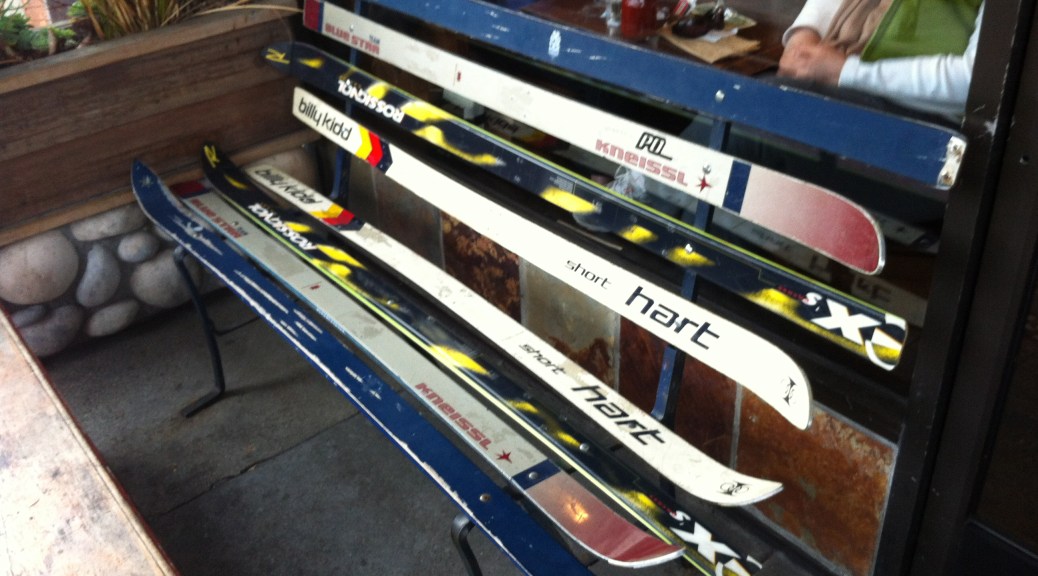
Header Image of bench made from skis by Victor Grigas /
CC By SA 3.0

Today’s post was first published in 2011,  by Jim (who used to be) from Clark’s Grove.

As an impoverished student I learned to do a lot of improvising. In those days I got by with shelves made from boards and cement blocks which were also found in many other student apartments. I even had a guide to living as an impoverished student that gave all kinds suggestions for living cheaply. It gave a recipe for cooking a tasty chicken dish to serve on special occasions, along with instructions on making your own beer, and talked about using colorful cloth to cover worn out sofas and other things.

Most of the improvised things from our student days have been replaced by items that cost a little more and don’t need to be covered with colorful cloth. The lamp made from an over sized beer bottle is no longer in use. The board and block shelves were replaced by less rugged shelves made with 2 by 2s and boards and those shelves were finally replace some that were purchased at a furniture store.

We are still making use of some used furniture that we refinished during our student days. One of these items is a Hoosier cabinet that we bought for next to nothing at a back street auction house. We painted this cabinet and used it for many years before stripping it and giving it a coating of polyurethane. We even found a source of hardware that matched the style on the cabinet and replaced a broken latch. This cabinet has a lot of interesting features and is still in use for storing dishes and other things in our dining room.

There are some other pieces of refinished used furniture that we are still using. Most of these refinished items came from relatives. They include and old arts and craft styled oak kitchen table. The legs of the kitchen table were not refinished and still are covered with the old wood finish and decorative stripes of green paint. We are also using a refinished dresser that might be made of maple and a small refinished table made from some kind of fairly good looking wood. An old oak dresser has been stored for many years in our basement waiting refinishing, but I doubt that I will get around to working on it and I think it will end up as a donation to the Salvation Army.

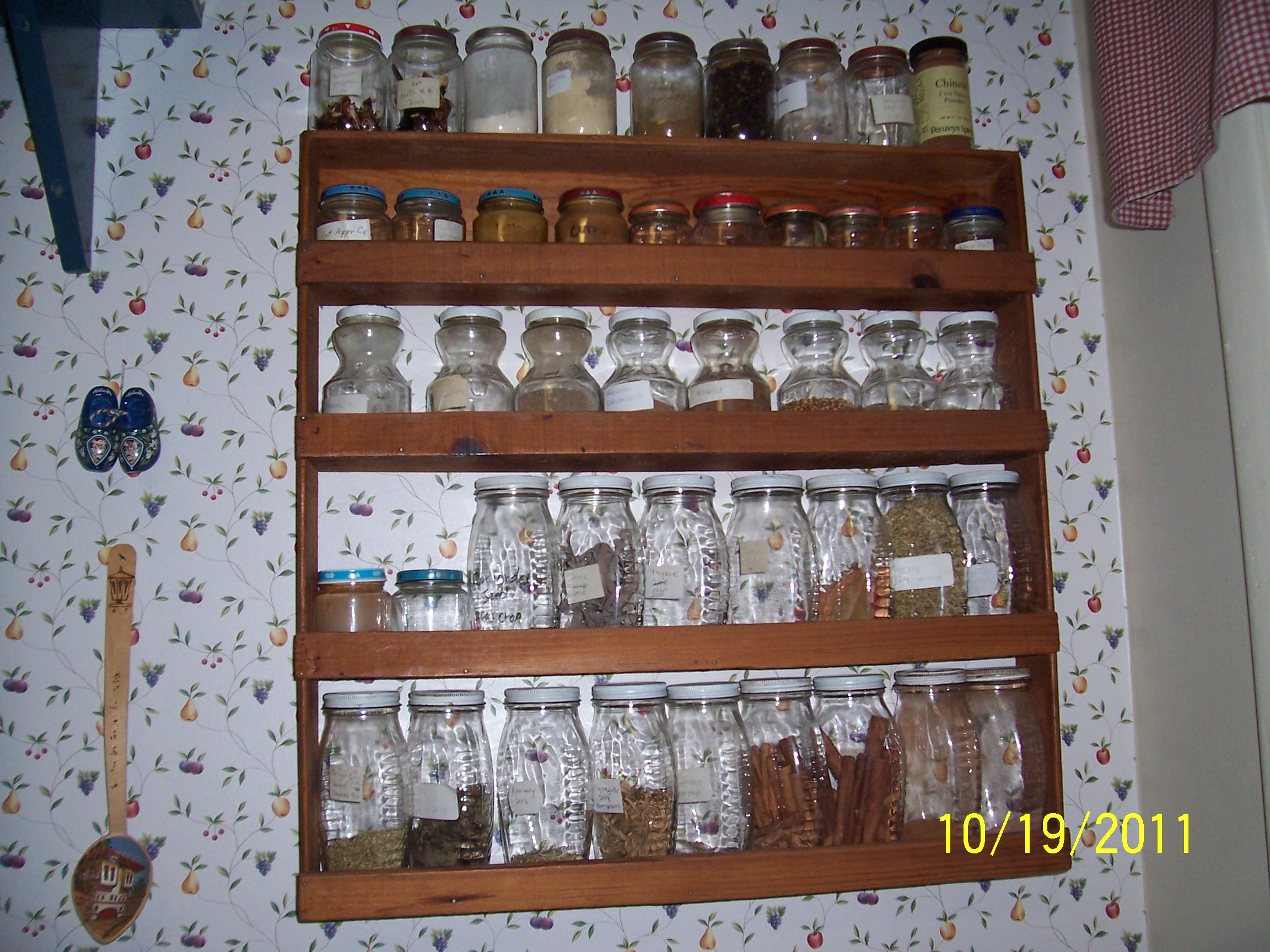
The most treasured remnant of impoverished student days is a homemade spice rack still being used in our kitchen that is seen in the picture. It was made from some rustic wood slats that came from an old wooden orange crate and is filled with sets of recycled glass jars of various kinds. This is one of the few times that my tendency to hoard all kinds of things, including used jars, paid off. It isn‘t a highly attractive item, but it has a ‘folksy’ look that keeps it from sticking out like a sore thumb. It could use some new better looking jars with better looking labels on them. This spice shelf is a well liked reminder of the days when we didn’t have much money.

It can never be replaced.

What’s your greatest low-budget improvisation?