Category Archives: History

The Day the Music Died

Today’s post comes from Wessew

For me the music died on Monday, October 24, 2016 with the death of Bobby Vee.

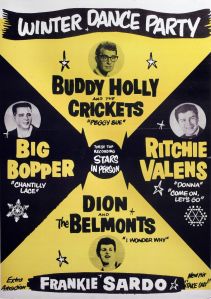
holly_poster

Buddy Holly, Ritchie Valens, J.P. Richardson (the Big Bopper) and pilot Roger Peterson left Clear Lake, Iowa for a flight to Fargo, North Dakota. They were to perform at the Moorhead, Minnesota Armory as a continuation of the Winter Party Dance tour. They never arrived as they died when the plane crashed into an Iowa cornfield, February 3, 1959. As news of the tragedy spread in the Fargo-Moorhead area, word went out for performers to substitute for the lost tour members. Fifteen year old Robert Velline and his newly formed group volunteered, were chosen to play and the show went on. The Shadows, as they called themselves on the spot, were well received and Bobby Vee went on to a stellar career before succumbing to Alzheimer’s disease. My parents attended that event. It’s not that they were big rock and roll fans but we lived just a short walk from the Armory in Moorhead and were acquaintances of the Velline family. So they went as a show of support for Bobby and his brother Bill, one of the guitar players in the band. My sisters and I remained at home with Grandma. I have no recollection of disappointment in being excluded from “making the scene.” Seeing as how I was only 6, the entertainment value would likely have been lost on me.

Over the years, the significance of the deaths and dance became more pronounced for me. Collecting the recordings was a given. I’m not big into memorabilia but if only Dad and Mom had kept those ticket stubs what a treasure they would be! I became a fan of Holly and Vee. Not so for my parents. It never seemed to matter much to them that they had been part of music history. I have been able to piece together a pretty good picture of what they experienced. They were in their late twenties so were a bit out of place among a crowd of teenagers. Not surprisingly, given my Dad’s two left feet, they didn’t dance at all. They did watch the Shadows perform but left early and didn’t see Dion and The Belmonts.

Time marches on and it is now the late sixties. KQWB radio began promoting a celebrity basketball team composed of the station’s DJ’s and a few college players. The advertising spot included a sampling of the backup singers for Bobby Vee’s hit record, “Rubber Ball” which in 1968 was now a golden oldie. They sang, “Bouncy, Bouncy. Bouncy, Bouncy.” KQWB 1550 was always on our car and home radios so we heard that little jingle frequently. Well, my Father swore that Bobby Vee had sung that song in 1959. The song wasn’t recorded until 1961 but no amount of evidence could disabuse him of the notion that he had heard it years before. The Vellines were no longer in our social circle, so there was no appeal to authority from that source. Now with the Internet, it is easy to prove how wrong he was but back when I was in high school, information resources were rather meager and it was probably best to let the matter drop in any case. But every once in a while the “issue” would come up. Dad would reaffirm his theory that many musicians play songs before they record them. The fact that Gene Pitney and Aaron Schroeder wrote the song, not Bobby Vee, leaves him unfazed. The mysterious song had become part of a conspiracy. The voices in Dad’s head are like a rubber ball going “bouncy, bouncy.”

Do you have a favorite conspiracy theory?

It Is a Village, Though

Today’s post comes from Clyde of Mankato

I have been thinking much about community–what it is, what makes it, how we lose it, why it matters that we lose it. Community has invaded my fiction without my permission. This is a vignette from my stories about Northeastern Minnesota.

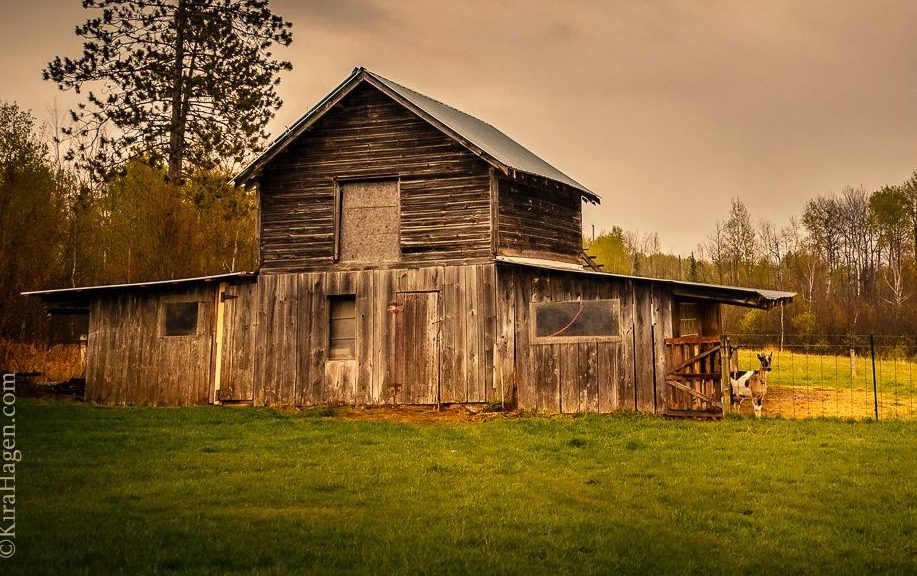
A place. Only a place. Indistinguishable from much of the boreal forest covering Northeastern Minnesota and adjoining Canada. A place, only a place, unless you looked at this place with the masterly eye of the original people who first roamed in small bands through the forest thousands of years ago. A Place: a low hill rich in game, with a level area above a clean-flowing stream, ample supplies of firewood, and many young cedars for poles, baskets, and other village needs.

It was many times a Lakota village for a season or two.

It was a village only once or twice for the Ojibwe, who, forced west by the European settlement of the eastern Great Lakes, displaced the Lakota out onto the prairie. The native peoples had astounding geography skills, which allowed them to remember favorite locations for their nomadic villages, but they were weak at geology. They were unaware of what lay beneath the hill and how to use it.

It was never a village for the fur trappers, first French and then English. The stream had clogged up, making it of no interest to the beaver.

It was not a village for the five men who came prospecting for iron ore. With their geology skills, they found the hidden wealth. Five men focused only on rocks for one week do not make a village.

It became a village once again when the first two dozen men arrived to open up the mine and by necessity begin a town. Soon followed more dozens of men, some to work the mine and some to attend the men who did. The third wave of men, accompanied by women and children, helped establish the mining office, a store with post office, boarding houses, and a dining hall.

Ten years later it was a large village, complete with several hundred residents, seven stores, two banks, two law offices, one doctor’s office, three churches, and a committee of village leaders to incorporate it as a municipality under the statutes of the young State of Minnesota, allowing them to plat and try to maintain muddy streets, provide a constabulary with jail, build a pine-framed city hall, organize a volunteer fire department, and grant the mining company and railroad all the exemptions and privileges they desired. The committee named the town for an eastern wealthy industrialist of dubious integrity but who had a proper British surname, unlike eighty percent of the residents.

After another ten years it had grown to a village of more than fifteen hundred residents who, despite some strident objections, added a brick city hall with jail, a larger fire hall with better equipment, a hospital, a small pine-framed elementary school, and parks, which at first were no more than rocky, weedy empty lots. It was a village because people gathered for their commonweal by assigning or gathering in the various roles that a village needs. United they were despite being divided into different heritages with different cultural norms, into different brands of Christianity, into opposing political points of view, and into social strata based primarily on occupation and nationality.

As a village it struggled, like all villages do, to serve the greatest good of the greatest number of people despite the interests of a powerful few. The library was a telling point for the village, opposed by those who saw it as a waste of tax dollars or waste of people’s time and by those who feared books as sources of dangerous ideas. A few years after the first small pine-framed library was built in the alley behind the city hall, it was replaced in the town center by a large-windowed brick and stone building, funded, along with its oak shelves and books, by Andrew Carnegie, who had made himself wealthy beyond the village’s imagination by processing their high-grade ore into iron and steel. His wealth was built with his skill, his ill-use of his employees from his mines to his blast furnaces, his intimidation of those who dared oppose him, and his manipulation of Wall Street, which has never cared what makes a village.

It was a village because most residents knew most of the others, because they gossiped about each other, by which is meant, among other things, knowing and tending to each other’s needs. Through gossip they knew what to help celebrate or who to help grieve. As a village they wove the strands of the web that bound them together, the strongest bonds woven in the hard times, of which there were many. Through boom and bust it was a village parenting each other’s children and finding pride in landmark events, such as their first high school graduating class of only two young women and one young man, others of suitable age having gone to work instead of going to high school.

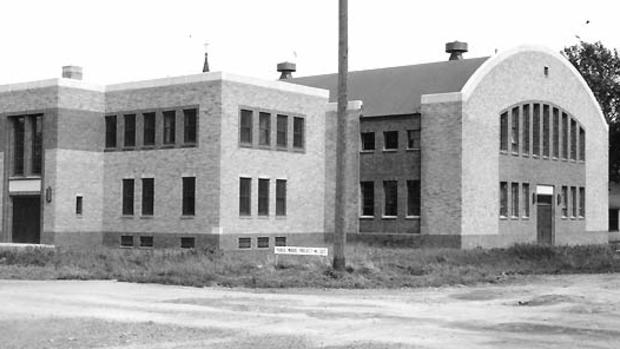
It continued to be a village as it grew to over 4000 residents who survived the disaffections and deeper divisions that come with larger size. It was a village proud of its new brick and granite grade school and imposing high school on the top of the highest point in town, donated by the mining company. More and more students were graduating, more and more were heading south for a better jobs or to add to their education for a fuller life.

It was a village united behind their sports teams which played other mining villages, united in elation when their teams were victorious over the teams from their rival town ten miles to the east or untied in dejection when the teams lost.

It was a village when it proudly and naively marched boys off to wars, stunned but united in grief when the sad telegrams began to arrive, and bound in relief when men came home.

It was a worried village when the ore of their mine began to dwindle. The population started to fall, more young people headed south, and businesses began to close. As a village it stood through it all, taking the loss as too-personal when their high school closed, sending their young to the rival school ten miles to the east. To the village’s relief, the grade school remained, but only for a few years until the population dropped back to a few hundred residents, most of whom were beyond the parenting stage.

It remained a village after the downtown closed and house after house was abandoned, a village whose residents drove elsewhere to bank, to shop, to visit the medical clinic, to treat themselves to a restaurant meal, and to hire lawyers to write their wills.

It is a village still, a village of mostly retired people, more women than men, who gather to mourn the impending death of the village and to pass around photographs of children and grandchildren who live in distant large cities where people have no sense of what makes a village and why villages matter.

© Clyde Birkholz 2016

What has not endured that you thought would endure?

Too Good to Last

Today’s post comes from Renee in North Dakota

One of the reasons we traveled to Bremen, Germany in May was to visit the towns where my mother’s family came from.

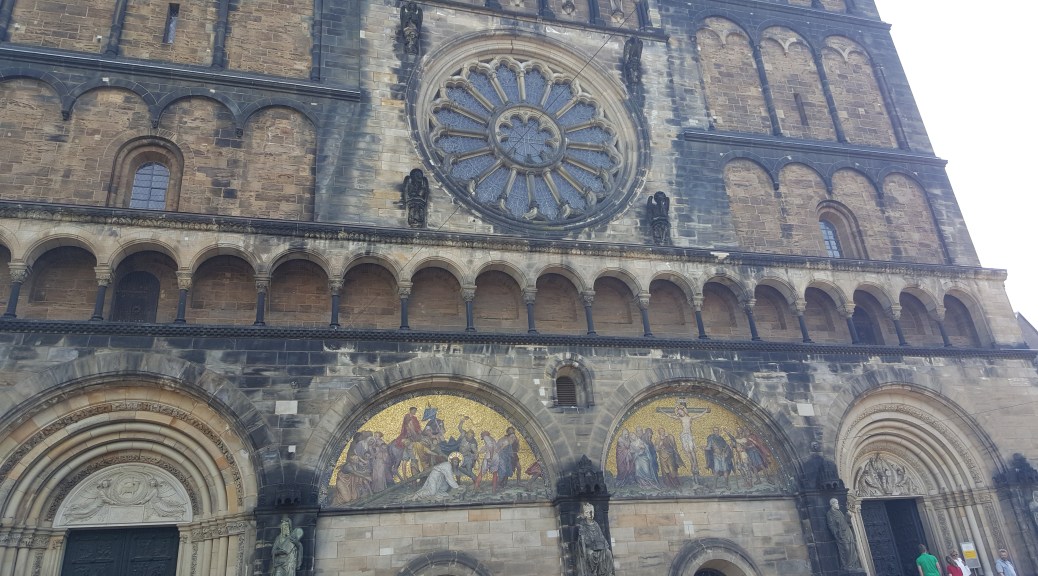
My maternal great grandmother’s family came from a town a few miles south of Bremen. The family last name was Cluver, and they came from Verden, a town with about 25,000 people. It was a very important place in the Middle Ages. Charlemagne slaughtered 4500 Saxons there in 782 for sliding back to pagan worship after they had been baptized. I imagine some of them were my relatives. The town was closely connected to the Old Saxon Law courts nearby. The town was considered a Free Imperial City of the Holy Roman Empire. A medium size cathedral,  built  between the 12th and 15th centuries, was home to a Prince Bishop from 1180 on, from whom my Cluver ancestors enjoyed great political patronage. That relationship also caused the eventual downfall of the family.

We have extensive records on the Cluvers. They were very wealthy in the centuries before the Reformation. Northern Germany is flat, low,  and swampy, and the Cluvers possessed the knowledge and ability to drain wetland so that it could be used for growing crops.  The Cluvers often loaned money to the Prince Bishop of Verden as well as the Prince Archbishop of Bremen. The bishops rewarded the Cluvers with land,  allowed them to live on grand estates that they owned, and used their influence to further the Cluver’s business and political aspirations. Things went well until the Reformation and the 30 Years War, when Sweden invaded and occupied the area and the whole region became Protestant. The Prince Bishops were ousted from power.The Cluvers clung tenaciously to the Church and refused to convert, I believe as much out of greed as from religious conviction. They didn’t want to abandon the cash cow that gave them so much prestige and power. I gather that they were pretty annoying and rebellious toward the occupying Swedes, who retaliated by killing as many male Cluvers they could find. Eventually, the family lost most of their wealth and lands, and became small Lutheran farmers like the majority of their neighbors.

It is hard to describe the feelings I had as I walked in the cathedrals of Bremen and Verden and saw the monuments and tombs of my ancestors.  There is a quite large and elaborate tablet from 1457 on the wall near the north Tower in the cathedral in Bremen in memory of Segebad Cluver. I wonder how he would feel knowing how things turned out. Greed can be pretty destructive. I also saw acres and acres of good farmland, though, so I suppose the family contributed something to the area that lasted.

What is a a gift or opportunity you’ve come to regret?


Guess Who’s Coming to Dinner?

Header image by Tim Evanson , CC BY-SA 2.0

Today’s post comes from Steve Grooms

Well, you don’t really have to guess, for you get to choose any dinner guest in the world, living or dead. Which person would you enjoy meeting informally, entertaining them in your own home?

Maybe there is someone from history you always wanted to answer a question.  Invite William Shakespeare for dinner, serve him some ale and then ask, “Hey, Bill, I’ve always wanted to ask: who really wrote your stuff?”

But be careful. In 1963 I asked former president Harry Truman a question about his decision to drop the atomic bomb (specifically, the second bomb). He blew a gasket. After reflection, I would do that one differently.

I’ve been thinking about whom I would invite to dinner. In April of 1962 John F. Kennedy hosted a White House dinner for Nobel Prize winners. Kicking the evening off, Kennedy said: “I think this is the most extraordinary collection of talent, of human knowledge, that has ever been gathered at the White House – with the possible exception of when Thomas Jefferson dined alone.”

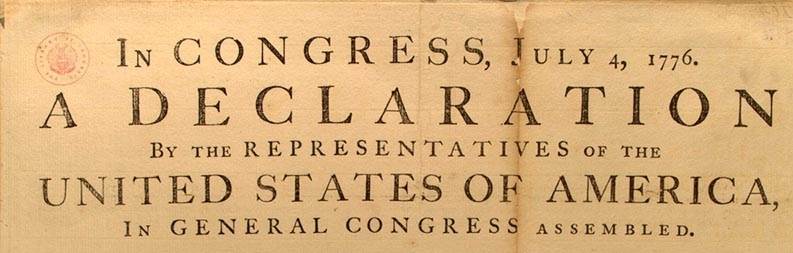
Since hearing that, I’ve fantasized about dining with Thomas Jefferson. Given my history, that might be a dangerous choice, for I’d be tempted to ask the author of the Declaration of Independence why he slept with his slave.

That’s okay. I have other choices. Sticking to presidents for the moment, I would pass on Theodore Roosevelt (who was too full of himself) but would love an evening with his nephew, Franklin. To make FDR feel at home I might add his chubby buddy Winston Churchill. (And since this is a fantasy I don’t have to worry about how I could afford Winston’s bar tab.)

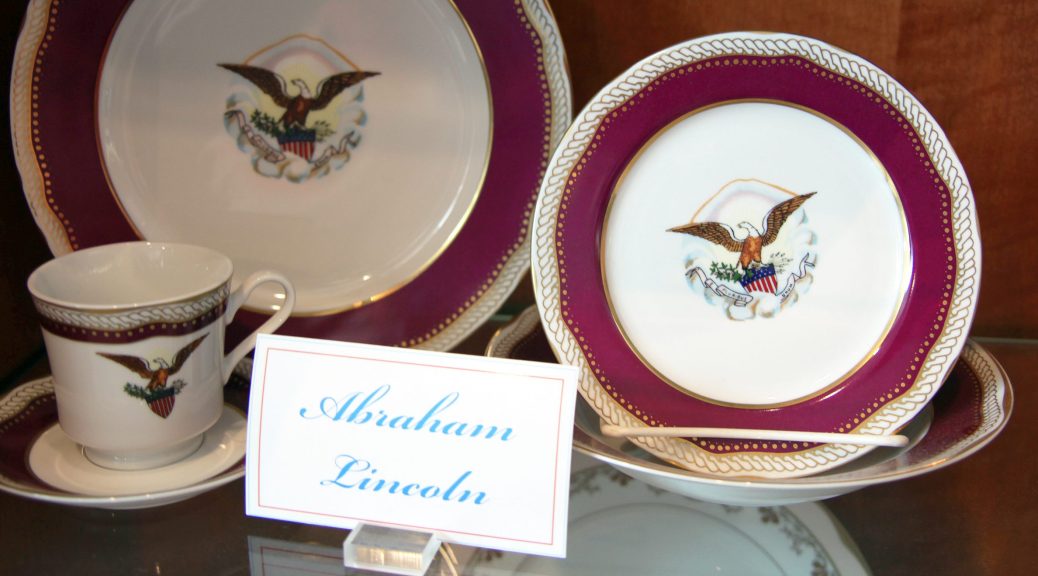
My first choice among presidents would be Abraham Lincoln. They say that Lincoln was a terrific storyteller who often embarrassed his stuffy cabinet members with stories that were funny and occasionally a bit earthy. And if Lincoln was coming to dinner, I’d sure want to invite Martin Luther King. I’ll bet they would hit it off.

Maybe you fear you’d be intimidated by hosting a great person. Not to worry. Invite Pope Francis. He seems like a great guy, someone who is approachable. He wouldn’t gripe if you served him less than a gourmet meal. He’d love a tuna casserole. In fact, he’d probably try to wash your feet.

Or would you prefer to host a small group?

Think about an evening spent in the company of Groucho Marx, Paul Wellstone, Pete Seeger and Walt Whitman. Or how about Eleanor Roosevelt, Abigail Adams and Molly Ivins? I don’t think the conversation would drag!

So . . . who’s coming to dinner?

I Don’t Snow About That

Today’s post comes from Clyde of Mankato

The photo shows my sister Cleo at age 13 and and me at age 10.

Standard clothing and standard work for farm children in the mid 1950’s. I cannot imagine my ten-year-old and thirteen-year-old Minnesota grandchildren working like this, nor do I want to. But I do not regret this labor in my childhood. My father did not assign us this task lightly. He no doubt was off doing even harder work at the same time. My sister, I suspect, came out of her own free will to help me. We were close that way. My sister was not afraid of exercise. She became a physical education teacher. The work she and I did mattered; it contributed to the welfare of the family.

However, one of my many back issues is a disorder in my upper back which is associated with doing heavy lifting at a young age. Perhaps it is related; perhaps it is not. I promise that was heavy snow, having been pushed there by the county plow. We lived at the end of a road.

I am a bit confused about the issue of children working. I did not make my children do much work, but none of the supposed effects of not requiring children to work is evident in my mid-forties offspring. Quite the opposite in fact.

What’s your history and attitude on child labor?

Winona Ho!

Header photo of Lake Winona and bluffs via Wikimedia Commons

Today’s post comes from Barbara in Robbinsdale

Winona Ho!

The Play Group

When Husband and I moved up to Minneapolis from Winona in 1985, it was with mixed feelings.  We thought we had found “Home” in Winona, and we knew how much we were leaving behind in the small town. Minneapolis is where Husband had landed a good programming job, and we had his family and several friends in the Twin Cities. But we were pretty sure it wasn’t going to be permanent – we would return some day to Winona.

There are many reasons why this is finally going to happen, probably in mid-summer:

The hippie farm

– For Husband, he’s realized that Winona is where his Tribe resides – people he’d met as he helped to start up the food co-op and the farmers’ market, from his apple-picking days at an orchard on the river, from living on the Hippie Farm  above East Burns Valley… there were many colorful characters, several of whom are still around.

Up on the Levee

– My roots there are not as deep, but I formed a bond with local folk dancers, and parents in the preschool play group that Joel and I had joined. I fell in love with the beauty and the – movement is almost the right word – of the river. (…“you rolling old river, you changing old river…” Bill Stains)  Our house was just a couple of blocks from the Mississippi, so we would often pull the wagon up on the levee to see it. I also love the fact that this town, slightly larger than Marshalltown IA (a little over 25,000 when I was growing up), had such a vibrant Alternative Community. Then there was the Culture available with three (now two) colleges, a boat house community…

–  It turns out that my Tribe, I have come to realize, is mostly our Babooner “collective”, plus a few others. I am hoping this is a portable connection, though I imagine it will feel somewhat different not being right “in the center of things”. I figure I’ll be traveling up to the Cities at least monthly – will try to schedule it around Baboon events.

–  I am also aware that, for both Michael and me, we are not as moored to this place as we once were, before our son Joel died in 2007. And Husband has lost several family members in recent years, either literally or figuratively – freeing us up even more. I am hoping that my mom will be amenable to moving there when the time is right, and we have done some research to that end.

At a party - 1984

– We have recently seen the power of the network of Winona people, since our best Winona friend Walken (who is experiencing the early stages of Parkinson’s) lost his wife Bernadette in December to pancreatic cancer. There is a food network that brought daily meals for weeks, and several people who provided rooms for his visiting in-laws.  (Reminds me of how we Babooners have gathered to help each other at times.)

I have never said “No” to a move, and I have never been sorry. But as I think about leaving Mpls, it is with mixed feelings. No doubt I will miss a lot of things about this city – this is worthy of its own blog at some point.

But the bluffs are calling.

Have you ever had to leave a place before you felt you were ready to leave?


The Palace

Header image by McGheiver under Creative Commons Licence 3.0

Today’s post comes from Renee in North Dakota

I subscribe to my home town paper, The Rock County Star Herald, and I am constantly amazed by the positive tone and progressive activities the paper reports. For example, there is a $1,000,000 renovation to the library getting underway. The town just beautified the four corners of the major intersection in town to make it more appealing, and the community voted to extend some sort of special State financial assessment that benefits the public school system.  The town has three museums, a new hospital, and a beautiful Veteran’s Nursing Home. The Rock County Historical Society raised $150,000 from private funds to remodel its new building, and the newspaper recently referred to the director of the Historical Society (an elderly woman who taught with my mom) as “Rock County’s Sweetheart of History”.

I think one reason for all this good natured  progressiveness goes back 100 years to the building of The Palace Theater in 1915.  It is a grand structure in the Beaux arts style with 550 seats, built by Herman Jochims for traveling theater troupes, orchestras, and vaudeville acts. It has an orchestra pit and, after 1926, air conditioning and new decor in the Art Deco style.  Herman wanted the Palace to compete with any of the theaters in large cities , and spared no expense decorating it. The second story was used as a ballroom and eventually as Maude and Herman’s residence. In 1926 Herman installed a pipe organ which his wife, Maude, played during the silent films he showed. She was an elegant woman noted for her musicality and elegant dresses.  I watched movies at the Palace all through my childhood and adolescence. It was so posh inside. The first things I always noticed after walking in the foyer were the two large, round mirrors, hung directly opposite one another, so that they reflected the other in smaller and smaller images as though the images went on into infinity.

By 1977, the Palace had fallen on hard times and had been foreclosed by the bank down the block. My parents often talked about the travails of the theater at this time, and I got more details about the issues in a paper by Maianne Preble of the Minnesota Historical Society in 2009. Community members raised money and got grants, and volunteers helped with renovations, so that the theater opened again and was purchased by a local theater group. Some movies and live plays were presented, but there was trouble ahead when the theater group’s Board of Directors sold the building to one of its members in 2001.  There was a general uproar at this, and, eventually, a new and revised Board of Directors repurchased the building after it again went into foreclosure by the bank down the block. This bank gave the new Board of Directors a line of credit with which to buy the building back. More extensive renovations took place, and the building is now owned by the city, which partners with the theater group for its day to day management. Movies are shown, and live theater and musical groups perform regularly.

My hometown isn’t perfect by any means. There is the conflict and disagreement and hard feelings that you find in all communities. I think, though, that the live  performances  and movies gave people the opportunity to see beyond their current situation and dream of something better.  Many people have reported seeing the ghost of Herman up in the balcony, and the organ has been heard playing when it was turned off and even dismantled for renovation. (Maude, no doubt, wanting to play again.) I like to think that when there are hard decisions to be made in town, their spirits flit out of the Palace and start whispering in people’s ears “Do it right. Make it beautiful.”

What local landmark lifts your spirits? 

The Old Home Place

Header photo: threshing machine cc BY-SA 2.0

Today’s post comes from Jim Tjepkema.

My Grandparents operated a small dairy farm that was run by my Uncle after my Grandparents retired.   I visited that farm with my family on many occasions when I was young.  It was a small farm that was still being run in some of the same ways that it was operated when my Mother was young.  On those visits I learned about some of the old traditions that characterized farming in the Midwest many years ago.

One of my most treasured memories from a visit to the old home place was the time we were there when my Grandparents were hosting a threshing party.  Before farmers had combines that threshed grain in the field, stationary-threshing machines were used and bundles of grain were brought to those machines.  It was called a threshing party because a group of neighbors gathered to bring the grain in from the field and thresh it.  The threshing party I observed included a big noon meal, prepared by my Grandmother and women from the neighborhood, to feed the threshing crew.

By the time I made my first visit to the farm they had switched from using horses to using tractors for fieldwork.  However, they still had one of the draft horses that had been used to work the fields.  One of the years when we visited at Thanksgiving there was a small patch of corn still waiting to be harvested.  My Uncle hitched the horse to a wagon and we helped him finish harvesting the corn by hand picking it and throwing it into the wagon.  I was surprised to find out that the horse was able to move the wagon ahead without anyone riding in the wagon.

I learned more about the old farm during an extended visit when I was old enough to help my Uncle with fieldwork and milking.  Modern milking machines were used, although there was no bulk milk tank.  Pails of milk were carried to the milk house and poured into cans that were kept cool in a tank of water.  When my mother was young, they sold milk by bottling it on the farm and delivering it to homes in the nearby town.  The milk that my Uncle produced was hauled in cans in the back of his pickup to a local cheese factory.

My brother and I helped my Uncle with haying.  We helped load bales of hay onto hay wagons and then unloaded them into the barn.  The farm still had some equipment for handling loose hay including a hay loader.  I saw this equipment in action when it was used to harvest wild prairie grass, which was piled on top of bales of hay that were stored outside. My Uncle showed me how to use a pitchfork to stack the wild hay on the bales in a manner designed to shed water, thereby protecting the bales.

I have described some of the highlights of my visits to the old family farm.  Some other memories included: playing in the hayloft; taking the cows out to pasture; watching the birth of a calf; and feeding the pigs.  I was lucky to have seen the tail end of some of the older ways of farming practiced by my Grandparents and Uncle.  In fact, farmers interested in becoming more sustainable have recently rediscovered some aspects of those older farming practices..

What older ways of doing things do you fondly remember?

Remembering Them

Today’s post comes from Barbara in Robbinsdale.

November 11 has been called Veterans Day since 1954 – before that it was called Armistice Day in honor of the end of the hostilities of World War I. My story grew out of an event from World War II.

You would think they might still be mourning the French people they lost in World War II 70-odd years ago (and I’m sure they are). But in spring of this year, the French villagers of St. Père en Retz, on the western edge of the Loire region of France, wanted to honor the Americans who died there on May 1, 1943. A crew of ten from the US Air Force flew a B17 (the Black Swan) out of Britain, one of 59 bombers on a mission to take out a submarine bunker at coastal St. Nazaire that had been taken over by the Germans. Six lost their lives, including the pilot, who was my mom’s older brother Bobby (Jay Robert Sterling). (Another time I’ll tell more of what we now know of the story.)

The people of this region are still so grateful for every attempt by American and British forces to aid them, that between 2013 and 2015 five different villages along the Retz River have  commemorated the soldiers, with several more installations planned in the next few years.

The organizing Committee from St. Père en Retz searched via the internet for crewmen’s family members, then invited us to come to France for the occasion. They were fairly successful – eleven travelers representing four of the crew were able to gather the first weekend of May. (A fifth crewman’s family was able to come later on.) Since my mother wasn’t well enough to make this trip, my sister and I went in her place, along with her son and Husband.

Other family members of the crew had visited St. Père en Retz individually in previous decades, and had each been honored in some way. But this time they wanted as many people as possible as they accomplished several things:  installation of a new History Panel (Panneau Historique); upgrading a Monument listing the names of the crew;  and commemorating this with a church service, and ceremonies at the crash site, to which the entire village was invited.

Six of us were put up at a country manor house of one of the Committee, five more at nearby B & Bs. The villagers were impressed that we would travel all this way – we were impressed by all the work the Committee undertook to organize this, how they welcomed us, and the turnout of the community for the ceremonies.

So it was a weekend full of receptions, ceremonies, speeches, poems, banquets, unveiling of monuments, viewing of the crash site (the most emotional time of the weekend), and touring related sites like the submarine bunker. There was also consulting my LaRousse at every turn as I tried reviving my college French, attempting to remember all the new French names, and getting used to being full of food and wine all the time…  We were exhausted by Monday morning, but I wouldn’t give it up for anything. It was quite something to be celebrated like this.

All over this corner of France, these Panneau Historique are being created and installed, telling the stories they don’t want their people to forget.

Have you ever been moved by a patriotic event?
Is there anyone you want to remember this Veteran’s Day?

Hummel, Hummel-Mors, Mors

Today’s post comes from Renee in North Dakota

Clyde’s recent posts about DNA and birch logs made me think about these little carvings I have that came from my mother’s family from Hamburg, Germany.  

The crabby water carrier and the farm animals and other figures were in my house all throughout my childhood.  Mom would never let me play with them. I think some of them were children’s toys. Mom said she thought that some of them were sent from Hamburg by family in thanks for the food packages my grandma sent them during the war.  She was pretty vague about it.  She couldn’t even tell me  how long she had them, or why she had them instead of my grandmother or other family members.  

She also couldn’t tell me much about the water carrier. She said he had something to do with Hummels. I always thought she meant the porcelain  child figures designed by the nun, Sr. Maria Hummel.  

Well,  That isn’t quite the whole story.

I now know that the water carrier figure was a real person who worked as a water carrier in Hamburg in the mid-19th century and who was noted for his nasty temper. He was given the nickname “Hans Hummel”.  The word Hummel sometimes is used to refer to a bumblebee. Hamburg children would follow him through the streets as he carried water, yelling “Hummel Hummel” and he would respond with “Mors Mors” which is low German slang for “Kiss my a**”.  

People from Hamburg often greeted each other this way long after Herr Hummel went to meet his maker. The water carrier is a popular symbol for Hamburg.  Now, why didn’t my mom tell me this? How did those cute child figures get mixed up with this?  I don’t even know if mom knew the whole story. If that is the case, why didn’t her mother or her grandparents tell her the story?

Since my parents have both died I find I have lots of questions that I will probably never get answered. I wish I could go back in time and ask my great grandparents and other ancestors just what is up with all this stuff.  Husband and I are tentatively planning a May trip  to Bremen and Hamburg, so maybe I will find some answers.

What question would you ask your ancestors?