Category Archives: The Baboon Congress

Spring Went Sproing in 1965, Part 1

In the spring of 1965 Morey Amsterdam was in the Twin Cities for a gig, which must have been during the height of his fame. While he was here, he wrote a one-liner about Minnesota that has hung in my mind ever since:

“Minnesotans are people who have snow in their driveways, have water in their basements, are missing the roof to their houses, don’t know what time it is, and can’t buy paint on Sunday.”

The last two parts you may not appreciate if you were not here in ’65. The legislature overdosed on stupidity pills that year. They did not pass a law to define when Daylight Savings Time started. As a result every city set its own time, which among the many cities of the Twin Cities made chaos. That was one of the reasons Congress passed a national law for uniform DST, which the logic-benders of Arizona ignore.
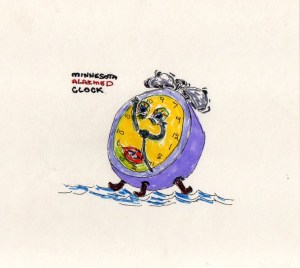
MN alarmed Clock

While they legalized the sale of liquor on Sunday, the legislature also outlawed the sale of many items on Sunday, such as hardware. That law stood up in court for about .321 seconds. Boone and Erickson were doing riffs on bootleg paint and high-speed nuts and bolts runs from Wisconsin. Perhaps the lawmakers were right; a Sunday reprieve from the contagious frenetic pace of modernity would not be a bad thing.
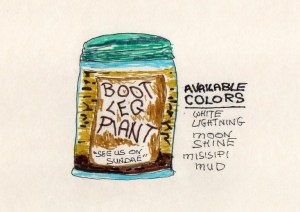
Bootleg Paint

Spring ’65 was, of course, also a time of floods and tornadoes. I was working at the University of Minnesota medical school as a sub-lowly lab tech. On the evening that the tornadoes tore through the northern suburbs, I was working late, not sure why, what with my insignificance, but there I was. The janitor on my floor of Diehl hall, a person who was otherwise impossible to find, invited me to join him and some others on the roof of the highest floor of Mayo Hospital, which at that time was about as tall a building as you could find outside of the Foshay Tower. It was up on that roof that I lost my innocence.

I lost my innocent belief that you could trust other people’s observation, and by extension, my own. Person after person called into WCCO radio, to which we were listening, to report tornadoes. No one called from the northern suburbs where the tornadoes were, because they could not. Many called from places we could see clearly to report nonexistent funnel clouds, such as over the Sears Tower, where a bright shaft of light was streaking down through the clouds.

If I were to serve on a criminal journey, I would mutter to every eyewitness, “Yeah, right.”

When have you or someone else’s observation been proven wrong?
Play Time

Today’s post comes from Renee in North Dakota 

I believe that the Trail Baboons are a pretty playful bunch, so I thought they might find interesting my tools of the trade as a play therapist.

I am the only therapist at my agency who feels comfortable working with children under the age of 10. At the present time, the waiting list to see me for first appointments extends into September. I find that disturbing, but understandable, given that people don’t want to drive 90 miles to Bismarck for weekly appointments.

Husband is going to start working a second part time job as a therapist for Lutheran Social Services, and will work with children and adolescents, so I hope he can help fill a therapeutic void in our region.

I made a decision long ago that I would purchase all my toys, books, and materials myself, mainly
because I want to get the exact items I need and not have to depend on what might be in the agency budget at any particular time. The Association for Play Therapy has an annual conference and there are loads of vendors selling lots of toys, books, and games. I get what I can whenever I go. I also find lots of things at a local farm/ranch store.

Play therapy rooms need to have materials that allow for self expression and relate to the child’s everyday experience.

I am proud of my room, and I hope that the following photos will prove interesting to the Baboon community.

I have a jail, a school, a hospital, a fire station, a doll house, a kitchen area, baby dolls, a farm, and a sand tray.

I have a castle, human figures, animals, toy coffins and grave stones,miniature alcohol bottles, plastic turds, puppets, a puppet theatre, and costumes.

I have a doctor’s kit,toy guns and swords, and handcuffs.

I have books and therapeutic games. I also have a set of foam bowling pins with foam bowling balls (for irrational thoughts bowling, in which we tape an piece of paper inscribed with an irrational thought or fear on the pin, and bowl it over).

Generally, a toy is appropriate for a therapy room if it can be used to elicit feelings or help a child express feelings or tell their story. It is also important that, if thrown, the toy can’t hurt to therapist too badly.

You will notice in the photos that I have every few toys with commercial associations.

Those commercial links stifle creative play. Superheroes seem to transcend their commercial ties, and end up doing a wide variety of things in the play room.

I don’t see all my child clients in the play therapy room, mainly those age 8 and younger. My therapeutic interventions involve non-directive play, in which I make reflective statements about the child’s actions and behavior, or more directive play when there are specific issues that a child has to deal with and I more actively organize the session.

The large purple doll figure is named Meebie. It has a variety of Velcro-backed facial features and things like teardrops and broken hearts that children can use to display all sorts of faces and feelings.

The pure white cloth doll figure, called a Blanco doll, can be drawn on with washable markers and comes clean in the washing machine.

The large wooden chest is for anything in the room that is scary and needs to be locked up.

I have a new doll house. This one has two stair cases. My old one was very grand but the children were upset that there were no stairs. No one ever wanted my suggestion that they could pretend there were stairs. My new doll house, with stairs, is getting a lot of use.

None of my American Indian clients want to play with the Indian figures. I am still trying to figure that out.

The sand tray is really popular. I get the sand from a guy in Utah who sells beautiful sand in different colors and textures. I use the sand tray for general free play as well as to have children use the miniatures and other objects to show me what their world is like and how they would like their world to be. Sand tray therapy is widely used by Jungian therapists with adults as well as children, and there are hundreds of miniatures that these therapists use.

I found the scared and horrified figures at a recent play therapy convention. Kids really relate to them and use them in the sand tray.

I have lots of animal figures, wild, domestic, and fantastical. The animals are in family groups, with adult and young members.

Some people refuse to have toy weapons in their play rooms. I don’t think banning them from the play room is realistic.

The large wooden structure gets used a lot as a safe place or as a home.

I like the guy with the chain saw. He is so Freudian with the position of the saw!

What are the tools of your trade?

Sleepless Seated Sightseeing

Today’s guest post comes from Edith.

Recently I took a long trip, and was very lucky to have window seats the entire 3 days and 3 nights.

I boarded Amtrak late at night in Kansas City, MO, “slept” through most of Kansas, and woke up to a red sun rising over the prairie behind us.

NM_train9 (1)

During the first day the train went through New Mexico. I never had been to that area before, so was fascinated by the scenery: shrubby trees, hills, some mountains. Lots of browns, but other colors, too.

When I woke the next morning we were running about 1 ½ hours late, but somehow, by 8:30, we had made up 1 ¼ hours of that. The train arrived almost on time in Los Angeles. A good thing for me since there were only 2 hours between our scheduled arrival and the departure of my next train.
Wow, the train depot at L.A. was something else! Huge! Busy! Full of people hustling and bustling around, and all of them knew where they were going; I was the only one who wandered around in circles before I figured out the gate where I was to board my next next train, the once-daily Coast Starlight.

Then I went to the waiting area – to wait, of course. But I got restless. When I noticed people coming in some side doors. I got up to investigate and found a charming courtyard. Trees. Birds singing. Benches. A fountain. Tile work. Grass. Blue Skies. Very refreshing.

The Coast Starlight was pretty full, so I had a seatmate. She spent a lot of time in the observation car. No need for me to do that – not only did I have a window seat, it was on the ocean side.

But we sat in the same spot for a long time while the train was stopped because of a gas leak somewhere near the tracks up ahead. I had a great view of a parking lot and some empty tennis courts.

Lovely.

After 4 hours, we were able to move on.

Lucky me! The train goes very close to the ocean, in spots, so I had great view after great view.
Very cool!

The problem with the train being late was we no longer had any stops where we could get out and stretch.

Uffda, my legs ached from sitting. Even after we left the coast, the scenery in northern California and Oregon was lovely, but i had trouble appreciating it.

My trip_CA17

Finally, after what seemed like an endless time of trying, never very successfully, to sleep in a train seat and wanting to do anything but sit still another hour, I arrived in Portland.

I wanted only to take a shower, sleep in a real bed, and look forward to a day with fellow baboon Steve. Still, despite all the discomfort I had endured, I felt lucky that I was able to see so many beautiful sights from the train window.

How long can you stand to sit?

Frictional Fictional Fretting

Today’s guest post comes from Clyde

For thirty years or more a novel has irritated me; I would say angered, but that makes me seem petty.

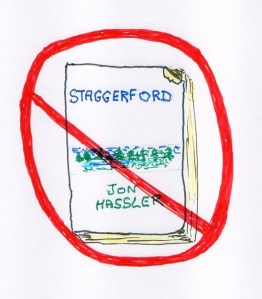
The first book is Jon Hassler’s Staggerford.

Staggerford

That was supposed to be my book to write: the tale of a man teaching English in a small northern Minnesota town at the high school he attended. Even worse he wrote it so well. Curse him. I could have not described a faculty meeting and a faculty party as well as he did. Darn him. He fictionalized Park Rapids, while I would have done so to Two Harbors. I would have thought of as clever a town name as Staggerford—if given the time. Hmmph to Hassler. It so disgusts me that I have been forced to read it several times now.

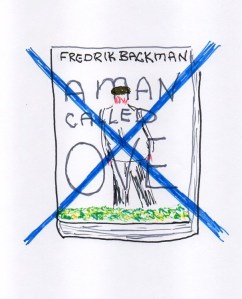
Ove

Now, in my grumpy old age along has come another equally irritating novel. Last week while waiting for my wife to select another half dozen interchangeable romances, I spotted on our library’s tiny New Fiction section the book A Man Called Ove by Fredrik Backman.

I am about three-fourths of the way through writing my second book, a book which takes my main character from my first novel into old age with a cat. Go ahead guess. Yep, you’re correct: A Man Called Ove is my plot, set in Sweden, no less. About a man dealing with solitude and forced retirement and a cat.

Well-written too. Funny, too. Human, too.

Backman’s cat is a wild cat like Opus’s friend Bill the cat, all ratty and hairballed. My cat is a superior cat, coming by way of a vet, named after a woman author.

Backman’s first chapter upset me the most. I have been in a running battle with the techies from our local cable provider, (was local, but sold off to a mega-corp) who cannot make my TV and Internet connection reliable. Our discussions are frustration on both ends.

In Backman’s first Chapter grumpy old Ove is frustrated by the sales clerks whom he frustrates because he cannot understand how the “Opad” is not a computer. Where is the keyboard, anyway? Backman not only stole my plot, he also made me look foolish to me.

This book I think I may just have to purchase in paper form. Not digital because 1’s and 0’s don’t burn well.

I would tell you the plot, but that would be telling MY PLOT. I strongly urge you not to read it. Wait for my book to come out.

Eventually.

What novel or fictional character is too similar to your life or you?

Cousin Dan Keeps It Simple

Today’s guest post comes from tim.

i may have mentioned cousin dan before here on the trail.

this time of year i have to call him and thank him one more time for making me aware of the special circle we live in.

dan comes from fargo, i come from fargo. i got out, dan didnt.

when cousin tim would come up from the cities it was a special time. the cities were like the emerald city in fargo in 1960-70. i would come in in my twin city finery with peace sign pendants and floppy hats from the mod psychedelic stores in the heart of minneapolis.

dan was a wild man and did things i would never dream of doing. reckless drug trials, trouble that anyone would know better than to try but in fargo you knew where to draw the line, when you could get away with it,  and when you were pushing your luck.

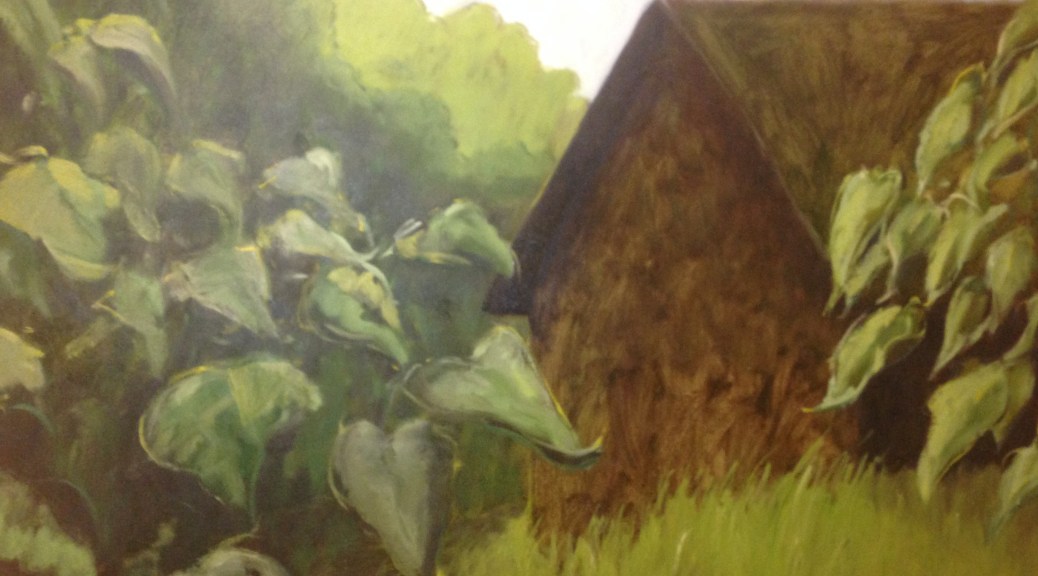
dan went off to study fine art painting with figure studies and landscapes as his focus. i love his work. his hay bales in the field and his rolling fields with the focus being the rows of corn stubble and large cloud skies took my brain away on trips to the places i visited when i had time to look and enjoy

about 4 or 5 years ago he had an aneurism and today reminds me of chauncey gardner in jerzy kosinskis being there which peter sellers brought to life. its fitting. he has traded in his wild youth for the most laid back passive existence on the planet where he paints and watches people on the sidewalk scenes in his world and enjoys the simple things.

the paintings he did and does are of the landscape and the gentle surroundings we miss if we are not paying attention.

for the next 3 or 4 weeks the greens are magic. the developments in the world of leaves make the world a kaleidoscope of greens. today i saw willow leaves sprouting almost dandelion yellow the celery green and moss and white hued buds popping as the leaves do their butterfly form the cocoon imitation and sprout from those tree branches like aliens form a sigourney weaver movie.

so thanks to dan for making me appreciate green in april and may.

what do you do to simplify your life?

Ask Dr. Babooner

We are ALL Dr. Babooner

Dear Dr. Babooner,

Since I am a regular reader and commenter on “Trail Baboon,” I have come to feel kinship with these noble creatures and have occasionally described myself as “a baboon” with what I thought was justified pride.

Then few weeks ago I saw a show titled “The Secret Life of Primates” on PBS, which inspired me to do even more research online.

After that I became somewhat identity-confused because there were several baboon traits that I liked, and then there were some others.

What I liked:

  • In several species of baboons, the alpha female rules. She gets the first and best food, water, sleeping spots.
  • The adults groom each other in a “significant social function” and ritual.
  • Young baboons are active and playful, especially while the adults groom each other.
  • The females tend to be the primary caretaker of the young, although several females will share the duties for all of their offspring.
  • Baboons are completely at ease in trees, thanks to their long arms and legs.

What I didn’t like:

  • The weakest female develops a real inferiority complex.
  • Among the males, there is a lot of infighting for lead position.
  • Baboons  eat EVERYTHING they can find – fruit, insects, small fish and animals, and seed pods embedded in anything including dried out dung piles of, say, a rhino.

That last part about picking seeds out of rhino dung completely put me off the feeling that I am in any way like a baboon.

And yet I still admire the tree-swinging and grooming and females-in-charge aspect. Is it wrong to accept kinship with only the admirable baboon traits, while distancing myself from the negatives?

With concern,
Barbara in Robbinsdale

I told BiR that her somewhat tentative baboon-affinity is no different than the difficult choice politicians face when they are asked to take a picture alongside some random stranger. One wants to be friendly and accepting, although if the price of putting your arm around someone (or following them on Twitter) means you endorse everything they have done or will ever do, it quickly becomes impossible to socialize. I suspect before long all our public associations will have to be accompanied by a detailed disclaimer statement – fine print that will clearly lay out what we like and don’t like about them.

But that’s just one opinion. What do YOU think, Dr. Babooner?

Pi Day Squared

Today’s post is a re-post of a guest post from two years ago, when Sherrilee first discussed Pi Day.

I’m a geek. I admit it. I love trivia; I love learning things. I have three magazine subscriptions: MentalFloss, Scientific American and National Geographic. I love Star Trek and have seen every episode of The Big Bang Theory. So three years ago when I first read that there are people out there who celebrate Pi Day, I was intrigued.

Pi is the ratio of a circle’s circumference to its diameter and is expressed as – 3.1415926…. into infinity. It’s decimal representation goes on forever and never repeats. Since March 14 is 3/14, it has been adopted as the day to celebrate the mathematical constant of pi. There is even a website where you can send Pi Day email cards and see Pi Day videos.

Although I’m not a serious fan of math, Pi Day seemed like a perfect holiday for my inner geek.

Last year I convinced my boss that I should be able to use my floating holiday for Pi Day and then sent out a few invitations to my neighbors. I pulled out all my cookbooks that might possibly have pie recipes in them and poured through them. Over the weekend before Pi Day, I did all the shopping – had to hit three different stores to get everything. I even stopped at the local liquor store and let the sales people recommend three bottles of wine that would “go with pie”.

The weather on Pi Day was wonderful. I was able to open all the windows to get fresh air and the sun streamed into the kitchen while I worked. I made seven kinds of pie: Dutch Apple, Cherry Apricot with Almond Crumbles, Bannoffee (toffee with bananas and whipped cream), Pecan, Peanut Butter with Chocolate Chips on a Pretzel Crust, Blueberry and finally, Crack Pie (gooey butter on an oatmeal cookie crust). The refrigerator had to be completely re-organized and I had to press the fireplace mantel into service to keep the finished pies out of reachof the dogs.

Everything turned out like it should and tasted great. It was relaxing to spend the day in the kitchen and it was fun to have another holiday in March to celebrate.

What is your favorite Pi(e)?

The Mink Caper

Header photo by William Warby

Today’s guest post comes from Plain Jane, who told this story in the Trail Baboon comments a few days ago.  With the holiday party season just past, it is a cautionary tale about knowing your limits and keeping tabs on your property.

It was shortly before Christmas, and I had just separated from wasband a few months before; I was in a blue funk. A man I had absolutely no interest in dating had invited me to the NCO Club at Fort Snelling for a little Christmas cheer, and I had accepted his invitation because I couldn’t bring myself to say no.

That same day was our company’s Christmas party, held at the now defunct Minnesota Club, a rather posh establishment next door to the Ordway. I had two gin and tonics at the party, enough to make me completely oblivious to time and place – and apparently everything else as well. I had reasoned that having a couple of stiff drinks would make my upcoming date more bearable. As it turned out, I forgot all about him, and didn’t show up for out date.

Sometime later that evening, I became aware that I was dancing at the Smuggler’s Inn. I had no recollection of how I had gotten there, but there I was with a bunch of my coworkers. When I announced that I should probably go home, my firm’s office manager said “Margaret here’s your coat,” and handed me a short, blond mink coat. I said “Martin, that’s not my coat,” to which he responded “well, I’ve been sitting here watching it for you all night.” The Smuggler’s Inn wouldn’t let you check a fur coat because they didn’t want to be responsible for it, so Martin had been watching it while I danced. I left Smuggler’s, without a coat, leaving the fancy mink on my chair.

One of my coworkers offered to drive me home, but the problem was that my house keys were in the pocket of my coat – a dark, long muskrat bought at a Goodwill store on Lake Street – so I had to spend the night at her house.

The following morning I wondered who would know what had transpired the night before. Mary, an older secretary in our tax department, seemed like a good bet, so I called her. Mary told that when the official office party was over, a bunch of us had decided to continue partying at Smuggler’s. I had donned the short, blond mink coat from the unattended coat rack. She had protested that that was not my coat, but I had assured her that it was, that I had two fur coats. I seemed perfectly normal, she said, so she believed me.

At this point I realized that I had left The Minnesota Club wearing a mink coat that didn’t belong to me. I immediately called the club to ask if my coat was there, to which they responded “are you the woman whose $5,000 mink coat was stolen last night?”. “And no,” they added, “it hadn’t been returned.”

Oh lord, can you imagine how I felt at this point? I had left a $5,000 mink coat – that had been reported stolen to the police – slung over the back of a chair at Smuggler’s Inn.

I was lucky enough that the coat was still there when they opened a little later that morning. I returned it to The Minnesota Club and retrieved my own $25.00 muskrat which was still hanging where I had left it.

I was very lucky that this story had a happy ending, but I can assure you I learned a lesson about my capacity for handling hard liquor.

What innocent error might have put you in jail?  

Lost & Found

Today’s guest post comes from Steve Grooms.

After living 38 years in my Saint Paul bungalow, I decided to move closer to my family.

I spent half a year last winter and spring preparing my home for sale. The job would have been impossible without the help of several people who contribute to this blog site. They helped clean and paint my home. They loaded decades of junk in a pickup and took it to the dump. And they boxed up a few precious things so I could ship them to Portland.

We finally ran out of time. There was still work to be done when my friends said goodbye the last time and turned their attention toward their own homes, their own families and activities for Memorial Day.

That’s when things fell apart for me. The folks who would run the estate sale wanted me out of the home so they could organize the sale. I still needed to box up more stuff and ship most of it to Portland. And I needed to fill my station wagon with a few things I’d drive to my new home.

When my home hit the real estate market I had to keep leaving while groups of potential buyers toured it. Seven groups came through the first day the home was listed for sale. I sat in my station wagon from a discrete spot up the block, waiting for them to leave so I could go back to packing.

I expected it would take from four to six weeks to sell my home. But 30 hours after going on sale I had two parties offering to pay more than my asking price for the home.

That was wonderful, but it meant that instead of having many weeks to pack and leave I had two days! That would have been difficult for someone young and fit. For a senior citizen with health issues the overnight sale of my home created a crisis. On my last day I limped with boxes of stuff between home and my car in a thunderstorm. It was one of the worst days of my life.

Many things I meant to take to Oregon never got packed because I ran out of time. I didn’t realize how severe my losses were until I got to Portland and discovered how many useful or beloved things had failed to make the trip. The box of precious family photos ended up in a landfill in Minnesota. I forgot to bring my warm coat. My favorite Christmas memorabilia didn’t show up after the move.  Molly, my daughter, grieved the loss of the Christmas box, although she understood I had left Minnesota in near panic.

Last Thursday Molly and Liam came over to my new apartment. I mentioned that there was one last box I hadn’t opened after the move. Parked on a high shelf, it was too heavy for me to bring down. From its weight, I guessed the box held books.

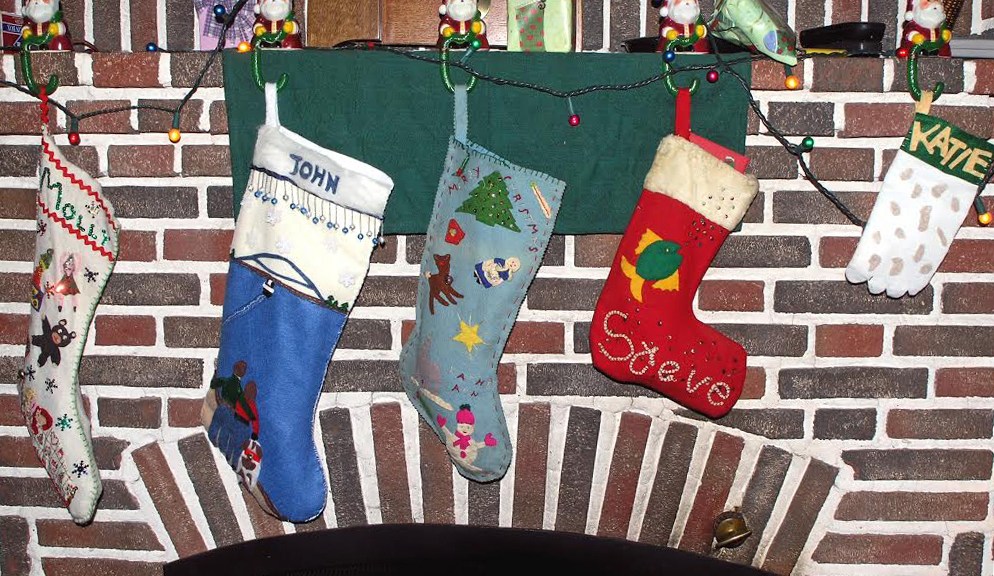
Liam and I were in the living room when Molly called to me in a strangled voice. I rushed to the bedroom. The mystery box was on the bed, flaps open. Molly was holding a Lunds shopping bag that had been packed in May by one of my baboon friends, probably Linda or Barbara. That bag held our old family Christmas stockings. Tears streamed down Molly’s cheeks. She wasn’t able to talk.

The red stocking was made for me by my dad in 1956 when we lived in Iowa. A plump green fish swims near the top of the stocking and exhales a bright spray of sequin bubbles. My name is written below, the letter shaped from red and white pipe cleaners.

My erstwife’s childhood blue stocking was there too. Kathe’s mother sewed this stocking by hand when the family still lived in New York City. She decorated it with a reindeer fawn, a Christmas tree and a little girl dressed for Swedish folk dancing.  Stitched letters proclaim “Merry Christmas Kathe Ann.”

While my former wife was not artistic or crafty, she had a gift for making charming Christmas stockings. There in the Lunds bag was the stocking she made for Molly in 1983. The white stocking sparkles with sequins and carries several iconic Christmas objects: a teddy bear, a dancing girl and a goofy jack-in-the-box. At the bottom of the stocking a six-year-old girl sleeps lies in her bed, her arm thrown over an orange kitten. The little girl is, of course, Molly. We gave the kitten to Molly just before Christmas.

When Molly first saw the exuberant kitten, she said, “Wow, that’s one froshus cat!”  And that is how Froshus got his name.

When she finally could speak through her tears, Molly said, “Nothing else matters. The other stuff you lost doesn’t matter. I didn’t want you to know that it broke my heart to think we’d lost these. And here they are.” The old stockings now hang on Molly’s hearth, waiting to be filled by Santa.

Merry Christmas, baboons.

What precious object would you dread to lose?

Aww, Man, Don’t Say That!

Today’s guest post comes from Steve Grooms.

When I was a grad student I developed a hernia low on my tummy. A hernia is like when a body part meant to be an “innie” decides to poke its head outside and live as an “outie,” creating a tender bulge. Hernias need to be repaired, so for the first time in my life I would need surgery.

When I asked for help at the University of Minnesota Hospital, nurses ushered me into the office of the most famous man at the University, heart transplant surgeon John Najarian. Dr. Najarian promised to fix my hernia. That turned out to be the first in a series of lies told me by my doctors. The University Hospital was a “teaching hospital,” I later learned, meaning Dr. Najarian was probably a dozen feet from me during the actual operation, supervising the cutting and stitching done by a team of wannabe surgeons.

My response to the anxiety of surgery was typical for me. I decided to become the perfect patient. I would respect every directive from my doctors, winning the affection of my doctors with my cheerful compliance.

Exactly the opposite response was chosen by my hospital roommate, a man I’ll call Frank Higby. Frank was a stocky, pug-nosed character from northern Minnesota who had a potentially fatal stomach ailment. Frank talked nonstop, stabbing the air with the cigars he chain-smoked. Cigars were perfectly legal in hospitals of the time.

Frank despised doctors. When told he had to fast before taking an enema, Frank sneaked out of the room in the night, roaming dark hallways until he found the kitchen. He returned with several slices of banana pie and a bag sandwiches. When I asked Frank why he had so much contempt for doctors, he replied that he had been a caddy in Rochester, Minnesota, when he was a kid. “I got to know those sonsabitches when they didn’t know someone was watching them. What a scummy bunch of phonies!”

Nurses told Frank and me that we each had to take three exams: a lung x-ray, a heart exam and a proctoscopic exam. Hospitals in those days were compensated based on how many procedures they performed, so they routinely called for as many tests as they could. When the nurses left the room, Frank rolled his eyes in terror. He said he’d suffered a proctoscopy once before. He called it “the worst experience of my life” and vowed he would rather die than have another. This did nothing to ease my own concerns about the next day.

On the day of our exams, nurses led barefoot Frank away in a skimpy blue hospital gown
that didn’t cover his butt. Although he didn’t look quick, Frank shocked them by breaking free and scooting out of sight in that large building. I learned this from a breathless nurse who came to our room looking for him. After she left, Frank dashed in looking like a cartoon mouse running from a cat. Wheezing heavily, Frank grabbed a phone and called the Pinkerton Detective Agency. He begged them to protect his anus by “sending your eight biggest goons down here.”

Minute by minute, it was growing harder for me to act the perfect patient. About then I had a conference with the man who said he’d be my anesthesiologist. My life would literally be in this man’s hands, so I hoped he would like me.

My anesthesiologist turned out to be a cross-eyed Korean with a thick accent. I tried to bond with him by making good eye contact, but that was difficult because his eyes were cattywampus like the headlights of a car after a front end collision. One eye pointed left and one pointed right. I couldn’t tell which eye I should make contact with.

My anesthesiologist wanted to know what kind of drug trip I wanted to take during the operation. That was unsettling. I thought he was the one who should be telling me how I’d travel through lala land. Instead, he described three different drug trips, giving me more detail about each than I knew how to handle.

Desperate now, I said, “Gee, it is amazing that you know so much about all of these forms of anesthesia! I suppose you have experienced them yourself?”

The cross-eyed Korean drew himself up with offended dignity. “I should say not!” he barked. “I am a Man of Science. I would never expose myself to unnecessary risk!”

When has someone said the wrong thing to you?