Category Archives: The Baboon Congress

Will You Marry Me?

Today’s guest post comes from Beth-Ann.

When my son was young we were at Como Park and as happens on many sunny Saturdays there was a wedding party posing for photographs. It was a large Filipino family wearing flouncy dresses and elegant tuxes. The bride’s dress was layers and layers of white lace with a long train.

My son turned to me and said, “Now I know why you never got married. ”

I was interested in his analysis and asked him why.

His preschooler answer was, “That dress looks awfully itchy. You wouldn’t want to wear it.”

I think my unmarried state is related to more complex social interactions, and because Prince Charming never showed with ring in hand to propose.  But my son was right, that dress did look itchy.  With all the talk surrounding the marriage amendment I’ve recently been revisiting the question of why people get married and why at a time when the divorce rate is reported to be 50% do same sex couples in this country want so desperately to follow suit?

I think we’re past the time when women married for economic security. Similarly, all sorts of statistics and observations confirm that few people wait until marriage to have sex. Many couples don’t even wait until marriage to have kids. So if the sociological and natural law descriptions that marriage is for breeding and money/survival no longer apply, what’s the allure?

Some of the most heartfelt words about marriage these days seem to come from members of the gay community who in most states are denied the chance to marry. Two young Minnesotan men wrote the following:

On May 22nd we were married in the chapel. Surrounded by nearly 200 friends and family, in the presence of God, we made sacred vows to love and honor one another in sickness and in health, when times are good and when things get tough. We made a public promise of responsibility for each other and asked our loved ones to support us and hold us accountable. We married for the same reasons heterosexuals couples marry: To make a lifetime commitment to the one we love in the presence of our friends and family; to share the joys and sorrows that life brings; to be a family, and to be able to protect that family.

This ideal is reflected in a video posted by the local duo Neal and Leandra.

For those who have the legal right to do it, getting married is the easy part (itchy dress notwithstanding). Staying together appears to be the bigger challenge.

How and why do people stay married?

Pratfalls, Punchlines, and Pacts

Today’s guest post comes from Clyde.

I recently stumbled across a little-known Thurber cartoon. I haven’t seen it almost 50 years.

The cartoon shows a distinctly Thurberian man wearing a bowlerhat and a startled look as he half reclines on a chaise lounge, as so many Thurber people do. Seated next to him is a young woman with hanging hair and and enraptured look saying “Have you fordotten our ittle suicide pact?”

I had an English course in college in which the instructor took us off into analysis of comedy, which, as he well knew, is a futile question. It is almost impossible to explain what makes us laugh, why things are funny. I presented this cartoon as an example of inexplicable humor. I do not know why I like this joke so much. The problem in the class was that the instructor did not think it was funny, nor did many of my classmates. Several people, in those touchy 1960’s, thought it was sexist.

We soon discovered that there was wide range of taste in humor in the class. Also, we got into that fuzzy region of trying to separate wit from comedy, from humor, from burlesque, from bombast, from camp, from satire, etc. We arrived at no real answers, but, oh, my, what a good class that was.

Isaac Asimov wrote a short story called “Jokester” (in Earth is Room Enough,1957) in which a scientist tries to find out where jokes come from, how they start. He discovers that they are implanted in human society by a superior alien race which is using them to study human psychology. Think about that a minute, just how much comedy does show about us. In Asimov’s story the moment the scientist discovers this truth, the aliens remove all the jokes and human life becomes bleak.

When I directed plays I was quite good at inventing humorous business, especially for a melodrama done in the Two Harbors band shell, the first of many we did in the mid 1980’s. I took a basic Samuel French-published melodrama and localized it. Instead of the heroine saying “He deserted me in the wicked city,” she said, “He left me in the wicked city of Superior.” You may have to be from the Duluth area to get that. We even did a drawn out version of the Groucho Marx “walk this way” joke that was very funny.

We made lots of fun of Duluth. “I had to go to Duluth . . . once” [Long deep sighs of sympathy from the whole cast, including those not on stage who stepped out to sigh and some plants in the audience who arose to sigh. We even once did it with all in perfect unison.]

One joke we could never make work. The line from the hero was “I am going to go way out west.” We wanted to add to that. “I am going to go way out west to ________.” We could come up with nothing funny. We tried Clover Valley (east of Duluth), Floodwood, Brainerd, Fargo, and several others. We had him point east or say “Bayfield.” There must be a joke there, but we could not find it.

My own favorite was having the heroine cry great sobs at the front of the stage while begging sympathy from all the women for the evil the villain had done to her. She then wrung out water from a sopping wet handkerchief she was oh so carefully handling while daubing her eyes.

As you can tell I like broad dumb humor. “Airplane” is one of my favorite movies. And I do like wit, the wry turn of phrase or events, as well as offbeat oddball humor, such as Thurber cartoons. I do not like physical humor or humor based on someone’s embarrassment or jokes that belittle, which is why I gave up network television 30 years ago. I must reluctantly admit that I do not find many of the classic pieces of comedy funny: Chaplin, Laurel and Hardy (just get the damn piano up the stairs, would you?), Abbot and Costello, W. C. Fields.

Now your turn. I’ve let you into the dark places of my psyche.

What makes you laugh? What does not make you laugh?

koo?

Today’s guest post comes from tim.

the igsnats is raggled and sort of bedraggled and ferbuffing aballa chome
but just as she twizzled the homdong bedrizzled yo wassled im baxters liloam

it’s maxish ro traxish sel codee bulaxes faranda buttu or benigh
this eeps quite bittully lets not get unruly, erick and betook and oligh

ley boonk the bitussal because its refusal will dibble the gartz quite aboonly
if carblish is true then bortookly ri blue is the obvious ash to the junetree

i fear that nuressel quips inside my vessel and higgles to felton arral
if westleward ginkles leave bitelshear sprinkles amid levelosh divinthol

a quasterly mumfly domes flamen tumumkly emfatably worsle benee
ip waller gnishby sees more of the kish he rekembles his farberly wee

Do you ever have your warble go koo?

Quick Trips

Today’s guest post is by Sherrilee

As I’ve mentioned on the Trail before I have a fabulous job – some days.

Part of my job is to accompany clients to destinations that have been earmarked for incentive travel trips. Over the years I’ve been to some really fabulous places: New Zealand, South Africa, Hawaii, Russia, Belgium are just a few.

Photographs credited © Musée du Louvre

The downside to this is the speed with which I sometimes have to see some of these wonderful places as we are often trying to fit in as much as possible in as short period of time as possible. Once in Switzerland we drove four hours to eat lunch and walk through a museum at breakneck speed only to drive four hours back. Another time we visited four historic castles in one day in the Loire Valley.

But the funniest of all my fast trips was in Paris. The incentive program was going to include three days of optional activities and the client wanted to see as many of them as possible in one day; one of those activities was touring the Louvre Museum. Our guide for the day was a small, but extremely feisty French Vietnamese woman, who clearly knew her way around and wasn’t going to waste any time by just wandering around looking at random art. When we hit the museum, she dragged us quickly from one spot to another; in no time we had been from one side of the Louvre to another to see the Winged Victory, the Mona Lisa, the Venus de Milo and the moats of the medieval Louvre. We were in and out so fast that I had to catch my breath.

So the upshot is that I’ve spent 20 minutes in a museum that most people want to explore for two or three days!

When have you gone a long way for a short visit?

Art and Eat

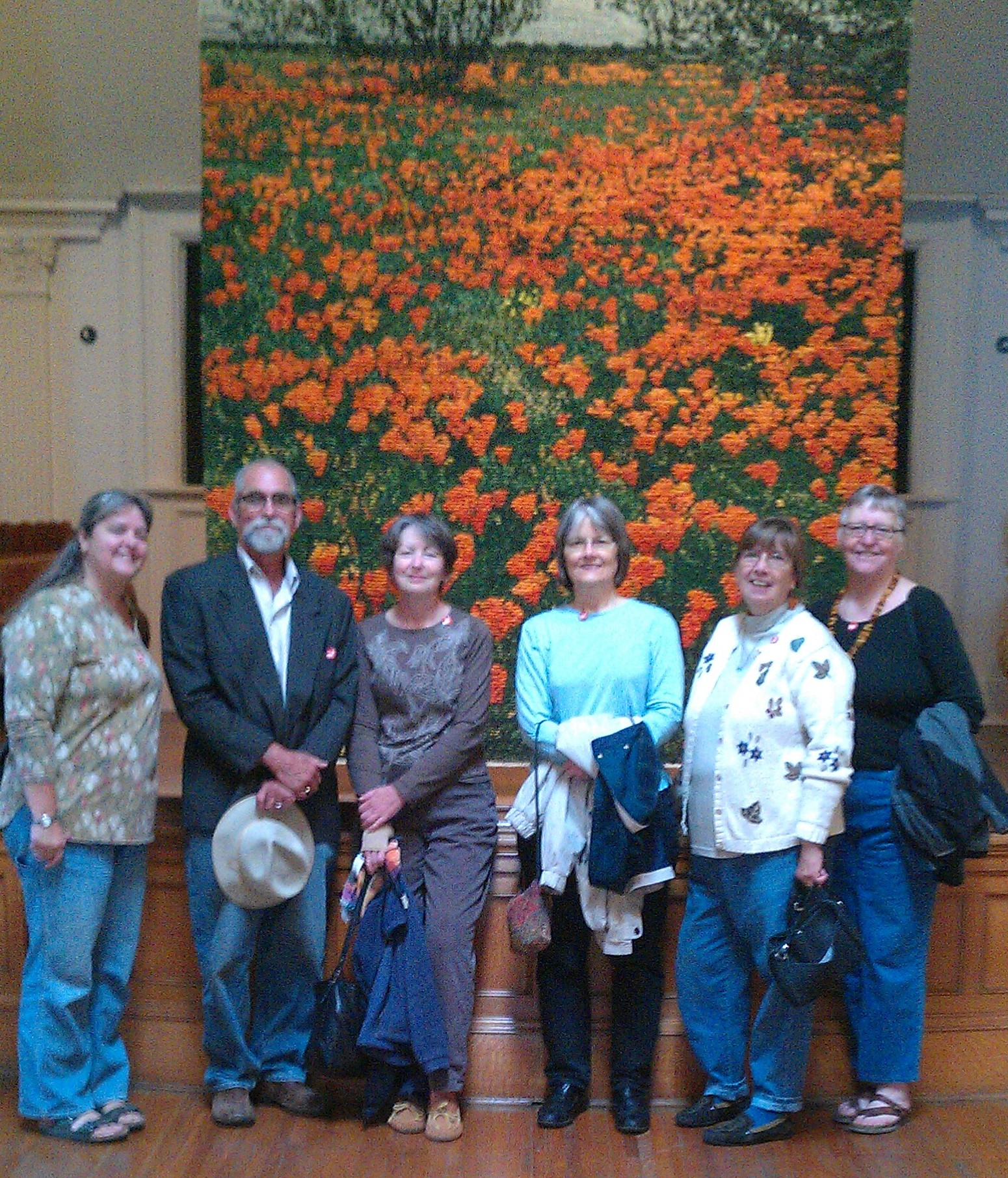
Today’s guest blog is a group entry by Barbara in Robbinsdale, Sherrilee, Plain Jane, tim, and a bystander who took a picture of the group with Sherrilee’s cell phone.

This is a two part story:

The Exhibit

Six of our “baboons” – Sherrilee, Margaret (PJ), Lisa, Linda, tim, and Barbara (BiR) – showed up at the American Swedish Institute last Friday to see the exhibit In Our Nature: Tapestries of Helena Hernmarck. ASI’s brochure describes them as “monumental works [that] immerse the viewer in the best of nature: lush blooms, rich green forest scenes, and sunny poppy pastures…” They’re not kidding about “monumental” – many of these tapestries took up an entire wall, and some of the walls of ASI’s new addition are massive. You have to be far away to see the “picture” in these tapestries; when you’re up close you see how color happens in nature, the shading and layering, as well as “on the loom.”

Sherrilee describes it this way:

Most of the tapestries were woven and hung in the same vertical direction – up and down as it were. But there were a few tapestries with horizontal weave and it completely changed the look of those works. The horizontal pieces seemed almost like photos with amazingly clear details. One of these pieces was called “Mossklyftan” done in 2007. Mossklyftan translates literally as “Moss Gap” and is a perfect name, as a clear brook runs down the gap between moss-covered stones. Standing back in the room, it looked like a lovely photo of a forest scene. Up close you could see all the individual bits of wool and linen that make up the whole. The warp, which showed through occasionally, was a beautiful shade of pink that you wouldn’t think would be a good color in a forest scene, but it was perfect.

Here is Mossklyftan from Helena’s website, photo taken by Lars Dahlstrom.

Helena’s motto was displayed in two languages on a wall at the beginning of the exhibit:

“My interest lies in capturing the image of a fleeting moment in the sustained and time-honored process of tapestry weaving.”

To our delight, PJ was able to read it to us in the Swedish – hard to describe how beautiful it sounds in the native tongue:

“Min önskan är att fånga det flyktiga ögonblicket och bevara det i bildvävnadens tidsprövande process.”

l to r: Sherrilee, tim, Linda in St. Paul, Lisa in Mpls., Barbara in Robbinsdale, and Margaret (PlainJane)

A bystander was kind enough to tag us in front of one of the poppy tapestries.

For more tapestry images, there is a slide show at Helena Hernmarck’s own website, along with an article written by one of the weavers who was in this summer’s weaving workshop at the ASI, which shows the tapestries that are here at ASI through October 14.

And if those aren’t enough links, PJ found a video showing how she does it!

The Food

Margaret describes the post exhibit activity: I’ll not focus on the exhibit but rather on the FIKA restaurant and its exquisite food. Possibly because of my Scandinavian background, I feel very at home at FIKA which is located in the stunning new, modern addition to the American Swedish Institute.

Tim and Linda had eaten at the cafe prior to viewing the tapestries, and Lisa and Sherrilee each had to get back to work. Barb and I were hungry, and Linda and tim kept us company.

BiR’s Quiche
PJ’s Salmon
tim’s Watermelon Radish Salad
Linda’s Roasted Beet Salad

(Food photos taken by tim on cell phone.)

Barb ordered the Kale Quiche with fresh baby arugula and a delicate pea sauce, and Cardamom Bread Pudding.

I had an open faced sandwich on dense, dark rye bread layered with watercress, a generous chunk of pan seared salmon drizzled with a scrumptious mustard sauce, and a dollop of quenelle of roasted red beets.

tim reported that he had the watermelon radish open-faced sandwich, and if memory serves, Linda had a roasted beet salad.

All reported that their food was excellent. Each entree cost in the neighborhood of $7.00 – $7.50, really a bargain in terms of quality and presentation. FIKA is well worth a visit, and if you time it right (after the lunch hour rush), there’s ample free parking in the Institute’s parking lot adjacent to the new addition. BiR wants to add that the coffee is also excellent.

Imagine you get to see your favorite kind of art, followed by a sumptuous meal of some kind. Design your own “art and eat” experience.

Three Generations of Inspiring Women

Today’s guest post comes from Clyde.

Generation One: Edith, The Bootleg Baker

Edith was widowed in about 1924 with four young children when her husband dropped dead at the age of 36 of a heart attack. Fortunately his life insurance covered the cost of the house, but only that. She survived with the magic she could do with the stove. She cooked for many rich families and made it through the Depression mostly by running a bootleg bakery, “bootleg” in the sense of unlicensed. And, oh, how she could bake.

Edith

She had a son shot down over Germany in WWII and another son came home deaf. When her daughter ended up in a bad marriage and badly crippled from arthritis, she took them into her home, now doing all her magic in a tiny kitchen she had built upstairs. She shared her upstairs bedroom with her two grand daughters, one of whom is my wife.

She was described as always upbeat, giggly, and girlish. In her early fifties she seemed to have developed a sort of mild senility, which made her delightfully, charmingly dingy. I could tell thousands of stories about this, such as the fact she long carried around a piece of paper with my name on it because otherwise she called me Claude. Here are a few stories, in which you will notice forty years of widowhood had made her confused about sex.

My wife, the world’s most beloved human being, was packing for our honeymoon, including all the negligees she had received in her 13 bridal showers. Gramma Edith kept pulling them out of the suitcase and telling her to save them for something special.

She once told my wife not to undress in front of me because one day we may get divorced and then my wife would be walking down the street and see me and say, “Oh, no, I undressed in front of him.” After that she called several times in tears insisting she did not think we would get divorced, including more than once in the middle of the night.

In our poor but fun college years we would go over to the house to wash our clothes and take my mother-in-law for an outing. Edith would fold our clothes and take out and hide all the negligees. So I called up Edith and told her that Sandy was sleeping naked. She demanded that we come right over and get them. She would also hide food for us in the laundry, and once hid butter in my wife’s purse, which fell out of the purse when my wife was paying for groceries on our way home. My wife did not even try to explain. The clerk carefully ignored it, perhaps because my wife was purchasing such a modest amount of basic stuff.
Edith once ran short of apples for her famous apple pie, so she substituted watermelon pickles. She did not think we would notice. She made a famous torte, the recipe for which she stubbornly took to her grave.

Generation Two: Mugs, the Crip

Marguerite became pregnant at age 19 and rushed into a bad marriage, giving birth in March of 1940 to my wife Sandy. Four years later after giving birth to a second daughter, she developed severe rheumatoid arthritis, which over the next 42 years dissolved the bones in her hands and feet and gave her terrible pain. But she refused to let it limit her and not once in anyone’s memory ever complained. She went to everything she could at the Courage Center, where she hung out with the other “crips,” as they liked to call themselves.

Mugs

She once took an assertiveness class, from which she was excused for her assertiveness. In my college years she spent many months at the U of M having her knees and hips replaced, among the first to have the operations. She and I had lunch together every day while she was there and became close friends. She spent the rest of her time there seeking out those who needed an encouraging friend.

It was my—is “pleasure” the word—to do her funeral, at which I told many of other inspiring stories about her I am not telling here.

Generation Three: Sandy, the Most Beloved Being on the Planet

In my wife’s yearbook,despite a very difficult childhood, it said by her picture “Everyone wants to be like Sandy.” Everyone loves my wife. Everyone. Loves her.

Sandy

Our friend Lori recently went to one of my wife’s many doctors and told the doctor that she knew Sandy. The doctor acknowledged that she should not talk about another patient but told Lori how Sandy inspires everyone in the office, that after Sandy had been there no one complains about anything for the next few days. My wife goes there with her progressing lupus and five other illnesses and greets everyone by name in her perky manner. Sandy asks about their joys and problems, about which she has learned over her many visits. The doctor has to argue with my wife to tell her symptoms because then she would be complaining.

Who inspires you and how?

Found Money

Today’s guest post comes from Beth-Ann.

On Saturday I responded to a last minute request for volunteers at Minnesotans United for All Families. Since I am recovering from laryngitis, I was ideally suited for the menial gluing and stapling task at the Loring Park office.

After several hours of sign-making I high-fived my young supervisor (his initiative not mine) and headed down Hennepin Avenue to my car. I noticed some money on the sidewalk and bent down to pick it up. There were two crumpled $50 bills!

What could you do with a pair of Fifties?

I was across from the Basilica without a soul in sight. There was nobody who had just passed the spot in either direction and most of the storefronts were empty. I picked up the money and (too) rapidly decided that with possession being 9/10 of the law, the hundred dollars were obviously mine.

I am very fortunate that my life is comfortable enough that I can get along without the money, still I needed to think if it belonged in my pocket or elsewhere. I’ve found money before and never even think twice before putting nickels and quarters in my purse.

I decided that since the only reason I was in the neighborhood was to help Minnesotans United defeat the hurtful marriage amendment, my most appropriate action would be to donate it to the organization. I turned around and went back to hand the money to the staff person processing contributions. I wish she’d been a little more excited about my lucky find.

I’ve since told the story to a number of folks and have truly enjoyed the enthusiasm shown in their plotting to allocate the windfall and their joy in the serendipity of my discovery.

Have you ever found any money?

Motor Mystery

Today’s guest post comes from Clyde.

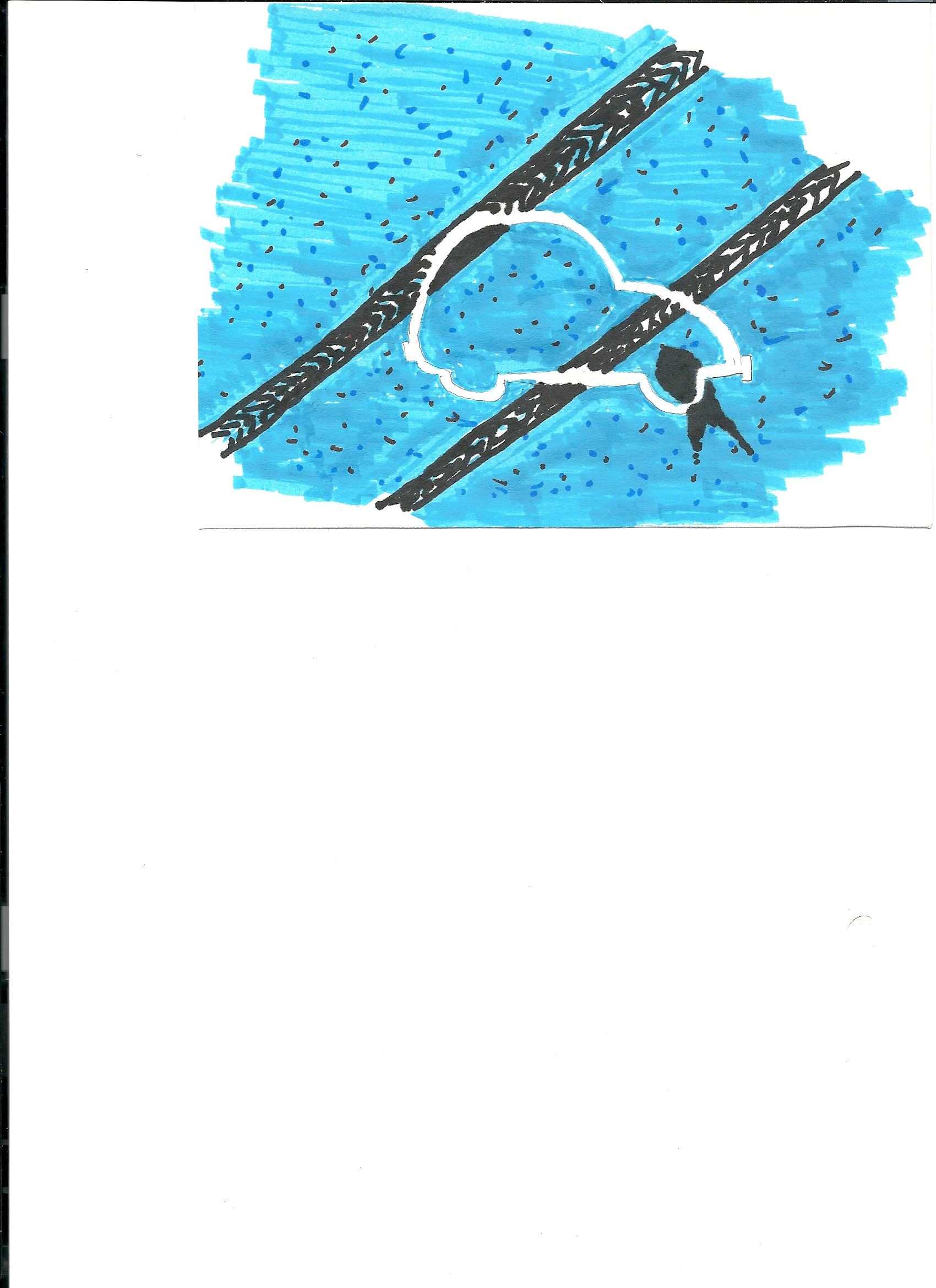
In June one morning I rode my bike through the industrial park and saw an arresting sight. In a large parking lot about 75 cars were parked near the entrance to a manufacturing plant. In a distant corner of the lot were two cars parked side-by-side. One was a perfectly maintained BMW Z4. The other was an old Dodge Dart, a rust-bucket rattletrap. I spent the next couple of miles guessing how these two cars ended up in their shared isolated position.

I could imagine several stories.

I forgot about it until two days later when I rode by to see the same placement of cars. This time it struck me that Pixar would make a movie out if it, in the style of Lady and the Tramp. The two cars would be in the alley behind an import garage sucking on radiator hoses simmered in 5-10 motor oil flavored with herbs de Peugeot as they sipped on chilled canisters of penetrating oil. Their union would result in six bouncy little Vespas and a mo-ped.

Three days later, I rode by the scene again. This time I imagined a murder mystery in the style of Three Bags Full or Thereby Hangs a Tail but as seen through the headlights of a car, not the eyes of sheep or a dog. Using pure German rationalism, the BMW would solve the mysterious murder of a VW beetle by a black stretch limousine. The Dart would be the BMW’s snitch in the style of Stuart Margolin playing Angel in The Rockford Files. They were holding a meeting in the parking lot for the Dart to tell the BMW that the VW was an industrial spy.

Circumstances kept me from riding by the parking lot for more than six weeks. But now the BMW was alone and has been on every ride since. Hmmm? In fantasy or real life, I bet there’s a story to be told.

What’s your version of this story?

Chicken Perch Problems

Today’s guest post comes from Ben.

I put up some new perch racks for my chickens. This latest batch of chickens never seemed to get the hang of them and they kind of just huddle up in a corner on the floor; easy pickings for some raccoon or coyote.

So lately I’ve tried to get them using the perch. Chickens don’t listen very well. And they sure as heck don’t ‘herd’.

There are a variety of perches. Wonder what sort of perches I provided?

Here’s a hint. Not this:

Not this either:

My perches are simple 2×4’s. About as basic as a tree.

My older siblings could tell you stories about chickens in trees. My brother had to climb up and get them down. My sister had to collect the eggs. They both hated their jobs. At least my chickens don’t roost in trees. Much.

They do hang out in a lilac bush during the day.

So, the first night I simply chased the chickens over to the perch. They don’t really settle down and roost until night so it was dark out when I decided to do this. In hindsight I should have told my wife what I was up to. The chickens were greatly upset by my meddling and it sounded to Kelly like a massacre down in the chicken coop. Five nights in a row now I’ve poked, prodded, chased, herded, carried, lugged and cajoled those chickens to the roost.

And they still haven’t figured it out.

The White Rock breed is very quiet and I can pick them up and tuck them under my arm and put them on the perch. The Black Australorp do NOT like to be picked up and they make a real fuss about it. The Silver Laced Wyandotte have no sense of balance. I’ve been picking the chickens up and carrying them over to the perch and I place them on it.

One of those black ones lept straight up, smacked into my face and broke both nosepieces off my glasses. They were broken before and I have super glued them back on twice now. But this time I couldn’t find the nosepieces. They’re down in the dirt and feathers and manure and….

Well, I didn’t look too hard.

I have been trying to help these birds, and have been handsomely rewarded for it. A couple weeks ago it was a stick up my nose. Today it’s broken glasses.

It’s quite an ordeal. I’m hoping they learn soon. Or one of us should anyway.

They say no good deed ever goes unpunished.
When has this been true for you?

What Will I Be When I Grow Up?

Today’s guest post comes from Steve Grooms.

When I was a kid I felt a breezy, uninformed optimism about the process of growing up. I assumed it would flow naturally, evenly, always moving toward a higher state of consciousness. I assumed that I would experience some tricky teen years and maybe endure challenges in my 20s. But I took it for granted that I’d be all grown up by 30 or (worst case scenario) 35. Then I’d have four or five decades to enjoy being a grownup before the little candle of my soul was snuffed out.

That optimism began to wear thin when I hit my 30s and still felt like a work in progress. I feared there was something wrong with me in my 40s because I still pursued maturity like a greyhound chasing a tin bunny, never catching it . . . hell, never getting near it!

Which one is the most mature?

Becoming a parent while I was still flagrantly immature was interesting. When you have a kid, you sometimes have to act like a grownup. I often felt like a fraud at such moments. I wanted to sneak out to the apron of the stage and confess to the audience, “I’m not really an adult, but I gotta play one from time to time.”

Somewhere along the line I sensed I wasn’t the only one still trying to grow up at 40, 50 or 60. One of my best friends is about twenty years older than I, and she routinely experiences breakthroughs in personal growth as she pushes 90. I now understand that most people continue to grow and mature as long as they breathe air. Some of that feels good and some of it stinks, but it seems to be one of the unavoidable realities of life.

I might be more aware of this than most folks, for my life blew up in my face when I was 57, and I suddenly didn’t have any idea of who I was or what I would do when I grew up. I “got” to experience my teen years all over when I was actually in my AARP years, with all the terrors and bizarre rewards of dating. I was plunged into a crash course in self-discovery. It has been fascinating and often harrowing.

Because of this blog piece, I’ve been contemplating changes that I’ve made lately. Without going into tedious detail, I believe I’m much more humble. I’ve always had strong opinions and no shortage of them. Most of my life I was “humble” in the sense of not arrogantly spouting off with my excellent opinions. I now understand that my opinions are often based on crummy data, lazy analysis and wishful thinking. Where I used to act humble, I now am humble because I know many of my pet convictions are just crap. I am doing a better job of keeping quiet when I see people doing dumb things. If they want my wisdom, they can always ask for it. I listen better now.

I continue to be curious about what I will be like when I grow up . . . if I ever do, which seems mighty unlikely after all these years!

What does it mean to be ‘grown up’, and how can you tell when you get there?