Category Archives: The Baboon Congress

Ancient Greek Rock and Roll

Today’s guest post comes from Clyde.

Sisyphus was a man in Greek mythology assigned the punishment of rolling an immense boulder to the top of a steep hill. At once it rolled back to the bottom, from where he had to push it back up, only to see it roll down again. Endlessly, eternally, up and then down the hill. It is one of my favorite images from mythology.

Who has not felt like Sisyphus?
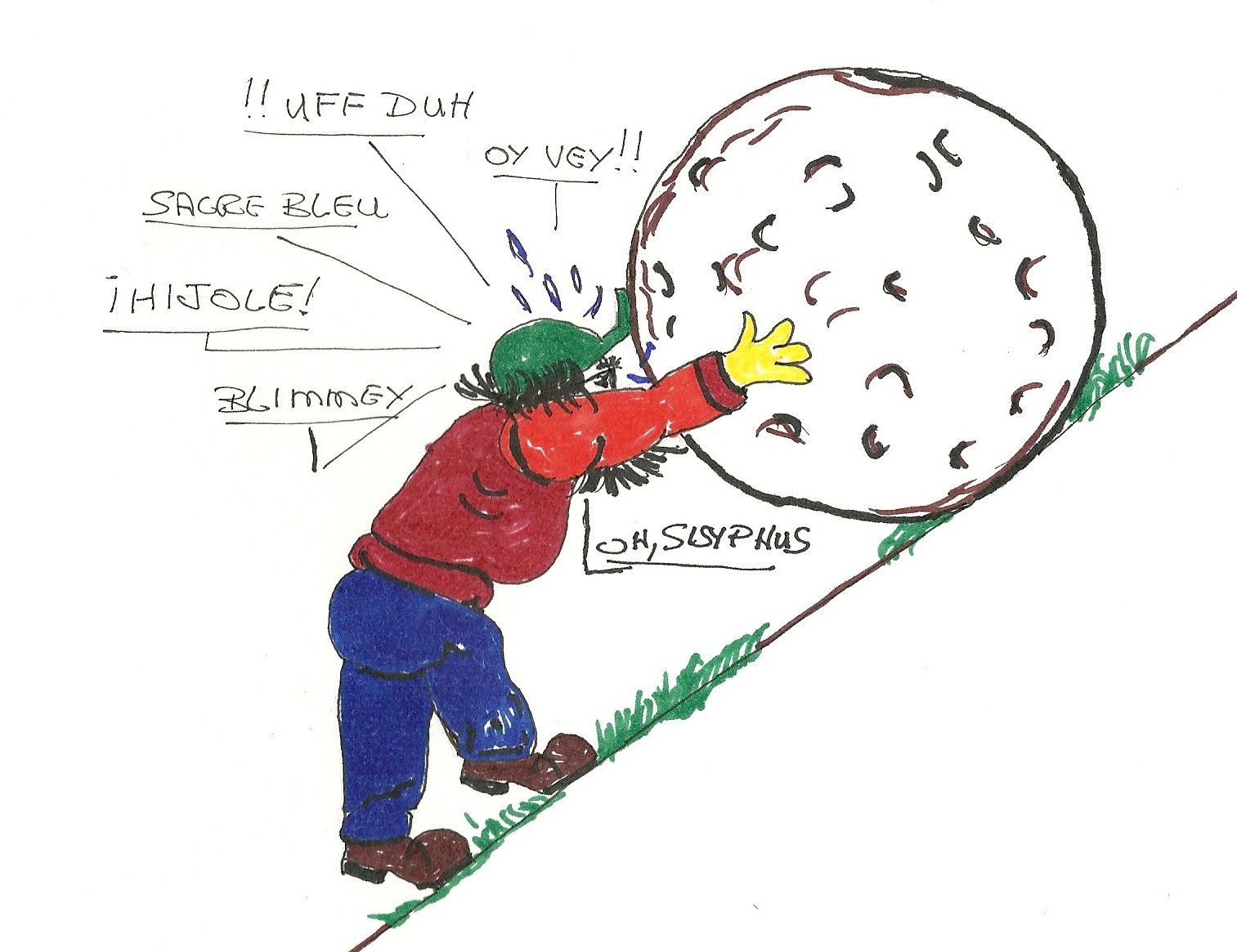
We tend to think of Sisyphean tasks as onerous. But not necessarily. An example for me was sermon-writing. When I was a pastor, I had a weekly process I followed, which led me through a seven-day cycle of inspiration, creativity, and soul-searching. Struggle, too, but that made the climb meaningful. I am about to give my last sermon, or maybe I gave it already, depending on two factors out of my control. Either way it was a good climb which I did about 700 times, counting all special services as well as Sundays. I have a friend who has done it over 3400 times, as I estimate it.

School teaching was another example for me. I would spent a year pushing the boulder up the hill, that is, getting my students to where they should be at the end of the year. Three months later I would come back into the classroom to meet the rock at the bottom of the hill. Not that I am complaining about that. It was a joyous and rewarding thing to get them to the end of the year, with many a struggle along the way. Life comes in many cycles, and that was one of the best in my life. Until, with my low threshold of boredom, I had done it just too many times. Twenty years ago I met a strong, vibrant, and life-filled woman who pushed that rock up the hill 54 times, claiming, and I believe her, to have loved every trip up the hill. She did it exactly twice as many times as I did.

Why had I burned out on a nine-month climb and I did not on a seven-day climb? Hmm?

Life is full of the unappealing hill climbs, such as housework. You clean and it gets dirty again. My own particular bane is making beds.

At this age I have discovered that my primary Sisyphean tasks have shrunk from nine months or seven days to 24 hours. Such is aging; tasks get more personal and come in shorter spans of effort. Also, now there seem to be a few boulders to push up each day, such as pain-management, keeping the filtered water bottle filled, following this blog, and forgiving myself for stupid mistakes.

How would you be punished or rewarded in a Greek myth? For what?
Little House in the Suburbs

Today’s guest post comes from Barbara in Robbinsdale

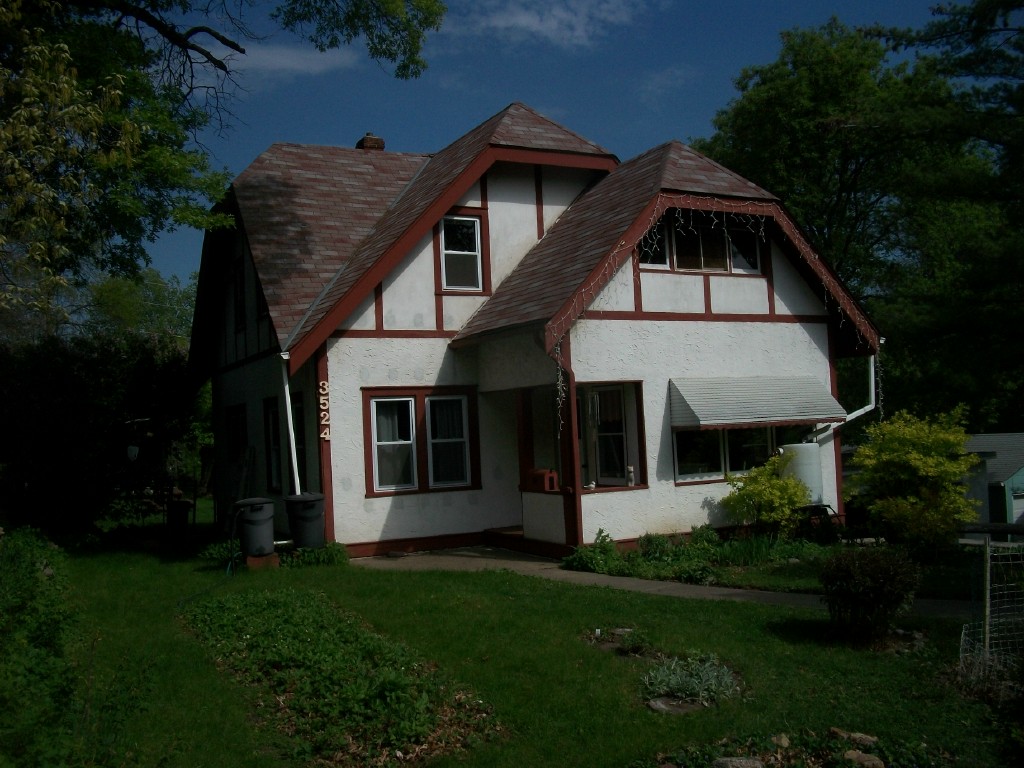
The sun had just peeped over the horizon as Ba was starting her chores. Ba and Ha (not to be confused with Ma and Pa) live in a little stucco house on the edge of Sochacki Park. There is a big ravine beside their neighbors’ little green house, and then a bit of woods where the park begins. They can see snowboarders and cross country skiers during a winter when there is some snow. There are furry animals, too, and hawks and other birds. A catbird mimics other bird songs, and can even sound like a cell phone.

Ba filled the bird feeders, watered the house plants, and went down to the big upright freezer in the cellar for something to thaw for dinner. She threw a load of laundry into the washer, adjusted the settings and made sure the lid was closed tight. Then she put in 15 minutes on the stationary bike in Ha’s workroom while the clothes were washing.

After breakfast, Ba loaded the dishwasher and straightened up the kitchen. She washed out the zip-loc bags so she could use them again. It would be too wasteful to throw them away after just one use. Then she scrubbed the porcelain sink till it gleamed and she could almost see herself in it.

Later Ba would hitch up the horses (76 horsepower in the gas engine part of a Prius) and drive into town to visit her Ma. On some days she would walk an entire mile to get there, if Ha needed to use the car. Then she would put on her Gortex parka and her Reboks so that she would stay warm and safe. If it was very slippery she might use her Yak-trax.

As some of you may have guessed, I’ve been reading Laura Ingalls Wilder’s Little House books again, and started imagining being Ma…

What would be your “chores” and daily “hardships” in a Little House chapter?

Herding Cats

Today’s guest post comes from Edith.

I’m sure most of you have heard the phrase “herding cats” referring to “a task that is extremely difficult or impossible to do, due to one or more variables being in flux and uncontrollable” according to Wikipedia.

Well, in my house, there lives a Sheltie aka a Shetland Sheepdog. Shelties are derived from dogs used in the Shetland Isles for herding and protecting sheep. I don’t have any sheep, but when we first got our dog, youngest daughter was still fairly young, and occasionally the puppy would try to “herd” her. Dog didn’t try to herd the larger members of the household and now that youngest daughter is well along in her teens, there isn’t anybody around here small enough to herd.

Until late February 2011, that is. That is when the dog found a CAT in our yard. Being excitable, she barked incessantly until I came out to investigate. Long story short, the cat is still here and is now a member of the family. The dog and the cat sometimes play with each other, chasing and wrestling, with both doing pretty equal amounts of chasing. But sometimes the cat is very definite that he does NOT want to play with the dog. But as he walks around the house, the dog decides he should be going somewhere else…so she herds him. Or tries to. She tries to nose him in the “right” direction, but the cat just keeps going where he wants to go and pays no attention to this bigger animal trying to push him in a different direction.

It’s quite amusing watching the dog put so much effort into something that is so futile. That is, it’s funny until I start to feel like it’s a metaphor for my life.

What have you done, or tried to do, that you could compare to herding cats?

Inflated Superstition

Today’s Guest Post comes from Clyde.

I had four flat bike tires in eight days. Then a week later my wife said, “Well, you haven’t had a flat in a few days.” I gritted my teeth, but did not answer her. Why did she have to say THAT?

I am a strange contradiction in a way. I have some education in and a strong reading interest in the sciences. And I’m a Christian, well a Lutheran, which is the next thing to a Christian. I have some education in and a strong reading interest in religion. While those two things are supposed to be in conflict, they should together rid me of all superstitions. Nevertheless, I have had one and only one superstition my whole life, but I can never shake it. It is the fear that words will make the opposite so. You know the “knock on wood” superstition.

When someone says something I fear may make the opposite happen, I do not knock on wood. I mean, that would be just stupidly superstitious. I would, however, never say that I had gone for awhile without a flat. (I just checked this minute–no flat. Pshew.) I might even say something like “Yep, bet I’ll get another flat” hoping my words will prevent a flat. (Just checked again on the bike tires. Still okay. But bet I get one, nudge, nudge, wink, wink.)

I have a perfectly logical explanation for why I had the flats. God’s out to get me. No. Don’t be ridiculous. First, the streets and sidewalks, which is where I do almost all my riding, have quite a bit of glass on them this time of year before the city gets out with street sweepers. Second, when I put the bike away last fall, I made a note to remember that both tires were worn down, which is the number one way to get flats. I did remember the worn tires when I started riding a few weeks ago. But this is April. You know, tax month. I am SURE I will owe A LOT when I get them back from my accountant. A LOT. (Nudge, nudge, wink, wink.)

I had no choice but to buy new tires. So now I’m sure I won’t . . .

Well, let’s just not say it.

What are your superstitions, perhaps in spite of yourself?

No E for Me

Today’s guest post comes from Madislandgirl.

Like many Baboons, I am a reader. I almost never leave home without something to read in hand, the local librarians know me on sight. Finding a new author I enjoy is like making a new friend. I have raised a son and heir to be a reader too.

But at least for the foreseeable future, we won’t be investing in an e-reader. Yes, there are great features on the various models-you can make the font change, you can take notes, look up words and most tempting of all, you can be carrying around over 100 books in the physical space of one book-no mean consideration in a household that is chronically short of shelf space and long on book bags with torn seams from carrying around too many books.

When you check out an e-book from the library, you never need to worry about returning it on time or losing it, it simply disappears when it is due. For my friends whose hands now have trouble holding books over a certain size, an e-reader is a gift from heaven. All great stuff, but we aren’t getting one.

I’m not even tempted. In fact, the only reason I have done any research on e-readers is to write this piece. The reason I give is that I just don’t want one more thing that has to be “charged”-I’m bad at remembering to do it, and can only imagine the screen going dark, just as I am getting to the best part. But I know that isn’t the real reason.

The answer came to me while sitting next to a fellow fencing mom, both of us reading away, she on her e-reader, me with my book. I glanced over and my unbidden thought was, “I don’t want to do that!” What would I be missing if I were doing what she was doing? Why is important to me that my hands as well as my mind know what I am reading?

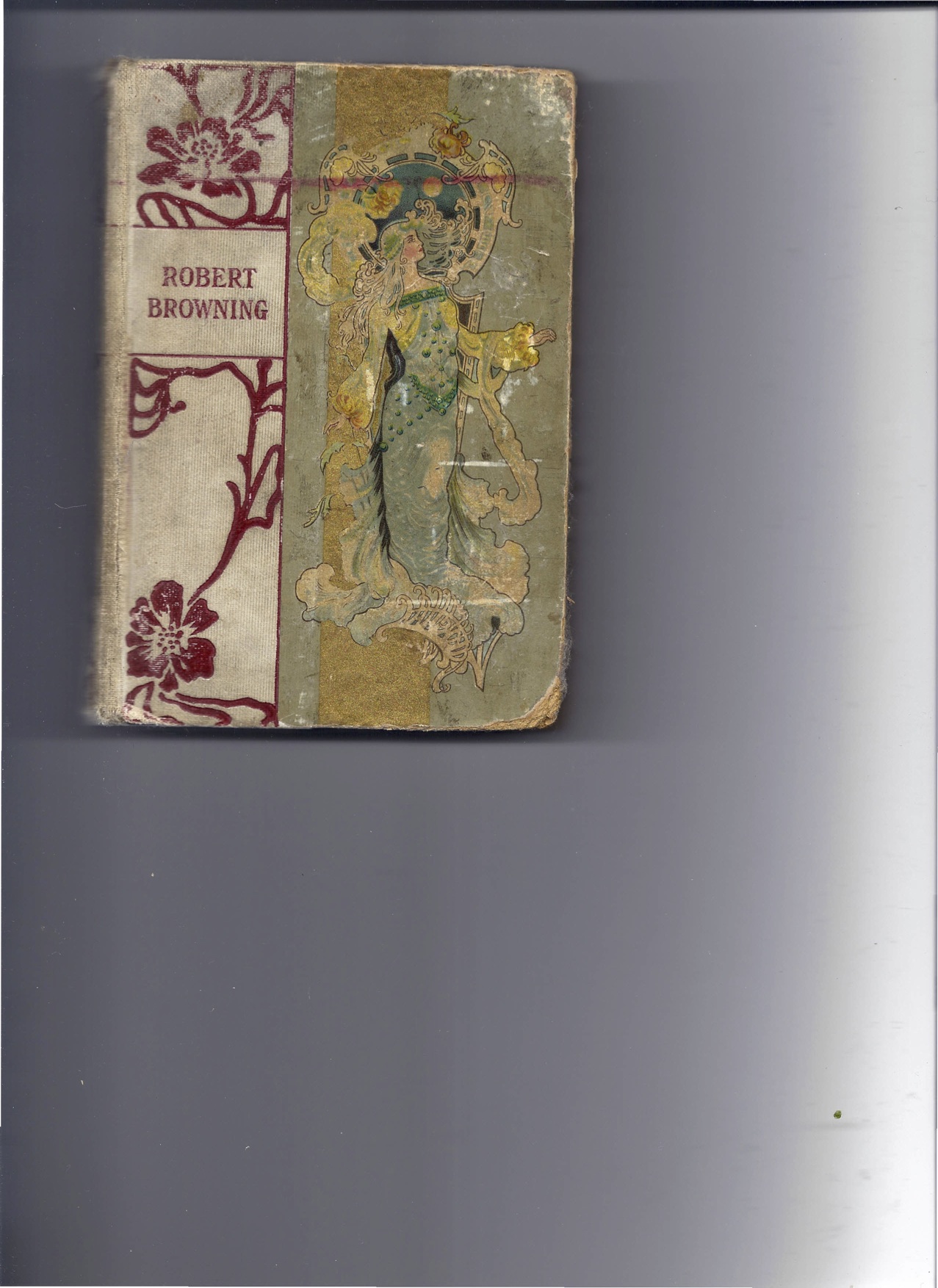
I like the covers of books. When I go to the library, I tend to use the computer to direct me to the general area I am interested in, then I stand before the shelves and scan for something interesting. My hunter instincts have been honed to identify at a glance which non-fiction books are probably meaty affairs, which are too thin to be satisfying, which are going to be tougher than I want to chew on right now. In fiction, the publisher has often gone to great trouble to design a book’s appearance to let me know what kind of reading experience I can expect. I am greatly grieved when I find I have been deceived.

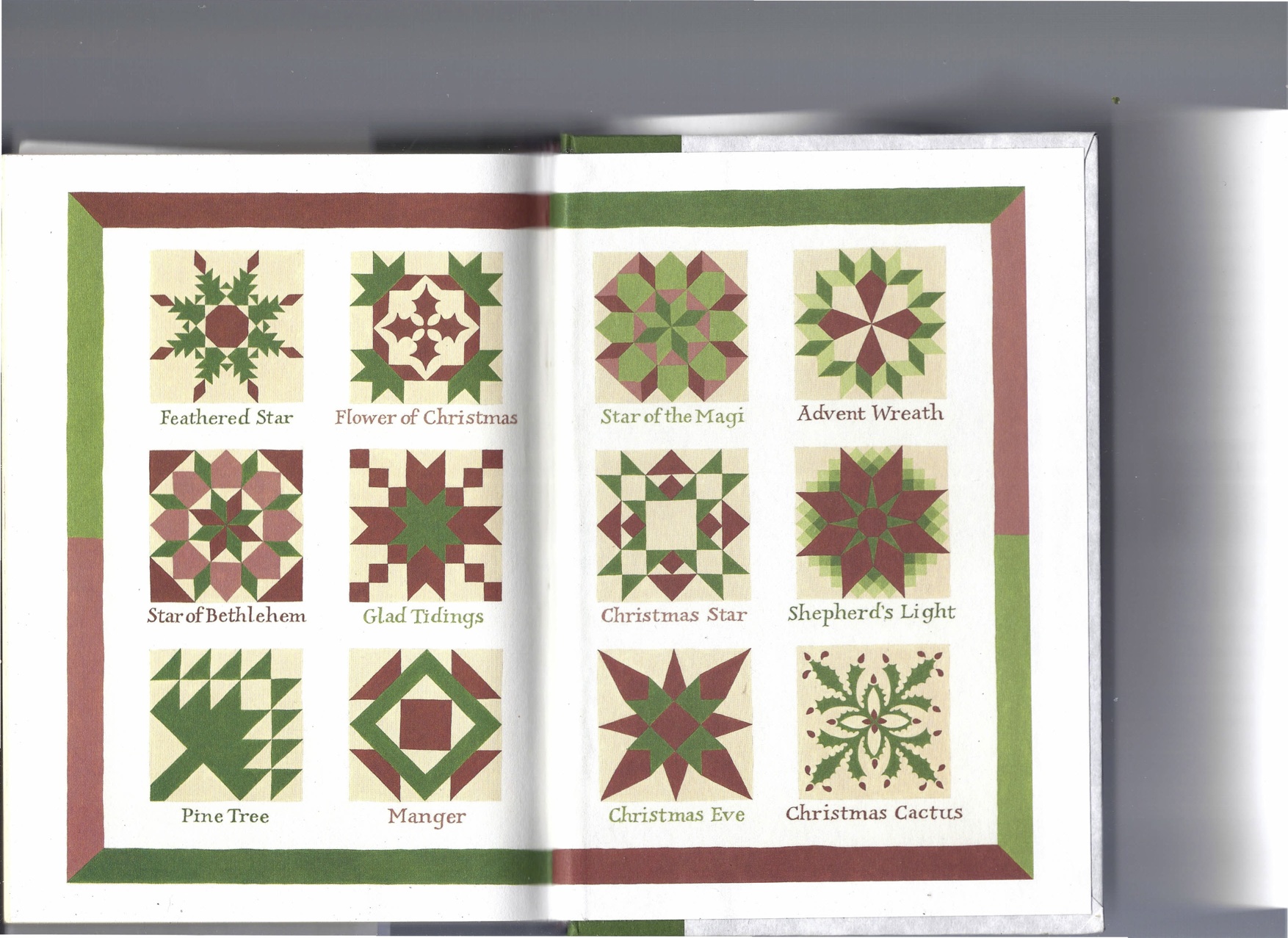
The book I was holding on the night of my epiphany had an embossed dust jacket that was a particularly good tactile experience. The graphic layout depicts a quilt border I might someday like to make, and the author’s name is in gold letters. It must be rather grand to see your name on a book cover in gold letters. Inside the cover are the end papers. I love end papers. In the case of this particular book, the end papers show quilt blocks from the story that could easily be crafted into a real quilt. Other favorite end papers have maps of the locale of the story, or genealogical charts of the families in the story. The marbled endpapers of old books are often almost meditative in their undulations of color.

I suppose it is possible that e-books include endpapers, but they would look like just another page, and you would have to click or scroll to them, just like any other page. It’s just not the same.

Then there are the “bragging rights”. I suppose there may be some advantage to being able to read Fanny Hill in public without having the whole world know it, but if you are the sort of reader my son is (and I am), you kind of want the world to know if you are reading War and Peace, and not the latest installment of Diary of a Wimpy Kid. A friend who is often on the light rail purposely seeks out books with titles like The Hollow Chocolate Bunnies of the Apocalypse, just for the amusement of her fellow travelers.

I thought this might just be a generational thing, but as the son and heir has not so much as suggested we get an e-reader, I asked him what he thought. He had no interest in getting one, so I asked him why.

“I like the ‘bookness’ of a real book. I like turning the pages, clicking to turn the page would be so lame.”

Not to mention, scrolling through pages makes me nauseous, flipping through pages doesn’t.

And where do the readers of e-books look for misplaced Important Pieces of Mail?

Do you have a favorite book cover? Is it an accurate indicator of what is inside?

The Maturity Fairy

Today’s guest post comes from Beth-Ann

My son received his diploma from the University of Minnesota this December-after a mere 7 and a half years. This was not the speed at which I imagined his academic journey would proceed. It certainly wasn’t the speed that my journey took.

Before you ask, it wasn’t because the classes weren’t available, or that he changed majors (note to Ben and Anna – A few semesters were trashed when he built sets instead of doing classwork), or even bad advice or financial problems that slowed him down. This past September my son called me after he ran into the Dean and Chancellor of his college along with the new president of the University. They asked him why it had taken so long to graduate and with total honesty my son answered, “If you don’t do the work, you won’t pass the classes, and you can’t graduate.”

When I heard these words I knew that the Maturity Fairy was at work. You may not have encountered her but after this 7+ year slog I AM a believer in this force that brings growth from out of the blue.

In addition to his academic under performance my son was a jerk for a good part of the time. You can imagine the various forms of irresponsibility his behavior took (and no, you cannot substitute spraying Febreeze on your dirty clothes for doing laundry). More heartbreaking was his rude behavior to me and all those who loved and supported him.

I turned to a mantra that got me through a rough stretch of potty-training – IF he wears diapers to Kindergarten it will be his issue not mine. I stopped trying to train him and waited for the Maturity Fairy to inspire him. One day she waved her wand and my son asked for Mickey Mouse underwear and never was wet again.

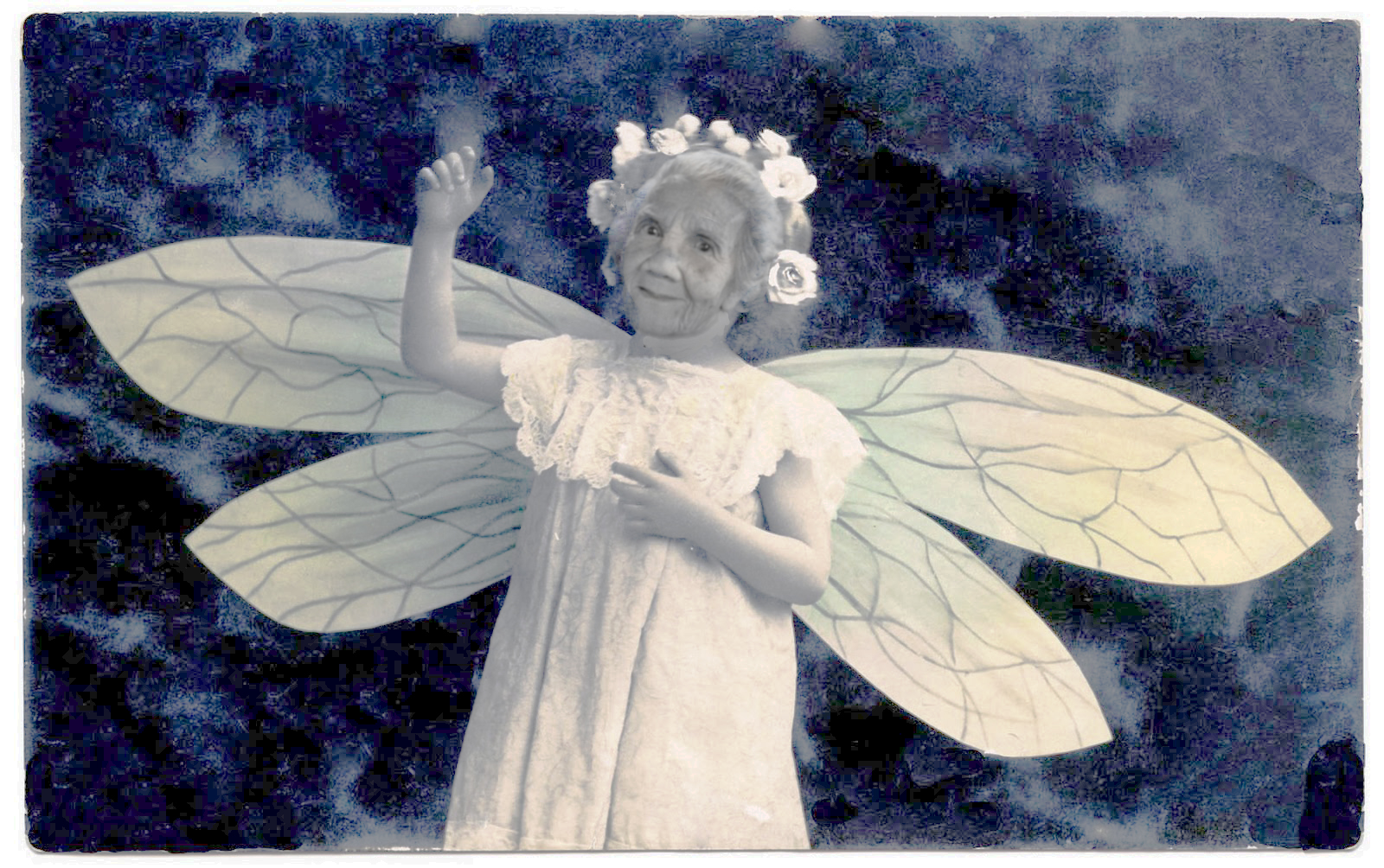
This Fall my son actually called home to ask for advice. With silent gratitude I provided 2 sentences of guidance and said that I was sure he could figure it out because I was busy. The change was out-of the blue and defied rational explanation The Maturity Fairy is still my heroine and I love it when my son notices his cousin is a brat on Facebook and says, “Was I that obnoxious at 14?

I feel the Maturity Fairy waving her wand over me as I decide NOT to cite chapter and verse.

I hope she sticks around for a little while longer. He still doesn’t have a job …

Have you seen the Maturity Fairy at work in your life or in the lives of others you know?

Teaching My Daughter to be Cynical

Today’s guest post comes from Steve Grooms

It should not have surprised me. When my daughter Molly began to talk, she started telling her mother and me the same things we were always telling her. Kathe and I talked to Molly almost nonstop, and much of the time we were explaining the world to her.
I should have expected that Molly would begin explaining the world to us.

“All these lights along the road?” Molly would say, her voice rising as if to form a question. “They put them there so the cars don’t bump each other in the dark.”

One day Molly spotted a poster of Garrison Keillor—Garrison with his distinctive face and beard. “When you see a face that looks like that,” Molly said to me in a helpful tone, “then you know that it is Garrison.”

We took Molly to a Lebanese restaurant one night. She was silent, her eyes wide as she took in the novelty of a restaurant that didn’t serve American food. She finally said, “It is a good thing they have this restaurant. All the people fighting the war . . . when they get tired they can come here and have their own kind of food.” Molly was responding to the fact that every night’s TV newscast featured film of civil war in Lebanon.

While explaining the universe to us, Molly almost always added her stamp of approval. She described the world as a place that was laid out in a pleasant and logical way. “They always put the cookies in the same place in the grocery store so kids and parents can find them.”

I used to reflect on the word she used so often: “they.” “They” made sure that water came out of our taps—hot and cold—when we twisted the handles. “They” put Christmas lights up at our shopping center. “They” made our world, and Molly appreciated their work. Beaming with contentment, my daughter savored the comfortable life that “they” had created for just for us.

This delighted me for years. Then I began to worry.

Yes, “they” had created a world that served our needs and delighted our senses. But “they” were not to be trusted. Sometimes “they” did things for selfish or even evil motives. Sometimes they lied. Molly needed to temper her pure trust in them. My sweet daughter needed an injection of cynicism.

Perhaps only another Midwestern parent would understand what this cost me. I adored my daughter’s unalloyed trust in her environment. Something in me balked at introducing her to the venality of human nature. And yet it had to be done. Without an appreciation of how deceptive others could be, my daughter would be vulnerable to manipulation. I had to teach a trusting child to be cynical, at least a little bit.

But how? I chose to introduce my daughter to cynicism by picking on a fat target: children’s commercial television.

One day when we were watching a cartoon show sponsored by a line of toys, I told Molly that people who wanted to sell stuff created commercials that made the toys look better than they are. “That truck probably broke right after they filmed that commercial,” I said. I showed her how tricks in film technique made the toys seem more dramatic than they were.

Molly was aghast. But she soon got in the spirit of things. When we saw other commercials, she would seek my approval by suggesting ways the sponsors might be lying to us. She began finding fault with what “they” were doing.

One morning when she was about six I went into Molly’s bedroom wake her up to face another day at school. My daughter lay on her back, eyes closed, arms splayed out like Jesus on the cross. When I rubbed her tiny chest, she spoke in a sleepy mumble. From the corner of her room the clock radio was blaring morning news.

“Daddy? What is the very best thing for you when you get up in the morning?”

Like any sensible parent, I was terrified by that question. She had been thinking about some issue and had a very particular concern. I wanted to be careful with the answer to this question, for this was not a harmless random question.

“Why, Molly,” I finally said, “the very best thing about getting up in the morning is that I get to see you and Kathe again.”

“Oh, they lie! THEY LIE!” said Molly, eyes still closed. “That just shows how they lie. On the radio they just said, ‘The best part of getting up is Folger’s in your cup!’”

What is the best part of getting up?

Local Fauna

Today’s guest post comes from Jim in Clark’s Grove.

I like to explore nature and it has occurred to me that it would be interesting to study and document the animals than can be found in my yard or near the place where I live. So far I haven’t put a big effort into studying this nearby fauna, although I have noticed some things that I found interesting. Also, there were some creatures, which would not usually be thought of as wild life, which made an unexpected effort to populate my yard.

I am always amazed at the wide variety of birds that can be found in urban areas. My bird feeders, like most bird feeders, attract a fairly wide variety of birds. I am especially pleased that the number of Chickadees has increased this year. Many years ago there were large numbers of English sparrows coming to the feeders and now they seemed to have been replaced by House Finches. I don’t like seeing large flocks of either of these two kinds of birds because they are aggressive and are more or less an invasive species. I’m glad to report they haven’t been able to push out my more preferred visitors.

In the spring I see birds that are brief visitors as they migrate through our area. I particularly like seeing the tiny Kinglets that seem to like to rest in our yard on their way north. Of course, spring also marks the return of local birds that live in the south during the winter. I especially like to hear the singing of Wrens and Chipping Sparrows that ring out as they come back to their nesting areas. In the summer I sometimes see flocks of Cedar Wax Wings that move through our neighborhood looking for fruit. I have even had a visit from a Yellow Bellied Sap Sucker that I saw drinking sap from a hole it made in a tree.

We have a fairly large number of squirrels. I spread some bird seed on a picnic table for the squirrels to keep them from attacking my bird feeders. Our yard is also the home of Short-tailed Shrews. Short-tailed Shrews have a somewhat poisonous bite. Mice are included as one of their prey. I saw these shrews for the first time when I was cleaning out my compost pile and one of them gave me a painful nip, but I guess I was just too big to bring down. I’m glad we have these mouse predators in our yard because mice occasionally invade our garage and damage stored items.

Finally, we had a tree house in our yard that was used by our daughters. Neighbor kids also played in the tree house and I was glad that they could make use of it after my daughters grew up. One day I saw two young girls there that were not from our neighborhood. They had apparently decided this was now their “nest” and had even started to freshen it up with some paint. Since I had no idea where these two “birds” lived and they hadn’t asked permission to redecorate, I told them that they should find another place to do their nesting.

Have you noticed any interesting or unusual local fauna?

Arty V. Smarty

Today’s guest post comes from Sherrilee.

I’ve always been a go-getter, as my mother would say. If I want something, I figure out a way to get it and if I’m doing something, I like to do the best job I can.

As my middle sister discovered early on, this is a difficult personality trait to have in an older sibling. As I had two years on her, everything she did or tried had already been done by me. After a few years it became clear to my parents that there were things she didn’t want to try because I was already doing them (piano, dance, reading…)

So when she showed an interest in drawing and painting, my parents really encouraged her and DIScouraged me. She got art lessons, she got art supplies, she got her artwork framed all over the house, I got bupkis. To their credit, I don’t think they were trying to discourage me in their efforts to nurture something that was all hers, but the result was the same. As the years went by we were more and more defined this way; I was the smart one and she was the artsy one.

In college, during a particularly rough semester, I was looking for something that would be easy and decided to take a beginning drawing class. It was a shock to my system that I wasn’t too bad and I had a great time in class.

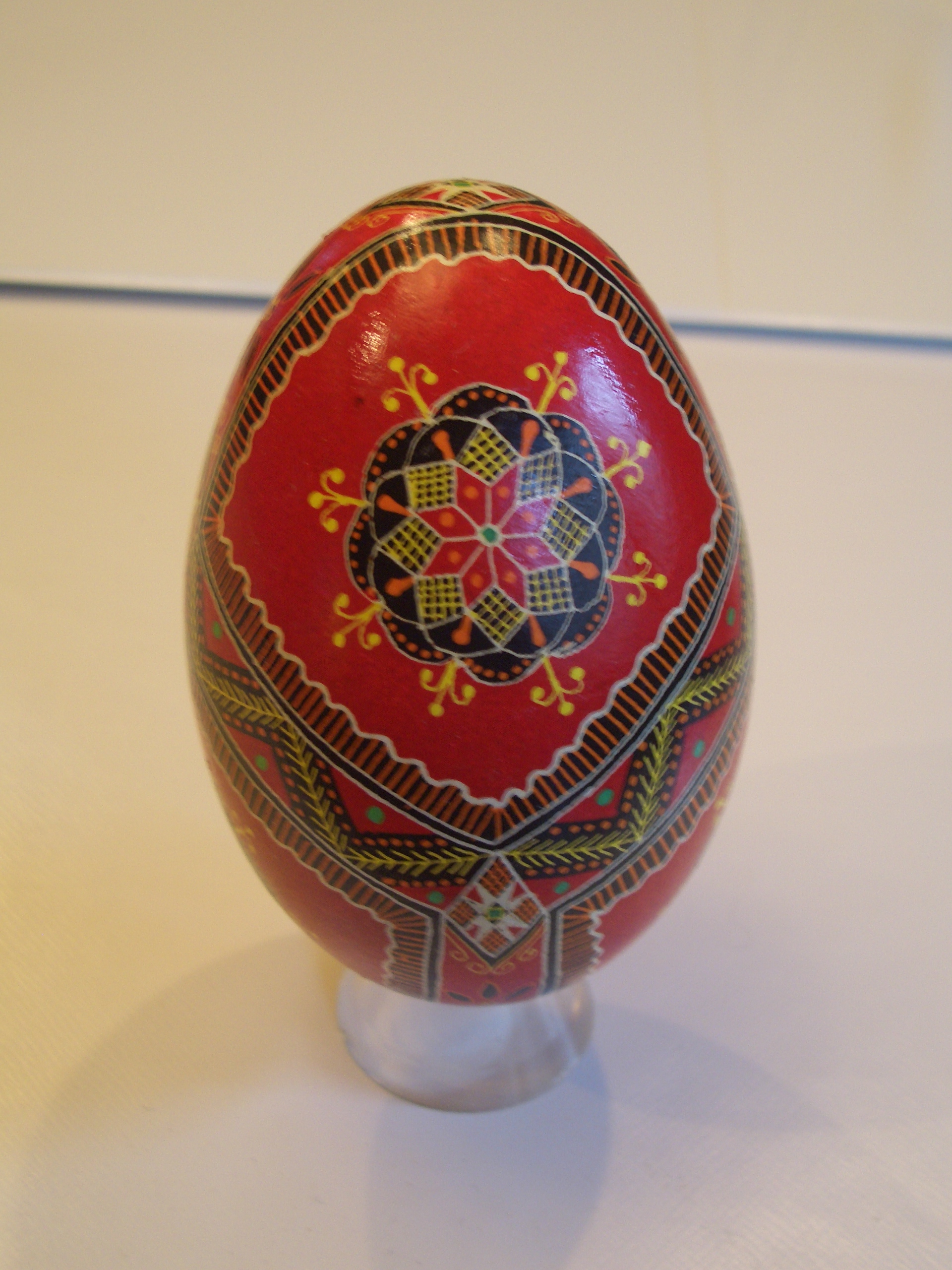
After that it was as if a huge door opened for me. It seemed as if around every corner, there was another artsy-craftsy experience waiting for me. Since then I’ve taken on Ukrainian eggs, rubber stamping, tie-dye, silk screen, sewing, scrapbooking, glass etching, candle making…. it’s a long list. The teenager and I now make most of our gifts and I do cards galore every year.

In a bizarre twist, my sister decided in college that she “didn’t have time for art”. So now I’m the artsy one!

What passion have you discovered later in life?

Wait, Wait, Don’t Sell Me!

Today’s guest post comes from Clyde.

As my wife’s permanent chauffeur, I spend much time in medical waiting rooms. Even though I have learned to bring my own entertainment, I have informally cataloged what is provided as reading and viewing material.

One clinic provides nothing because they believe that the reading material spreads germs. Two have taken out play areas for children on the same principle.

As a casual observer of marketing, I notice how the marketers have, as they will, found the captive audience. A few places provide the standard array of magazines, usually with a plastic cover over them on which are imprinted ads for the company which paid for the magazine.

Much more common is to devise ways to market medical services and products, almost entirely drugs, to the captives. Or is that victims? Let’s say patients or impatients, as is maybe more often the case. The two favorite media are TV screens and medical-interest magazines. The technology is slowly expanding. It usually extols the virtues of the organization holding you prisoner. Ads for drugs are also slowly creeping in.

I scan the medical-interest magazines before reading my Dickens or Hardy, two authors I read in waiting rooms because it takes an environment such as that to make them interesting. Most clinics contain two types of such magazines: a general medical health publication, or ill-health as I shall explain, and a magazine aimed at the focus of that waiting room, such as arthritis or neurology.

The content of these magazines has made two things clear. 1) No disease is real until someone famous gets it, or as second-best, the parent of a famous person. 2) There is a myriad of diseases of which I should be terrified, things of which I have never heard, which get catchy names as if Madison Avenue named them. Did it?

Overstatement is standard fare, especially on the cover. For instance one magazine on its cover suggested that all Boomers have a mysterious disorder called HepC, which turned out to be hepatitis C. The reason, as I read inside, is that we all, it seems, shot up drugs, shared toothbrushes, and participated in orgies. I guess I wasn’t invited.

The purpose of these magazines is ads for drugs, with long legal statements in very minute print, too small for most of the patients in the waiting rooms to read. Another Madison Avenue decision? The listed side-effects are more terrifying than anything Stephen King would dare write. All the ads tell me to ask my doctor about the drug, meaning to prescribe the drug. I tried to talk my wife into taking a list of the drugs in with her and asking her doctor about each of them. My wife has no sense of fun.

Doctors hate ads like that, and they hate articles which tell people that they have the latest dread disease. But I am quite sure the management of the clinic or hospital is placing them there and not the doctors.

The slowest passage of time known to humans is that spent in waiting rooms. People need distraction, but the content of the TV screens and the magazines seems to me so contrary to what people really crave or to the purpose of the visit.

What would you put in medical waiting rooms to distract and or comfort people?