Tag Archives: Outer Space

Locked in a Room

As the state’s budget showdown drags towards a shutdown on July 1st, settlement strategies come and go. The latest is the leader lockdown – Governor Dayton, House Speaker Kurt Zellers and Senate Majority Leader Amy Koch will engage in some marathon sessions Friday and Saturday to try to shape an agreement.

According to a report by Tim Pugmire of MPR:

Zellers said they will lock themselves in a room and won’t leave until they have at least some consensus or a framework that they can then take back to their legislative members and the governor can be comfortable with.

“But the point being that without the three of us in a room talking about these bills in great detail and coming to agreement between the three of us, it’s going to be awfully difficult for all of us to come to agreement,” Zellers said.

This is necessary at the very least so all parties will be able to say “we really tried” while pointing fingers after July 1.

But one wonders how “in” they will be “locked”?

Perhaps they could follow the model of the Mars 500 mission. But the experience so far seems to bring this warning: Those who are locked in a room begin to get used to being locked in a room.

It has now been more than one year since six men were shut inside a space ship-like enclosure in a Moscow suburb, agreeing to mimic conditions on a trip to Mars and back. They have endured mock emergencies including a loss of power and a week without communications with the outside world. They have simulated a Mars landing and walkabout, and are now on their way “back”, with a planned arrival “home” in early November.
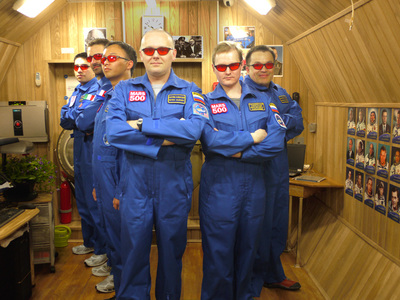
Matching Goggles Can Help Build Camaraderie

They have their routines, which they follow every day without fail (weekends included). One Marstronaut said his greatest regret is that he misses “the randomness of the world”. So far it seems the greatest threat to the well-being of these men is the dreaded fun-sucking monster, monotony.

One of the mission co-ordinators said “one thing that they’re using to break the monotony … is creativity. For Halloween they dressed themselves up with scientific equipment. For Christmas they came up with their own self-made nativity scene. And they also celebrated the Chinese New Year.”

Perhaps Minnesota’s combatants could resolve to stay in the Governor’s reception room until a settlement occurs, and if they’re still in there on the Fourth of July, they could break the monotony of their own immobility and form a bond by improvising an appropriate holiday celebration with the materials at hand.

Better make sure nobody has matches when they go in.

How do you handle a deadline?

Sun In Your Eyes

I see that one of the most e-mailed items on the New York Times website lately is a commentary that makes the argument that spending too much time in weak indoor light has caused more children than ever to be nearsighted. The article contends that something about the proper development of our eyes requires us to spend time in sunlight.

This alarming thought runs completely against the cautious parenting I did when my son was young. He was a fair skinned child, and I was vigilant about exposure. I may have even cast the sun as a master villain, along the lines of The Joker or Dr. Strangelove. Diabolical. Powerful. Merciless. The sun was something to be viewed suspiciously, and by “viewed”, I mean, never ever looked at directly.

Now parents will have to take a more nuanced approach. How are our kids supposed to feel about the sun? It’s complicated.
Perhaps this calls for a children’s poem.

Go play outside or you’re going to go blind.
The sunshine will help you to bloom.
Your lenses and retinas might misalign
if you do not come out of your room.

Our bodies are built to be active outside.
Doing running and swimming and games.
The sun is your friend. He’s your comfort and guide.
But please don’t look into his flames.

And sunblock your neck and the tip of each ear
and your shoulders and legs and your head
the tops of your feet. And please cover your rear.
Or the sun will re-color you red.

Go into the light but stay out of the glare
have fun but be safe while you play.
Get some sun. Cover up. Be carefree. Be aware.
And do everything just as I say.

What did your parents tell you never, ever to do?

Bridge for Sale

I know the real estate market is in miserable shape, but some deals are irresistible.

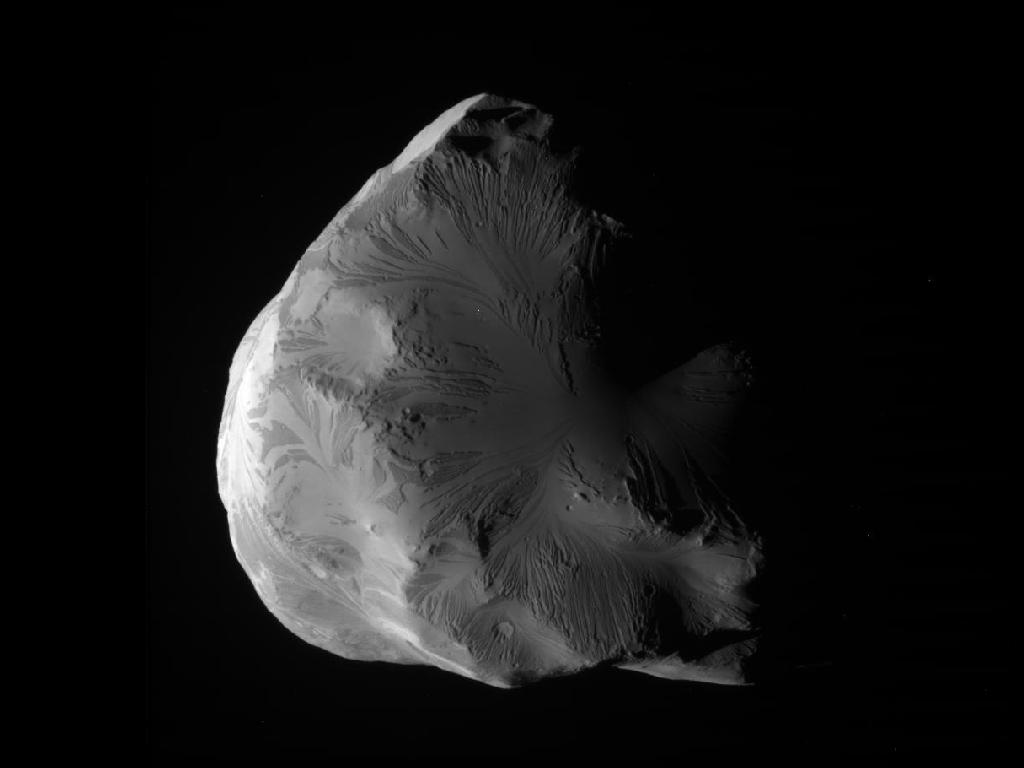
Wouldn’t you like to own this fabulously ornate and undeveloped chunk of terra incognita? The property itself has the same luxurious texture as the lumpy pillows that engulfed you when, as a five year old, you sat down on Aunt Helene’s mammoth brocade sofa, and almost disappeared.

This wonderful bargain is, in fact, NAMED Helene. How unique!

Don’t let the fact that Helene is a rather remote property prevent you from taking advantage of this once-in-a-lifetime opportunity. Moons of Saturn are numerous, it’s true. But they are not for everyone. Helene is frightfully cold and traditionalists shopping in the moon market sometimes disparage Helene for her clack of classic roundness. But this is a satellite with an unforgettable shape – clearly distinct from any run-of-the-mill sky disc. No one looking at a line up of charming orbiters would mistake Helene for a common moon!

And Helene is much more than a chiseled work of art – she occupies one of only five exclusive Lagrange points which can guarantee consistently excellent and unchanging views of both her sister moon Dione and the planet Saturn!

Yes, it is a rare individual who could afford to even attempt to buy a moon of Saturn. But times (for some) are so flush, the embarrassing build-up of money almost requires that a grand gesture be made in the form of just this kind of extravagant purchase – the kind that no one else would ever attempt!

C’mon, doesn’t it remind you of a heavy, musty smelling pillow from that favorite couch? What did you call it back then, when you were just a child? Rosebud?!

What useless thing do you own just for the sake of owning it?

Getting the Yard Work Done

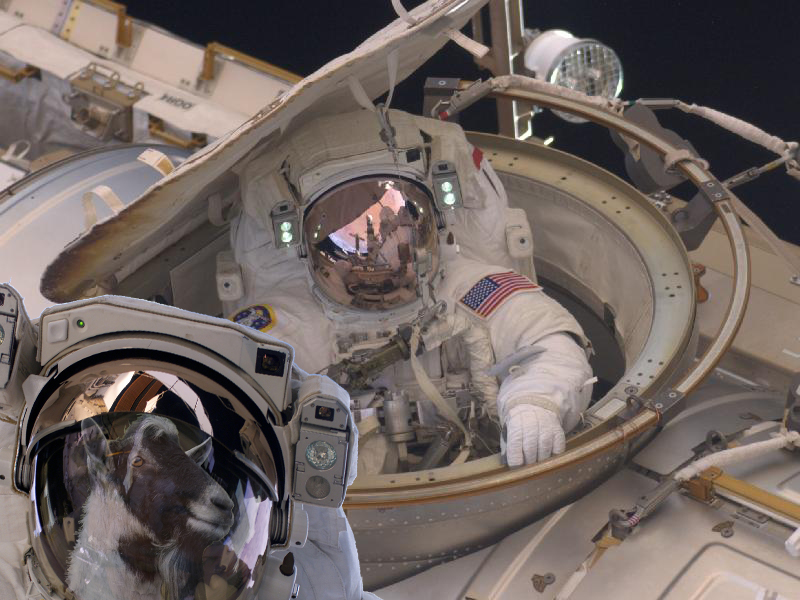
When you and a friend go on a trip to an exotic faraway place, you will probably come home with a few photos of you standing by some historical monument or in front of a landmark or in the doorway to a famous place you are about to enter. That’s just human nature. So it’s no surprise to see NASA release this touristy photo from the current shuttle mission with Andrew Feustel climbing back into the International Space Station after spending 8 hours doing handyman work alongside the photographer, well traveled astronaut Mike Fincke. (Not to be confused with legendary Ohio River keelboat character Mike Fink, though both come from Pennsylvania).

In popular culture, I think it was Star Wars that first gave us a glimpse of space as a place where people would spend an inordinate amount of time fixing dirty, broken machines. Feustel and Fincke put in extra hours outside on Sunday doing just that – trying to grease a mechanism that’s supposed to turn without grinding, but doesn’t, unless it gets a lube job every now and again. Weekend mechanics were no doubt happy to hear that the space jockeys had to slow down to deal with bolts that were mysteriously popping off the covers that had to be removed to get the work done. At least one bolt was lost in the vastness of the universe. Up to this point my idea of a miserable mechanical search job was the time I spent trying to track down a loose fastener that fell in the grease pit while my father was working on his old Corvair! Finding a single bolt in a rapidly expanding cosmos? Infinitely more difficult. “Did you look EVERYWHERE?”

So this is what space travel will become, with several companies hard at work on the next step – creating routine off-planet tourist trips. Above the atmosphere, even mundane tasks become exciting and heroic. Perhaps someone will pay a few (million) bucks for the chance to do the next greasing on that fussy solar array.

And while you’re out there, don’t forget to tend the animals.

Goats in space!

I happen to have a long list of outside chores waiting to be done. I have every intention of getting to this work, but other things get in the way. If it ever comes to the point where humans are living away from Earth, your space ship will likely be your home. And there is no reason to expect that any of us will change our handyman habits.

You’ll be able to tell my vessel by the piece of cosmetic siding that’s falling off, the junk I’ve allowed to collect around the air handling equipment, and that loose railing on the external observation deck.

What will the neighbors say about the upkeep on your spaceship?

Ask Dr. Babooner

Dear Dr. Babooner,

I work with a group of astronomers who comb deep space for evidence of planets that are not part of any solar system. I work a lot. Since I’m the only unmarried member of the team it’s assumed I can stay late every night and through weekends!

Here’s the good part – we’ve been finding a lot of planets lately and our research has made the news, which is good for our morale. But when I read these articles I feel uneasy about some of the things my colleagues say.

They’ve taken to calling these unaffiliated bodies “Lonely Planets”, simply because they are not orbiting a star. Planets don’t have feelings, so why would a scientist talk this way? I understand that it’s important to describe scientific research in terms that are accessible to laypersons, but why must we assume being unattached is the same thing as being lonely?

Even if planets DID have feelings, couldn’t it be that some of these planets are satisfied with their status? One of these planets might even be glad he isn’t in the thrall of some stupid shiny star, especially if that star is always so far away and out of reach that the planet doesn’t get any warmth from her at all. The close-in planets, the ones that push to the front, think she’s so HOT. Fine. Let them all snuggle close and act like she’s the center of their universe if that’s what they want to do. It’s not that great, you know, orbiting and orbiting and orbiting. Anyway, the closer you are, the faster the run-around you get. And it never stops.

I’d prefer to think of the so-called “Lonely Planets” as Free Planets! Free to go from place to place around the universe, visiting different galaxies if they want. Free Planets are independent spirits, not easy to corral, and they don’t need to have a star to orbit just because some other planets do.

But if a star came along, especially if she was very bright and wanted to have only one planet and not a whole string of them stretched out over millions and millions of miles – well, that kind of orbital relationship might be worth the risk of allowing yourself to be captured by a little gravity.

Dr. Babooner, how do I tactfully indicate to my colleagues that I disagree with the term “Lonely Planet” without seeming like a geek who is hopelessly fixated on his own social status? My objections are purely scientific, and to be seen as emotional on this matter would be humiliating.

Sincerely,
Gas Giant

I told Gas Giant he should not use terminology that makes him uncomfortable, and since “Lonely Planet” isn’t a scientific name, he should feel no guilt about refusing to say it. Furthermore, he should pick a name he likes and start using that exclusively to refer to these “Lonely Planets”, and perhaps as he gains credibility his name choice will too. But it would help if the new name had some appeal for those who have accepted “Lonely Planet”, so I proposed that he call them “Orbisons”, after Roy Orbison, who sang “Only the Lonely.”

But that’s just one opinion. What do YOU think, Dr. Babooner?

A Matter of Perspective

‘Tis the stormy season here in the upper midwest. There will be thunder and lightning!
That’s OK! I enjoy a rattling good storm if:

1) I don’t have to go out in it, and
2) It doesn’t include a tornado.

Lightning is particularly fun to watch if you’re not on a sailboat, in the pool, or out on the golf course holding a five iron over your head. The jagged, unpredictable bolts make for a great show, especially if the action is at a distance. A lot of the drama is in the setting – we’re down here on the ground and all this unruly commotion is happening over our heads. We’re weak and helpless.

I’ve sometimes wondered if lightning is as impressive when observed from above. Well, just yesterday NASA distributed this photo taken three months ago from the International Space Station by Paolo Nespoli of the European Space Agency.
It shows a storm in progress over Brazil.

Good news, the bolts are going down!

I confess I would feel smug looking down on a thunderstorm from space. Finally – nothing to fear! Up above, I have the strategic advantage. Yes, I’ve got nothing but a metal bulkhead and some insulation to protect me from lethal cosmic rays and the frozen airless vacuum of space would make my blood boil if I were suddenly thrown into it and OK, perhaps the Klingons or the Borg are really out here, and what if our on-board computer stages a mutiny? But at least I don’t have to think about being hit by lightning!

Unless it looked more like this:

Bad news! Fingers reaching up!

This can’t be good.
I suspect once humans get comfortable in outer space, the scariest stuff in the universe will still be those crazy things that might come after us from planets.

When has a change in perspective made all the difference?

Job Opening!

For people who use mass transit, there is a moment you dread – when you realize the bus you meant to catch is pulling away from the stop and you are still three blocks down the road with an bag of groceries clenched in one arm and a cranky four year old hanging from the other.

Unemployed people have a similar kind of sinking-in-the-gut sensation – when you find out they’re hiring for your dream job the day after the position closes. That’s how I felt when I discovered Virgin Galactic was looking for three pilot/astronauts.

Too bad, because I could easily see myself doing this!

True, I don’t feel comfortable with heights and I tend to get slightly dizzy from sudden movements, but there is nothing in the job description that says you have to look down at the ground from outer space or turn your head quickly. In fact, doing either of those things would probably interfere with your efficient operation of the next-generation Virgin Galactic space plane, the SpaceShipTwo! A great pilot/astronaut would keep his eyes on the controls, no? And my eyesight is pretty good, especially around the middle part of the day. I don’t do so well after dark, but that wouldn’t be an issue. In space, the sun is always shining!

Oh well.

It’s undeniable that technically I was lacking in some of the specific qualifications, like graduating from an accredited test pilot school and logging at least 3,000 hours flying highly complex, super-fast jets. Oh, and the job announcement says “prior spaceflight experience is an advantage”. Fair enough. When filling out the application, I’d be forced to admit that I’ve never been in space before. But at least it’s not required!

And I’m sure once the Virgin Galactic people got to know me, they would be mightily impressed with my extensive knowledge of what it takes to be a public radio folk music disc jockey. Some very useful qualifications never make it into standard job descriptions because the people doing the hiring just don’t stop to think about the value of some unusual types of experience!

Good luck to the candidates who got their applications in on time, and a sharp salute to the three who will be chosen to be pilot/astronauts for Virgin Galactic. Just remember this when you put on your fancy helmet and your crinkly silver jumpsuit with your name stenciled above the left pocket – it shoulda been me!

What’s the best job you ALMOST got?

Get Off My Lawn!

When things get complicated and tiresome here on Earth, it’s always a bit of a relief to get off-planet and look at something quite distant – a place where our problems are unknown and everything that keeps us awake at night is completely insignificant.

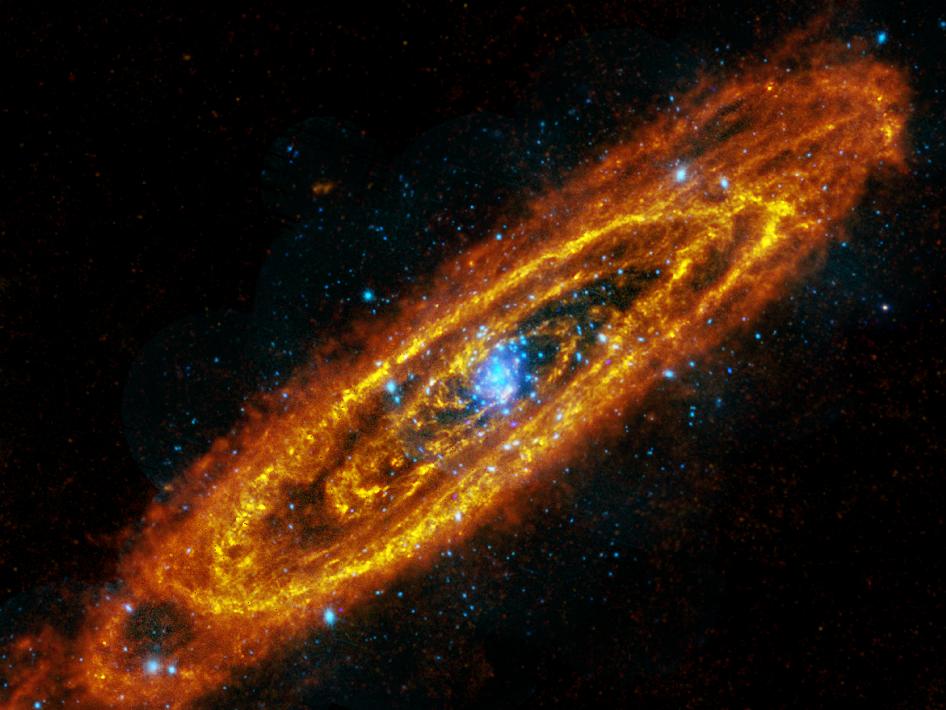
In this case, it’s 2.5 million light years away – the galaxy Andromeda.

This remarkable image is a composite, taken from several space cameras operated by the European Space Agency. They all observe different flavors of light – microwave, ultraviolet and X-rays – each indicated by a distinct shade.

The blue sections are older star clusters that have exploded or are in their final stages, and the reddish orange swirls represent areas where new stars are forming. I see it as just a lot of colorful fun, though it’s my luxury to think that – I don’t live by a star that has just blown apart and don’t have to put up with a new sun popping up next door.

But if you don’t mind waiting 4 billion years, our galaxy, the Milky Way, will eventually collide with Andromeda, and then things get really interesting. Rumor has it the two galaxies will intermingle and eventually become one bigger, fatter galaxy. It does not necessarily mean that other planets and stars will come crashing into the Earth or our Sun. The distances between objects in space are so vast, I guess it’s possible for two galaxies to combine without it becoming a cosmic demolition derby.

But, if you ever thought you could move to a place where you would never have to concern yourself with nosy neighbors invading your space – think again. The universe just naturally mixes things up.

There are suddenly new people (creatures?) next door. Do you go over and say hello, or draw the shades?

Please Don’t Touch the Displays

Today, officials at NASA will announce which three American museums will receive the decommissioned space shuttles Discovery, Atlantis and Endeavour. NASA is also giving away the shuttle prototype Enterprise, which is a test craft that never left the atmosphere so technically it’s a Thin Air Shuttle.

Museum exhibit looking for a place to land

If you run a museum that features things that fly, getting one of these babies would be a real coup. It would also bring a hefty financial obligation, since the cost of preparing a shuttle for display and getting it to your location is a cool 28.8 million dollars.

The people of Dayton, Ohio are excited because their town is in the running. The National Museum of the United States Air Force is at Wright-Patterson Air Force Base, ten miles northeast of the city. Dayton has been actively campaigning for the honor and people there will be terribly disappointed if they’re passed over, though who hasn’t been passed over by the shuttle at one time or another?

At the Museum of Flight in Seattle, they’ve already started building a place to house the orbiter they’ve not been given yet, which is either seat-of-the-pants audacious in the best tradition of barnstormers and test pilots, or flat-out foolhardy.

Other candidates include the Johnson Space Center, Chicago’s Adler Planetarium, the U.S. Space and Rocket Center in Huntsville, Alabama, and New York City’s Intrepid Sea, Air and Space Museum. Some of the contenders are not making a big promotional deal out their entry, possibly because they realize their chances of success are slim and nobody wants to be tagged as a “loser” in the museum world.

I have no such concern about my bid to bring a shuttle to the empty parking slot in my garage. Why, you ask? Building a suitable display for the only retired Space Shuttle on my street would keep me busy, for one thing. And when I was done I’d have a great central attraction to compliment the rest of my personal museum. The other day I went downstairs to retrieve something I can’t even remember the name of and was amazed at the range and scope of the things I have amassed, so I must be building a museum. What else could it be? Though I admit the collection is a bit unfocused.

I’m calling it the Museum of Invisible Objects because it is comprised of things I wanted to have out of my sight as soon as possible, which is what led directly to their installation in the basement galleries.

The largest expense in setting up my museum (after the 28.8 million for shuttle cleaning and delivery) would be the cost of building an escalator so visitors could be whisked from the garage directly into the Hall of Half-Read Books, where both hardback and paperback copies of classic stories and once new groundbreaking fiction are on display. There’s also a non-fiction area, where detailed explorations of things I once thought I wanted to know are carefully arranged in the order I abandoned them.

From there, it’s a short walk to the Obsolete Technology Collection, which includes a walk down Partly Functioning Inkjet Printer Alley, the amazing Inadequate Television Display and an amusing assortment of cassettes, 8 track tapes, LP’s, VHS tapes and laser discs I’m calling the Defunct Format Farm.

We’ll soften the lighting as people transition into the Sentimental Attachment Section where they can view the Enshrined Cute Baby Clothes and walk down the Boulevard of Broken Toys.

Then it’s directly to Ambition Row where they can see the Too-Scary-To-Use Table Saw and the Only-Tried-It-Once Power Washer.

As the tired but happy visitors move towards the exit they’ll pass through the wistful halls of the Period Furniture Farm, where they’ll have a chance to marvel at the things that used to be used to be in the main living area of this house, and in the homes of a number of my relatives.

And because it’s my basement, just before the stairs to the street there will be a whimsical display of bug carcasses under the heading, “Catalog of Things The Spiders Have Eaten”.

Late addition:

That Guy In The Hat sent in this item from his collection as a way to show us that, unlike me, he doesn’t just accumulate junk. Nice. Thanks, TGITH.

What’s on display in your personal museum?

Don’t Panic!

Today is the anniversary of the first broadcast of the first radio installment of Douglas Adams’ “Hitchhiker’s Guide to the Galaxy”. I mention it only because I know some Trail Baboon regulars are fans of the author and the series, which went on to include books, TV shows, movies, more radio shows, a video game, lots of websites and who knows what else.

But it started as a for-ears-only experience.

The online description of the beginning states it thus: “Despite a low-key launch of the series (the first episode was broadcast at 10:30 p.m. on Wednesday, 8 March 1978), it received generally good reviews and a tremendous audience reaction … for radio.”

I love the “… for radio” part. Who listens to radio at 10:30 on a Wednesday night? For drama? Comic, science fiction drama? In Britain in 1978, the answer was “just enough.”

The video and film versions never quite measured up to the original, for me. But then I’m biased in favor of “the theater of the mind”, where some say the pictures are better but it’s also true that you automatically edit out any mind-pictures that don’t measure up – perhaps an unfair advantage for the creaky old medium.

This You Tube non-video offers the first ten minutes of the first episode.

http://www.youtube.com/watch?v=ZnJFo2hSe7Q

Shortly after this clip ends, the world is destroyed. Not a bad first step along the way to starting something new.

I can only guess that Adams did not expect this project to draw the cult following it did, or to take up so much of his limited time on Earth. He died of a heart attack at age 49.

Clearly “The Hitchhiker’s Guide” is an example of something with modest beginnings that became much grander and infinitely more complicated. So hurrah for modest beginnings!

What have you done that met with unexpected success?