Flash Flood

We had around 2 inches of rain on Sunday night in the space of 70 minutes. That is pretty unusual for us, and resulted in a lot of flash flooding in town. The photo below shows a flooded underpass. You can see the railroad bridge at the top of the photo. The street goes under the bridge, and the flood waters are about 12 feet deep.

Photo by DJ Miller

The following photo is of a main street in town that I drive on every day to work. I never really noticed the low spot where the yellow car is sitting. There are apparently lots of these low spots on the street, and they all flooded briefly. I have lived here for 35 years and I never noticed them. Now I notice lots of these low spots all over town.

Photo by DJ Miller

Someone from the fire department also took a photo of the underpass. The fire department is always called when the underpass floods, as it seems someone tries to drive through the underpass during a flood, and they like to have a rescue truck available.

Photo by Dickinson Fire Department

We had another .20 inches today, and it seemed like it soaked in much better than the downpour on Sunday night. It is interesting how less can be more when it comes to rain.

Have you ever been in a flood, flash or otherwise? When, in your experience, is less really more? What are some experiences when you have seen but not really noticed ?

Dessert Anyone?

I am not usually a procrastinator; in fact, I’m usually the opposite.  I almost always start with the thing I don’t want to do and then reward myself with the more pleasure task afterwards – unlike Oscar Wilde, I like to have the dessert at the end.

But every now and then I encounter a project that just throws me for a loop – a project that lingers and lingers while I find excuse after excuse to not get to it.  It tortures me and I keep putting it off, even though I remind myself that it won’t take as long as I think, it won’t be as hard, I’ll feel so great when it’s finished.  About the only way I’ve found to counteract this is a deadline.  Once there is a deadline, then I’m all in for getting it done. 

My front porch (yes, she’s going to talk about the front porch again) is right up there.  I didn’t have any problem scrapping (although it was taking forever), no issues with sand blasting (although tim helping did set up a deadline if I’d needed it), no issues with replacing the broken glass panes, no issues with getting all the glass to the correct recycling center, no issues with sanding the window frames.  

Getting the ceiling done – I’m just tilting at windmills.  I simply cannot get myself to stain the ceiling.  It started with taping up the plastic – took me a month to figure out how to trick YA into doing it with me.  Of course, I could have done all the taping on my own in less than 30 minutes, but I just couldn’t make myself.  Now that I don’t have plastic on the to-do list, you’d think the staining would be easy.  But no… again, every time I think about it, some other thing that is much more enjoyable “needs” to be done. This past weekend, I spent close to 10 hours in my studio…. cuz I really need more cards, right?  Right now I’m trying to think of how to trick YA into the staining as well.

Any projects you’re procrastinating on right now?  Any thoughts on how to get YA to do the ceiling for me?

Reduced, Reused, Re-Reused

Today’s post comes to us from Clyde.

I am aware, in a way few people are, of an historical change. An age died in America, with some very few small pockets left, in about 1957-1960. This age started thousands of years ago in Europe and came to America with the first immigrants, although I suspect the Native Peoples practiced it.

I call it the Age of Reduced, Reused, Re-Reused

It was an age by necessity of self-sufficiency. Time Team, a British archaeology show I enjoy, often discovered how even the Romans would reuse, as did the stone age and iron age peoples. The age died slowly. In the early and mid 19th Century people recognized it was passing. Thoreau and Emerson commented on its dying. Thoreau’s Walden experiment was to some extent about self-sufficiency. His cabin was built of reused materials. I think the experimental communities of that era that interest Bill were strong on self-sufficiency in reaction to this change.

In much of rural America the age was still very much alive through the depression and the two post-war eras. I lived it as a child beside my parents and our neighbors. We lived reduced lives, reduced in the material sense. Ready cash was rare. Toys were few and often handmade. It is the reuse and re-reuse part that strikes me now.

I showed you awhile back me wearing a hand-me-down coat from my sister. In most of the pictures of me before the age of about 12 I am wearing baggy clothing cut down as best my mother could from my brother’s clothes, who was 7 years older than me. People gave my mother old woolen coats, as all coats were then, which she cut in strips and hooked or braided into rugs. My sister still has a rug or two. Her quilts were made of recycled cloth or from remnants she purchased in bundles from Sears Roebuck. The only things she threw away to be dumped on our rock pile were a few cans and bottles. No foodstuff was tossed.

However, it was in the world of my father where I was more aware of the reusing and re-reusing. In the early 50’s people in town were giving up their backyard sheds and now too-small garages. We would demo them, often with other men from the valley. Once we brought one home whole, but I do not remember how. It was my job to remove the boards as carefully as possible. From an early age another of my jobs was to straighten the not-too-rusted nails to reuse. It is a tricky business which gave me a few purple fingernails. We shared the lumber and nails with others or used it to build our own sheds. We built a large machine shed using only recycled wood for the walls, not the roof.

And there were the vehicles. In my very early youth many jokers could be seen around the valley. Jokers were old trucks cut down and rebuilt to serve as tractors or utility vehicles. The header picture is my rendering of the joker my father and my uncle built out of an old logging truck when we lived in the Superior National Forest. The joker moved us down to our farm. After I drew this as best I could from memory, a clearer picture emerged in my memory of a shorter box and chains hanging on it and lots of grease. But you get the idea. This was our tractor for the first year or two we had the farm. Then my father bought a 1923 Farmall and overhauled it, three times. Compare that with Ben’s picture of his tractor in his most recent blog. I am, of course, envious of that tractor of his. That joker became the frame for our all-purpose heavy-duty trailer, which hauled our hayrack, logs, and things like rocks in a box built for it.

By the way, I long thought joker was a local term. However, my research says it was widely used.

The men of the valley in my childhood had many skills, or they traded them. My father had a buddy Martin, who was a genius with engines, but weak at carpentry, plumbing, and electricity, which my father could do well. Martin was often in our workshop working on our vehicles or rebuilding engines of older cars to sell.

Let me tell you the story of our 1936 Chevrolet four-door sedan, which was our family car until about 1953, with its suicide back doors and with both front and back pneumonia holes.

At that point Martin overhauled the engine and transmission while my father cut it down into a pseudo-pickup, always called the puddlejumper.

When I was 12 my father took me down in the mowed hayfield and showed me the basics of how it drove differently than the Farmall. I then spent an hour or more driving around practicing the techniques of using a stick shift.

A few years later the engine died for sure. Now my father turned the box on the back into a dumping trailer, with a hand crank to elevate the front of the box to dump it. I have a story about that, but I will let it pass.

Such men and women still exist in very small numbers, often in the most rural places. Otherwise the only reuse and re-reuse commodity I can think of are children’s clothing passed from family to family.

In 1960 we started to talk about planned obsolescence. The last two years have shown how weak we are at self-sufficiency. I doubt very many people think about it in those terms.

I suspect this community is stronger than most on recycling, retaining, reusing and maybe even re-reusing. Are your roots strong on self-sufficiency?


Pas de Parade

Photo credit: Raymond Hillegas

YA and I are parade people.  We’ve always liked parades.  Blueberry Festival in Maine was a great parade and during the Cheesehead Parade in Little Chute, Wisconsin during the Great Wisconsin Cheese Festival, YA came away with more candy and loot than any parade before or since.  We go to the State Fair parade every day we are on the fairgrounds.  For me this means four or five times in 10 days. 

When YA was younger, she was actually part of the Richfield Fourth of July Parade with her gymnastics team.  I was part of this parade as well, as one of the accompanying adults.  The only other parade I’ve taken part in was the year the Thespian Society had a float at our high school homecoming parade.  (We had a stuffed horse (the opposing team’s mascot) in a football uniform with a cast on its leg.  Break a leg?  We thought it was clever but we didn’t win any prizes.)

Normally YA and I do two parades on the Fourth of July – the local Tangletown parade which is kids on their bikes and people walking their dogs, all following a big fire truck.   Low key but charming.  Then we head off to Richfield parade – a more typical Independence Day parade with floats, military displays, politicians and candy.  Makes for a nice holiday for us.

So it was a little sad when we found out last week that Richfield isn’t having their parade this year; I was looking for the parade route (which isn’t always the same) online and found out that due to inflation, they can’t afford to do the parade this year.  A bunch of other Fourth of July activities has likewise been cancelled.  YA and I talked about it and decided that maybe we’d go to Edina; we’ve been to that one a few times in the past. 

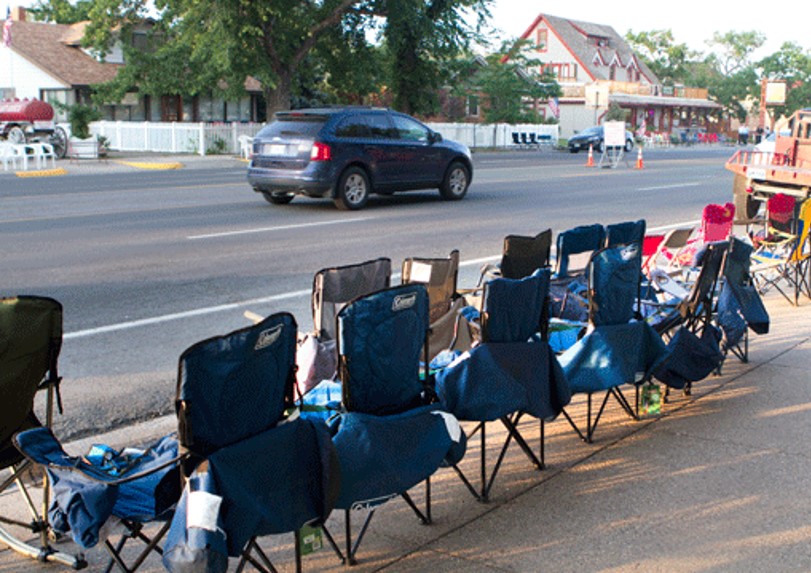
YA came home from an errand on Saturday to say that people were already claiming their spots for the parade; the parade route is actually pretty short.  It seemed remarkable to me that folks would be putting chairs and towels out on the boulevard; what an invitation to vandalism.  But then I drove by yesterday morning and it did my heart good to see that everybody’s stadium chairs and tarps and blankets all seemed too be in place.  And there were A LOT of them in place.  We talked about whether we should join the fray but since that parade conflicts with our local parade, we opted not to. 

Of course if it is raining when you read this, no parades for us.  Although we do like parades, not enough to sit in the rain for them.

Have you ever been in a parade?  Do you have a favorite parade?

GROWING AND CUTTING AND STUFF

The weekend Farm Report comes to us from Ben.

By the time you’re reading this, I’ll have gotten my gold spec implanted, and had back surgery to remove a cyst. Give me a couple more days and I’ll be up and around like I was back in April! Although the left knee still hurts; the one I was supposed to get replaced in June before I started down this other path. Got the knee on the schedule for December now. The Pessimist in me says, “By August I’ll be back to where I was in April!” The optimist says, “Look what you’ve learned and the people you’ve met and the time you’ve had and the new perspective on things!” Yeah, well. Stuff a sock in it Mr. Optimist. …some days I’m more pessimistic than others…

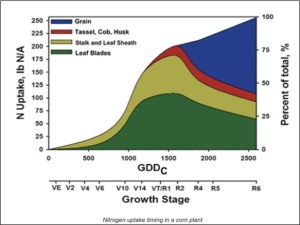
The agronomy news lately is about side dressing the corn with extra nitrogen. Recently saw this chart showing nitrogen uptake by the plants based on what stage of growth it’s in. Honestly, the more I learn about this stuff, the more fascinated I am. Many farmers have started doing split applications of nitrogen. Anhydrous or liquid nitrogen as starter to get the plant going, and then coming in about now and applying more when it needs the growth spurt and has higher nitrogen needs. I’d like to try it next year when, hopefully, fertilizer prices won’t be so ridiculously high.

We’re over 1000 GDU’s, about 80 about normal.

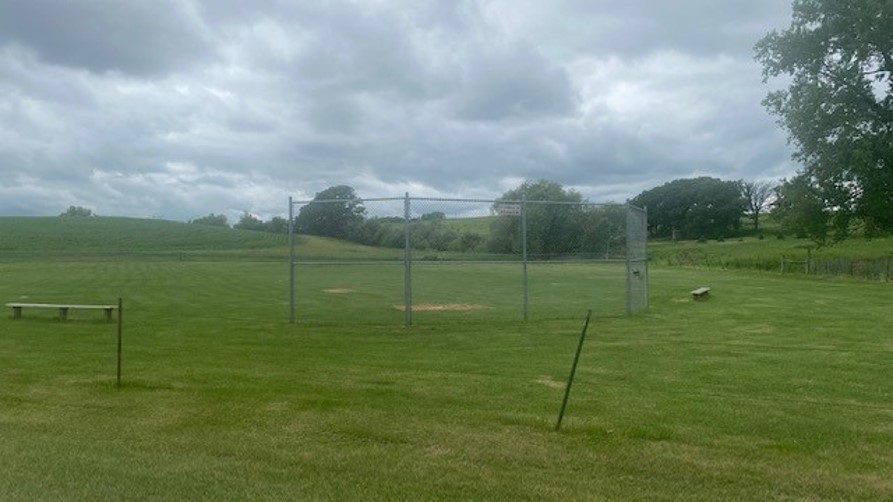
Kelly and I were driving around the other day, just checking out the neighborhood and seeing how the neighbor’s crops were doing, and we drove through the small town of Viola; home to the Viola Gopher Count. We saw Shea Stadium and the local chapter of this motorcycle club.

There was some discussion among the locals when the club moved in, but you know the old adage, ‘Don’t mess where you sleep’ and this place hasn’t caused any issues. Viola is a town of maybe 25 people. Three streets, two avenues, some gravel, some blacktop. A church (next to the club) and a park with a beer hall (available for rent! But mostly used for Gopher Count) and a townhall.

My brother and I have both played 4H softball at Shea Stadium.

Made the final payment on one of my tractors this week. That’s a good feeling.

Got the roadsides cut last week. Then it rained.

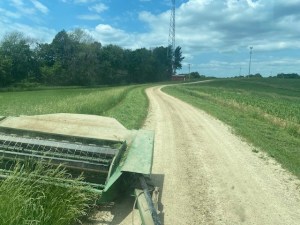
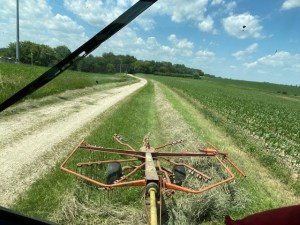
Got it raked and baled on Monday. Thank goodness it was mostly grass and that dries thin and quick. Got 70 bales total.

Oats started heading out on Sunday, June 26th.

Every year, I report what I plant for crops to the local FSA (Farm Service Agency). Any government payments I get come from there. FSA is the agency responsible for keeping track of all that stuff. I’ve written before about government payments, and how that works. In typical government fashion, it’s not always easy. They provide maps and they have measured the fields (by satellite imagery) so they tell me the acres. I may or may not completely agree with there acres, but it’s hard to get them to change their minds. Again, I’m a small farm. I have about 20 fields, and some they have measured individually so I can just say, for example, field 4 is 4.5 acres. But sometimes they lump 5 fields together and give me one total acreage and then I have to break it out by field. Again, not a problem. The fields are measured to the 100th of an acre. But the report they want back only goes to tenths. Just round up or down. Yet it still has to all match. And generally, the fields stay the same from year to year, but some change a bit. (For example, the two corners I put into CRP this year have to be deducted from the rest of the field). And corn ground is ‘worth’ more on the reports than oats. So, round up on the corn, and down on the oats. Play the game.

Way back mid 1980’s I worked for this office when it was called the ASCS office. (Agricultural Stabilization and Conservation Service). Everyone I worked with there has retired.

When we got the gator in the fall of 2020, it came with a yellow flashing beacon on the top. We didn’t order that, but this one happen to come with it. Last week I broke it off. By accident. I was backing into the garage to pick up garbage and just as I’m about to go through the door I thought to myself, “There’s no reason this won’t fit, right?” And that’s when the beacon hit the garage frame. Crap. Broke off the amber globe. There is a bolt, and if it was loose enough, it would have bent out of the way rather than breaking. Well, a year and a half it lasted. Longer than I expected. We have too many trees and low branches and something sticking up or out doesn’t usually last long around here.  

How do you find the silver lining?  

Any stories about gangs?

Borrowed Cookies

I made brownies and cookies for a funeral luncheon last week (and, of course it was the hottest day of the summer so far).   I just did the basics and was happy that my friend didn’t insist on lemon bars, which seem to be a funeral luncheon staple these days.

The chocolate chip recipe that I used is one that I got from our Anna years ago, which she got from the Betty Crocker Boys & Girls Cookbook, which was published in 1957.  Since Anna shared this recipe, it has pretty much replaced every other chocolate chip cookie recipe that I’ve ever used.  Great taste, great texture and really reliable.  What more could you ask for in a chocolate chip cookie?

Betty Crocker’s Boys & Girls Chocolate Chip Cookies

Ingredients
2⁄3 cup shortening (I used butter-flavored Crisco)
2⁄3 cup butter softened (but not too much)
1 cup granulated sugar
1 cup brown sugar (packed)
2 eggs
2 teaspoons vanilla
3 cups all-purpose flour
1 teaspoon baking soda
1 teaspoon salt
12 ounces semi-sweet chocolate chips
1  cup chopped nuts (optional)

Directions

  • Heat oven to 375 degrees.
  • Mix thoroughly shortening, butter, sugars, eggs, and vanilla.
  • Stir in remaining ingredients adding chips at the end
  • Drop dough by rounded teaspoonfuls 2 inches apart onto ungreased baking sheets.
  • Bake 8 to 10 minutes or until light brown.
  • Cool slightly before removing from baking sheet.

Yield:  I use an ice cream scoop so this recipe makes approximately 3 dozen larger cookies.

At the luncheon THREE different people asked me for the recipe.  Luckily since I had just made 3 batches the day before, I still had it in my memory.  The yesterday another friend texted me, asking for the recipe as well.  I’d feel proud except that I feel Betty Crocker and Anna should get all the credit!

Do you have a recipe that just always works?