Last week was a very trying one for us, as Husband’s truck froze in the extreme cold up on the Indian reservation and wouldn’t start. It was -36 with -45 windchill Thursday night. He planned to come home Friday morning, but there was no way that truck would start in such cold.
Husband works in the main town on the reservation, where Tribal headquarters and the biggest school and the medical services are. There are two much larger towns, Minot and Williston, about 70 and 80 miles away respectively, which are not on the reservation and offer all necessary services. Minot even has a university. There are also smaller, non-reservation towns within 30-50 miles that also have a wide variety of services.
After unsuccessfully trying to get the truck started, and even putting in a new battery with the help of a friend who works in Tribal maintenance and who has a degree in car mechanics, Husband phoned the number for road side service affiliated with our car insurance. The nice insurance person in Tennessee regretfully informed him that after phoning every tow service in the region, none would take the job. No one wanted to drive to the reservation. There is no tow service in the reservation town. There is no auto repair shop, either.
Our friend helped Husband get an electric magnetic heater, like a heating pad but really hot, to place under the hood. They plugged it into an outside outlet where Husband stays. Husband got some nasty frostbite on his pointer fingers while getting it all set up. The heater sat on the engine block all day. I drove up to the reservation later in the afternoon on Friday. It was after I arrived that Husband and friend discovered that the outlet on the outside of Husband’s place didn’t work, so the heater hadn’t heated up at all. Once they switched it to another outlet it started working.
Since we weren’t sure that the heater would work and unfreeze the engine, and since it was evening, Husband and I drove the 90 miles back home through oil field traffic. A few hours later our friend and his wife phoned to say the truck started. They drove it to their place and got up at intervals in the night to start it and their vehicles as well. We drove back to the reservation on Saturday morning and retrieved the truck and drove home again, this time through snow.
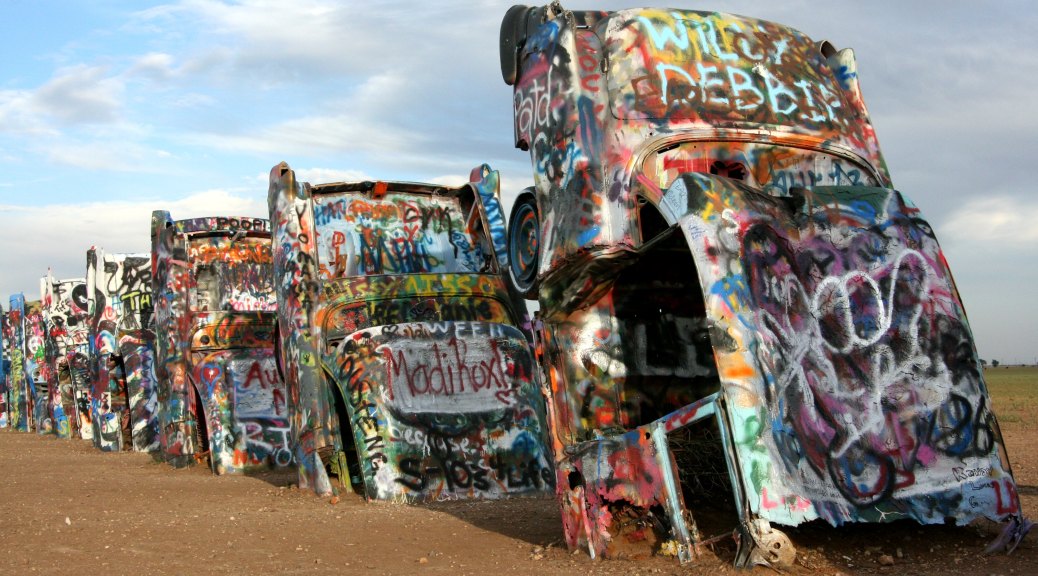
I always wondered why the Native Americans we know have so many vehicles in various states of disrepair. Now I know. When you have no auto repair shop, you have to fix them yourself, and when you find one that works and is easy to fix, you keep driving it, no matter how junky it looks. You also rely on friends and family to help with rides or loan you a vehicle that works. If you can’t fix your vehicles you leave them where they are since no one will come and tow them away. We are eternally grateful to our maintenance friends, and offered to till their garden in the Spring with our big tiller. They accepted the offer. It is all a part of helping each other out.
What have you learned about lately? What are some mysteries you would like solved?




 Trail Baboon