The weekend Farm Report comes to us from Ben!
Have you noticed the price of dogfood lately?? Hokey Smokes. I’m sorry dogs, you’re not getting the fancy stuff you used to get. Partially because it’s not even available, and partially because I’m not paying $60/ bag for dog food. Jeepers. I was shopping and the dogs end up with more treats than we get.
Egg production is coming up! The new ladies are laying eggs. The eggs are a little small yet, but that will improve in the next month or so. And the girls don’t seem to have figured out *where* to lay eggs. Some on the ground in this corner, some over there in that corner. A few in these nest boxes, a few in those nest boxes, and three more back in that corner. At least they’re laying.
I put the back wall on the pen the other day. I take it off for air circulation in the summer. Back on to stop the drafts in winter.
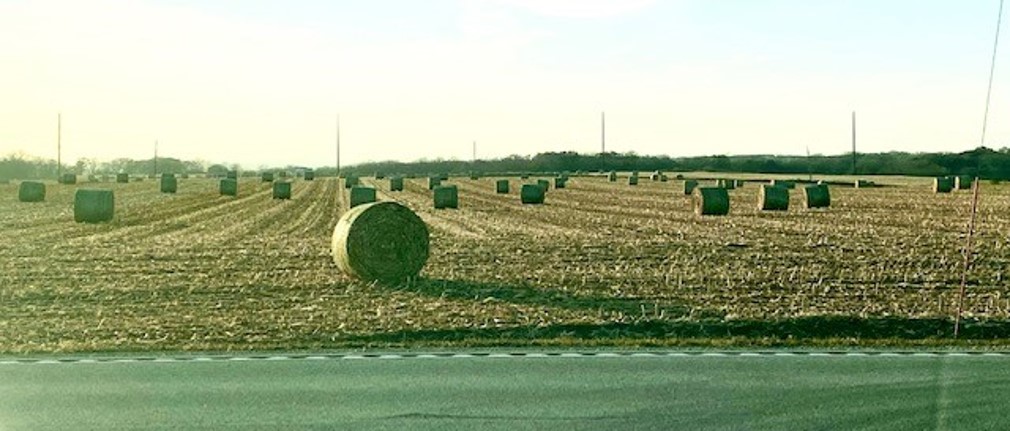
The weather has sure been good for harvesting and making corn stalk bales (for bedding. See header photo.) Haven’t gotten my corn out yet; I read a report that said about 85% of corn is harvested in SE MN. Yeah, driving around, there’s not much standing out there yet. And not much I can do about it. Corn isn’t so sensitive to moisture and weather changes (barring 60mph winds or hail) but snow on the ground is OK. So, the neighbors will get it when they get it. They have a bunch to get on the farm next to ours too and once I see them there, that will take 2 or 3 days, then they’ll get mine in a day or two. If the weather is still holding, I’ll have the co-op spread more lime on the fields that need it and if the weather is STILL holding, I’ll get some chisel plowing done.
A lot of corn got hit with a fungus called ‘Tar Spot’ this year.
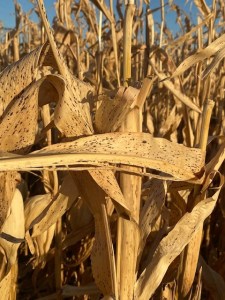
You can see it as the black spots on the leaves. From what I’ve read, excessive moisture this summer caused the corn plant to become infected with crown and stalk rots, which then made it susceptible to tar spot. The tar spot affects photosynthesis, and the plant dies before the kernels reach maturity. There are fungicide sprays for it, which I may have to use next year, but that’s another expense, too. And I’ve been saying my corn ears look pretty good this year, so until it gets harvested and I can see what the yield / acre is, I’m not sure how much damage it caused.
When I had the beans harvested, I asked the co-op to mail the check to me. Took 2 weeks to go 25 miles! They told me it went in the mail on October 11th. I didn’t receive it until the 27th. And it was postmarked the 11th, and it didn’t show up in my ‘USPS Informed Delivery’ email. So where was it for 2 weeks?? You can believe I won’t ask them to mail the corn check. I got approved for a loan for next years crop inputs. I haven’t even paid off this year’s yet and I’m ordering stuff for next year. That’s how it goes. We’re not rich, we just have good credit.
Rosencrantz and Guildenstern have begun to mingle!

They were out drinking water when I went to do chores and when they saw me, they went back in the pen (I thought). I was gonna chase them back out and force them to be mingling, but they weren’t in the pen. And I found them out back on their own! And they sort of crossed paths with the older ducks but didn’t actually interact. The next day they almost seemed eager to get out of their pen and they were hanging out with the big boys. Atta way kids!
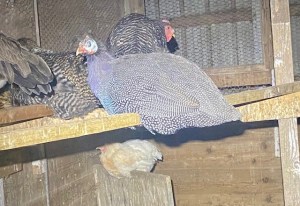
One of the new guineas spent a night in the coop with the chickens.
The chickens and guineas spend most of the daytime over in the lilac bushes.
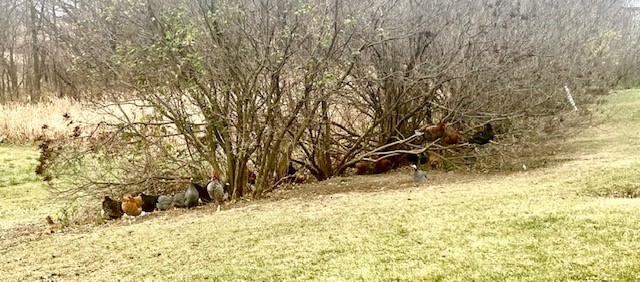
I don’t know where the ducks go at night. We used to have a bunch that laid right behind the house. That was OK as there was shelter and you’d think protection from varmints. But this batch hasn’t done that.
Remember the time changes Sunday!
What have you stopped buying? Why? Which item do you miss the most?