
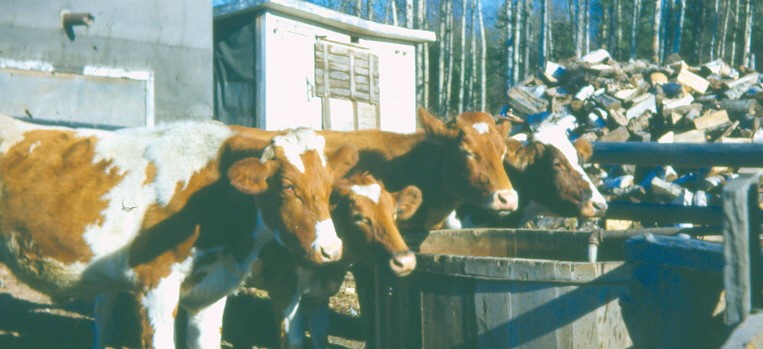
Today’s post comes from Clyde.
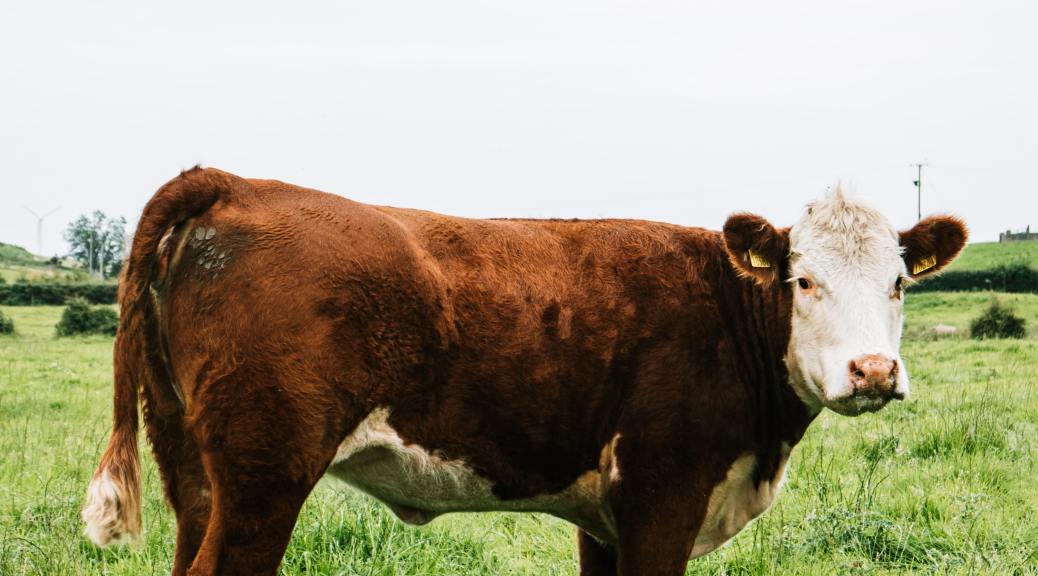
As a farm and woods child I was struck by how animals know to look humans in the face. Or is it just the eyes? Not always easy to tell. Maybe it is obvious for animals to look at our face, but I have never been sure it is. Maybe they are looking at the source of our voice, but the few woods animals with which I had close contact looked at my face and I was being silent. It was the cultural norm in my family to talk to the animals. Many insist that our pets pick up our moods. I think they probably read us well. Not sure they respond to our moods as people believe. I think we anthropomorphize their behavior more than we realize.
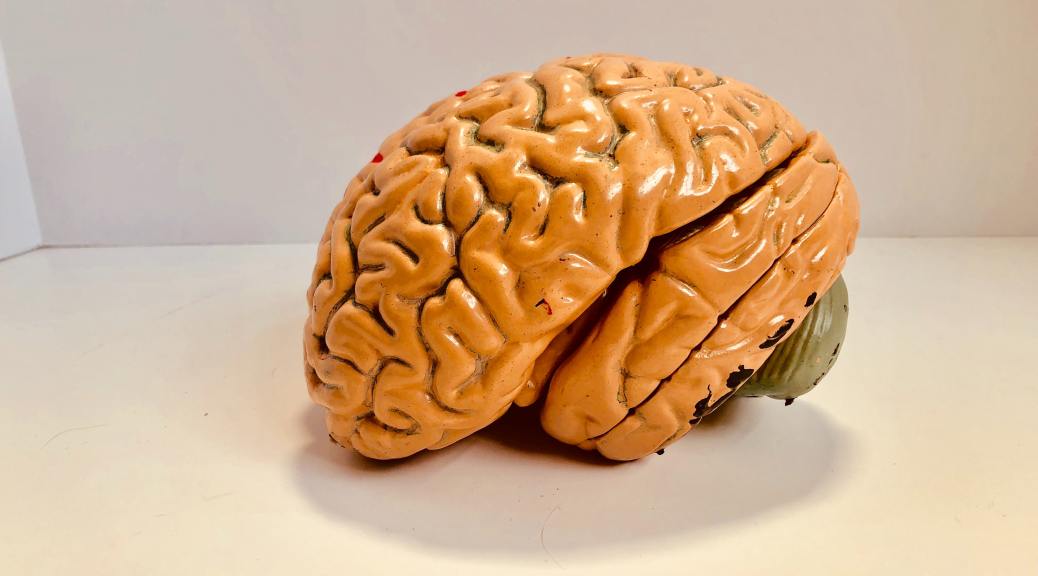
The human brain is hard-wired about faces. We memorize them extremely well. When researchers make minute changes in the key landmarks in a photo of someone their subjects know, the subjects recognize something is incorrect. This is why portraiture is so difficult. Maybe all mammals are hard-wired about faces.
As if to throw mud in our faces about this, some eastern Europeans studied the behavior of the brains of our dogs as they encounter us, watching to see how much of the brain lights up on scanners when they interact with us. Their studies show that the dog brain is no more responsive to the owner’s face than to the back of the head. This so far is a one-off study, needed other studies to duplicate, or not, their results.
But it makes me wonder. How much of our truth about our pets is in our heads and not in theirs, so to speak. The great science writer Stephen Jay Gould wrote very often about how scientists’ protocols of study and analysis of results produce the results they want to discover. Objectivity is not really ever very true.
Consider these three faces.
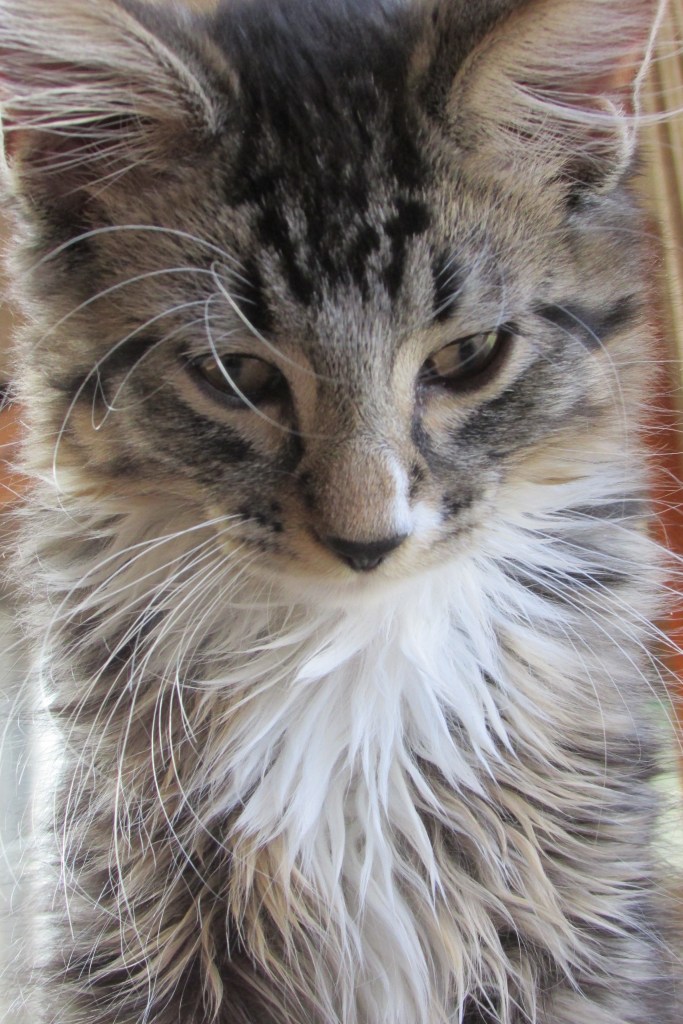
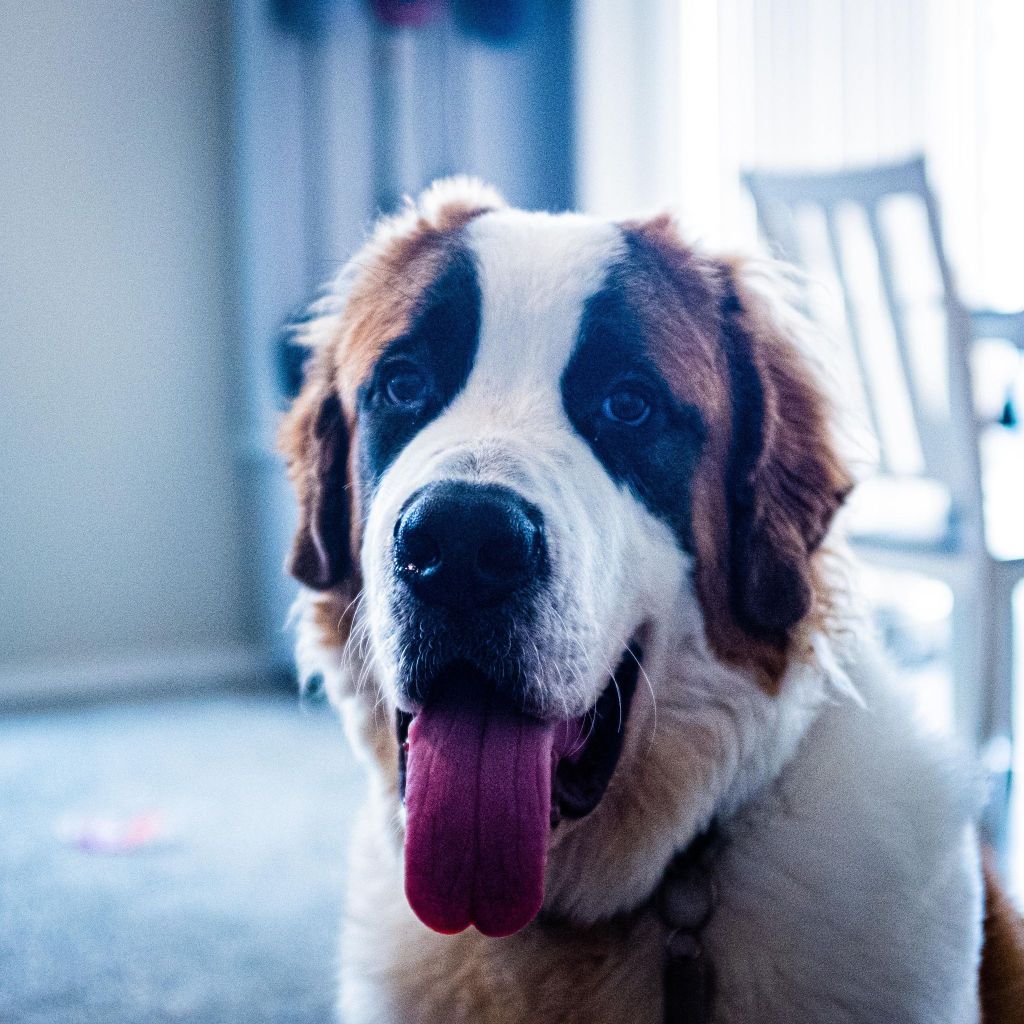
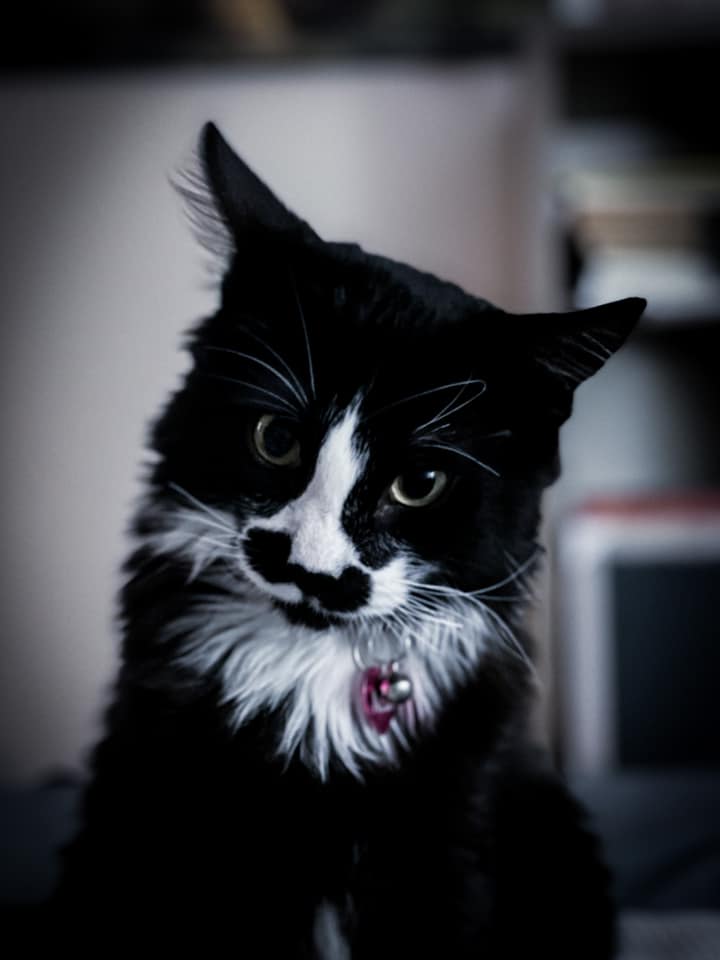
We certainly read all sorts of things into these three faces. The tuxedo cat is my son’s Neon and the St. Bernard is his son’s Melvin. The cat with the fancy ruffled shirt is my daughter’s Bean. (If you are wondering why the dog lacks the usual jowliness of the breed, it is because he is only a year old. The jowliness, my son tells me, starts to develop at that point. And both his parents are small for the breed and are not very jowly. He is small at 120 pounds.) What are you reading in their faces? They are just sitting there looking at their owners, maybe wondering what that thing is they hold up in front of them so often.
Amazon Prime has three series of a competition to find in Great Britain the Portrait Painter of the Year. You watch several painters painting one of three famous people. At each of four rounds they pick one painter to go onto the next round, and then they pick a winner. The three judges are very biased against anything very literal. Yet somehow the best four can capture the face very well in less literal modes. I suspect however the failed literalists get the most commission work. Sandy, oddly, is fascinated by these shows. So we watch them together in the afternoon when I am over there. No matter how you look at it, portraits are a fascinating topic in art history.
All you pet lovers, go ahead and disagree with me about your pets responding to you.
How objective do you think you can be?
Do you have a favorite great portrait or portrait painter?
How would you want your portrait to be painted?





 Trail Baboon