Category Archives: Farming Update

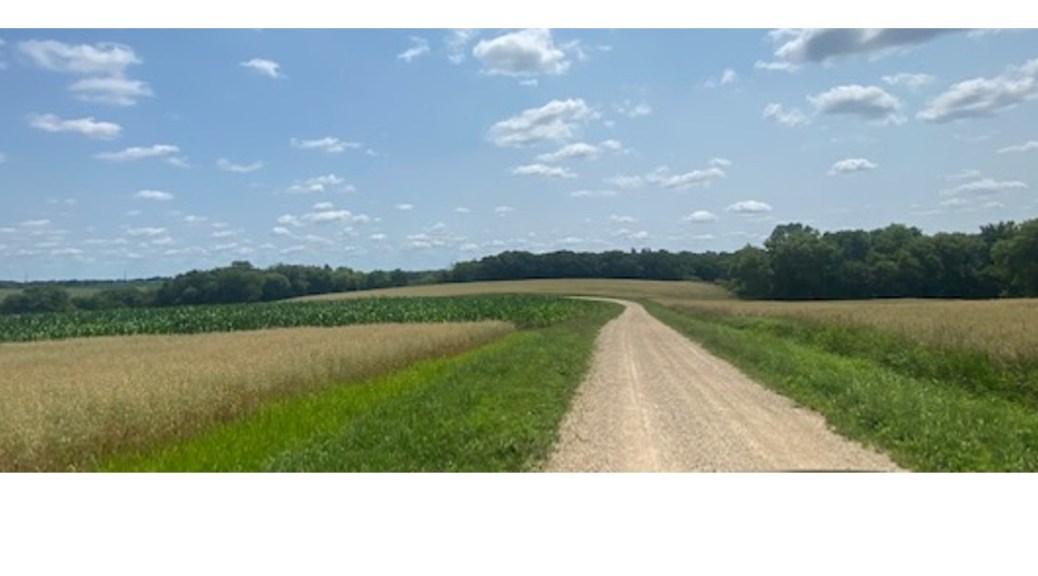
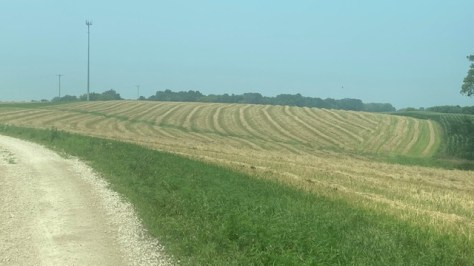
Farming In August

Today’s post comes from Ben.

Actually, hasn’t been much farming the last few weeks…

I’m back at “work” work now, and I lit another show, and we moved my mom to long term care.

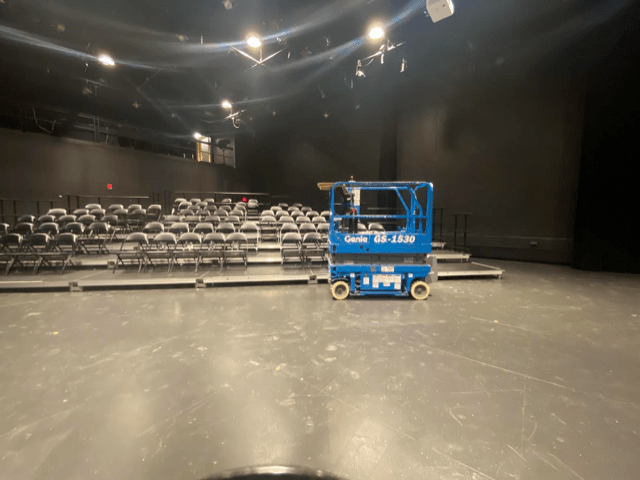
Here’s a theater space I was working in and the genie lift that’s my best friend because it means no ladders!

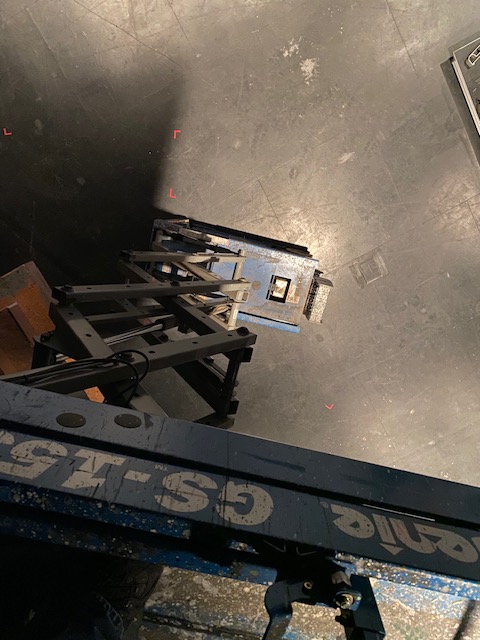
And the view from up there.

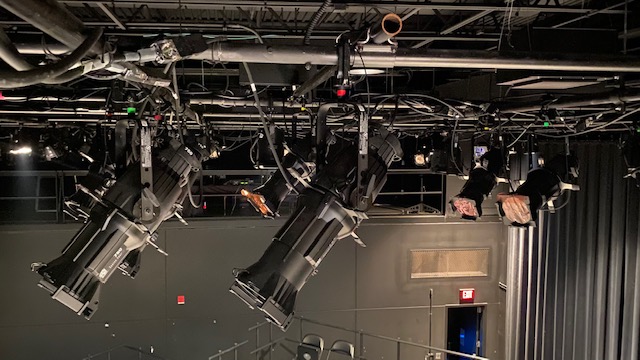
With the lights.

And the lighting console in the loft.

And some of the finished product. The colored lights? That’s what I did.   
It’s a show called ‘Head Over Heels’, music of the GoGo’s (which apparently I only know two songs.

Mom is 95 and has just kinda lost her self confidence in the last few months. There’s been a few falls (nothing serious) and I think she kinda likes it when the firemen come to help pick her up. And I’m lucky I have siblings here and everyone is chipping in to pack and deal with things.
Moving to a long-term care apartment was her idea so that makes it a bit easier; we were over there more and more and balancing the cost of more Visiting Angels or Assisted Living or LTC, she decided this was the thing to do. I can’t say enough good things about VA; they’ve been great.

She was already in a Senior place so we’re lucky that she’s just moving into another section and not across town or anything.

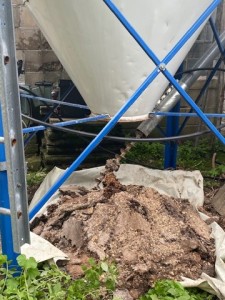
There is a large metal bin down by the barn that holds corn which I use for the chickens and ducks. I opened the top lid one day to climb up and check how much was left inside, and then forgot about it and left the top open for two weeks and that’s when we got 3” of rain. Oh fer….

I spent an hour one morning taking an access cover off the bottom and digging out about 30 gallons of wet, stinky, moldy, rotten corn. I’ll try not to forget to close that again. Thank Goodness it’s almost empty. I’ll be ordering 100 bushels of cracked corn to refill in the next few weeks.

They say August is bean month. Beans have pods, but how big they’re going to get depends on the weather in August.

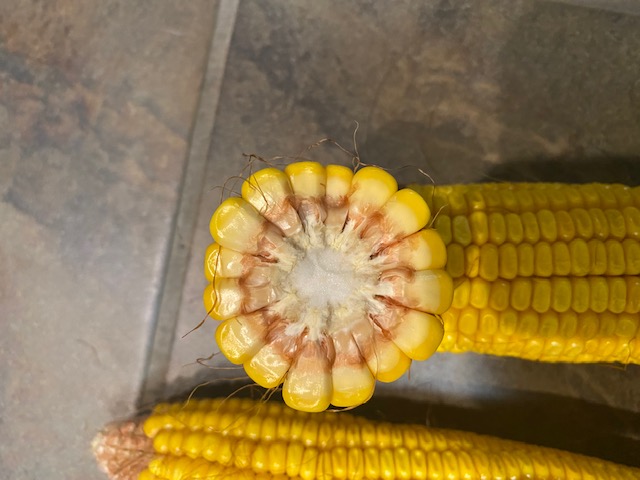
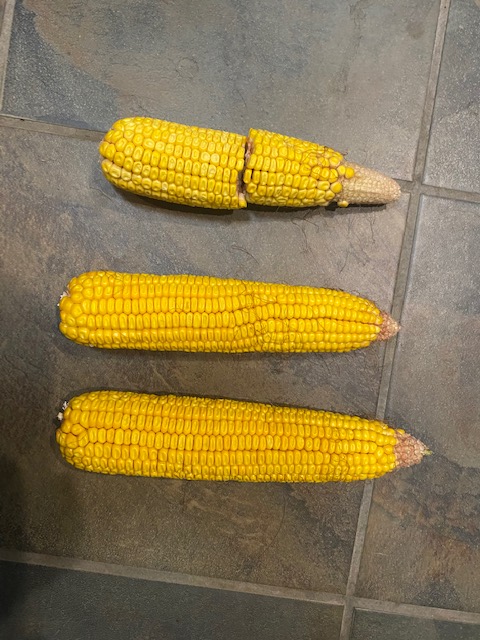
I was just reading about how corn develops and how the yields are determined by the weather. It takes roughly 90,000 average kernels to make a bushel (56 pounds for corn, remember?). The guys who are winning the yield contests can get that down to 65,000 kernels (bigger, heavier kernels). Final yield started with how many plants emerged back in April. The girth of the ear was determined at the 5-leaf stage; If the plant was happy and it had all the right nutrients and moisture, it can have 20 kernels around. 12-14 is average so any more than that means everything was going right at that point. Now the kernels are there and it depends on the weather as to how much they fill and what the test weight will ultimately be. If it gets stressed now, it won’t develop fully to the tip as the plant sacrifices them to fill the bottom. A lot had to happen already, but the weather this month can still make or break a crop. It’s pretty fascinating.

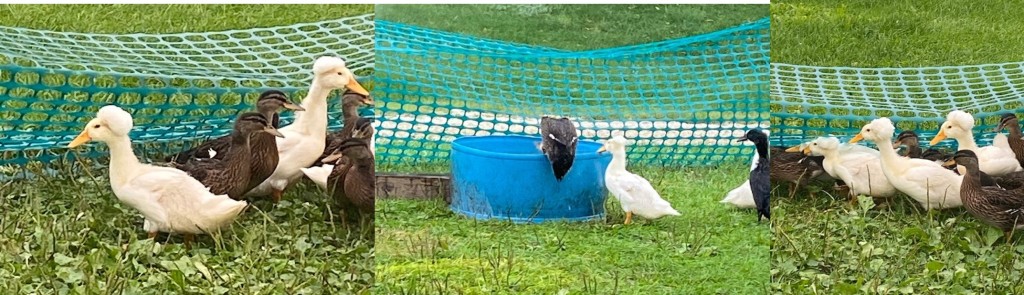
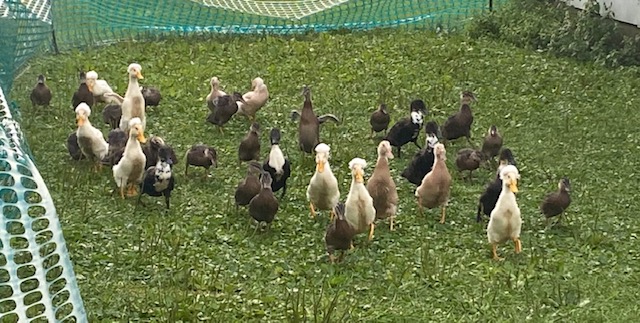
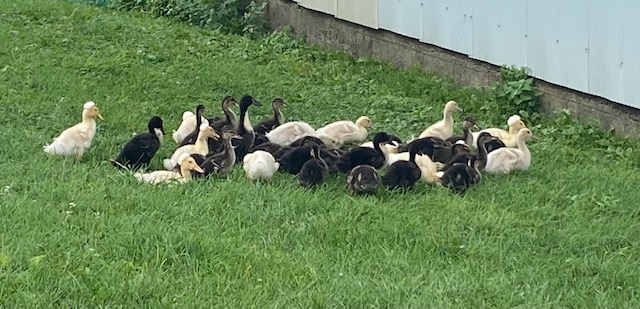
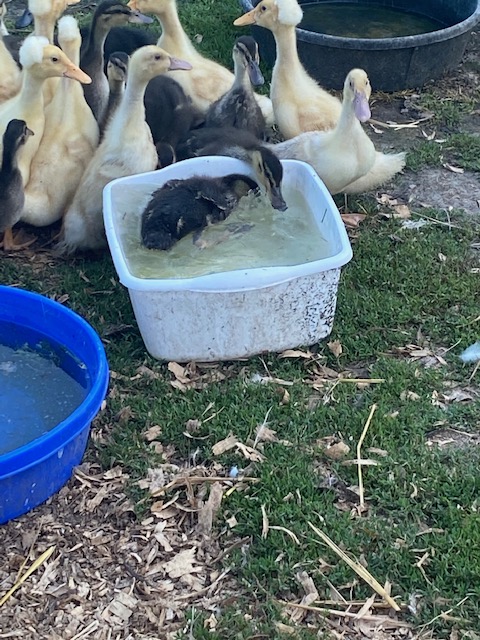
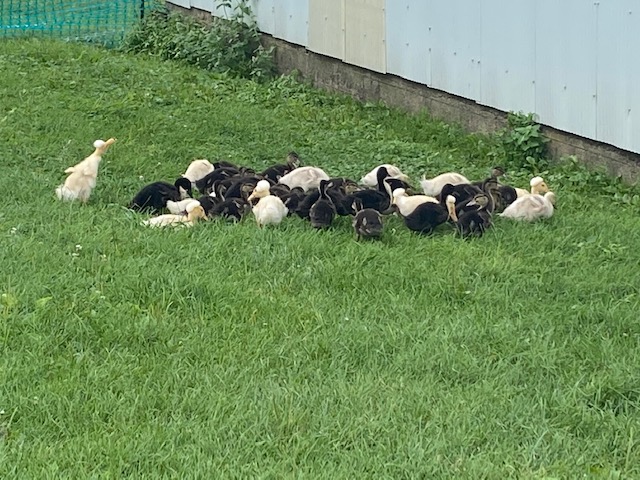
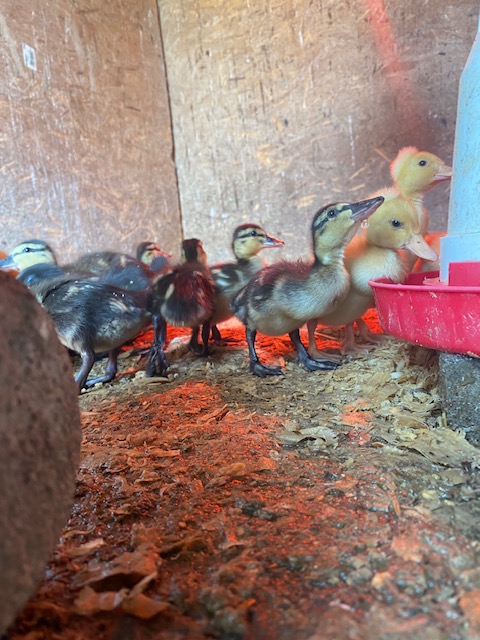
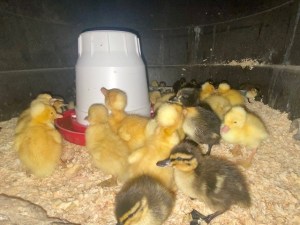
The ducks have moved outside and now it’s all muddy out there (I swear; everything is wet when you have ducks).

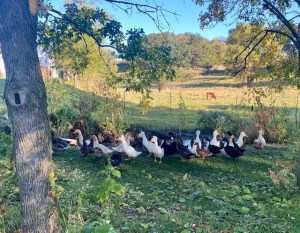
Here’s some ducks!

Any Questions?
Boil or microwave your sweetcorn? Who’s done mud wrestling?

Hey, Hey Straw

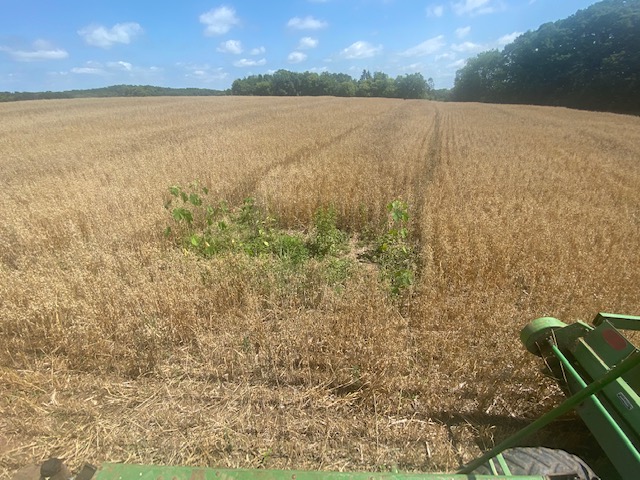
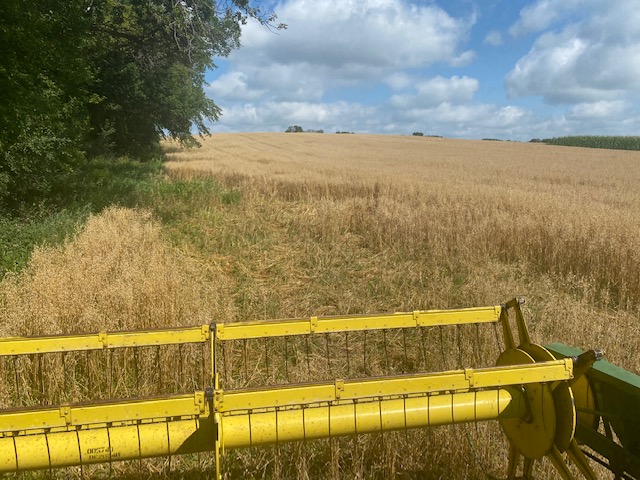
To wrap up the oat harvest, let me explain test weight and pricing.

There isn’t a big market for oats, so they won’t take the oats if the quality is a little low. By ‘Quality’ I mean if it isn’t at least 32 lbs test weight (That’s the ‘standard’ weight of a bushel of the product. 56lbs for corn, 60 lbs for soybeans, 32lbs for oats). The weight can vary depending on a lot of things; moisture content of the crop, the weather as it grew, the variety, ect. The market price is based on that weight though, so if it’s low, we don’t get paid the full amount because while we deal with the crops in volume (the trucks and wagons it takes to get it hauled in), we’re paid by the bushel. If your corn sample only tests 50 lbs, then it takes more corn to get to 52 lbs and we get docked for the low TW.

My oats samples tested 38 and 39 lbs. The truck is heavier, which means it takes less grain to make 32 lbs so I get more bushels on the truck. But no bonus for being Over TW.

Price this year was $3.58 / bushel at the Elgin elevator (which is closest so most of the oats went there) but they were full so the last of the oats went to another elevator and it was $3.71 there. Heck; if I’d known that I’d have taken it all to that second place!

Remember; hay is something animals will eat; it contains nutrients. Straw is just an empty stalk; there’s not much nutritional value in straw.

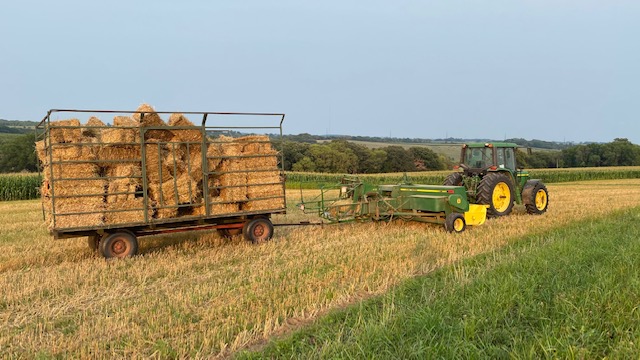
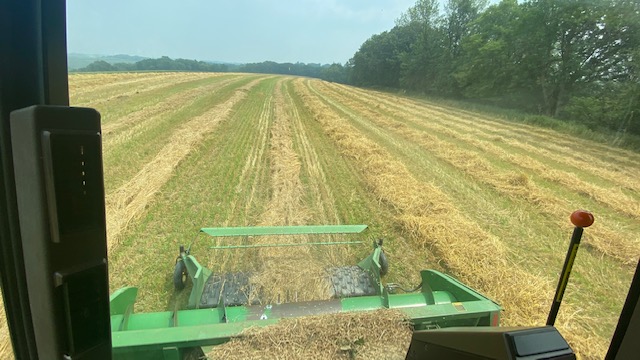
Baling straw; it went pretty well this year. No problems.

It might take a while to get the baler working right; get the rust off it, so to speak. I like to bale straw; it’s light and the bales are easy to throw around.

I broke a shear bolt just after starting; a ‘shear bolt’ is protection against something bad happening. It might simply be overloaded or it might be a safety feature against something catastrophic. But sometimes they just wear out. That was the case here.

This shear bolt hooks the baler flywheel to the hydraulic pump for the baler kicker and sometimes it just fails. Then the kicker looses it’s oomph.

In the old days, Clyde and my dad had to have someone on the wagon to catch the bales coming off the baler and stack them on the wagon. I was about 10 years old when Dad bought a kicker baler which ‘kicks’ the bales into the wagon. Less manpower needed. Course, getting them back out is a little more trouble.

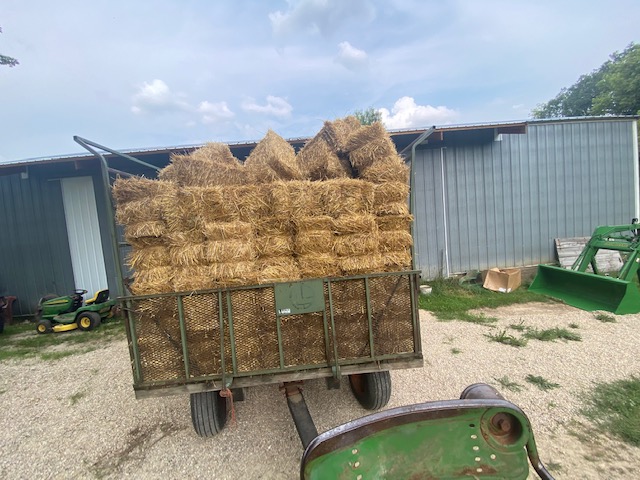
In 1993, we hosted 2 men from Russia for a few days. They were here as part of an exchange program with the Farm Bureau. They didn’t speak English, but they had a Russian / English dictionary and we had a good time doing hand gestures. I was baling hay and they rode in the wagon and insisted on stacking the bales as they flew in there from the baler. I tried to stop them; warning them this was dangerous and not to get hit by one. They assured me it was fine and kept stacking. And it’s a wonderful thing; so much easier to unload when they’re stacked, plus I get more bales on the wagon. I’ve been stacking a few ever since. Just the bottom row or two, and a ‘wall’ at the front to help keep the bales in the wagon.

The kicker part of the baler rotates left and right. That allows me to throw a bale in the wagon even when making a corner. And there’s a power adjustment to kick the bale just a little bit or kick it real hard! The average is 3 or 4. It goes to 8, I haven’t had to use it that high unless I’m kicking it all the way over the wagon just for fun. Because the power is based on weight, kicking to the back of the 16’ wagon only needs about 4. If the bales are so heavy it needs 6 or more, then they’re too wet to bale and I can’t even pick them up.

Up or down hills changes that a bit… and making a corner when it kicks can still kick it over the side. All in all, it’s kinda fun.

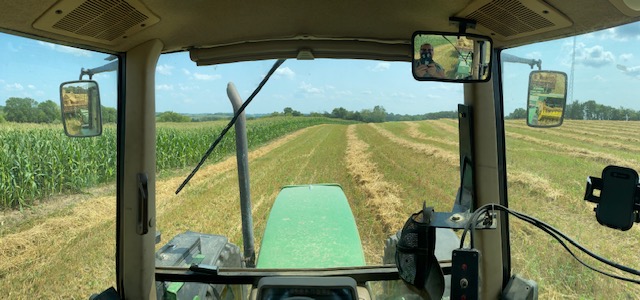
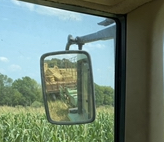
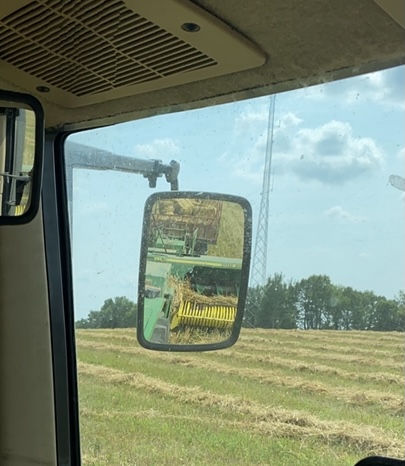
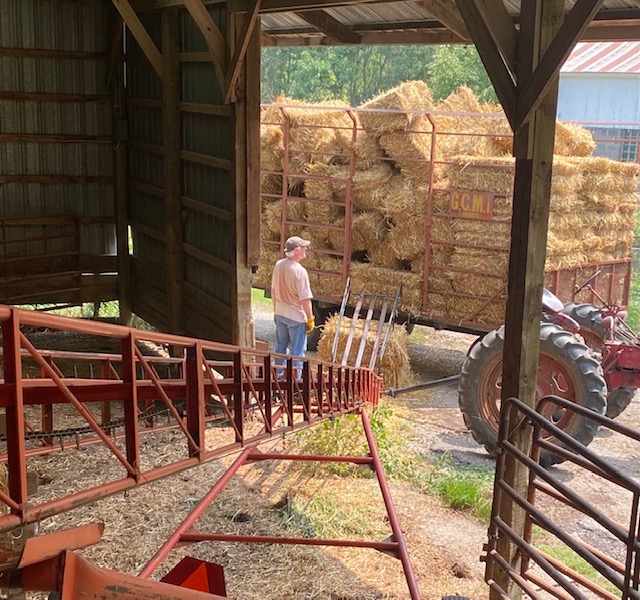
Here’s what it looks like from the tractor cab.

I’m watching my left mirror as that shows the back of the baler and I can tell the bale is good (not missing a string) and I can see most of the wagon. The right mirror shows the row going into the pick up.

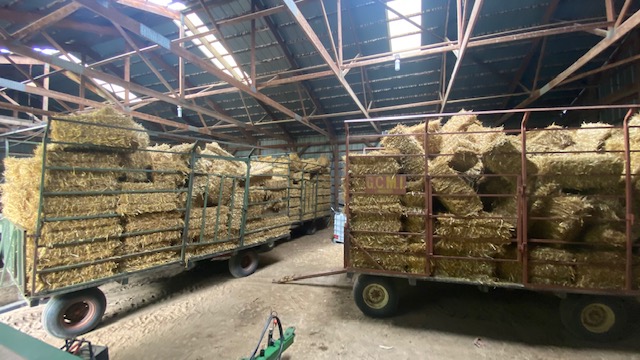
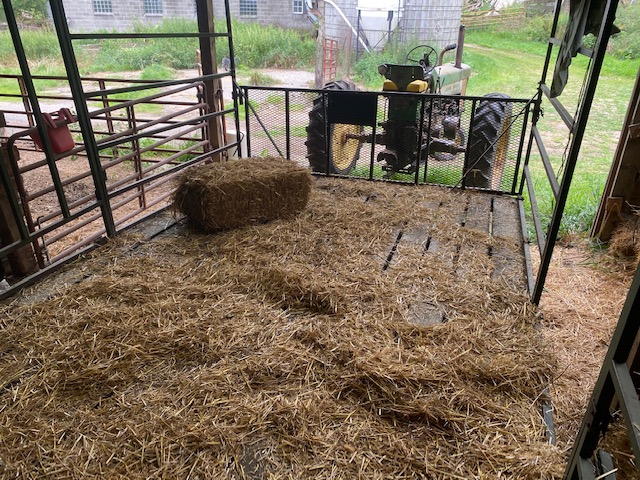
Here’s three loads in the shed.

A few weeks ago we talked about backing up wagons. Here’s what it looks like to back up a wagon into the shed:

You need to trust yourself about what’s behind you.

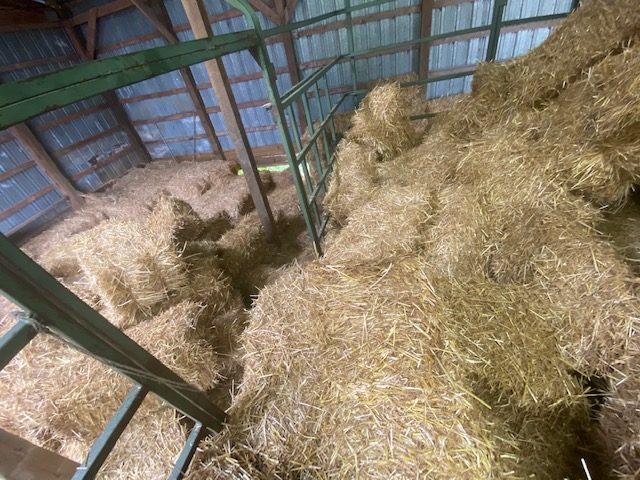
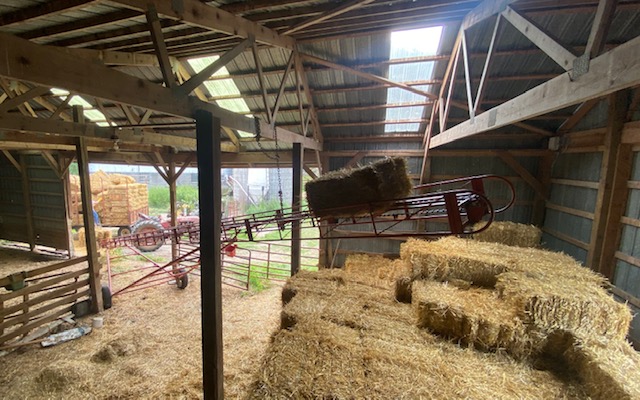
I had about 200 straw bales left in the barn. I baled 612 (there’s a mechanical counter on the baler; each time it ties a knot, it trips the counter). 166 bales (one stacked load) went to the neighbors for their strawberry patch. He’ll use it for cover this fall. The other 446 went in the pole barn. I unloaded one load by myself; back the wagon into the barn, toss a bunch out, get out and stack them, toss a bunch more out. It’s not too hard when the stack is low. It’s too much work once up about two rows.

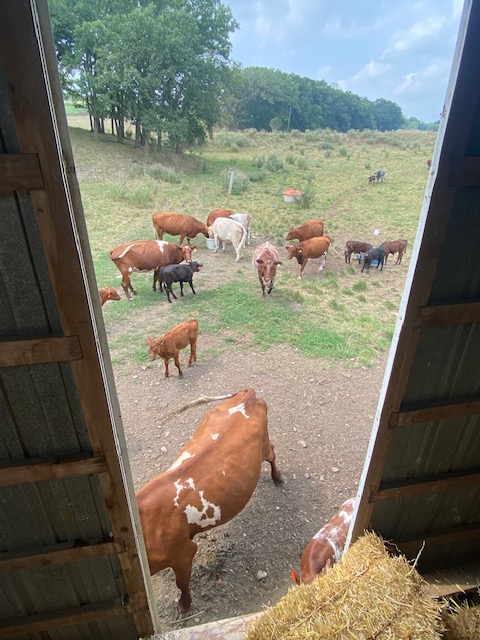
My brother came out; he helped me get the elevator set up and then he and I unloaded the last two loads. The cows came to watch me.

Here my brother is trying to figure out how to start the load

Here comes a bale destined for VS’s garden next spring.

A clean field and the last bale are welcome sights.

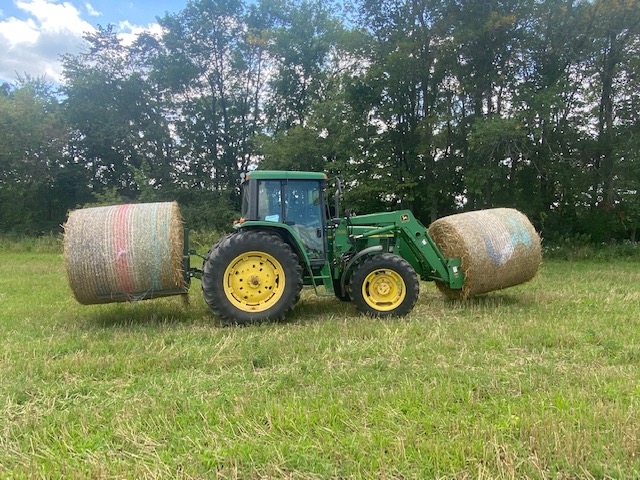
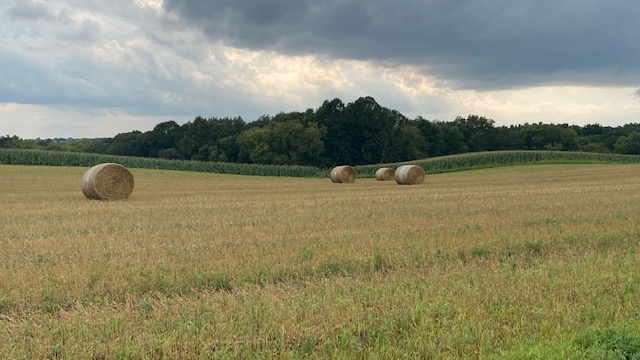
I didn’t need anymore small square bales this year so I hired a neighbor to make round bales from the rest of the straw.

 I’ll sell them to the neighbor with the cows.

I’ve left off the tractor that inexplicable died. (turned out to be the coil wire). And the dead battery in the other tractor. And the post that has somehow twisted a bit so now the gate doesn’t swing in AND out anymore, so I have to take it off to get the elevator put up.

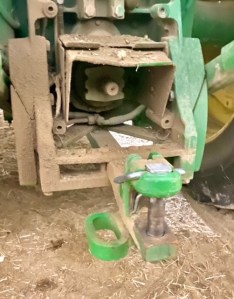
I did get the hitch welded back on the elevator so that’s one thing.

And I got the second show open.

And time to cut grass again.

Hey! “Straw is cheaper, Grass is free. Buy a farm and you get all three.”

So? “Sew Buttons on a balloon, you’ll get a bang out of it.”

What’s your favorite sarcastic reply phrase?

Doesy Doates

Today’s post comes from Ben.

When last we left the farm the swather was standing on one tire and a jack.

Mechanic Nick came out from John Deere and fixed it up in no time. Now that was a good decision to call them. And $637 later I’m moving through the field again. I was estimating $500. “Labor” was $500… bearing, flanges, locking collar, service call, misc and …. Just put it on my tab. But it’s fixed and I finished cutting oats and the swather is back home in the shed.

I spend a lot of time thinking of ‘what if’s’. What if the machine breaks down? What will I do if I can’t fix it? Who can I call that would know people to come and cut oats? And then, as I near the end it becomes ‘I would just leave this part’, or ‘who has a sickle mower I could use’, or ‘I wonder if the bean head could do this’? This year I learned something. I learned I call John Deere and they can fix some of it. Course it depends what, exactly, has broken. 

And what do I think about all day just going round and round? I have music in my head. Last week I had the ‘Mairsey Dotes’ song in there for a while… that annoyed me. Had to work real hard to get something else in there. The first day it was a Pink Floyd song. Got some Led Zepplin going, there was probably a show tune in there somewhere… I can’t remember what finally settled in.

No cab or radio, and I’m wearing hearing protection, long sleeves, and a dust mask.

I observe the direction the oats was planted versus the direction I’m cutting it and I wonder if it matters because of how it sits on the stubble; is sitting sideways better than sitting in line? When going the same direction, in line, does it fall down between the stubble more? Hmmm. (It depends how heavy the windrow is). And I leave some stubble so it sits on top of that in case it does get rained on it’s not flat on the ground.  

I observe how whenever I stop with the planter, I leaves a gap of a few feet and weeds grow wherever there isn’t grain growing.

Which is kind of amazing when you think about it.

I look at the damage the deer cause and I curse them out a little more.

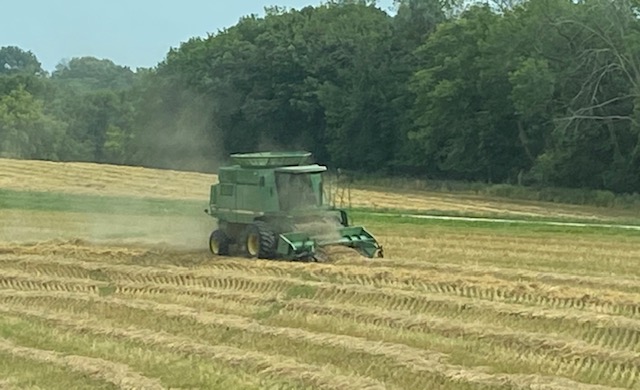
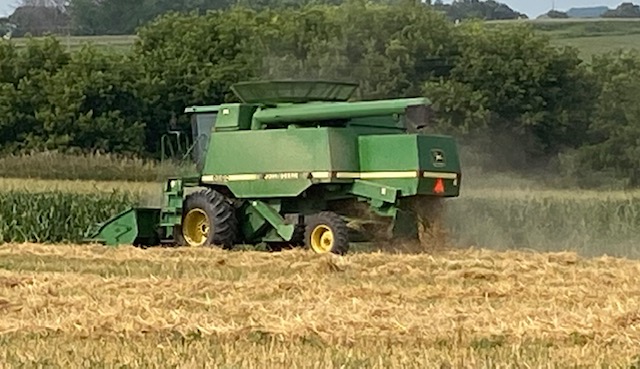
When the combine (we should clarify the pronunciation of this if you’re not familiar. It’s not com-BINE, like adding things, it’s COM-bine. I don’t know where that came from. Subject for another day). The combine has to pick up the oat windrow the same direction it was cut. And that means from the head end. As the swather cuts it, all the heads fall to the back and it’s usually pretty easy to tell. Trying to go the wrong way, it just doesn’t feed into the combine as well.

When cutting, it’s best to make about 4 or 5 rounds all around the field, so there’s room on the ends for the combine to turn around, (and that goes for any crop; corn or beans or anything); we call those the ‘headlands’.  And then it can just be cut going back and forth. Corners are tough so we avoid those when we can. Tough in that the machinery doesn’t make 90 degree corners very well, it doesn’t plant well in corners, hard to stay on the row in a corners.

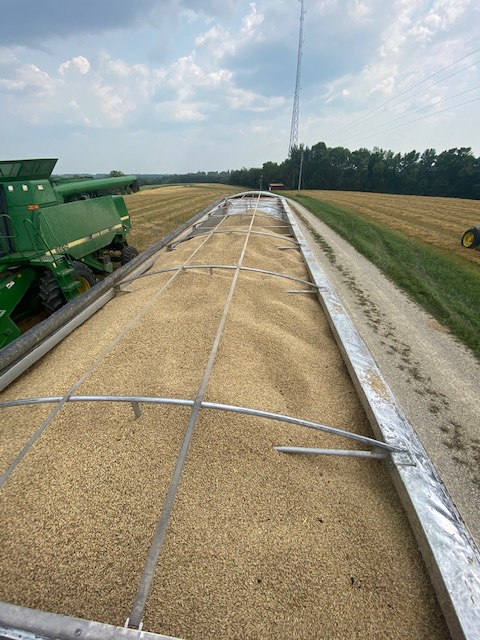
OK, so now it’s Saturday and the combine is here and harvesting and I don’t have any trucks yet. I can’t get the truck guy on the phone. I call another guy from the farm, but he’s over in Wisconsin and he can’t get anyone on the phone either. Finally, we just go to the farm and get a semi and drive it back here ourselves. And, of course, there’s a summer shower and the harvesting is done for the day. Next day he’s back and finishes that field. And a few days later gets the last of it.

I don’t have the final numbers yet, but it looks like a real good crop.

As I write this, I’ve got some straw baled, got another show ready to open, ducklings moved to a bigger pen,

and I’m going to cut the grass!

Talk about when you had to do something yourself. Why is good help so hard to find?

Marizy Doats

The Farm Report comes to us from Ben.

It started out so well– no rain in the forecast and, while the swather always makes me nervous because I know I am on borrowed time, we were making good progress.

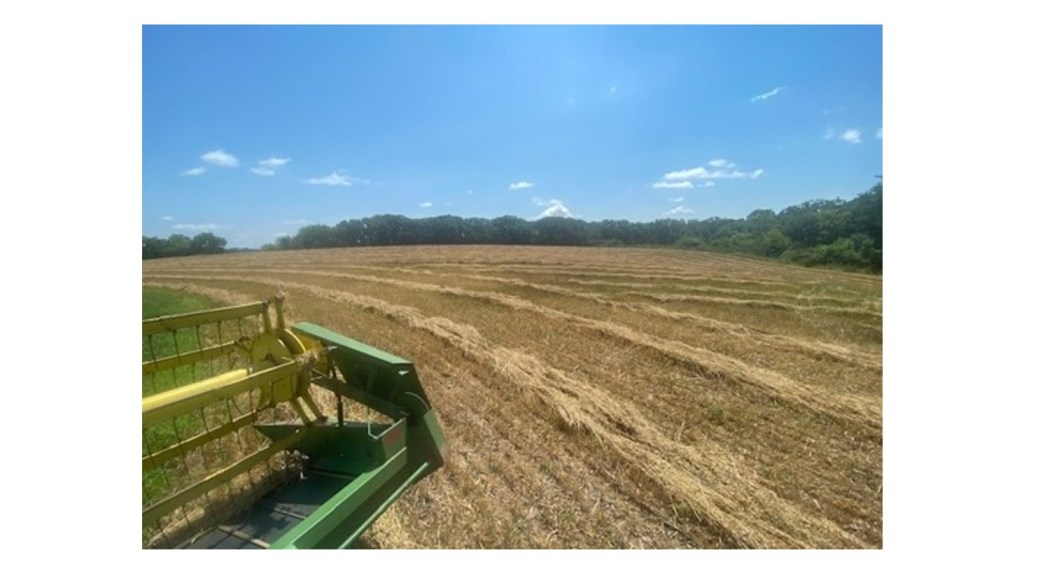
Me, and the dragonflies, and the barn swallows, and the butterflies, just being out in the fields. It wasn’t that hot Saturday morning and I got three fields, or about 9 1/2 acres cut out of my 25 acres of oats. Back out on Sunday afternoon and a good breeze and cut another field of about 5 acres and moved into the last field, about 10 acres. I made one round, and there was a clunk and forward momentum stopped. It stopped on the right wheel anyway, the left wheel kept going. The machine makes a lot of noises and most of them make me nervous. This machine, a John Deere model 800 swather is from the 70s. They’re built like a tank, have a Chrysler ‘Slant 6’ engine (with a reputation of being bullet-proof), and they run forever except when they don’t.

It’s a machine I use only for cutting oats. It cuts the standing oats and lays it in a row; a ‘Windrow’. It gets used a day or two per year. But there’s no one in the area with a swather, so I had to find my own about 6 years ago.

Took a while to diagnose what was going wrong and it turned out to be just a chain off. Well I’ve fixed that before and it’s kind of a process but it’s not bad. Except this one was jammed in there and it was bad. Kelly came to help when I called her for a ride home. I was hoping to be all done cutting by 8:00PM, it was 8 o’clock when we gave up and went home. A few things to do the next day so it was about 4 o’clock when I went back out to work on it again.

I was down to plan “G” or “H” by this point. And that also revealed a wheel bearing going bad. Well, that would explain why the chain had come off. We did finally get the chain out and installed again and we felt pretty good about ourselves.

I had to decide: can I finish cutting on this bad bearing or do I need to attempt another major repair out in the field and replace the bearing. I decided to take my chances, because that’s what farmers do. Except this time, I only went about 10 feet and the chain was off again. And again, it was 8 o’clock at night. We went home and I was back the next day with some more tools. I don’t know how many trips I made back home to get ‘Yet One More Tool’ for this repair. I even took the Oxy-acetylene torch up there to heat up the wheel hub. I’m a little nervous using a torch in the middle of a dry field of oats, but I wasn’t really cutting anything or making sparks, I was just heating up the wheel hub to try to get that off the axle so that the bearing can come off the axle. Nothing has been apart for 50 years I presume. I worked for a few hours and gave up and called the John Deere dealer. It felt as though a huge weight was lifted off my chest because now this isn’t my problem anymore.

The plan was to start combining that oats that was already cut on Tuesday afternoon, however, the guy with the truck needed his trucks to haul corn so he couldn’t make it. He said he would have a truck out here Wednesday morning. With no rain in the forecast for weeks, it didn’t seem like a problem. And then it sprinkled Monday morning, not enough to hurt anything, and it sprinkle Tuesday morning but not really enough to hurt anything and then we had a thunderstorm warning Tuesday night– where the heck did that come from? And I got about 2/10 of an inch of rain. So now we’re not combining on Wednesday either. Could have been worse, it was a pretty bad storm with some pretty gusty winds and heavy rains, but we just got the edge of it and then it built up south of us and I saw some hail damage and some corn flat on the ground from that.

It’s not ideal for oats to get rained on when it’s cut, but it’s not the end of the world, depending. I leave 4 to 6 inches of stubble for the oats to lay on so that it gets some air underneath. And that works pretty well. Light rains like this followed by some sunny days with a breeze and it will dry out again and can be combined with minimal loss. The heavier the rain, the more grain is shelled out on the ground. There have been a few years I had to go out with the hay rake and tip the windrows over. That knocks off a lot of grain. However, the people who take the straw like it because there’s less grain left in the straw if I have to handle it before they get it. Everyone has their own silver lining, don’t they?

So that’s where we are at the moment, hoping the mechanic will get the swather fixed, hoping it holds together for another 10 acres, well really, I want it to hold together for the next number of years.

I’m just about ready to open the one show in town and I’m just starting to work on another show. Remember the song about home improvement from the LGMS and at the end he says, “Now I can go out and mow the lawn!”? That’s kind of what I feel like.

But the beans are looking really good, they’re almost waist high, lots of flowers, lots of pods. 316 GDU’s above normal. The corn ears have already determined their length and girth and now they just need to fill out. If they’re stressed by weather, the tips won’t fill. Be interesting to see how it does this fall.

Often corn will have two ears on them, but only the one really develops completely.

The baby ducks arrived from California after a 2000 trip. These are some well-travelled ducks! I was worried about them making a trip but there were two little Dixie cups taped inside each box that presumably had some kind of food nutrient in it. Lost two of the 40. They were busy little ducks! The first day pretty much all they did was eat and drink.

 What’s your most critical tool that you use the least?

Always Three Eggs in a Nest

Mid-July Farm Report from Ben

Dare I say it’s a quiet time around the farm. The Co-op is done spraying, I don’t have hay to put up, oats is coming but not quite there yet, and I’ve got weeds and brush mowed.

We almost had another hot air balloon landing in the fields. I was out doing my chicken chores and heard it and could see it through the trees and it looked pretty low. Kelly and I headed up there and met the chase vehicle coming down. The balloon was pretty high again at that point and still moving East. The driver said he had considered landing here and I guess they were coming to ask permission. I don’t know if they just didn’t get here in time or what, but the balloon moved on. It was a different balloon company so it wouldn’t have counted in my 3 landings = free ride anyway.

One of our favorite nieces, her husband, and 9 month old baby came to visit from South Carolina. Her mom and dad are still here, and the baby got to see Great Grandma Hain and we had a real nice visit with them.

Four generations here. As luck would have it, our son and his wife were able to come down too, so the cousins had a good visit. The Niece always talks about the wild black raspberries that grow out here and she remembers picking them when she was a kid visiting Grandma and Grandpa’s farm. There was a lot of berries this year and they lasted a long time. Just not quite long enough for their visit. I did get a few fresh berries for her. They sure are good.

I did get the waterways and pastures mowed with the rear mounted brush hog. I was down in one of the pastures cutting brush and clearing that darn buckthorn when one of the big spinny things underneath fell off. Oh. That’s a problem. I just unhooked it and walked away for the moment. The main shaft out of the gear box sheared off. I looked up parts online; $600 for the shaft. Plus, whatever bearings, seals or other bits might be needed… I was rather discouraged. I’ll fix it. Later.

I did get the new and improved loader bucket back from my nephew the welder. I don’t have the loader on the tractor right now; I took it off for mowing, and will leave it off for baling straw, then I’ll put it back on. I should give it a new coat of John Deere Green.

There were a few comments on the driveway in the last blog. From the main highway to our house is 1.3 miles. The first .4 miles though is technically a township road, and the snowplow will come in our road about a 100 yards to turn around in a cell phone tower driveway. It’s easier for them than trying to turn around where our driveway starts. The road forks right there and our lovely neighbors are on the right fork, we’re on the left fork. There’s a hill their driveway that’s given a lot of people trouble over the years. You think our driveway is bad, you should see theirs! Our road is longer, theirs is steeper. Both are beautiful drives, just scary in the winter. We both joke, you can always get home, and if you can get out, you can probably get wherever you’re goingI do have a 7’ blower that mounts on the back of the tractor, so I have to go backwards when blowing. The last few years I’ve been using a rear blade if it’s just a few inches of snow. Quicker, faster, and my neck doesn’t hurt when done. But that also makes a pile of snow on the edge of the road that will drift in sooner. So eventually I have to put the blower on and cut those down again.

It’s interesting when I collect eggs, the chickens seem to like the number 3. Often the nest boxes will have 3 eggs in them. There might be more or less, but more often than not, multiple boxes will have three eggs in them. It’s curious.

After 18 months of very little theater, I’m back in full force. I have two shows to open in three weeks. Afternoons this week is working at the Rochester Civic Theatre for a Rochester Repertory Theatre production of ‘Turn of the Screw’.

Then next week is tech for ‘The Addams Family’ down in Chatfield for Wit’s End Theater. Somewhere in here I’ll be cutting oats and baling straw too.

I talked about the helicopter spraying a couple weeks ago? A helicopter crashed about 20 miles East of here while spraying crops. They think he flew under an electric line and snagged one of the wires. The pilot was killed. A newspaper article says “accidents are not uncommon”. Don’t know if it was the same company or anything. It’s terribly sad.

Hot weather or Cold Weather? How many eggs did you eat today?

July on the Farm

As I write this, the oats is looking good, quickly turning color, and I’m getting my hauler, Craig, (a neighbor with a semi) and Parm, the neighbor with the combine, lined up. We’re thinking it will be ready in 10 days or so. There are some pretty severe thunderstorms predicted this week, with high winds and heavy rain. And another round in the evening is possible with more high winds, large hail, tornadoes, and heavy rain again.

Sigh. I really don’t want the winds… or hail. Fingers crossed we just get some rain out of this.

I have crop insurance on the corn and soybeans, including hail coverage, but crop insurance isn’t available on oats.

Beans are setting flowers which equals pods. They’re only knee high, but they’re filling in and getting bushy, just not too tall yet.

The neighbor’s field of peas was harvested. Kelly collected a shirt full of left-over peas during her evening walk. And the next day, neighbor was planting soybeans in that field. He’s pushing it planting a crop this late. I talked to him about it and he said, “I’ll tell you this fall whether this was a good idea or not.”

July 1 is usually about the latest you should plant beans and expect a reduced crop. To plant on July 13… well, it just depends how the fall weather goes. An early frost and they won’t get anything. A normal year will give them a reduced yield. Planting this late automatically means a reduced yield, but if they get enough to cover their input costs then they win.

The coop comes out a few times during the year to scout crops. They have more knowledge and a better eye than me. Usually it’s the interns. I can’t imagine how far they walk in a day, just on my farm, the first time they’re here they start on one end and, not knowing the field roads or shortcuts, they may end up on the other end of the farm and the truck is a few miles over that way. Kelly gave one a ride back to the truck one day. Since then they’ve driven to this end of the farm.

Kelly is on jury duty for two weeks. She hasn’t had to report in yet.

Daughter started day camp. Her first group activity since March of 2020. She was nervous of course, but she knew some of the staff and some of the other clients and she gets to go swimming every day, which she loves. We’ve had to try and shift her schedule a bit to make this work. She knows everything so that hasn’t worked the way we’d like. Have I mentioned she’s a teenager? Stays up too late, sleeps too late, knows everything, thinks mom and dad are ruining her life. We hear about it every day when she goes to her room and talks out loud. Kelly and I challenge each other to see who gets talked about more. She did tell Kelly she’s enjoying camp and she’s glad she’s there. I’ve noticed I have to do more household chores myself since she’s at camp.

Last week I woke up to 3 dead chickens. Bailey had one at the front door, found another in the garage, and another outside. I’m not sure what happened. I don’t think Bailey killed them; she does get excited sometimes and will run through a group of chickens. And one day she kinda harassed one hen, but I’m not convinced she killed them.

Yet, if it was a coyote, and we’ve been hearing a lot of them lately, they wouldn’t just kill it; they’d grab it and run. And racoons kill it and eat the head off. So, it’s not that either. The chickens go into a building at night and I don’t always lock them up. It’s an unfortunate mystery. My chickens are all free range. But that comes with risks. I keep a puddle down by the barn so they always have water (besides the fresh water in buckets) The puddle gets kinda gross in the hot summer months so I make a fountain with the hose. The ducks swim in there too.

I fixed not one, but TWO lawnmowers! I finally figured out where the transmission oil was coming from on the big mower. Had to pull off the seating platform, and gas tank, and there was a seal leaking under the drive pulley. As long as I was in that far, I changed the drive belt too.

And then the lawnmower that came from Kelly’s farm, and has been sitting in the shop for 4 years because it quit moving, well, I discovered I had done something kinda stupid (that I’m not going to even tell you about) and it was an easy fix. I put the mower back on that and it runs too now. Whew!

It did require another trip to Plainview for parts. Kelly (and the dogs) and I had a parts date complete with Dairy Queen again.

The storms predicted didn’t amount to anything serious for us. There sure was a dark red cell that went over, and there was a little wind that blew a large cardboard box away from the shed and a tree broke off, but no oats down. Got .82” which is real nice.

I’m spending a few days mowing weeds along the edge of fields, waterways, and pastures. In the oat fields, it’s nice to have the waterways mowed because that makes it easier to cut the oats, and also I don’t have a pile of grass or weeds when baling the straw. ‘Waterways’ are a path through the field where water is intended to run. The low spots, or valleys in a field. Since we have hilly, rolling ground, I may have 4 waterways in one field. They’re kind of a pain; I feel like I spend more time lifting and lowering implements than I do actually in the ground. And 95% of the time they don’t seem to be doing anything. Then we get a hard, ‘gully washing’ kind of rain and without the waterway, the dirt runs. And that’s why they’re there.

What’s your favorite DQ or ice cream treat?

Ever dipped a toe in an Ocean?

Farm Report – Early July

The corn made knee high by the fourth of July.

It’s as high as a small elephant’s eye. There have been a few years the corn was only knee high on the fourth and those were extremely wet years and it was planted very late.

Beans are coming along and looking good. Oats is just starting to turn color. The green is fading and it’s turning yellow as it matures and dries out. Now I worry about storms and high winds knocking it down; we want rain, not storms.

We keep scouting the crops, watching stages of development and looking for diseases or insects. Beans can get aphids that affect yield. But we don’t spray for them unless it hits an ‘economic threshold’; the point where the cost of the damage from the pests would be greater than the cost of the spraying. That’s about 250 aphids / plant. It’s been a few years since I sprayed for aphids, it doesn’t happen very often. 

The corn I like to watch as the brace roots emerge – extra roots that come out to help stabilize it as it gets taller.

I found a few places where corn plants are still emerging after all these weeks. They’re too far behind the rest to amount to much; the ear most likely won’t fully develop or be dry enough by fall, but it’s pretty amazing the seed still grew this long after planting and being in the ground all that time!

We are delighting in the warm summer nights and enjoying the fireflies over the crops. They’re always such a treat to watch. Some of us like the “warm” part better than others of us. Growing Degree Units are up – 355 over normal.

I mentioned the helicopter spraying at the neighbors. I’ve always been fascinated with helicopters, so it was fun to watch that operation. I’ve been in a helicopter a couple times; Many years ago I took a helicopter tour over Gettysburg Battle grounds and just a few years ago a helicopter tour over Charleston SC. That was fun. 

One night, Kelly was taking a walk and she texted me that a hot air balloon was pretty low. We’ve had a few balloons land in our fields, but usually it’s winter and there’s no crops to worry about. It was a very still night and this guy had lost all his wind and was really just hanging there. I drove up and met his chase crew. I told him if he could at least get to the edge of a field and not land in the middle I’d be happy with that. He said he would do his best. And he did. He managed to get to a water way (just a grassy area) to land and the crew dragged him over to the road. Always fun to see them. If they land 3 times on the farm I get a free ride. It hasn’t happened so far. 

Still fixing things, had a flat tire on the lawnmower, which isn’t surprising given the areas I’m mowing. I couldn’t find a hole, so I took the tire apart and couldn’t find anything inside either, so bought a bottle of ‘Slime’ and put that inside and it worked! Plugged up the hole! (‘Slime’ is a green, thick, goop, you squirt inside a tire and it’s supposed to plug up holes and prevent new holes. I’d heard of it before, but never tried it.) I just bought a second bottle. If this works, I might be sold on it!

Working on the grain drill too. It needed some bushings on the arms that support the press wheels and a couple new bearings in the press wheels (they press the seed into the dirt for good ‘seed-to-soil’ contact.) Plus, one of the actual seed cups had been broken since I bought it. Wasn’t really hard to fix, but it was 44 little ¼” bolts and it takes two people. I have a college kid, Khalid, that is helping me with that. Waiting on parts to finish that project.

I also took the bucket off the loader and have it over at my nephew, Matt’s. He’s a welder and got his own shop going as a side business. The loader bottom was bent because I work it too hard. And it’s also 20 years old and it has pushed a lot of trees over. He tried to straighten the bottom, but it couldn’t be repaired so he got a new piece of steel for that and I ordered a new cutting edge from the dealer. Half the price of a new bucket and this will be better than new. [photo]

I bought another funnel at Menards. ¬¬Funnels are a mystery. I have a dozen different funnels and still didn’t have one that will hit the transmission oil filler on the lawnmower. Although this one today might! I even bought a funnel with a right angle on it and that wouldn’t reach either. Some funnels have too big of a funnel end. Some are too long that they’re awkward. Some are too narrow and the thick oil won’t flow through. Some are metal, some are plastic, some are tapered to one side, some are flexible but never the way I need them to be.

It doesn’t seem like it should be this hard, but I guess it is. You think “I’ll just get a funnel for this”, and then it doesn’t work. I got two flexible folding funnel things. Silicone and moldable, made to fit in wherever you can squeeze it. Sometimes that’s the right tool. I tell the kids a lot, “Every new job is an opportunity for a new tool”.

Helicopter ride? Hot air balloon ride? What’s the craziest/most fun thing you’ve ridden in? 

Late June Farm Report

Last week of June – The crops are looking better. Still need some rain, (all day rain on Saturday only gave us about 1/4 of an inch), so better than nothing, but keep it coming. I say that carefully.

Corn is finally tall enough and filling in enough I can’t see all the bald spots.

Soybeans are looking good and starting to get bushy and fill in.

Oats is all headed out – looks pretty good, looks like there will be a lot of grain out there. Knock on wood.

I changed some field boundaries this spring, so I’ve got one corn field that used to be two separate fields. This particular corn field was corn last year on half of it, and the other half was soybeans last year. (Normally crop rotation: soybeans last year means corn this year. Corn becomes oats, oats becomes soybeans. That helps with weeds, soil pests, and erosion.) But what’s really interesting is the corn on corn looks better and is taller than the corn on soybeans. And the only difference is the corn field was plowed up last fall, and the soybean field wasn’t. Is it soil compaction? Root structure? I will dig some up and investigate the roots. It’s very interesting; I need to ask more questions about why this looks so different.

I dug these up when the corn was about a month old. Notice the seed still down in the roots. And the other seed that just never sprouted. That was our spring. 

Been fixing stuff. Picked up parts. A bunch for the corn planter (new fertilizer disks and bearings) and some belts for the lawn mower, a new mower bearing, and other odds and ends. The lift bracket on the corn planter, the thing that actually raises and lowers the planter, was just wore out.

Replaced the pin and bracket, added some weld to the hole in the cylinder end so it’s more ‘round’ again. Then I ran into something and broke a big chunk out of the lawn mower hood so had to buy a new hood. I told Kelly I could just take the hood off and we could go ‘red-neck’. (And I did for a day while working on other parts) A friend put it best when he said, ‘You go redneck and pretty soon you’re judging yourself’. Yep. Good point. No trip for parts is complete without a stop at DQ.

Then the electric clutch that starts the mower wore out so replaced that. I’m also trying to get an older mower running again to use for around trees and to mow in the random areas. I’m mowing more area than I used too; behind barns, up in a grove, all in an effort to keep the weeds down.

I mentioned the barn swallows that have two nests by our front door. Here’s the kids’ double nest.

The parents’ condo is on the left side of the door. The kids took flight the day after this was taken.

My chicks are out in the world now. Of the 45 chicks we received on April 14, a few died as chicks and we let 36 out into the open. So far so good out in the world.

I’ve ordered 30 ducklings of mixed breeds. Be here July 27. I really do enjoy having the ducks around, but my goodness are they messy for the first month or so. Water and muck everywhere. I have a bulk bin down by the barn where I store cracked shell corn for the chickens and ducks. I toss some on the ground and I have some in feeders. They prefer it off the ground, I think. Course that also attracts squirrels, rabbits, birds, and, in winter, the deer and turkeys. 

When I was milking cows I had protein supplement stored in this bin. It feeds from an auger into a box inside the feedroom and I fill buckets from that box. It holds maybe a week’s worth of corn in the box. A few weeks ago, when it was so hot, I just got corn from the box and I didn’t run the auger at all. Never really thought about it. And then when I did turn on the auger, no corn came out. Well, sometimes that happens as the bin gets low; cracked corn doesn’t always ‘flow’ very well and sometimes I get a hollow spot. I climb up on top and I have a long stick that I use to knock the corn loose. (I do not get inside).

And what came out was this brown, liquid, sludge! Ewww! I don’t know what that was!! EEEEWWWWW!! It was really gross. There was a fair amount of it, like maybe a couple gallons. Here’s what I think happen: Sometimes when I get corn delivered, the previous load may have had liquid molasses added to the feed. I used to do that when I had calf feed made. And I’m wondering if maybe there was some of that old feed / old molasses down in the bottom, and it go so hot, the molasses all melted and sank to the bottom. Could that be a thing?? Because I’ve never seen it happen before and this stuff didn’t stink like anything rotten… Once that slug was out, it was back to corn and it hasn’t been a problem since. But I run the auger every few days too, now.

Weird.

Wild black raspberries are out; they’re early this year. But just as yummy especially early morning when they’re still cool.

A former college student has been coming out to help on the farm lately. I enjoy the company and It helps me focus and get some jobs done. He’s also applied for a new job and the hours won’t be compatible to here. Such is life.

Got some big summer plans? Making any progress on them?

Crop Report

Today’s post comes from Ben.

As I write this we’ve had an inch of rain and the temps are cooling. Sometimes we call them “Million Dollar Rains”, this one was a $100,000 rain.

The first few weeks after planting, I spend a lot of time driving around checking on fields. Crop Scouting is really important the first month, and then throughout the summer, but the first few weeks is when we learn the most.

Just like your gardens, we’re watching to see how things are growing and what weeds are coming.

I’m generalizing here; every farm is different and different parts of the country plant different. I mentioned before, the corn was planted at a population of 33-34,000 plants / acre. So, there should be a plant about every 6”. Two together is a ‘double’, and a blank space is a ‘skip’ and that tells me how the planter is working and what I may need to fix for next year. And where there are skips, I might dig it up and see, is there a seed down there that didn’t germinate? Maybe it germinated but didn’t emerge; it’s all very telling. And then the first few inches it grows, it’s so interesting to see how the root develops.

Corn just fascinates me; the seed actually stays in the ground and the root goes down, the stalk comes up and the ‘growing point’ stays underground for a long time. That’s why a freeze or hail won’t necessarily kill a corn plant. Whereas soybeans; it’s the seed that comes up out of the ground. So, if it freezes, it’s done.

This website has taught me a lot about corn development:

http://www.soilcropandmore.info/crops/Corn/How-Corn-Grows/

This year, with the hard rain, soil crusting, and then cool weather and wet weather, I lost a lot of corn that didn’t emerge. And yet when I compare fields planted after the rain to those planted before, it all looks just as rough. It was kind of a mystery to me and I kept thinking it’s was  rather unfortunate this was the year I got so much planted on the first day (because of the hard rain). And then NATE,  one of my seed salesman came and looked at the corn. IT’S NOT MY FAULT! YAY! Turns out this particular variety had trouble this year. There are dozens of varieties of seed and most are tested pretty well to judge how it will do with drough tolerance or pest resistance, ect. Guess this one hadn’t been tested for this year’s weather. When I measure out 17’6” (1/1000ths of an acre) and count the plants, that gives us an estimate of the final stand population. I’m counting between 23 and 26 plants. 23,000 plants is a lot less than 34,000. Do the math: missing 11,000 ears, 200 ears = one bushel = 55 bushels less / acre. In a good year I get 160 bushels / acre. I’m thinking the ears will be bigger this year since they’ll have less competition and more sunlight…. ?? J

If I had decided to replant the corn, they would have given me seed to replant free of charge. But I decided there was enough plants there that it didn’t make sense to replant. So, they will refund the cost of my seed. I still paid for fertilizer and spraying so those expenses are already in the ground. And it’s not like there won’t be any crop (Knock on wood; we’re not there yet) but it just won’t be the bushels it should have been.

I’ve been taking lots of photos, but the camera doesn’t capture it very well.

Just notice the leaves curled up from the heat and lack of rain. Notice the uneven stands, the varieties of green color. The deer eating the tops. This corn is thigh high. Now with the rain it will be doubling in height quickly.

Oats has just headed out; looks like a lot of grain out there. Again, noticethe shades of green… it should all be dark green and I’m not quite sure why it’s so uneven this year. It’s a new variety for me, and maybe that’s what this one looks like. See the strips of dark green that’s taller than the rest? That’s where the PTO shaft on the fertilizer spreader broke and it was making a ‘streak’ of fertilizer.

Things to watch now: as the oats starts to turn color and get ripe, the stalks get brittle. Storms can knock it down, break it in half or even lay it flat. When trying to cut it, broken or flat makes it hard to pick up to cut. There is a fungus called ‘rust’ that can hit oats hard. Makes it brown and dusty and more brittle than usual. I have the corn sprayed to prevent that. Just as the kernels emerge, that’s called the ‘boot stage’.

Soybeans are looking OK. See this one field that looks like a lawn? Just all green? That’s a field I plant for a neighbor; he just uses it as a food plot. I didn’t have that one sprayed with ‘pre-emerge’ grass control like I did on my fields. It was my control field. See the rows on the others? With out the pre-emerge spray, they’d all be solid grass. Definitely a benefit to that. Then later I have it sprayed for ‘broadleaves’ and volunteer corn. I used the drill to plant the beans and I said they were sort of ‘clumpy’; you can see that in these photos. Again, it’s doing OK, seed spacing isn’t as critical for beans.

I mowed the roadsides last week. Got 50 bales of grass hay off that. Some neighbors will take that.

Mowed down in the woods for another neighbor. He’s been clearing buckthorn and it looks really nice down there now.

Also mowed an area I call ‘The Swamp’ since it was so dry. Turns out it wasn’t as dry as I thought…

Do you play the lottery? What’s the biggest prize you’ve won?

Early May

Today’s post comes from Ben.

Mid June. It’s dry, we need some rain. Corn is curling up from the heat. My crops look terrible this year. Corn was planted a little light in the first place, then it didn’t emerge well, and now it’s dry and the deer are eating it… GDU’s: 946 to date, +291 above normal.

Oat’s is just about to head out, in fact it will be by the time you read this, – seems later than some varieties, and this is a new variety for me so… I guess it’s OK; better not to be headed out when it was so hot, the heat just boils the milk out of the heads anyway.

I told Kelly the crops are all in that adolescent stage and they all look terrible. Corn is knee high already, well, some of it.

Soybeans are getting there, look OK when you look down the row, then I look across the field and see all the skips and misses and it looks terrible again.

Back in blogworld, I finished planting soybeans on May 10th. That’s ahead of most years. Some years I’m still working on corn at that point.

When planting any crops, the trick is to have just enough seed to finish, without having too much left over to clean out of the planter. Soybeans are easy because the rows don’t really matter for harvesting, so I can just drive any which way in the field to run out the seed. Remember I had plugged up every two rows? I pulled the tape off and planted at 7” rows just to use up the seed. Once around the outside of one field did it. Oats is the same. I mean I try to figure it so there’s not a lot left in the first place, then just run it empty.

Corn is a little harder as the rows have to line up. I save the left over seed to use next year and the unopened bags can be returned to the dealer.

After planting soybeans, some guys run over them with a large roller, to smooth the field. Soybeans make a pod clear down at the ground, so at harvest, you want to cut as low as possible without picking up rocks or running too much dirt into the combine. Rolling the field pushes down rock and levels out any lumps to make combining easier.

I don’t have a roller. But I have a drag and decided to try that. Haven’t used it in 20 years. And I half expected when I pulled it out of the weeds it would just disintegrate. But no, it held together, and I ran it over all my bean acres. It did help smooth things out.  

Time to clean up machinery.

I feel like I’m making dumb mistakes again. Got the pressure washer out and had a tip plugged up. I’m supposed to remember to check them before I start. But I didn’t. So now it’s all pressurized and I can’t get anything apart. I should have let it sit for a few minutes and the pressure would bleed off and I could get it apart. But I got in a hurry. Using pliers and a hammer I got the ‘quick connector’ apart and the tip shot into the air and it never came down. I put on a different tip (I have three different tips that are different spray widths), I didn’t get this one snapped in right and when I pulled the trigger, it shot it off somewhere over by the feed room and I haven’t found it yet. Sigh.

The third tip was plugged up and I WAS smart enough to let the pressure drain before I took it off and got it to the shop and cleaned out. I’m trying foam wash this year. Also tried ‘Simply Green’ cleaner. Not sure how much they help but it all smells better.

Cleaned out fertilizer wagon, washed the grain drill, and the corn planter. There are lots of nooks and crannies to get into. Made notes of things worn out that will need to be replaced before planting next year. I had a minor leak on a hydraulic hose that was spraying a little oil on the back of the tractor. By the time I finished planting, the back of the tractor was covered with oily dirt.

The next day I had some township stuff in the morning. Paul, one of the other township supervisors, and I picked up garbage someone had dumped in a ditch, and we looked at some culverts. Paul works for crop insurance and we talked about how some guys were using a rotary hoe on their corn. A ‘rotary Hoe’ is one of those tools you only need to use about once every 10 years. This would have been the year to have one. I have a really old one; it doesn’t actually help much. And I was afraid the corn was already too tall.  

Saw Orioles one day; Put the oriole feeder and hummingbird feeder out. Haven’t seen the Orioles again. But we have two Hummingbirds that are often at the feeder. Maybe there’s more than two, but I have seen two at the same time.

At the front door we have a pair of barn swallows. We really enjoy them and their chirps and their flight patterns. They have a nest to the left of the front door. Now they have a nest to the right of the door, too. And both nests are occupied. I wonder if it’s parents and kids??

They do make a poopy mess, but we put cardboard down and they’re pretty tolerant of us coming and going.

Finally got .22 inches of rain on the 19th. And from then until May 29th we had 2.5”. And since then, hot and dry. No wonder the corn looks so rough. It sure looked bad after that frost. And the uneven emergence didn’t help anything.

Finally cleaned out the tractor cab too. By this time, there’s quite a collection of ‘Nutty Bar’ wrappers, and dirty paper towels. And some tools, and golf balls, and whatever else I’ve picked up in the fields.

I carry a little whisk broom (a trick I learned from a youtube farmer) Millennial Farmer, Zach Johnson,

https://www.youtube.com/channel/UCp0rRUsMDlJ1meYAQ6_37Dw

Next week I’ll do an up to date crop report.

Do you have any cleaning tricks? How bad do you let things go before you clean?