Category Archives: History

The Mystery of the Boxes in the Field House

Today’s post comes to us from Steve.

Few of us encounter mysteries, I think. Life is usually dull. But now and then something seems wrong. Something doesn’t make sense.

As a hunter and fisherman, I always had a secret dread of being the person who would discover a corpse. Murderers often discard bodies in remote areas, I’ve read, and I spent much of my life blundering about in remote places. In the back of my head I always worried I would be tramping around looking for a grouse when I would find someone’s decaying arm sticking out of the ground from a shallow grave. For example, a murder victim was once hidden in Carlos Avery Wildlife Management Area, and I used to hunt there. 

My sister once became curious about family history. By snooping around in old boxes she turned up old court records revealing the existence of a legal half-brother that our parents had never mentioned. It seemed a shocking family scandal.

The truth turned out to be much less exciting. My father was accused of fathering a child by a young woman who became pregnant out of wedlock in the 1930s. The charge was false, our parents explained calmly. At the time there were no scientific ways to prove or disprove paternity in what lawyers called “bastard cases.” My dad’s lawyer told him to plead guilty and to pay the unwed mother, who wanted $200 to cover maternity bills. The story was funny rather than shocking, and it involved a cow sculpted from butter. Some friends of this web site know the whole story, for I wrote about it in my unpublished book about my family.

I have led a mostly boring life, and yet there once was a mystery that excited my imagination.

In my home town of Ames, Iowa, there was a curious round brick building near the high school football field and track arena. The “Field House” began life as a shelter for Chautauqua attendees in 1928. The Chautauqua movement was a fascinating development that flourished in early decades of the 20th century. The building was later built up to form an odd round brick structure that hosted athletic events. By the time I was a kid in Ames the Field House was boarded up and unused.

One day in 1960 some friends and I happened to look in the windows of the old field house. It was filled with an astonishing number of cardboard boxes stacked to the ceiling. We had never seen so many boxes in one place. Each one was identical, and each bore the word “Crest.” What was in those boxes? Why would anyone stockpile many thousand boxes in an abandoned building? Was this some secret government program?

Before long, we understood the mystery of the Crest boxes. For decades Procter and Gamble had been experimenting with toothpaste formulas. In the 1950s P & G learned that adding stannous fluoride to their paste would radically reduce cavities among people who faithfully brushed with Crest.

But consumers were slow to pick up on this. In the absence of truth in advertising legislation, people hawked miracle products to cure everything from cancer to arthritis to “wind in the belly.” Our family doctor once confessed that he went to medical school on the profits of some “snake oil” cure-all that his grandfather sold in little bottles. If such little bottles were filled with flavored alcohol, they usually sold well. In my own childhood the marketplace promoted such dubious products as Geritol (a cure for “tired blood”) and Carter’s Little Liver Pills.

Crest toothpaste, which actually reduced dental disease by 40 percent, only claimed ten percent of the toothpaste market in the 1950s. Then the American Dental Association conducted studies that confirmed the effectiveness of fluoride. The ADA had never endorsed a product before. In 1960 the ADA officially named Crest as the only toothpaste that reduced cavities. Knowing that this announcement would hit the market like a bombshell, P & G went into feverish production and filled warehouses with boxes of Crest in the months before the announcement was released. The old field house in Ames was one of many such stockpiles. Crest dominated the toothpaste market for decades until the practice of adding fluoride to drinking water reduced the need for fluoridated toothpaste.

Have you ever discovered a mystery?


Bryce’s Germs, No Returns

Last week, one of my high school classmates died. Bryce was the second to die in as many weeks, quite a lot for a class of about 110 people. We are, after all, only in our late 50’s . Bryce died in a local nursing home. I have no idea of the cause of death, or the circumstances of his life since we graduated.

Bryce was a gentle, simple soul. He was categorized as “slow”. He wasn’t as slow as the children in the special education classes and he was in the regular classroom full time. I don’t think he could read, though, and academic work wasn’t easy for him.

Bryce was a farm boy who quite evidently got up early to do chores.  We knew this because he never changed clothes or boots before he got on the bus, and the manure still clung to his boots and the barnyard smell followed him all day.

Our elementary school was old, and there were very steep stairwells inside that led from the outside doors up to the second and third floors of the building. Every  time we were out of doors and had to go inside, we all had to line up on the steps. There was always a great amount of jostling, with people bumping into and brushing against each other. Woe betide those who had to stand next to Bryce or any of the other children considered unlovely or objectionable in some way and got touched by them. The only way we found to cope with it was to pass along the experience to the acceptable ones around us, wiping our hands on them and saying “______’s germs, no returns”. Those germs would be passed along until the poor person last in line would get stuck with them. You never wanted to get stuck with the germs.

I am sure that Bryce and the others knew that their germs were being passed along and that they were considered unacceptable by the rest of us. We didn’t exactly whisper. Despite this, I never once saw Bryce upset or retaliate. I never thought much about it until we were in junior high school. I don’t know what the occasion was, but for some reason I found myself in a conversation with Bryce and he thanked me for being so nice to him all the years we had been in school together. I was flabbergasted and deeply ashamed of myself, as I knew I hadn’t been kind to him at all. I was just less mean, I guess.

I thought of that conversation this week as I read his death notice.  I am still ashamed of myself. I hope he died easily and I am glad he is at rest. I wish I had been kinder.

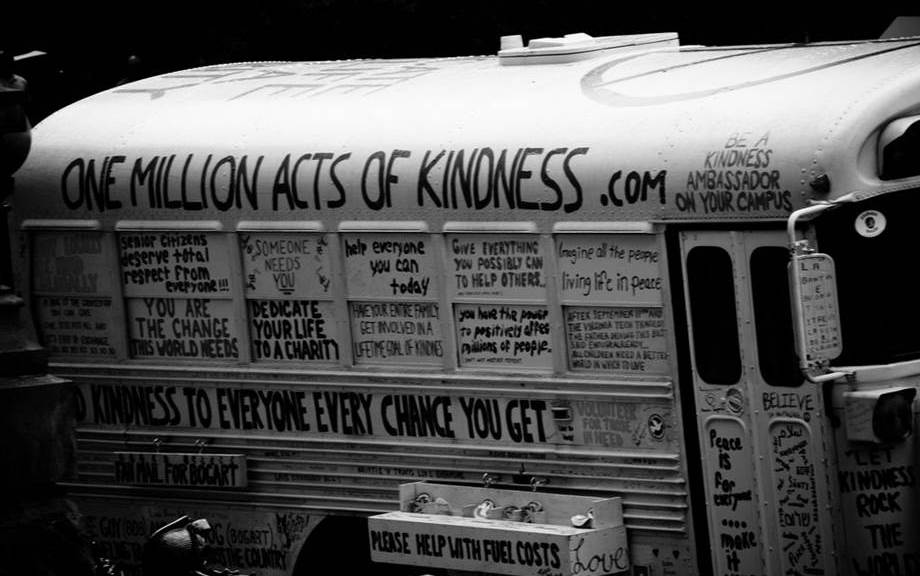
How has kindness played out in your life?

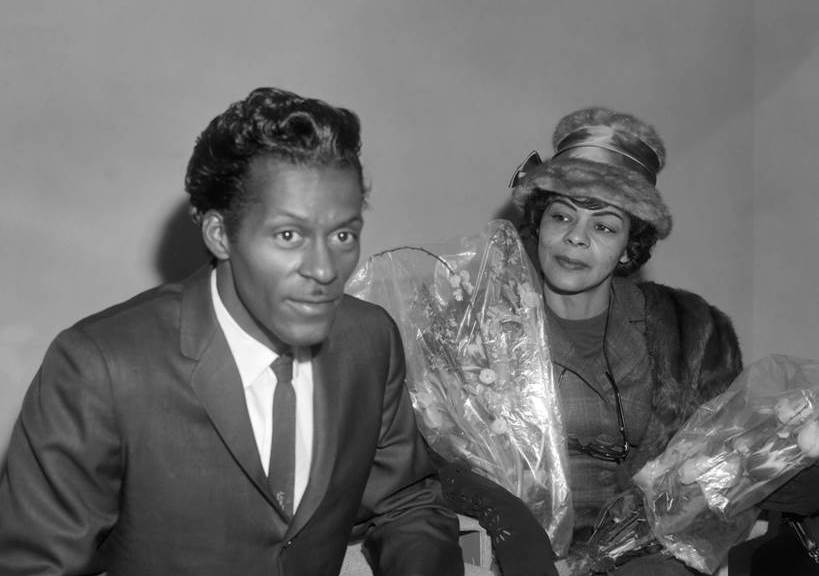
Chuck Berry 1926 – 2017

I didn’t realize until last week that Chuck Berry was from St. Louis, my home town. He grew up in what we would call “the city” and then moved to the burbs in the 60s.  This made me curious to find out who else was from what I usually refer to as “the armpit of the nation”. Here are just a few: Yogi Berra, Lou Brock, Vincent Price, Kevin Kline, Dick Gregory, Miles Davis, Harry Truman and Scott Joplin.  Some St. Louis folks also like to claim Maya Angelou, but she didn’t live in St. Louis all that long, so I’m not sure claiming her is playing fair.

I didn’t grow up in a musical family; while I knew who Chuck Berry was, I didn’t know very much about him or his musical history. I’ve honed my little bit of knowledge on Wikipedia and YouTube so now I wish I had paid more attention when he was alive.


What celebrity do you miss from your hometown?


Grandpa’s Wallet

Today’s post comes to us from Jacque.

Recently I have felt a rush of appreciation from family and a newly found old friend.   The most recent appreciation episode is from someone long ago, my Grandpa who died in 1964.  As I have mentioned, I have been sorting through family pictures and papers, slowly making tedious progress.  Last week I took apart my old picture albums, and threw away duplicates (did I really need four copies of the many pictures taken at my first wedding, the ensuing marriage which ended in divorce?  I think not.)  This reduced the picture collection by 75%, to a mere 5 picture boxes to organize and cull more.  I will set this aside for a while.

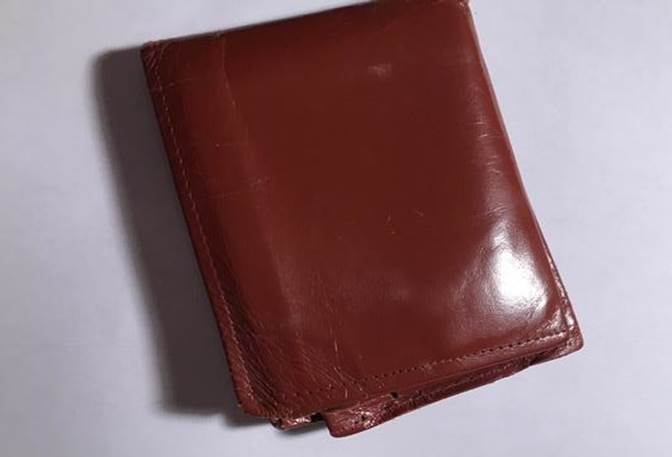
Now I am starting to pick through the three overflowing plastic bins of papers, letters, deeds, cattle pedigrees and, yes, more pictures that are not mine, but my parents’, grandparents’, and great grandparents’ memorabilia. There in one bin I found Grandpa Stratton’s wallet, which my mother must have kept after he no longer lived with us in 1963.   His wallet contained a 1960 paper driver’s license, hand-typed and signed with no identifying picture, his fishing license much the same as the driver’s license, and my kindergarten picture with a four leaf clover pressed into it.  He and I spent a lot of time seeking four leaf clovers.

Looking at this gives me a poignant moment, remembering a loving Grandpa. My kindergarten forehead is stained with the patina created by a copper snap in the wallet, which ate through the picture sleeve.  The four-leaf clover is flat and fragile and dear.  It brings tears to my eyes.  I cannot throw away the old wallet because of the picture and the shamrock.  It now lies in my desk drawer where I can sneak a peak at it on a bad day(s) in which nobody else loves me enough.

My wallet is remarkably utilitarian compared to Grandpa’s wallet. I carry all my pictures of the Grandchildren on my phone, leaving the wallet to house plastic cards, coins, receipts,  and disorganized bills of various denominations.  No sentiment there at all.

What is in your wallet?

Are You Positive?

Today’s post compliment of tim.

mr ehlers was the badass teacher who taught drivers training at my high school

he hated hippies

he gave hell to everyone I knew except me. he was never nice but never gave me trouble. i think my friends noticed and asked but i didn’t have any idea what was going on.

years later my mom who was the art teacher in the school said mr ehlers had come up and told her “ that’s some son you have”

“why” she asked

he told her that some mean kids had been in the lunchroom and run into mike kennedy on purpose and knocked the books out of his hands.

mike was a big guy who was a special needs kid that was so good natured he had no enemies but he would notice that some people acted mean or stupid or do things to be funny just showing off for their friends. He was very philosophical about life. He had been that way when I was in first grade and met him at swimming lessons. He always had a smile and a story and told me how his sister karey was (i had a severe crush on her) so when the kids knocked the books out of his hands I went over to him and told him that i saw the kids acting stupid and helped him pick up his books. a pat on the back and a see ya later was all that went on that day but mr ehlers caught me doing something right and he was never able to see me as a hated hippy after that.

i try to remember that all the people who are driving me crazy in everyday life are not doing anything mean or intentionally trying to drive me nuts. they are just doing there little moment of life in front of me and that is how I get to base my conclusion as to if i would like to have coffee with them or not.

sometimes I try to remember that I am acting in a way that other people get to respond to too. am I really who I want to be?

i like getting caught being the right person

the one minute manager was a popular book in the early stages of my business life. it was a simple idea. if you are a manager try to catch people doing something right and praise the heck out of them. every time you catch them praise the heck out of them.

have you gotten positive feedback for being yourself?

Validation!

You’ve all heard my theory of the presidency. Anyone who wants to be president is automatically disqualified by that desire.  Imagine my surprise when I found out that a former president was of the same opinion, so much so that he wasn’t even a candidate at the 1880 convention that nominated him.

Political cartoon lampooning the 1880 convention

The book I’m currently reading has this quote:

“I have so long and so often seen the evil effects of the presidential fever upon my associates and friends that I am determined that it shall not seize me. In almost every case, it impairs if it does not destroy, the usefulness of its victim.”

James Garfield

Who would YOU like to find out agrees with you?

Lego Ore Boat

Look at that massive block carrying masses of taconite. Efficient. Cost effective. Where is the curved grace of a classic ore boat?

ore-boat-3

Industry once designed for aesthetics as well as purpose.

Can a photographer discover poise and rhythm in industry today?

bridges

Wait until you see the Lego bank under construction near me (future blog).

What floats your boat this week?

Wise Words

Today’s post is from tim
I sent a blog into Sherrilee and it got lost and rather than being able to find it due to my computer breaking and not having access to those files I thought about responding and in responding it Dondonde me that the punchline is that when I type stuff up it’s just kind of a quick off-the-cuff flowing commentary on what’s going on in my brain at the moment have you been able to tell…
The book that we’re reading in BBC nightingale starts out with a great first line not just memorable like they call me Ishmael but a great first line says something to the effect of marriage teaches you what you want to be an award teaches you what you are I hope to have memorable quotes that I can pass on as a legacy when I’m gone
something more than the fact that I miss spell the word form
every time every time every time
friend of mine just commented on the fact that her dad died and how difficult that was and it occurred to me that my dad left me with the number of sayings that I treasure and while I may not be the mark twain or Albert Einstein to be quoted by the world it would be nice to be remembered with a couple of meaningful sayings to pass on

are used to “Dr. Wayne Dyer from your Aronian zones and his quotation of the Declaration of Independence…”All experience has shown that mankind is more disposed to suffer-while evils are sufferable -than to right themselves by abolishing the forms to which they are accustomed.”

that’s a true statement but those Declaration of Independence guys got a little wordy didn’t they?
what’s your favorite meaningful saying

Unpaved Trail

It’s official – the baboons are in control of the Trail. After years of writing and then maintaining the blog, our fearless leader has turned over the reins and switched us to our own domain!

It looks a little quiet right now as most of Dale’s followers haven’t found their way to us – my guess is that we’ll gain our own followers as we go on. If anybody is in contact with prior Trail members, give them a shout and invite them back.  In the meantime, we’ll keep doing what we’ve been doing for almost a year – writing our pieces and asking our questions.

If you are listed in the Baboon Congress, then you have rights to go in and post a blog piece. If you are not listed, you can send it via email to Verily Sherrilee (shelikins at Hotmail).  Verily and Renee will be administering/publishing the posts: Renee on the even months (except February this year as we get up to speed) and Verily on odd months.  If you don’t have a picture, let us know.  if you have a picture but don’t know how to get it on the Trail, send it to us.  Jacque has volunteered to do back-up if needed and tim will remain our cheerleader and organizer!

Kitchen Congress and Blevins are still up and running – Verily is watching over those. Barbara in Rivertown has the Glossary’s back!

The one thing that we do need to do is come up with a new “About” page.  Right now it’s just a blank template.

What do we want to say about ourselves, our history, our raison d’etre?

Whose Barn Was This?

Today’s post comes from Cynthia in Mahtowa

The Carlton County Historical Society in Cloquet recently embarked on a project to photograph all the old barns in the county before they are gone. A good number of them have been kept up or restored, but more have not.

When the project was brought to my attention, I asked if they would like to include my little barn, thinking it might not be worthy as it is very small and hardly a barn at all though that’s what I use it for. The volunteer who came to check it out loved it then took photos from several angles plus measurements (14x14x14).

Then I learned that they also wanted to know when the land was homesteaded, when the barn was built, what the barn was used for…and so began another research project — in addition to my previous project: “Why Blackhoof?”.

goat-barn-clouds


I retrieved the abstract from my safety deposit box and sorted through the many entries and pages of the land changing hands often, early on for logging purposes, a railroad easement, mineral rights. Then a man named August Wilson bought it in 1915 and likely he and/or his son built the barn. August’s son Herbert and his family owned it until 1948. (The original house is long gone, I live in one built by a widow, her neighbors and relatives in the late 1960s. )

In addition to the abstract I found a neighbor who has lived in Mahtowa most of his 80+ years who was happy to share what he knew and remembered. His Swedish immigrant father told him the Mahtowa area (my land is a mile north of Mahtowa as the crow flies) was once a magnificent, prime White Pine forest. So prime that logging companies fought over and for the right to harvest the trees here…then clear-cutting and leaving huge stumps. My land doubtless was included in the greatly logged so the trees now are relatively young with only a few White Pines here and there.

There still are connections to the Wilson family in the area, so I get a smattering of stories (though so far no one knows when the barn was built). One more connection links me to the history of my land: the eldest Wilson daughter — the Mahtowa postmistress for 48 years — was sister-in-law to a cousin of the woman at MPR who hired me in 1991.

The volunteer committee continues to locate, contact owners and get written permission to photograph and document whatever history they can about the barns. And now I have joined the committee to help continue photographing and collecting histories on other barns in and around Mahtowa and the nearby townships.

What do you know about the history of the land or house you have owned and/or lived in?