Category Archives: History

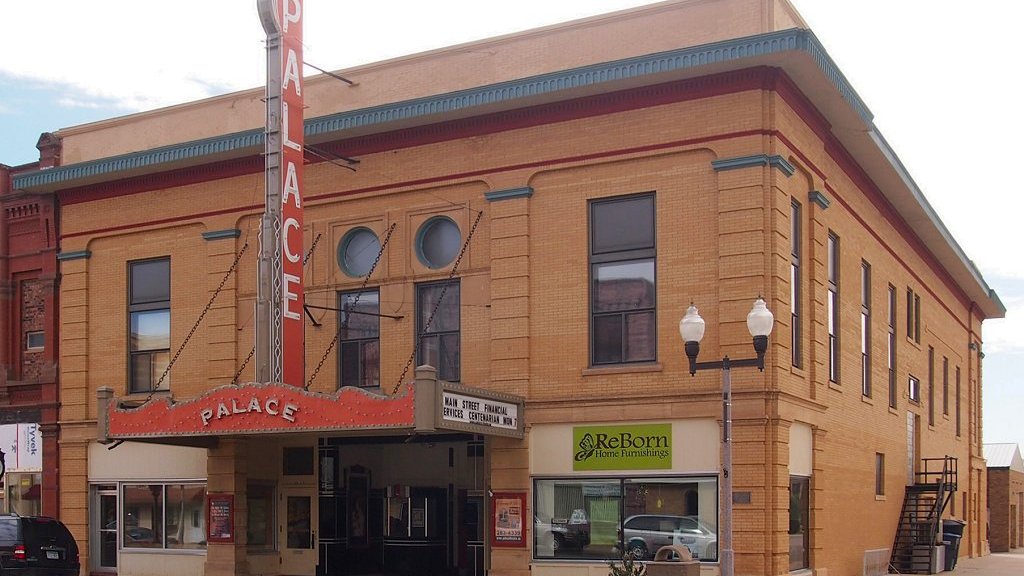
The Palace

Header image by McGheiver under Creative Commons Licence 3.0

Today’s post comes from Renee in North Dakota

I subscribe to my home town paper, The Rock County Star Herald, and I am constantly amazed by the positive tone and progressive activities the paper reports. For example, there is a $1,000,000 renovation to the library getting underway. The town just beautified the four corners of the major intersection in town to make it more appealing, and the community voted to extend some sort of special State financial assessment that benefits the public school system.  The town has three museums, a new hospital, and a beautiful Veteran’s Nursing Home. The Rock County Historical Society raised $150,000 from private funds to remodel its new building, and the newspaper recently referred to the director of the Historical Society (an elderly woman who taught with my mom) as “Rock County’s Sweetheart of History”.

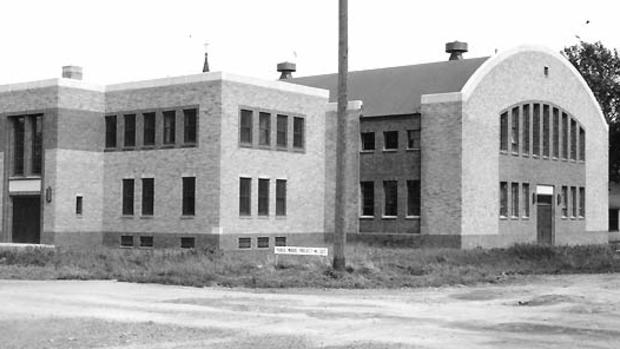
I think one reason for all this good natured  progressiveness goes back 100 years to the building of The Palace Theater in 1915.  It is a grand structure in the Beaux arts style with 550 seats, built by Herman Jochims for traveling theater troupes, orchestras, and vaudeville acts. It has an orchestra pit and, after 1926, air conditioning and new decor in the Art Deco style.  Herman wanted the Palace to compete with any of the theaters in large cities , and spared no expense decorating it. The second story was used as a ballroom and eventually as Maude and Herman’s residence. In 1926 Herman installed a pipe organ which his wife, Maude, played during the silent films he showed. She was an elegant woman noted for her musicality and elegant dresses.  I watched movies at the Palace all through my childhood and adolescence. It was so posh inside. The first things I always noticed after walking in the foyer were the two large, round mirrors, hung directly opposite one another, so that they reflected the other in smaller and smaller images as though the images went on into infinity.

By 1977, the Palace had fallen on hard times and had been foreclosed by the bank down the block. My parents often talked about the travails of the theater at this time, and I got more details about the issues in a paper by Maianne Preble of the Minnesota Historical Society in 2009. Community members raised money and got grants, and volunteers helped with renovations, so that the theater opened again and was purchased by a local theater group. Some movies and live plays were presented, but there was trouble ahead when the theater group’s Board of Directors sold the building to one of its members in 2001.  There was a general uproar at this, and, eventually, a new and revised Board of Directors repurchased the building after it again went into foreclosure by the bank down the block. This bank gave the new Board of Directors a line of credit with which to buy the building back. More extensive renovations took place, and the building is now owned by the city, which partners with the theater group for its day to day management. Movies are shown, and live theater and musical groups perform regularly.

My hometown isn’t perfect by any means. There is the conflict and disagreement and hard feelings that you find in all communities. I think, though, that the live  performances  and movies gave people the opportunity to see beyond their current situation and dream of something better.  Many people have reported seeing the ghost of Herman up in the balcony, and the organ has been heard playing when it was turned off and even dismantled for renovation. (Maude, no doubt, wanting to play again.) I like to think that when there are hard decisions to be made in town, their spirits flit out of the Palace and start whispering in people’s ears “Do it right. Make it beautiful.”

What local landmark lifts your spirits? 

The Old Home Place

Header photo: threshing machine cc BY-SA 2.0

Today’s post comes from Jim Tjepkema.

My Grandparents operated a small dairy farm that was run by my Uncle after my Grandparents retired.   I visited that farm with my family on many occasions when I was young.  It was a small farm that was still being run in some of the same ways that it was operated when my Mother was young.  On those visits I learned about some of the old traditions that characterized farming in the Midwest many years ago.

One of my most treasured memories from a visit to the old home place was the time we were there when my Grandparents were hosting a threshing party.  Before farmers had combines that threshed grain in the field, stationary-threshing machines were used and bundles of grain were brought to those machines.  It was called a threshing party because a group of neighbors gathered to bring the grain in from the field and thresh it.  The threshing party I observed included a big noon meal, prepared by my Grandmother and women from the neighborhood, to feed the threshing crew.

By the time I made my first visit to the farm they had switched from using horses to using tractors for fieldwork.  However, they still had one of the draft horses that had been used to work the fields.  One of the years when we visited at Thanksgiving there was a small patch of corn still waiting to be harvested.  My Uncle hitched the horse to a wagon and we helped him finish harvesting the corn by hand picking it and throwing it into the wagon.  I was surprised to find out that the horse was able to move the wagon ahead without anyone riding in the wagon.

I learned more about the old farm during an extended visit when I was old enough to help my Uncle with fieldwork and milking.  Modern milking machines were used, although there was no bulk milk tank.  Pails of milk were carried to the milk house and poured into cans that were kept cool in a tank of water.  When my mother was young, they sold milk by bottling it on the farm and delivering it to homes in the nearby town.  The milk that my Uncle produced was hauled in cans in the back of his pickup to a local cheese factory.

My brother and I helped my Uncle with haying.  We helped load bales of hay onto hay wagons and then unloaded them into the barn.  The farm still had some equipment for handling loose hay including a hay loader.  I saw this equipment in action when it was used to harvest wild prairie grass, which was piled on top of bales of hay that were stored outside. My Uncle showed me how to use a pitchfork to stack the wild hay on the bales in a manner designed to shed water, thereby protecting the bales.

I have described some of the highlights of my visits to the old family farm.  Some other memories included: playing in the hayloft; taking the cows out to pasture; watching the birth of a calf; and feeding the pigs.  I was lucky to have seen the tail end of some of the older ways of farming practiced by my Grandparents and Uncle.  In fact, farmers interested in becoming more sustainable have recently rediscovered some aspects of those older farming practices..

What older ways of doing things do you fondly remember?

Remembering Them

Today’s post comes from Barbara in Robbinsdale.

November 11 has been called Veterans Day since 1954 – before that it was called Armistice Day in honor of the end of the hostilities of World War I. My story grew out of an event from World War II.

You would think they might still be mourning the French people they lost in World War II 70-odd years ago (and I’m sure they are). But in spring of this year, the French villagers of St. Père en Retz, on the western edge of the Loire region of France, wanted to honor the Americans who died there on May 1, 1943. A crew of ten from the US Air Force flew a B17 (the Black Swan) out of Britain, one of 59 bombers on a mission to take out a submarine bunker at coastal St. Nazaire that had been taken over by the Germans. Six lost their lives, including the pilot, who was my mom’s older brother Bobby (Jay Robert Sterling). (Another time I’ll tell more of what we now know of the story.)

The people of this region are still so grateful for every attempt by American and British forces to aid them, that between 2013 and 2015 five different villages along the Retz River have  commemorated the soldiers, with several more installations planned in the next few years.

The organizing Committee from St. Père en Retz searched via the internet for crewmen’s family members, then invited us to come to France for the occasion. They were fairly successful – eleven travelers representing four of the crew were able to gather the first weekend of May. (A fifth crewman’s family was able to come later on.) Since my mother wasn’t well enough to make this trip, my sister and I went in her place, along with her son and Husband.

Other family members of the crew had visited St. Père en Retz individually in previous decades, and had each been honored in some way. But this time they wanted as many people as possible as they accomplished several things:  installation of a new History Panel (Panneau Historique); upgrading a Monument listing the names of the crew;  and commemorating this with a church service, and ceremonies at the crash site, to which the entire village was invited.

Six of us were put up at a country manor house of one of the Committee, five more at nearby B & Bs. The villagers were impressed that we would travel all this way – we were impressed by all the work the Committee undertook to organize this, how they welcomed us, and the turnout of the community for the ceremonies.

So it was a weekend full of receptions, ceremonies, speeches, poems, banquets, unveiling of monuments, viewing of the crash site (the most emotional time of the weekend), and touring related sites like the submarine bunker. There was also consulting my LaRousse at every turn as I tried reviving my college French, attempting to remember all the new French names, and getting used to being full of food and wine all the time…  We were exhausted by Monday morning, but I wouldn’t give it up for anything. It was quite something to be celebrated like this.

All over this corner of France, these Panneau Historique are being created and installed, telling the stories they don’t want their people to forget.

Have you ever been moved by a patriotic event?
Is there anyone you want to remember this Veteran’s Day?

Hummel, Hummel-Mors, Mors

Today’s post comes from Renee in North Dakota

Clyde’s recent posts about DNA and birch logs made me think about these little carvings I have that came from my mother’s family from Hamburg, Germany.  

The crabby water carrier and the farm animals and other figures were in my house all throughout my childhood.  Mom would never let me play with them. I think some of them were children’s toys. Mom said she thought that some of them were sent from Hamburg by family in thanks for the food packages my grandma sent them during the war.  She was pretty vague about it.  She couldn’t even tell me  how long she had them, or why she had them instead of my grandmother or other family members.  

She also couldn’t tell me much about the water carrier. She said he had something to do with Hummels. I always thought she meant the porcelain  child figures designed by the nun, Sr. Maria Hummel.  

Well,  That isn’t quite the whole story.

I now know that the water carrier figure was a real person who worked as a water carrier in Hamburg in the mid-19th century and who was noted for his nasty temper. He was given the nickname “Hans Hummel”.  The word Hummel sometimes is used to refer to a bumblebee. Hamburg children would follow him through the streets as he carried water, yelling “Hummel Hummel” and he would respond with “Mors Mors” which is low German slang for “Kiss my a**”.  

People from Hamburg often greeted each other this way long after Herr Hummel went to meet his maker. The water carrier is a popular symbol for Hamburg.  Now, why didn’t my mom tell me this? How did those cute child figures get mixed up with this?  I don’t even know if mom knew the whole story. If that is the case, why didn’t her mother or her grandparents tell her the story?

Since my parents have both died I find I have lots of questions that I will probably never get answered. I wish I could go back in time and ask my great grandparents and other ancestors just what is up with all this stuff.  Husband and I are tentatively planning a May trip  to Bremen and Hamburg, so maybe I will find some answers.

What question would you ask your ancestors?

Timber! To an Era

Today’s post comes from Clyde of Mankato

My last guest blog asked you to look closely at grass. This time I want you to examine two slides taken by my mother in 1954. They capture an end of one era in the forest and the beginning of another.

First I apologize that the horse’s head is at the semi-exposed end of the roll. Adeline and I long bemoaned that bad luck. We both recognize the photograph has family and larger significance. Today the ratty right end strikes me as appealingly quaint.

End of one era: the horse for one, which you probably realize. In 1955 it was rare to see horses used for logging, but more than my father were still using them. However, the images also show the tail-end of old growth trees in northeastern Minnesota. Look at the size of the those birch logs! How long had they lived? You perhaps think they were sawed into birch lumber. In 1954 it simply was not done. Birch was then a difficult wood to manage as lumber. Today those logs would be worth as fortune.

I feel an affinity for those logs. First because they are birch wood, as am I, being a German birchwood. Secondly because I spent the next eight years using pieces of the logs as chopping blocks, before which I spent many an hour swinging an axe. I was well acquainted with that birch tree before it was felled. Its grandeur appealed to me. For my father it was a massive temptation to cut down. Because of the girth of the stump, he did not attack it, not having a proper two-man whip saw to do the task. Then along came that yellow chunk of steel in the other image.

Logging 1

Beginning of another era: our nearest neighbor Floyd (man on your left) was a full-time time lumberjack (cutter of trees for lumber) and gyppo (cutter of trees for pulp wood). He was a famously surely tough old bastard, older than he looks in this photo. A couple years later while cutting pulp by himself in the Superior National Forest, he broke his back when a widow-maker fell on him. He had to crawl out to a road to get help, which took two days and nights. Three months later he was back in the woods alone. His personality made working solo a necessity. Being a bachelor, Floyd could not have made a widow.

A few days before these pictures were taken, he stopped at our house to show us his new prized possession, the chain saw. They had been around, but now they were mass-produced at a level that made them affordable for professional cutters. Also, they were dependable. They were still very heavy, nothing like today’s light-weight wonders. Yet even at that weight, a new era swept the woods, for one thing allowing old birds like Floyd to earn real money cutting alone.

The moment my father saw the chain saw before him, he pictured that birch tree. And down it came, my mother coming along, after the fell deed, it seems, to photograph the results.

What you see are only the two bottom lengths of the trunk, minus the two butt pieces on which I am standing, which became the chopping blocks. It took several loads to bring up all of that tree. My father knew how to coax every piece of firewood out of large trees. How long it must have cooked our meals and heated our house! You may wonder by what means the logs made their way onto the sled. My father and I did it alone. How that is done, I will leave a mystery.

If you had those birch logs today and could pay the cost, what use would you make of them?

Chores and the Great Depression

Today’s post comes from Jacque.

I am the first to admit that my life growing up was, well, unusual. I came from thrifty, hardworking, somewhat eccentric people. My parents were the first people in their families to go to college and graduate with 4 year degrees. Mom and Dad grew up in the Great Depression on farms where their frugal parents survived by using things up, patching, repairing, and saving money. Every one pitched in to help with family chores. They passed this on in their parenting. We had chores. We saved money.

My siblings and I grew up bearing a lot of responsibility given our young ages. Mom worked outside the home as a teacher during a time when Mom’s usually stayed home to care for the family. Our Dad stayed home with us because his illness, Multiple Sclerosis limited his life.   This arrangement demanded that we all pitch in for the common good of our family. We helped with Dad’s care, with cooking, cleaning, and gardening.

Now, in our adulthood, my brother, sister and I gather and regale ourselves (and any one who will listen) with the tales of our growing up, our chores, our travel stories, and our family’s attempts to save a buck. We roar with laughter at our own stories.  Our kids, now grown-ups, too, are a bit tired of these stories.  So we always seek new victims to listen to them, like, say, Baboons!

This year for Mother’s Day, my brother, sister and I went out with our Mom, now 87 years old, for supper. We teased her a bit, which she loves.   We made 2 lists, reflecting our unusual life together: our chores and our family methods of stretching a penny.  Today you get List #1, Our Chores. Items 1-3 are pretty standard stuff. Item 4 starts to stretch the limits, of well, normal? Of reliving the Geat Depression

Our Chores

  1. Saturday mornings clean the house. I vacuumed, my sister dusted, my brother emptied the garbage and goofed off. NO CARTOONS. This really meant that the moment Mom went grocery shopping, we turned on the TV. Dad never told. My sister and I posted our brother at the window to watch for Mom’s car so we could turn it off in time to stay out of trouble. We cleaned AND watched cartoons.
  2. Set the table before a meal.
  3. Often we cooked the meal.
  4. Wash and dry dishes after each meal.
  5. Light dad’s pipe when requested. Knock the old ashes out, clean it with a pipe cleaner, refill.   Do not pack too hard or it won’t light easily, then the match will burn your finger.
  6. Make dad’s coffee in an old-fashioned stove top drip coffeemaker which loaded the grounds in the bottom of the upper part. We had to pour boiling hot water from the bottom carafe into the upper part which fed the hot water through the grounds back into the bottom carafe. I learned to do this at age 9. Pour the coffee. Put Dad’s straw in it and place it where he could drink it.
  7. When my diabetic Grandpa lived with us, it was my job to watch him for symptoms of insulin shock. If he showed symptoms, I ran to the refrigerator, poured a glass of orange juice and assisted him in getting it down his throat. (I was 9 years old at the time)
  8. Get dad his urinal, run it to the bathroom, empty it, rinse it, and flush.
  9. Gather food scraps and take them to compost pile.
  10. Operate washer and dryer. Fold clothes. “Sprinkle” clothes which would need ironing, then iron them.

This list looks like we were slackers compared to Mom’s list of childhood chores, which consisted of tasks such as milk cows, churn butter, clean out the barn, so it is all relative I guess. The Great Depression really did influence our experiences in the 1950’s and 60’s despite its long demise.

Did you re-experience the Great Depression in your childhood?

File Under T for Treasure

Today’s guest post comes from Anna.

My father was a saver of paper and a filer of almost anything that could fit into a manila folder: tax documents, old report cards, receipts for car repairs, meeting minutes for committees that may have disbanded by the time the paper was in a file. I shudder a bit at how much paper I might find when it come times to clean out the house – though the task will be made somewhat easier knowing that each sheet will be in a properly labeled folder and filed alphabetically. Among all of these papers and files, my mother recently found a file that was, I’m sure, labeled “Vacations.” In it there was treasure: handwritten and typed letters from the owners of Castle Creek Camp in South Dakota.

lingerlong

Castle Creek was a former gold mining camp, nestled in the Black Hills outside of Hill City. The “unmodern” cabins (as one letter describes) rented for as little as $7 per day or $40 for the week, linens and dishes included, running water in or nearby the cabins, “modern” shower facilities were separate and there were outhouses for, well, outhousing. At least some of the cabins may well have been original to the place when it was a mining camp and they came with names like “Linger Long” (our cabin of choice) and “Tumble Inn.” The eponymous Castle Creek meandered through the camp and one letter shares that, “panning for gold is a lot of fun and we even find some once in a while” (shoes recommended as there are sharp rocks in the creek).

castlecreek (1)

Our family vacationed at Castle Creek for several summers, going back each year to Linger Long. Along with the creek, where gold might be found, treasure could be had when you heard the whistle of the 1880 Train. Part of the train’s track ran along the far edge of the camp. When the train whistle blew, any kids in camp learned to stop what they were doing and run to the tracks and wait: the man in the caboose kept Tootsie Rolls with him and would throw them out to us by the fistful. A handful of Tootsie Rolls went nicely with an ice cold Orange Crush procured for a nickel from the pop machine that lived by the owner’s house. The machine was one of those red, rounded corner affairs that held a single row of glass bottles behind a tall slim door: open the door, put in your nickel to unlock the options and pull on the neck to free the bright orange, sweet goodness of a Crush.

goldie2

The other attraction, at least for me, was the resident donkey, Goldie. She had run of the place and roamed more freely than even the owner’s family dog. Goldie would come visit me in the mornings and eat sugar cubes out of my hand while I sat on the porch railing at our cabin. Since I wasn’t quite big enough to keep up with my brother and the owner’s two boys (nor did I have much in common with them – a red, white and blue guitar “just like Buck Owens” was not really a draw for me), Goldie was my friend at Castle Creek; my gentle, big eared companion. I looked forward to seeing her each summer as much as my brother looked forward to adventures with the boys.

Remember that 1880 Train? It did one other thing. It ran into Goldie. The last year we went to Castle Creek we found out that Goldie had been killed, run into by the train, while she was trying to get her foal off the tracks. I befriended the foal as well, but she wasn’t quite Goldie – in it for the sugar, not the companionship. Castle Creek wasn’t quite the same for me without Goldie. The Orange Crush was still cold, the Tootsie Rolls still flew out of the caboose, but I didn’t have Goldie. She was my real treasure at the mining camp. Treasure remembered and rediscovered again with a map provided in a letter saved by my father.

What treasure would you mark with a map?

All the News That’s Fit to Print in Blowers

Today’s guest post comes from Clyde of Mankato

Mr and Mrs. Harold White were the guests of Mr. and Mrs. Einar Rasmussen on Friday night. Mrs. Rasmussen served Swiss steak with pineapple upside-down cake for dessert. After dinner the couples drove into Wadena for dancing at the American Legion club.”

Hot news that story, is it not? Such items were once the staple of small town newspapers. As I recall, they were called “social notices.” Anything to fill space around the ads and the legal notices. (More on the legal notices later.) Who does not want to see their name in print?

Pix 1

My parents spent much of their childhoods and early married life in the central Minnesota town of Sebeka, home of the Sebeka Review, to which my parents subscribed after they moved away. Each Thursday they would read the paper and tell us stories, fully augmented by imagination, about the people mentioned, the kind of tales a newspaper would never tell. The Review published social notices by regions, one of which stood out in our childhood—Blowers Township. My sister got a kick out of the name, “The Blowers News,” which as a joke we always pronounced as you are pronouncing it now, unless you are up on your Otter Tail County geography. It is not bloo-wers, as in people who blow, but blau-wers, as if you were expressing pain with the ow, “oooww.”

Every week my sister read the Blowers social notices aloud. Over time we became acquainted with most of the few residents of this small very rural township. My sister plotted out friendships and feuds. She drew scandalous unfounded conclusions about what the notices really meant.

As for the social notices on our town, my parents’ comings and goings were hot news almost every week. The wife in the couple with whom my parents were socially active was the reporter of such tidbits. A common item would read “Mr. and Mrs. Lewis Birkholz were the guests of My and Mrs. ______________. After a dinner of chicken and dumplings several games of smear were played.” Mrs. ______________ was a devoted fan of passive verbs. In social notices women were always Mrs. His-First-Name Something, as if they had no first name.

If you do not know what smear is and how to pronounce it (Schmear), then you don’t know Northern Minnesota.

Another long gone item was a legal notice, the property tax reports. Each household was listed, by the man’s name of course, unless the woman was in some form single. After each person’s name was the amount of property taxes assessed and if paid or not. My father relished the anger he could express at how much more property tax the few farmers paid than the high-paid citizens in town. The newspapers made good money from printing those long reports.

Pix 2

Doing a bit of research, I learned something new about Sebeka. It is the birthplace of one-time Twins pitcher Dick Stigman, which I knew, but is also birthplace of Kenneth Arnold, the pilot who made the first widely reported sighting of a UFO, or a flying saucer as he called it.

Have you ever been newsworthy?

Hidden History

Today’s guest post is by Cynthia in Mahtowa, and was inspired  by Reneeinnd’s July 12th blog “Overlooked Overlook” and Happy Valley Steve’s comment about “not noticing history.”

At our little long-time book club we recently read Prudence by David Treuer. The story takes place midst WWII somewhere in northwest or north central Minnesota with characters from Chicago who own a resort on a lake near an Indian reservation and a German POW camp.

germanpowcampmap

A German POW camp? In Minnesota?

None of the group had heard of such a thing. Did Treuer make it up? As it turns out, a Google search confirmed that there were indeed German POW camps in Minnesota – at least 15 of them.

Many other states also had them. Some 400,000 POWs were brought to the US to farm, work in factories, log or do whatever wasn’t getting done with American men fighting in the war. Most of the Germans were prisoners from North Africa, sent to the US by the British who no longer had room to house the number of prisoners they were capturing.

Two relatively recent MPR stories documented the camps: In March Tracy Mumford interviewed David Treuer about his novel. He grew up on the Leech Lake Reservation near Bemidji and had heard stories of a nearby camp. One of the stories told was of two prisoners trying to escape south via the Mississippi River in a row boat .

A second MPR story reported that in October, 2002 some of the former POWs and their families came from Germany to camps “to remember, learn and reconcile.”

Why had I never before heard of the camps in any of my (Minnesota or American) history classes?

Along this same line of “overlooked history,” our club also read The Assassination of Chief Hole-in-the-Day by David’s brother Anton.

2012_0406_images_05b_curio

Bagone-giizhig, known in English as Hole-in-the-Day the Younger, was a charismatic and influential chief who played a key role in relations between the Ojibwe and the U.S. government in Minnesota. Yet he won as many enemies as friends due to his actions during the U.S.-Dakota War of 1862 and his claim to be the leader of all Ojibwe. In 1868, Bagone-giizhig was assassinated by a group of other Ojibwe from Leech Lake. For many years the real reason for this killing remained a mystery.“

I have lived most of my life near the Fond du Lac Indian Reservation. I have had Ojibwe classmates and friends. We had Minnesota history in sixth grade.

Were we taught about this famous chief and I just don’t remember? Or, was it never included in our textbooks?

Other history I learned as an older adult are the hangings of the Sioux warriors in Mankato and the black men in Duluth. Not to mention the Dakota Conflict itself.

What history has been overlooked in your education that you wish you had known earlier?

A Late Great Morning Show Revival

Today’s guest post comes from Sherrilee

At Blevins Book Club last weekend, a small pocket of us were reminiscing about some of our crusty old favorites from The Late Great Morning Show.  Most of us are still Radio Heartland devotees, but don’t hear the oldies but goodies as often as we’d like.

So it’s time for a LGMS revival!  If we pull together a list of titles, Mike will get them organized and we’ll have a rousing couple of hours of songs that elicit some of our great memories from over the years.  After we get the list to Mike, he’ll let us know the date and time.  No guarantee that he’ll be able to find all our titles and I’m assuming we’ll come up with way more titles that can fit into a couple of hours, but I think we should give it a shot.

I’ll start us off with two:  The Mary Ellen Carter by Stan Rogers and Canned Goods by Greg Brown.

What song do you miss from the LGMS?