Category Archives: History

Leaving a Legacy

There is a woman who attended our Lutheran Church for many years before she and her husband moved to Minnesota. Her lasting legacy , the thing she is remembered for, is her lefse recipe. Hers’ is the recipe we all consult when there are any doubts about how to make lefse. I think that is a pretty nice way to be remembered.

One of my Great Uncles is best remembered for being a very musically inclined bootlegger who was really good operating steam threshers. HIs children carried on his love of music by running a dance band for many years. Since Prohibition was over, they didn’t need to keep up his bootlegging when he died in the early 1930’s.

I hope that Husband and I are leaving a legacy of good psychology practice that others can learn from. I like having students and interns to teach and supervise. I only get to do a little of that, though. I guess I could consider my psychological evaluations as lasting legacies. It would be fine with me, though, if I am mainly remembered as a good cook and baker and as a kind person.

What lasting legacy would you like to leave? What skills or talents would you like to pass on to someone?

How Terribly Strange

Can you imagine us years from today,
Sharing a park bench quietly?
How terribly strange to be 70….

– Paul Simon, Old Friends

The classic Simon & Garfunkel album Bookends was released in 1968. While working on the album, Paul Simon reportedly told a writer at High Fidelity, “I’m not interested in singles anymore”, but when the album emerged, it featured the hit single Mrs. Robinson, which was featured in the hit movie The Graduate.

The B-side of the single was the contemplative melody Old Friends, which segued into Bookends Theme (Reprise).

Paul Simon is 82 today. If weather permits, I hope he is sharing a park bench, quietly, with a friend.

How has the passage of time changed your views on aging?

Close Call

The big news in Fargo this week has concerned the fate of a group of 85 local Roman Catholic parishioners, clergy, and their relatives who were on a pilgrimage to Israel.

The group was in Jerusalem when the bombing started, and for some reason they fled to Bethlehem where they holed up for a few days with the fighting happening just 45 miles to the south.

Yesterday they managed to get on three buses and made their way through multiple checkpoints until they were able to walk to safety in Jordan. I can’t imagine how frightening that must have been. They are scheduled to be back home in the next couple of days, many of them facing 40 hours of travel with their plane connections. It could have all gone so much more badly for them.

When have you or someone you know had a close call with disaster? When have your travel plans changed significantly?

Balloon Disaster

We had a lovely time in Cleveland, OH, last week. The conference I attended was actually interesting. We also met up with a dear graduate school friend who lives in Ohio. She is originally from Newfoundland, participates in competitive ballroom dancing, and lives with 16 cats.

Cleveland was nice, and we could see the lake and the Rock and Roll Hall of Fame from our hotel. Cleveland has had its struggles, though. It is sometimes referred to as the mistake by the lake. The Cuyahoga River caught fire here years ago. Nothing beats the balloon disaster, though.

In 1986, the Cleveland United Way proposed a fundraiser by trying to beat the world record for the number of helium balloons released at one time. Disney held the record. The United Way released 1.4 million helium balloons not far from where our hotel stands. They used substandard helium, the winds were uncooperative, and the balloons didn’t float very high and then came to earth. Balloons covered the roadways and the lake. Roads were obscured and people crashed their cars. Two fishermen who went missing in the lake couldn’t be located because of all the balloons. They drowned. Horses ate the balloons and also died. The United Way had to pay millions in damages. The Guinness Book of World Records stopped measuring balloon releases.

Any good disaster stories? What are your favorite disaster movies? How many cats is too many?

De-Extinction

I read with interest last week the news story of a company that wants to resurrect the wooly mammoth, perhaps in ND. A fairly intact wooly mammoth tusk with all sorts of usable DNA was found in a coal mine here in the state. The company wants to use it to recreate the mammoth.

What is quite surprising to me is that the ND government is paying this company $3,000,000 to consider locating the company to ND. This a pretty fiscally conservative state, and the public reaction to the Department of Commerce spending money on this venture hasn’t been exactly supportive.

The local climate is more conducive to mammoth well-being than Texas, where the company is located. I wonder what you do with a wooly mammoth once you have de-extincted it? Let it wander around the Badlands here? Can it be fenced in at all? Raise it for meat? Have mammoth rodeos? The company thinks they can have a viable mammoth by 2028. I am glad that I will be living in Minnesota by then. I would hate waking up to find a mammoth in my yard eating the tomatoes.

What would you do with a woolly mammoth ? What would you like to see de-extincted?

Quitting

Pretty sure I’ve mentioned that I’m reading biographies of the English monarchs in order.  It’s been awhile since anything got added to the list and when I clicked on the tab of my spreadsheet, I realized why.  Richard II is up next.  I suppose there might be a few more controversial English kings than this one but it would be a close race.  I don’t know all that much about Richard II but I do know that his death ended the reign of his line and that victors always write/rewrite history.  So when I went looking for a biography, I tried to find something more recent and hopefully balanced.

I did watch the series “The Hollow Crown” a ways back but never read the book so when I found Within the Hollow Crown I thought I’d give it a shot.  After two pages it went back to the library.  I’d prefer to have a more straight-forward biography without the author writing whole swaths of what they believe the historical figure is thinking.  If I had known this book was historical fiction, I wouldn’t have checked it out.  Just not my cup of tea.

Now I’m back to a hunt for a balanced biography… or even if I can’t find one that doesn’t absolutely vilify Richard II, I’d at least like one that doesn’t try to fill in the mental gaps!

If you start a book, do you feel compelled to finish it?  What was the last book you abandoned?

Still Dry

The weekend Farm Report comes to us from Ben.

No rain to speak of around here yet. We had some mist a couple different days, and at least it’s cooler now and I like that. 

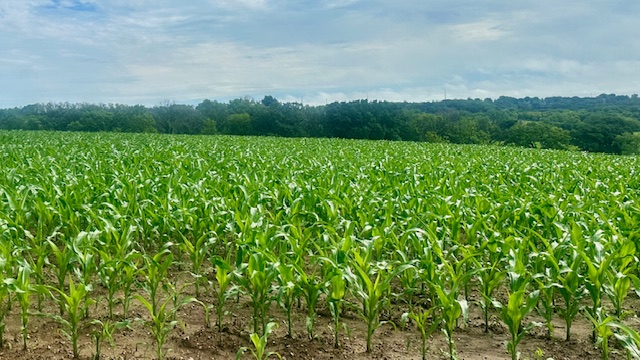
I see some farmers chopping corn silage. I miss doing that; it was a fun job. It smelled good, it unloaded easy, and it was a very satisfying job. The loads were heavy and if it was muddy that made it harder with the small tractor I used to pull the wagons. For a lot of years, Dad ran the chopper and I pulled the wagons home to unload. There were a few years I did it myself because he was working or retired. Maybe that’s why I just feel like doing things myself so much these days. Yes, fall is coming; I have seen some corn crops really drying out and turning brown both because of reaching physical maturity or because they’re on lighter soils and it’s so dry, the crop is just done. (Especially noticeable in rocky ground; that dried out sooner). 

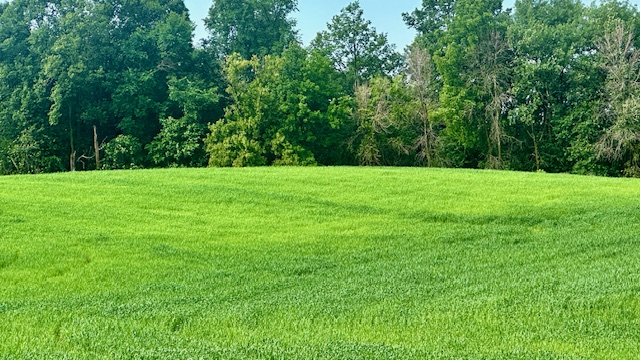
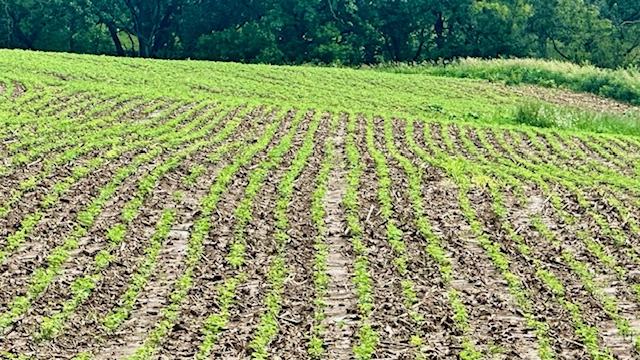
Soybeans are starting to turn yellow and will soon be losing leaves. Not mine, but most or the better-looking crops. My weeds are flourishing in the bean fields. My sister made the comment that she was glad to see some weeds because that meant I wasn’t “drowning the fields with herbicides”. Hmm, Well. All those weeds will be going to seed and making that many more weeds next year. And if the beans dry out but the weeds haven’t frozen yet, that makes harvesting more difficult. Plus the nutrients they’re using that the crop should be using. We can be pro or con to herbicides and chemicals, but we have to be sure we’re looking at both sides of the situation. Crop rotation helps with weed control too, so these fields being corn next year will stop next year’s weed, but those seeds…you know they just hide out and wait. 

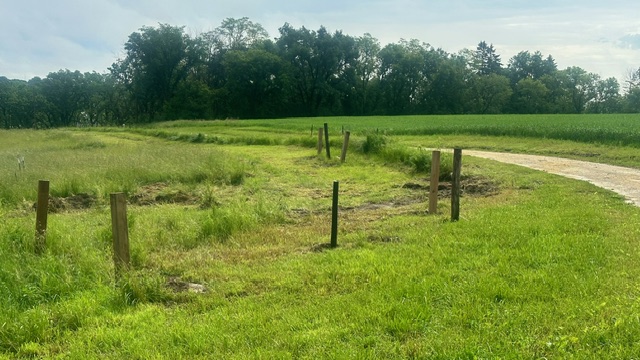
A few weeks ago, I talked about planting winter rye as a cover crop. I haven’t planted yet because it won’t grow until it gets some moisture in the soil. It’s just hot, dry dirt right now. Chance of rain again Sunday, but that’s the only rain in the forecast. And if it gets too late in the season, is it worth planting? I don’t know yet. 

The barn swallows have moved on. It sure is quiet with them gone. We miss them a lot. 

Lots of acorns falling. And walnuts. We have one horse chestnut tree I planted from a seed that I picked up outside of our church when I was a kid. Mom says it’s a wonder it ever grew as I was always digging it up to see if it was growing yet. Well, boy, it has a lot of nuts on it now and it seems like 60% of them sprout in the spring. I’ve used the chestnuts for barnacles in plays. And I used to fill my Tonka dump truck with acorns. There are oak trees around the college theater and every morning as I walk in, I step on the acorns and have warm memories. 

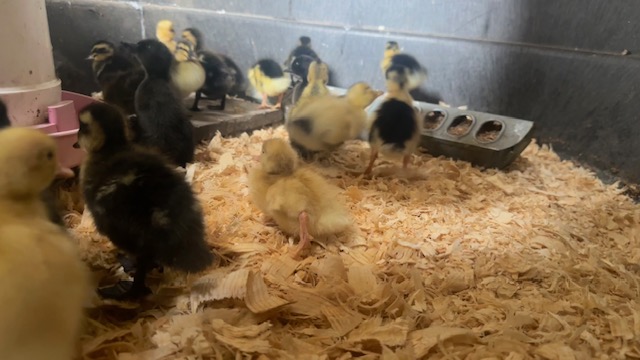
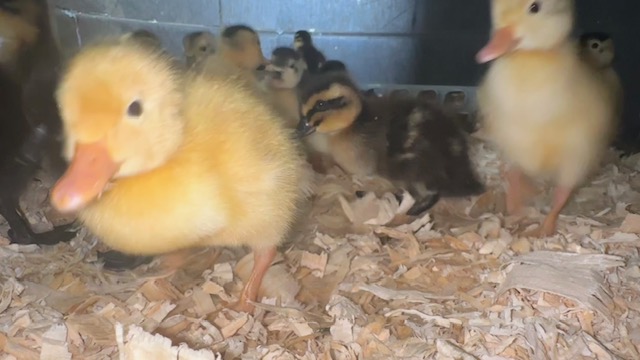
Mother-clucker still has her 13 chicks!  

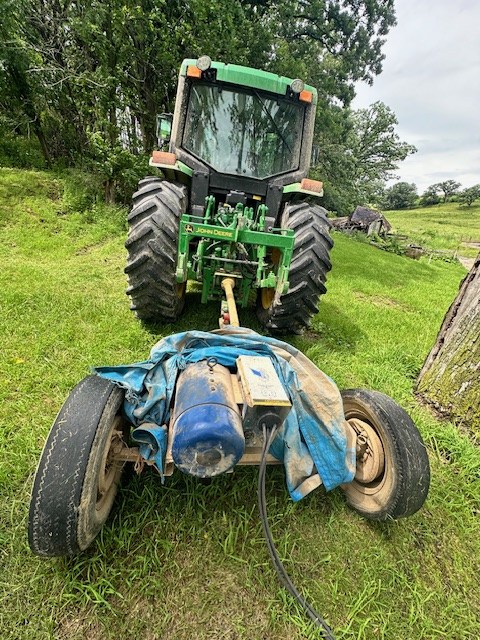
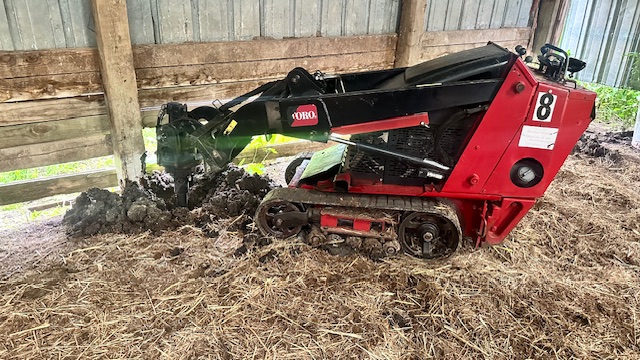
The John Deere Company stopped making moldboard plows this year. A moldboard plow is the traditional looking plow that you’d picture in your mind. The name ‘moldboard’ comes from the biggest metal curved piece that tips over the dirt. That fact it was metal is what made the man, John Deere, famous. From 1837 to 2023, the John Deere company made plows. It’s what started and made the company. It’s a big deal to let that go and there’s been some online debate over it. But that style of farming has changed. The benefit of the moldboard plow was how it could cut the plant roots and turn over that virgin soil. For a lot of years, that was the tool that was needed. These days, as we do more conservation tillage and have equipment that can plant into more plant residue, turning the soil over completely isn’t as critical. At the bottom of the moldboard was the ‘share’. The tip of that was the first piece to wear away from the soil contact. (Isaiah 2:4, “…and they shall beat their swords into plowshares…”)  

Here’s a website with more about plows and plowing than you knew you needed to know: 

I still have a 4 bottom plow at home. I used it when I took some Conservation Reserve ground out of the reserve program and put it back into cropland. Using a chisel plow on sod ground– (“sod” being alfalfa hay, grass, or pasture. Basically, any kind of grassland with the deep, tangled roots) — using a chisel plow, it takes about 2 years for the soil to really break down enough to be workable because it doesn’t turn it over completely or cut the roots so cleanly. I also use the moldboard plow when a neighbor wants part of his hayfield plowed up in order to reseed the next year. 

Plowing makes a ‘furrow’ after the last row. That furrow is a trench about 5” deep and 16” wide that you put the tractor tire in for the next round. (If everything is lined up right). At the last round of the field, you try not to make such a deep furrow. That last round is called the ‘dead furrow’. You want to remember how you plowed this year, so the next year you can go the other direction, therefore moving the dead furrow to the other side of the field. Clyde, what would you like to say about plowing? At the end of the field, how did you turn with that? Did you have to lift it or roll it on the side?

Any songs about nuts?

First Day Of School

Last Wednesday was our grandson’s first day of Kindergarten. He was happy, proud and confident. He is, after all, 5 years old, and in his mind, he can do anything! His parents were dewy eyed, and our DIL had to redo her eye makeup when she got to work after dropping grandson off. I reminded son that I missed his first day of school since I had moved to Iowa to do my psychology internship, leaving him for the year with his father.

My first day of school was in Mrs. Helling’s room. I teased my mother in the weeks before school as she, a Grade 3 teacher, was getting her room ready and I would go with her to the school , warning her that I would slip into Mrs. Cooney’s room next door. Wouldn’t you know, my teasing got me all confused and I actually went into Mrs. Cooney’s classroom and was told to go next door. I was mortified!

What are some of your memories of first days of school?

Being Teddy

Medora, ND is a tourist town about 40 miles west of us that capitalizes on its connection to Theodore Roosevelt, who lived on a ranch near there in his younger days. It is on the border of Theodore Roosevelt National Park. The town has an Old West feel, with a homespun outdoor musical every night in the summer, stores that sell Western memorabilia, and trail rides. They also have people dressed as important figures from the town’s history, including Teddy Roosevelt and the Marquis de Mores, a French beef packing scoundrel. Every night at the musical, a local cowboy on an actual horse reenacts Teddy’s charge up San Juan Hill. The commercialization of Medora was the brain child of a wealthy North Dakota businessman, Harald Schafer, who owned the company that manufactured Mr. Bubble bath soap. He wasn’t that well liked in town, though, for some reason. His son became governor.

I read recently that there are about 60 people in the US who are Teddy Roosevelt reenactors. This summer, three of them were in Medora. One lives there all year long. They all work simultaneously in the summer. At least one is a young Teddy. The other two portray him when he is older. They walk around town and talk to people and get their pictures taken and seem to have a great time.

If you were to be a reenactor, who would you want to portray? What is your favorite bubble bath?

Summertime Cousins

Our son and DIL and grandson were in Alabama last week for the baptism of our DIL’s niece. I was glad our grandson got to spend time with his only cousin. It was really hot there, though, and between the weather and the politics, Son said he could never live there. I wish our grandson had cousins who lived closer.

I remember summers as the best times to hang out with my cousins. We all lived within 30 miles of each other. As an only child, my cousins were the closest people I had to siblings, and I got to spend weeks in the summers at their various farms. They all lived on farms. They were mainly boys, and I learned how to set gopher traps and set off fire works and play rough and tumble football and baseball. We played and messed around and had a great time. When I was in Middle School and High School I spent summers with a married cousin and she taught me to sew for 4-H.

The other day, Son was filling up his car with gas in Pipestone, MN where many of my cousins lived, and saw a really tall, thin, older blond man filling up his car. He looked like one of my relatives, and after Son introduced himself, it turned out he was one of my cousins, who asked when I was moving back to Minnesota! He lives in Norfolk, NE, and he is going to move back, too, when he retires. I don’t think he still traps gophers.

Where in the US wouldn’t you want to live? If you had cousins, what did you like to do with them? What are some of your favorite summer memories from childhood?