Category Archives: Nature

Too Late?

Asteroid 1994 PC1 whizzed past us yesterday at 43,000+ miles per hour.  Apparently compared to the asteroids that swing by almost every day, 1994PC1 is fairly large to be so far outside the asteroid belt.  NASA has been watching it for years (I’m guessing from it’s name, since 1994) and since none of us got warnings about impending asteroid/earth collisions the last few days, they are quite aware that relatively speaking while it’s coming close to us, its closest pass will be five times the distance between us and the moon.  According to scientists “if you aren’t worried about the moon crashing into your house this week, you shouldn’t be worried about this either”.

I guess we might have a closer call with a much larger asteroid in 2028.  That news actually hit the stands back in 1997, just a year after a big scare when 1996 JA1, an asteroid the length of two football fields, passed by at only 300,000 miles with not much warning.  This might account for a bunch of the asteroid movies that came out in the next couple of years (Deep Impact, Armageddon, Asteroid, Judgment Day to name a few). 

I’m not a big disaster film buff (although technically if they divert the asteroid, it’s not really a disaster flick, is it?) but I did see a couple of these.  It’s an interesting concept – pushing off an object that is traveling 43K miles an hour.  And I don’t really follow this stuff closely so I don’t know if there is an object that NASA is actually worried about.  And I wonder, would they tell us if there were?  Not sure what in heck we, as citizens of the planet could actually do to prepare.  I mean, I assume we’re smarter than the dinosaurs, but there sure wasn’t anything they could have done differently.

Which do you worry about more – asteroids or a zombie apocalypse? 

Bags

This week’s Farm Report comes to us from Ben.

The weather warmed up and I got the car washed. For now.

And now It’s snowing and cold again. Oh well. It’s January in Minnesota.

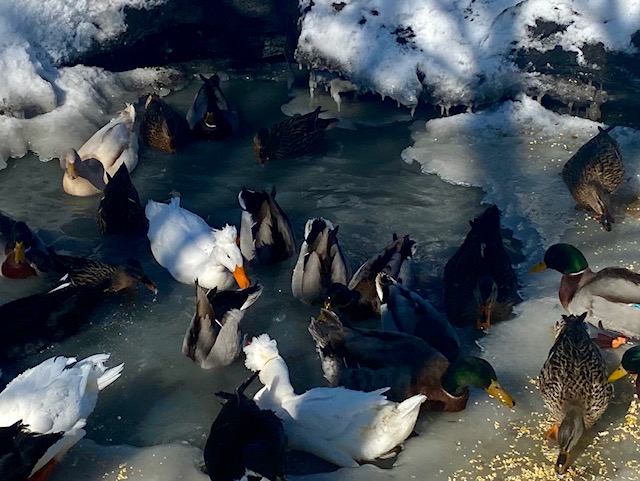
The ducks and chickens did enjoy the melting snow and grass coming out of the snow; they really like having some dirt to scratch in. Everyone was enjoying the sun.

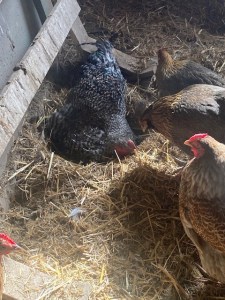
 The chickens don’t like to walk through too much snow. They’ll do a little, especially if they know there’s some dirt beyond it. Except this white chicken.

She doesn’t seem to care about the snow. Kelly calls her “sturdy and hearty”. Yeah, well, she’s something all right. She’s mean too. She will cut you! Reach under her for an egg and she’ll bite and twist and not let go!  

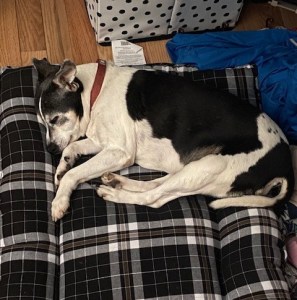
Daughter and I took all three dogs to the vet this week; they all needed shots. And we got ice cream. Also signed papers for the loans for corn and soybean seed. And on the way home, picked up a ton of ‘egg layer’ ration for the chickens. Thank goodness for pallet forks.

We pour a 50 pound bag of egg layer into a container mounted on the wall, then fill the chickens feeders from there. If I leave the bag on the ground, the chickens will peck a hole in it. And I don’t use enough to warrant getting it in bulk.

It makes me think of how much stuff used to come in bags. I’ll be interested in Clyde’s memories of this.

For my dad, I suppose in the 1940’s there wasn’t so much stuff in bags as they used their own corn for seed and there wasn’t commercial fertilizer or feed supplements. In my childhood, we were always going to pick up feed, seed, fertilizer, and supplements. There were always bags of something around.

I remember a truck coming late winter early spring loaded with several tons of fertilizer bags. I was too small to help or maybe in school, but one day the corner of the shed would be filled with bags of corn starter fertilizer. Seems like those were 60 or even 80 lb bags. My dad was strong! I think he worked a lot harder than I do; just the sheer physical labor of everything back then compared to what I do now. When planting time came, he would load those fertilizer bags into the truck and then dump them into the planter every few acres. Those bags were handled 3 times. Now I get it all delivered in bulk truck, put in the wagon, and unloaded via auger. Pretty easy for me.

The milk cows got protein supplements added to their feed. I used to buy that in bags. Fifty pounds each, and I’d get 500 or 1000 lbs. Sometimes 2000 lbs at once; it just depended on the checkbook I think. Eventually I put up a bulk bin and then I could order a ton or two and another truck with an auger would unload it. I still carried bushel baskets of ground corn to the cows, but it was a bulk truck that delivered the corn and unloaded it into the barn. When we picked our own ear corn, we had to grind it before feeding it to the cows. After I went to shelled corn, the co-op would crack it before delivering.  I remember dad having a “hammer mill” to grind up the corn. The mill sat down by the barn and first he’d have to shovel ear corn from the crib into the truck, then shovel the corn in the hammer mill, which pulverized it via swinging metal bars, called hammers, hence “Hammer mill”. (Let’s not forget, he may have had to pick that corn by hand, throw it in a wagon, and shovel it into the crib in the first place! Read more about hammer mills here: https://tinyurl.com/4tjv8ac4

Eventually he bought a ‘Grinder Mixer’, which was a hammer mill and tank on wheels. We took that to the crib, shoveled the corn ONCE into the grinder, added minerals if needed and it all mixed up and it had an auger that we could unload into the barn. I shoveled a lot of ear corn to grind feed. Had to do that every 10 days or so. The mixer held about 5000 lbs.  And you don’t see them too much anymore. Different ways of feeding cattle that are less labor intensive.

My seed still comes in bags, but for the bigger farmers, some of the seed is starting to come in bulk. Soybeans mostly. Sometimes wheat or other small grains depending how they do it.

Before I bought the pallet forks and had this building, When I got chicken feed or milk cow protein, it was put in an old building called the ‘blue building’ because it used to be blue. It was faded and dull white as I remember it. When we picked up the feed from the coop, it was loaded into the truck from their pallets by hand, then unloaded at home, bag by bag into the blue building.  Then I’d haul them to barn as needed, usually 4 or 5 at a time every week. There was a just a lot more daily chores. And it wasn’t “work”, it was just part of the day. I was talking with daughter about that. I never said I was “going to work”, it was just “going outside” and that might mean milking cows, grinding feed, hauling bags, or who knows what.

Have I mentioned how hard my dad worked? So much has changed, so much has gotten physically easier in farming.

What do you think of milk in bags?

More or less bags in your life these days?

Prehistoric Critters

I don’t remember why I asked for a DVD of The Cave of Forgotten Dreams from the library.  I had to get it through InterLibrary Loan so it took awhile.  I have a vague memory of seeing something recently about cave art so that is probably it, but I’m not sure I’ll ever remember for sure.

It was captivating to see the cave art (from the Chauvet Cave in southern France) – the public is not allowed in the caves so it felt a little like getting away with something although the scientists and camera crew did have permission.

The film got weird in a few places, a little disconnected and then at the end it got REALLY weird.  In a “postscript”, the film introduces a nuclear power near the caves and then continues to show the crocodiles who have been added to the warm waters of the plant.  Not only that, but some albino crocodiles became the final focus with the film clearly suggesting that they are mutants from radiated water.  This, of course, captured my interest in a big way.  First off, they weren’t crocodiles, they were alligators – classic u-shaped alligator snouts.  But more importantly, why in heaven’s sake would a nuclear power plant build a crocodile farm?

Of course all my questions were answered when I actually looked up at the screen just in time to see “Written, Directed and Narrated by Werner Herzog”.  I don’t know a lot about Herzog but I have seen enough comments over the years to know that he doesn’t use the same definition of “truth” that I do.  This made it incredibly easy to fact-check the crocodile farm story.  The power plant did NOT build the croc farm; it was built by two crocodile enthusiasts.  They are close to the cave and they do use the water from the nuclear power plant but the water is consistently tested and has never shown any radioactivity.  And the albinos?  Imported from a croc farm in the Southern U.S.; they were albino before they even reached the French waters.  Not radioactive mutants.  None of this really explains the purpose of the postscript of the film, but it was interesting research.

The most noteworthy fact I found is that the French croc farm is not the only place on the planet where crocodiles are benefitting from nuclear waters.  Apparently 25% of the crocodiles in the U.S. thrive among the cooling canals at Turkey Point Nuclear Plant south of Miami.  They are protected, having been encouraged there since the discovery of the first nest back in the 70s.  Fascinating.

Have you ever held a baby alligator or crocodile in your hands?  Snake?  Tarantula?  Anything?

Money, Money

Today’s Farm Report comes to us from Ben.

Happy New Year everyone! Hope you’re staying warm.

End of the year so I’ve collected all the miles and hours from machinery and cars. Vehicle mileage has been down the last few years with Kelly working at home and my having less shows to work on.

My largest tractor; the one I use primarily for fieldwork, gained 48 hours. About average. And the other tractor that does planting, mowing, and snow moving was used 114 hours. Lawnmower got 34 hours of use, and the Gator, 50 hours and 241 miles, which equals 7 MPH which seems pretty slow on average. The 4-wheeler suffered as we drove the gator so much more. It only got 17 miles of use.

Let’s talk about money. Subsidies to farmers have been in the news lately and I thought some of you may have questions. It’s complicated and I won’t pretend to know all the answers or understand all the political maneuvering that may be going on (who does??) but I’ll tell you how it works for our farm.

Easy stuff first. I’ve talked about having land in the ‘CRP program’, The Conservation Reserve Program. I was working for the Farm Service Agency back in the 1980’s when this program was first created. Its point was always to take marginal land out of traditional row crop farming and get it into some sort of soil conservation program. The trick was, if you were already a fairly responsible farmer and keeping marginal land in grasses or hay, it wouldn’t qualify for the program. So it was sort of only benefiting the, shall we call them the ‘aggressive’ farmers, or the ones using poor soil practices. I don’t want to lump everyone in the same category, but that’s how it worked. The applying farmer would suggest the payment / acre he wanted in return. Maybe $200/ acre / year he would get back in return for not farming this land. And then the government determined what it could afford of the acres submitted and everything under, say $180/ acre was accepted. It was a pretty popular program with good intentions and millions of acres were accepted over the years. I think it’s been pretty popular and well done.

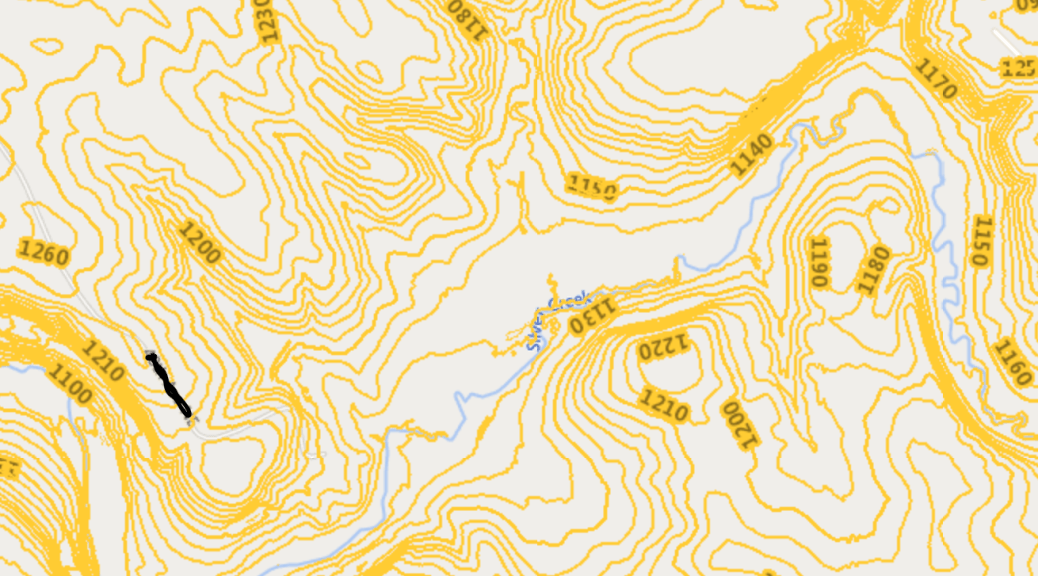
It was 2010 when I offered 14 acres to the program. By this point the rules had changed a bit. I enrolled 14 acres of really prime, flat, farmland. Some of the best on the farm. But it is low, next to Silver Creek, and some years it would be too wet to get planted, or planted late, or flooded out after planting, so I just never knew if it would make a crop or not. Putting it in CRP at least guaranteed a payment of $130 / acre. (The program had a preset price at this point) Less than a good crop, but more than it flooding out. And with no input costs (fieldwork, diesel, seed, fertilizer) it comes out alright. There are some maintenance costs; it’s the field we had burned last spring, and I mow it sometimes in the fall. I took out 3.5 acres when I renewed it for another 10 years.   In 2020, I got $1,824 in CRP payments (14 x 130) and those come from the Federal Government.

Last year, 2020, I got $5,419.77 in subsidies (in addition to the CRP). It’s based on the acres of corn or soybeans we have reported to the FSA that we planted. (Not every crop gets a subsidy. Wheat might. Oats doesn’t) That was the year the former President cut soybean sales to China and crop prices all took a hit. There were several extra payments to make up for that. $5,400 is a lot of money and it really helped my farm cash flow and I’m a small farmer. It would be easy to see bigger farmers getting $54,000 dollars, however their expenses all have that extra zero on the end too. I’m sure there are people taking advantage of the system, but I don’t know how they do it.

I got $1,313 for CRP payments in October of 2021. I added a couple acres this year and all together, it’s paying $137 / acre / year. AND I got $17 as a signing bonus! Subsidy payments this year was $2,080.60. (Plus the CRP payment. AND the $17!) That money came back in April. Honestly, I’m not sure what it was for. They’re based on expected crop prices and usually come in two parts. I think this was part two of last years. Crop prices were better this fall so there wasn’t any extra payments.

The co-op prepared a spread sheet of next years expected prices on fertilizer and chemicals. It’s up significantly from this year. I’m prepaying everything to lock in prices now as they expect more instability and price increases come spring. (Normally I just prepay a few things) I paid $1000 for anhydrous nitrogen in 2021. It’s projected to be $7,000 for 2022. A few chemicals are down a bit, but most are way up. My total projected costs, including the coop doing all the custom applications will be over $26,000. About twice of other years. Again, I’m a small farmer. Add another zero or two for the big guys. And their $54,000 subsidy doesn’t look like so much anymore. I’ll remain optimistic crop prices will stay up and it will rain at all the right times, and I won’t go taking out extra loans for anything.

Not complaining, just telling you how it works.

Pheasants have just started coming to eat corn with the ducks.

Had a bald eagle flying over the farm the other day.

The ducks chose to eat at a new place Friday.

We bought a new heated water bucket for the chickens since we have this bitter cold spell coming on. I’ve used heat lamps before and I’ve used a heated pad the water buckets sit on. Both work OK, but below zero is pretty tough to keep the water open. The coop is an enclosed pen inside another building. When I built the pen I had Styrofoam insulation on the walls. The chickens pecked it all off and ate it. Huh. Didn’t know they’d do that. The heated bucket says it has a 6’ cord. I cannot get it out of the bottom; it seems to be jammed inside, stuck around the supports inside. It was really frustrating me! I spent 5 minutes trying to see in the little opening at the bottom and threatening to cut a hole in the bottom to get the cord out and I got frustrated and headed to the house with it before I realized it’s a bucket within a bucket.  Oh.

They pulled apart and the cord came right out. You gotta be smarter than the bucket, Ben.

Ever kiss anyone special on New Years Eve? Tell us about your favorite Kiss?

Looking For The Midwest

Husband and I left Brookings, SD yesterday to get back home to Southwest North Dakota. We typically go north from Brookings through Fargo, and then west on I-94, but there was a pesky snow storm in the James River Valley in Jamestown and Vally City that would have been distressing to drive through, so we chose a southern route on Highway 212 to Gettysburg, SD and then north to the Interstate just east of Bismarck.

Husband grew up in Wisconsin. He misses the Midwest with its small farms and rain. He spent our time through South Dakota gauging where the red barns ended and the terrain got flat. There, he declared, was close enough to the 100th Parrellel to say that is where the Great Plains begin, and his Midwest ended. I don’t know where the last of the red barns comes into this. I was just glad to be back home, no matter what colors the barns were.

For where do you yearn? Where do you think the Midwest is? What snowstorms have you driven through?

Christmas on the Farm

Today’s post comes from Ben.

It’s the Holiday season. And the season might last over several days; that’s how it works in our family. The immediate family Christmas, then Christmas with one side, then the other, and somewhere in there our family too.

Growing up, Christmas eve, we’d open presents after milking, then go to midnight service. I could never get out of the barn fast enough at night to open presents.

When we took over the farm, Christmas Eve was with Kelly’s family and we’d be the last ones there after milking.

But those nights in the barn, I clearly remember Christmas Eve being a special time down there. I tried to be extra nice to the girls; a little extra hay and a scratch on the head for each of them. The barn was a cozy place at night. It’s warm from the cow bodies, in fact we needed exhaust fans or it would get too humid from them breathing. So it was always a nice warm place in the barn. By the time I finished milking, got the equipment washed up and got them fed, most of them were laying down and they were comfortable, and it was just very nice.  

Walking to the house in the winter with the yardlight and all the usual noises of cattle or pumps running, was nice. It was just a good feeling.

All that taught me the animals should come first; it’s our responsibility to them.

I do my chicken chores first thing in the morning and it’s similar that there’s more chores in the winter than summer. Make sure they have water, break ice or get fresh as needed. Refill feeders. Bedding isn’t really an issue as it lasts a long time for chickens.

And once / week refill the bird feeders too. Do that before I get my breakfast.

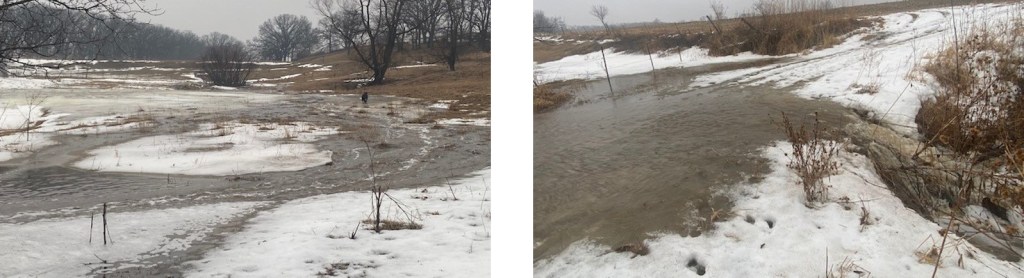
With the cold temps, but no snow, the springs in the swamp are still running, it’s making an ice path that we can’t usually see.

A little too rough for skating, but interesting to see.

End of the year coming up fast. I’ll be recording mileage and hours on all the vehicles and tractors (Machinery goes by hours rather than miles. 10,000 hours is slightly used. Over 50,000 hours is well used.)

Time to update the farm balance sheet for the year too. I love this kind of thing; seeing the changes from year to year.

I’ve had my fill of Christmas music and I’m ready for the 1940’s station to come back to XM radio. My checkbook register is full too; I’ve had this register since November of 2017 and I’m not about to get a new one for the last couple days here. Whatever I have to do yet, I’ll wedge it on the page somehow.

Have you noticed in your own life what you do first? With my bad shoulder, putting a jacket on is an issue some days and I’ve noticed I put my hat on first. Which is a problem getting the jacket on then.

I do my left shoe first. Usually left sock first too, then right. It’s curious.

What do you do first in your routines?

Happy Birds

The warm weather the last several weeks has given us a glimpse of some fun bird behavior.

We have a bird feeder in our backyard that Husband fills with black oil sunflower seeds. We are the only people on the block who feed birds, so our yard is pretty popular, especially given the tall lilac bushes where multitudes can perch. They also like weaving in and out of the twisty grapevines on our deck. There is a very large flock of about seventy sparrows, with several Red Polls, House Finches, Chickadees, Rose and White Breasted Nuthatches, and Junkos who frequent our yard. There are often seven Eurasian Collared Doves on the ground under the feeder, eating what the other birds knock down. A Downy Woodpecker also makes an appearance now and then. They are all really greedy, and feast and gobble as fast as they can. The Chickadees alert the others after Husband refills the empty feeder to let them know that dinner is served.

I cleared out the rhubarb bed the other day, leaving a large area of smooth dirt that the rhubarb leaves had formerly covered. Last Saturday I noticed about twenty Sparrows rolling around in the exposed dirt, digging into the earth, making little indentations in the soil. I guess they were having dust baths, a luxury in North Dakota in late November.

Even more luxurious was the shower they and a migrating flock of Cedar Waxwings had a month ago on the last really warm day of autumn. I set up a sprinkler to water our rhododendrons, bleeding hearts, fern bed, and hydrangeas before freeze up, and we saw the birds flying repeatedly through the spray and huddling on the ground, letting the water cascade over them. The Waxwings made a point of drinking copious amounts of the water that collected on the walkway. The next day, they were gone.

What are your favorite birds to watch? Tell your bird stories. What is your favorite bird-inspired music and visual art?

Light My Fire

In searching for something on my laptop last week, I came across a list of books about dragons.  Looks like I made this list six or seven years ago (last time it was saved was six years back) and I’ve read a few of the books on the list since then.  I’d completely forgotten that I had this list.

Dragons, of course, are widely varied in literature.  My least favorite kind are the mindless, evil dragons (think Smaug in The Hobbit).  I prefer intelligent dragons who can communicate if they choose (like Ramoth in Dragonflight or Temeraire in the Novik series).  My current car is named after a dragonrider of Pern (Brekke – one of the rare dragonriders who can communicate with all dragons, not just their own). 

I also like dragons who adore treasure – not sure why, maybe because it’s such a longstanding bit of dragonlore that it feels right when it is included.  It’s interesting that the Greek dragons who were set to guarding treasure have morphed into beings who lust after gold, diamonds and jewels.  Of course I also read somewhere once that gold is a good conductor of magical energy and that dragons NEED it to exist. 

The biggest problem with this list is that I have already reached the limit of books that I can have on hold at the library – with probably be at least a week before that changes.  Hopefully in a week, I’ll remember I have this list of books I want to read! Maybe I’ll start yet another tab on my reading spreadsheet.

Tell me about a mythical animal that you think might improve our world if it existed!  Or just if you have a favorite mythical animal.

Busy Week

The Farm Report comes to us from Ben.

It was a busy week for the Hain farm. After getting the crops out and the soil testing done, I got all the corn ground chisel plow on Saturday. Bailey rode with me all day.

Sunday morning it was warm enough I could use a hose and jet nozzle and clean off the chisel plow and tractor. (Pressure washer is already put away for winter.) I also finally got the garden fence taken down. The garden had been done for a month of course and I left the gate open so the chickens have been in there scratching around, I just hadn’t time to get the fence down. And it was bugging me so I’m glad that’s done.

I ran out of diesel fuel in the barrel when filling the tractor on Saturday. Off road diesel fuel is dyed red and can only be used in off-road equipment like tractors, combines, or construction machinery. The point of dying it is because I don’t have to pay quite so many taxes on off-road fuel.  As I understand it, a DOT inspector might check the fuel tank of an over the road truck and if there are traces of red dye in it you get a hefty fine. Gasoline I pay taxes, but I also get them refund on my tax returns for the gallons used on the farm. Hence we don’t fill the cars with gas from the barrel. When I was a kid we did, then the tax laws changed. My cost for a gallon of diesel is $2.50, it’s about $3.54 in the stores around here. My big tractor holds 140 gallons of diesel. I know the big 4 wheel drive tractors might hold 350! Crazy. I had the delivery truck fill the tractor, too. There is a long story about summer diesel and winter diesel I’ll skip. I use an additive to make it winter diesel and prevent gelling.

I got 200 gallons of gasoline (a couple of the older tractors, the swather, the lawnmower, the four wheeler, the gator, chainsaws and Weedwhackers’ use gasoline) and 500 gallons of diesel for the two main tractors.   

Also Monday, the quarry and the co-op arrived to spread lime. I was at work but Kelly got some photos for us. A semi would deliver and fill the spreader using an elevator. Then the spreader had the computerized mapping software integrated with the soil tests so they could applied as needed.

I took Wednesday off from “Work” work.  I was able to get my brush mower fixed. Got the blades fixed, and I also realize the timing of the two sets of blades was off. They need to be at 90° to each other. And that was simply a matter of removing one chain, getting them aligned, and reinstalling the chain. Much easier than I had expected. Got the roadsides mowed down, mowed two little parcels that are going to be planted to native grasses next spring, cleaned everything off, and got the mower put away. Hooked on the snowblower and move that into the machine shed.

I hope I don’t need it for several months, but at least it’s in. Got the grain drill all put back together

and tucked that back into place. What a good day. 

The theater renovation is finally wrapping up. I was waiting on one final approval from the fire department about a sprinkler head, which would then let the city inspector sign off on the final permit. I started this the first part of November, some minor corrections to the work done and some bureaucratic red tape means it’s Wednesday before Thanksgiving and we have an audience that night and I’m still making phone calls and poking people to approve this! I did not sleep good Tuesday night. It’s so nice that everything is online these days, finally about 1 o’clock Wednesday I see online that it has all been approved. I did a happy dance in the tractor.

Man, maybe I can sleep again.

I know some of you get so excited about the seed catalogs coming. Hoovers Hatchery has announced their 2022 catalog and a couple new breeds of chickens they’ll be carrying. Maybe I should get some of the Buff  Chantecler or Black Minorca! The ducks and chickens are still good. I notice Rooster #3 has got some size on him and he’s not shadowing Boss Rooster anymore. I haven’t heard him picking fights, but I think he’s strategizing.

We had a Thanksgiving dinner that couldn’t be beat* and had a nice relaxing day. A few minor odds and ends to do at the theater for opening on Friday. Saturday daughter and I will get driveway markers put in. Kelly and I would prefer a nice day with no wind to get snowfence up. Maybe middle of next week.  

Twisted any arms? Talk about when that’s gone poorly. Or well.

How do you feel about Alice’s Restaurant?

*Anyone catch that reference? I listened to it Thursday morning.

Stop and Smell……

The Boy Scout brought the two wreaths over the weekend.  Even though I normally don’t do any decorating before Thanksgiving, it seemed silly to just lay them on a table for a few days, so I hung them up.  One on the outer front door and one on the back porch inner door. 

Then yesterday morning, I spent a few hours picking up, cleaning up, arranging – it had been a while and the downstairs was looking ragged.  Our kitchen trashcan is actually on the back porch (thanks to a string of too-smart Irish setters) so I was opening and shutting the door onto the back porch repeatedly – each time I was greeted with a waft of evergreen.  It gave me a wonderful feeling every time.  My family always did live trees for the holidays.  A couple of years ago I flirted with the idea of an artificial tree and decided against it because I thought I would miss the evergreen smell.

I have other favorite smells.  Two of them are hard for me to admit; as a vegetarian for almost 50 years, it seems somehow wrong that bacon and tuna are high on my list.  They bring back pleasant memories from when I was younger, not from the taste of these things but the experiences surrounding them.  Of course, warm bread smell is hard to beat as well.   Wasband and I once ate an entire loaf in two hours – the first loaf out of our new bread machine.  And chocolate chip cookies.

Any evocative smells for you?