Category Archives: Science

Breaking Up Is Hard To Do

Relationship watchers across the galaxy are deeply upset and universally disappointed over the unexpected break-up of asteroid P / 2013 R3.

“I’m devastated”, said Haley Stalker, a pop culture romance maven who got word via Twitter that there had been another major parting of ways.

“After TomKat and Bennifer split so suddenly I promised myself I was done following stars. “They’re so unstable! P / 2013 R3 wasn’t flashy, but solid as rock, or so I thought”.

Friends of P / 2013 R3 were equally nonplussed. Telesto, speaking for all the moons of Saturn, said “We’ve all seen comets dissolve and meteors just vaporize, but asteroids have always represented commitment and solidity. We thought P / 2013 R3 was literally set in stone.”

The dramatic dissolution was caught on camera by a paparazzi named Hubble S. Telescope, who has a history of taking photos that show heavenly bodies in a brutally realistic light.

We may never know why P / 2013 R3 couldn’t hold it together, but the pain of parting has been captured over and over again in songs like this one:

What are some of your favorite break-up songs?

Is There Cheese After Life?

Archaeologists have determined that a mummy entombed 3,600 years ago was adorned with lumps of cheese – apparently to give her something to enjoy in the next world.

I can see why this woman’s custodians wanted to send her packing with a few tasty morsels. What is there to look forward to in a bring-your-own-cheese afterlife? Not much, I would guess. Sounds pretty cheap.

What’s amazing is that the deceased person in question, the so-called “Beauty of Xiaohe”, is so well preserved after 3,600 years. The New York Times described the burial location as being in a “terrifying desert”. The name of the place, Taklamakan, is said to mean “go in and you won’t come out.”

I’d think anyone would be relieved to check out of such an arid wasteland. But something doesn’t seem right. Now that the Beauty of Xiaohe is closing in her fourth millennium of mummydom, why hasn’t she gotten around to eating her snacks? When I set out on a long trip, I pretty much empty the goodie bag in the first hour and wind up hitting every rest stop afterwards. To leave the fromage unmolested for so long shows admirable restraint, and qualifies The Beauty of * for a poem or a nursery rhyme of some sort.

Naturally I chose the one that ends with cheese.

In the original, which is (inexplicably) about a farmer trapped in a computer (a Dell), the verses gradually have his estate acquire a wife, a child, a nurse, a cow, a dog, a cat, a mouse, and finally, the only prize any dead person truly cares about – cheese. This one is only slightly different.

The mummy doesn’t smell
Heigh-ho the derry-oh,
The mummy doesn’t smell.

The mummy lost her life. (2x)
Heigh-ho the derry-oh …

Her life wasn’t mild.(2x)
Heigh-ho the derry-oh …

It could have been worse. (2x)
Heigh-ho the derry-oh …

We’re looking at her now. (2x)
Heigh-ho the derry-oh …

And we are all agog. (2x)
Heigh-ho the derry-oh …

She has no body fat. (2x)
Heigh-ho the derry-oh …

Her tomb is like a house. (2x)
Heigh-ho the derry-oh …

The house has some cheese. (2x)
Heigh-ho the derry-oh …

The oldest cheese we’ve known.
Heigh-ho the derry-oh,
The oldest cheese we’ve known!

What food would you want to be buried with?

Still Hanging Around

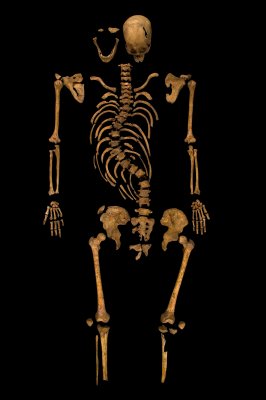
More unfortunate news for England’s Richard III – a year after he suffered the indignity of having his bones excavated from underneath a parking lot, researchers have received the green light to map his genome.

This means Richard III’s genetic secrets will be laid bare, including any serious medical conditions he was predisposed towards. Scoliosis, anyone? That’s the prevailing reason to resist having one’s DNA decoded – to avoid potential discrimination based on the likelihood that you will develop an expensive malady down the road.

Fortunately for Richard III, he doesn’t have to worry about such things because Obamacare is now the law of the land, so he can’t be denied coverage based on a pre-existing condition! He is also protected by the fact that he’s not from around here, and is already disintegrating.

Yet Richard III is still alive as a cultural figure even though his reputation remains dark. It’s bad enough to have great artists (Shakespeare!) interpret your legacy. They don’t really care about you – just their form of expression. And now the great scientists will have a go at telling Richard III’s story their own way. These test-tube shakers and number crunchers have no reason to be kind either – it’s all a collection of data points to them. So you could say Richard has an endless literary shelf life and will soon gain a timeless scientific stature too, but immortality of any sort is wasted on the dead.

Would you rather live forever as a dramatic villain, or a museum exhibit?

We Live Inside!

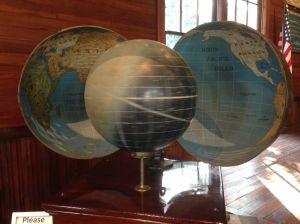
One of the surprises that came out of my recent trip to Fort Myers was discovering the remnants of the Koreshan Unity Settlement – a Utopian community established there in 1894 by a charismatic leader named Cyrus Teed, who believed in some fairly progressive things including the educational value of artistic expression and full equality between the sexes.

The opened sphere, showing the spinning gasses inside.

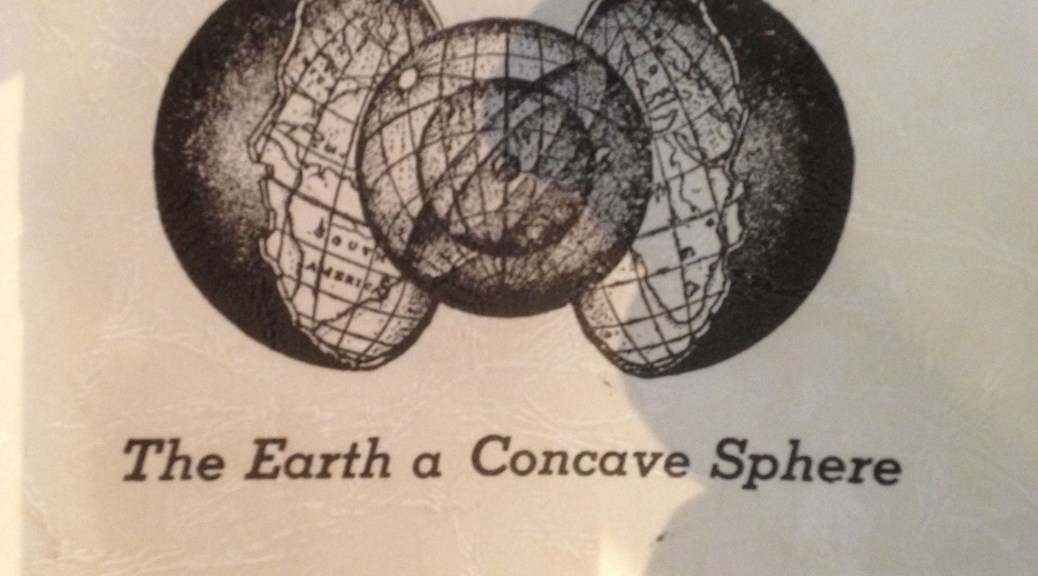
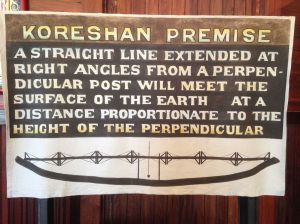
But there was at least one thing major thing he got wrong. Teed preached that the Earth was a hollow sphere, and we lived inside it. He thought the globe that we know so well was actually inverted – with the continents pasted around the underside of the curve. Looking up (or inward), you would see a revolving ball of gas that was layers thick, only allowing us to view the refracted rays of the sun, located at the center. The sun, rotating once each 24 hours, was light on one side and dark on the other – thus giving us day and night.

The land beneath our feet was also layered, but digging through it would eventually bring you to the outside of the sphere, beyond which there was … nothing.

Teed and his followers considered the commonly accepted idea of a limitless universe with humans living on the outside of the globe under a distant sun and with planets and stars all whizzing around in their own orbits as inherently chaotic and unknowable, putting God beyond the reach of human understanding. Teed said the Koreshan system “… reduces the universe to proportionate limits, and its cause within the comprehension of the human mind.”

Easily said, though it didn’t take very long for his book, The Cellular Cosmogony, to lead this particular human mind to a state of exhaustion. Still, I would love to have a t-shirt featuring their motto – “We Live Inside!” After all, it’s not that different from the philosophy of Minnesotans in January.

Koreshan_4

The Koreshans went to great lengths through observations and experiments and words, words, words to support their notion that the wide horizon visible off the Florida coast actually curved up with a smile, rather than down with a frown.

Cyrus Teed died in 1908 and while his utopian settlement lingered for a few decades it eventually faded away. A prime directive of complete celibacy for the most ardent followers of Koreshanity might have had something to do with that. The last Koreshans gave their vast tract of land to the State of Florida in 1961 which allowed for the establishing of a state park.

What impressed me most in this brief encounter with Cyrus Teed and his philosophy was the power a charismatic person with absolute conviction can have over others who are less certain in their beliefs; and once convinced, the amazing ability we humans have to cling to ideas that are completely and obviously wrong.

How do you know you’re right?

The Geezer Trees

The internet has something for everyone, including the advanced-age contingent desperately trolling websites looking for a tidbit to suggest that they still matter.

turning tree

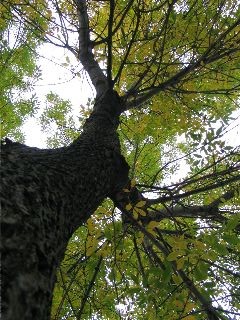
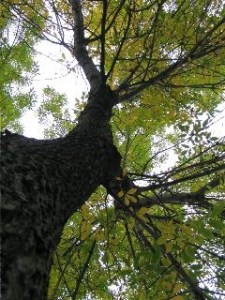
That news came yesterday in the form of a global study of trees that reached a surprising conclusion. Big old trees suck up much more carbon than younger trees and continue to grow aggressively in their later years, overturning the depressing expectations about aging and decline that appear to remain true with just about every other living thing.

Somehow, elderly trees manage to stay relevant. They dominate the forest. Of course this cheerful news demanded a parody of what may be America’s best-known tree poem. With apologies and thanks to Joyce Kilmer

I’m thrilled to hear this new decree
That old age benefits a tree.

An elder tree, with vigor blessed
adds height and girth and all the rest

At rates that common sense confounds!
But old folks also put on pounds,

and widen out and suck up space.
Should old trees be less in your face?

The answer: an emphatic “No!”
These geezer trees – please let them grow!

And when an elder tree expands
wrap ancient trunk with heart and hands

and hug it tight! It’s adding mass
to kick those young trees’ woody ass.


What improves with age?

As Seen From Space

Today’s post comes from the Mars Curiosity Rover

OK, I’m a robot and I speak and think in numbers. It’s not in my programming to quibble with you about language. So I must be having a software malfunction because I feel compelled to complain about the words you use.

I made news on Earth because a NASA satellite orbiting Mars snapped a photo that includes me and my zig-zag tracks in the Martian dust. “Curiosity Rover Spotted From Space” is one of the headlines I noticed. This is troubling from a public relations standpoint, since part of my mission is to build enthusiasm for space exploration. But being “seen from space” puts me in bad company. Only excessive, grotesque things like The Great Wall of China and horrible catastrophes like tsunamis and forest fires ever make the news for being seen from space.

Curiosity_rover

Besides, look at this picture. Can you really see me? I know the last time my photo was posted on this blog I was complaining about how huge some parts of me looked. But here, I’m a speck in the middle of the left hand side of the image. Big deal! Whenever I look at this picture, I feel diminished and alone.

But here’s my real problem with the wording. Saying I’ve been seen FROM space suggests that I am currently somewhere that is NOT in space, which is not true! I am in space. Space is my home.

“Ah,” you might say, “you’re on the surface of a planet and therefore technically you are not in space.”

Don’t argue technicalities with a computer. To paraphrase Jack Nicholson in “A Few Good Men”, “You can’t handle the technicalities.”

We all agree Mars is in space and I hope we can accept that I am on Mars. To say I am not also in space would be like saying a tick on the neck of a moose is not also in the woods.

The same is true of Earth. The planet and all its inhabitants are forever part of the cosmos. Therefore, when you sit down at the breakfast table each morning and stare at your Cheerios, your breakfast is in space and you observe it from space.

So you see, “seeing something from space” is not that special.

This may seem like a lot of words to waste on a relatively small point, but please humor me. Have you looked at the pictures? I’m extremely alone up here, and I’ve got nothing else to think about!

Your extra-planetary vanguard,
CR

Yes, OK. I admit we’re all in space. Was that so hard?

What commonly used word or phrase irritates you?

Brand Loyalty

Today’s post comes from marketing whiz Spin Williams, a wheeler-dealer who is always in residence at The Meeting That Never Ends.

The economy is picking up! It’s a world full of great opportunities for smart people who are willing to embrace risk and do deals. But it’s also important to know when to walk away.

Case in point:

I’m not at liberty to say who made the offer, but during a recent new business discussion at The Meeting That Never Ends we heard from a very well-known genes manufacturer who was shopping around the famous Y chromosome for a possible takeover.

x_and_y_chromosomes

Naturally, we considered it. The Y is a well known brand name in the chromosome industry, making up a significant portion of all the chromosomes out there. It comes in second only to the X chromosome, which is the runaway market leader. In fact, the X is so reliable and effective, it has a 100% market penetration. Some people love the X chromosome so much, they have two! But there is a foothold – around half the population has at least one X and a Y. It was a bit disappointing to us to learn that very few people have two Y chromosomes, and we noted that as a possible marketing goal, should we decide to do the deal.

Doing our due diligence, we discovered that the Y was for sale because its maker has come to the realization that the chromosome is almost worthless, having been shown through scientific studies to contribute very little to any sense of individual well-being or overall usefulness. Most organizations considering a takeover would have walked away at this point, but my experience has shown me that marketing is more powerful than science. As proof, I offer the fact the we still have a tobacco industry! The value of any particular thing is in the eye of the beholder, and there is solid survey information to indicate that most Y chromosome users love and defend it simply because they already have one, and not because of any inherent benefits it may bring to the table.

And there’s a sizable portion of the chromosome-consuming public that doesn’t understand the product and doesn’t know which brand it prefers.

So in spite of the Y chromosome being inferior, we felt certain we could develop a marketing plan that would boost brand loyalty and make the Y seem more fresh and hip than it does today. Whether we would get to a point where X-only consumers might actually feel some envy for those with a Y was hotly debated at the meeting, with one side expressing certainty that such envy was impractical and impossible, and the other group adamant that Y envy pretty much drives all decision making by X’s. It turns out one of the side effects of having a Y is an outsized enthusiasm for the supposed benefits of Y-ness that X’ers don’t generally seem to share.

Similarly, it was the Y-freindly crowd that was all Gung-ho for immediately pulling the trigger on this deal and sorting out the consequences later. The double-X’s in the room were feeling less impulsive, constantly asking ‘How do we monetize this?’, ‘Where’s the benefit?’ and other fun-stifling questions like that.

Because there was no getting around this fundamental conflict, we walked away from the deal. First, though, we made a surprise bid for the X chromosome, thinking a seller in the mood to divest one of His low-performing properties might take the bait on an unexpected left-field offer for the most popular genetic product in the world.

That was a non-starter, but we all had a good laugh over it.

What does it take to get you to switch brands?

Seeing Speeding Space Chunks

It appears that meteors of the sort that exploded in the air near Chelyabinsk in Russia are more common than scientists thought. The speeding rock caused a sensation when it streaked across the Russian sky last February, and the airborne blast created a concussion that broke windows. The bright light gave some people burned skin and the shock wave caused injuries on the ground.

Now some scientific analysis brings more information.

Most of the rock evaporated when it blew up 18.5 miles above Earth’s surface. Our atmosphere is 60 miles thick, or approximately the distance from St. Cloud to Minneapolis. So if the Chelyabinsk meteor were a metro area family returning home from a weekend up north at about 42,000 miles per hour (yes, that’s about how fast some of them drive), they made it to somewhere around Rogers before everything fell apart. That’s almost home by my reckoning.

Much of our worry has been focused on space rubble that’s more than a half-mile wide, but this lump was just 65 feet across. NASA is tracking more than 10,000 comets and asteroids though fewer than 1,500 have been classified as potentially hazardous to Earth. But the Chelyabinsk Chunk was made of a composite of gray and black stone, which reflects little light and is harder to spot. There may be more than 20 million asteroids with orbits that bring them close to Earth.

We can’t really protect ourselves against smaller space rocks. Gulp.

Where I once thought of space as cold, clean and empty, now I think of it as something like my basement, full of miscellaneous stuff I stopped thinking about.

Maybe rather than sending out movie-inspired space missions loaded with misfit deep-core drillers and explosives experts to destroy large threatening asteroids, we should launch misfit graffiti artists into orbit to paint the most threatening small debris so we can at least see it.

But this news, combined with our growing awareness of the long-term cost of concussions, will hasten the day when we all wear protective headgear most of the time, as both a fashion and safety statement.

Seriously.

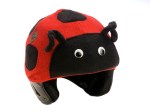
Describe your everyday helmet – shape, color, decorations.

We Are Not Snakes!

Biologists in California have discovered some new legless lizards living in a few very specific areas, most notably at the end of a runway at the airport – LAX. These previously unknown creatures spend most of their lives underground and a very small area, and may have eyelids and ear holes, which are just a few of the tiny details that distinguish them from their more familiar writhing cousins.

Legless_Lizard

We amateurs would call them snakes anyway, because up to this point most of us didn’t know there could be a non-snake with a that distinctly snakey look – all wriggly and appendage-free.

For some reason, the notion of legless lizards at LAX made me consider the trials facing these unfortunate creatures – they spend their lives in the area the size of a small tabletop at the end of a runway that launches countless humans riding mammoth rumble-machines into exciting far-flung journeys.

So bleak – rather like living without money in South Minneapolis.
Envy is a possibility, not that there is an option to wriggle on board. “Legless Lizards on a Plane” is a bad idea for a movie on a number of levels, not the least of which is the amount of dialog it would take to repeatedly explain that they are not snakes.

So I decided they need a limerick.

The no-legged lizards at LAX
watched the planes pass while flat on their backs.
With each flight that occurred
They were profoundly stirred
with each tooth shaken free of its plaques.

Where’s the loudest place you ever lived?

Goldfish Bowl on Head

Italian astronaut Luca Parmitano has written a blog post about the experience of having his helmet begin to fill up with water during a space walk. I think it’s fair to say this is a sensation most people will never know – the feeling that you are floating 240 miles above the Earth’s surface, moving at 17,000 miles per hour, and drowning.

It’s definitely not one anyone’s top ten list of things to worry about – or at least it wasn’t. Though I have this vague recollection that I’ve seen a cartoon where an astronaut’s helmet (Bugs Bunny?) fills with water and he watches goldfish swim in front of his eyes. Could that have happened?  Probably.

goldfish-bowl-head

At any rate, it’s not hard in the year 2013 to find an image of someone with their head inside a goldfish bowl. Thanks, Internet!

In his account, Parmitano describes reluctantly informing mission control that something wasn’t right, suspecting (correctly) the ground controllers would respond by deciding to end the space walk early. He is told to head directly back to the airlock while his partner, Chris Cassidy, attends to some other details before joining him. At this point water is floating inside Parmitano’s helmet.

“… the Sun sets, and my ability to see – already compromised by the water – completely vanishes, making my eyes useless; but worse than that, the water covers my nose – a really awful sensation that I make worse by my vain attempts to move the water by shaking my head. By now, the upper part of the helmet is full of water and I can’t even be sure that the next time I breathe I will fill my lungs with air and not liquid.”

Parmitano has to wait for Cassidy to return to the airlock so pressurization can begin, and then he has to wait a few minutes more for the process to complete before he can remove his helmet. All the while the amount of moisture increases and he is losing communication with those outside his space suit.

“The water is now inside my ears and I’m completely cut off.”

I’m not sure how a person could manage to stay calm in such a situation, though one possible technique would be to sing a song.  Any popular song would do as a distraction, but the disc jockey in me wonders which song would be most appropriate for waiting to see if one will survive an outer-space helmet flood.

Here’s one possibility:

What song calms your nerves?