Category Archives: The Baboon Congress

Road Worrier

Kudos to everyone who responded to the pitch for guest posts yesterday. I’ve been hearing from people during the past few weeks with generous offers of surplus posts to give me some extra time to adjust to my new job and some extra projects that are chewing up the afternoon and evening hours. Bless you!

One offering that came in yesterday was so good, the moment I read it I knew I wanted to post it today! Many thanks to today’s substitute host, Steve.

The car of my youth was a 1947 Cadillac. It was a queer choice of automobile for my family, being both impractical and costly to maintain. But my dad got the Caddie at a low price because of a series of events that are complicated and ultimately tragic, so I won’t go into them now. And although Dad was no car snob, this car appealed to the child in him.
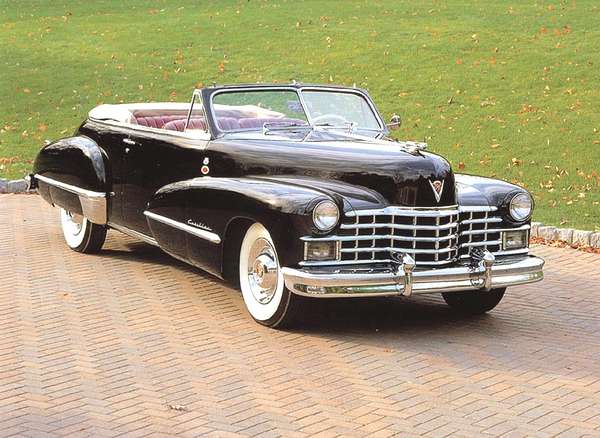
He was delighted to find, for example, that the Caddie didn’t have a hood release in front or a gasoline filler cap in the rear. Dad would pull into a gas station and just grin while the attendant walked around and around trying to figure out how to get the hood up or the gas in.
The trick for lifting the hood was to push up on the hood ornament, which was a stylized woman with wings. When the Caddie was new we had to whack the “Ladybird” ornament pretty hard, and in later years we had to give the Ladybird one hell of a clout on her chin. Dad found that funny, too. To put gas in, the gas station attendant (I know that dates me) had to lift the right taillight assembly to uncover the filler cap hidden underneath.

1947 must have been the first year Cadillac began experimenting with hydraulics. The transmission was a very early and buggy hydraulic system. Our windows were hydraulic, but finicky, so once you put the windows down they were going to stay there for months until the next mechanical overhaul. Worse, the convertible mechanism itself was hydraulic and unreliable. Putting the top down was foolish, for the chances were more than even that it wouldn’t go back up. And then there was that night we went to the Ranch Drive-In Theater and decided to put the top down. The top lurched into the night sky until it was pointed straight up, and then it refused to move an inch either way. The outraged honking of all the cars behind us is something I’ll never forget.

The ’47 Caddie became my car to drive on short hunting and fishing trips around Ames when I got my driver’s license. And by that time the Caddie had a new trick. The engine would shut down after 16 or 17 minutes of driving. Since my dad sometimes drove the Caddie 8 minutes to his office, he refused to believe my stories of engine trouble. I complained a whole year before he tried to drive it 16 minutes and learned I had been right.

The Caddie engine shut down one lovely May day when I was out with buddies Nick and Mike. We couldn’t get it going again, and we were out in the country where I couldn’t call for help. But there was a farm house right up the hill, so we climbed that and knocked on the door.
I almost lost my voice when the door opened. There about five young men in that farm house, all looking like the most lethal biker gang on earth, with tattoos, naked chests, bizarre hair styles and black leather. These guys looked meaner than the mutant hillbillies of “Deliverance” on a bad hair day. I wanted to run away, but I had just knocked on their door. I quaked out my request for help, and this bunch of psychopaths agreed to give me a push.

You might be thinking: but you can’t push a car with an automatic transmission. Indeed, that is what everyone said. But I had just read an article in a paper that said if you got the distressed car above 47 miles an hour and dropped the tranny lever into D, she might fire up.
We got in the Caddy and the gang of escaped convicts got in some kind of hopped up truck and began pushing us. Has anyone driven country roads in Iowa? They are all covered with limestone gravel, which makes a good road unless you get up speed or try to turn left or right, at which point the gravel rolls under your tires like ball bearings. And we were on a serpentine road next to the Skunk River.

By the time we were up to 40 mph the bumpers of the two cars were sawing back and forth wildly and we were drifting from one road edge to the other, inches from disaster. When we got to 50 I dropped the transmission into gear, but nothing happened. Then I realized I hadn’t explained a “Plan B” to these leather-clad father rapers. They were still on Plan A, and their only thought was to keep pushing me faster and faster. Now the old Caddie was slewing madly from one curve to another, throwing gravel way out past the ditches. I was past thinking about starting the Caddie, for it was all I could handle to keep that old beast from drifting into a ditch. Somewhere near 60 mph the engine kicked in, and then I had to floor it to let my friendly sociopathic Good Samaritans understand that I was on my own power.

Did you ever drive a car with a quirky personality?

Mutual Admiration/Opposition Society

Today’s guest post comes from Clyde.

I am a devoted re-reader of the 1974 book Staggerford by the Minnesota writer Jon Hassler.

I admire the honest but still satirical image of the professional life of a secondary English teacher, which Mr. Hassler once was. It has a delightfully real and satirically-portrayed faculty party and faculty meeting. Also, equally honest is the portrayal of the sad lives some students are forced to endure. As a lucky side-light for me, I have met the teachers who were the models for two of the characters in the book. He got them exactly right.

But when I re-read it every two years or so, I more and more admire the character Agatha McGee, the main character’s land lady. Miss McGee is old-fashioned and conservative, in the true sense of the term of one who does not want things to change, ever. She is a devout Catholic who still uses her ancient Latin Missal. When she passes the peace in church, a modernism she resents, she says “Pax.” She is a sixth-grade Catholic school teacher who dresses and runs her classroom the way teachers did in the 1920’s. She is dark and broods over rain, sin, and the moral laxity of modern poetry. She later becomes the main character in two subsequent books which have never quite worked for me.

As a dedicated change agent in education, and one open to modern adaptations in religion, I should dislike her. But instead I am drawn to her and the clarity and wit of Hassler’s descriptions of her. I suspect he feels a similar contradiction in his attitude towards her. It is the strength of her convictions, her underlying humanity, and her take-charge-in-a-leadership-vacuum ability which so strongly affect me.

I hope I am a better liberal, well, moderate liberal, for having met her.

When have you come to respect, admire, or even love someone, real or fictional, whose opinions or attitudes contradict your own?

Uncommon Knowledge

Today’s guest blog comes from Sherrilee.

As many of us on the Trail have discussed before, as we get older, it’s an interesting phenomenon that information that used to be part of our cultural lexicon has passed out of usage. As the mother of a teenager I am constantly reminded that the younger generation doesn’t have the same cultural knowledge that my generation has.

Lucretia

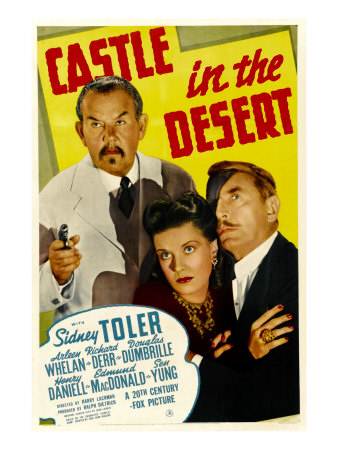
When I was a kid, Lucretia Borgia was well-known as famous poisoner. I didn’t know much more about her except that she had lived in the olden days and wore a big ring that opened up to deliver deadly poisons to her enemies. In fact, I remember a Charlie Chan movie, Castle in the Desert, in which the femme fatale was a descendant of Lucretia and had inherited the venomous ring (which, of course, was the murder weapon). I have since read up and learned that poor Lucretia Borgia was greatly maligned and probably didn’t do any of the dastardly things that used to be “common knowledge” about her, although her father and brother were certainly very poor role models for anything remotely resembling nice guys.

Although she was born out of wedlock, her father, Pope Alexander IV, didn’t hesitate to use her for his political gain. He married her off repeatedly to political allies beginning at a young age. Then when the political winds shifted, he and her older brother Cesare arranged various endings for those marriages (annullment and murder topping the list). Her final marriage survived her father’s ambitions (and life) and she lived the remainder of her life in Ferrara. She died from complications of childbirth in 1513.

She was just thirty-nine

In my job, I arrange a lot of functions in hotels throughout the world – welcome receptions, breakfasts, theme parties, meetings. About 10 years ago, I was working with the Westin St. Francis in San Francisco and arranging the final night dinner for a small group. In discussing the evening, I asked where my event was scheduled and my contact replied “in the Borgia Room”. We finished our conversation but as I hung up the phone, I turned to one of my co-workers and laughed… “I’m not sure if I were one of my participants, I would want to have my final night dinner in the Borgia Room.”

The Borgia Room

My co-worker, who is not that much younger than I am, looked at me blankly. Not only did she not get my joke, but when I explained who Lucretia Borgia, it didn’t even ring a bell. I went on a small surveying trip around my department and with the exception of my boss, no one had heard of Lucretia Borgia. I was dumbfounded to realize that something I assumed was common knowledge was NOT.

My group’s dinner went off without a hitch and no one seemed concerned about eating a meal in the Borgia Room. But I have never forgotten it!

What things used to be common knowledge in your world, but aren’t anymore?

N.A.T.S.

Today’s guest post is from Renee Boomgaarden.

Our town has a wonderful vocal teacher. “Kathy” (not her real name) is a conservatory trained soprano who found true love with a local backhoe operator and successfully blended marriage and motherhood with the work of a vocal performance major. She teaches on occasion at the local college, performs with regional operas and civic choruses, and has a private vocal studio.

Kathy is really gifted at nurturing young voices and picking just the right material to challenge and inspire her students. This April, three of her oldest high school students (my daughter, daughter’s best friend, and another local girl) participated in a juried competition sponsored by the state chapter of NATS, the National Association of Teachers of Singing. The event was held at NDSU in Fargo while the Red River was cresting. Kathy is a member of NATS and participated as one of the nine judges. I drove the three girls to Fargo, along with best friend’s mother who also was the girls’ accompanist.

The singers were divided into competitive categories based on gender and year in school. Our girls were lumped in the one high school category. Most of the singers were college undergraduates, with a few singers in the graduate student and adult categories. There were separate categories for those singing Broadway musical numbers. Most of the participants sang opera arias and oratorio solos, with a few art songs thrown in. All singers started performing at 8:00 am.

It’s quite something to hear and see about 60 anxious singers preparing to compete that early in the morning. Practice rooms were at a premium. Most of the women wore rather daring and flamboyant cocktail dresses and very high heeled shoes. (By the end of the day, most of the women were walking around in bare feet). The men wore somber suits and ties. Once the 8:00 round was completed, the judges decided who would go on to the 10:30 round in which more singers would be eliminated, and so on through the 2:30 round, until the 4:00 final round in which the three best singers in each category would perform and be evaluated by all nine judges.

At 8:00, our girls were judged by two men who wrote furiously while the girls sang. They were finished by about 8:30 and they fell asleep in the van in the parking lot for two hours. Tension runs high at these events and those few minutes of singing wore the girls out. Best friend’s mom and I spent nap time listening to other singers and watching the weeping of those who were eliminated and the excitement of those who were sent on to the other rounds.

Our girls were the only high school students at the competition. Best friend has a phenomenal voice and she was the only one we expected to make it to any of the other rounds. Much to our surprise and delight, the judges decided that since there were only three high school students, all of our girls were automatically forwarded to the final round held in a lovely and intimate recital hall.

The Steinway grand took up most of the stage. The voices in the final round were truly beautiful and I don’t know how the judges decided between them. My daughter was the youngest singer in the competition. She is an alto, aka mezzo soprano at these events. Her voice is just developing strength and range. It was so interesting to hear how the voices matured as the singers got older, even among the college-age singers.

The last singer was a graduate student, a huge, barrel-chested man who closely resembled Pavarotti and looked like he was quite ill. He struggled to the stage, got himself in role, and and filled the room with an enormous, powerful baritone. He then struggled back to his seat and looked like he was going to collapse.

Daughter was awarded $10 for making it to the final round. The judges’ comments were all encouraging and kind. I am informed that she wants to do this again next year and she insists she has to have a new cocktail dress for the event. She feels she is too tall and her ankles too wobbly to wear high heels.

What have been your experiences being judged?

Steerage Song

Today’s guest post is by Beth-Ann.

Early this month, Dan Chouinard and Peter Rothstein premiered a musical docu-drama (Peter’s word) telling the story of immigrants who traveled through Ellis Island. Steerage Song is a powerful homage to what is lost and gained by immigrants.
Beautiful voices sang the words from Emma Lazarus’ poem inscribed at the Statue of Liberty

“Give me your tired, your poor,
Your huddled masses yearning to breathe free,
The wretched refuse of your teeming shore.
Send these, the homeless, tempest-tost to me,
I lift my lamp beside the golden door!”

And like John McCormack in this video the talented cast sang about the Beautiful Isle of Somewhere.

I was moved by this production for many reasons, but one of the big ones is that I am from an immigrant family. All of my great grandparents, my grandmother, and my son are immigrants. They came from Ireland, Russia, Germany, Austria , and Korea to this foreign land where they learned a new language, new jobs, and how to add their potatoes, kreplach, and kimchi to the melting pot that is America.

I am also a migrant. I was born in Japan on American soil and didn’t come “home” until I was 9 months old. Since that time I have lived in Michigan, New York, North Carolina, Virginia, Maryland, Massachusetts, and Minnesota. I think this Land of 10,000 Lakes in My Isle of Somewhere.

We are all immigrants and some of us are migrants too.

What has been your family journey lit by the lamp at the golden door?

The Matchbox Tree

Today’s guest blog is by Sherrilee.

My dad didn’t go to law school until I was born so didn’t settle into his career until a little later in my life. One of the results of this was that we moved around a lot when I was a kid. This meant I was ALWAYS the new kid on the block and I struggled to find friends and fit in.

When I was five, we lived on West Cedar in Webster Groves, Missouri for about a year. It was a great old house on a tree-lined street and as a family, we went through quite a bit in that house. My younger sister had her open-heart surgery when we lived there. My mother survived scarlet fever in this house and I learned to ride a bike on the street in front.

But my favorite memory of living on that block was being befriended by the little boy who lived across the street. His parents had welcomed us to the neighborhood early on; his name was Bobby and he was a year older than I was. There weren’t any other kids on our block that summer (except my sister who was too sick to play outside with us) and this was back in the day when you made do in your neighborhood. You just didn’t get driven around by your parents for play dates back then.

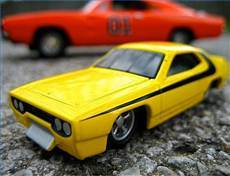
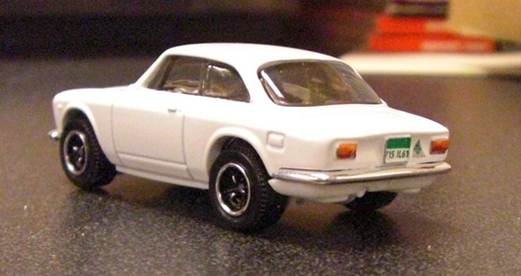
Bobby had a huge collection (or so it seemed to me at the time) of matchbox cars, all different shapes and colors, that he kept in a big shoe box. He knew all the names of the different makes of cars and could tell you when he got each one. He could play with those cars for hours and he invited me to join in his adventures. He did have a little track for the cars in the house but the hands-down best place to play was around the base of the big tree in front of his house. You know the kind of tree I mean – one of those trees with the root systems jutting out of the ground and winding all around. It was the perfect setting for all our matchbox action. We drove the cars all around, up and down the various roots and even placed popsicle sticks across some of the roots to make carports and caves. We had quite a few different scenarios to play out, but it seems that many of our games were spy games, with one spy chasing another all around the tree, in and out of our little caves. It never seemed to bother Bobby that I was a girl and I don’t remember our folks worrying about how much time we spent playing with those cars that summer. My family moved away that fall, but that summer of the matchbox tree still remains as a sweet childhood memory for me.

What childhood game brings back good memories for you?

june splendor

Today’s guest post could only be by tim.

june is my favorite month.

the newness of vacation has the kids all a flutter and the weather is always pretty darn close to perfect. the birds are singing and the flowers are blooming. this is the way the world is supposed to be.

minnesota which gets a bad rap december and january could not make you prouder than it does in june. loons and ferns and thunderstorms and lakes and outdoor festivals and art fairs and parades and celebrations.

june was the beginning of the time of year that meant growth. when i went to school i would leave the day after school ended. vw van for the westward trip. the best travel happens before the 4th of july. It is like having an exclusive on all the wonderful places in the world. Ely, leach and dl are the spots that come to mind but I enjoyed the duluth blues fest for a couple years 20 years ago and the kayak trip to brule every first weekend in june for 20 years.

Years later it was Montana on route to many other places Canada. west coast zig zagging the rockies ( my favorite ) and all the while realizing I had the great luck to be able to do this and should savor it now before the responsibility of life aced me out of the ability to go. I realized later that I have a responsibility to pass on the ability to camp and vagabond to roll with the vibes of the moment in whatever moment you find yourself in. it is where I truly excel and among the best stuff I teach to my children.

Winding through the back roads I often don’t know where I am while I am there. It doesn’t matter to me at all. It is the moment not the details . Montana Idaho Utah Wyoming Colorado Arizona New Mexico then finish it up with the Washington Oregon California part of the trip wonderful places all but I realized after al my travels that Minnesota is the part of the world is where I have the perspective I enjoy. Never realized it more than hanging in Atlanta for a couple of weeks.

I haven’t gotten out much in june for a couple years with baseball and other summer commitments but I do love the memory of taking my oldest kids out on the road 3 or 4 days after school ended and road tripping it for three or 4 weeks to nowhere in particular for our time together. Nice way to do it. Maybe its time to put an x on the calendar for this summer before it all gets spoken for.

but june is the best.

what do you prize most about this time of year?
what do you make certain to make time for and never miss?

The Low-Speed Chase

Today’s guest post is by Steve Grooms.

Crosby Farm Park is a former farm turned into a 736-acre urban park. It lies along the east bank of the Mississippi River just below Hidden Falls Park, across the river from Fort Snelling. Crosby includes almost 7 miles of trails, a boardwalk over a marsh, a long river shore and two small lakes.

It has critters, too. It was well known for years that there was a coyote pack in the park that was kept alive by a diet including rabbits, muskrats and unlucky house cats from the homes just off Shepard Road. On my first visit, I saw a gray fox (a tree-climbing variant of the usual red fox). I also know for a fact Crosby was home to a black bear for a while in 2001. Does a bear poop in the woods? Yes, and on the walking paths, at least that year.

Crosby is many things, but what it is not is a dog park. That is, any dog down there is supposed to be on a leash. I’ve always blamed the Russians for that. The park is used heavily by Russian immigrants, and they have a terrible opinion of dogs. If an unleashed dog approaches someone with a sweet smile and wagging tail, and if that person nearly faints away with fear and disgust, you’ve encountered a Russian.

In spite of the rules, Crosby is really attractive to dog owners. Dogs can sprint along the river beach and swim for sticks. The park is so big a dog gets to roam a lot without encountering other dogs or people. It is just a pretty place and great playground for people and dogs. And if you hike down there during low-use hours, you’ll probably not see a Russian or any other human. There’s no harm in that!

There is harm, however, if you get caught. It is risky to run your dog off leash in Crosby even if you are in remote areas of the park where others don’t go. At the end of your hike you have to get back to your car in the parking lot, and that means you have to walk where park rangers often go. When a friend got caught with her golden retriever off his leash, she was fined $75. When she got caught again, the bill went to $100. That’s a lot of dog food!

I’ve allowed my English setter, Katie, to run off her leash in Crosby since she was a puppy just a few months old. She doesn’t range far, and she is the sweetest dog I’ve known in a lifetime among dogs. That means she doesn’t intimidate anyone except a freshly-immigrated Russian. I’ll admit it feels spooky to walk around looking out for someone who could tag you for $100, but I did it for years with no close calls.

Katie and I took a hike in Crosby in the winter of 2008. Because the woods were full of snow that had gone through several melting-freezing cycles, all the paths were covered with treacherous ice. I adapted to that by lashing on “traction devices,” a sort of rubber attachment to my boots that carried short bolts like the studs in winter tires. With a traction device you can walk normally on ice without slipping or falling.

At the end of our walk, Katie and I were on the return loop about a mile from the parking lot. Out of the corner of my eye I saw that a large man was following us, a large man wearing a chartreuse vest. Adrenaline hit my system as I tried to think of anyone who might wear a chartreuse vest except a park employee. Maybe this was just someone who was checking the health of the place, but the odds were good that he was a ranger with a pad of citation tickets in his pocket. But I was ahead of him by 200 yards or so, and I had good traction.

It was a fascinating problem. I had to get to my car before he caught up with me, and I had to get there with enough time to throw Katie in the back of the car and make my getaway without getting caught. Was my lead good enough for all of that? Probably not. But if I walked at a normal pace I could pretend I wasn’t knowingly breaking the rules. Authority figures in Minnesota are more likely to issue warnings than fines if they think you were dumb enough to break the laws. Or putting it the other way around, if you run and skulk and make it obvious that you are trying to get away with something, even Minnesota authority figures can get ticked off.

We came to a fork in the road. I went left, not taking the short path to the parking lot. The path I took went through deep woods, and it was used by few people. Without letting my pursuer know it, I turned just enough to peek behind me. Dang! The guy in the vest was still on my trail, having taken the path in the woods like I had. The evidence was mounting that I was his quarry.

Even while struggling to avoid a $100 fine, I could see the humor of my dilemma. I had to make good time, flying over the ice, without looking like a guilty person. I was a bit like the duck that seems placid above water while he is actually madly paddling beneath. And I thought of the OJ Simpson low-speed chase. I was walking and the ranger was walking, but we were both trying for as much speed as we could get without breaking form and actually running. In spite of my casual body language, arms gently swinging, I was panting by now.

As we neared the parking lot, a fellow got out of a white car and headed down the woods path right at us. With this fellow were a black Labrador and some sort of gray mutt.

“Hello!” cried the newcomer. “Do you know how I can get down to the beach?”

“Just keep going,” I said, “and turn left when you get to a T in the trail. You’re going just the right way now!” This guy with two off-leash dogs was going to run smack into the ranger.

As I passed the newcomer, I smiled broadly. “Damn! You wouldn’t believe how happy I am to see you down here today!”

Hair Cuts Before Pay Cuts

Today’s guest post is by Donna.

Every 6 to 8 weeks I spend close to 2 hours and a bunch of money at a beauty salon called, The Stylist. It always goes pretty much the same way.

When I arrive, Gary, my stylist, greets me with a smile and escorts me back to his station. He makes a thorough assessment of my hair by running his hands through it and asking, “How has this cut been working for you? Have you noticed any problem areas? How have you liked the color? Are you thinking you’d like to make any changes?” Then he disappears for a few minutes and reappears with a bowl of coloring solution that he masterfully applies, separating the hair into sections and sweeping the brush upward to ensure complete coverage. It feels refreshingly cool and its fumes immediately clear my sinuses and cause my eyes to water and blink enthusiastically.

All the while he engages me in fascinating conversation. We visit about his back surgery, his parents, his herbs, his new sofa, and Mike and Sassy. (One of these is his Pomeranian and one is his partner. I can never remember which is which.) He asks me about the happenings in my life and I share a couple of anecdotes about my first graders and he laughs like I’ve said something hilarious, but we both know it wasn’t that funny and that my love life is still dormant. Next he brings me a bottle of water and coffee and some magazines to help pass the time while the color processes. I drink the coffee and have a sip or two of the bottled water, but no more, because I will take the rest of it home to share with my cat. Then I read a magazine until I nod off.

When Gary returns he gently rouses me to my feet and leads me over to the sink. This is my absolute favorite part because after the rinse, he caresses my head for an entire 60 seconds, using a massage potion fused with pomegranate and pesto.

All too soon it’s time to go back to the chair for the cut, and at first I watch him very closely because if I could learn how to do this myself, I’d save so much money and I truly do need to scale back because of the pay cut I have to take next year, thanks to our governor and legislature. Then I start visualizing the kinds of punishment that await them in the afterlife, and before I know it, Gary‘s moved on to the blow dryer and I’ve forgotten all about that impractical notion.

I compliment Gary on his remarkable ability to transform my fine limp hair into a temporary voluminous mane. He responds by holding up a bottle of heat-activated spray gel that smells like strawberries – apparently he applied some during my sadistic daydream – and hands me a ten percent-off coupon for any product in the store this week only! Then he says what he always says, “This color looks fabulous on you! I am so glad we let your hair grow longer!” And I say what I always say, “You’re the master!”

Then I go up to the counter and pay my bill and leave Gary a liberal tip. It may or may not surprise you to learn that I also splurge on the strawberry styling product. I do this not because I think it will actually give me salon results at home, but because it smells sooo good and because my pay cut won’t go into effect for three months yet.

How do you justify luxuries that are totally worth it?

The Duck Walk

Today’s guest post is by Jacque.

Tuesday morning I went to the gym at about 7:00am. I was still a little groggy, waiting for the coffee to kick in, as I wandered toward the door of the community center when I heard hissing. To the right next to a bush was a Mama Duck protecting at least 10 little fluff ball chicks. And that Mama was MAD. Clearly I had committed a duck faux pas by thoughtlessly walking too close.

One of the most fascinating things about living in the Twin Cities is the population’s attitude towards these broods of ducks and geese each Spring breeding season. Normally fast moving traffic on the interstate will slow to a crawl, then a full stop, to allow a misdirected Mama and her babies to clear the road. These are drivers who sometimes seem willing to run their own slow Mama off the road.

In the mid-1990’s when I worked at a local Chemical Dependency Treatment Center for teenagers and young adults there was a Mama duck who returned to an interior outdoor courtyard of the facility every single Spring to build a nest and raise her family. The facility custodian would haul out the kiddie pool each spring, install it in the courtyard filled with water then place a plywood ramp up to the pool so the ducklings could learn to swim. These ducklings learned to walk up the ramp then jump into the pool for swimming lessons. Our teenage addicts stood for hours watching this through the window. Soon they would have to learn to swim in life stone sober.

When ducks could swim and walk the facility Executive Director would announce the date of The Duck Walk a week in advance. Each treatment group held Duck Walk Orientation so the kids would know what to do! During the duck walk every juvenile delinquent in the place was responsible for holding his or her piece of large cardboard in just the right place so the Mama and Family could be escorted through the building without escaping, then out the door. These juvenile delinquents and addicts found this event thrilling, often mentioning it as a highlight of the rehab program.

Last year on my way to work a goose family was confused and stuck in the middle of a four way stop. Traffic was carefully edging by them, slowing, stopping. When my turn came at the green light the family was positioned in a place where I would hit them if I proceeded. No one was moving while the panicked Mama tried to get the goslings off the road. But one crazy driver behind me wanted to MOVE NOW and laid on her horn. Not one other car moved to allow that driver through. Did she really want to run down the geese? Apparently so.

However, that lady is the exception. If you want to see living beings treated with compassion, gentleness, great care and loving kindness come to the Twin Cities during the Spring when Fowl run our roads and nest in our yards.

Do you have stories of Families most Fowl?