Hard Times in Hollandale

Today’s post comes from Jim Tjepkema

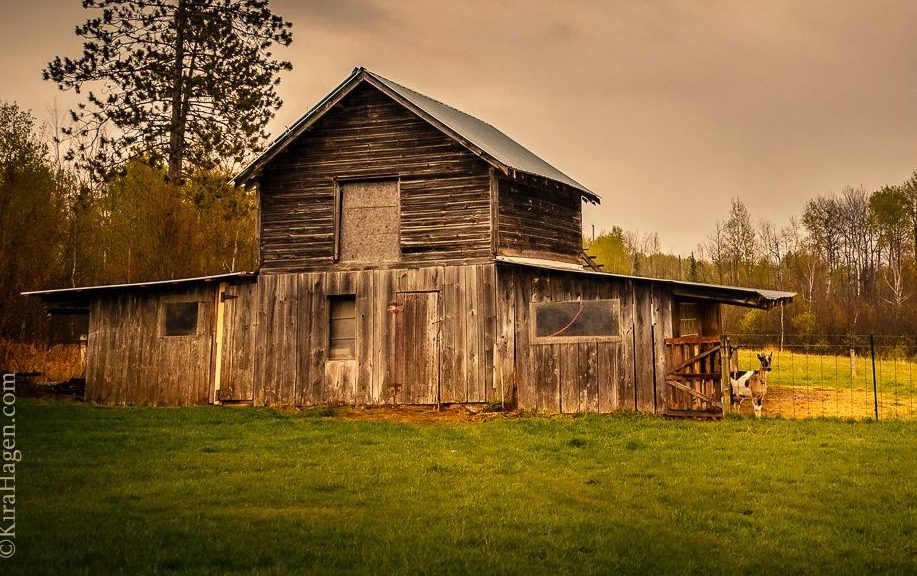
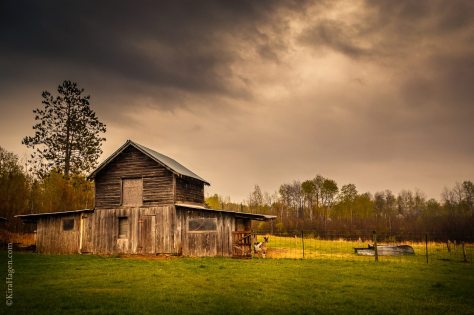
Hollandale is a small town in Southern Minnesota that came into being in the early part of the last century when a large wetland area was drained. The organic soil that was exposed when the land was drained was sold off as small vegetable farms. In it’s early days there was a very large number of small farms that produced a wide variety of vegetables. By the time I moved to the area in the early 80s, there were less than 30 vegetable farms and they were primarily devoted to growing potatoes with some of them also devoted to producing onions, carrots, and sweet corn. Most of the families that purchased the original small farms were of Dutch heritage and many of the ones I met when we moved there were descendants of those families.

Within any ethnic group you can often find people who are proud of their heritage. That is certainly true for many of the Hollandale area residents. I asked one of the older members of the community if he agreed with the saying: “if you aren’t Dutch, you aren’t much”. He told me that he might think that, although he never says it out loud. Both of my father’s parents were born in the Netherlands, so I know a little about the pride of the Dutch.

20160124_144338

My first job in Minnesota was at a small agricultural research company located near Hollandale. When that job ended I started a crop consulting business and soon found out that there was a big need for a consultant who could help vegetable growers keep on top of production problems. Two of the best growers were willing to try my services and they made it clear that the other growers should also use my services. As a result, I spent 10 growing seasons checking Hollandale vegetable fields for diseases, pests, and other problems along with providing advice on dealing with what I found. Due to the high production costs for vegetables and large risk of losses due to production problems, I was able to show that my services were needed. Unfortunately, the farmers were not willing to add very much to their costs by paying me a high salary.

During the years I worked with the Hollandale growers the number of farms gradually decreased until there were only 5 of 6 left and now there are only 2 or 3. I’m sure some of them quit because the strain of operating a vegetable farm became too great, as they got older. There is a tremendous amount of work involved in planting, growing, harvesting, storing, packaging, and marketing vegetables. One grower, who also grew corn and soybeans, referred to corn and soybean farming as a hobby because the amount of work needed to produce those crops is very much less than is needed to produce vegetables.

There were a number of other factors that led to farmers calling it quits. A big one was the problems they have with flooding when water from higher ground filled their low lying fields following heavy rainfall. Also they had a big problem with soil loss because organic soil can blow away during dry weather and burn up during hot weather. In addition they had difficulty competing with the very large farms that dominate vegetable production in the United States. The drop off in the number of growers brought my work in Hollandale to an end. However, I have many good memories from the years I spent working with those farmers.

What’s the toughest job you ever quit?

Banished Words

Today’s post comes from Barbara in Robbinsdale

I was listening to “The Splendid Table” one recent Sunday morning and was appalled to hear Lynne Rossetto Kasper mention a kitchen “hack” for a desired outcome. Until then I had thought I could avoid hearing “hack” (used in place of the word “tip”), if I simply stayed off Facebook and Pinterest. It’s just one of those little new words that drives me a little batty, and apparently I’m not the only one. On New Years’ Day, I came upon this New York Times article about a Banished Words List, issued annually for the past 40 years by the Public Relations Department of Lake Superior State University (in Sault Ste. Marie, on Michigan’s Upper Peninsula).

This tongue-in-cheek listing began as a publicity strategy to help LSSU become known as more than a technological institution. “The first list was dreamed up by Bill (William T.) Rabe and… friends at a New Year’s Eve party in 1975. The following day, the “List of Words Banished from the Queen’s English for Mis-Use, Over-Use and General Uselessness” was released – the international reaction from news media and the public was unexpected… Although Rabe retired in 1987, the list has been continued by LSSU’s Public Relations people.    

“People from around the world have nominated hundreds of words and phrases such as ‘you know,’ ‘user friendly,’ ‘at this point in time,’ and ‘have a nice day,’ to be purged from the language.” Some more recent offerings have been: “my bad” (1998), “forced relaxation” (1989), “free gift” (1988), “live audience” (1983, 1987, 1990). 2015’s list included “bae,” “polar vortex” and… “hack.”

It was in some odd way satisfying to find “hack” on the 2015 Banished Words List

“This word is totally over-used and mis-used. What they really mean is ‘tip’ or ‘short cut,’ but clearly it is not a ‘hack,’ as it involves no legal or ethical impropriety or breach of security.” – Peter P. Nieckarz Jr., Sylva, N.C.

What word or phrase would you submit to the 2016 Banished Word List?

Double, Double, Toilet Trouble

Today’s post comes from Renee in North Dakota.

The agency at which I work is housed in a six-story former college dormitory built in 1964.  There are sixteen offices on each floor along with a large secretarial office and central waiting room. The building has one elevator.

The bathrooms are located on the east and west sides of the building. There are 26 bathrooms in the building, four on each floor and two in the basement. The building is owned by our local college, which is responsible for upkeep and maintenance.  The age of the plumbing and water problems made the college completely upgrade the plumbing and the bathrooms. We have been set upon by construction workers and plumbers for the past two months.

20160124_120643Construction began on the west side of the building in November, with the complete gutting of all the bathrooms on that side and the removal of all the old pipes and oddly placed sinks and defunct showers  from Sixth Floor to the basement. We have to use the bathrooms on the east side of the building.  You can imagine the noise, dust, and commotion, and how the elevator has been tied up with carts full of debris and gross-looking iron pipes. It is hard to administer a test for attention and concentration when it sounds like dinosaurs are devouring the building and there are crashes and drilling and pounding above and below. The workers have been really great to work with though, and we have developed a nice camaraderie with them as we pack into the elevator together. It was with the arrival of the plumbers that things have become somewhat more challenging.

20160124_120354The plumbers don’t communicate real well with either the construction workers or Joanna, our administrator responsible for agency-construction company interface. She has had to contend with unexpected water outages, odd and toxic smells, client complaints, and recently, explosions. Last week the plumbers, for their own nefarious purposes, decided to pump air into the new pipes on the west side of the building. Somehow, the air also went into the old pipes on the east side of the building, with some pretty spectacular effects. When flushed, the working toilets responded with crashes as loud as rifle shots and rapidly swirling torrents of water. Joanna was in a bathroom on First Floor. When she flushed, the water exploded high in the air like Mount Vesuvius, drenching her and the walls and the ceiling.  The lead carpenter asked her how she liked the new bidet on First Floor. She was not amused. I don’t know what she said to the plumbers.

Once the west side bathrooms are finished, the east side ones will be completely removed and the space turned into storage closets. There is trouble brewing, though. The architects insist that the new bathrooms will be handicapped accessible. Our nursing staff tried to get a wheelchair into one of the unfinished bathrooms just to make sure. The space is too small to get a wheelchair in and close the door. The fixtures aren’t even in the bathrooms yet. I think we are in for a long construction season.

How have you navigated your way through construction zones? 


Coloring Books

Header: Michael Maggs [CC BY-SA 3.0 ] via Wikimedia Commons

Today’s post comes from Verily Sherrilee

I’m a meeting doodler. I discovered years ago that if I doodle during my twice-monthly department meeting, they go faster and I am less frustrated. I used to sit in the back corner of the room so that my doodling wouldn’t distract anyone but several years back, my boss invited me to sit at the main table, doodles and all. Last fall one of my co-workers brought me a mandala design and a couple of colored pencils (with my boss’ permission). It was fun to do something a little different than my usual doodle designs.

Since that day, I’ve seen quite a few news stories about the new coloring book fad for grown-ups. Every book store and craft store has piles of coloring books and Fortune magazine published a bit about coloring books being a big boost for book sales in 2015. There are also plenty of articles about why coloring books are such a big hit right now. Some say that it lets adults to be more creative than their daily lives allow. Others say that coloring relieves stress. Another theory is that coloring books allow people to ditch technology, a return to their gadget-free childhoods.

So what does it say about me that I received THREE different coloring books for the holidays, complete with colored pencils, a huge set of markers and even some sketch `n sniff pencils?

What takes you back to your childhood?

Letting Go

Today’s post comes from Chris in Owatonna.

I have spent most of the day putting in a comma and the rest of the day taking it out.  –Oscar Wilde

I’ve had it! Enough is enough! I can’t change one more word!

While working on the final draft of my suspense novel, Castle Danger, those thoughts built up over the past few weeks until I reached a breaking point. It’s time to let go and send it to the proofreader, and ultimately the printer.

There comes a time during every creative process that the creator must pronounce his work “finished.” A painter finishes a painting; a sculptor chips off the last piece of marble and sands it down; a composer inks in the final note on the score. Then the artist lets go, releasing his creation to the world for its consumption and subsequent pleasure, displeasure, or indifference.

So I’m now at the letting go stage. I realized I can change a word here, switch sentences there, intensify an expression in a third place, but to keep doing so indefinitely is a sign of fear, doubt, and uncertainty. Is the story good enough? Will anyone buy the book? If so, will they like it? And by extension, will I feel validated for spending several years of my life on creating something from nothing.

I’m glad I waited until this point, though. To have deemed Castle Danger to be finished any earlier would have left me with nagging doubts about whether I gave it my best shot. Now I am confident I gave it my best shot and can face whatever comes in the way of “success,” positive/negative reviews, and feeling good about myself. I feel good about myself right now, and the novel’s success or failure won’t change that.

If it bombs, I’ll be disappointed, but hey folks, I wrote a damn novel! Not the most earth-shattering achievement, but at least, I didn’t sit around for the rest of my life and talk about writing a novel. Seriously, I’m proud of having gotten to the point of completing a  monumental project (for me). It’s something I never imagined myself doing this late in life.

For a Neo-Renaissance practitioner like me, new experiences are always good, but seeing a project through to completion is just as important as trying the new activity.

When have you finally let go of a project or creation and what brought you to that decision?

My Short “Career” Packing Meat

Today’s post comes from Jim Tjepkema

I could see that my work as a private agricultural consultant was coming to an end.  Many of the vegetable farmers that were my best customers were retiring or going out of business.  I found an opening working as a temporary employee in a local meat packing plant and ended up working at that plant for 2 years.  During those two years I worked at many different positions, starting as a laboratory technician, followed by working at a variety of quality control jobs, and finishing up by working on various production lines.

I learned a lot about the production of processed meat, and met many very interesting people.   There were times when I didn’t mind working at that plant.   However, in many ways it was not a good place to work.  A man who had worked there for many years told me that while it might look as if he liked his job, the opposite was true for him and many of the other employees.

In my first position at the plant I had limited contact with people working in the production areas.  I did get to know the quality control clerk who sent samples up to me from a production line.  She and I developed a good working relationship helping each other to make sure the samples were checked in a timely manner.   One night didn’t go so well when I tried to bring her test results while she was eating in the lunchroom. She made it very, very clear that I should never bother her during her lunch break.

I went from working in the lab to working as a quality control clerk when they eliminated the job I had in the lab.  I found out that those clerks often had a very difficult time completing all of the checking and sampling that was required.

In fact, I wasn’t able to do some of those jobs fast enough.  The position I was given required me to learn to fill in at any and all of the many different quality control clerk jobs.  When it was clear that I wouldn’t be able to master all of those jobs in the small amount of time I was given me to learn them, I moved on to production work.

I started out on a ham line putting chunks of sliced ham into compartments on a bagging machine.  At first I wasn’t able to do this job fast enough.  However, they gave me enough time at this job to get up to speed and I eventually mastered the job.   Unfortunately, work on that ham line was seasonal and I had to move on to another job.  I took several different temporary jobs in other parts of the plant to hold me over until I was needed again on the ham line.   With more time to learn the temporary jobs, I might have been able to handle all of them.  However, they gave me very little time to learn them and I failed at some of them.  At that point I decided I was not cut out to be a meat packer, bringing my days working there to an end.

What kind of short term work have you done that was interesting or not so interesting?

Unstructured Time

Today’s post comes from Barbara in Robbinsdale

The plan was to finish going through my file cabinet today – we’ve been in the deep freeze here in Minneapolis, and happily there is nothing on the calendar except maybe calling my sister, and chorus tonight. So I figured it’s a great time to complete that project and hopefully write a blog post.

It is now 2:08, and I haven’t gone anywhere near the filing project. Here’s what happened – knowing I have the whole day at home, everything I’ve done today led to something else that needed doing… you know, those tiny one- or five-minute tasks that can be done ANYTIME. As I was making pancakes, I used up the non-gluten flour mix, so went ahead and made more. At the computer I cleaned up the email folder and finished some replies that had been waiting to be done. Saw that some small shelves needed to trade places (it’s not a fun day at home without re-arranging furniture!), and that always involves some cleaning. While doing that I came upon the lost earring I was going to fix for my mom… You get the picture. This is what’s DANGEROUS about a full day at home – it feels like there is infinite time, but the time taken by all these little tasks adds up. Suddenly the day is gone and you’ve done nothing you’d planned to do.

Burger is thawing for supper, there’s a load of clothes in the washer, and I’ve returned two phone calls. Having written this much of a blog post, I think I can now see where I left off last time I tried purging files. Maybe I’ll even get to read the Sunday paper before choral rehearsal.

How do you get back on task when you’ve been distracted?

The Palace

Header image by McGheiver under Creative Commons Licence 3.0

Today’s post comes from Renee in North Dakota

I subscribe to my home town paper, The Rock County Star Herald, and I am constantly amazed by the positive tone and progressive activities the paper reports. For example, there is a $1,000,000 renovation to the library getting underway. The town just beautified the four corners of the major intersection in town to make it more appealing, and the community voted to extend some sort of special State financial assessment that benefits the public school system.  The town has three museums, a new hospital, and a beautiful Veteran’s Nursing Home. The Rock County Historical Society raised $150,000 from private funds to remodel its new building, and the newspaper recently referred to the director of the Historical Society (an elderly woman who taught with my mom) as “Rock County’s Sweetheart of History”.

I think one reason for all this good natured  progressiveness goes back 100 years to the building of The Palace Theater in 1915.  It is a grand structure in the Beaux arts style with 550 seats, built by Herman Jochims for traveling theater troupes, orchestras, and vaudeville acts. It has an orchestra pit and, after 1926, air conditioning and new decor in the Art Deco style.  Herman wanted the Palace to compete with any of the theaters in large cities , and spared no expense decorating it. The second story was used as a ballroom and eventually as Maude and Herman’s residence. In 1926 Herman installed a pipe organ which his wife, Maude, played during the silent films he showed. She was an elegant woman noted for her musicality and elegant dresses.  I watched movies at the Palace all through my childhood and adolescence. It was so posh inside. The first things I always noticed after walking in the foyer were the two large, round mirrors, hung directly opposite one another, so that they reflected the other in smaller and smaller images as though the images went on into infinity.

By 1977, the Palace had fallen on hard times and had been foreclosed by the bank down the block. My parents often talked about the travails of the theater at this time, and I got more details about the issues in a paper by Maianne Preble of the Minnesota Historical Society in 2009. Community members raised money and got grants, and volunteers helped with renovations, so that the theater opened again and was purchased by a local theater group. Some movies and live plays were presented, but there was trouble ahead when the theater group’s Board of Directors sold the building to one of its members in 2001.  There was a general uproar at this, and, eventually, a new and revised Board of Directors repurchased the building after it again went into foreclosure by the bank down the block. This bank gave the new Board of Directors a line of credit with which to buy the building back. More extensive renovations took place, and the building is now owned by the city, which partners with the theater group for its day to day management. Movies are shown, and live theater and musical groups perform regularly.

My hometown isn’t perfect by any means. There is the conflict and disagreement and hard feelings that you find in all communities. I think, though, that the live  performances  and movies gave people the opportunity to see beyond their current situation and dream of something better.  Many people have reported seeing the ghost of Herman up in the balcony, and the organ has been heard playing when it was turned off and even dismantled for renovation. (Maude, no doubt, wanting to play again.) I like to think that when there are hard decisions to be made in town, their spirits flit out of the Palace and start whispering in people’s ears “Do it right. Make it beautiful.”

What local landmark lifts your spirits? 

The Uniform

Header photo: © Jorge Royan / http://www.royan.com.ar / CC-BY-SA-3.0

Today’s post is by Sherrilee

I’ve been thinking a lot about ties recently. Last week while I was waiting for the tech guy to figure out my computer, I noticed that the online support tech icon was a male figure wearing a tie. It made me laugh a little that the support company would think I would feel better to be helped by someone in a crisp white shirt and a tie instead of a scruffy guy in jeans and a sweatshirt.

The tie does definitely seem to be the uniform for men. Everywhere you go, dressed up men wear ties: at work, at church, late-night tv. For some job descriptions, like debate candidates, it’s not just any tie; if you want to really be part of the crowd, it has to be a red tie.

I wore a tie once. One Saturday, when I was still in the bookstore, I wore a denim skirt and vest to work. I borrowed a tan knit tie from my wasbund (he had to tie it for me); I thought I was pretty darn cute. At the Southdale B. Dalton store we had a huge stepped table for all the bestsellers and Saturday was the day we received the new lists for the following week.

That meant that big piles of books needed to be moved around, with the new and hot items toward the front. That day with my list in hand, I spent about an hour moving all the books around, beefing up some titles, moving other titles off the table. As I straightened up to take a look at my handiwork, I realized too late that the knit tie was stuck between two books. It was like a mountain of falling dominoes; the top stack of books collapsing onto the stack beneath it and then spreading down and out from there. People walking by the store stopped and clapped.

I went to the backroom and took off the tie; I’ve never worn one since. But I have felt really sorry for men who have to wear a tie day in and day out.

Have you ever had to wear a uniform?

Sea Hunt!

Today is the birthday of TV actor Lloyd Bridges in 1913. Bridges did a lot of different things in his 85 years on Earth, including a stint in the Coast Guard. But he was a favorite in my family for his role as expert frogman Mike Nelson on the 1960’s TV show Sea Hunt.

Because so much of the show was shot underwater, Bridges did voice-overs to describe large parts of the action. Of course there was lots of silent struggling with various people, sea creatures and obstacles (both natural and man-made). I became convinced if I ever went scuba diving, I was going to get trapped inside a shipwreck. Which is why I’ve never gone scuba diving.

To this day, nothing makes me hold my breath like watching actors who are pretending they can’t breathe.

Many of the episodes are available for viewing on You Tube.

Sea Hunt set the high water mark for our family viewing time. Even after its cancellation, every dramatic adventure series that came along was given a shorthand title that referenced this seminal classic, with which they were almost always unfavorably compared.

Star Trek was “Space Hunt.” Bonanza was “Horse Hunt”. The Avengers became “Spy Hunt.” The Fugitive, naturally, was “Guy Hunt.”

Lloyd Bridges and Jacques Cousteau convinced me at a young age that it is smart to take care of the world’s oceans – something I have attempted to do mostly be staying out of them.

What’s a favorite family entertainment from your childhood?