The weekend Farm Report comes to us from Ben.
Where are we with Growing degree units you might well ask. We are about 450 growing degree units above normal here in Rochester. Extremely hot days don’t add as much as you might think because typically the plants shut down over 86 degrees and below 50 degrees.
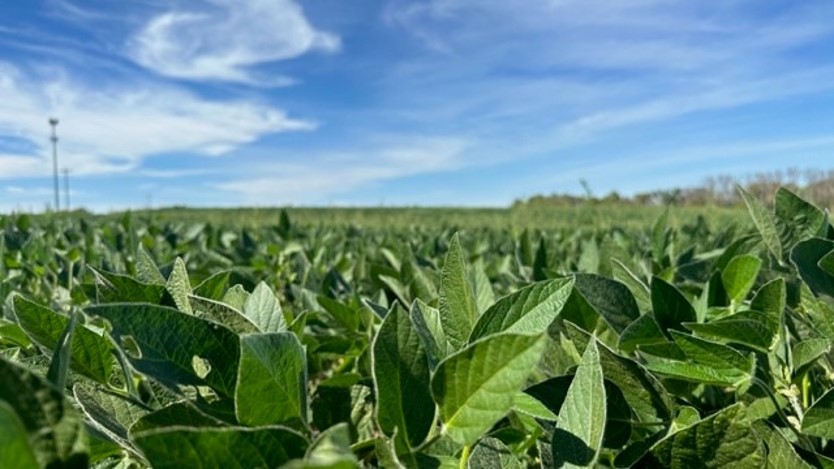
Too bad the weeds never stop growing. I mentioned once before, my soybean fields have really filled in and from the road, although short, they look pretty good. Except for all the weeds. I’m really discouraged about all the weeds. If this was a normal year, I probably would’ve had a second application of herbicide applied. But this year, I can’t justify the cost.
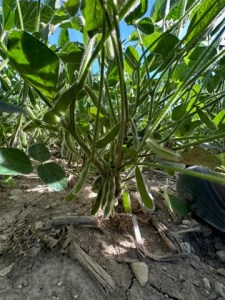
You can see from the photo, because the plant is so short, there’s not a lot of pods in the first place, and those pods that are in the bottom 3 inches are difficult to get in the combine because it doesn’t typically cut that close to the ground. I have talked before about guys rolling their fields after planting to help level them and to press rocks and such down into the soil. This is exactly why; to get as close to the ground as possible but still, it’s hard to get that low.
And the beans that are there, are not very big. There just hasn’t been the moisture to develop and fill a bean.
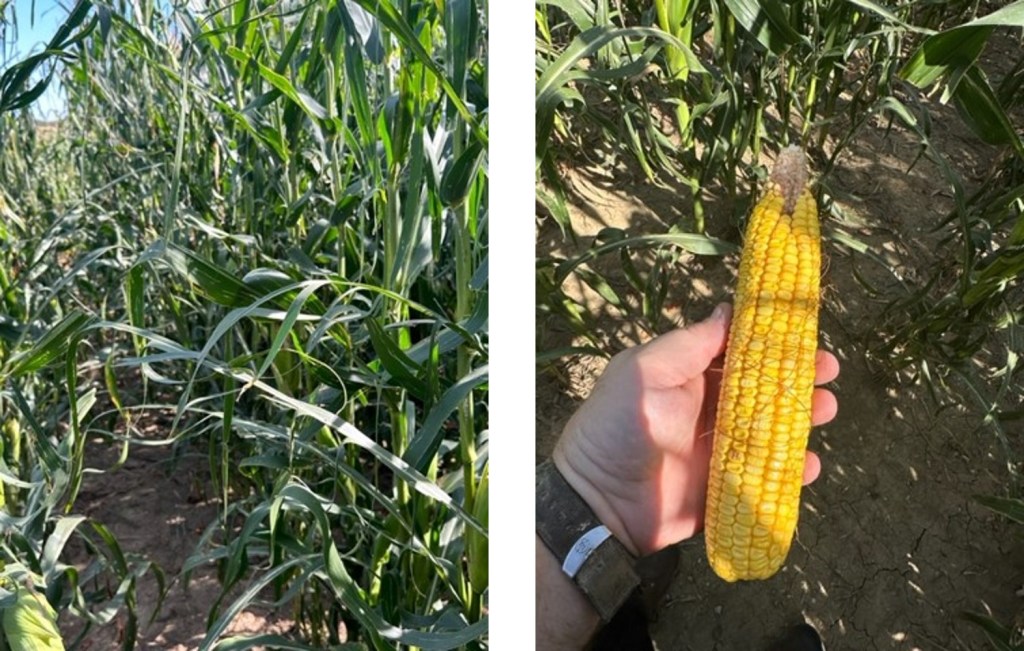
The corn looks kind of rough from the hail as the leaves are shredded up, the ears are OK, except again, small, and not filled to the tip because of drought stress, and I expect the kernels will be small because again, not enough moisture to fill the kernel.
Notice the kernels on this ear and how the tip didn’t fill. Drought stress and the plant pulled resources from them to save the other kernels.
This ear is 13 rows around and 43 kernels long. Everybody remember our math from last year? 13×43 equals 559 kernels on this plant. 80,000 kernels per bushel (bushel meaning 56 pounds), means I need 143 ears to create a bushel, but if the kernels are small and light, it will take more than 80,000 to be a bushel. Be sure to subtract deer, raccoon, and turkey damage. This year will be what it is.
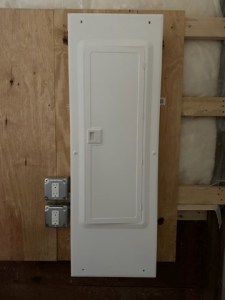
I made a little more progress on the shop. I have some of the two by fours installed on the walls that the interior steel siding will be fastened to. And electricians came back and installed the breaker box and some outlets. The other end isn’t hooked up at the pole yet, but he’s hoping to get that on Tuesday.
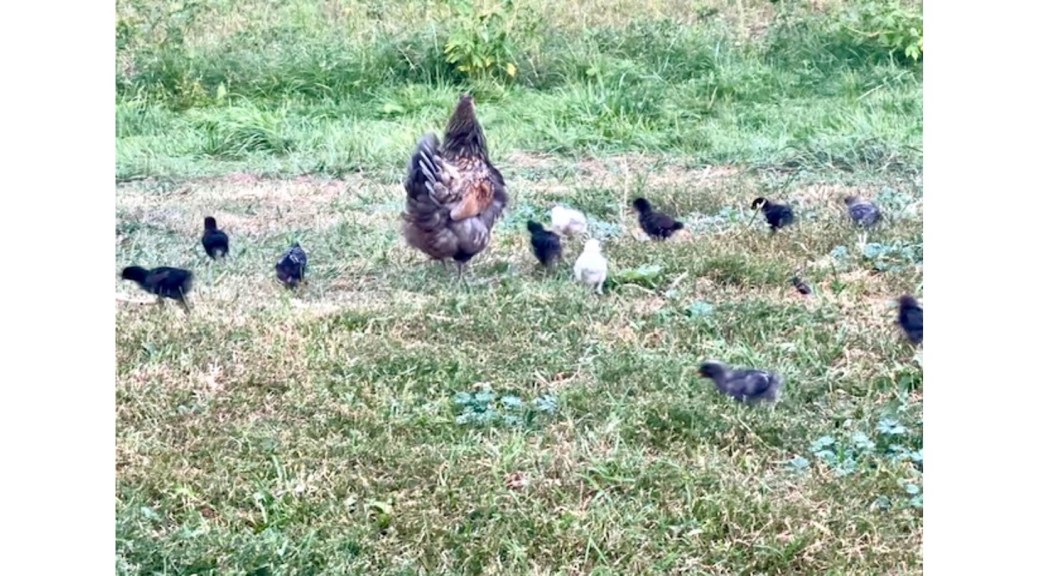
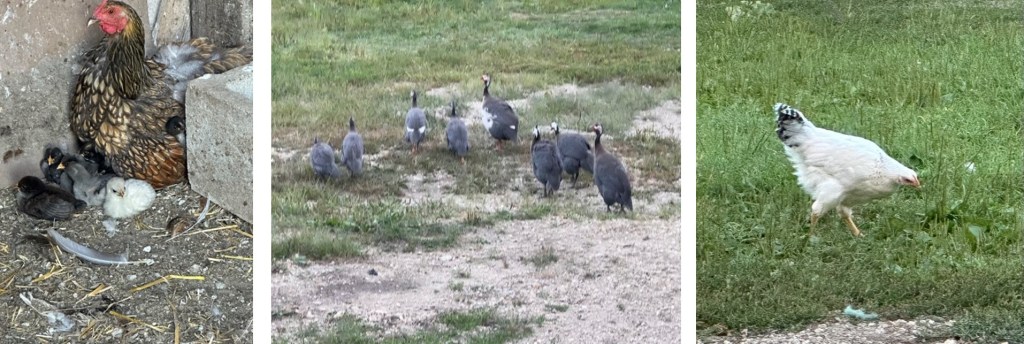
Momma and the chicks are doing well. Kelly calls her ‘Mother Clucker’. How many chicks can you find in this photo? (She’s still got all 13) And the 4 young guineas are hanging out with the older guineas. And we like this batch of ‘mixed breed’ chicks from this spring. They have pretty plumage.
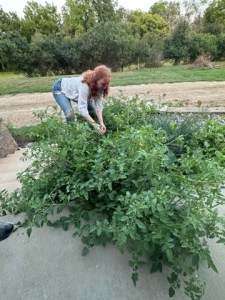
Kelly has one tomato plant, growing wild, and doing better than her plants in a pot.
Daughter waters the plants. She enjoys having chores. And it’s fun to watch her do it. She turns on hose, puts it in plant, thinks for a few seconds, counts “1,2,3…4,5……..6, 7…. 8…. 9,10” thinks for a second, takes hose out. Good thing the pots have drain holes in the bottom.
Last week I mentioned the lack of women behind the parts counters. I feel like I should clarify: There are a lot of women in agriculture. I just don’t often see them behind the counter. There are women who are large animal veterinarians. There are several women agronomist’s I work with and the lady who runs the Crop Insurance agency. There are a few women who are solo farmers and there are several on YouTube I follow. There are many out there working with their families and contributing as much as the men. I am in no way disparaging them. Being a farm wife is a huge task.
We used to have one woman farmer in our neighborhood. Rita. Hair all done up and nails painted and she ran the farm while her husband worked in town.
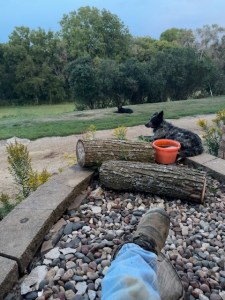
Kelly and I try to spend a few minutes in the evening sitting on our veranda without a roof watching the world go round.
Do you drink the recommended 15 cups of water in a day? Who do you know in non-traditional roles?






 Trail Baboon