Category Archives: Art

CPU

I learned frugality at my mother’s knee so sometimes it’s hard for me to part with my hard-earned cash.  I have a good friend who sometimes gives me grief about this.  Her view of life is all about CPU… cost per use.  If she purchases something and then uses it a lot, the CPU gets smaller and smaller.  She taught this life view to YA early on, so I am exposed to the theory on a fairly regular basis.

The one place I have been good at applying CPU is with the Minnesota Zoo.  I have an annual membership so when YA and I go to the zoo, we don’t have to pay anything.  It’s obviously not free but it feels free at the time.  We go enough that the annual membership is less than the full price and parking we would have to pay.

I have another friend who has been a supporter of the Minnesota Landscape Arboretum for many years and have always urged me to get a membership.  But at $60 I knew I’d have to go at least 4 times a year to justify the CPU.  This past spring, this friend called me to tell me that the Arb was having a membership sale.  Just $30 for the annual membership.  Right up my alley.

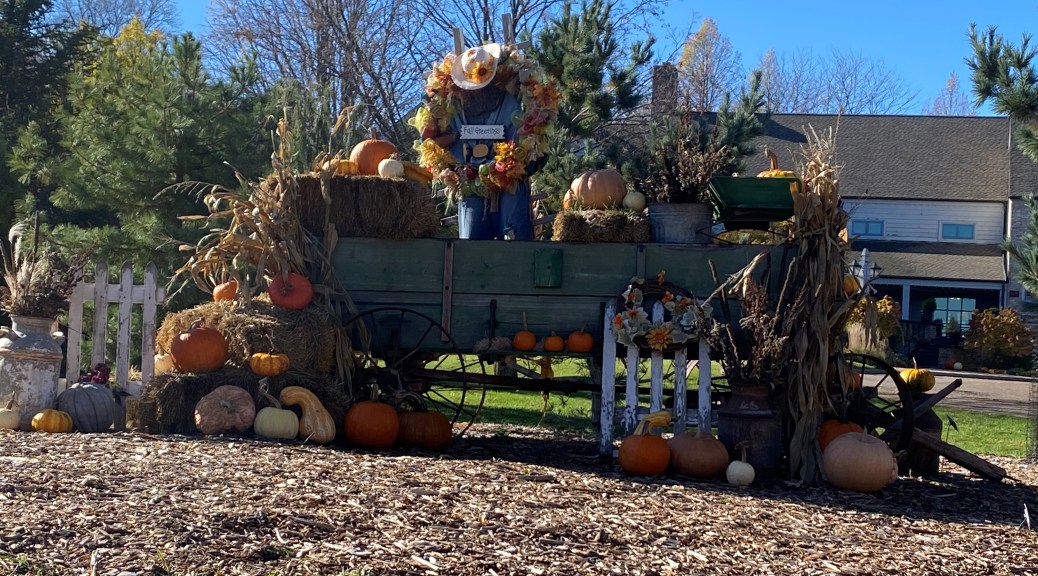
Now that I don’t have to pay every time I go, I’ve been to the Arb a few times.  Twice this summer I even parked myself in one or another garden with a good book.  In October they had their annual Scarecrow exhibit so last weekend, I made some space in my Saturday and headed out.  I strolled about, checking out how things are changing now that the big blooms of spring and summer are over.  (I even got a gardening tip; I noticed that in the Peony garden, they have chopped the peonies back.  This is not something I have ever done but the afternoon after my visit, I chopped all my own back!) 
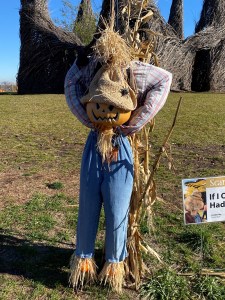
The scarecrows were a lot of fun.  Most of them were up on the hill and it was almost like a fall festival – lots of kids and lovely autumn displays – not to mention a gorgeous sunny day.  I normally take the tram ride but since it’s done for the season, I drove slowly along the Three Mile Drive myself with Enya playing on my phone.  I’m sure it’s the lowest my blood pressure has been for years!  They were starting to put up the lights for the Winter Lights Walk so as soon as I got home, I ordered tickets for that.   The CPU will be seriously low this year.

I was thinking as I enjoyed my day that even if they raise the price of membership on me next year, I’ll probably renew anyway.

How do you decide if something is “worth it”?

Pride of Workmanship

Today’s post comes to us from Steve.

I knew a young woman who was an indifferent student through high school, the kind of girl who gets lectured endlessly by school counselors who knew she could do better. Her early employment history after college was more of the same. She did what people told her to do, but not much more.

At some point she began working in the office of a company that tried to match temporary workers with jobs offered by companies who didn’t want the trouble of finding, compensating and training temp workers. Like so many companies, it was badly run. Upper management was clumsy, rewarding the wrong workers and failing to produce sound policies. And yet, like many badly run companies, this one did well enough to keep making a modest profit and thus could continue functioning as a business.

Then something strange happened. As that business grew, it assigned two young women, including my friend, to head up a new branch office. While neither of them had distinguished herself in earlier assignments, this was different. Both women had been paying attention to the shortcomings of their business and had thoughts about how they might do better. The two women threw themselves into an effort to run their office in an exemplary way. They did not expect their model to lift up the whole business, and in fact it did not. They didn’t expect their excellence to be identified and rewarded, and in fact it was not. And yet they experienced the rare joy of managing the only effective office in an organization that continued to limp along with shoddy practices.

Good things happen when people take pride in their work. We all have known workers who slacked off whenever possible, but we have also encountered workers who set a high personal standard for excellence. A persistent mystery in business management is exactly how some workers demand a high level of work from themselves. Studies show that the level of compensation is not the critical factor. What seems more important is pride, pride of workmanship.

When I edited a small magazine I worked with writers and photographers who were badly compensated. My magazine paid so little for articles that we couldn’t demand outstanding work from contributors. Some contributors, acknowledging that we paid poorly, sold us articles that were slick and poorly written. And yet some contributors gave us good articles in spite of our amateurish payment programs.

My own work became an example. I realized that I was the untrained editor of a very badly run publication. All of us on the magazine’s staff were ignorant about making magazines. Most of us tried to do our jobs well, but the business was a sort of clown show because had never been trained and now were badly led. 

And yet I came to understand that, with all its obvious faults, this was my magazine. Whether it was wretched or entertaining, I was the single person ultimately responsible for the quality of each issue. I began rewriting bad articles, trying to turn sow’s ears into silk purses. Our readers never guessed how hard I had worked to salvage shoddy original copy. It didn’t matter to me whose name was on a story. What mattered was that each article should be as funny, interesting or educational as possible.  We continued to print pictures upside down, print captions riddled with misspellings and make all sorts of factual errors. But more and more, almost in spite of ourselves, we began putting out a magazine that people really liked. Our readers were on our side, hoping desperately that a magazine like ours would triumph over the amateurism, disorganization and lack of resources that continued to plague us.

Later, when I became a freelance writer/photographer, I discovered how easy it was to write articles that were marginally better than average for that field of journalism. That is, I could knock off a slick article in two hours that looked pretty good, even if it was pretentious and lacking merit. That could have encouraged me to be lazy, and yet the opposite happened. I came to value the fact it was my name on an article. I took that to be a promise that I would do the very best work I was capable of, in spite of how meager my reward might be. The longer I worked as a freelancer, the higher my standards became. It became increasingly important to put out articles I was proud of.

How did you acquire the standards you hold yourself to in your work? Have they evolved over time? Did anyone serve as a model for you of doing the job well? What gives you pride in your work?

Claiming Your Space

Today’s post comes from Steve.

I paid no attention to home decor in the early years of my marriage. We were grad students living on sketchy incomes. Our furniture—sagging, mismatched and threadbare—came as gifts from our parents. Moreover, my former wife dominated all decorating decisions. When I ventured to suggest something that might make our home attractive, she was amused that the spouse with lousy taste was offering advice to the spouse with good taste.

Then, rather suddenly, the marriage ended. Within a few weeks I lost my father, my job and my wife. Everything about my life changed almost overnight, with my address being virtually the only thing that stayed the same. When my erstwife suggested I was now free to sell the home and move anywhere on earth, I panicked. Like a man who has suffered a shipwreck and now clings to floating parts of his old boat, I needed security. I needed my home to be constant and comforting.

But there was a problem. The upstairs of my home had become a place where I did not belong. I lived in the basement, rarely venturing upstairs where everything reflected the taste of my former wife. That began to bother me. After dithering for half a year, I decided to take on the challenge of changing everything about the appearance of the upstairs of my bungalow. I had to make my home a place where I would not feel like a trespasser.

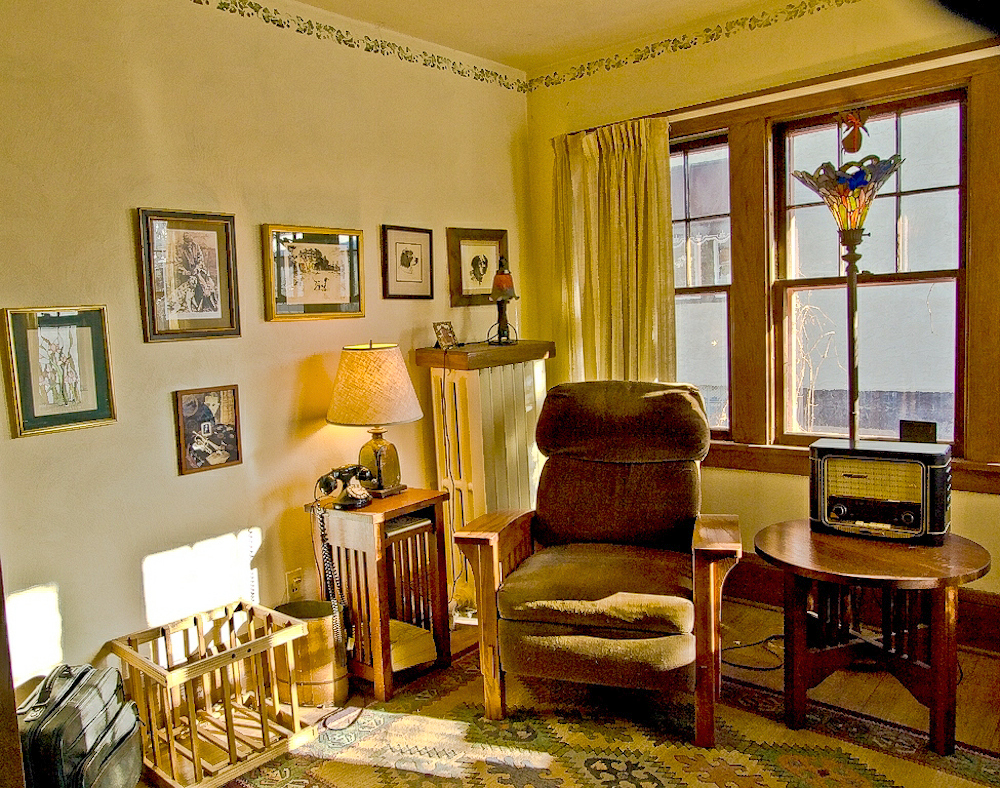
Home decor, something I had ignored all my life, became an obsession. Although I had never bought furniture, now I haunted furniture stores and consulted catalogs. Having never bought a lamp, I bought seven, all with stained glass shades. I gave away the art that my erstwife had put up and replaced it with original art, a big tapestry and a triptych. I collected fine art pottery and a handsome Mission clock to promote a turn-of-the-century look. I bought six rugs, including two hand-tied Bokhara orientals from Pakistan. I changed the color of every wall of every room. I installed new sconces, chandeliers and light switches. I studied the Arts and Crafts movement in American domestic architecture, and educated myself about the fascinating home design movement that produced the bungalow. My home had been built in 1925, and now I honored that by filling it with lovely objects from the early 20th century.

Reclaiming my home took about four years. I understand that the way I accomplished it was unusual, but I had been put in unusual circumstances. It was the perfect project for a divorced gentleman who was not as young as he once had been. Buying Chinese knockoffs of Tiffany lamps was healthier than other ways I might have processed the divorce. When I was done, virtually nothing was the same. It was all different and it was all me. The upstairs became a place that made me smile, a place where I could—finally—feel “at home.”

Have you ever taken a serious interest in the look of your home? Are you fond of any particular style of domestic architecture (Colonial, modern, Gothic revival, Arts and Crafts, etc)? Or, like most people, are you happy with an eclectic approach?

Dangly

Pre-pandemic I used to go to two craft shows a year in the Twin Cities – one on the State Fair grounds and one out at the Shakopee race track.  Hard to believe but with 40 vendors or so each, there wasn’t much duplication.  Except for Craft Fantastic.  They sell the makings for jewelry and they always have an inexpensive “make `n take” at each show. You start by choosing a piece of artwork, then you glue a glass tile on top of it.  After the glue dries, you trim off the excess and stick your tile onto a tray.  Then if you want a necklace on which to hang your goodie, they’ll give you one and if you want more components for other jewelry, they certainly have those as well.  I’m sure at some point I signed up for their emails but I don’t remember seeing them before pandemic. 

I have at least 10 of these necklaces from over the years although I don’t wear them often.  I like rings and I adore earrings, not as big a fan of necklaces and bracelets.

The emails started to seep into my consciousness a few months into pandemic.  Every month or so, they offer a “weekend designer” kit.  It is all the items you need to make a variety of things – usually in a theme.  I’m having a hard time keeping away from these, especially the earring collections.  They must be assuming that folks are making and selling these items because each kit makes WAY more than anyone needs.  I have given away quite a few pairs of earrings, necklaces and bracelets but that still leaves me with at least 30 more pairs of earrings than I had at the beginning of pandemic (and believe me when I say, I already had way too many earrings at the beginning of pandemic).  All dangly.  Chinese New Year earrings, Fourth of July earrings, Valentine earrings, Winter/Christmas earrings, Halloween earrings and then a large assortment of floral patterns.  Did I mention that they are all dangly?

I’m trying to cut back – most of the emails get deleted without being opened – but every now and then I spot a kit that is a little different than a kit I’ve had before.  I’m hoping that now I’ve made earrings for all the major holidays, I won’t be tempted.  That’s my story and I’m sticking to it!

What would you want buried with you so you could use it in the afterlife?

Feeling Needed

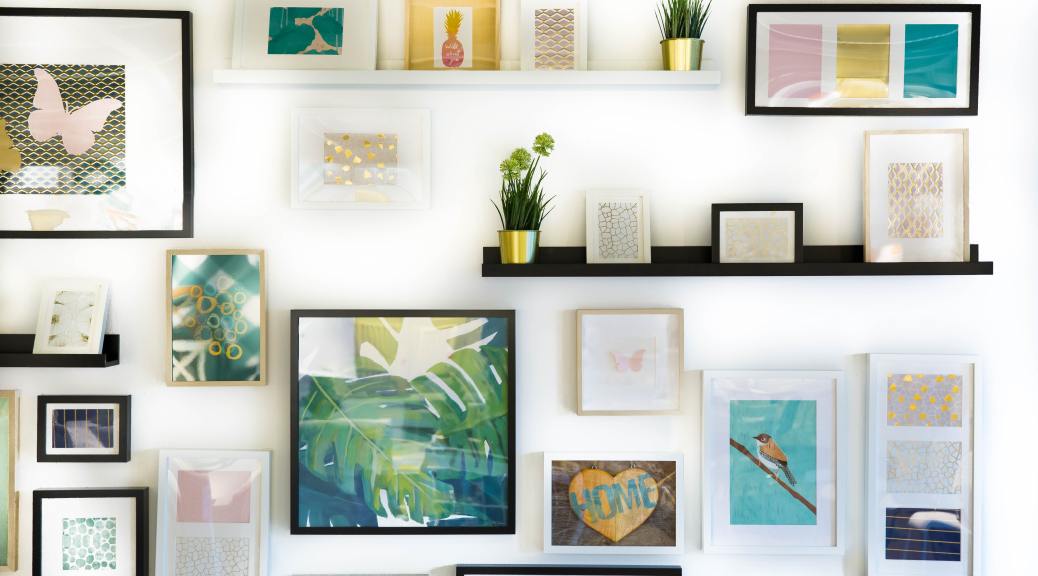
Our son and daughter-in-law are moving into their first home this Friday. We won’t be able to get to see them until October, over the long weekend for Indigenous Peoples’ Day. As usual, my job when we get there will be to hang the pictures and other decorative things on the walls.

I don’t know why they always want me to do this. They say I know how to center things so they look good. I just make a point of measuring and marking where the hangers should go. It isn’t that hard, but they appreciate it.

Husband is the family go to guy for landscaping advice. Son and his wife have a huge yard at the new house with no plants or trees or flowers. Son has been asking for landscaping advice already, and Husband has some ideas for him. We plan to bring all our flower and seed catalogs. It should be a fun visit.

What makes you feel needed? What skills do you want to teach others so they aren’t lost? How do you go about hanging things on the walls?

Fair Joy

I know we talked about joy the other day, but… I want to talk about it again.

At the State Fair yesterday, a woman with two kids sat down next to me on the curb, waiting for the parade to begin.  The son was about 8 or so, the daughter was maybe 3.  She was adorable with bright blonde hair that curled around her face and the back of her neck.  She also had quite a dirty face – a combination of what looked like chocolate and something berry-ish. The berry stain had found a home on the front of her shirt as well.

The most interesting thing about this little girl was the fact that she was completely suffused with joy.  Everything about the parade was fascinating to her.  She couldn’t sit down, swaying and dancing as each band went by.  She ooh’ed and aaah’ed over the stilt walkers, the art cars, the waving princesses and especially the big bovines.  As each attraction reached us, she would turn to her mother, her face alight with pleasure, pointing out this newest discovery.

No matter how you measure it, nobody enjoyed the fair more yesterday than this toddler. 

When was the last time you got dirty (and enjoyed the process)?

Stylistic Differences

I was looking through a magazine the other day, and I ran across an ad for a Swedish Women’s clothing company. The styles were fanciful, with skirts, tunics, dresses, pants, and sweaters in wild prints and vivid colors that are worn in layers with leggings. The clothes looked really comfortable. I like wearing layers. Wearing such clothes, though, would be a real stylistic change for me.

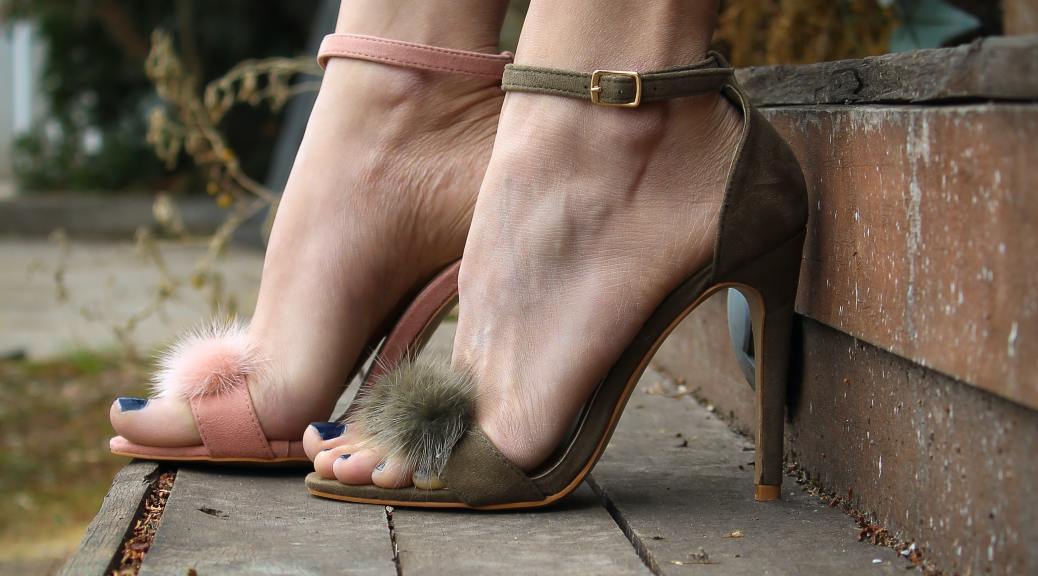
In the winter I dress pretty low key, in pull over sweaters and cardigans with corduroy pants and sensible shoes. Nothing fancy. I want to be warm and comfortable. In the summer, I just switch to Capri pants and shirts. The only time I dress up is when I have to testify in court. My coworkers always notice and comment “You must be going to court today!”

Changing my clothing style so drastically would excite rather a lot of comment at my work. No one who I know of in town wears anything like the Swedish clothing I saw in the magazine. People might think I was having a crisis in identity. I haven’t made up my mind yet, but I think I could possibly venture out with maybe one new, wild, Swedish ensemble. We will see.

How would you describe your style? What is the most outrageous outfit you have ever worn? If you could, how would you change the style of clothing you wear?

Double Take

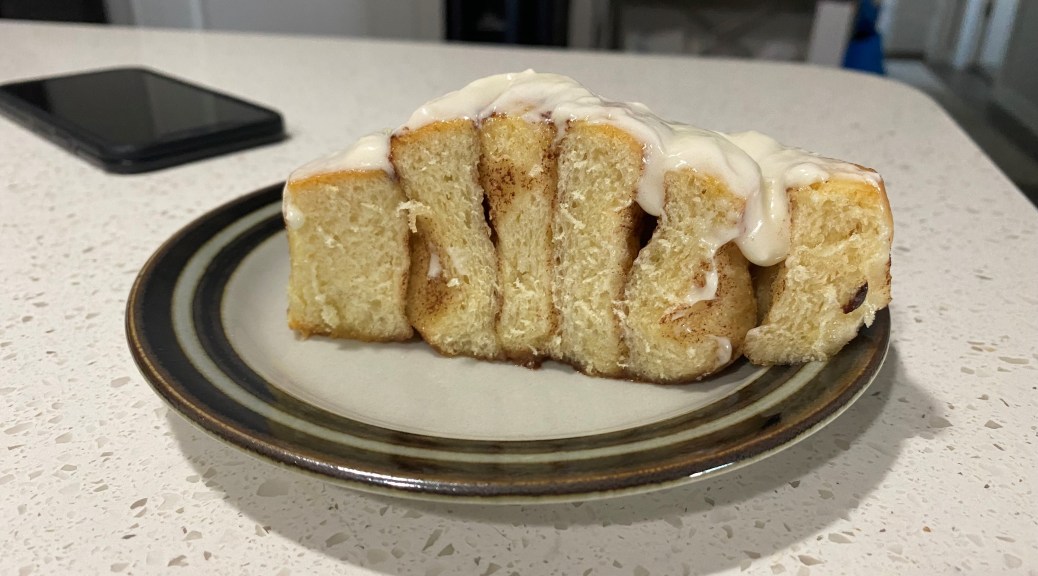
Last weekend when I was in Madison, my girlfriend and I got a huge cinnamon roll to take back to her place to share.  She cut it in half and put each half on a plate.  Admittedly I don’t think I’ve ever cut a cinnamon roll in half – I’m not much on sharing when it comes to cinnamon rolls.  But since we’d already shared a big doughnut at the market, I was acquiescent. 

When I looked at my half, I saw Stonehenge.  Well, not exactly Stonehenge as it looks now, but the stones that make up the henge.  I mentioned it to my friend, who said she could “kind of” see it.  She thought it looked more like Legos.  Since I’m the traveler and she’s the grandmother, I suppose that makes sense.  We see the world through our own filters.

What filter do you look at the world through?

Summer Camps

Today’s post comes to us from Steve, who is at the extreme left above, petting the dog.

The pattern of sending kids off to summer camp is much stronger in the East than in the Midwest, but summer camps seem increasingly popular here. Kids from cities like New York or Boston might be shipped out to spend the whole summer in one or more camps. The Midwestern pattern is more likely to let kids live at home, perhaps attending one or more camps in the summer.

Camps used to be very traditional and outdoorsy, much like Boy Scout camps everywhere. Kids would play outdoors, swim, do crafts and have bonfire picnics. Modern summer camps are increasingly educational, perhaps teaching computer skills or a foreign language. My daughter has fond memories of Artward Bound, a camp that encouraged kids to engage with the visual arts. Alas, it no longer exists.

My first camp was Camp Matigwa, a Boy Scout operation. I was at an awkward age, shy and reclusive. They taught me to make a lanyard, which later made the Billy Collins poem all the funnier. We were supposed to swim once a day, but the water was cold and I was delighted to learn I could spend that hour at the camp’s “canteen” eating Baby Ruth bars instead.

I wore shorts on the day we took our first hike. I contacted some stinging nettle, which hurt like liquid fire until one of the counselors found some jewel weed, a plant whose sap canceled the nettle’s poison. The obvious lesson was that we should learn all about plants. I now suspect that our counselors staged the whole thing. They obviously knew where the nettle and the jewel weed grew, so I was the dupe they maneuvered to blunder into the nettles so they could showcase their expertise.

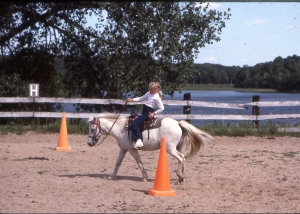
My favorite camp experience came in the summer of 1956 when I spent two delightful weeks riding horses at the Larry-Jo Dude Ranch near Boone, Iowa. We camped out, sang around a bonfire, groomed horses and took two trail rides each day. On my faithful horse, Margarita, I twice won the water relay event at our end-of-camp rodeo.

But the big event from that summer was when we played hide-and-seek on horseback. Pardon me for telling a story I’ve told before. We rode south of the ranch to a patch of woods. I had been assigned to ride Diablo, a large white mare that was the fastest horse in camp. But Diablo was lame that afternoon. When we divided up to go hide ourselves, I was stuck riding the largest, whitest, slowest horse in camp. I dismounted and led Diablo into a little gully where we could hide under some overhanging shrubs.

It was so exciting my heart still races when I remember it. Horses thundered all over the woods, kids screaming and tagging each other. I knew enough about psychology to know that time passes slowly when you are hiding like that, so I kept squelching the impulse to come out. Then the noises stopped. After what seemed an eternity, I ventured out of the gully. The woods were empty. Everyone had gone back to the ranch house, obviously unaware they were one buckaroo short.

As a courtesy to my lame horse, I held Diablo’s reins and walked her for half an hour back to the ranch. When I got to a hill overlooking camp, I saw three cop cars near the corral, their red and blue gumball lights madly spinning. And I understood: the town’s cops had been called in to find me.

The camp’s managers were delighted to find me perfectly alive and unharmed, but they infuriated me over and over. They kept calling me “the lost camper.” That was outlandish. I knew exactly where I was every minute of that day. They saw me as the lost camper although I saw myself as the hide-and-seek champion of all time.

Do you have any summer camp memories to share?

Tableau

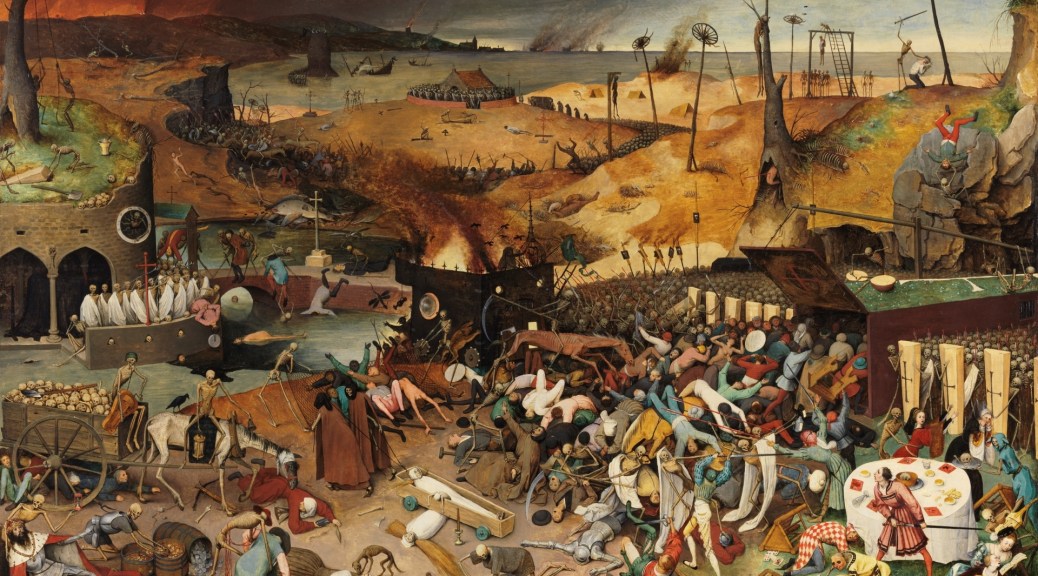
The following link will take you to a fascinating photography event that happened just 90 miles east of us, in Bismarck. It involves a collaboration of many people to recreate, with some twists, a painting by Peter Breughel the Elder, and is influenced by the pandemic. A friend of ours, a costumer and retired drama coach and choir director, sewed a costume for the collaboration, and participated in the event. It involved using wet plate photography, something I don’t quite understand, but seems to be an old technique.

https://www.inforum.com/entertainment/art/7116663-Bismarcks-Shane-Balkowitsch-makes-photographic-history-with-wet-plate-collaboration

What painting would you like to recreate in real life? What would you like to set out to photograph? What are your favorite paintings?