
The weekend farm report comes to us from Ben.
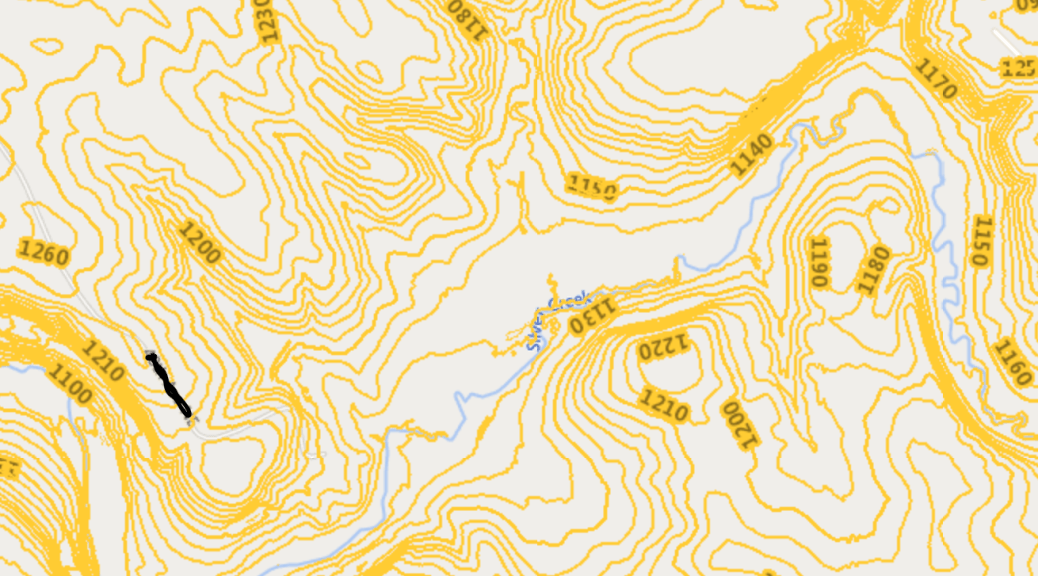
Our farm is in the “gently rolling hills” of SE MN. I have one field that is mostly flat and that’s on the low ground by Silver Creek and is in the Conservation Reserve program. The rest of the farm, the valleys, and the shape of our farm, is primarily the result of hundreds and thousands of years of water erosion. Its beginning was hundreds of millions of years ago and the seas that covered the area and created the limestone layers that eventually I played on as a kid. (Thank you Dr. John Tacinelli and the class MN Rocks and Waters for teaching me that). The topographical map in the header photo is part of our farm; the closer the lines, the steeper the slope. All those lines also mean our ground is considered highly erodible, which is why we use conservation tillage practices and crop rotation.
Also, when we get freezing rain, every step is treacherous. Everything seems to be downhill from wherever I am. Course then it’s all uphill back.
Those thousands of years of erosion are still happening… heavy rains or spring melt and there’s quite the stream coming down through our place. It’s impressive to think about the total area it might be draining; roughly 70 acres doing a quick Google Map distance check.
Last Saturday morning it was warm and the snow was melting and we’d had a little rain and I could hear the water rushing through the culvert under the field road down in the swamp.

Later in the day, the snow melt had grown in volume and was over the road.
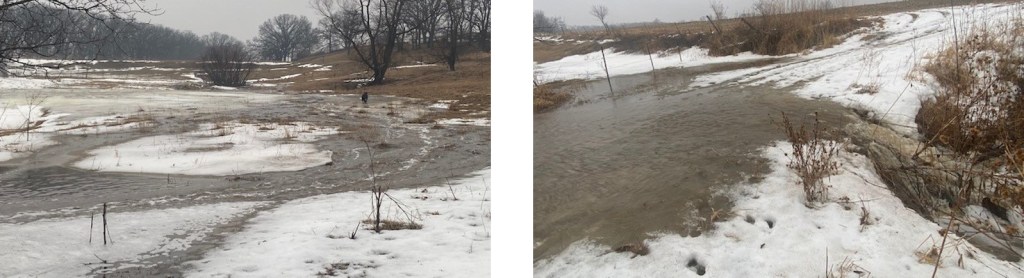
The culvert is mostly frozen yet, so it didn’t take too much more to overload it. But since the ground was frozen it didn’t hurt anything. Later in the day the runoff slowed and it was back in place. When I was a kid there wasn’t a road here, we had to go off through the pastures to get to those fields. And my siblings talk about skating on the pond down there. I think I even caught a crawdad down there once. Then dad put in some old culverts and made the road, and when that washed out, I had a better culvert put in.
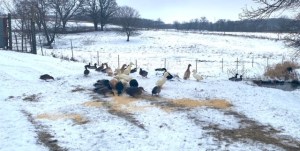
Sometime last week we lost two more poufy ducks. Then the next day one was back! Pretty beat up, moving slow, and all bloody, but back. We started calling him Lazarus. He’d be gone one day and back the next. We couldn’t get too close, but we could see he had something wrong with his bill. One day I went to get corn for the ducks and when I came out of the feed room, he was right there. I gave him some corn and got him some water. He seemed like he wanted our help. To leave the other ducks, go off by himself, and come that close to us… the ducks don’t normally do that. He drank some water; I used the hose and ran some water near him and sprayed a little on him. He seemed to appreciate that. Then he let me pick him up and I could see he had a chunk tore off his bottom beak. I didn’t want to try cutting it off yet. I put him in the feedroom with food and water so he could just rest. Kelly went down at noon and checked on him and talked with him, and I went down after work and he’d died. Shucks. I wonder if he came to us for help, or as animals do, was he looking to go off on his own because he knew he was dying? We hate to lose one, but it’s worse when we’ve been helping and we get attached to them.
Township elections and the Annual Meeting was last Tuesday. The second Tuesday in March is ‘Township Day’ and all 1780 townships in MN have elections and annual meetings that day. A township is the rural equivalent of the city council. Townships provide or coordinate road maintenance, fire protection, law enforcement, and whatever other issues may arise. It might be property boundary issues or animals at large. Usually, it’s a pretty low turn out and a pretty quiet meeting, which means we’re doing alright. When there’s a crowd, there’s usually a problem.
You’re up for election. What position did you win?








 Trail Baboon