Our friends at the Twin Buttes Powwow last weekend were very excited to serve us fresh fry bread made by a relative named Rhonda. She seems to be well known as one of the best fry bread makers around the MHA Nation on the Fort Berthold Reservation.
Fry bread, for those who don’t know, is a dough made with flour and lard or fat and then fried in oil. It was developed by Native Americans as a substitute for their traditional foods after they were relocated to areas that wouldn’t support the growing of their traditional crops of corn and beans. It is a bread of poverty and hunger, and was first made from US Government commodities doled out to the tribes. Despite its painful history, it is a favorite of many Native Americans, and considered a real treat. I have eaten my fill of fry bread over the years, and Rhonda’s was excellent, light and puffy and chewy, with a hint of sweetness and not too oily.
For years, Rhonda has jealously guarded her recipe and refused to let anyone know her fry bread secret. Last month at a Sundance at Pine Ridge she was there with other family members preparing food for the Sundance participants, got a migraine and, for some reason, started sharing her recipe with all sorts of people, except not with family and tribal members who have always wanted it! My, were they miffed!
What food is essential to your family gatherings? What food do you have trouble understanding why people bother to eat? Have you or someone you knew tried to keep a recipe a secret?
Son and Daughter in Law successfully bid on a new home last month. They close in early September. They matched an existing bid on the home, and the home owners picked Son and Dil. We are all most grateful.
I asked Son why he thought the owner picked them. He said he thought it was because they liked the bank they were working with better than the bank the other bidders were working with. I thought that was reasonable.
A couple of weeks ago Son and his wife took another look through the house, and ran into one of the owners. The owner, a very religious person, told him that they chose Son’s and his wife’s bid after concerted and serious prayer because they both had Old Testament names. How random, but again, we are grateful!
It is said that William Lyon Mackenzie King, an early 1900’s Prime Minister of Canada, used to make important government decisions by flipping open the Bible with his eyes closed and taking as an omen whatever verse his finger landed on. I find that alarming. I tend to use my head and my heart to make decisions, but mostly I decide using my heart. Sometimes, though, following my heart and instinct has led to disaster. It is only through a timely intervention by my head that I can proceed.
How do you make decisions? Tell of important decisions you or others have made that worked out or didn’t work out? Why or why not?
I love having “aha” moments and I’ve had three recently, all from reading.
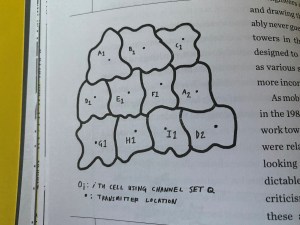
#1. 99% Invisible City by Roman Mars details a lot of the infrastructure that surrounds us in the urban environment, much of which we don’t notice and definitely take for granted. In discussing wireless towers, he writes: “As commercial cellular towers began to sprout up in the 1970s, diagrams depicting their coverage areas looked like blobby plant or animal cells pressed up against one another – hence the name ‘cell phones’.” I had never stopped to think about why we say “cell phones” so this was an amazing discovery for me. I stopped reading for a moment and reveled in the fun of it.
#2. This is Your Mind on Plants by Michael Pollan. This is the second book of Pollan’s that features discussion of hallucinogenics. In writing about mescaline, he alludes to the song Mellow Yellow by Donavan and that the meaning of the song is about smoking banana skins, believed in the 60s to be hallucinogenic. I can sing along to Mellow Yellow but never ever thought about the lyrics and what they might mean. (Turns out Pollan was actually wrong – Donavan was writing about an electric vibrator that he had seen an ad for – the equipment was called the “mellow yellow”.)
#3. A Time of Gifts by Patrick Leigh Fermor. This is an older travel book; the author walked from England to Constantinople in the days before WWII. After completely overdoing it in Munich at the Hofbrauhaus, he woke up with a “katzenjammer”. Now I remember the old comic the Katzenjammer Kids, but had no idea that katzenjammer actually means hangover. I’m not sure how “cat” and “distress” came to mean hangover, but it’s fascinating to know this tidbit!
It’s fairly well documented that William Shakespeare coined a lot of words (sources go as high as 2000) that we use commonly today:
Auspicious
Bloody
Dwindle
Frugal
Gnarled
Majestic
Multitudinous
Premeditated
Sanctimonious
There are also scads of phrases that he was the first to use and that we still use today:
Seen better days
Too much of a good thing
Love is blind
Set your teeth on edge
The game is up
Unfortunately, having seemingly absorbed the rules of language and grammar in my youth, I am often (read “always”) torn when I come across a new word. Part of me wants to send these new words to the trash can and part of me wants to embrace new words wholeheartedly. After all, think how unimaginative English would be if we hadn’t embraced “gentlefolk” or “jaded” or “pendantical”?
This week, I heard the word “bleisure” (combination of business and leisure travel) and I was a little appalled. If there is business, can there truly be leisure? Even my trip to Kenya and Tanzania, which was devoid of clients and official business, still felt like a business trip to me as I was surrounded by travel professionals from other companies. But I suppose there are plenty of people out there who can combine business and pleasure, making the word “bleisure” useful. I just can’t see myself ever using it.
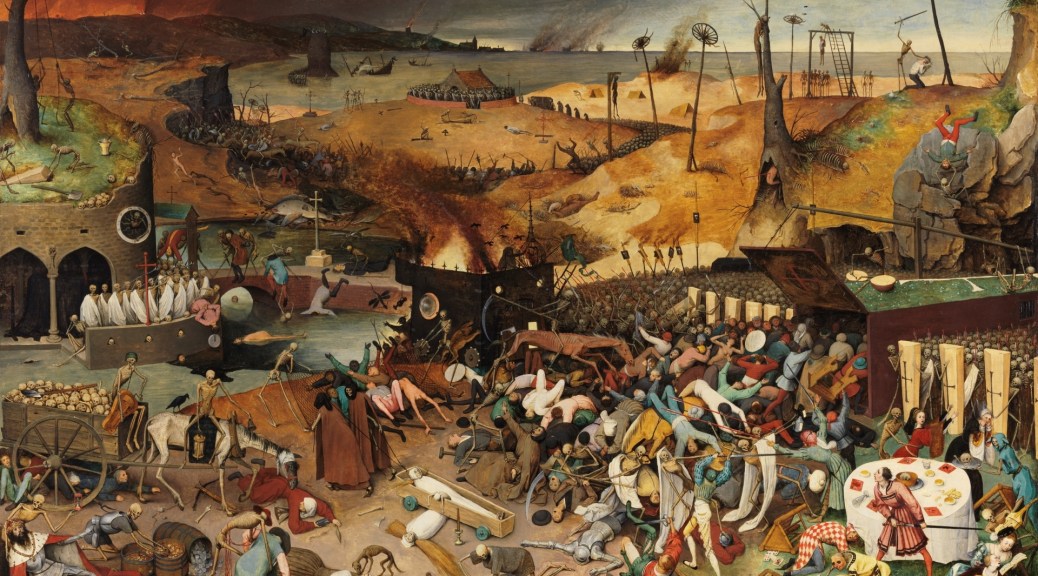
The following link will take you to a fascinating photography event that happened just 90 miles east of us, in Bismarck. It involves a collaboration of many people to recreate, with some twists, a painting by Peter Breughel the Elder, and is influenced by the pandemic. A friend of ours, a costumer and retired drama coach and choir director, sewed a costume for the collaboration, and participated in the event. It involved using wet plate photography, something I don’t quite understand, but seems to be an old technique.
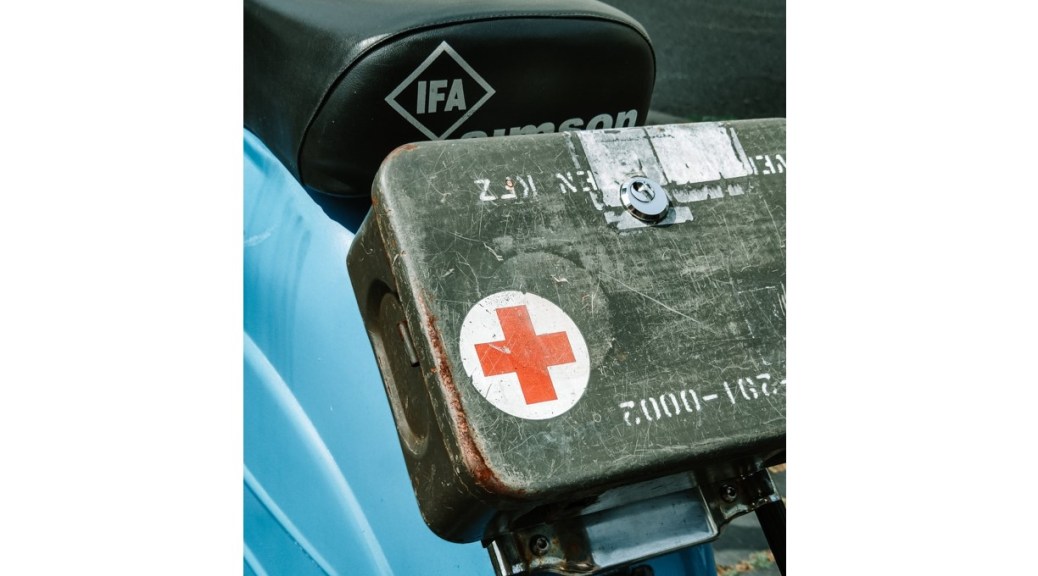
My phone pings me every day with a “this day in history” note. Yesterday’s was about the founding of the American Red Cross in 1881. I already knew that Clara Barton was instrumental in the beginnings of the Red Cross, but didn’t realize that she had worked with the International Red Cross during the Franco-Prussian war and that she began lobbying for an American organization when she came home after that. She headed up the Red Cross well into her 80s.
This tidbit of history caught my eye because the very first charitable work that I headed up was for the Red Cross. I don’t remember what was going on in the world and I also don’t remember how I got interested, but when I was in the sixth grade, I started a drive to make care packages that were sent to the Red Cross. My school let me mimeograph some flyers and kids brought items that we used for our kits: soap, washcloths, socks, toothbrushes and toothpaste. We had two or three meetings to put the packages together using paper lunch bags. I don’t remember how many we made, but it seemed impressive to me at the time. I felt very proud when my mom drove me to the Red Cross center to turn them in.
Like I said, this was my first organized good work but not the last of my support of the Red Cross. The following summer a friend and I went all over the neighborhood (repeatedly) with a wagon, collecting pop bottles from people. Then we carted them up to the Kelloggs store and collected the refund, which we donated to the Red Cross. It wasn’t very much, but it felt like we were doing something important.
Do you have a cause that you’ve been passionate about?
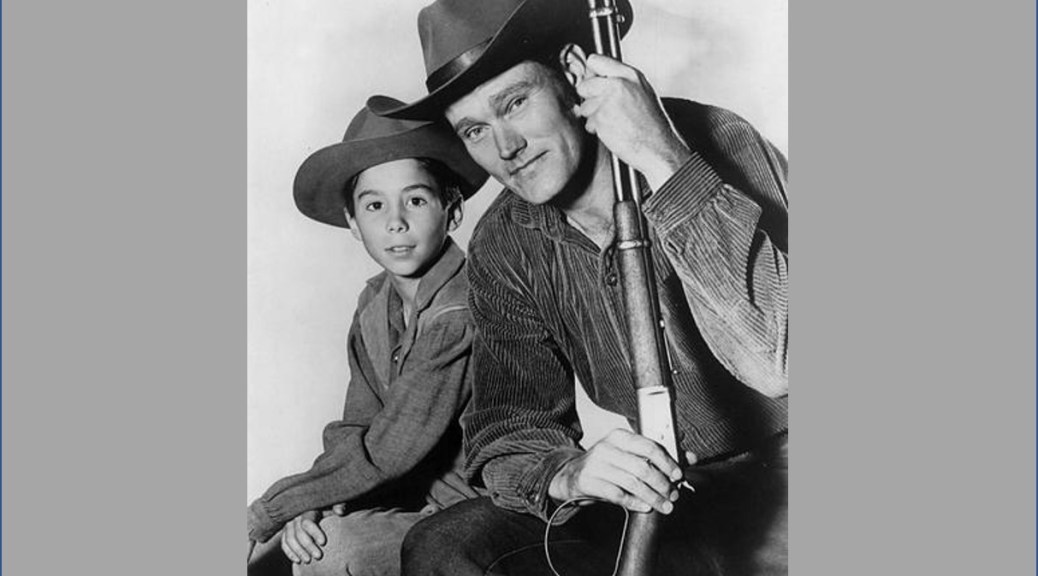
Johnny Crawford was one of my idols when I was a kid. Although he is best known for his role as Mark McCain on The Rifleman, he was a very busy young man, appearing in not just Mickey Mouse Clubhouse but a myriad of other movies and tv shows.
He also had a musical career with several of his songs making it to the top ten on the charts. His most famous was Cindy’s Birthday.
He appeared on the rodeo circuit for a time; apparently he was a master at rope tricks, which he had learned during his years on western/cowboy pictures. He served in the armed forces for a few years as well, but kept returning to acting. His last picture was a piece with Chuck Conners in which the roles from The Rifleman were reprised. Apparently Johnny and Chuck had remained close in all the years since their television show.
Crawford’s career was cut off when he was diagnosed with Alzheimer’s in 2019. Sadly he passed away from complications of Covid last week. He was apparently a really nice person and had a beautiful smile right up until the end.
Who did you have a crush on when you were younger? (Or now for that matter!)
I ran across this article in the Rock County Star Herald the other day, found in the newspaper archives from 1892 by the president of the Rock County Historical Society:
“It gives the Herald much pleasure to announce that the committee in charge of the Fourth of July celebration to be held at this place have been fortunate enough to secure for that occasion Prof. A. L. Ward, of Sioux City, IA . , one of the most celebrated and daring aeronauts in the country, who is now under contract to be at Luverne at the time stated and make one of his famous balloon ascensions and parachute jumps. The balloon to be used on this occasion is in the neighborhood of thirty feet in height and is equipped for the performance of the most daring feats ever witnessed in the country.
On the way up Prof. Ward gives a thrilling performance on the trapeze and takes with him a trained dog which creates much amusement and interest in making a parachute descent of his own. After going as high as his balloon will carry him, Prof. Ward discharges a number of explosives and then jumps from his balloon with a parachute. The exhibition will be one of the thrilling interest and no one should fail to witness it.
By the direction of the committee the president was requested to extend an invitation to the fire department. Half rates will be given on all the railroads and efforts are being made to secure special trains.”
I wish Betty, the Historical Society President, had also included a follow-up review of Prof. Ward’s jump. I also wanted more information on the dog. We are seriously planning to move to Luverne in a couple of years. There still is an element of fun in town. This appears to be a long standing, historical trend.
What are some fun times you remember in the community in which you grew up or where you live now. What kind of celebration would you like to see in your community? Under what circumstances would you do a parachute jump?
We had a lovely visit on Monday from my cousin, Wes. He lives in Columbus, OH, and is a retired librarian at Ohio State. He was a librarian at Macalester for several years, and then moved to to the big time in Ohio. ( I always think of him when Wesew comments on the blog).
Wes was on a return trip from Seattle and stopped by before heading to Minnesota to see other family there. We had a great time reminiscing and telling stories. We share similar political and social beliefs. I hadn’t seen him for six years. Growing up as an only child, my cousins were like my brothers. I spent a lot of time with them. I had very few female cousins and I wasn’t very close to them. I think perhaps that is why I have always been more comfortable around men than I am around women.
We have had very few visits from any family except my parents since we moved here 33 years ago. This visit was a real treat. I wish that more of our immediate and extended family had the sense that a visit to other family is more important than the appeal of the area in which they live. I suppose that our family could just consider us real pills, and that is why they don’t visit, but I they seem to like it when we visit them, so I don’t think we are that putting off.
What family visits have you dreaded or enjoyed over the years? Who are your favorite cousins? Who are your favorite relatives?
Things from the farm; Continuing that first day of fieldwork.
I Put the tires back on the drill and the four-wheeler. I put the pallet forks on the tractor loader to unload the pallet of oat seed (54 bags at 1.5 bushels / bag = 81 bushels x 32lbs / bushel = 2592lbs. This is way easier than unloading by hand. Working smarter, not harder!). I checked the tires and greased a few things on the tractor and soil finisher, and then out in the field. First thing I had to do was level out a couple cornfields that were chisel plowed last fall. Oats is the first crop that I plant in the spring and some will be on fields that were soybeans last year and some will be on corn ground. The bean ground doesn’t get worked up in the fall so that only needs to get dug up once before planting. First field, first pass, stop at the end to check things and found my first “field treasure”.
Not sure what this is. Still thinking about it. I also smoothed a field that came out of the conservation reserve program last fall; it had been planted to wildflowers for 10 years, but this particular field just never took off. Never had as many flowers and was getting some shrubs and saplings growing in one part. Trying to plow up a field of grass is tough; too much root structure. Have you heard the story about John Deere and his steel plow and that’s what made him famous? The root structure and grass would never survive a wooden plow. I have an old John Deere 4 bottom moldboard plow just for this purpose and I only use it every few years. 150 years after Mr. Deere himself. It worked out pretty good. It’s nice black soil over there.
Across the fence, in the neighbors pasture, next to the creek, I saw the two sandhill cranes that we’ve been hearing.
I called to order oat fertilizer and they said there was a waiting list on the spreaders so I really didn’t expect it for a few days. I was surprised when they deliver that about 5 o’clock. And that means I better get it spread right away so the next person can get it. Think of a really big version of your plain old lawn spreader.
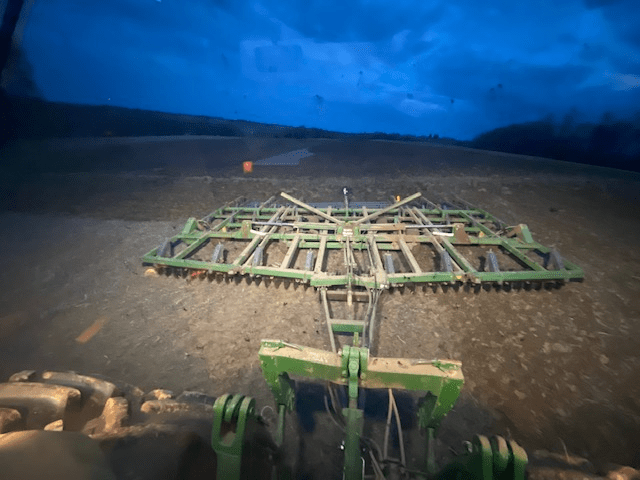
The pattern with broadcasting fertilizer is about the same width as the headlights. I’ve been putting better lights on the tractors the last few years.
As long as I can keep the tire tracks from the previous pass at the edge of the field of light, I am doing pretty good. I got two fields done and stopped just to walk around for a minute. While standing outside I looked at the power take off shaft that drives the fertilizer spreader and I thought, “that angle doesn’t look right”. And it wasn’t. The shaft is severed and the only thing holding it together is a tiny little bit of the plastic shield. Shoot. Guess I’m done for the night. I still can’t understand though, if it was still running when I finished the field and I turned everything off and drove over to here, when did it break and how did it keep working? I don’t know if I did something wrong: did I turn too sharp, is the hitch the wrong height, did the three point hitch bracket on the back of the tractor get in the way? Or maybe it just broke. I’ll call the co-op in the morning and somebody will come and replace the shaft. Even if I have done something stupid, they won’t give me too much grief about it. Parked it all in the shed and close the doors. If it’s raining in the morning there’s no hurry on calling to get it fixed.
9:00 PM. Supper time.
What do you find digging in your gardens? Ever found a buried treasure?









 Trail Baboon