Category Archives: History

Zippy the Wonder Car

With a nod to Anna, who started this discussion a couple of days back….

I bought my first car, a Toyota, when I was living in Northfield. I had spent the first winter after leaving school riding my bike out to the Country Kitchen on Highway 19 and didn’t want to do that again.  It was pale blue and got me through several winters before giving up the ghost.  I didn’t name that car; giving a name to a car didn’t even occur to me.

Then I met a woman who called her little car “Zippy the Wonder Car”. To this day I’m not sure why I thought this was so enchanting but I did, so when I purchased my next car (back in the 80s), I decided she should have a name.  She was a Honda Civic and when I discovered that the Italian word for flirt was “civetta”, I was hooked.  I had Civetta for almost 15 years.

I let Child help me name our next car, which made the process a LOT longer. This car was a Saturn Ion and we eventually settled on Ivy.  We usually called her by her whole name – Ivy the Ion.  Not quite as much fun as the Italian word for flirt, but it stuck.

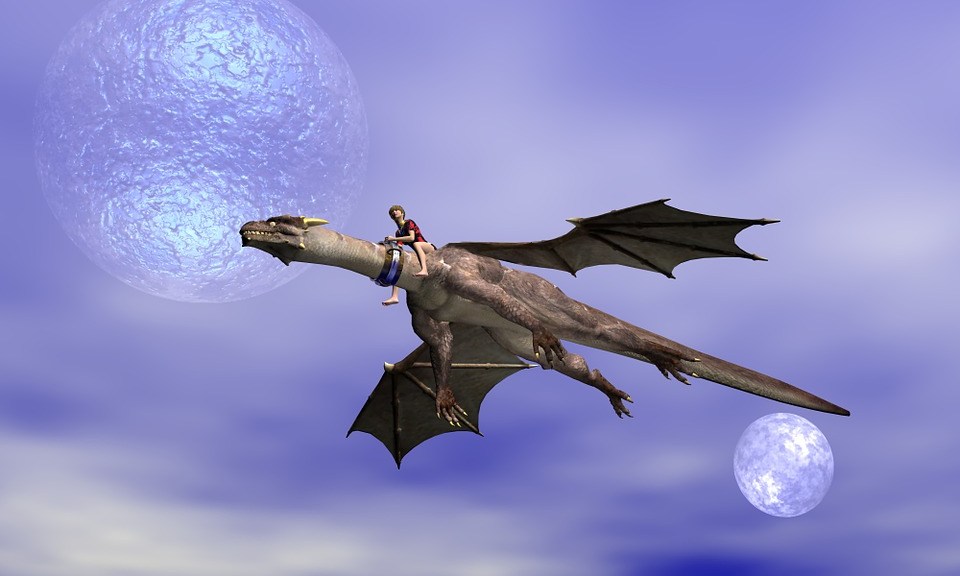
My current car is named Brekke. She’s a Honda Insight and I couldn’t find any “I” names that I really liked.  Brekke is a character from one of my favorite sci fi authors, Anne McCaffrey.  Brekke is one of a few characters on the dragon world of Pern who have the ability to communicate telepathically with ALL dragons, not just her own.  If I were to live on a dragon world, that is an ability I would certainly want.

Have you ever named an inanimate object?

If not, what name would you choose for your current mode of transport?


Modern Heraldry

The family crest in the header photo is that of my Great Grandmother Cluver.  The Cluvers were a very old family of knights and landowners  from northern  Germany near Bremen.  The crest shows a black claw of a bear on a golden field. The open helmet has a ball with a wreath and a column of peacock feathers.  I’m not sure what the seven flags represent. The family was in its  heyday in the 14th and 15th centuries.  You can see the crest on Cluver family memorial plaques from that time period in the Bremen Dom, or cathedral. They chose to remain Roman Catholic during the Reformation and lost most of their property and land when the region  was occupied by the Lutheran Swedes during the Thirty Years War.  By the time my great grandmother was born in the late 1800’s, they were small farmers and shop keepers. My great grandmother was a domestic servant before her marriage. That crest hasn’t reflected the status of the family for several hundred years.

Daughter rescued a hapless Yellow Lab from a busy intersection in Tacoma last week, and managed to track down the owners since the pup was  microchipped. When she told me about it I thought “well, the apple doesn’t fall far from the tree”,  since she saw us rescue many a dog and cat and get them to safety. That is when I thought about our family crest and what an updated one would look like.  I think it would have the profile of a Welsh Terrier in the center encircled by cats. Husband said a rolling pin and a garden fork would be appropriate symbols, too, as well as the Greek letter Psi, a symbol for psychology.  We should have a violin or cello worked into the design. Of course, there would be a baboon, too.

What would be on your modern family crest?

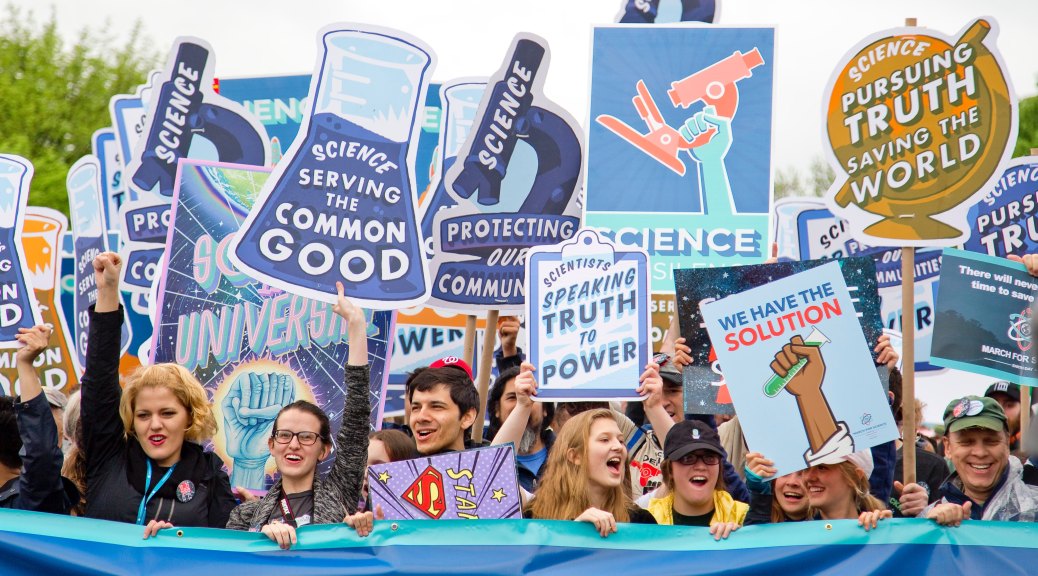
Science and Me

Today’s post comes from Steve Grooms.

I grew up thinking some people are born with science and math competence, but many are not. I long ago concluded I am stuck in the “not” group. Not surprisingly, I performed badly in the two science courses my high school forced me to take.

When I went to college I honored my mother’s fervent wish by declaring a pre-med major. That didn’t last long. In my freshman year I got a D in inorganic chemistry, a “gentleman’s D” that should have been an F. I switched my major to American Studies. I instantly felt relief because history and literature classes were fun and almost easy for me. I regretted being such a dunce in science classes, but it seemed obvious that I was never meant to be a scientist.

Life has ways of challenging our prejudices. As an outdoorsman and outdoor journalist I was a passionate advocate for intelligent management of the planet and all things that live on it. And guess what? I couldn’t fight for sound wildlife management without considering the science used to defend different management programs. When thoughtful people began dreading climate change, I realized that ignorance about science was a luxury our society cannot afford.

Writing about wolf management obliged me to confront tricky science issues. The state of Alaska has long been enthusiastic about lethal wolf management. Alaska’s game managers claim scientific research proves that killing wolves will boost populations of caribou and moose. Many wolf biologists disagreed. I was forced to consider whether Alaska’s wolf studies were sound science or just excuses to kill wolves.

At about the same time, I met wolf researcher Dave Mech, the most dedicated scientist I’ve known personally. Dave helped me see the dangers of sloppy science. After working with him I realized (to my astonishment) that I respect the scientific method. It is an intellectual discipline that makes it possible to test ideas about the world we live in.

My personal odyssey of coming to admire science has been boosted enormously by the way so many politicians have decided that science is their enemy. The current occupant of the White House hates science. He dismisses the wisdom of genuine experts, favoring the whims of his “gut.” As recently as 1990 many Republican politicians supported science research, but that seems like a distant memory now. I’m convinced that the anti-science culture so prevalent today is anti-intellectualism in a form that threatens all the values I hold dear.

I once would have cheerfully admitted to “hating science.” No more. I dream of a time when science and its rigorous style of problem solving is respected again. If we are to make America great again, that would be a smart place to start.

Does science touch on your life now? Do you have feelings about science?

RIP Peter

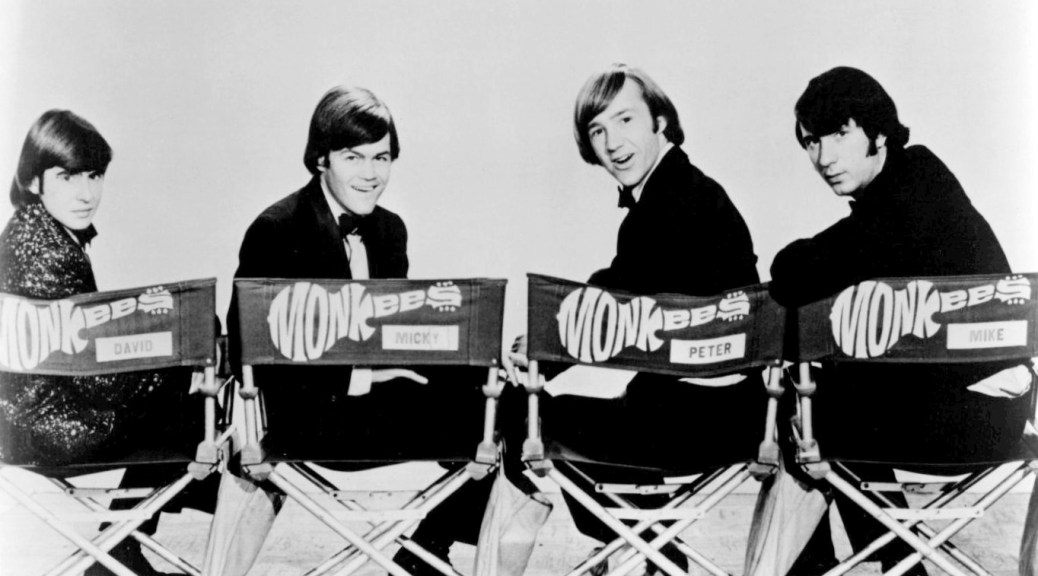
I was a little too young to be a full-on Beatles fan. In the mid-60s, I hadn’t quite hit puberty yet and didn’t have any of the drama and angst about pop idols that was needed.  But that changed just a few years later when the Monkees hit the pop scene.

Along with my friends, I papered by bedroom walls with Monkee posters, I watched their tv show religiously, I bought every single and album, I read every Tiger Beat and Teen Idol that I could get my hands on. In 1967 at the age of 11, I convinced by folks to let me go to their concert with some friends when they played St. Louis (there was a chaperone with us).  It was the first pop concert I ever attended.

Peter was my favorite Monkee. Davy was most people’s favorite, but I liked Peter; he was portrayed as a little dorky and scatter-brained, the underdog.  I am always attracted to the underdog.  So I was sad earlier this week when I heard the news that he has passed away at the age of 77.  Not distraught but it somehow feels as if a stage of my life has passed as well.  I’m listening to the Monkees right now on my pc.

Who was your first idol?

Rhapsody in Blue

Today is the anniversary of the 1924 premiere in New York City of George Gershwin’s Rhapsody In Blue by Paul Whiteman and his Orchestra. As a clarinet player, I always loved the opening clarinet slide, and was always so frustrated when I couldn’t replicate it.  I recently learned that Gershwin initially wrote the piece for two pianos, and it was orchestrated for Whiteman by Ferde Grofe, yes, he of the Grand Canon Suite.  Grofe was considered quite a jazz composer and arranger, which I also find surprising.

I love Gershwin’s music, especially his popular songs.  I wonder what would have happened if he hadn’t died so tragically young.

What is your favorite Gershwin music? What contemporaries of Gershwin do you like?

MMR

There was a small blurb  in our local paper yesterday about an outbreak of mumps in our city’s middle school. The city Facebook page has a number of antivac and provac responses to this crisis, as crisis it is, as there are several immune compromised students who cannot go to school because they are at risk for terrible infection.

I remember having Rubella, Mumps, Roseaola, and Chicken Pox. Husband had all those and Scarlet Fever as well.  Both our children had the Chicken Pox.  There are many individuals receiving Developmental Disability services in our region because they had mumps or measles or some other childhood illness in the 1950’s that resulted in intellectual disabilities.   Our grandson is now recovering from RSV, and I am thankful his parents are confirmed vaccinators.

What memories do you have about childhood illnesses?  How do you feel about vaccinations?

Surfing Pluto

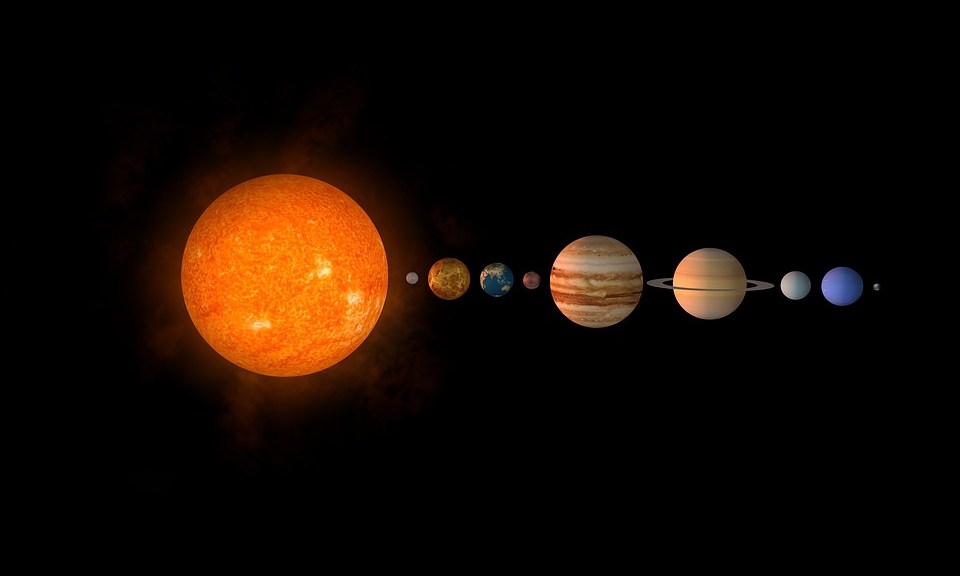
It’s amazing what happens sometimes when you’re surfing the internet. I started with my daily dose of Sci Show Space, which led me to Gustav Holst’s Suite of Planets.  I realized that Holst wrote The Planets before Pluto was discovered, so he can’t be blamed that after 1930, he was missing a planet (of course now he’s OK again if you want align yourself with the Astronomer’s Union).  Over the years composers have “added” to Holst’s work with various songs about Pluto.

There are serious attempts like Pluto, the Renewer by Colin Matthews):

and very silly (yet funny) pieces, like For the Planet Pluto by the Music Tapes:

And I particularly like this one, Plutonian Nights by Sun Ra:

Then my lunch break was up and I had to get back to work!

Any unsung heroes in your life?

Trending Fashion

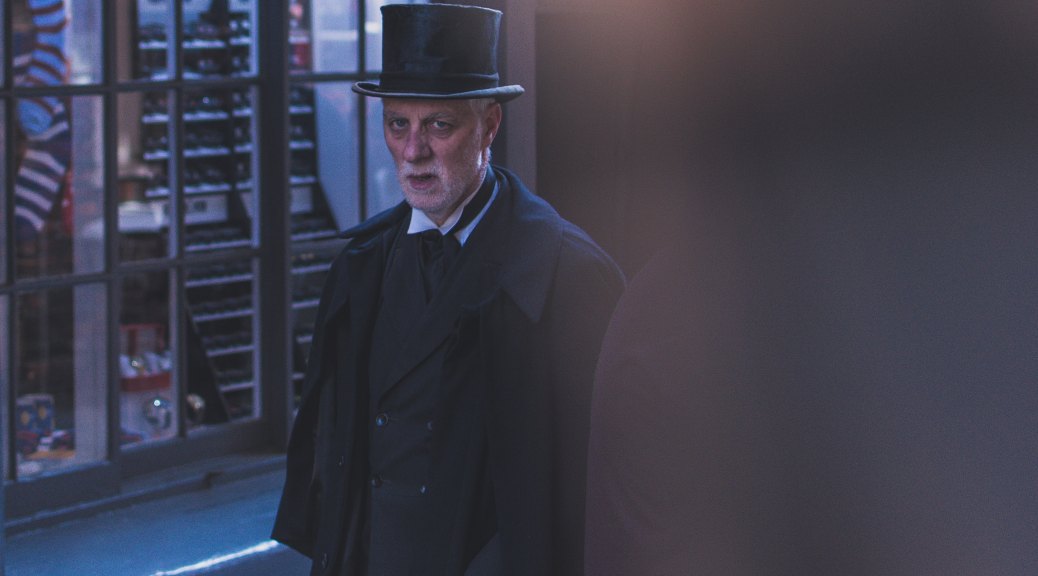
On January 5, 1797, John Hetherington, a London haberdasher,  stepped out into the public with the first top hat. It caused a riot, and Hetherington was arrested.  The arresting officer said:

He had such a tall and shiny construction on his head that it must have terrified nervous people.  The sight of this construction was so overstated that various women fainted, children began to cry and dogs started to bark.  One child broke his arm among all the jostling“.

The London Times came out in favor of the hat, and predicted that it would become a fashion staple. It was declared “a significant advance in the transformation of dress“.

I suppose the only time I was at the forefront of fashion was when I wore bib overalls in my early 20’s. That sure didn’t last long. These days I am a corduroy and sweater sort of person, dressed for comfort, not fashion, although those overalls were pretty comfy.

What do you think it would take to get a similar reaction to fashion today?  When have you been at the forefront of fashion? Own any fun hats?  Where would you like fashion to trend now?


Public Domain Day

Two years ago, when Dale retired from the Trail, I didn’t know anything about usage rights and although I had heard the phrase “public domain”, I didn’t really know what it meant. Dale taught me quite a bit about it and then I did further research to make sure we don’t get ourselves in trouble.  That’s why Renee and I sometimes question photos and for the most part, don’t copy poetry and lyrics of other writers.

Since 1998, a work enters public domain 70 years after the life of the author. Before 1998, it was 50 years; to clear up the complexity of that change, they put a moratorium on releasing anything into public domain for 20 years.  That 20 years is up and as of Tuesday, everything from 1923 is now officially in the public domain.

Some of the items now free to share are The Metropolis by Upton Sinclair, The Color of a Great City by Theodore Dreiser, The Murder on the Links by Agatha Christie, The Prophet by Kahlil Gibran, Rootabaga Pigeons by Carl Sandburg and New Hampshire by Robert Frost.

So in celebration of Public Domain Day, here is a poem that last week we could not have posted here legally!

Fire and Ice
by Robert Frost

Some say the world will end in fire,
Some say in ice.
From what I’ve tasted of desire
I hold with those who favor fire.
But if it had to perish twice,
I think I know enough of hate
To say that for destruction ice
Is also great
And would suffice.

Do you pay attention to expiration dates?

New Year’s Fly-by

A little over three years ago, Dale wrote a piece when NASA’s New Horizons spacecraft approached and photographed Pluto. He included several nice photos and gave us an update on the PTA (Pluto Tourism Association) about groups wanted to book some serious vacation time on the planet (or whatever Pluto is categorized as this week).

Today, after 3 years, New Horizons is doing a flyby of 2014 MU69; it will be the most distant object every visited by a spacecraft. Even NASA realizes that 2014MU69 is a terrible name – they have nicknamed the object, an icy Kuiper Belt object, Ultima Thule, which means “distant places beyond the known world”.

Scientists are not sure if Ultima Thule is one object or two objects circling each other and are hoping this flyby, which will happen at a whooping 31,500 mph, will clear up that mystery. After the New Year’s flyby, it will take a full 6 hours for the radio signals to arrive back at earth.

It’s amazing to me that just 117 years after our first machine-powered flight, we will be waiting for signals from a spacecraft that has traveled a billion miles since it passed Pluto three years ago. I wonder if we’ll still be getting signals in three more years when it is a billion miles farther from Earth and if we will be vacationing on 2014 MU69 by that point?

Have you ever had a speeding ticket?