Category Archives: Nature

Ginkgo Conundrum

I don’t think of myself as clueless but I will admit that most of the time my brain is going 100 miles an hour and I’m not always as observant as I would wish.   

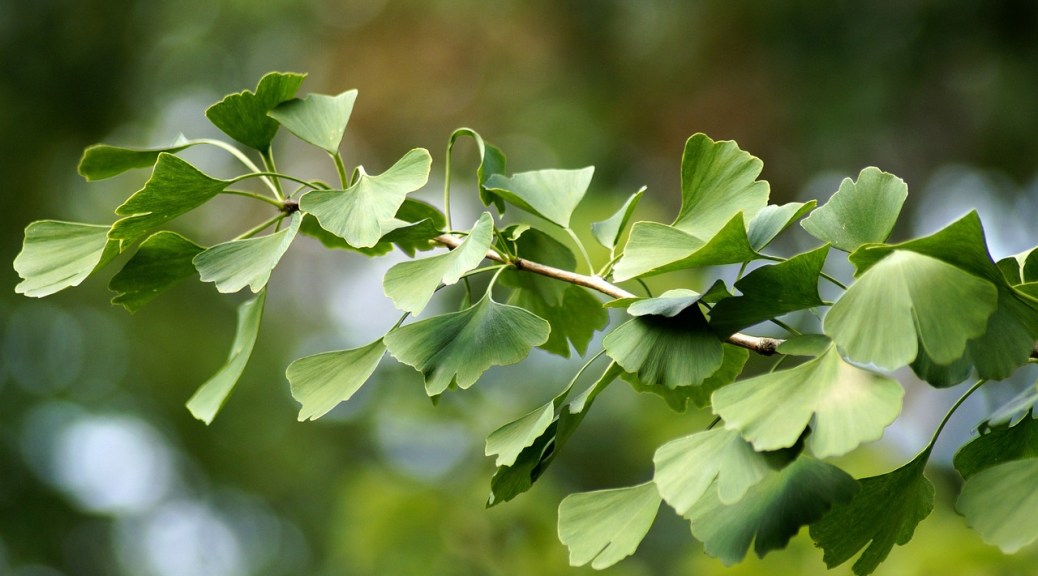
Dog walking has returned to my schedule now that I’m RE-retired. We normally go for 45 minutes to an hour.  I tend to wander around Tangletown or towards Lake Harriet; I like the neighborhoods and I don’t think Guinevere cares where we go as long as we go.  So if you count all the walking we did during pandemic/furlough as well, we’ve probably trekked down Belmont Avenue 50 times in the last couple of years.  But it wasn’t until last week that I noticed the ginkgo leaves on the sidewalks.  The first one I noted, the second one I noted and after the third one, I looked up and down the street.  With few exceptions, all the boulevard trees from 51st all the way to Minnehaha Parkway are ginkgos.  And they are big, sturdy trees – obviously planted decades ago.  Just lovely.

I did a little bit of research and found that the city has always controlled the boulevard trees but I can’t find anything on why this particular stretch was planted with ginkgos.  The current policy, thanks to Dutch Elm disease and the Emerald Ash Borer, is to diversify trees on the boulevards so going forward I doubt any replacement trees on Belmont will be gingkos, although if it were my boulevard, I might petition hard to get a gingko replacement!

How should I focus so I can be more observant?

Still Dry

The weekend Farm Report comes to us from Ben.

No rain to speak of around here yet. We had some mist a couple different days, and at least it’s cooler now and I like that. 

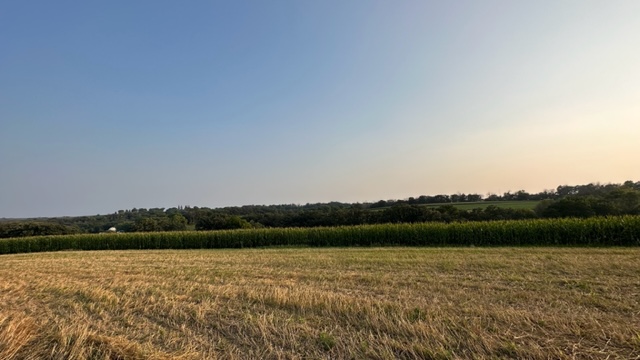
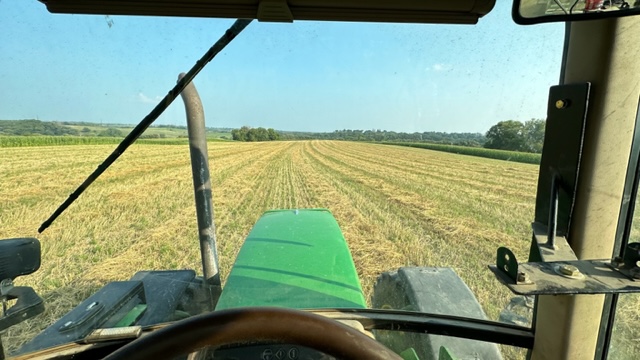
I see some farmers chopping corn silage. I miss doing that; it was a fun job. It smelled good, it unloaded easy, and it was a very satisfying job. The loads were heavy and if it was muddy that made it harder with the small tractor I used to pull the wagons. For a lot of years, Dad ran the chopper and I pulled the wagons home to unload. There were a few years I did it myself because he was working or retired. Maybe that’s why I just feel like doing things myself so much these days. Yes, fall is coming; I have seen some corn crops really drying out and turning brown both because of reaching physical maturity or because they’re on lighter soils and it’s so dry, the crop is just done. (Especially noticeable in rocky ground; that dried out sooner). 

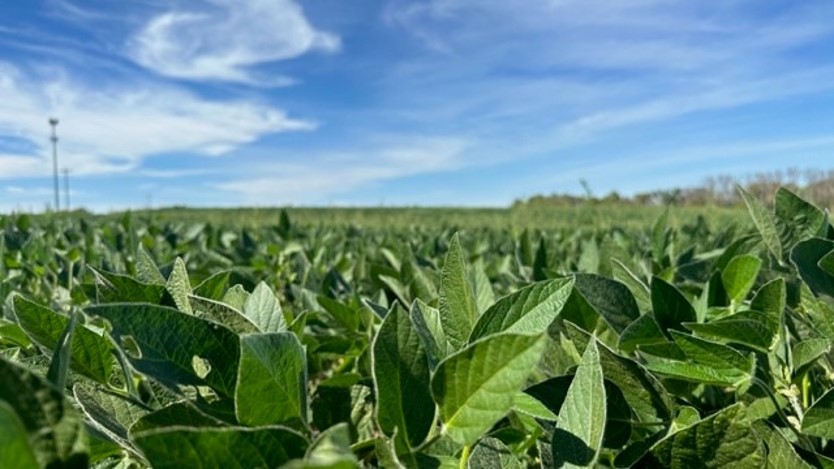
Soybeans are starting to turn yellow and will soon be losing leaves. Not mine, but most or the better-looking crops. My weeds are flourishing in the bean fields. My sister made the comment that she was glad to see some weeds because that meant I wasn’t “drowning the fields with herbicides”. Hmm, Well. All those weeds will be going to seed and making that many more weeds next year. And if the beans dry out but the weeds haven’t frozen yet, that makes harvesting more difficult. Plus the nutrients they’re using that the crop should be using. We can be pro or con to herbicides and chemicals, but we have to be sure we’re looking at both sides of the situation. Crop rotation helps with weed control too, so these fields being corn next year will stop next year’s weed, but those seeds…you know they just hide out and wait. 

A few weeks ago, I talked about planting winter rye as a cover crop. I haven’t planted yet because it won’t grow until it gets some moisture in the soil. It’s just hot, dry dirt right now. Chance of rain again Sunday, but that’s the only rain in the forecast. And if it gets too late in the season, is it worth planting? I don’t know yet. 

The barn swallows have moved on. It sure is quiet with them gone. We miss them a lot. 

Lots of acorns falling. And walnuts. We have one horse chestnut tree I planted from a seed that I picked up outside of our church when I was a kid. Mom says it’s a wonder it ever grew as I was always digging it up to see if it was growing yet. Well, boy, it has a lot of nuts on it now and it seems like 60% of them sprout in the spring. I’ve used the chestnuts for barnacles in plays. And I used to fill my Tonka dump truck with acorns. There are oak trees around the college theater and every morning as I walk in, I step on the acorns and have warm memories. 

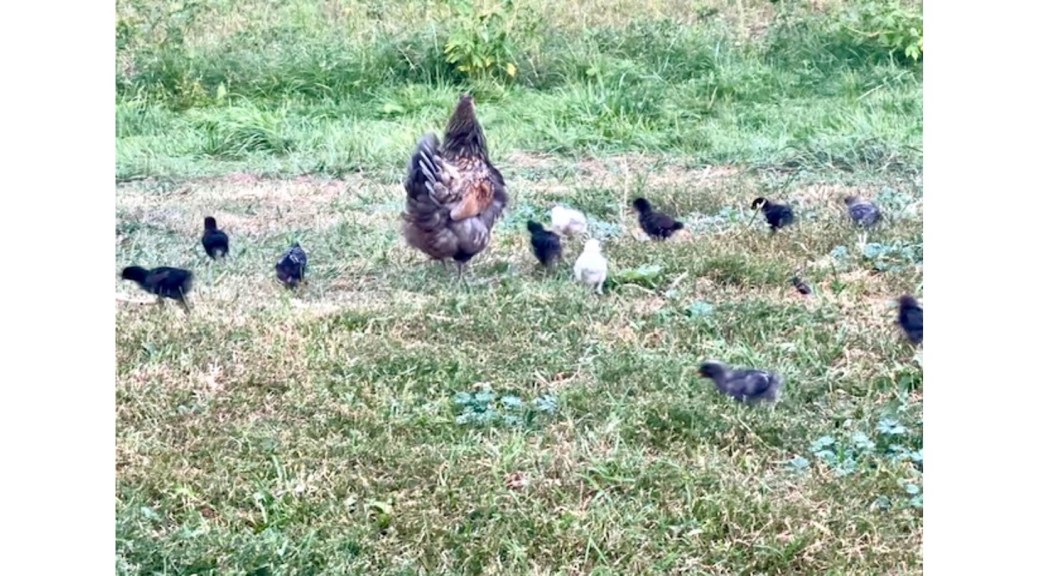
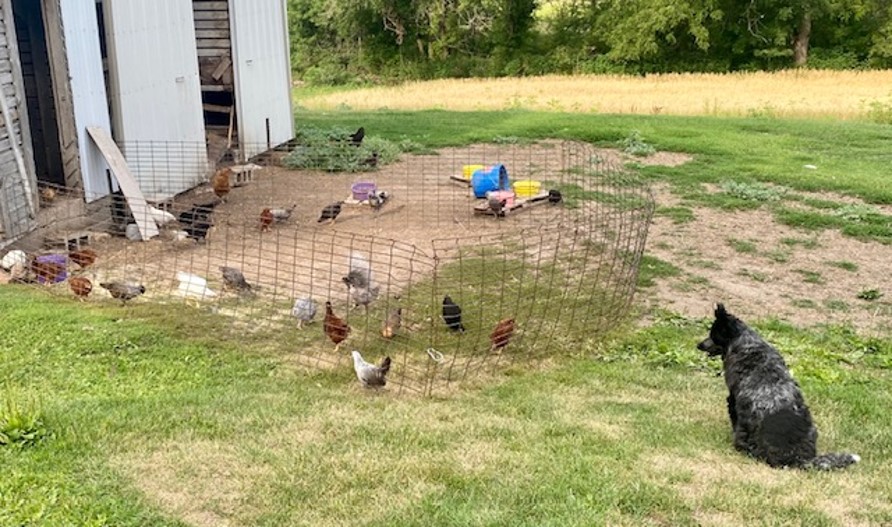
Mother-clucker still has her 13 chicks!  

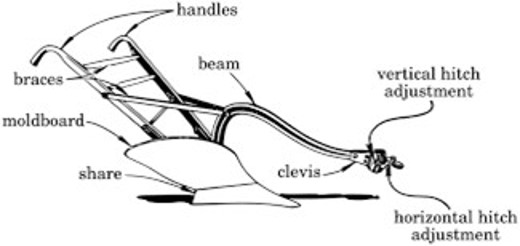
The John Deere Company stopped making moldboard plows this year. A moldboard plow is the traditional looking plow that you’d picture in your mind. The name ‘moldboard’ comes from the biggest metal curved piece that tips over the dirt. That fact it was metal is what made the man, John Deere, famous. From 1837 to 2023, the John Deere company made plows. It’s what started and made the company. It’s a big deal to let that go and there’s been some online debate over it. But that style of farming has changed. The benefit of the moldboard plow was how it could cut the plant roots and turn over that virgin soil. For a lot of years, that was the tool that was needed. These days, as we do more conservation tillage and have equipment that can plant into more plant residue, turning the soil over completely isn’t as critical. At the bottom of the moldboard was the ‘share’. The tip of that was the first piece to wear away from the soil contact. (Isaiah 2:4, “…and they shall beat their swords into plowshares…”)  

Here’s a website with more about plows and plowing than you knew you needed to know: 

I still have a 4 bottom plow at home. I used it when I took some Conservation Reserve ground out of the reserve program and put it back into cropland. Using a chisel plow on sod ground– (“sod” being alfalfa hay, grass, or pasture. Basically, any kind of grassland with the deep, tangled roots) — using a chisel plow, it takes about 2 years for the soil to really break down enough to be workable because it doesn’t turn it over completely or cut the roots so cleanly. I also use the moldboard plow when a neighbor wants part of his hayfield plowed up in order to reseed the next year. 

Plowing makes a ‘furrow’ after the last row. That furrow is a trench about 5” deep and 16” wide that you put the tractor tire in for the next round. (If everything is lined up right). At the last round of the field, you try not to make such a deep furrow. That last round is called the ‘dead furrow’. You want to remember how you plowed this year, so the next year you can go the other direction, therefore moving the dead furrow to the other side of the field. Clyde, what would you like to say about plowing? At the end of the field, how did you turn with that? Did you have to lift it or roll it on the side?

Any songs about nuts?

Overheard in the Raspberry Patch

Man:  This is a good year – lots of good berries.
Woman:  That doesn’t mean we need more than usual.
Man.  I think it means exactly that!

Girl.  Yada, yada, yada, yada…..
Grandpa:  Just stop.
Girl.  Stop what?
Grandpa.  Talking.

Woman #1:  We ended up having to rent a u-haul to get everything to college.
Woman #2:  Makes you wish they would just go to college locally, doesn’t it?
Woman #1:  Absolutely not.  Two u-hauls would be OK with me!

Girl:  He’s throwing berries at me.
Boy:  I am not.
Girl:  Are too.
Boy:  Am not.
Field Worker:  Wouldn’t you rather just be eating them instead of throwing them?
Boy:  I’m only throwing the white ones.

And then awhile later…..

YA:  What are all those scratches on your arm?
Me:  From the raspberry brambles.
YA:  Why don’t you wear long sleeves when you pick?
Me:  Well, it’s hot and the scratches are kinda like badges of honor.
YA:  SIGH (and biggest eye roll this side of the Mississippi)

What shall we do with all the fresh raspberries this year?

BLT – Bean, Layers, Tomato

The weekend Farm Report comes to us from Ben.

Where are we with Growing degree units you might well ask. We are about 450 growing degree units above normal here in Rochester. Extremely hot days don’t add as much as you might think because typically the plants shut down over 86 degrees and below 50 degrees. 

Too bad the weeds never stop growing. I mentioned once before, my soybean fields have really filled in and from the road, although short, they look pretty good. Except for all the weeds. I’m really discouraged about all the weeds. If this was a normal year, I probably would’ve had a second application of herbicide applied. But this year, I can’t justify the cost. 

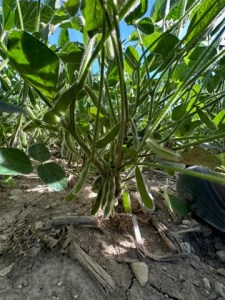
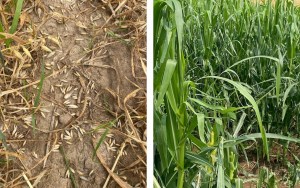
You can see from the photo, because the plant is so short, there’s not a lot of pods in the first place, and those pods that are in the bottom 3 inches are difficult to get in the combine because it doesn’t typically cut that close to the ground. I have talked before about guys rolling their fields after planting to help level them and to press rocks and such down into the soil. This is exactly why; to get as close to the ground as possible but still, it’s hard to get that low. 

And the beans that are there, are not very big. There just hasn’t been the moisture to develop and fill a bean.

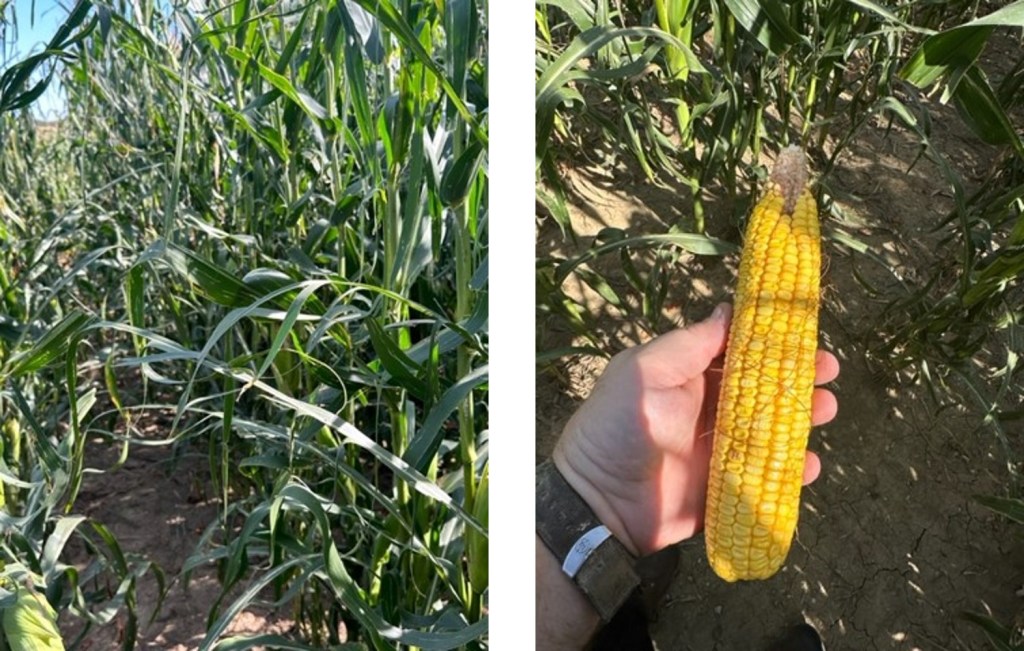
The corn looks kind of rough from the hail as the leaves are shredded up, the ears are OK, except again, small, and not filled to the tip because of drought stress, and I expect the kernels will be small because again, not enough moisture to fill the kernel.

Notice the kernels on this ear and how the tip didn’t fill. Drought stress and the plant pulled resources from them to save the other kernels.

This ear is 13 rows around and 43 kernels long. Everybody remember our math from last year? 13×43 equals 559 kernels on this plant. 80,000 kernels per bushel (bushel meaning 56 pounds), means I need 143 ears to create a bushel, but if the kernels are small and light, it will take more than 80,000 to be a bushel. Be sure to subtract deer, raccoon, and turkey damage. This year will be what it is.

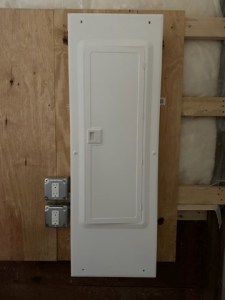
I made a little more progress on the shop. I have some of the two by fours installed on the walls that the interior steel siding will be fastened to. And electricians came back and installed the breaker box and some outlets. The other end isn’t hooked up at the pole yet, but he’s hoping to get that on Tuesday. 

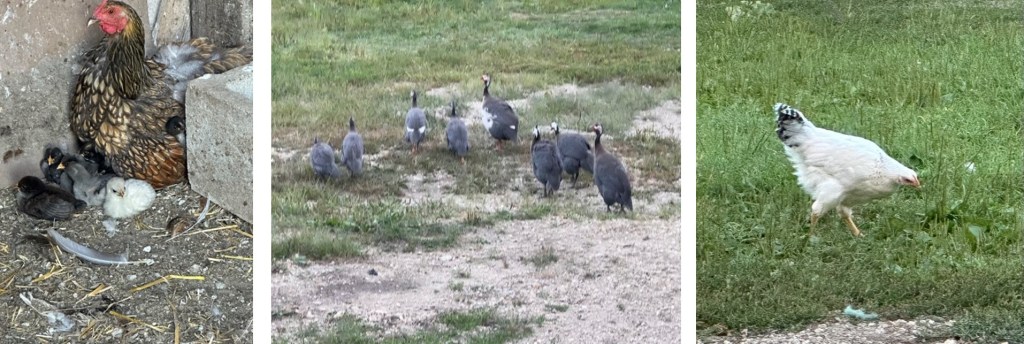
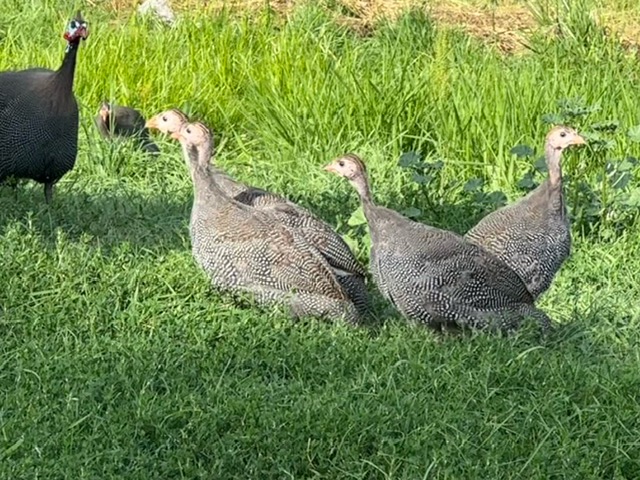
Momma and the chicks are doing well. Kelly calls her ‘Mother Clucker’. How many chicks can you find in this photo? (She’s still got all 13) And the 4 young guineas are hanging out with the older guineas. And we like this batch of ‘mixed breed’ chicks from this spring. They have pretty plumage.

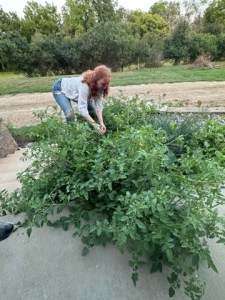
Kelly has one tomato plant, growing wild, and doing better than her plants in a pot.

Daughter waters the plants. She enjoys having chores. And it’s fun to watch her do it. She turns on hose, puts it in plant, thinks for a few seconds, counts “1,2,3…4,5……..6, 7…. 8…. 9,10” thinks for a second, takes hose out. Good thing the pots have drain holes in the bottom.

Last week I mentioned the lack of women behind the parts counters. I feel like I should clarify: There are a lot of women in agriculture. I just don’t often see them behind the counter. There are women who are large animal veterinarians. There are several women agronomist’s I work with and the lady who runs the Crop Insurance agency. There are a few women who are solo farmers and there are several on YouTube I follow. There are many out there working with their families and contributing as much as the men. I am in no way disparaging them. Being a farm wife is a huge task.

We used to have one woman farmer in our neighborhood. Rita. Hair all done up and nails painted and she ran the farm while her husband worked in town.

Kelly and I try to spend a few minutes in the evening sitting on our veranda without a roof watching the world go round.

Do you drink the recommended 15 cups of water in a day? Who do you know in non-traditional roles?

Too Darn Hot!

My best friend from Howard Lake texted me on Tuesday to say that the heat index there was 114 degrees. She had never experienced such heat in Minnesota before. It is hot here, too, but not like that.

I wonder how we would cope if there was no air conditioning. I remember as a child we spent a lot of time in the basement on really hot days before my parents had an air conditioner installed in the living room. It was one of those that sat in a hole especially cut in the side of the house. Most of my relatives on farms never had air conditioning in their homes. They just hung out on their porches and tried to keep cool. There was no air conditioning in the school in Luverne. The nights were the worst, as it never really cooled down because of the humidity.

When we moved here in 1987, our house didn’t have air conditioning, and we really didn’t need it because it always cooled down at night. The humidity here is low. After about five years, things changed, the nights didn’t cool down, and we decided to put in Central air. I think that was my first direct knowledge of climate change. I don’t know what we would do without it now.

When did you first live in a home with air conditioning? How did your family cope without it? Share some weather songs.

Bet the Farm On It!

WordPress, for all its various issues, is good about keeping track of statistics.  They send me emails every month which I usually just blow off.  Since the point of the Trail is not to increase traffic and make a big deal of ourselves, it doesn’t seem like we need to pay too much attention.

We are up to 13,524 subscribers.  This isn’t as exciting as it sounds… it just means that at some point in the past decade, 13K folks have hit the subscribe button.  It does not mean that 13K folks are reading the trail every day.   Far from it.  But we still have readers from all over the globe – in fact, we have had a “Like” from Mongolia in the past six months – that’s new.

The most fun news is that the Farm Reports are by far the most popular bits on the trail.  For the past six months, the most viewed, liked and commented post of each month belongs to our Ben!  I even got WordPress to cough up the most popular post of the last year.  You guessed it.  September 10, 2022 – Is It Fall Already? 

So kudos to Ben for livening up the trail every weekend and for giving us all a fabulous picture of farm life!

Your fantasy farm?  Tell me all about it!

Top Of The Hill

Today’s Farm Report comes from Ben.

Finished baling straw this week. Terrible yields there too. Got 320 small square bales total, and it should have been 1000 bales off 20 acres.

It is what it is. Everything worked well and it’s nice straw. Kelly and I unloaded one load, I’ve go the last 100 bales stacked in a wagon for the strawberry farm that buys it, and there’s one load in the shed yet that we’ll get unloaded next week.

I am going to plant a cover crop this year on the oat ground. With the hail we had, there should be plenty of oats there to germinate and re-seed, but rye actually produces deeper roots and is a good cool season crop, so there should be a good winter cover. the same program that was paying for oats this year (separate from the ‘food grade’ oats program) is paying for cover crops. It’s funded by the USDA.

Every time i take my boots off this year, I’m leaving a trail of oats or straw chaff in my wake. Occupational hazard, i guess. I’ve got a cordless Dewalt vacuum in the mudroom specifically for this reason.

Walking on stacked bales is a bit of a challenge. It’s better when they’re stacked proper and tight, but that doesn’t always happen and I was curious how it would go for me and my new knee. And it went pretty well!

I was probably 16 or 17 when Dad announced his sore feet wouldn’t allow him to walk on the bales anymore and I was given the important job of stacking hay bales in the barn. Anyone can unload the bales and put them on the elevator, but stacking, that’s special and takes some skill. Right Clyde? (Or did you only handle loose hay?)

Basically, when stacking, you alternate the direction of the row, and you get the bale in place, then give it a good shove with your knees. Repeat several hundred times. Course, maybe you’re working 3 or 4 rows high in a corner and depending how much room there is as the bales come off the elevator into the hay loft, depends how fast you need to keep moving. All this to say, it was a big deal when Dad had me take over stacking. Just as big of deal it was last year when I wasn’t able to stack myself and my brother did it. The bales got in there, but walking over them the rest of the fall, winter, and this summer reminded me of the skills he missed out on over the years.

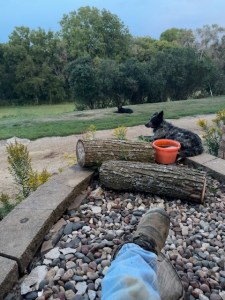
The one day last week, just as they finished combining oats, and it rained pretty hard and I had run up the road with the gator to open the truck tarp so the combine could dump the last of the oats. The dogs came running up with me and neither one of them likes the rain. They scrambled into the gator, and they sat in there for 20 minutes after we got home while I was out doing other stuff.

The young guineas are out and learning their ways. Festus, the guinea with the bad leg seems to have disappeared. We knew he’d have a tough time of it and we don’t know what became of him.

Here was a big ragweed plant growing out of the side of the silo, about 8’ in the air. ‘Was’ because I plucked it right after taking this photo.

The first few days at the college have been rough this year. Something about a ‘licensing issue’ means I don’t have access to Outlook, Word, Excel, or any of those Microsoft programs. Plus it seems like my computer – heck, none of the computers, want much to do with me. It’s been a rough few days.

MOTIVATIONAL POSTERS. DO THEY WORK FOR YOU? SEEN ANY GOOD ONES?

Refuge

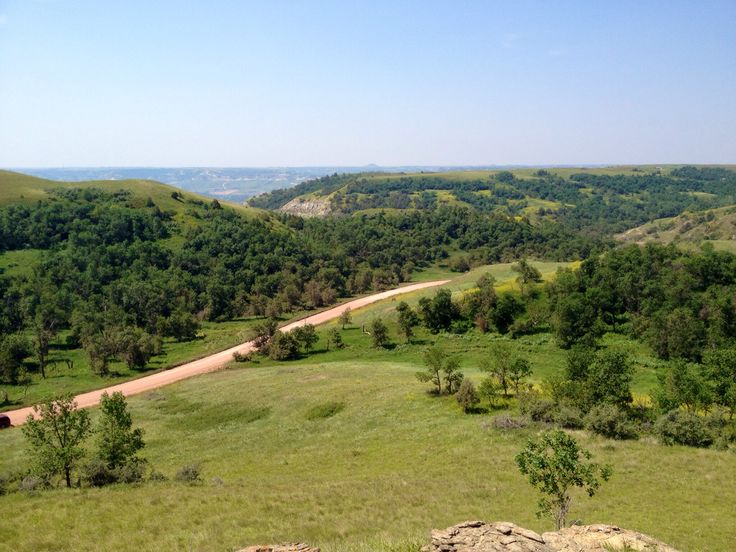
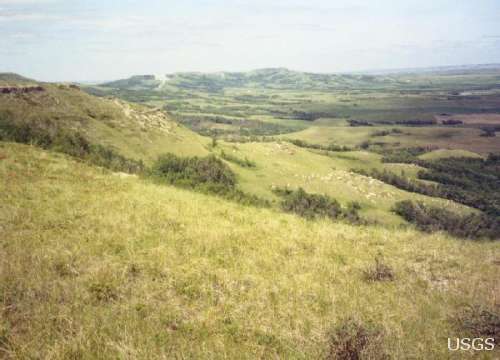
A couple of weeks ago Husband and I went to a barbeque in the Killdeer Mountains. The Killdeer Mountains are about 45 miles north of our town. They are really two mesas formed by wind, and river and lake erosion. The highest point is only 975 feet. There are lots of trees there. It was a sacred place for our native tribes. There also are badlands on three sides. One of the last battles of the Civil War was fought there in 1864, when General Sully fought some Sioux who who the government wanted removed from the Upper Missouri area to protect communication lines to the gold fields in Montana and Idaho. It was also part of punishing any natives for the Dakota War of 1862 whether they had participated in it or not. You can see the remoteness of the area, despite oil drilling activity.

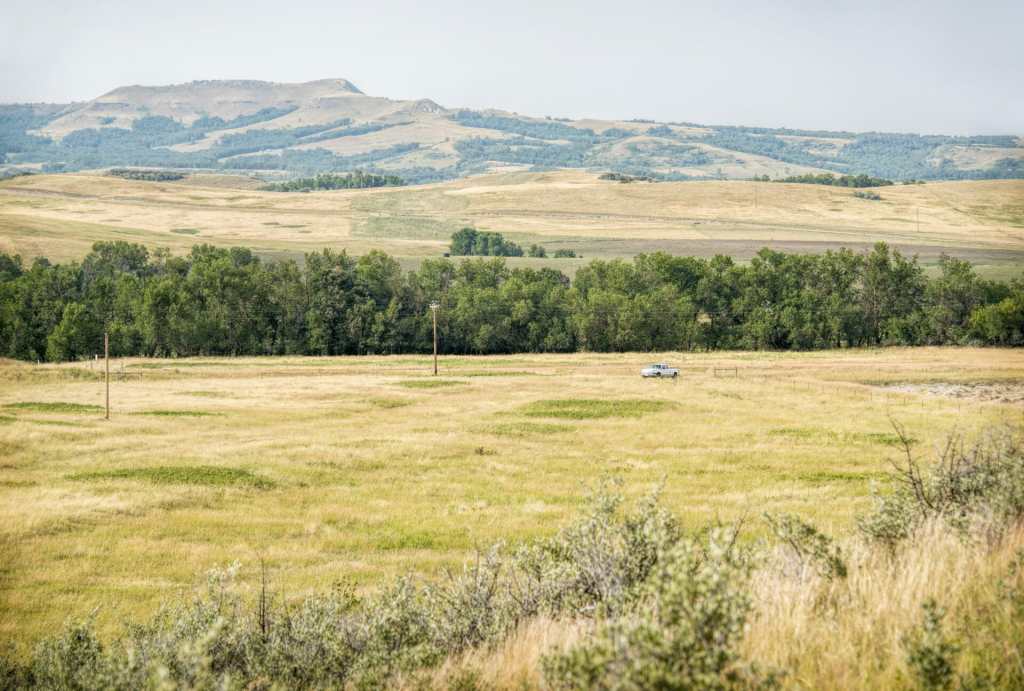
You can see a mesa from the plains that surround it.

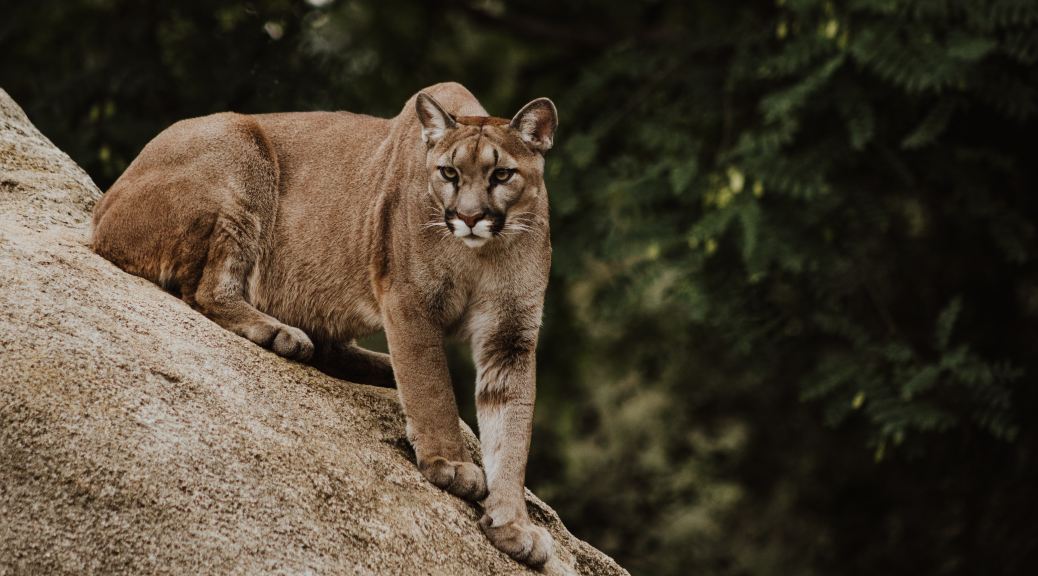
A nurse friend of mine and her brother inherited 4000 acres of land in the Killdeer mountains, part of a ranch owned by their great grandfather. We had the barbeque at a lovely, old hunting cabin there, where my nurse friend goes for rest and relaxation. She doesn’t hunt. A neighbor runs cattle on part of the land. The bulk of the 4000 acres has been turned into a nature preserve by my friend and her brother with the help of the Nature Conservancy. There is a mountain lion there as well as elk in the tall spruce and pine trees that grow all over the place. It is peaceful and quiet. We didn’t see the mountain lion, but it was fun to know it was in the area. Some friends brought their bird dogs to the gathering, who had a blast running around and looking for the wildlife. Other friends brought their children, who did the same thing.

Where would you like to have a rustic cabin? What sort of animals would you want in your nature preserve?

Summer “Farming”

The weekend Farm Report comes to us from Ben.

Thankfully theaters are equipped with AC these days.  This week was all about theater.  

I was at the Rochester Repertory Theater Monday and Tuesday evenings finishing lighting and dress rehearsals for ‘I and You’ by Lauren Gunderson. That opened on Thursday with a preview audience on Wednesday so that Wednesday night I was headed to the town of Chatfield, 20 miles South of Rochester to begin lighting ‘Hello Dolly’. I drove down on Monday with my friend Paul to scope out the place since I didn’t work there last summer, and the building had a lot of renovations done. Potter Auditorium, built in 1936, is attached to an elementary school built in 1916. 

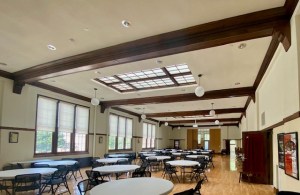
The theater was renovated in 2016. The renovation done to the school revealed the original skylights and main beams in a ‘great room’. It removed a lot of steps and ramps and various levels and added more bathrooms and elevators. It’s pretty nice.

I started working in Potter Auditorium in 1986, building the set for ‘Annie’ for $500. My dad and brother helped me carry 40 sheets of 4×8 particle board up from the basement to cover the gym floor (because of course it was a ‘gymnatorium’) and we couldn’t mess up the basketball floor.  

The next year I built the set for ‘Barnum’, and the next year, some kind of original talent show.  

Working in Chatfield always feels like going home. Lots of good memories there. There wasn’t AC until the 2016 renovation. Back in the 80’s, hornets would come in and buzz around on their backs on the floor. I’d walk over and step on them. Good times.  

I recently heard someone mention how, when they were a young kid, their dad talked about hunting and outdoor sports so that’s why they hunt now. And I thought, I got mail order books, and Disney records of Musicals. Mary Poppins, Robin Hood, Bedknobs and Broomsticks. Hmmm.    

I mentioned we had hail last Saturday. I notified crop insurance, and they assigned an adjuster. Haven’t met with him yet.

It knocked some oats out and beat up the corn and soybeans a bit. Left some marks on our cars too.  

The ceiling insulation for the shop was blown in on Wednesday. The ball is back in my court to start working again.  

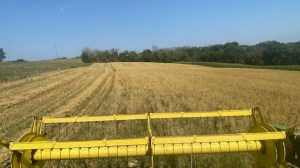
I started cutting oats on Tuesday. It was so hot the swather wouldn’t run right and it left me walking home twice. And then we got an inch of rain Tuesday night. Because of course now it would rain.

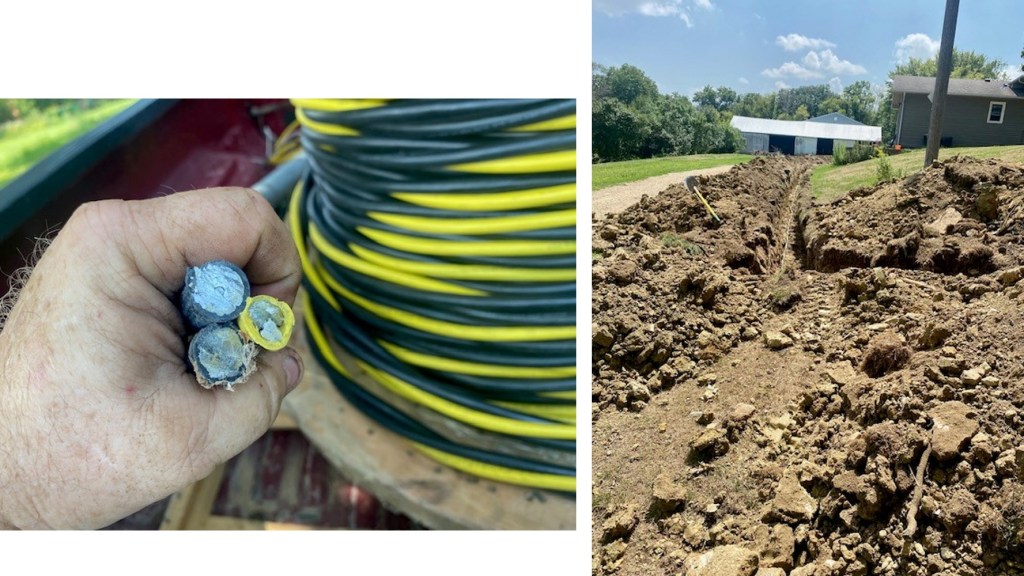
Also Tuesday the electrician buried the new electric line to the shop. He cut the phone line, which I didn’t need to the shop anymore. He also found the phone line from 1968 when we lived in the machine shed while the house was being built.  

And then he found the current electric line to the old shop. The one my dad buried in the 1950’s and the one being replaced. It was 30 feet from where I thought it was. So, he changed course. Oops; found it again. Thinking back; there was a ravine and a tree there, so I guess Dad had to go around the tree. Maybe that’s why it was way over where it shouldn’t have been.  

But this guy is an electrician, and he was able to fix it; no harm, no foul.

Here is Kelly posing with her new Gator.

We like it better than the old one already.  

WHAT’S YOUR FAVORITE DISNEY MOVIE OR SONG?   PLEASE RESPOND BY SINGING IT.  

The Cauliflower That Ate New York

I didn’t mean to come home from Madison with a cauliflower the size of my head.

But there it was – gloriously purple and calling to me.  Never mind that I know full well that YA is going to be gone for two weeks.  Never mind that we still had the entire capitol to walk around with this monster in my bag.  Never mind that I only brought my smaller cooler for dragging stuff home and I had already bought 4 loaves of Stella’s Chili Cheese Bread.  I had to have it.

It’s ways too big for just one recipe of anything (I put the can of water next to it for the photo so you can see how big it is).  The first thing I’m making is Savory Cauliflower Salad from Twelves Months of Monastery Salads by Brother Victor-Antoine d’Avila-Latourrette.

SaladVinaigrette
1 good-sized head cauliflower, cut into florets¼ c. olive oil
3 hard-boiled eggs, peeled, coarsely chopped3 Tbsp. hazelnut oil
2 shallots, finely chopped3 Tbsp. white wine vinegar
2 Tbsp. capers, drained1 tsp. Dijon mustard
 1 tsp. chopped fresh or dried tarragon
 Salt & pepper to taste
  1. To make the salad, put the florets in the top of a double boiler set over simmering water, cover, and steam until tender, 15-20 minutes, o cook in a large saucepan of boiling salted water for about 5 minutes.  Drain and allow them to cool.

2. Put the cauliflower in a good-sized salad bowl and add the eggs, shallots and capers.  Toss gently to combine.

3. Whisk the vinaigrette ingredients together in a measuring cup or small bowl until thickened.  Pour over the salad and toss gently to coat evenly.

Not sure what I’ll do with the other half of this giant.  Maybe a Parmesan Roasted Cauliflower.  Maybe a soup.

What was your last impulsive purchase/acquisition?