Category Archives: Science

A Polluter’s Lament

Featured Image taken by Dori (dori@merr.info)

Last week’s White House National Climate Assessment was remarkably blunt about the reality of our situation – that we are already experiencing the effects of an environmental shift.

For some of us in the baby boom generation who have been following this issue for a long time, this comes as a surprising development. Yes, we had heard that our habits of consumption were contributing to a potential catastrophe, but it always felt our role was simple – to create the problem and then to start a conversation about how later generations would face it and solve it.

Sorry about the mess, guys. Good luck!

Now this latest report seems to suggest the we are not going to be able to skip out on the check after all. Any chance I can go back and un-drive all those miles and un-click all those switches that let the power flow?

I didn’t think so. Would a poem of atonement help? I asked Trail Baboon sing-song poet laureate Tyler Schuyler Wyler to write one up, and he agreed because every stanza could include a reference to death – his favorite subject.

The warming fields and rising seas
The melting ice and dying trees
The drying lakes that will not freeze
This all has come up by degrees.

We’d heard it was a thing to dread.
And by our habits it was sped.
But also was it often said,
It won’t get bad ’til we are dead.

But now they say it has arrived!
Not something still to be derived
for our descendants to survive.
It came while we are still alive!

Our sadness, is, of course, profound.
For glacial ice now in the sound
and forest creatures elsewhere bound,
and us, that we remain around.

What have you witnessed that you thought you would never get to see?

Amateur Jugglers Rejoice!

I’m sure I learned something in college, though I’m not certain I can put it into words. My major was Radio-Television, and I’ve worked in radio all my adult life. But the skills I use every day are not things I learned in class. I picked them up while working at the campus radio station.

When it comes to classwork, the greatest course of my entire post-secondary career wasn’t even in the Radio-TV Department, it was taught out of the campus auditorium and it was called “Vaudeville”.

Yes, I took the most academically rigorous route available.

When questioned about this choice by my cash-strapped parents I explained that my mission was to succeed in the media, and since radio and television are entertainment mediums, it was necessary for me to be conversant in other, historic forms of mass amusement.

They acknowledged my logic but still did not pay for the pricier tap shoes.

In spite of my being personally underfunded for this particular class, as part of “Vaudeville” the instructor, Jo Mack Witwer, did managed to teach me to tap dance and to juggle.

Like virtually everything else I learned in class during those years, I didn’t keep up the daily practice and eventually forgot my hoofing and juggling skills though I do like thinking of myself as someone who can, in a pinch, do both.

This all comes rushing back because scientists have successfully duplicated an earlier attempt to create a super-heavy element, a metal known currently as ununseptium, soon to throw its atomic weight around the periodic table under a different, freshly-minted name.

Ununseptium doesn’t exist in nature – it has to be created in the laboratory by bombarding radioactive berkelium-249 with calcium-ion beams. And then as soon as it exists, this inherently unstable element starts to decay , breaking down into other unstable elements before it finally devolves into parts that are capable of existing for a span of time that actually registers with our conscious minds.

But existing for a few milliseconds in repeated experiments is enough to qualify ununseptium for a new name and permanent inclusion in the table of elements. I admire the scientists who managed this and am in awe of their achievement, though with entirely selfish motives.

Here’s why – if ununseptium is an element, then I am still a juggler.

I discovered through experimentation that if I practice for two days straight, I can juggle three balls for five seconds before my eye-hand coordination goes kerflooey and everything hits the floor. But those five seconds are golden, and they make up a span of time that’s much longer than any atom of ununseptium has ever existed.

Mission accomplished!

What are you good at for only a very short time?

Ask Dr. Babooner

We are ALL Dr. Babooner.

Dear Dr. Babooner,

Taking a cue from the government-funded activities of NASA, several years ago I purchased a powerful telescope and began looking around my immediate neighborhood for other homes that showed signs they could support life as comfortably as the home I live in now.

I’ve been studying the area very carefully and for the most part the places I see all have something terribly wrong – they’re way too big or far too small, they’re too close to a busy street or too far from the local park, they have aluminum or vinyl siding (which I hate), or smokers live there and the air inside the home is simply not breathable.

That last bit is something it took quite a while to learn, but now that I’ve had time to practice with the telescope I’ve become quite good at training it on windows and getting a clear sense of what goes on inside by measuring shadows as they pass in front of the interior lights.

Just the other day I found a house that is quite far from my own but it seems to have all the
elements I love about the place where I already live. The size and temperature are nearly perfect and I think there’s even liquid water inside. I’m pretty sure on that count because I saw someone taking a bath!

You can imagine how excited I was!

But just this afternoon the police came to my door and told me if I don’t start pointing my telescope at the sky rather than the other houses up and down the street, they will try to move me to a new home that is cold and desolate most of the time and has food water only at certain times which are not under my control.

Dr. Babooner, I thought scientific exploration was a pathway to a better life, but in this case it feels like all my work is taking me in the wrong direction. Should I stop, or keep pressing onward, hoping for a breakthrough?

Sincerely,
Curious K

I told “Curious K” that he (she?) should definitely stop peeping into other people’s homes and calling it research. The sad truth is that even if you found a place that could support your life as nicely as the place where you already live, the chances are slim that you could get there and even slimmer that you would be welcomed by the current inhabitants. It would be much better to take care of and learn to cherish the place you call home.

But that’s just one opinion. What do YOU think, Dr. Babooner?

Goats in the News

An Irishman says a ewe on his farm has given birth to a rare Goat-Sheep.

The animal is exactly what you might imagine – the product of a union between a goat and a sheep. According to the BBC article and Wikipedia, such offspring usually don’t survive.

This one, however, is thriving. He’s faster than a typical sheep, and woolier than a normal goat.

Of course when a story like this surfaces on the Internet, alarm bells go off and a skeptical reader looks for signs of a ruse. And this tale has them.

For one thing, the farmer’s name is Paddy Murphy. I’m not saying such a name is unlikely – far from it. I would argue the opposite – Paddy Murphy is a go-to Irish name that any writer from The Onion would choose.

Paddy Murphy’s would also be a logical first choice for anyone with enough cash and bad taste to open a phony Irish pub in Coon Rapids. And sure enough, the farmer owns a pub, (Murphy’s, naturally), though his is in County Kildare.

Yet I believe this story, because I love the odd duck and pull for the underdog. Which would be the Underduck – a sad-eyed and lovable but highly temperamental hairy billed beast. And the story originates with an unimpeachable source – The Irish Farmers Journal.

No one would make that up.

What sort of hybrid are you?

Five Seconds Grace

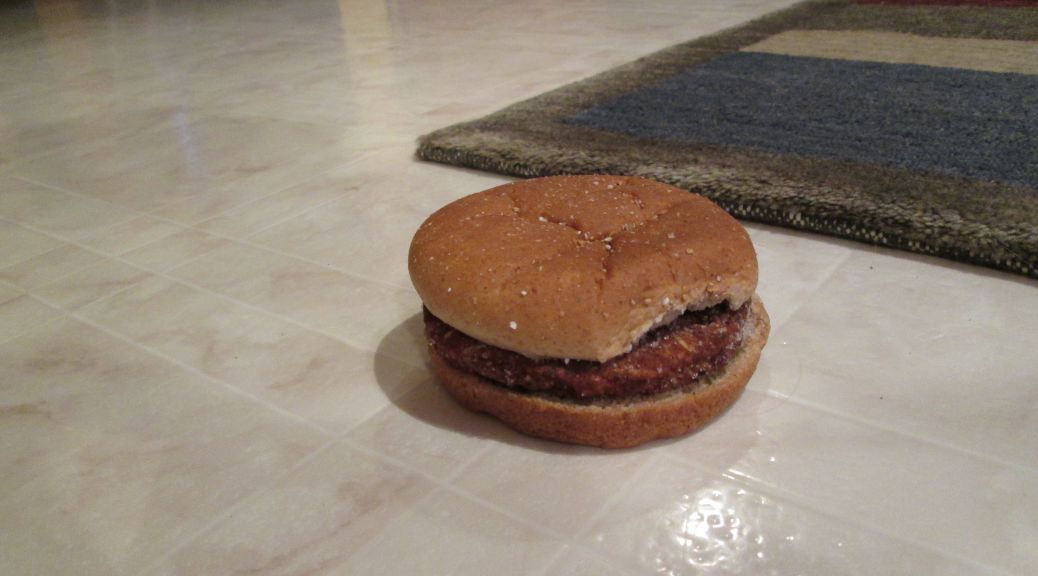
Students at Aston University in Birmingham, England have conducted an experiment and claim to posess data that lends credence to the famous 5-Second Rule for dropped food.

They fumbled toast, pasta, biscuits and sticky sweets, and then left the morsels on different types of flooring for up to 30 seconds.

These calculating slobs of science found that time is a significant factor in the transfer of bacteria from a floor surface to a munchie. Remarkably, the experiment found that food dropped on carpet picked up fewer contaminants than food dropped on flooring that is less plush.

Additional findings: that wet food drew more invisible unsavories than dry food, and women were more likely to pick up and eat dropped food than were men. That last one runs against the stereotype that women are less disgusting in every respect. I can only reconcile it by assuming that, rather than pick up dropped food, men are more likely to grind tidbits into the carpet with their feet before plunging their hands deeper into the chip bowl.

Although its findings are contradicted by study after study after study, this unpublished and non-peer reviewed research is good enough for me, because now I can begin to imagine living in a more forgiving world where mistakes can be undone with no penalty as long as you realize it right away.

I’m not saying I do a lot of dumb things, but most of the time while committing my major screw-up-of-the-day I pretty much know it immediately – often while in the act.

Although putting it that way might have been an error.

Never mind. Undo!

What if there was a Universal Five Second Rule (UFSR) that allowed you to instantly take back anything at all if it seemed wrong within five seconds of commission – a contract signature, an unkind word, an errant throw, a dropped match, a Facebook post or an e-mail?

The irreversibility of ill-considered choices is what makes it worthwhile to think before acting. In a world governed by the UFSR, some people would abandon discipline and take back virtually everything. And then there would be an expansionist lobby – if five seconds works, why can’t we make it fifty seconds? Or five minutes?

“A slippery slope,” as they say. Which, if you stepped onto one, is exactly the sort of thing you would want to revoke before the consequences hit.

What is the proper length for a grace period?

Science Fare

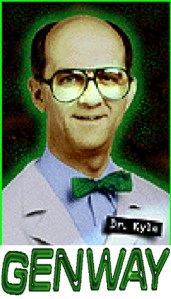
Today’s post comes from Dr. Larry Kyle, founder and produce manager at Genway, the supermarket for genetically engineered foods.

DrKyle

Vindication is mine!

Anyone who knows my work at Genway understands that I have been a misunderstood and lonely pioneer. Scientifically I have blazed unthinkable pathways in the genetic manipulation of plants and animals. And ethically I have set a new standard for non-regulated, devil-may-care experimentation. Have I done things that were questionable? Yes. Ill advised? Of course!

There was a time when people called me mad. MAD, I say! And THEY said it too! They said LOTS of things.

Hah hah hah hah hah hah hah!

When I developed fresh-as-life toast that lived in a terrarium they said I should be investigated.
When I invented the Genway Screaming Halloween Pumpkin, they said I should be prosecuted.
When I used terrier DNA to create barking tulips, they said I should be stopped!

But they couldn’t lay a hand on me because I had no University affiliation and took no money from the government. I financed my work with proceeds from product sales at Genway, and through urgent contributions from neighbors and acquaintances who wanted only one thing from me – that I stay far away from their homes and their families.

Yes, some other researchers called it “vanity science”, and even extortion. But I knew if I waited long enough the rest of the scientific community would eventually come around. And now they have, because I see there is a major article in the New York Times that claims Billionaires With Big Ideas Are Privatizing American Science!

“For better or worse,” said Steven A. Edwards, a policy analyst at the American Association for the Advancement of Science, “the practice of science in the 21st century is becoming shaped less by national priorities or by peer-review groups and more by the particular preferences of individuals with huge amounts of money.”

Yes! Now the most groundbreaking science will be done by those who are best at separating rich people from their fortunes! Whim based research will shape a tomorrow that you won’t recognize and no one can predict. How quickly the Brave New World I dreamt of has become a reality!

The Extra Long Cobra Banana - Delicious Hot or Coiled
The Extra Long Cobra Banana – Delicious Hot or Coiled

Why let government chart a course when the future really belongs to guys who have the twisted curiosity to wonder what might happen if you combined a banana with a King Cobra, and the fat bankroll to find out?

Hah hah hah hah hah hah hah!

And in case you didn’t read it with the right amount of spirit, yes – that’s a maniacal laugh!

Yours in Unsupervised Experimentation,
Dr. Kyle

What sort of research would YOU pay for?

Twinkle Winkle

Photo by Matt Wier under Creative Commons Attribution Share-alike 3.0 license

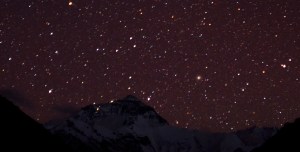
I really don’t have the patience to go out and stare at the night sky for very long, which is why I so appreciate it when brilliant people who follow the paths of planets, stars and asteroids tell us that something highly unusual is going to happen and then it does – right down to the second!

Early Thursday morning, March 20, the distant (78 light years away) star Regulus will be briefly obscured for sky watchers in parts of New York, New Jersey, Connecticut and Eastern Canada by the passage overhead of an asteroid named Erigone, pronounced (air-RIG-oh-knee).

Is this a big, jaw-dropping kind of space event, like a solar eclipse or an incandescent alien swarm of interstellar bees engulfing the moon and setting it on fire?

No! But it is quite rare. Rare enough so that maps have been published and in the nation’s most populous area serious people are thinking about staying up until 2 am to see a tiny light in the sky not be there for about 14 seconds, and then come back.

Simple pleasures are the best.

Pleasures as simple as a familiar nursery rhyme, re-cast as a conversation between an Earthbound observer and a distant light.

How appropriate that each verse, when sung sweetly, lasts exactly as long as Regulus will be invisible.

Regulus, so far away,
Spotted you towards break of day.
You’re a bright but tiny dude.
Star of the first magnitude!
Regulus, intense and proud.
Shiny, showy, sharp and loud.

Twinkle, Twinkle, little star
Now I don’t see where you are!
You were there but now you’re dark.
Were you light or just a spark?
So long star. This has been real.
Hey, you’re back! So what’s the deal?

Asteroid Erigone,
floating between you and me,
had the angle and the size,
to obscure me from your eyes.
Briefly blotted out, you see.
Thanks a bunch, Erigone!

Twinkle Twinkle, little star.
Resurrected! There you are.
Thought I lost you for a time.
Just a verse within this rhyme.
That was much too long, I think.
Twinkle, winkle, twinkle, wink.

Some people, Hollywood stars, mostly, can pull off a wink and make it seem sexy. When I wink it just looks like I’ve got something stuck in my eye, which is why I never do it.

What makes a wink work?

Breaking Up Is Hard To Do

Relationship watchers across the galaxy are deeply upset and universally disappointed over the unexpected break-up of asteroid P / 2013 R3.

“I’m devastated”, said Haley Stalker, a pop culture romance maven who got word via Twitter that there had been another major parting of ways.

“After TomKat and Bennifer split so suddenly I promised myself I was done following stars. “They’re so unstable! P / 2013 R3 wasn’t flashy, but solid as rock, or so I thought”.

Friends of P / 2013 R3 were equally nonplussed. Telesto, speaking for all the moons of Saturn, said “We’ve all seen comets dissolve and meteors just vaporize, but asteroids have always represented commitment and solidity. We thought P / 2013 R3 was literally set in stone.”

The dramatic dissolution was caught on camera by a paparazzi named Hubble S. Telescope, who has a history of taking photos that show heavenly bodies in a brutally realistic light.

We may never know why P / 2013 R3 couldn’t hold it together, but the pain of parting has been captured over and over again in songs like this one:

What are some of your favorite break-up songs?

Is There Cheese After Life?

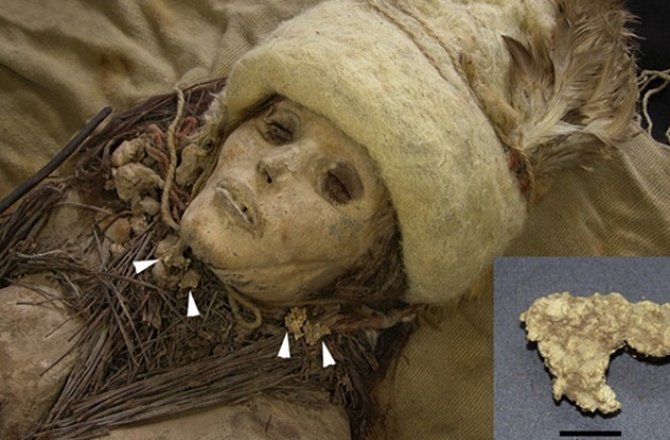
Archaeologists have determined that a mummy entombed 3,600 years ago was adorned with lumps of cheese – apparently to give her something to enjoy in the next world.

I can see why this woman’s custodians wanted to send her packing with a few tasty morsels. What is there to look forward to in a bring-your-own-cheese afterlife? Not much, I would guess. Sounds pretty cheap.

What’s amazing is that the deceased person in question, the so-called “Beauty of Xiaohe”, is so well preserved after 3,600 years. The New York Times described the burial location as being in a “terrifying desert”. The name of the place, Taklamakan, is said to mean “go in and you won’t come out.”

I’d think anyone would be relieved to check out of such an arid wasteland. But something doesn’t seem right. Now that the Beauty of Xiaohe is closing in her fourth millennium of mummydom, why hasn’t she gotten around to eating her snacks? When I set out on a long trip, I pretty much empty the goodie bag in the first hour and wind up hitting every rest stop afterwards. To leave the fromage unmolested for so long shows admirable restraint, and qualifies The Beauty of * for a poem or a nursery rhyme of some sort.

Naturally I chose the one that ends with cheese.

In the original, which is (inexplicably) about a farmer trapped in a computer (a Dell), the verses gradually have his estate acquire a wife, a child, a nurse, a cow, a dog, a cat, a mouse, and finally, the only prize any dead person truly cares about – cheese. This one is only slightly different.

The mummy doesn’t smell
Heigh-ho the derry-oh,
The mummy doesn’t smell.

The mummy lost her life. (2x)
Heigh-ho the derry-oh …

Her life wasn’t mild.(2x)
Heigh-ho the derry-oh …

It could have been worse. (2x)
Heigh-ho the derry-oh …

We’re looking at her now. (2x)
Heigh-ho the derry-oh …

And we are all agog. (2x)
Heigh-ho the derry-oh …

She has no body fat. (2x)
Heigh-ho the derry-oh …

Her tomb is like a house. (2x)
Heigh-ho the derry-oh …

The house has some cheese. (2x)
Heigh-ho the derry-oh …

The oldest cheese we’ve known.
Heigh-ho the derry-oh,
The oldest cheese we’ve known!

What food would you want to be buried with?

Still Hanging Around

More unfortunate news for England’s Richard III – a year after he suffered the indignity of having his bones excavated from underneath a parking lot, researchers have received the green light to map his genome.

This means Richard III’s genetic secrets will be laid bare, including any serious medical conditions he was predisposed towards. Scoliosis, anyone? That’s the prevailing reason to resist having one’s DNA decoded – to avoid potential discrimination based on the likelihood that you will develop an expensive malady down the road.

Fortunately for Richard III, he doesn’t have to worry about such things because Obamacare is now the law of the land, so he can’t be denied coverage based on a pre-existing condition! He is also protected by the fact that he’s not from around here, and is already disintegrating.

Yet Richard III is still alive as a cultural figure even though his reputation remains dark. It’s bad enough to have great artists (Shakespeare!) interpret your legacy. They don’t really care about you – just their form of expression. And now the great scientists will have a go at telling Richard III’s story their own way. These test-tube shakers and number crunchers have no reason to be kind either – it’s all a collection of data points to them. So you could say Richard has an endless literary shelf life and will soon gain a timeless scientific stature too, but immortality of any sort is wasted on the dead.

Would you rather live forever as a dramatic villain, or a museum exhibit?