Husband and I travelled to Newell, SD a couple of weeks ago to pick up some lambs we ordered from the Tri-county Meat Locker. It was a beautiful day for a drive, through some pretty isolated and rugged terrain, past the Slim Buttes, Custer National Forest, and Castle Rock, past Hoover, ( a former stage-coach stop that now is a ranch with a convenience store), with Bear Butte (sacred to the Lakota people) in the far distance near Sturgis.
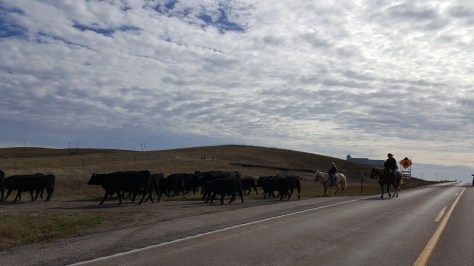
We were about 20 miles into SD near a very small “town” named Reva, when we had to stop for about 15 minutes to allow the last of about 200 head of Angus cattle cross the road to their winter pasture closer to their rancher’s home place. They appeared to be cows with almost full-grown calves. We arrived at the very end of the parade, and we could see the cattle that had already crossed the road winding their way far ahead.
The cattle were pretty placid and calm, mooing quietly, trudging resolutely, herded by two teenage girls and a much younger girl about eight years old, all on horseback. The little girl didn’t look too happy about it. There was a mom-type with two preschool-age girls bringing up the rear on an ATV.
As we continued on our way we noticed fresh cowpies on the highway for about 10 miles, and we could trace where the cattle had started out in a pasture just below the Slim Buttes. Husband and I were so happy we got to see this, which we found out was pretty common this time of year. It is a lot less expensive to drive them to winter pasture than to truck them. I thought about the teens and younger children involved in the drive and I hoped they understood just how fortunate they are to experience this.
The cattle were not visible from the road on our return trip later that afternoon. I like to think they were munching away on good grass on the other side of the hills. I suppose they will travel back to their summer pasture in the spring, this time accompanied by new calves.
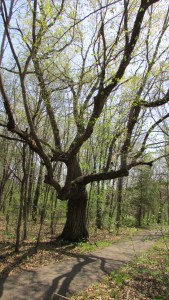
This spring, just as the trees were budding, later than normal, Sandy and I walked the Williams Nature Trail near Minneopa State Park. It has a paved path that allows her to use her walker.
In the middle of the summer we hit the MinnesotaLandscape Arboretum at the peak of color.
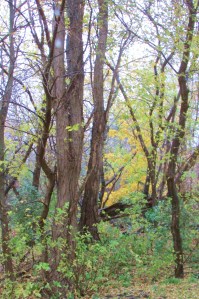
Now, in this quick autumn season, out the window above my computer I see the last bright colors hanging on.
My grandson, Mr. Tuxedo was here Saturday and wished he had brought a book to read sitting out in the ravine beyond that tree.
Then we went out to buy him and his sister their pumpkins to carve this week. Halloween, it seems to me, is the exclamation point to summer.
In early October Lou and I travelled to Philadelphia for a long weekend in the City of Brotherly Love to see the sights and climb some ancient branches of the family tree. We made our plans with my sister and her husband, who wanted the climb the family tree with us.
We were scheduled to leave on Wednesday. Tuesday, my sister and her husband were packed and ready to head North from Iowa. She picked up a knife to scrape a label off a can. The knife slipped. A perfectly positioned ½ inch cut at the base of her thumb severed the tendon. She called from the Dr.s’ office to report that instead of going to Philly, she was going to surgery. The surgery appears successful, but her hand and arm are swathed in an enormous splint because it is of great importance not to move the thumb while the tendon heals. Not only did she miss the trip to Philly, she can’t even drive in Iowa. She called SW airlines, cancelled her plane tickets and put them on hold for another trip.
We left for the airport early, early Wednesday morning; 530 am early, to arrive in time for a very delayed flight—plane repairs. The layover in Chicago was even more delayed—more plane repairs. That plane they finally just replaced after 2 hours of waiting. HMMM. In what condition does Southwest Airlines keep their planes? So our ETA of 12:55pm stretched to an actual arrival time of 5pm. Argh.
We arrived famished and tired. However, we were delighted that the train into Philadelphia was simple to locate and right on time, zipping us right into the Center City area. Yippee. We were on our way. We walked to our B and B through the beautiful neighborhoods surrounding Rittenhouse Square, noticing an array of restaurants with really great looking menus. Philadelphia is a fabulous city in which to be hungry. It has great restaurants, one of my favorite parts of travel. My first meal of crabcakes was delicious.
Highlights of the sightseeing and family tree climbing are as follows:
A tour of Independence Hall which revealed that the Founding Fathers rented the space to meet from the Colony of Pennsylvania. The USA owns it now, but we did not own it then!
The National Jewish Museum which provided me with a list of Jewish Geneology sites and which confirmed the presence of many Jewish soldiers from the Philadelphia area in the American Revolution. Maybe my 7th great grandfather, Michael Klein/Kline/Cline will reveal himself there.
I was blessed by a cardboard Pope Francis in City Hall.
Reading Market—a fabulous Inner city market with more great food (see sandwich picture).
Rittenhouse Square—a lovely park that hosted a wonderful art/craft show over the weekend—is filled with jugglers, mimes, families with children, dogs and musicians.
The Betsy Ross House where I learned a lot more about the Free Quakers from whom I am descended. And there I learned that my cousin, Timothy Matlack, was the scrivener of the Declaration of Independence. His grandfather, Mark Stratton is also my 7th great grandfather whose grave I located at the Medford Friends Meeting Cemetery, 20 miles from Center City Philadelphia in New Jersey. And I had not heard of this man before.
LaReserve B and B. We had a comfy stay there with excellent breakfasts.
And did I mention the food? The Osteria on S. Broad was the highlight.
Sandwich from Reading Market
What is left of the red sandstone Gravestone of Mark Stratton B. 1692 D. 1759
Blessed by the Cardboard Pope
Pine Street in Philly
What a great city to tour! I would do it again; however, I will not fly Southwest again. We arrived back at the airport early Sunday morning to fly home, where we found the Southwest computers all down and the agents printing and collecting tickets.
So we arrived home late. The flights were delayed due to computer failure. Of course they were. Sigh.
Today’s post comes from Barbara in Robbinsdale
(Written 9/28/15, in the hills of Berkeley, CA)
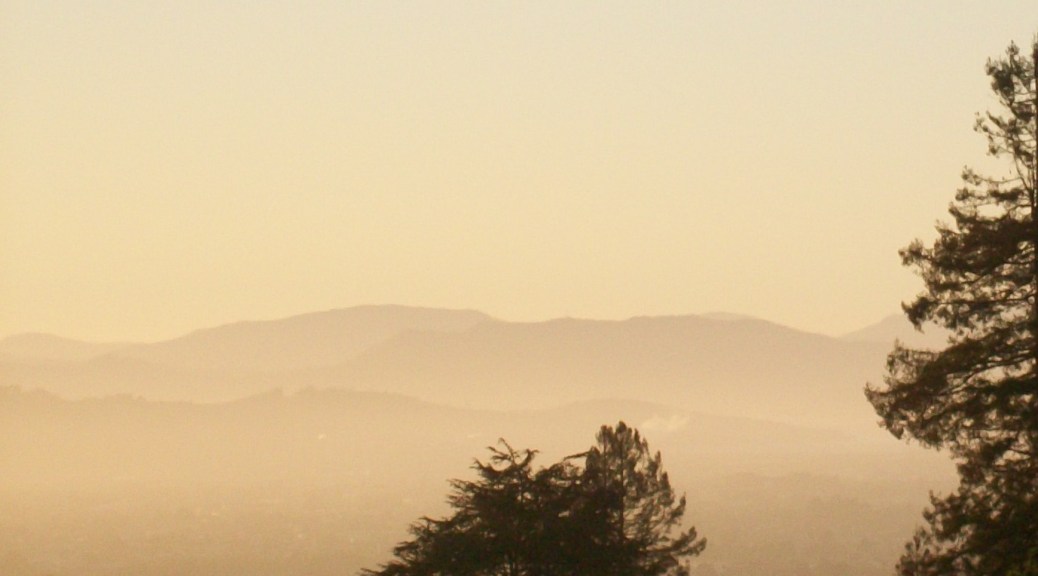
When I first looked out here, I could see only the house across the street. Now I can see some rooftops, but beyond that is Fog, just a blur as the houses across the street seem to drop away down the hill. I am house-sitting in the Berkeley hills for a friend of my sister while I visit Sue in the East Bay near San Francisco. It’s a chilly morning so I’m seated with a cup of tea, inside the sliding glass door. I hear crows and traffic, so I know there is life beyond what I can see. I hope I can find my camera.
This slideshow requires JavaScript.
Ah, now I can make out several large pine trees farther down the hill. I know that behind them are more houses and more trees, then smaller and smaller houses as the hills level off to the “Berkeley flats”, the franchise strips like San Pablo Ave, the freeways, and finally the Berkeley Marina and San Francisco Bay. Last night it seemed that millions of lights dotted this view – this morning, Fog.
I try and remember the Carl Sandburg poem we memorized in 8th grade:
“The fog comes
on little cat feet.
It sits looking
over harbor and city
on silent haunches
and then moves on.”
My memory takes me back to another time: In the early 1970s I spent two years living in El Granada, a tiny coastal community 45 minutes south of San Francisco on Highway 1. I’d already spent two years in S.F., so I knew a bit about Fog. When I (and my dad) bought my VW, I made sure it was the new bright yellow that would show up in the Fog. Living on that coast, I would wake up many mornings to the foghorn – that low, haunting vibration that makes you want to burrow back under the covers. But the Fog would usually “burn off” by noon, often revealing a crisp sunny day.
When I moved back to the Midwest, I seldom encountered Fog. When I did it was usually an anxious time, me creeping along in the car because I couldn’t see what was ahead of me. I realized I missed the kind of Fog that comes in morning, then bows out and lets the sun through – missed the foghorn.
Every now and then a bit of research comes along that turns commonly accepted wisdom upside down. And so it is with a recent study of howler monkeys and chimpanzees.
According to the New York Times, the researchers concluded that to gain a mating advantage, species evolved either to make very low frequency sounds, or have much larger testicles.
But none had both.
For human men, the possible ramifications of this conclusion are world-altering, even though the Times article clearly states the research examined differences between species and so it has no application to human beings.
But our imaginations are not limited by such inconvenient facts.
When I mentioned this to Trial Baboon’s Singsong Poet Laureate, Tyler Schuler Wyler, he was moved to adjust his rather snug jeans, and pen a few timeless lines to extrapolate the findings:
It’s obvious, when all’s compared,
that “E” equates to “MC squared.”
And likewise, with a monkey’s calls,
A sexy voice means teensy balls.
If human beings follow suit
the big-balled man sounds like a flute.
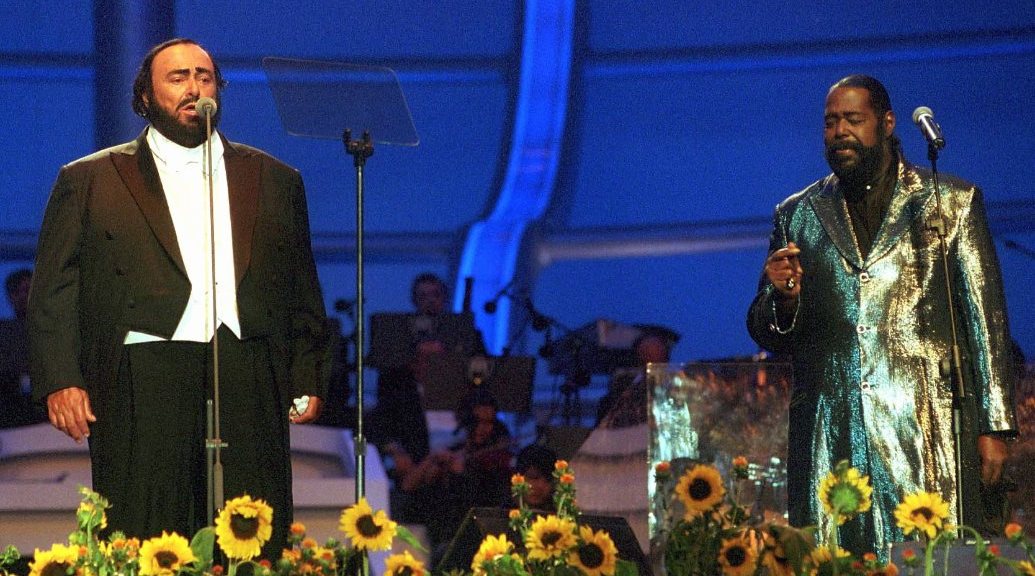
and deep voiced guys (like Barry White)
can wear their trousers extra tight.
While penny ante Pavarottis,
(Never seen by girls as hotties)
Make their trade-off down below –
With every squeak, cojones grow.
So fellows with a treble voice
must favor baggy slacks by choice.
Though baritones may get romance,
the tenors need room in their pants.
I don’t own a boat because having a little bit of fun on the weekend shouldn’t require that much work.
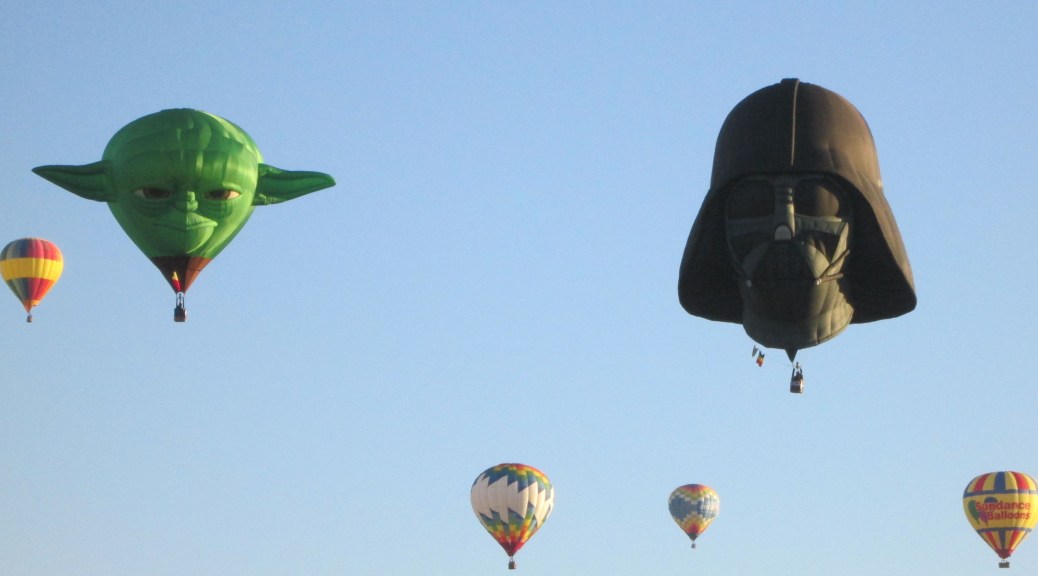
But I just had the delightful experience of attending the last few days of the Hot Air Balloon Fiesta in Albuquerque, New Mexico, and now I’m wondering what it might cost to buy a sturdy two person basket and an acre of cloth specially sewn to resemble of a fire hydrant.
Yes, it was a hoot to walk among the giant puffed up gasbags as they lifted themselves off the ground with the help of propane, fire, and human determination. At one point, there were so many oversized shapes looming over me, such a collection of bulbous forms that were seemingly oblivious to my existence, I felt like a four year old who had gone to the department store with his mother.
Here’s a giant cow, lifting off.
This slideshow requires JavaScript.
You can see why this celebration is one of the world’s most photographed events. With all the color, motion and charm the balloons and their crews bring to the field, mixed with the interplay of fire, clouds and light, it is quite a challenge to take even one bad picture.
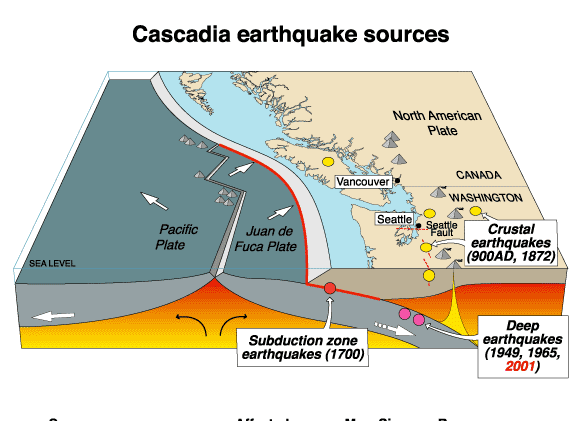
Something terrible is going to happen in the Great Northwest. The approaching danger has a pretty name: “Cascadia.” Cascadia refers to an earthquake that will devastate 700 miles of Pacific coastline from California to British Columbia. That quake will be followed by a massively lethal tsunami.
Here is a little Cascadia Q and A:
How sure can we be that a bad quake will hit here?
Scientists are absolutely sure of this prediction. Quakes registering 9.0 happen in this region about every 250 years. That pattern has persisted as far back in time as geology lets us see. The last big quake struck in the early 1700s, shortly before Europeans arrived. That means no quake has occurred while European settlers have been here, so people in this region have no memory of what a bad quake is like. After the next quake and tsunami, scientists say, the northwest coast will be “unrecognizable.”
When might this happen?
Scientists still cannot predict the timing of quakes with any specificity. They agree that the next quake is seriously overdue. One authority calculates there is a 40 percent chance that Cascadia will hit in the next 50 years. As I consider those odds I hear the gritty voice of Clint Eastwood asking, “Do ya feel lucky, punk?” “Nooooo, Clint! Nooooo, I don’t feel lucky at all!”
How bad will it be?
Seismologists expect a big quake, with Richter ratings close to 9.0. Cascadia will probably be a twin to the quake and tsunami that obliterated coastal areas of eastern Japan in 2011. That disaster tsunami killed about 16,000 people. FEMA planners anticipate at least 13,000 deaths as a result of Cascadia. When it happens, Cascadia will immediately become the worst natural disaster in the history of this country.
How prepared is Oregon?
Experts give Oregon a grade of F-plus. For example, of Portland’s eleven bridges, only two were built with quake-proof engineering. Because of publicity about the coming disaster, there is some hope that local government will begin addressing the region’s vulnerabilities. But the culture of this region is skeptical about government and collective action. Some leaders are campaigning hard for better preparation. So far, they have lost every battle to spend money now to save lives in the future.
The real issue isn’t what will happen to me in a Cascadia disaster. I’m an old guy with serious health issues. I won’t be living long in Oregon or anywhere else on this planet. It would be silly for me to panic about something I can’t prevent and which probably will not occur while I am here. And yet I believe everyone is responsible for planning sensibly for future crises, even those that seem unlikely to happen soon. My greatest concern is for my daughter’s family and for the region as a whole. My daughter’s home in southeast Portland is old. I doubt it can withstand the shaking of a quake, although it lies as bit beyond the reach of the expected tsunami.
My apartment sits near the top of a small mountain south and east of Portland. The soil under these buildings is solid. The elevation puts us safely above any possible tsunami. These apartment buildings were constructed in 2000. They had to conform to building codes reflecting a modern awareness of the threat of quakes.
If I survive the quake, my problems will just be beginning. Our electricity goes out when the wind blows. Quake survivors will have no power or telephone service for weeks after the quake. There will probably be no drinking water or (ugh!) functioning toilets. All banks and financial systems will be shattered. The local transportation system, already fragile and inadequate, will be in chaos. Highways will buckle, bridges will collapse and the tsunami will flood much of the coastal area with debris and corpses. Grocery stores and pharmacies will be looted within hours of the quake, with no chance for re-supply. Emergency vehicles will not be able to move on streets and highways. Any relief will have to come by helicopter. Most disaster relief will be focused on the areas hit most severely. Survivors will have to make do, somehow, for a period of two to six weeks.
Questions abound. For example, should I deplete my retirement fund to purchase six weeks worth of water? Where would I keep it? A sizable swimming pool lies a dozen steps from my apartment. Will it survive the shaking? Could residents drink that water? Who will establish and enforce order so neighbors don’t plunder each other’s goods?
I am more puzzled than panicked. Nothing in my lifetime has prepared me to respond to a threat like Cascadia. The event, when it comes, will be almost unimaginably tragic. And yet, although it is “overdue,” it might not come for several decades. My dilemma is figuring out how a thinking person can plan effectively for such an event, preparing for extreme chaos while keeping things in perspective. Surely there is a sensible middle ground position somewhere between irresponsible oblivion and total panic.
When I was a Minnesotan I knew it was always possible that a tornado could chew my home to pieces, but the odds against it were reassuring. Now, as I try to prepare for what is often called “the big one,” Minnesota winters suddenly don’t look as threatening as they once did!
How should Steve respond to the threat of Cascadia?
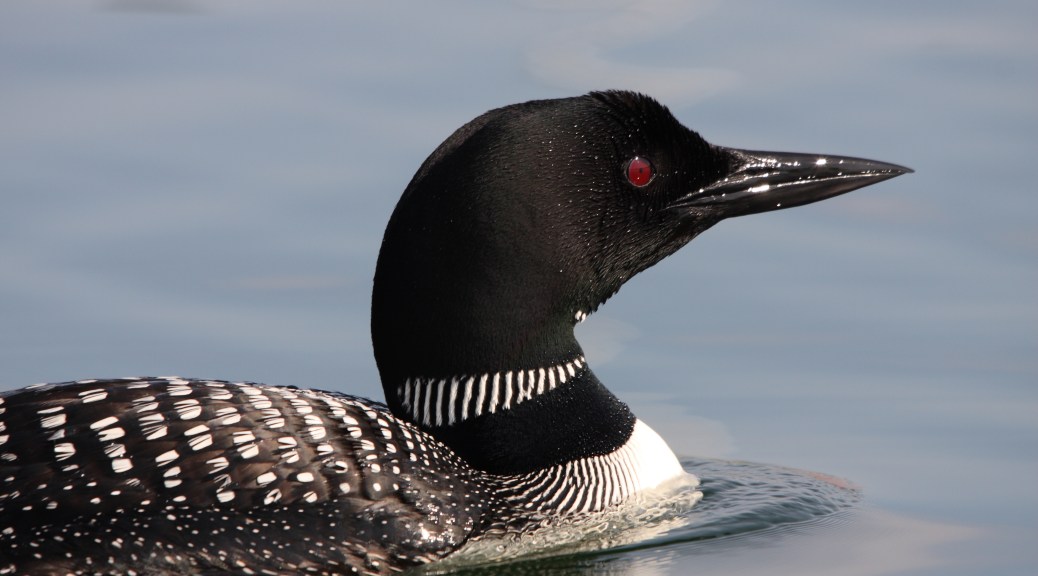
Every spring, a loon appears on Crystal Bay and stays until late fall. Loons are seen very rarely on this lake because it’s so heavily populated with boaters, especially when compared to the quiet, pristine lakes of the BWCA. Late at night this little loon makes the clarion, haunting sounds that only loons can make. I see him out there swimming and bobbing all by himself. In fact, as I sit here typing while facing the quiet autumn bay, I can see his silhouette far off in the distance.
I’ve never understood how a loon could not have a partner. He’s all alone out there summer after summer. I make up that he had a partner long ago and returns each spring to mourn her or perhaps still wait with anticipation. This loon and I share the quiet aloneness of our lives.
I prefer to use the term “alone” rather than “lonely”. For most of my life, if I didn’t have constant human interaction, I did feel painfully lonely. During my first few years after the divorce, I scrambled to find new people rather than face my new singlehood and desperately avoided time by myself. It seemed as though I only existed when others were around. It was a difficult chapter in my life.
I dated like crazy those early years, trying to compensate for a lifetime of being married to two men I’d grown to thoroughly dislike. For the first time in my 40 years of adulthood, I felt unencumbered and free. Eventually, after dating many ill-suited men, I met and fell madly in love with a man I was certain that I was born to be with. He broke my heart into pieces after a few months, then returned to my life once again three years later, saying he wanted to take care of me after my massive cancer surgery. He abruptly left the night before the surgery. My heart was broken all over again.
I had to come to terms with the obvious: I was in love for both of us. I’ll always see this man as the perfect life partner for me in spite of the betrayal and pain he brought, and in spite of knowing that this love affair was an illusion.
That was five years ago, and I haven’t dated since. Illusion or not, this relationship raised the bar so high that I knew in my heart no one would ever fill the piece he’d carved out. Over the years, I’ve self-repaired by contemplating the gift of this relationship and have long since realized that his presence in my life made it possible to experience the joy of being completely in love for the first time in my whole life. For the rest of what remains of my life, I can honestly know how this feels.
And so, he is long gone, but the precious feelings I finally got to feel are with me everyday. I no longer feel true loneliness, only an occasional bout of nostalgia when I see couples slow dancing. I’ve learned that my own company is enough and that one could ever be as perfectly matched for me than myself. Another way of saying this is that I finally feel safe and content with the best roommate ever: me.
Today’s post by Clyde was first published in 2011.
In my childhood the few farmers of southern Lake County shared equipment and work. Many of those farmers were characters worthy of being remembered. Two of them were Nordic Bachelor Farmers.
The Swede
Ole, his real name, I promise, lived in the valley below us up a side road of a side road of a side road in a small house. I always wanted to get into that house, to see if it was as neat and precise as were his barn and garages and to see if it had any frills. I never made it in.
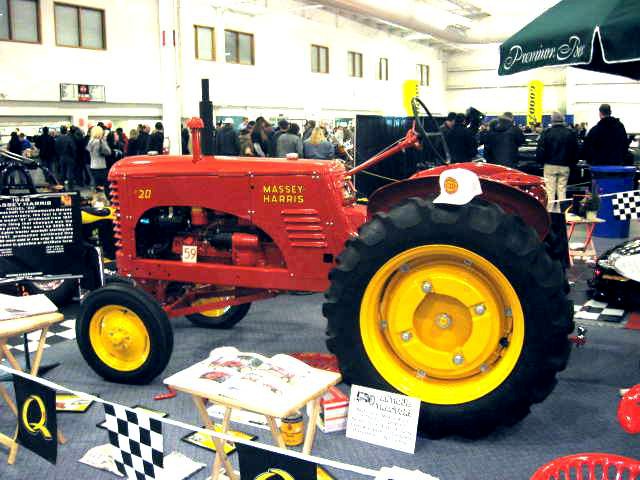
1948 Massey-Harris
In our early years on our perch above the valley, before the trees got too tall, we could just see his farm. It was three miles away, but by road it was seven miles. Ole owned a threshing machine. We would trade work or oats for him to come to our farm with “the separator,” as we always called it. Ole would putt-putt along at a much slower speed than necessary in his 1940’s era red and yellow Massey-Harris tractor towing the machine to and from our farm. Ole never rushed anything. Never. Ole never got excited. Never. Ole would talk . . . but . . . seldom . . . softly . . . with lots of . . . pauses.
He was slight of frame with massive hands at the end of long dangling arms. He always wore a cap, except when he came awkwardly into our house to eat. I waited for that moment when he stood at the door wiping his feet, cap in hand, calling my mother “Missus.” Powdermilk Biscuits would not have cured his shyness, nor given color to his pale skin, which somehow never tanned or burned, nor given thrust to his receding chin.
It was his head I waited to see. He had classic male-patterned baldness, and, here is what I awaited, five large bumps on his head. I do not know why he had them. They seemed benign, and he lived into his late 70’s. But what child could not be enthralled by those bumps!
The Norwegian
Noble—yes, that was his name—was my father’s best friend. And as opposite of my father in temperament as a man could be. He had been a Lake Superior fisherman until the coming of the lamphrey. He switched to farming, with which he needed much help from my father. I liked his name, and he did have a serene Nordic unpolished nobility. But I liked his brother’s name better, Sextus, which always made me giggle. Noble was short, stout of frame, and walked with small slow careful steps. He always bent his upper body forward and furrowed his brow as if deeply worried, which he was not.
Oh, how many stories there are about his kind, gentle, and implacable nature. For instance he once brought back 50 wild yearling steers off the Montana Range, and trustingly left a gate open, letting them escape. We got back 49, one of which died.
One was found as far away as Beaver Bay.
One day when he was about 50 years old sitting drinking coffee at our house, calling my mother “missus,” he casually mentioned that he had married the week before. My parents snorted coffee. It was a woman we knew—brusque, demanding, fast-moving, and intolerant of incompetence. It proved to be a lasting, loving, and happy match.
After I moved back to Two Harbors, I often saw Noble. Once I mentioned to him that my backyard had a large pile of firewood which was too punky to burn in our fireplace. He agreed with my suggestion that it would burn in the large barrel stove in his garage, fashioned for him by my father.
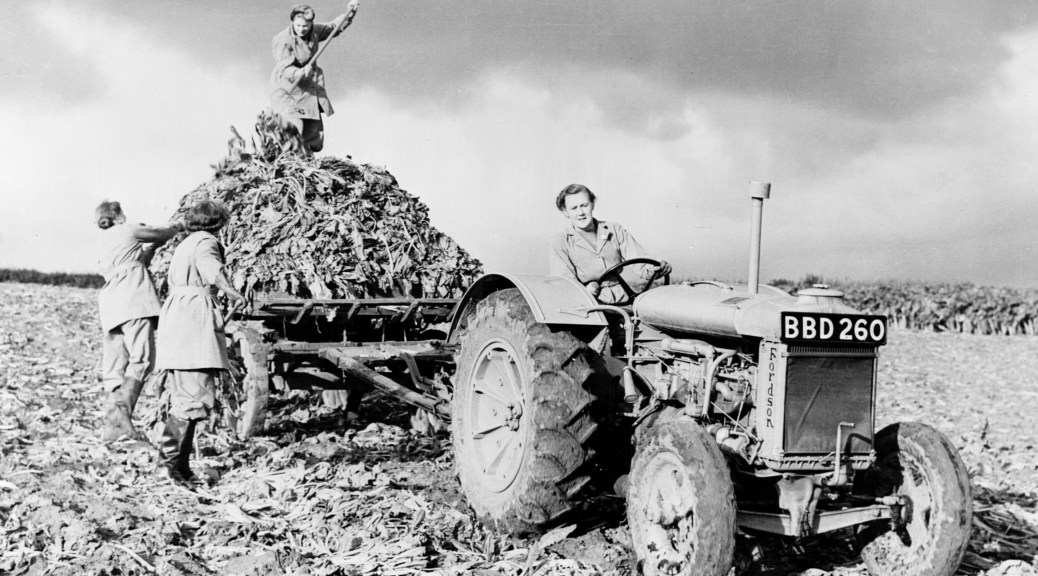
Fordson Model F
One Saturday he showed up with a hay wagon pulled by his 1930’s era Fordson tractor, famous for its durability and utter lack of power. Noble had three tractors, one a powerful International Harvester, but he loved to use that old putt-putt Fordson. As he backed it down into the low spot in my yard where the wood was piled, I told him that I did not think it had the power to pull out the load. He thought a moment and said, “Yup, yup, probably not,” and started to load wood. Halfway through the job we went in for coffee. He took off his hat, wiped his feet carefully, and charmed my wife, calling her “Missus.”
As you can guess, the Fordson would not pull out the load. He did not get mad; he just laughed and said, “Yup, yup, you were sure right about that.” He drove the 11 miles home and 11 miles back the next day with the IH, which pulled it out easily.
That was, sad to say, my last meaningful contact with that exemplary man. But I picture him every time I hear the term “Norwegian Bachelor Farmer.”
This guest Blog by Madislandgirl was first posted in 2010
I love digital cameras, because you can just shoot and shoot and not worry about wasting rolls of film that when developed show a nice out-of-focus art shot of the back of someone’s head. My son prefers taking shots of interesting images as opposed to the documentary shots I grew up with (“here we are at Mount Rushmore!”).
A little while back, discussion on the Trail was about wabi sabi. There had also been a bit of talk about old barns and how they are disappearing from the landscape. This got me thinking persistently about what once was my grandfather’s farm.
Grandpa’s Barn
And so it was that one weekend, the son and heir and I headed out to Scott County with the express purpose of taking pictures of my grandpa’s old barn. I figured this might be our last chance, as the family who currently own the place will be selling in a year, and I feel certain the barn will be coming down at that point. An electrical fire destroyed the farmhouse about 5 years ago, so this abandoned barn is what remains of “the farm” as I remember it.
A Tree Grows Through the Fence
The teenage son of the current owners was in the yard when we got to the farm, which solved my quandary about asking for permission to roam around the barn. He acquiesced to our request to take pictures in a way that made it clear that he thought we were nuts, but probably harmless.
I was seldom allowed near the barn as a child, I’m sure it was considered too dirty and dangerous for a “town girl”. My son wanted to go inside. It looked pretty stable, so I let him. We both managed to resist the siren song of the ladder into the hayloft, barely.
The Beckoning Hayloft
We had a great time shooting that barn, trying to figure out how some of the old equipment must have functioned when this was a working farm. My nostalgia for a past I could never recover lifted. This was An Adventure!
We were on a roll, so I decided I would try and find an old family cemetery on the other side of town. It is a corner of a cornfield and completely unmarked. I had been there exactly once before, 10 years ago with a toddler and I was not driving. Still, I was feeling cocky.
We headed out-of-town on what I thought was the right highway. I kept scanning the landscape for something that “felt right”. We came to a little town that I remember hearing of as part of the family lore and took it as a good sign, but had we gone too far? Kept driving. As we were driving, I thought I saw a little gravel track at an odd angle to the road-maybe? I decided to turn back and give it a try. The track was pretty well washed out. I parked near the highway and decided to hike in. If I got stuck out there on a fool’s errand, I would never hear the end of it.
My son elected to stay in the car with the cell phone to call the authorities if the farmer who had posted all those No Trespassing signs decided to mistake me for a pheasant-I had 20 minutes to get there and back or he was calling 911!
I hiked around the bend, thinking this was nuts, when I saw up ahead a small grove with something in it.
I had found what I was searching for.
Sellnow Cemetery
What vanished place do you wish you could go visit?


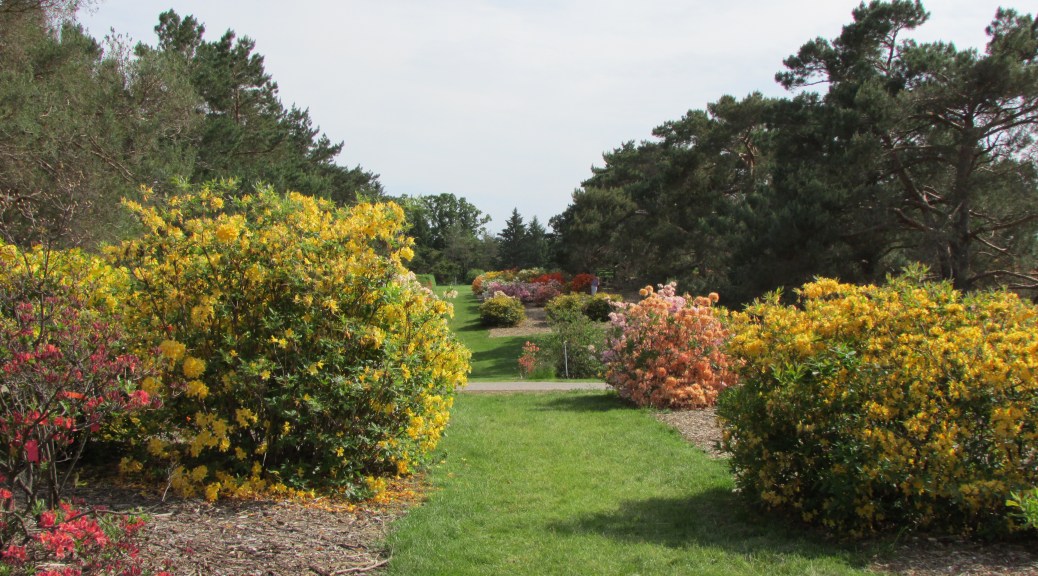
 Arboretum at the peak of color.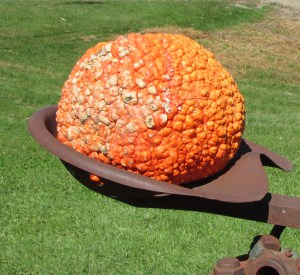







 Trail Baboon
