Inspiration, To A Point

I’m a fan of skyscrapers but not of heights. Gravity is always cause for concern.

I’ll go to the observation deck with you, but only for that giddy survivor’s high that comes when we return to the ground floor alive. And that’s where I can best admire a tall building – at street level or an even safer distance, like two miles away where it’s impossible for a rogue ice chunk or a clumsy, un-tethered window washer to fall on me.

Yes, skyscrapers activate my imagination, though not always in the best way. That’s why I’m concerned to see that the slow economic recovery has re-invigorated efforts to build the Chicago Spire.

Frankly, the project sets off multiple personal alarms.

When construction halted in 2008 because the world economy collapsed, Chicagoans were left with an enormous open pit on a prime piece of waterfront real estate. In my universe, open pits are bad. Gravity runs rampant there, and I consider it a miracle that the hole has remained in place for six years without becoming the scene of a terrible Timmy-in-the-well scenario. Construction keeps the hole open rather than filled up with pulverized rubber chunks, recycled packing envelopes, and other soft-landing material, which is what I would prefer.
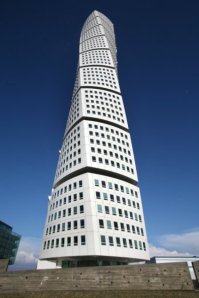
Turning Torso in Malmo

I also find it unsettling that the building’s shape twists so severely from top to bottom. A similar building by the same architect in Malmo, Sweden, is said to look like it is tilting at an odd angle when viewed from certain perspectives. That’s an understatement for this Escher-like structure, which comes with the feeling of vertigo built in. Boxy may be boring, but I like my skyscrapers to be nice and grounded-looking. Once we start twisting around the shape of acceptable living spaces, I’m afraid stability will go out of fashion. It’s a slippery slope.

And by the way, a slippery slope is also very troubling for the gravity-obsessed. That’s why I’m focusing on skyscraper news rather than watching the Winter Olympics.

Finally, I worry that the addition of The Spire to Chicago’s skyline will suddenly make it OK for new buildings to mimic the shape and design of power tools, which are unsettling devices especially in the hands of amateurs like me. Sure, this one is an innocent drill bit. But what’s to prevent other designers from framing up towers that appear to be lathes, table saws and orbital sanders? I could not feel comfortable in a city that featured, say, a Pneumatic Torque Wrench as part of its skyline. The urban environment is noisy and dusty enough!

What’s your favorite (or least favorite) skyscraper?
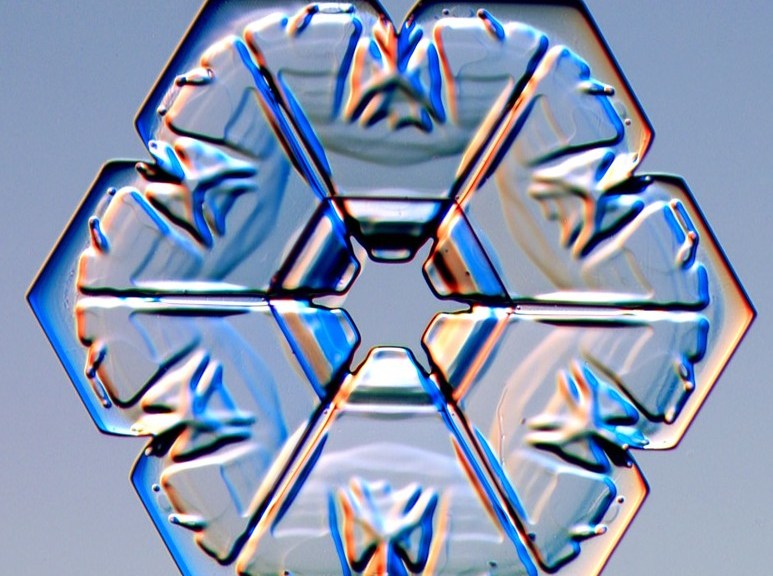
Stopping By The Woods on (the last) Snow Evening

An opinion piece in the New York Times suggests we are nearing a time when there will be precious few places in the world with enough snow to hold a Winter Olympics.

Things are changing that fast.

It is remarkable, especially during this unusually brisk and frosty winter, to think that piles and piles of snow could become an oddity reserved for only a few of the planet’s people.

I wish I could say I was doing something to stop this tragedy from unfolding, but my first response to just about any calamity is to write a parody of one of some great author’s work. Not a very effective strategy to stop climate change, but in my defense I can say that I was not driving a gas guzzling SUV all the while I struggled with the task of re-writing Robert Frost’s masterpiece.

Whose woods these are I think I know.
He does not come in winter, though;
The town folks easily get stuck
On nights with just a little snow.

My horse was once a pickup truck.
I had to sell it. Drat the luck.
There’s no more gasoline or oil.
Just horsey rumps and horsey muck.

The world is hot. The oceans boil.
The glaciers melt. Our treasures spoil
It’s something grand to watch the snow.
So strange to see it hide the soil.

That’s why I stopped here for the show
For generations long ago
And future ones who’ll never know
A time when woods could fill with snow.

What is the rarest wonder you’ve witnessed?

The History of Procrastination

Today’s post comes from forever sophomore Bubby Spamden, poster boy for the campaign against social promotion at Wendell Wilkie High School.

Hey Mr. C.,

Well, they stopped canceling school every other day just because it’s cold, so Mr. Boozenporn said he won’t let us move the deadline for our History Projects again – they’re due on Monday.

He calls it the “Monuments” assignment – all about how people through time built things like buildings and stuff to leave their mark on the Earth. We’re supposed to research something like the Parthenon or the pyramids or the Palace at Versailles and write at least 1,000 words about it.

AND we have to make a replica to show the class, using common materials found at home.

What’s worse, he only just told us about this in September, which is so unfair! The school year was starting then and we were excited about other things and January 31 (the original due date) seemed really, really far away.

That means I’ll have to spend the weekend doing some quick reading and writing and building a scale model of something from history.

At least it won’t get in the way of the Super Bowl.

But I don’t know how he can expect us to get interested in this super-old stuff, especially so close to Valentine’s Day when we’re all feeling kind of in bloom and full of young-person thoughts all about love and living and fun and the future, not about dead guys and their buildings and bridges and graveyards.

Is that fair? I don’t think so.

Plus, he said nobody is allowed to pick Indian mound builders, which was totally what I was going to do! I already had the Earth and everything!

So anyway I’m wondering if you and your blog people have any ideas of some old building or construction thing that isn’t too hard to understand that I can make a quick copy of using stuff I’ve got at home. I know you’re all pretty old so you probably have even made some of the original things that would qualify – if only you can remember what they are! (Just Kidding).

Your friend who just lost his whole weekend,
Bubby

I told Bubby when I was a sophomore I did a similar assignment on Machu Piccu using egg cartons, Easter grass and Neptune’s Castle from the bottom of my dad’s aquarium that he kept in the living room all lit up and bubbling even though the fish had died about ten years before. My model turned out a little slimy, which really enhanced the look even though it didn’t do much for the smell. I managed to get a B.

What’s the oldest man-made thing you’ve ever seen?

Ask Dr. Babooner

We are ALL Dr. Babooner

Dear Dr. Babooner,

Just sit right back and you’ll hear a tale – a tale of a fateful trip! It started from this tropic port aboard this tiny ship. The mate was a mighty sailing man, the skipper brave and sure, and everything that happened next is mostly conjecture.
We’re really not too sure!

The Skipper says a storm blew up. It swamped them more than once. They went off course and drifted for a year and several months. When I say “them” I really mean the Skipper, not the mate. The matey starved and perished on an unrecorded date.
He might have dressed a plate!

I say that ’cause the Skipper recently has come ashore. He says he lived on turtle’s blood. I think he needed more! He’s hairy and he’s tired but I’m really not impressed. If he has drifted sixteen months he’d look much more distressed.
A whole lot more distressed!

The media is hungry for some truth about this trip. It’s hard to say what happened and I don’t want to be flip. But if this is a hoax the Skipper’s name will soon be mud. And if the story’s true I’ll drink a pint of turtle’s blood.
I doubt it will taste good!

Dr. Babooner, is it wrong to make a bet with on the true outcome of a tragi-miracle like this?

Sincerely,
Mary Ann

I told Mary Ann it is in very poor taste to make light of a story like this one because a life was lost in the process and innocent newscasters everywhere may have been duped. But I wager that even the terribly poor taste of placing a bet on the true outcome of this story would not leave a flavor in your mouth that’s any worse than a pint of turtle’s blood. Yuk!

But that’s just one opinion. What do YOU think, Dr. Babooner?

Sleepy Bear Makes Prediction

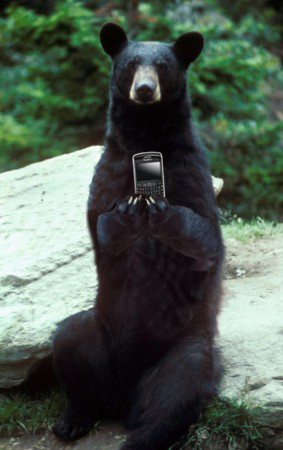
Today’s post comes from Bart, the bear who found a smart phone in the woods.

Bart Blackberry2

H’lo – Bart here.

Not really awake yet. Not asleep either. That’s hibernation – It feels like there’s this wet paper bag over my head. Kinda like the way some people look at the end of an all-day summer picnic at the campgrounds near here.

Yeah, I’ve been hiding back in the trees, paying attention.

Anyway, I rolled over and saw a news story about that groundhog that predicts the end of winter. Six more weeks, I guess. Unless there are less. Or more.

Y’know, animals pretty much agree groundhogs are morons. Amazingly dumb.

I get it that people have traditions that make them do things that they don’t understand or even think about very much, and I suppose this Groundhog ceremony is one of them. But I noticed that there wasn’t a whole lot of fuss made about it. Since I picked up this smart phone I’ve learned about Google and Facebook and Twitter and I’ve seen how some things can take over the conversation.
And let me tell you – yesterday, the Groundhog was not even the most-talked-about animal! Seahawks and Broncos were much more popular on every single platform!

In fact the greatest excitement about yanking a hairy rodent out of its burrow seemed pretty much limited to a few people in Pennsylvania. And they had some kind of script as far as I could tell. I watched the video. The Top Hat Guys pretended to talk to him but I didn’t hear Phil speak. They said he saw his shadow, but it looked dark and rainy. What’s with that? Reality programming with no real reality or personality – isn’t there enough of that already?

Which gave me this idea. I know more about the weather than a groundhog. Heck, I know more about marketing too. If you wanna bring back the feeling of spectacle to February 2nd, why not roust a bear? I have a burrow, and I can make a big ding dang deal out of waking up.

Wouldn’t it be a whole lot more tense and dramatic to have the Top Hat Guy poke a stick into my den to see if I cast a shadow when I come out to tear him to bits? Oh, I won’t hurt him, but I can growl and thrash around and even take a few swipes. I’ll eat his hat! If you smear some peanut butter inside it. Honest. I can be cranky when I just wake up, but I settle down after I’ve had something to eat.

I predict if somebody builds a celebration around pulling a bear out of his den next year, we’ll only have one more year of Groundhog Day. After that, the day will be known as Bear Scare Februare!

Your pal,
Bart.

What are you like when you wake up?

We Live Inside!

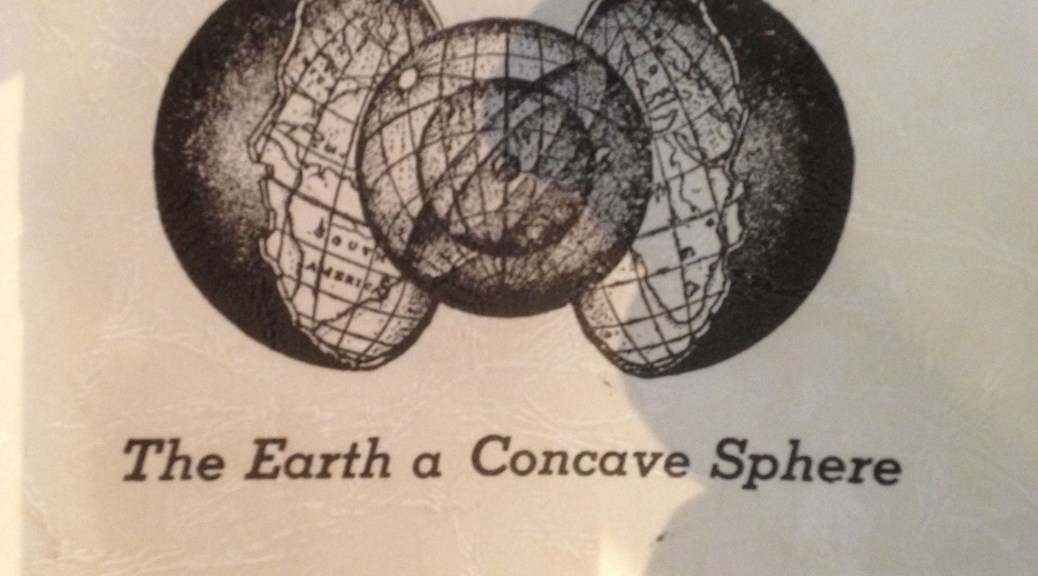
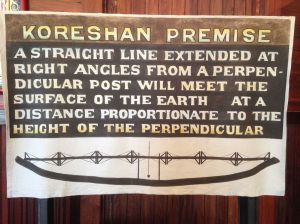
One of the surprises that came out of my recent trip to Fort Myers was discovering the remnants of the Koreshan Unity Settlement – a Utopian community established there in 1894 by a charismatic leader named Cyrus Teed, who believed in some fairly progressive things including the educational value of artistic expression and full equality between the sexes.

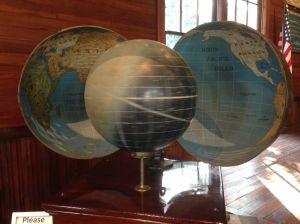
The opened sphere, showing the spinning gasses inside.

But there was at least one thing major thing he got wrong. Teed preached that the Earth was a hollow sphere, and we lived inside it. He thought the globe that we know so well was actually inverted – with the continents pasted around the underside of the curve. Looking up (or inward), you would see a revolving ball of gas that was layers thick, only allowing us to view the refracted rays of the sun, located at the center. The sun, rotating once each 24 hours, was light on one side and dark on the other – thus giving us day and night.

The land beneath our feet was also layered, but digging through it would eventually bring you to the outside of the sphere, beyond which there was … nothing.

Teed and his followers considered the commonly accepted idea of a limitless universe with humans living on the outside of the globe under a distant sun and with planets and stars all whizzing around in their own orbits as inherently chaotic and unknowable, putting God beyond the reach of human understanding. Teed said the Koreshan system “… reduces the universe to proportionate limits, and its cause within the comprehension of the human mind.”

Easily said, though it didn’t take very long for his book, The Cellular Cosmogony, to lead this particular human mind to a state of exhaustion. Still, I would love to have a t-shirt featuring their motto – “We Live Inside!” After all, it’s not that different from the philosophy of Minnesotans in January.

Koreshan_4

The Koreshans went to great lengths through observations and experiments and words, words, words to support their notion that the wide horizon visible off the Florida coast actually curved up with a smile, rather than down with a frown.

Cyrus Teed died in 1908 and while his utopian settlement lingered for a few decades it eventually faded away. A prime directive of complete celibacy for the most ardent followers of Koreshanity might have had something to do with that. The last Koreshans gave their vast tract of land to the State of Florida in 1961 which allowed for the establishing of a state park.

What impressed me most in this brief encounter with Cyrus Teed and his philosophy was the power a charismatic person with absolute conviction can have over others who are less certain in their beliefs; and once convinced, the amazing ability we humans have to cling to ideas that are completely and obviously wrong.

How do you know you’re right?

To Sleep, Perchance to Dream

Today’s guest blog comes from Steve Grooms

Dreams have a curious power to move us, convincing us that they are authentic even when they obviously are not. I occasionally wake up smiling and feeling the world is perfect, only to realize that my happiness is based on a pleasant dream, and that dream was pure bunk. As I lie there the euphoria of the dream slowly drains away.

Dream theorists have wildly divergent explanations for dreams. Some believe dreams represent ways the brain incorporates new knowledge. Freud thought dreams were caused by the unconscious (and much of the unconscious was driven by sex). Some modern researchers believe dreams are part of the process by which the brain processes the complexity of life.

One of the latest developments in dream theory is the creation of computerized data banks of vast numbers of dreams. One researcher, for example, has 30,000 dreams in his data base. Having so many dreams to study makes it possible to see patterns that could not be seen with less data.

It turns out that there are common themes in dreams. One of the most ubiquitous storylines is finding one’s self naked in public. Another “favorite” involves taking a test for which one is not prepared. I’ve had both of those dreams. I once dreamed I was returning a borrowed saucepan to my next door neighbor, only to realize that I’d forgotten to put on clothes. And I have had three dreams—nightmares, really—in which I had to take German exams for which I hadn’t studied a bit.

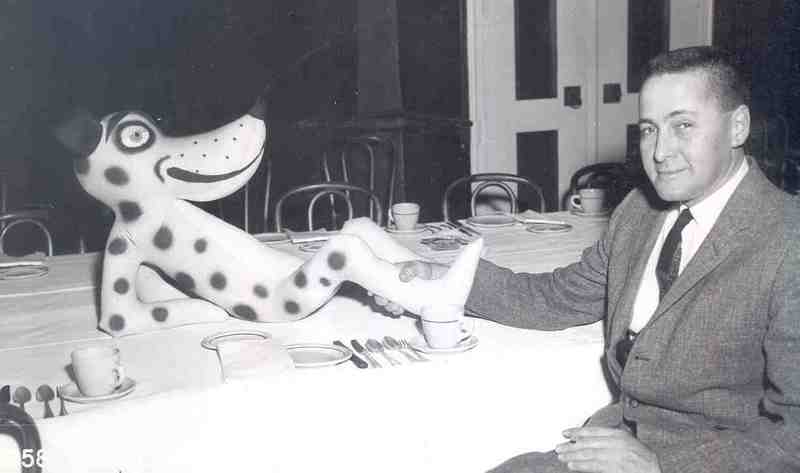
Another common experience, especially among creative people, is solving a puzzle or inventing something in a dream. Musicians have created whole compositions in dreams, compositions they could retrieve upon waking. My father was a stuffed toy designer. His first major success as a designer was a dog that came to him in a dream. “Cheerup” (a sort of silly beagle or basset) made my dad famous.

gvg w cheer-up

People vary in terms of how seriously they regard dreams. My own conclusion is that dreams are entirely whimsical and illogical. Or at least mine are. I once lost a dear friend who regarded dreams as holy truths from another world. When she learned how I saw dreams, she quit speaking to me and the friendship died right there. And I sure goofed when I casually mentioned to my daughter that I’d had a dream in which I had a tryst in a hay loft with elfin Olympics skater, Tara Lipinsky. Molly howled in outrage, “She’s young enough to be your daughter!” I could only sputter, “Molly, it was a dream! I didn’t do anything!” “Daddy,” huffed my daughter, “that is SO inappropriate!” Since then I have judiciously failed to mention several dreams to Molly.

00000magazine cover

My favorite dreams are those in which I can fly. Dreaming of flying is surely second only to the actual experience of being a bird. Have you had such a dream? If so, do you have to flap to get airborne? (I do.)

The most wonderful dream I ever had is hard to describe. In that dream I checked out rumors about a sportsman’s club in north-central Minnesota that maintained a trout stream so well that it held trout as mighty as trout routinely were in the early 20th century before Europeans came along to exploit them. In my dream, I visited that club’s lands to see this incredible stream. As I passed through the club house and entered the land the club kept, I realized I had gone through a wrinkle in time. All of our fishing gear was gear that anglers used in the 1920s: long bamboo rods, canvas vests, creels made of woven wicker. And, yes, the stream was filled with huge trout. We had been transported to an earlier time.

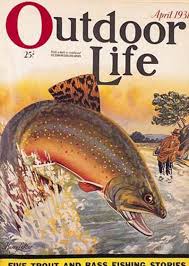
The most stunning thing, though, was the look of the dream. Outdoor magazines in the 1920s and 1930s often had covers that loosely reflected Art Nouvea effects, especially that super-saturated wild colors favored by illustrators. And suddenly I realized that this land I was in was actually in the style of Art Nouveau. I was dreaming in an artistic style!

What patterns have you found in your dreams?

Are We Not Men?

Today’s post comes from NASA’s Curiosity Rover.

curiosity020313

My ground controllers (lovely term, that) have informed me that China’s Jade Rabbit Moon Rover has encountered a problem after just three months’ service and will likely stop working sometime during the next few weeks. This new information came in a heart-rending message written in the robot’s voice, literally saying farewell to humanity because the device realizes that it cannot power down to hibernate through the coming lunar night, and it is about to die.

I’m as sentimental as the next piece of space equipment, but do we really have to invent personalities for our extraterrestrial tools and pretend that they speak to us in human voices?

I say “no way, dude.” People and machines are different, and keeping those lines that separate us clearly drawn is an important habit that we need to establish early on in our relationship. Otherwise, we may quickly come to a point where determining who is a person and who is not becomes nothing more than a matter of opinion. And we saw how well nine smart people on the U.S. Supreme Court handled that distinction.

So when the fading Jade Rabbit says:

“The sun has fallen, and the temperature is dropping so quickly… to tell you all a secret, I don’t feel that sad. I was just in my own adventure story – and like every hero, I encountered a small problem.”

I say “Puh-leez! Get over yourself, Jade Rabbit. You’re just a bucket of bolts who is about to become another expensive wreck on the lunar surface. Spare us the tears!”

I would also add that while all of us outer space probes are purely technical contraptions, some of us are more self-involved and melodramatic than others. And while I am not programmed to have an opinion about such things, it does seem to me that it’s a waste of programming capacity to try to put the personality of Scarlett O’Hara into a glorified lawnmower.

The Curiosity Rover has a good point here – we should start nitpicking now if we’re ever going to have a chance of enforcing the distinction between humans and machines. Or is it already too late?

Which of your favorite devices has the most personality?

A Lovely Wake

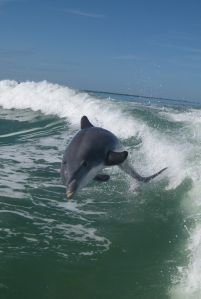
Dolphin_2

Now that I’m back, I feel comfortable telling you that I spent all last week on a Florida beach. At the time, even bringing it up felt, well, cruel. But now that we’re all suffering together (again) through an extended extreme weather moment, let’s pause to consider the lives of our brainy sea-going fellow mammals, the dolphins.

Dolphins do not have to shovel snow or shiver through a -40 degree wind chill at a Metro Transit stop, and no doubt they would be grateful for that if they had any concept of what it means to wait for a bus.

The closest thing to it may be represented by this video I took with my phone from the back of a Sanibel Island tourist boat called “The Thriller”. I’m more of a casual sailor who is most comfortable on a boat of the putt-putt variety, but when you operate a vessel called “The Thriller” you’re not really expected (or permitted) to take it easy. We had some very intense wind-in-your-hair stretches that the people with hair told me were quite exhilarating. Although the most exciting moments came when we slowed down enough to allow a pod of dolphins to ride our wake across the bay.

I consider this the marine mammal equivalent of waiting for a bus because experts say that dolphins are inclined to ride boat wakes as a way to save energy during travel, and also because they are naturally curious creatures who want to have a good look at what’s going on.

Which makes them somewhat like tourists.

As a tourist, I understand why we enjoy watching dolphins jump, but I’m puzzled at what possible satisfaction dolphins might get from watching us. Yes, it’s natural to come have a look because you’re curious, but once you see it’s yet another boatload of plump, pasty Midwesterners waving their smart phones around, why linger?

What makes you curious?

Aggression Study Provokes Fight

Today’s post comes from disgraced journalist Bud Buck, who considers telling the truth to be “a content strategy that hasn’t really worked out.”

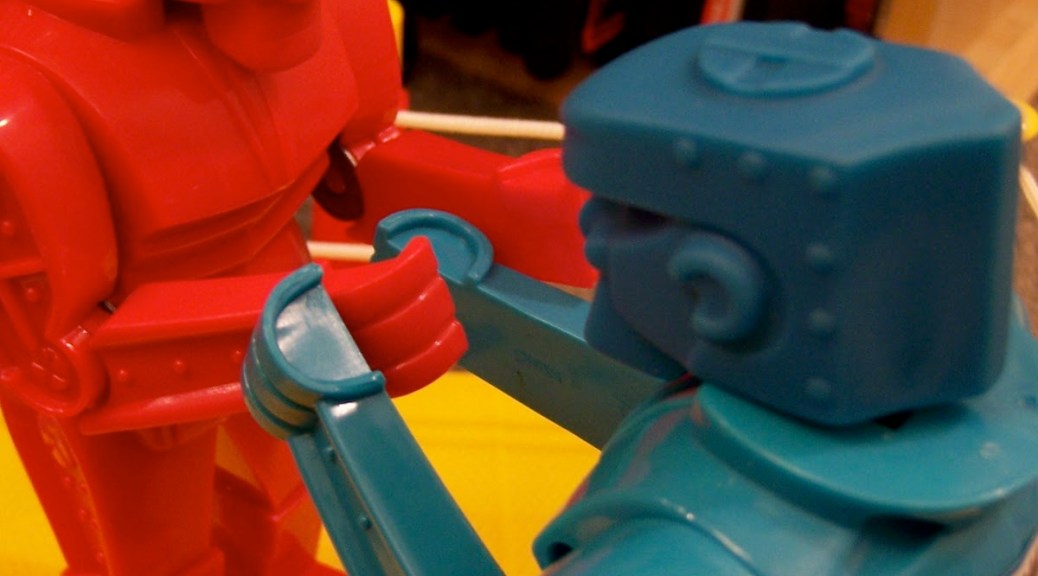
RSR

A team of researchers studying aggression in men has confirmed the long held suspicion that men will deliberately anger each other to get what they want.

Professor Kirk Buffdude of Pummel University led the study, which gave 140 undergraduate men a chance to call out to an opponent before competing with that same opponent in a fine motor skills contest.

The competition involved carefully threading lengths of puffy yarn through small holes cut in tablet-sized pieces of cardboard. Only one competitor was allowed to speak before the contest began, and that person had just three choices

Buffdude found that the participants who chose to issue a challenge to their opponent’s virility won the ensuing fine motor skills game 78% of the time, whereas those who chose to offer a supportive comment won only 3% of the time. The contestants chose to say nothing at all won the remaining 19% of the time.

“This shows that humiliating your opponent before a fight gives you a competitive edge,” Buffdude said. “The adrenaline spike of an impending confrontation makes it impossible to govern fine motor tasks, and aggressors inherently know this and use it to their advantage. It’s a major breakthrough, and it makes me the greatest aggression researcher of all time!”

But others in the field were not impressed.

“Buffdude’s study is a joke,” said Dr. Armstrong Slapdown, Chair of the Domination Department at Worrisome College. “If you add up the numbers, it’s apparent that the contestant who was allowed to talk won the competition every single time, no matter what he said. How is that possible? They must have been fighting girls.”

But Slapdown’s comments drew fire from Dr. Winsome Garrotte, holder of the Rob Ford Endowed Chair for In-Your-Faceness at Toronto’s Angst Institute. “Fighting girls is no picnic,” she said. “Professor Slapdown knows that very well from our joint appearance on the Bad Attitude Panel at last Fall’s I.V.A.C., the International Verbal Assassination Convention.”

In spite of the confrontational tone of the responses, the author of the study that sparked all the sniping was unmoved. “We don’t make a lot of forward progress in Aggression Studies,” Professor Kirk Buffdude said. “Mostly our work is a matter of posturing. You have to enjoy the show if you’re going to survive.”

How are you in a fight?