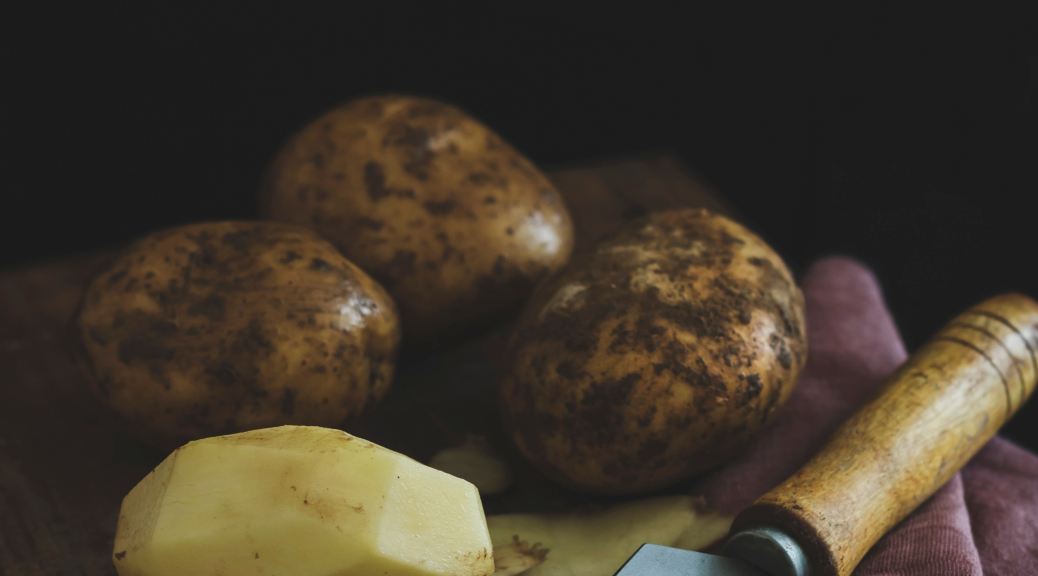
I baked 11 dozen sweet rolls for an Easter fundraiser at church to raise money to send our bell choir to New York in November. The rolls were either cinnamon, raspberry, or blueberry filled, and were lavishly iced. I had 3 dozen left at the end of the day, and brought them home and made them into rusks. That involved cutting them in half, brushing them with melted butter, and baking them at 275 until they were crispy/chewy. They store really well.
I brought a bag of rusks to work on Tuesday. My coworkers thought they were delicious, but only one had ever eaten anything like them before and knew what rusks were.
This puzzled me greatly, since I assumed that everyone would know rusks. I grew up with Zwieback and Dutch rusks. Dutch rusks came in round packages with windmills on the paper covers, and my grandparents would pour broth on them to soften them up. My coworkers are of German Russian and Czech heritage, and many of them grew up on farms, and I thought they would be familiar with a fine way to extend to life of stale bread. The only one who knew rusks was a coworker of Danish heritage. She said her grandmother used to butter stale bread and sprinkle it with cinnamon and sugar and bake it. She didn’t know they were called rusks.
You would have thought I had brought in the most exotic pastry imaginable. I looked up rusks on the internet, and found that there are examples of twice-baked bread from the Philippines to Greece. I think that it was used extensively to extend the shelf life of bread on sea voyages. There are loads of rusk recipes in the Nordic Baking Book my son and dil gave me for Christmas. Perhaps rusks are more common the closer you live to the Baltic or North Seas. In any event, they demand more rusks at work.
What family or ethnic foods do you have a hard time explaining to other people?
Daughter’s birthday was last week, and she reports that it was the best birthday ever. She finished her last graduate school class and she was given an award at her agency for her good work. Both our children become unusually disorganized around the times of their birthdays. Too much anticipation, I guess, although we never made their birthdays into productions. I was glad daughter kept it together and had a great day.
Today is William Shakespeare’s purported birthday. April 23rd is also the same day he died 52 years later. It is certainly not the way I should choose to spend my birthday.
What is your favorite Shakespeare play or scene. Which is your least favorite? What was your best birthday? What was your worst?
Husband and I had no real shopping agenda going to Santa Fe except, perhaps, to find some nice, everyday place mats. We thought that Santa Fe would be a good place for interesting textiles.
Husband went to the Santa Fe farmers market and found these place mats you can see in the header photo. We have plain white plates, and the place mats went with them nicely. They came from Guatemala, and are made from rags. They are thick and soft, and are kitty approved for napping comfort if we leave them on the table between meals. They also reminded me of my childhood.
My best friend’s mother had rag rugs that she had made from worn out clothing. She sent bags of rags to a woman in Magnolia (Cedric Adams home town), who somehow wove them into throw rugs for the entryways into their farmhouse. I thought they were so pretty and colorful. What a wonderful way to recycle! Nothing went to waste in that household.
Do you know of anyone who makes rag rugs these days? How do you recycle? Does anyone remember Cedric Adams? Where do your pets like to nap?
I saw four enormous birds soaring over town in migration a couple of weeks ago . They were whooping cranes, probably on their way to Alberta. I have only seen migrating whooping cranes one other time in all the years we have been here. We also have had geese fly over, and the owls, hawks, meadowlarks, and vultures are back.
Yesterday Husband and I assisted in the migration of two timpani from the college band room to our church in Husband’s pickup. They are needed for a piece our bell choir is doing on Sunday with a brass quintet. (Our bell choir director failed to see how funny it was when she kept saying a few weeks ago that she was one trombone player short of a brass quintet. She didn’t get it when people replied to her that they had always thought that).
When I grew up in Luverne, we usually had timpani in my church on Easter. They came from the high school. All the high school band directors in my youth were Lutheran, and we always got the timpani for special church services. No one from the community ever complained about it as being unfair or a misuse of public property. Our bell choir director teaches at the college, and I guess that is why we have the timpani for Easter. Our church probably has the most music of all the churches in town, and not all of them have the space for such things even if they had the musicians.
I wondered yesterday just how many timpani in the US are migrating from schools to churches for Easter services. I like to imagine that there are many in transit, and that it is a brief but yearly migration. I like to see cooperative use of such things. How many timpani does one small town need, after all?
What migratory birds have you seen lately? What percussion instruments would you like to play? What are some successful public-private cooperative ventures you know about?
Our grandson took his first steps this week. A couple of weeks ago, tim sent a video of his very adorable, curly haired, red headed grandson who had just started taking his first steps. The child was absolutely prancing! I couldn’t upload tim’s video due to WordPress rules. Here is what tim wrote:
my grand kid (ari)
took his first step april 1. he’s got it in his soul if not in his dance step yet
Well! I am curious about yesterday’s dearth of comments on Rogers and Hammerstein. Ben said they were too “Syrupy”. I suppose, but they fit their times. I remember finding a book in the local library when I was in Grade 7 that described most of the recent musicals of the early and mid 20th century. I was fascinated and researched all the musicals that I could, and surprised and exasperated my Grade 7 music teacher with all the things I knew about “All About Eve” with Lauren Bacall. It was the first musical sound track I bought.
We are challenged with deciding what we want to do when we visit New York in November. We want to see a musical.
Any suggestions from Baboons about current Broadway musicals to see? What musicals are your favorites? What is the first musical you remember? What about movie musicals?
I have a hard time saying “no, I can’t do that”. I tell the intake people at my work that my schedule is too full to take on new clients, and then I get a phone call from our county social services that they have five children who need therapy, and I am the only one in the area who sees children as young as the ones they are referring, and guess what? I have five new appointments for next week. People at work just laugh at me when I tell them I am going to put my foot down and not take any new clients. I have no one to blame but myself.
Is it hard for you say “no”? How do you manage to do it if you are able? What is hard for you to communicate to others? What is your favorite scene or song from Rogers and Hammerstein?
We returned on Sunday night from Santa Fe having purchased 1.5 pounds of ground Chimayo chili, woven place mats that came from Guatemala, a Green Chili cook book, a New Mexico history book, and two Pendleton baby blankets for some new arrivals of our acquaintance.
A person could sure spend a lot of money in Santa Fe on all sorts of Native American jewelry and clothes with Indian motifs, but there is something about them that make me very hesitant to wear such things. I don’t normally like to draw attention to myself, and I would feel so fake and pretentious wearing silver and turquoise jewelry. I think one of my problems with all this is that we have so many Indian friends. I would feel so odd and out of place if I showed up wearing their sacred cultural symbols on my clothes and jewelry. If we had more time and luggage space I would have bought pottery. I love the rugs and textiles. I know that many native Americans depend on the tourist trade for a living and want us to buy their wares. This makes me conflicted. I think I would rather donate to the American Indian College Fund.
We purchased a kachina corn god figure many years ago at the Mesa Verde National Park gift shop. I find the kachinas fascinating, but now that I know more about their meaning and significance, I would be hesitant to buy one, and I now know that I have to care for the one we purchased and not treat it as a decorative object. Sometimes knowledge can ruin all a person’s fun.
When I was six my parents arranged for the kids to meet a piano teacher. My sister was deemed to have talent, so she entered a program of piano lessons. The meeting must not have gone well for me. Afterward my father explained that I was musically impaired. His exact words were, “You couldn’t carry a tune in a bucket.” I had no reason to doubt him.
We were obliged to sing in my grade school, especially just before the holidays, when we performed a concert of Christmas carols. I dutifully performed, only I decided there was no reason to spoil the good singing of others, so I lip-synced the carols. Like Milli Vanilli, I got caught. That led to an epic showdown with my teacher, Miss Steele, the low point of my educational career.
While I couldn’t sing or play an instrument, I had ears. I thrilled to the popular music of my youth. I amassed a sizable record collection. In college I discovered classical music. Guys in my dorm introduced me to folk music. Occasionally I fantasized about making music, but mostly I accepted my fate as someone for whom that was impossible. Sometimes, to tell the truth, that seemed a blessing. I often woke up early in the morning to the sound of my sister plonking away on the piano when she would rather have been in bed, but piano practice was mandatory for her for years.
In the first week of graduate school I walked to the Scholar coffeehouse on the West Bank. The first act I caught—Koerner, Ray and Glover—amazed me. A day later I went back. The performer was a kid from Saint Cloud State who played 12-string guitar. The torrent of music coming from Leo Kottke’s guitar almost blew me off my stool. I’d never heard music remotely like that before, and it was one of the most thrilling events of my young life. I began hanging out at the Scholar, walking through blizzards if necessary in order to attend every gig Leo played.
It was inevitable: one day I bought a guitar, a classical model with nylon strings. At first I was delighted to be able to make any kind of music; just strumming a C chord made me giddy. I moved on to finger-picking, emulating my coffeehouse heroes. I grabbed every spare moment to practice. I took guitar lessons, starting with Carter family tunes and moving toward John Fahey compositions. Slowly, very slowly, I got better. I bought a steel-stringed folk guitar. Then—you knew this was coming—I got a 12-string. (I’d love to get back all the time I wasted trying to get that danged thing in tune.) And I practiced, practiced, practiced.
Alas, all those years when I did not sing or play an instrument had set limits on what I could accomplish as a musician. My brain and fingers could never coordinate well enough to enable me to master difficult material. I could do cheesy imitations of some Kotte or Fahey pieces, and that felt like a miracle. But I slurred many notes and muffed others. I had to cheat by simplifying the arrangements because my technique was so sloppy. After getting better month by month, I hit a wall I could not get past it. And I remained stuck there for years.
I finally realized the most graceful thing would be to accept my fate and simply enjoy the limited music I could make. While I was never going to play well, I was delighted to play at all. Then arthritis arrived, and I could no longer even play badly.
My performance career with the guitar now feels like some doomed romances from my past, romances that were fabulous in some ways but which failed. Sometimes things don’t work out, even if you passionately hope otherwise. I’m lucky to have those memories now and I’m sure I am a better listener than I could be before playing the guitar.
OLYMPUS DIGITAL CAMERA
Do you sing or play an instrument? What has that meant to you?
We always seem to meet interesting people when we travel, and this trip is no exception. We arrived late in the evening into the Albuquerque airport and had to wait for our prearranged shuttle to take us to Santa Fe. We waited with a fellow shuttle rider named Abdul. He was an Egyptian man, about 65 years old, who had just arrived in Albuquerque from Alexandria via Abu Dhabi and Los Angeles. He was very tall, well over 6 feet, and a professional chef who had worked for years in Santa Fe and was coming back to spend time in a cooperative community of scientists and artists outside of the town. He gave us some sage advice on good restaurants to try, and which hyped ones to avoid. He described preparing food as being just like composing and conducting music. We talked about how he manages his diabetes and how he loved teaching classes in Mediterranean cooking. I regret not being able to eat dishes he prepared.
Our second interesting meeting was with a man named Steven, a white man who owned a dusty shop chock full of indigenous art prints and native ledger art. He was in his late 60’s and was whittling bear root, an expectorant, to make into tea to help clear his chest from an attack of Spring allergies. He and I had a serious talk on why the Kachina figure I have in our living room gives me nightmares (he said I had to change my way of living). His art prints were in huge stacks that would take hours to go through. Husband plans to go back for more conversation and to look at more prints before we leave.
Tell about interesting people you have met on your travels.