Category Archives: Family

Disaster Averted

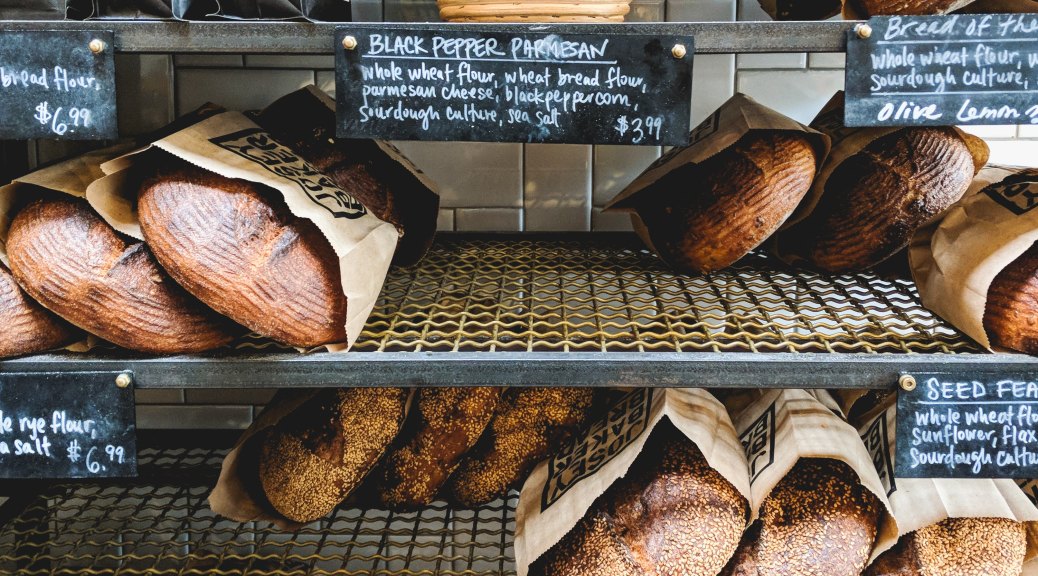
I got a family recipe from the wife of my German cousin Wilhelm. It is a traditional Christmas bread called Bremer Klaben. Petra speaks wonderful English, but her written recipe is, well, interesting.  It is ok that the ingredients like raisins and candied peel and flour are measured in grams. I have a scale that will do that for me. I really like cooking by weight, not volume.

The recipe calls for 60 grams of yeast.  I always assume a reference to yeast means granulated yeast. 60 grams of granulated yeast is about 1/3  of a cup. This only makes one medium-sized loaf of  bread, so I surmised that she was referring to cake yeast, not granulated yeast. The granulated equivalent of cake yeast is 4 1/2 teaspoons. Can you imagine what would have happened had I not made the proper conversion?  Disaster averted!

Tell about disasters you have averted (or not).


Rich Beyond Measure

I made broth last weekend.  It is the Brodo recipe from The Splendid Table with 9 lbs of turkey wings and 3 lbs of beef bones.  It simmers for 14 hours. It produces a couple of gallons of golden brown goodness. We use it all the time, so we try to always have some on hand.  We  consider ourselves rich as we put the broth containers in the freeze “This is wealth”, we say.  Who needs more things when you have broth?

We have much to be thankful for besides homemade broth.  We feel especially rich in good friends,  good coworkers,  and in our community as a whole.  In this season of rampant consumerism, I think it is good to consider all the things that contribute richness to our lives.

What makes your life a richer, more satisfying one?


Epiphanies

Today’s post comes to us from Port Huron Steve.

I once considered writing a book of personal memoir. The title was going to be Epiphanies. Not everyone is familiar with that word, which comes to us from the ancient Greeks. Epiphanies are those moments of sudden understanding in which a nagging problem is solved or a blazing new perception reveals itself. A less fancy definition would be “aha moments.” The word has special relevance to Christians, referring to the manifestation of Christ to the Gentiles. My favorite example of epiphany in popular culture is that moment in The Miracle Worker when Anne Sullivan pumps water over the hands of little Helen Keller, teaching her how language is the key that will reveal the world to her.

For me, epiphanies are special, even magic. Of course, we all learn lessons as we experience our lives. Usually enlightenment appears after a slow, unremarkable, evolutionary process. Epiphanies, by contrast, surprise and shock us. Routine mental growth is like lighting a candle in the dark; epiphanies are more like skyrockets that explode to fill the skies with color and noise.

Epiphanies I experienced as a child are hard to date with precision. When I was a toddler—somewhere between three and five—my grandfather took me out for a treat. He bought us drumsticks, those ice cream novelties with wafer cones. Up until that moment delightful things seemed to appear and disappear randomly. But when Grandpa Clarence bought those drumsticks I realized that these and other treats existed all the time. They were part of the world. If you had this thing called money, you could exchange it for a drumstick. The world was more orderly and benign than I had understood before that moment.

I experienced an epiphany in third grade that I often remember. Our classroom had an American flag (just 48 stars back then). Large portraits of George Washington and Abe Lincoln hung on the walls. Our desks were bolted in place facing the teacher’s desk, which was mounted on a raised deck to allow her to look down on the little humans in her charge. Our teacher, Miss Maybe, called on a kid named Andy to deliver a report. Sitting in my desk on the right hand side of the classroom, halfway back, I grinned with relief. The voice in my head said, “Hey, that’s Andy up there, not you! He has to give a report and you do not. He’s Andy. You’re Steve. You aren’t Andy, and you don’t have to give a report!” I’ve always wondered if most people have a particular blazing moment when they realized they are a unique consciousness, not part of a larger group.

Not all epiphanies are so fun to remember. In the first year of my marriage, my erstwife and I spent a winter month housesitting the home of Arthur Naftalin, then the mayor of Minneapolis. On a sub-zero February afternoon my parents drove all the way in from their Orono home to visit us. After a delightful meal they left, walking down the steep driveway to where they had left their car parked on the street. I stood at a living room picture window to watch. When they turned up the sidewalk, my mother and father spotted me. As if they had rehearsed this move for weeks, they turned, smiled radiantly, raised their hands and waved goodbye, each one mirroring exactly the expression and movements of the other. Tears shot out of my eyes, and I staggered back into the privacy of the living room so my parents wouldn’t see me crying. Something about the moment—the crazy synchronicity of their goodbye waves—made me realize these two people I loved so much would someday exit my life forever. Of course, I had always known my parents would likely precede me in death. That abstract, dry fact became a moment of scorching awareness when they waved goodbye that afternoon.

Do you experience epiphanies? Can you share examples?

Leftovers!

Photo credit: Steven Puetzer / Getty Images

YA and I have done Thanksgiving with the same folks for all of her life so I don’t know about anybody else’s traditions, but at our festivities, everybody brings some Tupperware (or cheaper equivalent!) and then after the meal, we divvy up the leftovers. Our favorite leftovers include mashed potatoes, sweet potatoes and sage dinner rolls.  YA wants the potatoes; I want the sage rolls.  Here’s my favorite leftover recipe:

Juju’s Sage Rolls w/ Cheese
1 sage roll (or two if you’re counting this as a meal)
1 not too skinny slice of cheese (your choice)
Butter (or mayo or mustard)

  1. Heat up the roll a bit, either in the toaster oven, the microwave or even the regular oven if it’s already on for something else
  2. Pull the warm roll apart (breathe in deeply while you do this so you get the sage smell)
  3. Slather on the butter or mayo or mustard
  4. Add the cheese
  5. Eat with your favorite day-after-Thanksgiving beverage!

What’s your favorite way to deal w/ leftovers?


Happy Thanksgiving!

This is a straight up-homage to the day. Not the turkey and football filled day, not the sweet potatoes and pilgrim hat day.  For those of us who don’t practice thankfulness as often as we should (including me), today is a day to help us do just that – practice thankfulness.

You’ve heard it before – what are you grateful for?


Spilt Coffee

At Caribou this morning Nonny and I spilt an entire cup of coffee while navigating the “add cream and sugar” part of the transaction. Very quickly two gals jumped in to help, with napkins and a little towel that one of them asked staff for.  Between us we wiped and wiped and eventually got it all cleaned up.  I thanked them profusely and asked them if they would come later to my house and do my kitchen floor.  One of them stopped at our table a bit later as she was leaving to say “have a nice day” and Nonny was surprised to realize that she wasn’t an employee.  I said they were both just innocent helpful bystanders – which had made me all the more thankful at the time.

What the last kindness someone did for you?

Leaf Vortex Conspiracy

YA and her boyfriend raked the leaves yesterday. If you live in the Twin Cities you’ll be saying to yourself at this point “the last yard waste pick up was two weeks ago – why did she wait so long”.  Well, I’ll tell you why.  I live next door to the tree that waits until every other tree in Southwest Minneapolis has dropped its leaves to start shedding its own foliage.  Every. Single. Year.

In addition, we live in a leaf vortex, right in the middle of the block. My neighbors to the south routinely have 5-6 bags of leaves, my neighbors to the north 4-5 bags.  My house this year – 20 bags.  I really think that my neighbors have figured out a way to get their leaves to blow into my yard at this time of year.

It doesn’t help that I detest leaf raking. Actually that’s not quite true.  I don’t mind the raking part.  It’s the bagging part I don’t like, especially now that we have to use paper bags; the paper bags are so unwieldy and hard to fill.  This is kinda how I feel about yardwork… I don’t mind the work, I just hate the clean up.  A perfect gardening day is when YA follows me about and bags up all the weeds and detritus from my work!

Anything you’re sure of, even if it doesn’t make sense?


Cleaning Up

I don’t like cleaning. Organizing yes but cleaning no.  When I was living in Milwaukee I audited a class at the University of Wisconsin called “The Politics of Housework”. This was a LONG time ago but one of the things I remember about the class material was that housework is deeply dissatisfying for almost everybody due to its repetitive nature.  The housework never stays done.  No matter how earnestly you mop the floor, the dogs are going to wipe their muddy paws on it, probably within an hour.  This theory was very validating to me.

When YA was little, a co-worker asked me once how I get everything done and I replied “my house is dirty”. She laughed until she realized I was serious.  Then she laughed some more.  Any time I have a list of things to do, I can guarantee that cleaning is at the very bottom.  One of the upsides of entertaining a lot is that I’m forced to face the cleaning so my house doesn’t become a reality tv series.

With Nonny arriving on Monday, we’re in the last couple of days of getting the house clean (again). YA and I have a pretty good catalog of chores and luckily she likes to clean more than I do.  But mopping is still at the bottom of the list.

How do you get yourself to do the housework?

Lest We Forget

I thought about my paternal grandfather this week leading up to November 11. In December, 1916, at the age of 19, my  grandfather enlisted in the US Army.  He was one of the younger offspring in a family of 12 children. His father had died two years before.  His next older brother, Albert, had enlisted in June, 1916 and was in the 136th Infantry.  (Albert was reportedly chasing Pancho Villa around the Southwest with General Pershing.)

Grandpa was sent to Fort Logan, CO and assigned to Company C, 4th Regiment of Engineers, and on April 30, 1918, he sailed for France on the Martha Washington. He was stationed in France on the Western Front, sometimes at the US camp at Allerey sur Saone.  He sent home postcard photos of the camp.  The header photo is of the Allerey camp, too.

Here is a photo of his unit. He is the second one from the left in the back row.

Grandpa was involved in the Second Battle of Aisne-Marne (Summer, 1918), the Battle of Mihiel (September, 1918), the Second Battle of Meuse-Argonne (Fall, 1918) and Alsace-Lorraine (November, 1918).  According to one source I read, The Engineers were in charge of repairing the devastation of the war to expedite troop movements such as surveying, bridge and road repair, constructing buildings, maintaining communication lines, removal of land mines and “booby” traps, digging trenches and constructing shell, gas and splinter-proof shelters, providing clean water and constructing or removing barbed wire. They also launched gas attacks, built hospitals, barracks, mess halls, stables, target ranges, and repaired miles of train tracks. Their extensive and time consuming duties left them little time for rifle practice and drills and they were not relied upon for frontline combat, but the success of the Allied forces depended upon the support of the Engineer Corps.

When he wasn’t digging trenches or building bridges, he was chasing women. He is the man on the left. I have no idea how this photo has survived for 100 years, and why my grandmother never threw it out!

Once Germany surrendered, the 4th was marched into the northern Rhine as an army of occupation. He was near the Mosel and sent this postcard home

He sailed back to the US on July 21, 1919, on the von Steuben, a German ship captured by the US.  He stayed in the army until June, 1920. He was a sergeant. He lived until 1980.

Grandpa had several studio portrait photos taken in France, and it is interesting to see how he changed over the course seven months.  Here are some early ones. He looks so young.

Here is a later one.

Oh, the questions I have after putting this together! I doubt I will ever get them answered.

How did the First World War impact your family?  After reading this, what questions would you have for my grandfather?


Paper Drive

This weekend’s post comes to us from Bill.
Photo Credit:  Ann Arbor District Library

Here’s a stream of consciousness for you:

Today I bought a roll of sisal twine to have on hand when I bundle tree trimmings or flattened cardboard boxes for recycling and I reflected that sisal twine always makes me think of paper drives. Remember paper drives? When I was in grade school and when I was in Boy Scouts, paper drives were a common way of earning money for extra-budgetary purchases. I especially remember the  school ones. We would each be given some lengths of twine and then, singly or in groups we would pull a wagon around the neighborhood asking neighbors, door to door, if they had any stacks of old newspapers we could have. There must have been a competitive aspect to it but I can’t remember specifically how it was set up. I don’t think it was individual; more likely it was grade against grade to see who could collect the most. I don’t recall a reward for winning either, other than the pride of coming in first. Paper drives have gone away because recycling has reduced the value of scrap paper and nobody has stacks of old newspapers lying around anyway.

It seems like there were a lot of fundraising schemes back then, most of which involved going door to door and trying to sell some commonplace item, like light bulbs, at an inflated price. An easy albeit unimaginative solution for some group of PTA parents to foist upon hapless students as a means to raise funds. Presumably, your native charm and powers of persuasion were supposed to compensate for the poor value of the transaction. Usually what happened is that your parents and grandparents ended up with a stockpile of off-brand light bulbs they had purchased at a non-competitive price. The only party to the scheme that made any real money was the company that supplied the fundraising products.

Door-to-door sales is almost extinct, it seems. Gone are the Fuller Brush men and I can’t remember the last time a kid came around trying to sell something. Although I imagine that would be considered child endangerment these days, most of us had some experience with that kind of commerce. I briefly considered trying to sell waterless cookware when I was in college. I had picked up the sample case and tried out my spiel on some female friends. I was so inept and so unconvincing that they were in helpless tears of hilarity before I finished. I returned the sample case the next day.

How about you? What did you sell?