Today’s post comes to us from Crystal Bay.
RIP dear Peanut. Last night, as I was weeping knowing it was our last night together, the old guy walked up to me and licked my tears. He’s been hiding for days, but last night he came for what used to be our nightly ritual. He hadn’t done this in months as he grew weaker. He walks up to the cover I pull up to my chin, paws it down, then I lift it into a tent for him to enter. He then makes three circles before finally plopping down close to my face. I then kiss him a dozen times while repeating, “I love you, Peanut”. Every night for 14 years. I wish that I’d created more of a dialogue with him over all of these years, but this is all I ever said to him.
The vet showed up at 10 this morning. He was on my lap relaxing in front of a space heater he’s always loved. My dear friend, Bruce, was here, and right up to the moment of the quick-acting sedation shot, I kept asking if I was doing the right thing. Did he have more time to live? Should nature just decide when it was his time to die? Was he really suffering or just old and skinny? The sweet vet told me that I didn’t have to go through with it; that she’d come back another time.
He sprawled across my lap as she administered the sedative, and slowly got sleepier. “Peanut, I love you” over and over. I was still so ambivalent that I asked her if he could revive from the sedative if I changed my mind. All I could think of was how spending the last day and night with him was so painful that I couldn’t go through this process again a few weeks or even months from now, so she very gently inserted the needle and pushed in the medication which would stop his heart.

I held his limp body, crying my heart out. I had decided just this morning that I didn’t want to bury him after all because the vision of lowering him into a black hole was just too much. The vet brought in a small kitty bed with a soft little blanket. I placed him in it. And then he was gone from my life. A piece of me and a part of what’s kept my world in balance went with him. I wrote a letter to him:
Dear Peanut, I found you in the middle of Crystal Bay Road 14 years ago on September 1, 2003. Your little eyes were glued shut with infection and your back leg was crushed. I rushed you to the vet who said that you were, at best, 4 weeks old and doubted that you’d survive. I came back several hours later, and there you were, bright eyed and bushy tailed, eating dry kibbles.
For the next two months, I kept you on or very near my body 24/7. When with clients, you nestled on my shoulder. I took you grocery shopping in a tiny box, to my volunteer work, to lunch dates. And every single day, I kissed the top of your head a thousand times, saying, “Peanut, I love you”.
For the twelve years following my divorce, you were the only warm body in my world who alleviated my loneliness. No matter how my day had gone, you were there at the end of it with our silly ritual, letting me know that you loved and needed me. I thank you for that.
Your buddy, Izzy, is already searching the cottage for you. I’ve always cared for her, but she’s not you, Peanut. Perhaps, after the six years she’s been here, she’ll come out of her shell and show some affection and bond with me? Right now, she’s lying next to me on the foot stool by the heater, something she’s never done before. Only an hour ago, you were there. She’s always deferred to you, even in this last year as you grew weaker, she’d box with you then suddenly jump off the bed out of respect for you.
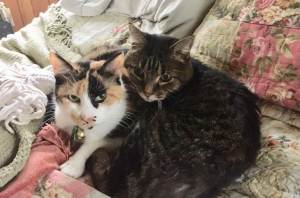
You were my fur person, my devoted companion, and the only constant presence in my life. Thank you for the 14 years you graced my life.
I love you Peanut, Mama
What’s the name of your favorite pet?