The other day, when we were talking about ads, I had the tv on for a bit in the afternoon and I looked up just in time to see a young woman sporting a pair of jeans that were definitely flared at the ankle. I actually backed up the ad to confirm I had seen it correctly. Not only were the jeans flared out but the word “flare” actually flashed across the screen. After fifty years it was a little hard to believe that flare jeans have become retro.
I called YA to confirm that flare jeans are “in” but she was very quick (and very vehement) in pointing out that it’s just a little flare that is in, not the huge wide flare jeans that were popular back in the 70s. I remember the outfit that I put together for the first day back of sophomore year in high school. Wide faded flare jeans with a “Make Love Not War” sweatshirt and a watch with a huge white wristband. I thought I was the cat’s meow. During the time that flared jeans were popular, I altered a few of mine by slitting open the leg and expanding the flare with bright patterned material. All the rage!
YA tried to get me to promise not to purchase any flare jeans for myself. She said “just keep your seventies memories to yourself.” I’m pretty sure I should be insulted but I can’t quite figure out how.
I got a tour of the farm on Saturday. It’s bigger than I was expecting although I think if I laid out all the photos that Ben has taken over the years, I should have probably realized its actual size. We got to talking about the blog and how many followers we have now and I thought I’d do a Stats Update.
We have 12, 672 followers. Of course I don’t really know what this means on a day-to-day basis except that at some point in the past 12 years, since Dale started up the Trail Baboon, 12,672 folks have hit the Follow Trail Baboon button. One of the things I do know is that having all these followers does NOT mean that 12K folks are reading the trail every day.
Most days we have somewhere between 200-240 views from 60-70 visitors – that includes us. The average number of views is 2.46 to 3.25. The average number of comments the last couple of years is 50. Sunday is the slowest day on the Trail. And for reasons that pass understanding, Wednesday is typically the busiest. I’m sure it won’t come as a surprise to anyone that the days that generate the most comments are book days, music days and food days.
Over the years we’ve had visitors from 202 countries. Pretty remarkable since Google says there are currently 193 countries in the world! US has the highest number of visitors, followed by India, the UK, Canada and then Spain. The countries with the least are Gabon, Sint Maarten and Chad (just 1 visitor each).
The Trail is a more subdued space these days, but relatively stable. Our least busy year was 2016, when Dale was cutting back and preparing to retire from the Trail. 2021 was the most active year since baboons took control. One of the most interesting things I discovered while researching the stats is how many of us kept the blog going while Dale was on sabbatical the summer of 2015 and then during 2016 when he was tapering off. This is not meant as a heavy-handed hint – although any pieces would be happily accepted by me and Renee – just an interesting phase of our history.
Any fun memories to go along with the Stats on this Memorial Day?
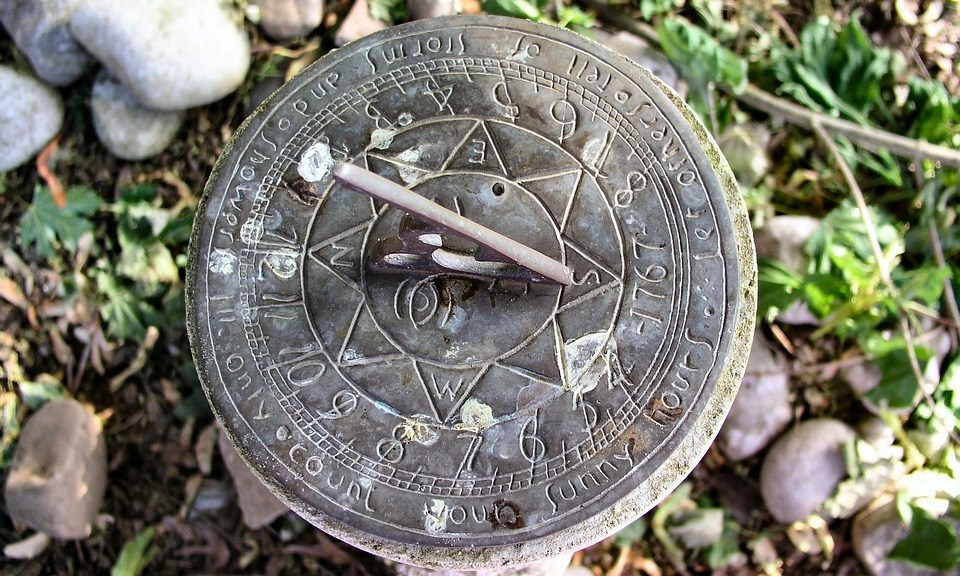
I’m reading a quaint little memoir called “Sunwise Turn: A Human Comedy of Bookselling”. Two women, with no bookselling experience decide to open a bookstore in New York in 1916. The book was written in 1925. It’s a fascinating story of how they got started and how they survived. The book downplays the fame of the store, but online you can easily find a history of the store which was also a salon for up and coming writers as well as an exhibition and performance space.
Early on in the book, the author describes how they came to name their shop:
The name was one of the crises through which we had somehow to get. There is sin and virtue in a name. We wanted a name that would mean something. Everything was to be significant. All kinds of titles of the thumb-mail variety were offered. My partner telephoned me one day that Amy Murray had drawn up in the net of her Gallic wisdom the name ‘The Sunwise Turn”.
They do everything daesal (sunwise) here” – Father Allen had told her of the people of Eriskay – “for they believe that to follow the course of the sun is propitious. The sunwise turn is the lucky one.”
The key goes sunwise; the screw goes sunwise; the clock goes sunwise. Cards are dealt with the sun. The Gael handed the loving cup around the banqueting table sunwise; he handed the wedding ring and loaned money sunwise An old sea captain who once came into the shop told me that wind and weather go sunwise, and once when I called in our Swedish contractor, Behrens, to confer with him about the furnace, eh said: “It out to be in the other corner of the house, maam. I always put my furnaces in the north end. Heat goes with the sun.”
I’m pretty sure naming your bookstore “Sunwise Turn” breaks every rule you can find about picking a name for your business. It doesn’t say anything about what the shop sells and it’s unbelievable obscure, but I really fell in love with the name and the thought and meaning behind it. Makes me want to open up a shop of some kind, just to use the name again.
Let’s say you are opening a shop of your own next week. What would you sell? And what would you name it?
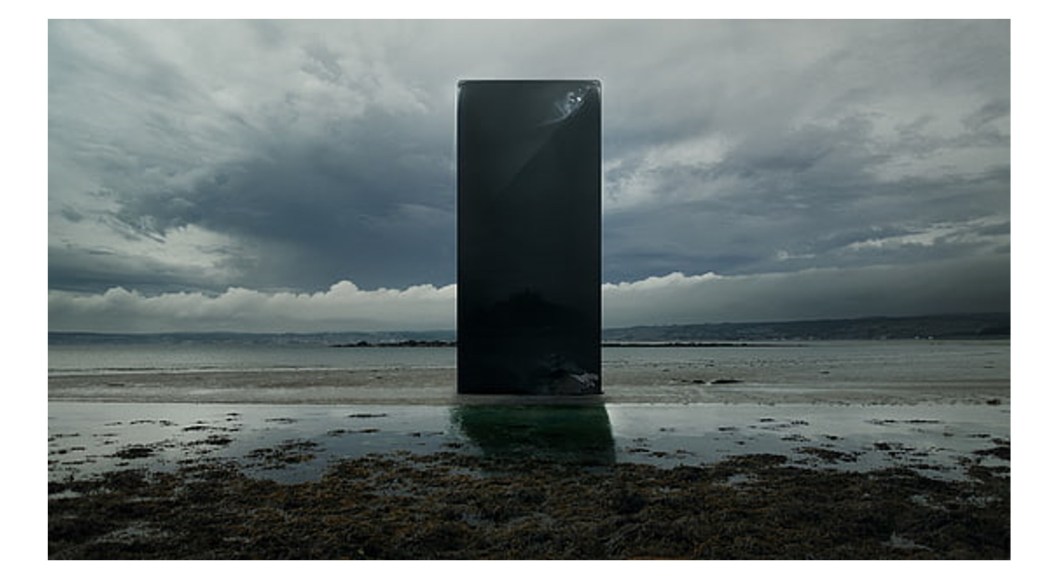
I was clicking around last week, looking for some good background noise while I addressed some cards and discovered 2001: A Space Odyssey available. I remember seeing 2001 in the movie theatre when it came out and I remember a good deal of it; but even 5 decades later and a lot more science fiction under my belt, it is still weird.
Research led me to things I didn’t know. First off, 2001 was a collaboration between Stanley Kubrick and Arthur C Clarke; it was not first a book and then turned into a movie. The movie actually came out first followed by the book, although by the time the book was published it only had Clarke’s name on it. I also found out that all the colored lights and psychedelic effects at the end were Dave becoming a “star child” after going through a star gate. Of course I’m not sure what a star child is – I haven’t actually read 2001 (although you all know it’s on my short list now) – and the movie certainly doesn’t elucidate any of this.
It seems as if Stanley Kubrick got a little lost in his special effects. And for 1968, they are great. And the whole Hal sequence is, of course, fabulous:
I’m hoping the book will make a little more sense than the movie. Fingers crossed.
Any special effects that you particularly like? Cinematic or otherwise?
In October of 1915, Ernest Shackleton’s ship, The Endurance (oh, the irony), was crushed by pack ice in the Antarctic and then sank. It had been trapped in the ice for 9 months. In August of the following year, a rescue ship arrived; all of Shackleton’s crew had survived.
The news from Antarctica this week is that after 100 years, the wreck of The Endurance has been found – nearly 10,000 feet under those frigid waters. It didn’t move too far in 100 years, it was found just four miles south of the location recorded by the crew when she sank. According to the search team, it is “in a brilliant state of preservation” and is even sitting upright.
I’ve read a handful of books about various exploration voyages, some about Shackleton, some about others. I also see several stories in National Geographic every year about someone heading off into the unknown to do something that no one has ever done before. None of these stories makes me want to do this kind of thing. Even today, 100+ years later, I can’t imagine how awful it must have been to be trapped on the ice of Antarctica, listening to the timbers of your ship creaking then finally breaking. You’d have to be fairly certain at that point that you would never see home/family/friends again. I don’t even like to set up the tent out of sightline from the car!
I used to think of myself as adventurous, based on all my travels, but after reading these stories about wandering out into the unknown, I’ve decided my level of adventure tolerance is much lower. I can live with that.
Have you ever ventured into the unknown? The partly unknown?
Because we are sustaining members of MPR and the pledge drive gets tedious, and because we always have some sort of music playing, I put a random CD on the other night, The Child Ballads by Anais Mitchell. I learned about it from Dale and TLGMS and Radio Heartland, and I was somewhat surprised to see Husband’s reaction to it. He was entranced by the music and stories. He charged downstairs and brought up a massive document he had printed off after purchasing the right to do so, of English Folksongs of the Southern Appalachians compiled by Cecil Sharp and Olive Campbell. Some of the Child Ballads were in that compilation.
Husband has always been fascinated by any music that has come from the British Isles to the Appalachian region, as that is the region his mother’s people from Scotland and the north and west of England, settled. We have a vast collection of old and obscure hymnals and song books that he has found on our travels and brought home. We both love folk music, but that music from that time and region holds special meaning for him. He took the The Child Ballads CD with him this week to his job in Bismarck so he could revel in it in the drive there and back.
What are you listening to in the vehicle these days?What folk music are you drawn to? Did you know Anais Mitchell wrote the lyrics, music, and book of the Broadway musical Hadestown?Why is folk music important?
Tuesday was my birthday. I had a great day. I got two lovely flower arrangements from my coworkers and from dear friends. I had lovely wishes from friends on Facebook and the Trail. It was a good day. I feel loved and blessed.
As I look on Internet sites concerned with happenings on my birthday, I see that I share a birthday with Clark Gable, G. Stanley Hall ( the first president of the American Psychological Association), Victor Herbert, SJ Perelman, Langston Hughes, John Napier, a Scots mathematician who invented logarithms in 1550, John Ford, the film director, and Boris Yeltsin. Queen Elizabeth I condemned her cousin, Mary Queen of Scots, to death on February 1. Lots of things happened the first day of February.
What important things happened on your birthday? What are your favorite or tragic birthday memories. With whom do you share a a birthday?
It’s been a rich couple of months here on the Trail, esp. with the return of some lapsed or very occasional babooners – Krista, mig (for madeline island girl, if memory serves), Crow Girl (where did that “handle” come from?), Occasional Caroline recently, and Lisa of Mpls. popped in Tuesday… did I miss anyone?
There have been a lot of changes here in the past few years, and there are no doubt major life events that we have missed in each other’s lives. There has also been much sadness following the deaths of two of our tribe – Edith, aka ljb/little jailbird in 2019, and our Minnesota Storyteller Steve this past Thanksgiving.
It occurred to me that perhaps we should have a catch-up day, where we tell the bare bones of what’s happened to/for us in the past few years. We could have a gossip/catch-up day – tell us if you’ve moved, changed jobs, where the kids are now..
For instance, Husband and I moved from Robbinsdale to Winona in 2016. By calling myself Barbara in Rivertown I was able to keep my BiR acronym… I’ll reveal more in comments below.
I see in the news that Maya Angelou is going to gracing our nation’s 25-cent piece this year. I was actually a little skeptical about this, seeing as how Harriet Tubman hasn’t made it onto the twenty-dollar bill yet and they’ve been talking about THAT for years.
But apparently there is a whole series of 2022 American women quarters planned: Sally Ride, Maya Angelou, Wilma Mankiller, Nina Otero-Warren and Anna May Wong. While I know Sally Ride (physicist, first American woman in space), Maya Angelou (writer, social activist) and Anna May Wong (first Chinese American film star in Hollywood), I have to admit that I didn’t know the names Wilma Mankiller or Nina Otero-Warren.
Wilma Mankiller was the first woman elected as principle chief of the Cherokee Nation and a lifelong activist for Native American rights. Her surname Mankiller is a Cherokee name (Asgaya-dihi) and refers to a traditional Cherokee military rank, like major or captain. She was elected Principle Chief in 1985 and served very successfully for ten years. She was Ms. Magazine Woman of the Year in 1987, was inducted into the Women’s Hall of Fame in 1993 and received the Presidential Medal of Freedom from Bill Clinton.
María Adelina Isabel Emilia “Nina” Otero-Warren was a woman’s suffragist, educator, politician and the first female superintendent of the Santa Fe public schools. In her role as superintendent she advocated abolishing the practice of sending Native American children to boarding schools and sought to integrate ethnic cultures and languages into the New Mexico school curriculum. She became the Director of Literacy under Franklin Roosevelt and later worked to preserve historic structures in Santa Fe and Taos and continued to promote Native American arts, language and culture.
I wish I had known who they were earlier, but I suppose this is better than never knowing them. I’ll have to make sure to get one of each of these quarters in the coming year.
It’s January in Minnesota and it’s cold and the duck pond is half frozen over. Plus the car is a mess and it’s too cold to get it washed.
When I was growing up, this wasn’t considered a problem. Other than spraying the car off with a hose once in a while, or letting it sit out in the rain, I hardly ever remember getting the car washed. Kicking off the snow warts was about all that was involved in exterior maintenance of the car. Maybe that was just us. The first car I remember was a Chevrolet; a Bel Air or Impala, or maybe Caprice. They all kinda looked the same, didn’t they? Pea Green. And a Chevy C20 truck that was blue. But I don’t remember either ever being washed or cleaned in any manner. And they weren’t rust buckets.
I got to thinking about carwashes. I remember taking my cars to the hand wash places before prom or something important. Not being really familiar with how they worked, I ran out of time before I had washed all the soap off. I drove out and was drying it outside when the guy who ran the wash, who turned out to be a guy I knew, came over and asked me what I was doing and told me to run it back in again and rinse it off. He paid for that. That was my first car wash lesson.
I have a carwash membership these days. I average about 2 washes per month, which is almost cost effective. I do like the convenience of just being able to go whenever I want. And they’re nice people and I like it when the woman who is the owner is on the wash line because I know I get a better wash when she’s there. I tip the guys too, I think that helps. I don’t get too many washes in January or February. (Another time I sure wish I had a heated garage). And those nice warmer late winter days, there’s 15 cars in line at the wash. Even 5 cars back it takes 20 minutes to get into the wash so I need to plan accordingly and decide if it’s worth it. And it’s just going to get dirty again so I need to justify it in my mind that at least I’m taking the first layer off.
I did some research. The first carwash was created in 1914 in Detroit. Workers pushed the cars through an ‘assembly line’ process and each person had a dedicated job. By 1920 some carwashes had large, shallow, pools to drive around to clean off the tires and undercarriage before moving into a stall for cleaning. The first automated wash came in 1951.
There have been a lot of innovations and changes. It was interesting to read how brushes were a big deal and if they made to much noise when scrubbing, people didn’t like that. White wall tires were hard to keep clean and several methods were tried including boys in a 4’ deep pit on the sides to scrub those whitewalls with a steam cleaner or brush. Or the method of attaching a log chain to the front bumper to pull that cars through. That worked as long as the driver followed the rules; Sometimes it would pull the bumper off the car. That was fixed by going to ropes instead of chains so at least the rope would break before it pulled the bumper off.
And the carwash people used to get in the car themselves, which some people didn’t like, or maybe the drivers didn’t like the claustrophobia caused by a tunnel, so the washes got taller and wider and windows got added.
Some washes can handle 250,000 – 300,000 cars annually. Or more. *
Considering how much a car costs now, it’s worth keeping clean. Plus, it just feels better to drive a clean car. In fact, that was a jingle from a local carwash place 30 years ago. “You’ll feel better driving a clean car!” Mermaid Carwash hired a lot of high school kids. He paid a bonus if you kept your grades up. I knew a few kids that worked for him and it sounds like he was a good boss. Eventually he was bought out by a chain.
It will warm up here soon then I’ll get the car washed. The truck too.
Ever been part of a carwash event? Tell us about your carwashes.