Category Archives: History

Comedy Tonight

On February 5, 1967, the Smothers Brothers Comedy Hour premiered on CBS. I remember watching it, as well as Laugh In, Carol  Burnett, Jackie Gleason,  Jonathan Winters, Jack Benny, and Red Skelton.

I was only 9 years old at the time, and sometimes I just didn’t get the humor.

I think I liked Carol Burnett the best.

It was such an unhappy time, the late 60’s, yet  such shows proliferated. One thing that surprised me as I researched this was how long the sketches were that I found.

What was your favorite comedy show? Know any good jokes?

Idle Curiosity

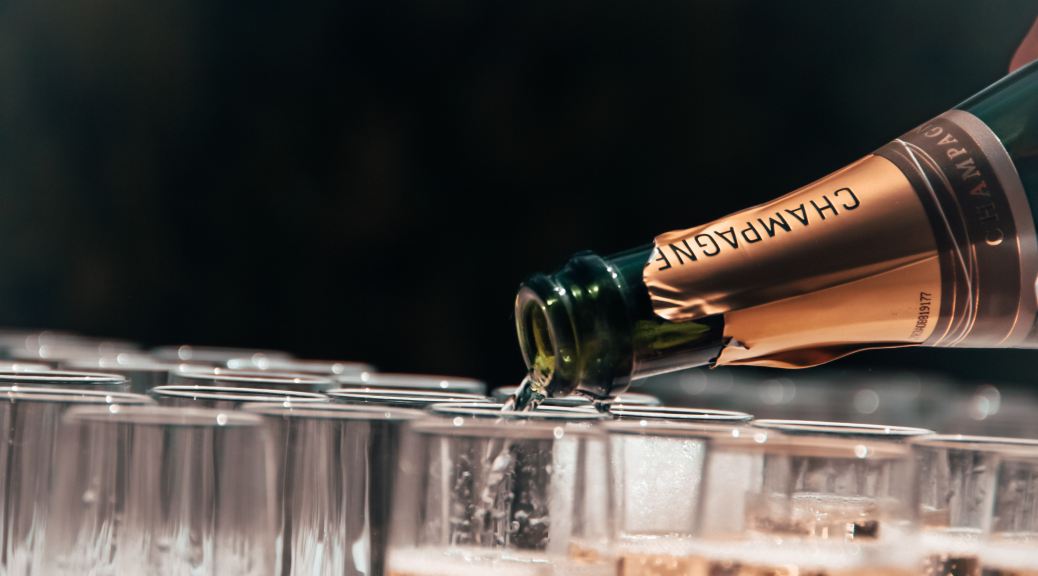
I mentioned in a comment on the Trail  on Saturday that I was enjoying some Veuve Clicquot champagne, and that led to some research on my part that I found fascinating.

I noticed on the bottle a portrait of a woman. I don’t speak French, so I looked up the name and found it meant “The Widow Clicquot”. I went on to find that in 1805,  at the age of 27, this woman inherited a champagne vineyard and business upon the death of her husband, and was the only woman to run a champagne house.  Her father-in-law insisted that she do an apprenticeship in champagne production, and she went on to be wildly successful. She invented a method of champagne production that is still in use today. She was the first to make Rose champagne. She was a friend of Napoleon, yet she made a point of smuggling champagne into Russia. Here is part of the Wikipedia entry for her:

On 21 July 1810, Barbe-Nicole Ponsardin launched her own company: “Veuve Clicquot-Ponsardin”.

Barbe-Nicole exported the vast majority of her champagne out of France.  Unfortunately, she was facing naval blockades that kept her from sending her wine abroad. Furthermore, Czar Alexander I banned French products.

Facing bankruptcy, Barbe-Nicole took a business gamble: she decided to send her champagne to Russia, when peace returned ahead of her competitors. While the war’s naval blockades paralyzed commercial shipping, Madame Clicquot and Louis Bohne secretly planned to sneak a boat through the blockade to Russia.

With the French monarchy restored, Madame Clicquot and Louis Bohne put the plan they had been preparing for five years into execution. In 1814, as the blockades fell away, the company chartered a Dutch cargo ship, the “Zes Gebroeders”, en route to Königsberg,[6] to deliver 10,550 bottles of Veuve Clicquot champagne to the Russian market, taking advantage of the general chaos, while their competitors still believed such a move to be impossible. The boat left Le Havre on June 6, 1814. Meanwhile, Russia had lifted the ban on importing French products. The whole shipment was quickly sold. A few weeks later, another ship left Rouen laden with 12,780 bottles of champagne destined for St. Petersburg, which were sold out as soon as they arrived. When the champagne reached St.Petersburg, Grand Duke Michael Pavlovich of Russia, Czar Alexander I’s brother, declared that Veuve Clicquot-Ponsardin champagne would be the only kind he would drink. Word of his preference spread throughout the Russian court.[11

During the years that followed, Russia continued to buy Veuve Clicquot wines. Sales rocketed: from 43,000 bottles in 1816, they climbed to 280,000 in 1821 and increased until the 1870s. Within two years, the widow Clicquot had become famous and was at the helm of an internationally renowned commercial business.

I just love looking up stuff like this. It makes me no richer, but it makes life interesting. Research is sort of like finding out the juicy gossip about neighbors, but it is less damaging and hurtful.

What do you like to find out about? What were you doing when you were 27?

Among Us?

Fun news this week. Astronaut Helen Sharman, one of the first seven Britons to travel to space, has come out as pro-alien lifeform.

“There are so many billions of stars out there in the universe that there must be all sorts of different forms of life.  Will they be like you and me, made up of carbon and nitrogen? Maybe not.”

Shades of Carl Sagan’s Contact.  And as if that isn’t spectacular enough, she went on to say”

“It’s possible they’re here right now and we simply can’t see them.”

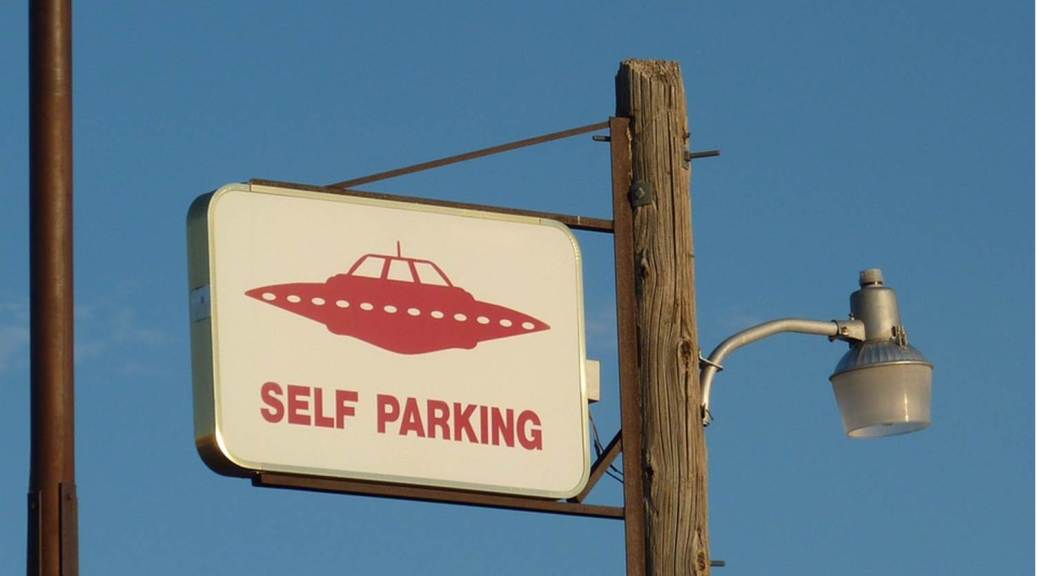
This of course brings to mind the scene from Men in Black in which Will Smith says he was sure his third grade teacher was an alien:

Anybody you are sure is an alien?

Two Days

Before my trip to Peru, I was well aware that this would be a trip of a lifetime. Even if I hadn’t already thought this, everyone I knew was sure to tell me.  As you all know, one of my life goals is to not have expectations set too high.  So this felt dangerous to me, to hear so many folks talk about bucket lists and dreams come true.

As a way to try to tamp down my expectations, I did not do ANY research on Peru or Machu Picchu prior to the trip. From our hotel in Cusco, we took a minibus to Ollanta Station (1.5 hours) and then took the Vistadome train to Machu Picchu City (another 1.5 hours).  Then there was the tourist coach up the side of the mountain (hint: if you are afraid of heights, always try to avoid the window seats on a trip like this).  On this last leg of the trip to the site, I reflected that I really didn’t know anything at all about Machu Picchu, with the exception of the altitude – 8,000 feet.

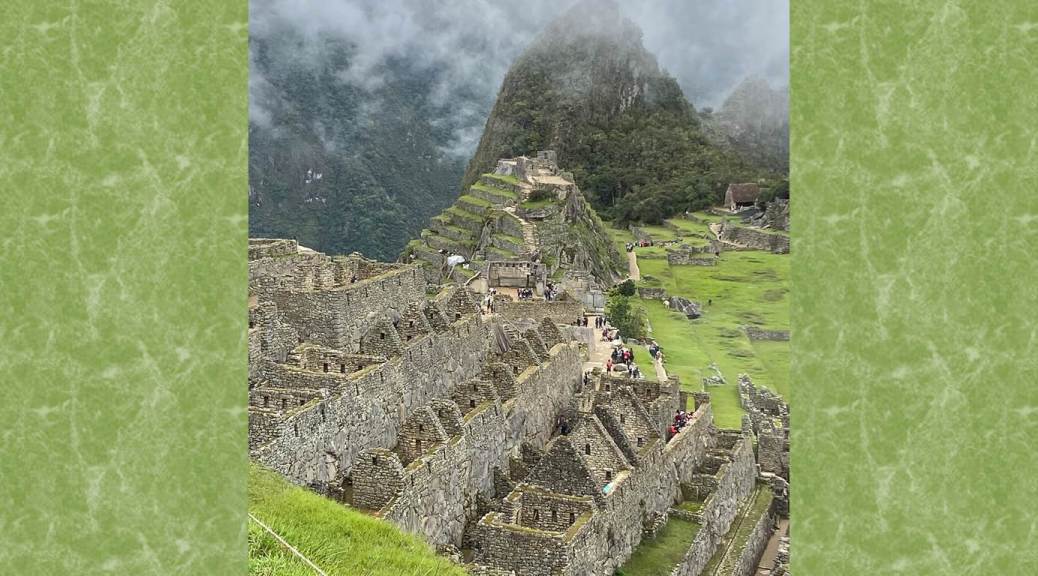
Turns out that there isn’t a massive amount to know. The pre-Andeans had abandoned the site centuries before it was re-discovered by Hiram Bingham in 1911 and they left no written record.  In fact “Machu Picchu” is just the name given to the site in the local dialect and means “old mountain”.  Archaeologists and scientist are pretty sure what many of the buildings were for: homes, palace for the Inca when he visited, security look-out and even a temple (although they only believe this because on the winter solstice the sun shines directly through the main window of the building) but other than that, they don’t know much about how life was lived here.

As I stood gazing out over the stone buildings I was struck with a strong desire to go back in time for just a couple of days to see what life was like when Machu Picchu was populated. How did they live, what did they eat, what were their favorite past times?  Of course it would be nice to know why they abandoned the settlement, but if I only have two days, I don’t think I want it to be the last two days!

 Two days to visit a time in the past. Just two.  When and where do you choose?  (And an absolute guarantee you can get back home after the two days!)

Thunder & Lightning

Photo credit:  Javsama

As part of my site inspection in Peru, we spent two nights in Cusco, which is also known as the “Gateway to Machu Picchu”. Cusco is in the mountainous part of Peru and is 11,152 feet in elevation (this is actually HIGHER than Machu Picchu).  While there are certainly spots on the globe higher than this (Kilimanjaro, Mount Everest), Cusco routinely makes the list as one of the highest altitude cities on the planet.  Many of the hotels in Cusco pump extra oxygen into the rooms and almost every establishment of any kind (shops, restaurants, hotels) have access to oxygen tanks, just in case.  If you search the internet, you’ll find a massive amount of information about altitude sickness, what causes it, what you can do about it.

But nowhere are you warned about the thunderstorms. In the mountains and tropical areas of Peru, it’s rainy season right now.  That means a lot of gray days and in Cusco, thunderstorms – three to four a week for a few months.  We experienced a thunderstorm the first afternoon we were there and let me tell you, when you are 11,000 feet up, the thunder and the lightning is MUCH closer to you than down in  the lower climes.  It’s hard to describe the visceral feeling that goes through you when the lightning seems just on the other side of the street from you and the thunder crackles and booms loud enough that you cover your ears.  We were touring a couple of convents during the storm, both with large courtyards and covered walkways; we weren’t actually standing out in the rain (which was intense as well) but close enough that the storm felt startlingly  close by.

The next day, I got to spend a couple of hours with the tour guide all to myself (a serious perk in my estimation) and he told me that in the Andes, the god of thunder is the most popular weather god as he is associated with the health of agriculture and crops. He is not known as Thor there, but as Illapa (pronounced E-yapa) and he even has his own holiday – July 25.  Apparently he is the keeper of the Milky Way which he keeps in a jug and pours out to make the rain.  Did I mention that on a clear night in Cusco, the Milky Way is very bright and visible?

So I came home from my trip with a robust appreciation of the god of thunder and lightning. When thunderstorms season rolls around next year, I’ll have to try to enjoy it more.

Any gods or goddesses that “speak” to you?

80 Days

Today is the anniversary of Phileas Fogg completing his trip  in Jules Verne’s Around the World in 80 days. He left on October 2 and got back to London on December 21.  I haven’t read much of Verne, but I thought this  plot was fascinating and fun when I read it years ago

What route would you take to go around the world if you mainly took trains and boats and cars?  What would you want to see? 

Valor, Tragedy, and Scandal

Our town was mentioned in the national news over the past couple of days due to an obituary.  I bet in the next couple of days it will make the national news due to a scandal at the local post office. Both stories involve the local newspaper.

Earlier this week our newspaper ran a moving and poetic obituary on a former resident, a Vietnam veteran, who died in a Veterans’ home in Montana. The story made the national news. If you read the article, it also provides a link to the actual obituary.

http://a.msn.com/01/en-us/BBY97ry?ocid=se

Then, late Thursday afternoon, the paper broke a story about thousands of pieces of mail being thrown in dumpsters behind the post office by postal employees.  I believe I have mentioned here my frustration with late or non-existent mail delivery.  Well, now we know what has been happening.

https://www.thedickinsonpress.com/news/4831203-Complaints-on-mail-delivery-at-Dickinson-prompt-investigation-newspapers-other-mail-found-in-dumpsters

Both these stories will elicit Baboon reactions and comments, so my question is simple:

Comment on these stories and your reactions to them.

High Flyers

Today marks the anniversary in 1903 of the first sustained motorized airplane flight by the Wright brothers in Kitty Hawk, NC. They flew 6.8 miles per hour. Orville was the pilot.  Wilbur ran along side. This is a photo of the 12 second flight.

It amazes me that their three-axis control system  which  allowed the pilot to actually control the plane in flight is still standard on today’s aircraft.

Our plane last month from Minneapolis to New York was pushed along at 600 miles an hour by some strong tail winds. The pilot made a point of proudly announcing this as we arrived well ahead of schedule at LaGuardia airport. I think the Wright brothers would be pretty amazed by that. I don’t know what the would think of the current state of commercial air travel.

How would you change modern air travel?  Be creative.

Physics, Anyone?

Yesterday in 1684, Isaac Newton’s paper on the theory of gravity was read to the Royal Society by Edmund Halley.  I wonder how it was received? Did they nod and say ,“Oh yes, I can see exactly what he is getting at”, or did they scratch their powdered wigs and shrug their shoulders, thinking “Poor Isaac has been spending too much time sitting under the trees.”

Hard sciences were never my strong suit in high school and college. Neither was mathematics. for that matter, although I was  pretty ace at Psychology statistics in graduate school. In college, the Physics majors I knew often said that Physics was a way of investigating God. I was just glad I didn’t have to take any physics classes. Biology, now that was a subject I could embrace.  I don’t know what it means that my poorest grade in college was in bowling,  a physical education class I despised. Maybe if I had taken a Physics class I would have been a better bowler.

What came easily to you in school? What was difficult? What would you like to learn about now?

Let Me Look that Up

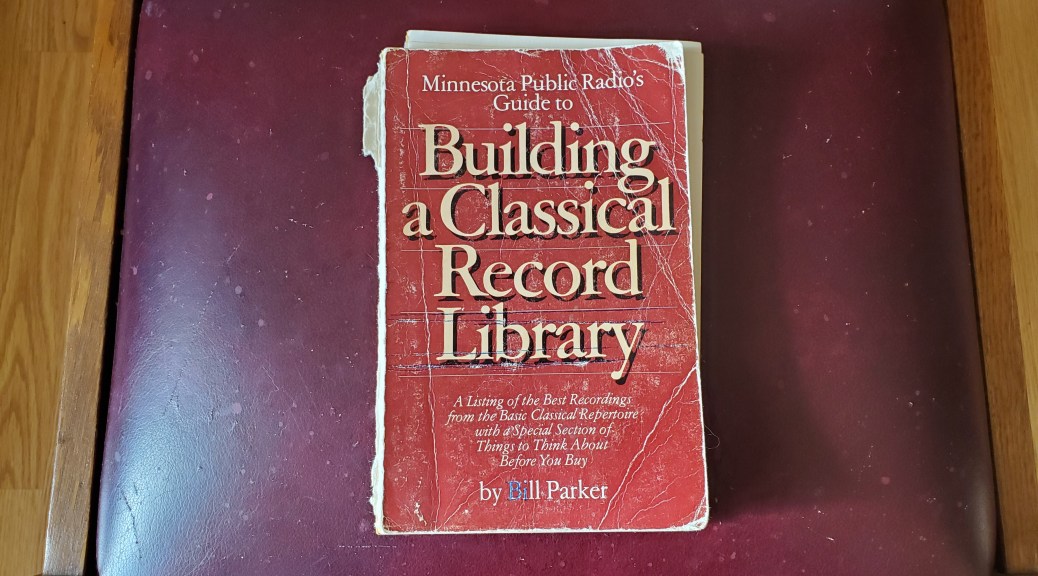
Today marks the anniversary of the first publication of the Encyclopedia Britannica in 1768 in Scotland.  I love encyclopedias. I loved the World Book set my parents got me and I read it all the time. Wikipedia pales in comparison, I think, to holding a real encyclopedia in your hand.

What are your favorite reference books?