Category Archives: History

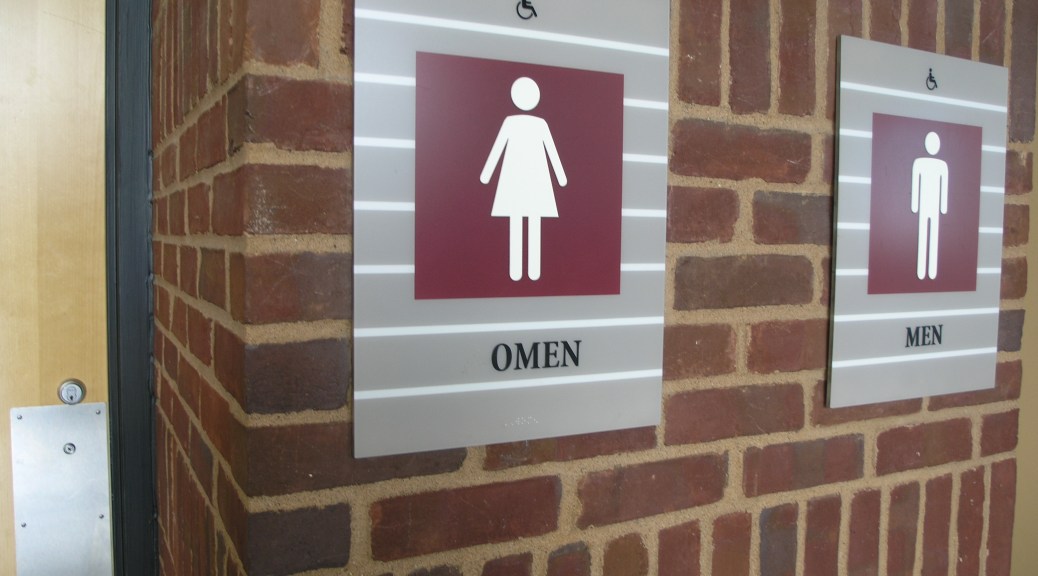
The Omen

Today’s post comes to us from Linda.

Something in the picture above seems ominous. Or perhaps omenous. But what does it mean?  Wikipedia tells us:

The Romans, unlike the Greeks, considered that signs from the left were usually favorable and positive, while signs from the right were seen as adverse and negative. However, under Greek influence this procedure began to change and eventually lost its universal weight, meaning that each omen case was to be examined separately.

Left or right?  Good or bad?  Discuss.

You Can Retire….

This weekend’s post comes to us from Jacque.

Recently I received the content below as an email from a friend who lives in Florida:

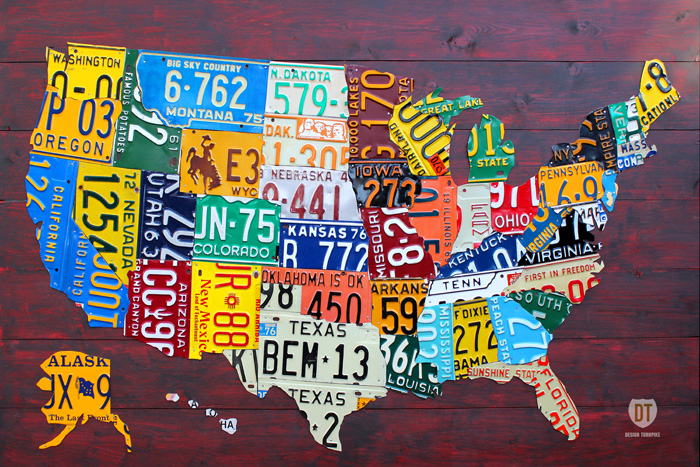
You can retire to Phoenix, Arizona where …

      • You are willing to park three blocks away from your house because you found shade.
      • You’ve experienced condensation on your rear-end from the hot water in the toilet bowl.
      • You can drive for four hours in one direction and never leave town.
      • You have over 100 recipes for Mexican food.
      • You know that “dry heat” is comparable to what hits you in the face when you open your oven door at 500 degrees.
      • The four seasons are: tolerable, hot, really hot, and ARE YOU KIDDING ME??

OR

You can retire to California where …

      • You make over $450,000 a year and you still can’t afford to buy a house.
      • The fastest part of your commute is going down your driveway.
      • You know how to eat an artichoke.
      • When someone asks you how far something is, you tell them how long it will take to get there rather than how many miles away it is.
      • The four seasons are: Fire, Flood, Mud and Drought.

OR

You can retire to New York City where …

      • You say “the city” and expect everyone to know you mean Manhattan.
      • You can get into a four-hour argument about how to get from Columbus Circle to Battery Park, but can’t find Wisconsin on a map.
      • You think Central Park is “nature.”
      • You believe that being able to swear at people in their own language makes you multilingual.
      • You’ve worn out a car horn. (IF you have a car.)
      • You think eye contact is an act of aggression.

OR

You can retire to Minnesota where …

      • You only have three spices: salt, pepper and ketchup.
      • Halloween costumes have to fit over parkas.
      • You have seventeen recipes for casserole.
      • Sexy lingerie is anything flannel with less than eight buttons.
      • The four seasons are: almost winter, winter, still winter, and road repair.
      • The highest level of criticism is “He is different,” “She is different,” or “It was different!”

OR

You can retire to The Deep South where …

      • You can rent a movie and buy bait in the same store.
      • “Y’all” is singular and “all y’all” is plural.
      • “He needed killin” is a valid defense.
      • Everyone has two first names: Billy Bob, Jimmy Bob, Joe Bob, Betty Jean, Mary Beth, etc.
      • Everything is either: “in yonder,” “over yonder” or “out yonder.”
      • You can say anything about anyone, as long as you say “Bless his heart” at the end!

OR

You can retire to Nebraska or Iowa where…

      • You’ve never met any celebrities, but the mayor knows your name.
      • Your idea of a traffic jam is three cars waiting to pass a tractor
      • You have had to switch from “heat” to “A/C” on the same day.
      • You end sentences with a preposition; “Where’s my coat at?”

OR

FINALLY you can retire to Florida where …

      • You eat dinner at 3:15 in the afternoon.
      • All purchases include a coupon of some kind – even houses and cars
      • Everyone can recommend an excellent cardiologist, dermatologist, proctologist, podiatrist, or orthopedist.
      • Road construction never ends anywhere in the state.
      • Cars in front of you often appear to be driven by headless people.

What area would add to this list?

Football Camp

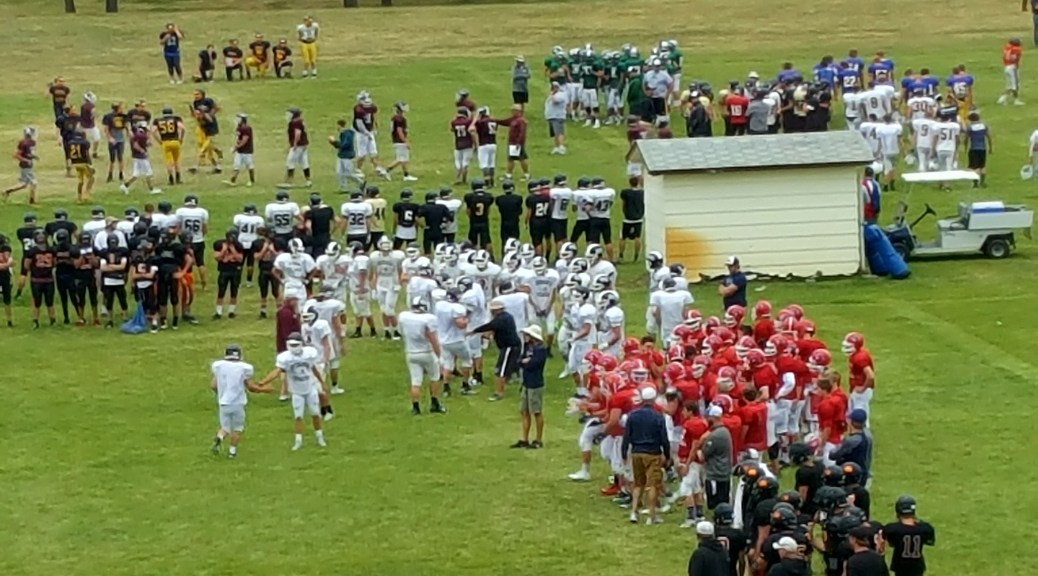
I took the photo for this post from my office window earlier this week.  Our building looks out on the college football practice field where a high school football camp was in session.  It is always rather entertaining to see them run around, skip, hop, and tackle while the instructors scoot around on golf carts.  I can hear the grunts and sounds of  tackle impacts all the way up to my fourth floor window. There must have been a hundred players.  Their buses fill the college parking lot.  Many come from little towns from Montana or the eastern part of North Dakota, and get to stay in the college dorms for the duration of the camp. We can hear them clatter past our building in their cleats on their way to the practice field.

You can always tell who the local campers are, since they drive their own vehicles, park along the drive up to my building, and then strip down to their skivvies while they change into their football uniforms.  We drive past them on our way to our parking lot. Some have the decency to go behind the large spruce trees that line the drive, but most just stand there in their shorts while they change.

I never went to a sports camp in high school, but trips for speech and music were both fun and stressful at the same time.  I hope the boys at the camp had the same sort of experiences.  I have worked at my agency for 18 years, and I have seen the local campers  in their underwear every year. They sort of signify the arrival of summer, just like the return of the swallows to Capistrano.  I think, though, that I would find the birds more interesting.

What are some of your high school camp and activity memories?

Tips for the Trail

We’ve been completely on our own for almost six months now – our followers are up and we’re managing to keep daily posts going. Dale had a few unwritten rules for the trail and I thought it wouldn’t hurt if we spelled them out.

It is a baboon congress, so it’s not a very long list.

#1. Be kind.

#2. Don’t worry if you reply in the wrong place

#3. Avoid publishing any email addresses, phone numbers or addresses. (We do have more than 5,000 followers, so this is a just in case)

#4. Pass on the right

#5. Don’t worry if you are Off Topic!

#6. Try to find photos that are licensed for re-use.

#7. Be kind.

Do we need any other tips for the trail?

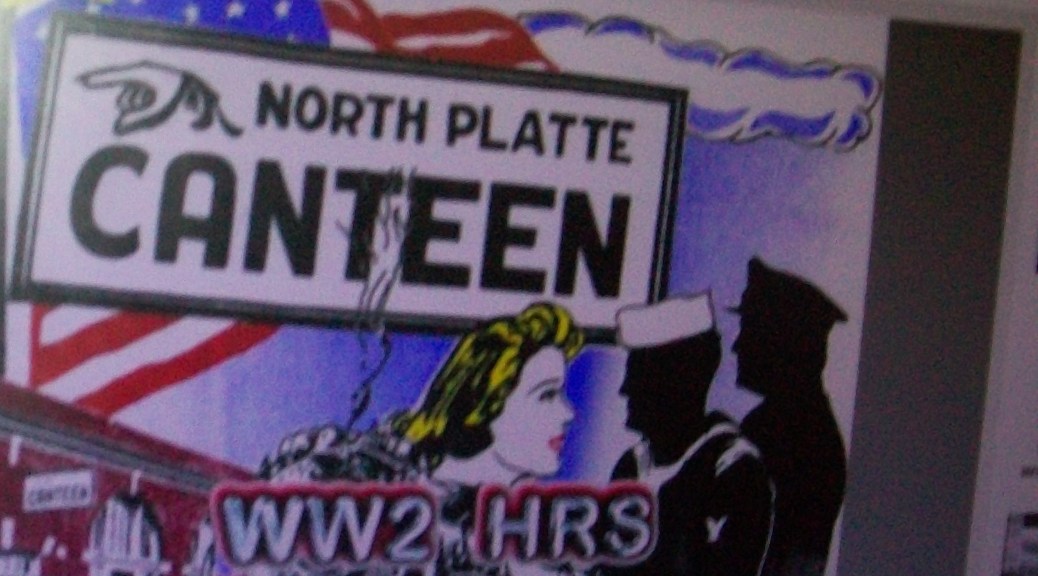
The North Platte Canteen

The North Platte Canteen

Imagine that it’s between 1942 and 1945, and you have enlisted in one of the armed forces – Army, Navy, Marines, Air Force, Army Air Corps, Coast Guard. You are traveling cross country on a troop train, perhaps headed to boot camp – maybe never been away from home before. Since you boarded, you have been sleeping in your seat, had no showers, and had only K-rations to eat. As you approach North Platte (pop. 12,000) in west central Nebraska, you are told that at the next stop, you’re not only allowed to get off for 10-15 minutes, but encouraged to do so while the train takes on water and fuel. You see the sign CANTEEN above the depot entrance as the train approaches the station.

When you enter the Canteen,  you see ladies serving at tables crammed with food – (from among) sandwiches, apples, small bottles of cold milk, coffee, cakes & pies, cookies & donuts, hard boiled eggs, sometimes even fried chicken. Women of all ages are serving, and the youngest ones are carrying baskets of cigarettes and candies out on the railway platform. One inside table has complimentary magazines (“Free to Service Men”) – Life, Look, Liberty, Saturday Evening Post, Readers Digest, comics, movie magazines.

You eat as much as you can in the allotted ten minutes – you are allowed take your coffee or milk on the train, as the cups and bottles will be collected by the conductor and returned to the Canteen. Before you leave, though, one of the ladies gives you a hug, and wishes you well on wherever your journey may take you.

What was the motivation of the North Platte population? (Of the hundreds of small towns along the troop trains’ route, this was the only one we know of to perform this service.) Shortly after Pearl Harbor, as Uncle Sam was entering the war, folks in North Platte heard a rumor that Nebraska National Guard’s Company D would be coming through North Platte on a west-headed troop train. Friends and family of the men, to the tune of 500 citizens, had come to the station with gifts for “the boys.”

As it turned out, it was the Kansas National Guard’s Company D, not Nebraska’s. After an uncomfortable minute or so, one young woman, Rae Wilson, said essentially – “Well, I’m not taking my cookies home,” and offered them through the window to the Kansas boys. This same woman then wrote a moving letter to the editor of the The Daily Bulletin, which included these lines:

“We who met this troop train… were expecting Nebraska boys. Naturally we had candy, cigarettes, etc., but we very willingly gave those things to the Kansas boys…  Smiles, tears and laughter followed. Appreciation showed on over 300 faces. An officer told me it was the first time anyone had met their train and that North Platte had helped the boys keep up their spirits.

I say get back of our sons and other mothers’ sons 100 per cent. Let’s do something and do it in a hurry! We can help this way when we can’t help any other way. “

Rae Wilson                           (who became the Founder of the Canteen)

Bob Greene writes in his book Once Upon a Town, “Most of the older women who worked in the Canteen had sons in the war. It was like a healing thing for them to work there.” (This book is also the source of Rae Wilson’s letter above.)

So it started as a small endeavor:  fruit and sandwiches, cookies and cakes. Ultimately, 125 surrounding communities participated, and a total of 55,000 (mostly) women. They met every train for more than four years, sometimes as many as 32 trains a day. On, i.e., a hospital train where the men could not disembark, the women boarded the train with baskets of sandwiches, apples, milk. The Canteen was staffed by volunteers who gave their own rations for the baking ingredients. It probably helped that these were rural farming communities, where things like eggs, flour, even pheasant (in season, mostly) for sandwiches were sometimes readily available.

For more details, see this link for a fascinating six-minute recap .  In the end, it is estimated that six million service men and women came through that Canteen.

When have you been the recipient of unexpected hospitality?

Throw It on Dayton’s Wall and See If It Sticks

Today’s post comes from Northshorer.

The last time Sandy was in Dayton’s downtown, when it was still a Dayton’s, she looked up at a large photo mural on an upper floor and spotted herself in the photo. We were going to try to get there with our daughter and family to see it, but health issues prevented us before it closed. But a friend of hers took a photo of it and sent it to us.

[

Sandy is walking beside her friend Maggie. I will leave it to you to find them, which is rather easy to do. The photo was taken in about 1953 when they were in junior high. It was a big adventure for them to ride the bus downtown from the Camden Park neighborhood where they lived. Would parents allow that today? Sandy can tell stories about having to deal with sexual predators of various degrees, so perhaps the age was no more innocent than today.

There was something about the downtown, whether in a major city or a small town.

What exactly was it about downtowns that is absent from our culture today?

A Little Explore

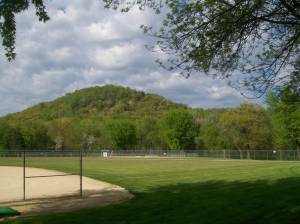
For our anniversary a couple of weeks ago, Husband and I took the day off and went out exploring. It is particularly beautiful right now out in the hills surrounding Winona, and we headed south and west, and ended up in a little town of 657 souls called Rollingstone. Had lunch at Bonnie Ray’s Café – cute place, with photos of the locals papering the walls, pretty decent food. We got to meet Bonnie herself – she was wearing a t-shirt that said something like “Rollingstone – Before the Song, Before the Band”. Then we walked around town and played cribbage on a picnic table in the city park, from which we had this view.

We drove on back roads toward Lewiston, and knew our way to Farmers Park, a gorgeous county park situated in a flat spot among the hills. It’s a peaceful place with multiple picnic spots, and an old fashioned playground with not only teeter totters, but also a real merry-go-round.

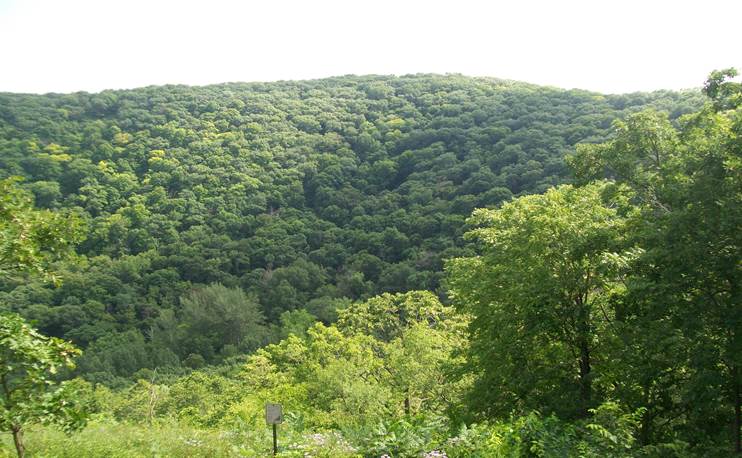
When we left, I suggested we follow the road you see in the top photo, up a rutted, winding path that brought us to a cornfield on the ridge. We made our way along one gravel road after another, trying to guess which direction at each juncture, and finally came to a county highway. By now we were so turned around we had no idea what would get us back to our Hwy 14. (And we have no smart phone.) Eureka! – I remembered a map I had picked up just that week, which showed a good bit of area around Winona; we turned left onto County Hwy. 23, made our way home.

Before (or lacking) smart phones, how did you manage to find your way when lost?

RIP Roger Moore

Roger Moore, most famously-known for playing James Bond, passed away this week. He was always happy about being known as 007.

James Bond, as written by Ian Fleming, is a smarmy, violent, misogynist. In addition the 007 movies have taken the violence to new heights.  If you can think of it, Hollywood has blown it up in the name of British spydom.

So why am I a Bond fan? Why have I seen them all? More than once? Can probably tell you the names of the books and the movies in order? Why did I make a special trip to visit Schilthorn (On Her Majesty’s Secret Service locale) when I was in Switzerland? Have had more than one heated discussion about who was the best Bond?  It doesn’t make any sense whatsoever.

Just one of my many quirks, I guess.

What’s your most outrageous “quirk”?

The Allure of Radicalism, Take 2

The following is the first guest post I wrote, back in the days when Trial Balloon blog was just a fledgling. I’ve updated slightly and given it a different question – only a handful of our usual readership has seen it before (I think).

———————————————————–

A few years ago when Husband and I were on a Minnesota stay-cation, we were honored to attend a memorial service for a man who had been a real “mover and shaker”, someone who was active in many arenas and really got things done. In addition to this, he was considered a “radical.” On a hilltop overlooking the gorgeous green valleys of Southeastern Minnesota in August, people told stories about this man for three solid hours – how he kept to his principles, questioned and at times defied authority, blazed trails, and worked incessantly for environmental and community-building causes.

I grew up in a household of mixed messages: Be Different (but not So Different That You’d Embarrass Us). In the late 60s and the 70s, there were so many ways to Be Different! You could blaze a little trail by trying out vegetarianism or marching in protest to the Vietnam War. Some of us left for the East or West coasts, or abroad, hoping to find something radically different, and of course we did. When ready to settle down in the late seventies, I came to the Twin Cities, hoping what I’d heard was true – there were Radicals in Minnesota. I’ve never been disappointed – the coastal hot spots had nothing on this state!

Most of us are now more subtle in our radicalism – there are hundreds of ways to be a little bit radical. I still enjoy getting people to raise an eyebrow by telling them, say, that I participate in a blog peopled by listeners to a former public radio Morning Show.

What would you like to do that’s a bit radical? (Or have you already done it?)