VS’s story about making pesto reminded me of the pesto fests that Husband and I had this month as we harvested the too large basil crop in the garden. Husband took the leaves off the stems, which I find to be the most tedious of chores, and I whirred up the ingredients in the food processor. We ended up with 54 jars.
Husband has gout in one of his feet, and he needs to shift his weight from one foot to the next pretty regularly if he has to stand for any length of time. I figure that he stripped about 110 cups of basil leaves off the stems this year over three pesto making extravaganzas. That meant a lot of standing at the sink. He said it would be easier for him if he had some music to listen to and shift his weight to as he took care of the basil. He thought that Celtic music would be good for the purpose. One evening we tried something by Clannad, but that was too dreamy and new age. We finally settled on a disc by Danu, a group we heard once at the Winnipeg Folk Festival. He shifted and danced his way through the basil stems, and it wasn’t too tedious for him at all.
I listen to music as I do paper work for my job. I typically choose classical music for work. We have music on most of the time at our house, and choose music accordingly for what we need to get done.
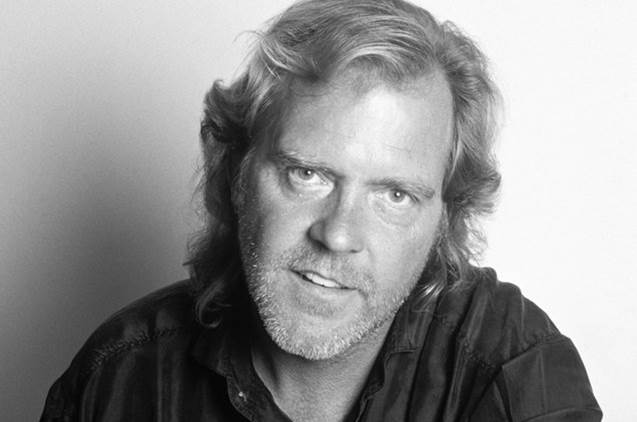
i was a huge fan of michael johnson’s rooty toot toot to the moon and other on his there is a breeze album in 1972.
he encompassed all the attributes of the ideal performer. great ability, great artistic sense, very pleasant personality. I saw him play in a small auditorium at normandale jr college ( full house was probably 60.) ansd at the guthrie and then i think i saw him a time or two at orchestra hall the day after christmas in kind of a celebration of one more year and we are still here. even when he moved to nashville and was having reasonable success as a singer songwriter he considered minneapolis st paul his home
he was originally from denver but was so loved in the twin cities that he felt this was his true home. a year ago I saw him play at the dakota which is a wonderful small intimate club downtown and it was great. he forgot a few lines and was embarrassed by it but getting old is part of the deal. I saw him play at the hopkins theater ahttp://www.youtube.com/watch?v=bYttaL_AHLwnd he was as much into telling stories about his life and observations as he was about playing the next song. I had told my daughter emma that i wanted to have her take classes from him at mcnalley smith in stage presence. i took a master class from him at mac phail and was very impressed with his gentle direction and basically the philosophy that when you perform you are offer your audience a gift. once i heard him say that i understood why i enjoyed his stage presence so much. that was it.
when I thought of how I would like to be seen when on stage he is what I came up with.
So many issues ultimately come down to a chicken-or-the-egg controversy. For example, do we cry because sad music causes tears to flow? Or is it more that we get in such a funk that we play music we know will cause the waterworks to kick into high gear?
Some music makes me weep, and sometimes it is the same music that sends other folks into crying jags. But it gets complicated. Some songs that are sure to send many folks running for a box of tissues have no effect on me. I’ve read that Adele has done wonders for the sale of Kleenex, but she doesn’t get a sniffle from me. And I’m an easy weeper.
What songs—if any—make you cry? I vaguely remember an earlier discussion on Trail Baboon that got into this. One surprising finding was that there is a song about a boat (of all things) that makes Baboons bawl. I’ll admit to being one of them. Here is an interesting You Tube video. It has an unusual intro that is worth listening to:
My strong hunch is that another song that makes me cry is one that also affects other Baboons. I think I’m the person who introduced Dale Connelly and Tom Keith to Eva Cassidy. I sent them a CD and a note to say that her songs make me cry, especially this one:
Of course, Cassidy died far too young, and I’m sure that is part of her impact on me.
I have long admired the special ability of Bonnie Raitt to sing what I call “heartbreak songs.” She sings many songs that involve a compassionate person talking about heartbreak in terms that seem utterly authentic. For me, heartbreak songs coming from Bonnie Raitt have more credibility than they could have from any other singer. I was touched when Raitt admitted, in a Scott Simon interview, that singing one of those songs in concert has a serious physical and emotional impact on her. As often as she has sung them, when she delivers one of those songs she is left drained and has to turn to other kinds of music in order to recover. Here is one of my favorites:
Some songs are so sad it isn’t a wonder that they make us cry. As a teen I learned to be careful where I was when I heard a song about a dead dog. So it is hardly surprising that a song like this next one would make people cry:
I mean—Clapton is singing to his dead kid, wondering if they would recognize each other in heaven! That’s pretty emotional stuff! (Pardon me while I blow my nose!)
One of the saddest songs I’ve ever heard was written by a very funny and impish guy. But I have it on good authority that this song also moves many people:
Seeing other people cry can make us cry. Here is an interesting example of that:
And—just to keep this post from being too heavy—here is a song so over the top and manipulative that I can’t imagine a normal person crying after hearing it. There is sentiment . . . and then there is maudlin weepy excess. A song that was designed clumsily to yank our heartstrings was one of Elvis Presley’s early hits. And here he is . . . with a bit of a spin. This is actually the (now dead) comedian Andy Kaufman singing one of Elvis Presley’s sappiest songs:
I need a tissue! No . . . after that one, I need a shower!
I was driving somewhere the other day and my iPod was playing randomized tunes. Patsy Cline’s “Back in Baby’s Arms” had just finished and was followed by John Pizzarelli singing “Be My Baby Tonight”. That started me thinking about the use of “Baby” as a term of endearment. It’s probably the most common way of addressing one’s significant other in popular music. More popular, I suspect, in songs than in real life.
In the 47 years Robin and I have been together, I’ve never called her an infant. But, as one who can’t let random musings pass unconsidered, I wonder: How and when did infantilizing one’s partner become desirable? Why would that be considered romantic? Is calling someone a baby ever the basis of an equitable adult relationship?
And isn’t it sort of creepy when you think about it?
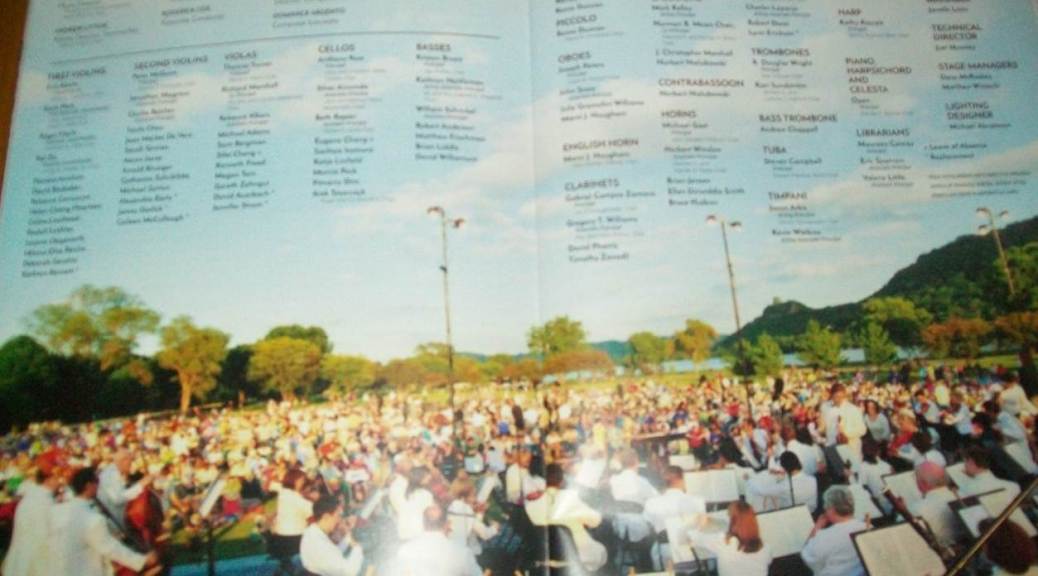
Thursday night we attended the 11th annual Minnesota Orchestra Concert down by Lake Winona, which officially opens the 2017 Beethoven Festival. It was a delightful concert, and got me thinking about some differences between Outdoor and Indoor Concerts:
Outdoor
There may be a little rain an hour prior to concert, but hey, it blows over. (This has happened for the past two years.) The breeze makes the musicians find a way to secure their music to the stand.
You bring your own chairs (or blanket), a picnic supper, and have a glass of beer/wine if you are discreet.
The orchestra is seated on a platform, and you are on the ground below, so for the most part you can only see the string players. (It would be a good idea for the horns to stand when they have a prominent part, but I haven’t told them this yet.)
A little girl in a green dress runs around (and around…) her parents’ chairs during the Tchaikowsky Polonaise (and beyond). Kids are swinging as high as they can on the adjacent playground, while the orchestra plays three of Dvorak’s Slavonic Dances.
You can kick of your shoes and let your feet feel the grass.
You get to watch a really cool sunset while listening to the music.
You can hum along with John Williams’ Raiders of the Lost Ark theme and no one minds.
If you see someone you know, you can wave wildly, and easily find them after the concert ends.
Indoor
Weather is not an issue once you are in the venue. Musicians’ music usually stays put on its stand.
You have prepaid seating; refreshments can be purchased at Intermission, and must be consumed before returning to the auditorium.
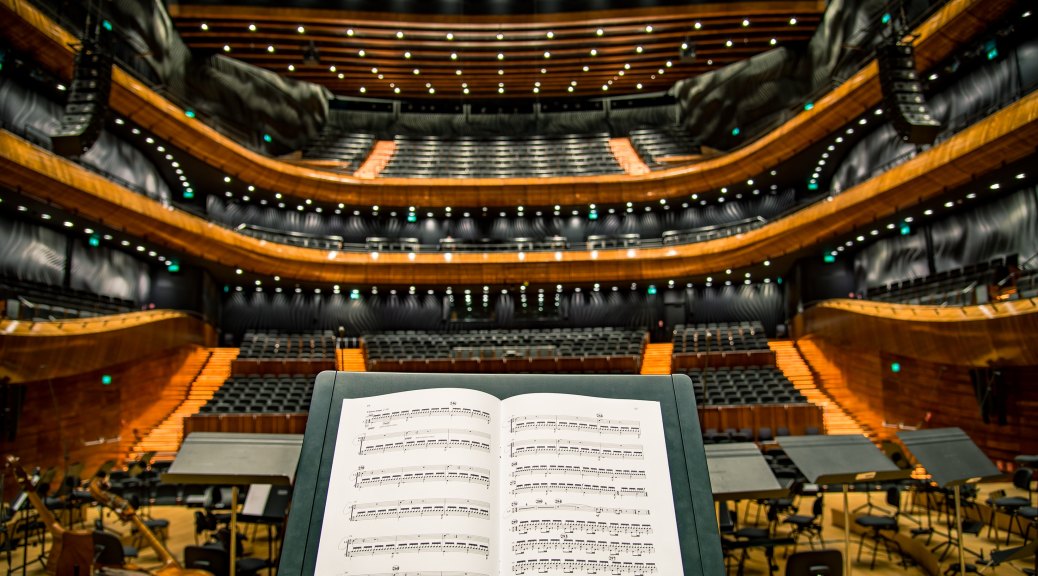
The venue is designed so that much of the audience is looking down on the performers, and can see most of the players.
Children are regularly hushed and shushed throughout the concert, and will run around only at Intermission.
It’s probably best to leave your shoes on your feet… they’re hard to find in the dark if you need them.
The lights will go down when the music starts playing, and you will sit in the dark.
If you talk or sing during the concert, you will most likely get stern looks from those around you.
If you see someone you know, give a polite wave and hope they see you; perhaps you will find each other in the milling crowd at Intermission
When and where was the last outdoor performance you remember attending?
Ever since our last presidential election, I’ve been taking the news in small measured doses and I’ve been wary of letting it just wash over me unless I am prepared. Consequently, instead of keeping my car radio tuned by default to the MPR news channel, I have an iPod, loaded with my choice of music and set up to shuffle through the selections whenever I drive anywhere.
Today, Robin and I were running a short errand together. The weather was sunny and warm with a light, fresh breeze. As we drove, the music selection that came up was a samba by Antonio Carlos Jobim, “The Girl From Ipanema” and I remarked to Robin that I have always considered Brazilian sambas the perfect evocation of summer– so warm, so languid. If Jobim doesn’t conjure up a hammock and a cool drink, I don’t know what does.
We were in the cities this past weekend for a family gathering, and managed to squeeze in the season’s last “Singing in the Light” event Sunday afternoon. This is led by my friend Barbara McAfee, a local singer/songwriter and voice coach. (She has given a couple of fun concerts with Claudia Schmidt, which a few baboons have attended.) It takes place in the Art Gallery (huge room) of the Hennepin Avenue United Methodist Church in Minneapolis, on maybe seven Sunday afternoons out of the school year.
I’ve written here before about singing in song circles or community sings, which have been around in Minnesota in one form or another since WWI. The kind I am most familiar with involve song sheets or books, and requires a couple of people on guitar. While that’s very enjoyable, I’ve noticed that much of the time is spent looking at the lyrics we’re singing – we interact with people mainly at snack break.
The Oral Tradition, on the other hand, is singing without written music or lyrics to look at, and is done “a capella” – without accompanying instruments (Italian: “in chapel style”). The music is described as “songs, rounds, and chants from around the world — from the sublime to the ridiculous.” All ages, all abilities (don’t have to read music!), are invited.
It works like this: someone (in this case Barbara) teaches us the parts via “call and response”, which we repeat, sampling them till we know it well enough to choose one. We move to that part of the room, then practice till we sort of know our part, and give it a whirl. After we get going we are invited to walk over to where they’re singing another part – heck, on some songs I was able to try out several – and move around the room. This goes on till everyone gets their part down well, and it sort of organically winds down or gets softer, and then that song’s done.
Meanwhile, all of a sudden there is this beautiful music, and we are making it. We are also looking at each other as we sing and walk around. It is the most satisfying kind of singing I have ever done, and sometimes brings me to tears. I wish everyone who loves to sing could get a chance to try it. I’ve never felt more alive while singing.
What is a regular activity of yours where there is eye contact with other people?
Thursday evening we attended a (free!) concert of the Artaria String Quartet, a nationally acclaimed group that does teaching/coaching of adults and youth in addition to performing. As reported in the Winona Daily New: “The quartet partnered with Strings in Motion, the Winona Public Schools’ orchestra booster club, to conduct sessions with the students in October, January and March.”
Our concert featured Winona High School students grouped in two string quartets and one Cello Choir. The latter half of the concert presented two movements of a Dvorak quartet played by WHS Faculty, and ended with the last two movements of that piece played by Artaria. We were spellbound by the end of the concert.
Artaria’s mission statement: “Artaria centers on string quartet performance and education. It is committed to presenting inspiring live performances, to mentoring string players of all ages, and to illuminating the world’s great repertoire of chamber music to a broad audience.” Also from Artaria’s website: “The ASQ is one-third of the way through an “Arts Learning” grant sponsored by the Minnesota State Arts Board. Free public concerts and educational events are taking place in Winona, Caledonia, Rushford, and Lanesboro throughout the season.”
Artaria is based in St. Paul, and their 2016-17 Concert Series shows a lot of activity in the Twin Cities. We feel lucky to live in a state whose State Arts Board has made concerts like this possible.
When do you remember attending a FREE concert or other event?
I didn’t realize until last week that Chuck Berry was from St. Louis, my home town. He grew up in what we would call “the city” and then moved to the burbs in the 60s. This made me curious to find out who else was from what I usually refer to as “the armpit of the nation”. Here are just a few: Yogi Berra, Lou Brock, Vincent Price, Kevin Kline, Dick Gregory, Miles Davis, Harry Truman and Scott Joplin. Some St. Louis folks also like to claim Maya Angelou, but she didn’t live in St. Louis all that long, so I’m not sure claiming her is playing fair.
I didn’t grow up in a musical family; while I knew who Chuck Berry was, I didn’t know very much about him or his musical history. I’ve honed my little bit of knowledge on Wikipedia and YouTube so now I wish I had paid more attention when he was alive.