Category Archives: Science

GunDel?

Photo credit: Fernhern A/S

I see in the news that they are building what will be the world’s longest immersed tunnel.  Linking Germany and Denmark under the waters of the Baltic, construction actually began in 2020 and is expected to be complete by 2029

I’m sure lots of folks are excited about this but not me.  I don’t even like driving through the I94 tunnel downtown and last month when folks got stuck in The Chunnel for several hours, I almost had a panic attack just reading the news story about it. 

Any phobias you’ll admit to?

Soak It In

I am a Neil deGrasse Tyson buff.  I’ve read several of his books, follow his current podcast (Star Talk) and own a t-shirt with a NdGT quote and a bracelet that I saw on his website of the planets in order.  (I actually made my own bracelet based on his design and I added Pluto – he may be smart, but Pluto will always be one of my planets!)

One of the things that I admire most is his ability to take difficult concepts and to distill them down so that most of us can understand them.  I was re-listening to his description of how the tides actually work/exist and wondered what it would be like to take a class from him (an entry-level class of course – I’ve encountered some of his work that is NOT distilled down and it is way over my head).

My favorite classes in college were always lectures.  I don’t need any small discussion groups or multi-student projects – just let me sit in the presence of great professors while I soak up their knowledge.  Between Carleton and Metro State I took five Shakespeare courses from two different professors – fabulous.  There was a spellbinding Chinese Middle Kingdom class and the professor who taught my King Arthur in English and American Literature (yes, a real class for which I got credit) held my attention like no other.

But based on YA’s master’s program experience, the current trend in education is all about self-teaching, small group projects and collaboration (I detest this word).  Her description of every single class she took for her MBA made my skin crawl, so I guess I probably won’t be going back to school in my retirement.  I’ll have to remain self-taught in the areas that appeal to me.  I’m still doing my online Italian class; I’m almost at 900 days straight.  I’m still working my way through biographies of the English monarchs as well as the American presidents.  Banned books are high on my list of interests as well as reading on Black Lives Matter.  Science is also a love of mine although I would say I have a broad science curiosity  as opposed to a deep curiosity. 

If I were to take any classes, my first choice would be anything taught by Tyson; it’s possible he could do wonders from my understanding of physics.  Add a course covering the history plays of Shakespeare.  I’d like an economics class that specializes in the real world and does not discuss guns or butter.  Literature courses of just about any kind.  No math (I got through trigonometry by the skin of my teeth) and no classes where anything has to be cut up!  

What were your favorite and least favorite classes in school?   

Henry?

I like to read the historical events that happened on particular days, and one of today’s I found very silly indeed.

On this day in 1889, the Second International Electrical Congress adopted the joule as a unit of energy, after James Joule, the watt as a unit of power, after James Watt, and the quadrant as a unit of electrical inductance. Inductance is the tendency of an electrical conductor to oppose a change in the electric current flowing through it. The flow of electric current creates a magnetic field around the conductor.  What I found so silly is that the name “quadrant” was later changed to henry. The henry (symbolized H) is the Standard International unit of inductance . One henry is the equivalent of one kilogram meter squared per second squared per ampere squared (kg m 2 s -2 A -2 ).

Henry? Why not Flora or Sylvester? This got me started renaming things. “Yep, husband drove 90 Biancas to Bismarck last night. ” Or “I lost 10 Elliots with my new diet.”

Come up with some silly names for units of measurement.

Puppy Physics

Our Cesky Terrier clearly has never heard of the Pauli exclusion principle, which states that two objects cannot occupy the same space simultaneously.

Try as he might, Kyrill can’t fit two of his favorite small tennis balls in his mouth at the same time. He loves his balls and runs all over the house with them. Much of the time he looks like a soccer player, one ball in his mouth, the other getting pushed down the hall and around the room with his front paws. He seems to experiment at times with both on the floor in front of him, picking up one and trying to pick up the other, as though he thinks the rules might have changed and he can have both in mouth.

Cesky Terriers are some what different in temperament from other terriers, in that they prefer (in fact, they insist) on being with their people instead of running off and exploring. Kyrill is very conflicted when we are both outside with him, as he wants to be with both of us simultaneously, even when we are in different corners of the yard. He has, apparently, heard of the superposition principle of quantum mechanics, which essentially states that one object can exist in two places at the same time. I have no idea how that possibly could be true, but it appears to be an actual proven principle. Kyrill hasn’t figured out how to make it work for him when husband and I aren’t together in the same room.

What natural laws do you wish you could suspend? What is your experience with animal devotion or loathing?

Half a Giraffe

You’re giving a announcement to the press about a small asteroid that has managed to get through our atmosphere without completely burning up.  The small space rock is named 2022 EB5 and hit above Iceland last Friday causing a boom and a flash of light as it whizzed across the sky.

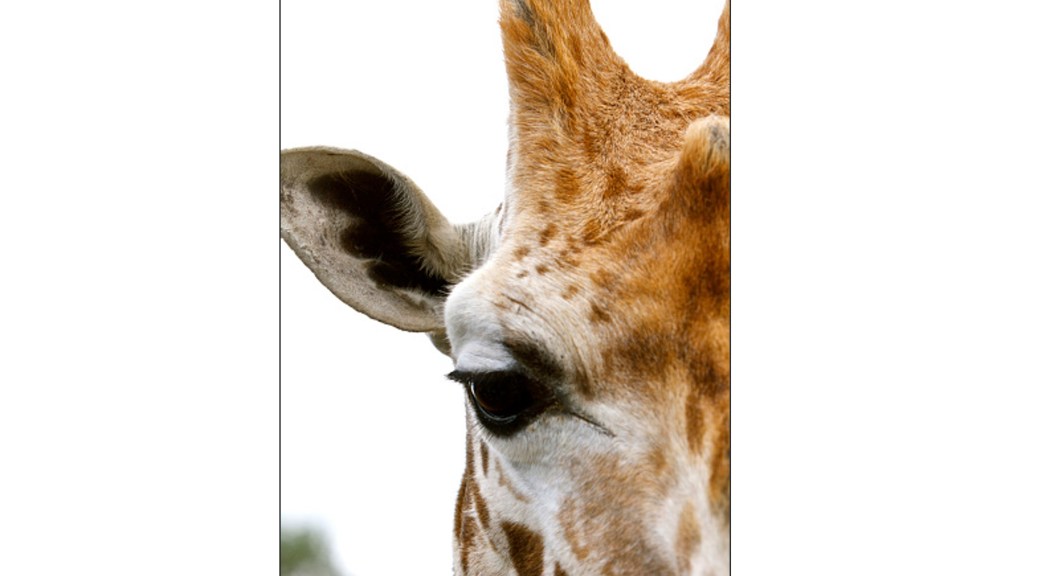
You haven’t found any evidence of the asteroid actually making it all the way to the ground, but you want to make folks feel secure about how little damage it would have caused.  So you describe the size of the asteroid as small, 10 feet/3 meters across, “half the size of a giraffe”.

What?  I think a lot of people have probably seen a giraffe in a zoo and have a fairly good idea of how big a giraffe is but it’s certainly not the first thing I would think of when trying to tell someone the size of something.  Especially when 10 feet or 3 meters isn’t that hard to imagine.  But a giraffe…. actually HALF a giraffe?

Isn’t half a giraffe the same as a baby elephant?  Or six dolphins?  Are we picking on animals?  Should we say the asteroid is the size of a Volkswagen Beetle?  And even if we stay with giraffes are we talking half a male giraffe, a female giraffe, a dwarf giraffe?  Are we talking head to halfway through the torso or halfway through the torso to the feet?

Possibilities are endless.

What do you think is a measure of size that the world is missing out on?

Dinosaurs to the Moon

I wasn’t on the trail much over the weekend; I was following a livestream on YouTube.  (I can’t even imagine what I would have thought if I had read that sentence 20 years ago!)

15 years ago, after reading a book by John Green (I think it was Looking for Alaska), I started following him and his brother, Hank, on their YouTube channel called VlogBrothers.  Hank is the brainchild behind SciShow, another fabulous channel and together the brother have created multiple other channels and platforms.  They manage and ship creations by a variety of artists, from their DFTBA (Don’t Forget to be Awesome) warehouse, among many other things.  Their following is called Nerdfighteria and I have to say that they were a big factor in my finally being able to own my nerdiness and feel that it was OK to admit to my smarts.  I say it calmly but it was actually a fairly big turning point in my life.

Both John and Hank are thoughtful, kind and generous – the year I started following their vlog, they decided to do a weekend event on YouTube to raise money for good works.  They invited people to send in videos to the channel to support charities; we would watch and vote on the videos and, if we could, send in money.  At the end of the weekend, they split up the money among the top voted groups.  And they did a livestream the entire weekend to encourage folks to watch the videos, vote and donate.  They called this Project for Awesome. 

And 15 years later, it is still awesome although a little more cohesive these days.  The first 24 hours of donations go to a couple of specific organizations that Nerdfighteria have supported for many years and then the second 24 hours of donations gets split up among the top groups whose video have been voted on.  Lots and lots of perks donated by various online creators.  The livestream is a little surreal… YouTubers setting up goals and challenges.  My favorite is Destin whose vlog “Smarter Every Day” I have watched for years.  Donations during his 2-hour stint get you a plastic dinosaur magnet with your name on it that gets sent to the moon on an electronic pulley system. Honestly I don’t even know how to describe it.  Suffice it to say it’s just hysterical and the donations just blast in during his time.

Anyway, I watched quite a bit of the livestream, including staying up too late both nights and then watching early in the morning.  As the project rolled toward its end, donations again ramped up as John and Hank finished up the livestream with a lot of thanks and champagne poppers and confetti.  About 15 minutes before the end, the counter clicked over the $3 million dollar mark.  I have to say I got a little verklempt.

The happiness that I get from being part of the nerdfighter community makes me think a lot about the Trail and my baboon companions there.  I am not a serious member of the group and I only know one other nerdfighter personally but as a group they follow their leaders… they are kind and thoughtful and generous as a whole, exactly like those I know on the Trail.  No nastiness, no name calling, no mud slinging.  Wish I could spread that feeling out to the whole world.

Tell me about some other nice, thoughtful, kind folks you know!

Too Late?

Asteroid 1994 PC1 whizzed past us yesterday at 43,000+ miles per hour.  Apparently compared to the asteroids that swing by almost every day, 1994PC1 is fairly large to be so far outside the asteroid belt.  NASA has been watching it for years (I’m guessing from it’s name, since 1994) and since none of us got warnings about impending asteroid/earth collisions the last few days, they are quite aware that relatively speaking while it’s coming close to us, its closest pass will be five times the distance between us and the moon.  According to scientists “if you aren’t worried about the moon crashing into your house this week, you shouldn’t be worried about this either”.

I guess we might have a closer call with a much larger asteroid in 2028.  That news actually hit the stands back in 1997, just a year after a big scare when 1996 JA1, an asteroid the length of two football fields, passed by at only 300,000 miles with not much warning.  This might account for a bunch of the asteroid movies that came out in the next couple of years (Deep Impact, Armageddon, Asteroid, Judgment Day to name a few). 

I’m not a big disaster film buff (although technically if they divert the asteroid, it’s not really a disaster flick, is it?) but I did see a couple of these.  It’s an interesting concept – pushing off an object that is traveling 43K miles an hour.  And I don’t really follow this stuff closely so I don’t know if there is an object that NASA is actually worried about.  And I wonder, would they tell us if there were?  Not sure what in heck we, as citizens of the planet could actually do to prepare.  I mean, I assume we’re smarter than the dinosaurs, but there sure wasn’t anything they could have done differently.

Which do you worry about more – asteroids or a zombie apocalypse? 

Prehistoric Critters

I don’t remember why I asked for a DVD of The Cave of Forgotten Dreams from the library.  I had to get it through InterLibrary Loan so it took awhile.  I have a vague memory of seeing something recently about cave art so that is probably it, but I’m not sure I’ll ever remember for sure.

It was captivating to see the cave art (from the Chauvet Cave in southern France) – the public is not allowed in the caves so it felt a little like getting away with something although the scientists and camera crew did have permission.

The film got weird in a few places, a little disconnected and then at the end it got REALLY weird.  In a “postscript”, the film introduces a nuclear power near the caves and then continues to show the crocodiles who have been added to the warm waters of the plant.  Not only that, but some albino crocodiles became the final focus with the film clearly suggesting that they are mutants from radiated water.  This, of course, captured my interest in a big way.  First off, they weren’t crocodiles, they were alligators – classic u-shaped alligator snouts.  But more importantly, why in heaven’s sake would a nuclear power plant build a crocodile farm?

Of course all my questions were answered when I actually looked up at the screen just in time to see “Written, Directed and Narrated by Werner Herzog”.  I don’t know a lot about Herzog but I have seen enough comments over the years to know that he doesn’t use the same definition of “truth” that I do.  This made it incredibly easy to fact-check the crocodile farm story.  The power plant did NOT build the croc farm; it was built by two crocodile enthusiasts.  They are close to the cave and they do use the water from the nuclear power plant but the water is consistently tested and has never shown any radioactivity.  And the albinos?  Imported from a croc farm in the Southern U.S.; they were albino before they even reached the French waters.  Not radioactive mutants.  None of this really explains the purpose of the postscript of the film, but it was interesting research.

The most noteworthy fact I found is that the French croc farm is not the only place on the planet where crocodiles are benefitting from nuclear waters.  Apparently 25% of the crocodiles in the U.S. thrive among the cooling canals at Turkey Point Nuclear Plant south of Miami.  They are protected, having been encouraged there since the discovery of the first nest back in the 70s.  Fascinating.

Have you ever held a baby alligator or crocodile in your hands?  Snake?  Tarantula?  Anything?

Right Brain Baking

We got a text from our daughter the other day, lamenting the dismal failure of two Christmas treats she tried making-those Special K wreaths you cover with green-dyed almond bark, and a pretzel, M & M, and white chocolate, milk chocolate chip confection. Neither set up, and were real messes.

Daughter has turned into a very fine cook of soups, casseroles, and main dishes, but admits she is no baker because she “cooks from the heart”, adding what she thinks would be good and deviating from the recipe. That just doesn’t work for baking. Baking is a first and foremost a science. The decorative part is secondary.

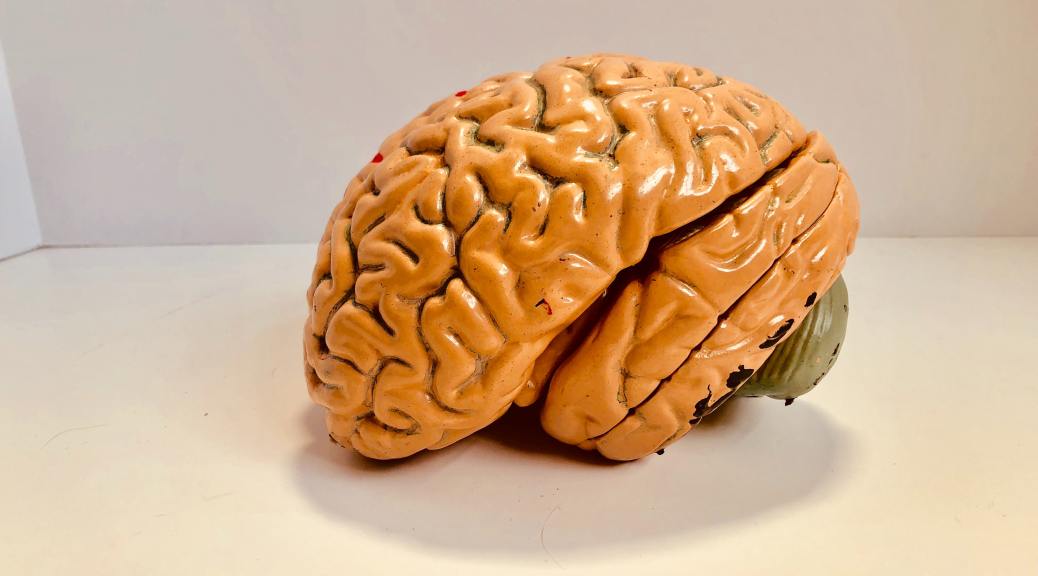
Daughter’s cooking style is that of a person relying more on their right brain than their left brain. I am a left brain person, who rigidly follows recipes until I get brave enough to alter things. Artists, poets. and musicians do a wonderful job using both sides of their brains in their arts. You just can’t wing your way through it when you bake. Flour can only absorb so much liquid, you need just the right amount of leavening, chocolate melts at a certain temperature, and you have to understand how fats interact with all of it. It is amazing anyone can bake.

How do you approach a recipe? How are you at following instructions? What science classes did you like/not like?

Deciliters

Husband is always on the lookout for sourdough rye recipes, and settled on a Danish Rugbrød last week. That is the coarse, very thinly-cut type of rye bread baked in a Pullman pan with added sunflower seeds, flax seeds, and rye chops. It is often used as the base for Smørrebrød, those lovely open faced sandwiches..

The recipe he chose took eight days to make, beginning with the sourdough starter. He meticulously measured things as he fed the rye starter, and by Day 8 he was ready to mix up the bread.

The recipe was poorly translated from the Danish, and the exact steps were very difficult to follow. Husband fussed and fussed over getting all the proportions of everything correct at every step. He measured out everything by weight, and had to covert even the liquids from liters to grams. I served as his calculation assistant, and when he asked me to find out how many grams in a deciliter, I knew we were in uncharted territory.

I remember feeling so lost when the metric system was introduced when I was in elementary school. As I helped Husband with his deciliters, I thought of that and how ridiculously logical the metric system is. Why is this so hard for my American brain to comprehend?

The bread turned out quite well. We froze half and plan to send it to the only two Danes we know for their honest opinion.

What are your experiences with the metric system? Why is it hard for the American mind to grasp? What is your favorite bread to bake? Whose opinion do you value?