
Today’s post comes from Reneeinnd
A friend of mine has the sad task this week of spreading the remaining half of her sister in law’s ashes in the ND Badlands. Her sister in law died of complications of West Nile Virus. It is truly tragic, and my post, although it contains some levity, isn’t meant to diminish her life. Sometimes humor is the only remedy for grief.
I say the remaining ashes, as half of the ashes have already been spread in a lake near where the woman grew up in eastern ND. I guess she loved both places. Given how windy it is here, it might have worked just as well to stand at the Montana border on a windy day and let them sail east with the prevailing gale. They would have reached the eastern part of the state eventually.
My friend is quite familiar with the odd and strange when it comes to funerals. She works with developmentally disabled individuals and has coordinated the funerals of several of elderly clients lately, people with no family able or willing to help out. Last month she stopped an interment in mid descent and insisted that the funeral director turn the casket around so that the client was facing east, which is how Catholic remains are supposed to face around here. Her client may have out of step during life, but my friend wanted to make sure the individual was facing the right direction for the Second Coming.
When I look out of the kitchen window I see three urns that contain the remains of our dog and two cats. I have been thinking about downsizing when I retire and we eventually move, and I wonder if we will take the pet ashes with us or do something else with them. I really can’t see moving them with the rest of the household, so I suppose we will commemorate the furry ones in some fashion and empty the urns in some beautiful place. Then, I wonder, what do we do with the used urns? We could keep them for future pet ashes I suppose, although I think there is something kind of morbid about people who keep and recycle pet urns.
I believe the Catholic Church has decreed that cremation is fine, but you have to keep your ashes in one place and not spread them around. I’m not Catholic, but I want to be cremated and kept in one container and buried somewhere yet to be determined. I want tangible proof that I existed. Husband hasn’t decided what he wants. I remember the very funny tale of a Baboon dealing with her parents’ ashes by mixing them up in a paper bag so they could spend eternity together. I think that would be a little much for our children to handle, so Husband and I need to come up with a unified plan. I suppose we could just use the vacant pet urns and save a bundle at the funeral home.
What are your plans for your mortal remains?
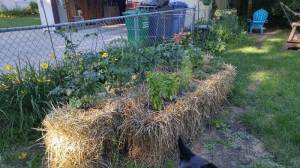
 Black Currents
 Borage
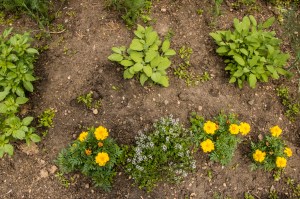 The herb garden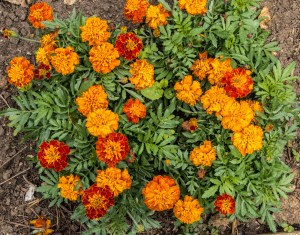
 The peas
 Red Currents
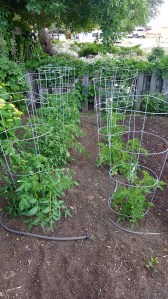 Tomatoes
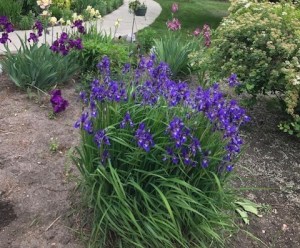
 Iris (Beverly Sills)
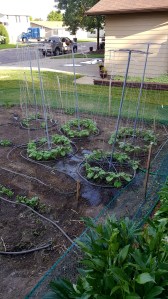 The beans and their extraterrestrial poles
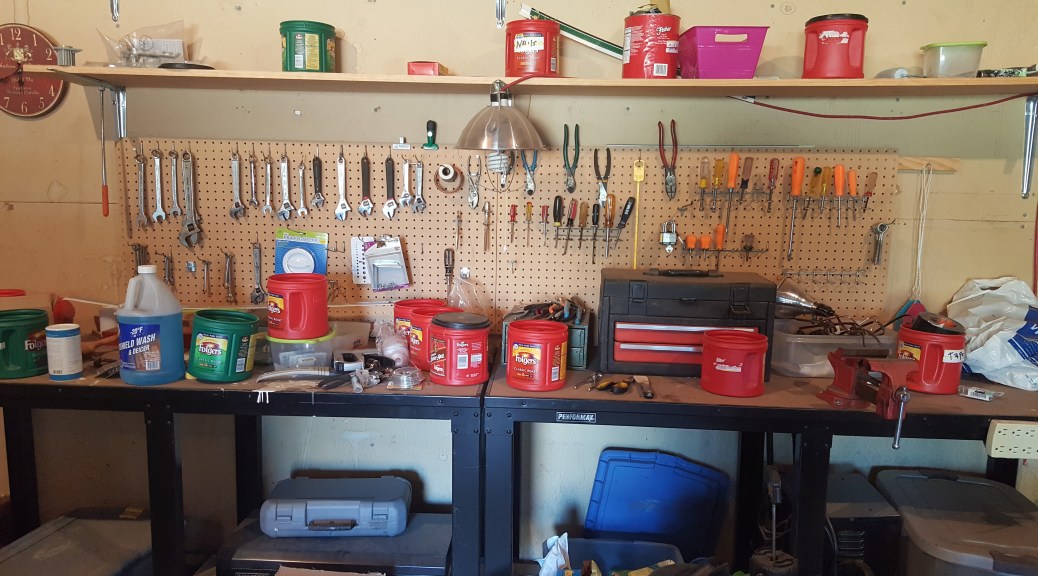


 Trail Baboon