Category Archives: Words

Poetic Lament

There are many sad things going on these days. Unfortunately as icons fall, some of their good works fall with them.  I have read Garrison Keillor’s Writer’s Almanac on a daily basis for years.  Almost all of the poetry I read is inspired by the Almanac – either more poems by the featured poet or work of others mentioned in the “on this day” section.

When I heard the news about Garrison in November, the first thing I did was to search online to see if the archives were still around, hoping the APM (American Public Media) would publish them on their own. I’ve checked every week since then.  Nothing.  I even talked to Dale to see if he knew whether Garrison was going to continue on another platform.  Probably not.

So now I’m officially in mourning. I love poetry and I’m struggling to figure out where to get my poetry fix these days. I’m know there’s lots of poetry out there but the Almanac was such a perfect setting for me that I’m thinking that my world from here on in will just be a little sadder for the loss of it.

Two questions today:
Is there a product you’ve had to learn to live without?
Where do you recommend I go for my poetry fix?”
How to choose…Post Script

I received permission from Robert Bly’s wife Ruth to post the poems I had chosen for my book club, the ones Renee suggested we not post because of not having permission.  But with permission, she suggested I share them now.  So…here they are:

Or Robert’s The Dark Autumn Nights…?

Imagination is the door to the raven’s house, so we are

Already blessed! The one nail that fell from the shoe

Lit the way for Newton to get home from the Fair.

Last night I heard a thousand holy women

And a thousand holy men apologize at midnight

Because there was too much triumph in their voices.

Those lovers, skinny and badly dressed, hated

By parents, did the work; all through the Middle Ages,

It was the lovers who kept the door open to heaven.

Walking home, we become distracted whenever

We pass apple orchards. We are still eating fruit

Left on the ground the night Adam was born.

St. John of the Cross heard an Arab love poem

Through the bars and began his poem. In Nevada it was

Always the falling horse that discovered the mine.

Robert, you know well how much substance can be

Wasted by lovers, but I say, Blessings on those

Who go home through the dark autumn nights.


I love the tiny book, Four Ramages, with illustrations & graphics by Barbara LaRue King.

Grief lies close to the roots of laughter.

Both love the cabin open to the traveller,

the ocean apple wrapped in its own leaves.

How can I be close to you if I am not sad?

There is a gladness in the not-caring

of the bear’s cabin; and in the gravity

that makes the stone laugh down the mountain.

The animal pads where no one walks.

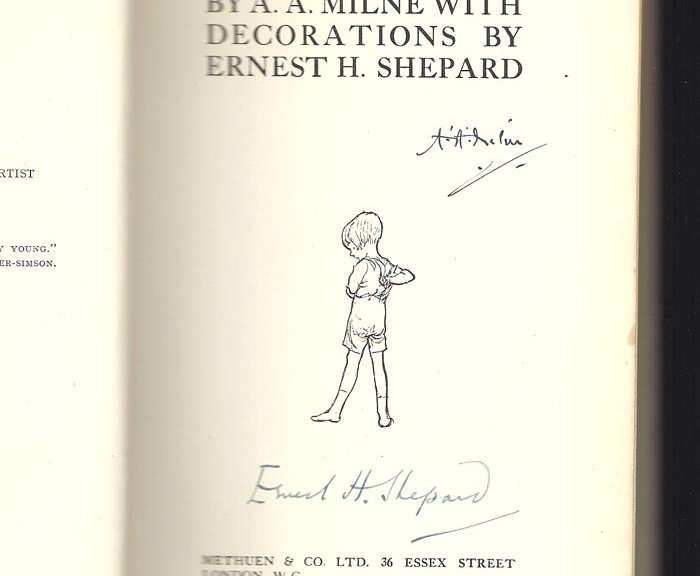
Meanwhile, I found my Yeats collection and further inspired by Barbara in Rivertown, I also found “Now We Are Six” by A A Milne…and decided to do “Down by the Sally Gardens” and “He Bids His Beloved Be At Peace” by Yeats; “Wheezles and Sneezles” by Milne. But I still love Bly’s poems…


PS…I just changed my mind again, well, added one (I hope), “King John Was Not A Good Man” by Milne because it is about Christmas.

Enough of my favorites, please share more of yours.

Books: Theory Number 1

Today’s post comes from NorthShorer (Clyde).

I lifted the following from my second novel:

He took out the two novels, Jon Hassler’s Simon’s Night and Elizabeth Strout’s Olive Kitteridge, which he brought to occupy the many hours he would pass in the chair. “Hulger, maybe truth about old age is best told in fiction.”

Hulger held his pout; his tail still said J’accuse.

Clair had read both books, Simon’s Night a few times. He brought them for their shared theme of old people who have drifted out of the central river current into the slack water. Dropping both books onto the rock, he opened his journal to write. “Fiction comes in four categories:

1) Stories of extraordinary people doing extraordinary things to face extraordinary challenges, which seems to be the grist of most current movies.

2) Extraordinary people facing ordinary challenges.

3) Ordinary people facing extraordinary challenges, which Hitchcock preferred.

4) Ordinary people facing ordinary challenges, which I prefer, but which is not in fashion in popular fiction.”

Assuming this is proper grist for your thoughts, which type(s) do you read most often?

How to choose?

Our Library book club has a “sort-a” December tradition of reading aloud a favorite poem or two. In the past I have read a Lady Gregory, plus several by Louis Jenkins, Mary Oliver and Yeats. This year I am at a loss, having covered many favorites.

So far, these are the books I have pulled off the shelf…

Galway Kinnell’s Body Rags, Mortal Acts Mortal Words, Selected Poems

 Lawrence Durrell’s Selected Poems

Mary Oliver’s New and Selected Poems

Seamus Heaney’s Beowulf: A New Verse Translation

 Selected Poems of Rainer Maria Rilke translated by Robert Bly

Robert Bly’s Four Ramages

Olav Hauge’s Trusting Your Life to Water and Eternity translated by Robert Bly

Tomas Tranströmer’s 20 Poems translated by Robert Bly

Robert Bly’s My Sentence Was A Thousand Years of Joy

 A Julius Berg Baumann poem from his Fra Vidderne translated by Josh Preston

I can’t find my book of collected Yeats poems. Or the ever-so-old copy of D.H. Lawrence poems. But perhaps I have enough to sort through – though I’m afraid we might be limited to only one or two.

My favorite Rilke poem?

I live my life in growing orbits

which move out over the things of the world

Perhaps I can never achieve the last,

but that will be my attempt.

I am circling around God, around the ancient tower,

and I have been circling for a thousand years

and I still don’t know if I am a falcon, or a storm,

or a great song.


Or Robert Bly’s The Dark Autumn Nights…?


I love the tiny Bly book, Four Ramages, with illustrations & graphics by Barbara LaRue King.


Okay, my decision has been made…I’m going for all three Bly poems!

(plus the other 3 Ramages)


Who (or what) are your favorite poets (or poems)?

Whispering

Today’s post comes from Ben.

The final project in the English class I’m taking, “Critical Reading and writing 1” is to create a research paper on a topic of our choosing. We’ve written three other papers based on material we’ve read in class. The entire class to this point was mostly learning how to properly use commas, quote marks, how to attribute a quote, how to add citations to a paper, all that stuff you need to get a college level research paper done right.

I felt like I had a pretty good handle on things going in. What I’ve learned is just because I can do it doesn’t mean I know the rules and knowing the rules is harder!  English is hard! I only whined about that once or twice to the teacher. She’s been great. I knew her before the class and knew I would like her as a teacher so that’s all been good.

For my research paper, I choose to write about whispering. This came up because our daughter speaks really loud. I mean it makes my ears ring sometimes.

But it’s not that simple. I talked with an ENT doctor from Mayo. I spoke with a professional opera singer and I interviewed a speech pathologist.  The fact we can speak at all is pretty amazing! There’s a lot going on in making a “voice”. But loudness has to do with how much air you’re moving (and that comes from your “Pelvic Floor”) and it has to do with intonation and resonance and it all gives your voice a tone or pitch.

AND THEN, the speech pathologist said he didn’t think our daughter spoke that loud. Huh! So now ‘Loud’ is relative. Loud compared to what? I looked up that the average speaker is about 60dBA’s. A quiet room is about 40dBA. A lawn mower is about 85-90dBA. (And those are all rather subjective too). And using an iPhone app, she does speak about 60dBA. But the rest of us in the house don’t talk that loud. So I guess she’s only loud “in comparison”. And it’s loud when you’re in a quiet restaurant and the lunch rush is over.

I’ve learned a lot and it’s been interesting. It’s just not that simple. And I guess really, I just need to be grateful she can communicate at all.

Got anything to say about your voice? “

Alas, Poor Yorick

Went to Hamlet tonight at the Park Square Theatre. It wasn’t very full so the theatre manager invited everyone to “upgrade” their seat for free – we ended up sitting center stage, fourth row.  It was a very good performance with intriguing casting (Horatio and Polonius were female) and a fascinating set.  It was set in more modern times and although the final scene was done with the traditional rapiers, when Hamlet kills Polonius in Act 3, he uses a gun. The only disconcerting part of the evening was that the director re-arranged a few scenes (and cut Rosencrantz and Guildenstern).  Not a big issue but for someone who knows the play well, moving some of the speeches around is noticeable to say the least.  Anyway, I would highly recommend it.

What was the last thing you saw in a theatre (play, movie, musical, sing-a-long)?

Good Words

I ran across a list of old English words that have lost favor over the centuries. They are cool words!

Bedward:  heading to bed

Elflock: tangled hair as if matted by elves

To gorgonise: to have a paralyzing effect on

To hugger-mugger: to act in a secretive manner

To kench: to laugh loudly

Monsterful: wonderful

To twattle: to gossip

Twitter-light: twilight

Widendream:  a state of mental confusion or excitement

Malagrugrous: dismal

To jargogle: to confuse

To degust: to taste carefully

Illecebrous: attractive

To brabble: to argue loudly

What words currently in usage would you wish to see disappear? Make up some words you would like to see in usage.                                    Make up some sentences from the old English words listed above. 


Thinking Poetically

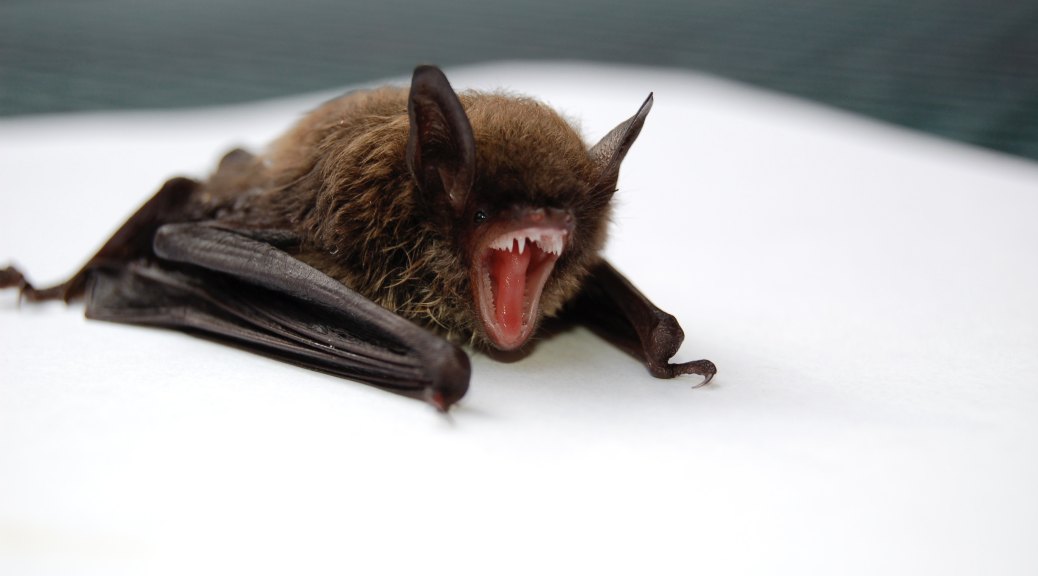
As I look out of our front window, I see what remains of our late autumn garden.  The quivering, pendulous  poblano peppers  hang from  their branches like dark bats dangling from the ceiling of a cave.

Okay, Baboons, come up with some similes and other metaphors.  

Spoiler Alert

500 pages. Book discussion is Saturday so I thought I’d dig in tonight.  After two hours I realized I might finish it before I went to bed.  You know how this ends.  It’s midnight, I’m turning out lights and suddenly remembering I haven’t check on a blog bit for tomorrow!

What’s the last book you stayed up to finish?

More About My Mom

Today’s post comes from Occasional Caroline.

My mother is intelligent, loving, and feisty. She also has some type of learning disability, probably some type of dyslexia; they didn’t recognize that kind of thing in the 1920’s. She says that she hated school until she got to college. She convinced her mother she was sick and couldn’t go to school more days of the week than not, all through high school. But she loved everything about Macalester College and doesn’t recall ever missing a single class. Smart as she is, she has never, ever been able to spell. Anything. At all. She clearly remembers the agony of multiple failed attempts to get her first library card because she couldn’t spell her 16-letter full name on the application form.

When she went to Macalester, she had a note on file from a psychologist, stating that she wasn’t stupid or uneducated, but she couldn’t spell, and her professors should cut her some slack in that regard. She graduated from Mac in 1947 with a double major in Sociology and Theater. Not too shabby for any women in that era, especially one who couldn’t spell.

She can’t look up a word in the dictionary. She can’t even get to the right page, let alone to the right word. If spell check had come along 30 years earlier, she would have been one of it’s greatest beneficiaries, but she was born to soon.

She’s an avid reader, which seems odd to me. She read aloud to us when we were kids and we didn’t notice until much later that she pronounced many words differently than most people do. We frequently had “samriches” for lunch, for example.

Throughout my childhood, she would ask me how to spell simple words. Every time one of us missed school and she had to write an excuse note, she’d ask me how to spell stumpers like “with” and the dreaded “sincerely.” She had a cheat sheet in her stationery box, but nearly always asked, because the words just didn’t look right to her.

She always writes individual notes in her Christmas cards, but it takes her forever, because she writes them out on scratch paper and has me correct the spelling before she copies it over to the card. It’s the bane of her existence. She would almost rather not get gifts because the mandatory thank you notes are so frustrating to compose. Her notes are always heartfelt, but brief.

Mom will be 93 in October. At somewhere around 75 she started taking to heart the information she was seeing about how crucial it is to keep your mind challenged as you age. She couldn’t do the Highlights for Children crossword puzzles, let alone the ones in the New York Times, as was frequently recommended. She couldn’t do word search puzzles, as many of her friends did, and don’t even mention playing Scrabble! So she came up with her own brand of brain training; she memorized all the insignia/logos on cars. For the last 20 years or so, riding in the car with her is a running monologue on the makes of the cars going by. “Oh, there’s a Toyota, that’s an Acura (a’ cura, in her pronunciation), that one’s a Mercedes, I think those are very expensive.” She’s only focused on the make, models are not her thing, except for one particular Hyundai (I think it’s a Hyundai, of course I can’t come with model right now) that every time she sees one, she points out what a remarkably good looking car it is.

What do you do to compensate for your weaknesses?